Author: vitorcherulli

  • Top 10 UV Air Purifiers for Home and Office: Expert Picks for 2026

    Top 10 UV Air Purifiers for Home and Office: Expert Picks for 2026

    Clean indoor air is essential for health and comfort, and air purifiers with UV technology are gaining popularity for their ability to reduce airborne pollutants, allergens, and microorganisms. These models typically combine a True HEPA filter, activated carbon, and UV-C light to create a multi-layer defense. Below, we review 10 top UV air purifiers suitable for various room sizes and needs.

    1. Dyson Purifier Hot+Cool Formaldehyde HP09

    The Dyson HP09 goes beyond purification by also functioning as a fan and heater. It features a sealed HEPA H13 filter, activated carbon, and a catalytic filter that continuously removes formaldehyde. Built-in sensors adjust performance based on real-time air quality.

    2. Philips Series 3000i

    Designed for large spaces, the Philips Series 3000i uses NanoProtect HEPA and active carbon filters to capture fine particles and odors. Its high CADR ensures efficient coverage, while automatic sensors regulate fan speed.

    3. Coway Airmega 250

    The Coway Airmega 250 delivers reliable, everyday purification with a True HEPA filter and odor-removal technology. Real-time air quality monitoring allows automatic adjustments, making it ideal for pet-friendly homes and allergy sufferers.

    4. Honeywell Air Touch U2

    Compact yet powerful, this purifier includes HEPA, activated carbon, and UV LED technology. Perfect for bedrooms, studies, or small offices, it provides efficient purification without taking up much space.

    5. Eureka Forbes Air Purifier 355

    This straightforward model combines HEPA, activated carbon, and UV tech to tackle pollutants. Air quality indicators and a filter change reminder simplify maintenance. Suitable for mid-sized homes and offices.

    6. Sharp FP-J80M-H

    Sharp’s FP-J80M-H employs HEPA and Plasmacluster ion technology for quiet, effective purification in large rooms. Ideal for households with dust and allergy concerns, it operates silently for continuous use.

    7. Blueair HealthProtect 7470i

    Integrating HEPASilent technology, intelligent sensors, and connectivity, this model monitors air quality even in standby mode. Designed for large homes and offices, it offers low energy consumption.

    8. Levoit Core 600S

    Featuring a True HEPA H13 filter, activated carbon, and high CADR, the Levoit Core 600S is controllable via app and voice assistants. It’s a powerful choice for large spaces.

    9. Xiaomi Smart Air Purifier 4 Pro

    This affordable model includes HEPA filtration, activated carbon, and a laser particle sensor. Automatic mode adjusts fan speed based on air quality, and smartphone integration enables remote monitoring.

    10. LG PuriCare AeroTower

    Combining multi-layer HEPA filtration with a bladeless fan, the LG PuriCare AeroTower improves both air quality and circulation. Its slim, modern design fits seamlessly into contemporary homes and offices.

    Buying Guide: How to Choose a UV Air Purifier

    Select a model that matches your room size and CADR rating. Always prioritize True HEPA filters for capturing 99.97% of particles as small as 0.3 microns. UV-C technology is a helpful addition, not a substitute for proper filtration. Consider smart controls and energy efficiency for added convenience. Replace filters every 6–12 months for optimal performance.


  • Are AI-Powered Air Conditioners Worth the Investment? A Detailed Look

    Are AI-Powered Air Conditioners Worth the Investment? A Detailed Look

    AI-powered air conditioners go beyond basic cooling by learning your daily routine, preferred temperature, and usage habits over time. They automatically adjust settings without requiring frequent remote adjustments, delivering a more comfortable experience while reducing manual intervention.

    Lower Power Bills

    One of the biggest advantages of AI-powered ACs is improved energy efficiency. They monitor room temperature, humidity, occupancy, and even outdoor weather in some models. The system adjusts cooling only when needed instead of running at full power all the time. This smart operation can help lower electricity bills over the long term.

    Better Comfort All Day

    Traditional air conditioners often cause sudden temperature fluctuations by switching between high and low cooling settings. AI models make small, continuous adjustments to maintain a stable indoor climate. This reduces cold blasts, maintains consistent comfort, and improves the overall cooling experience during long hours of use.

    Smart Control From Anywhere

    Most AI-powered air conditioners come with built-in Wi-Fi and a dedicated smartphone app. Users can switch the AC on before reaching home, adjust the temperature remotely, or create daily schedules. Many models also support voice assistants, making it easy to control cooling with simple voice commands.

    They Cost More

    AI-powered ACs usually cost more than standard inverter models because they include advanced sensors, smart software, and internet connectivity. While the upfront price is higher, the added features may improve convenience and reduce energy use. Buyers should compare the long-term savings with the initial investment before making a decision.

    Easy Maintenance Alerts

    These smart air conditioners can monitor their own performance and detect possible issues before they become serious. They send reminders to clean air filters, notify users about maintenance needs, and sometimes identify faults through the mobile app. Regular alerts help keep the AC running efficiently and may extend its lifespan.

    Are They Worth Buying?

    AI-powered air conditioners are a good choice for people who use their AC every day and want smart features with better energy management. They offer greater convenience, automatic temperature control, and remote access. However, if your cooling needs are limited, a quality inverter AC can still deliver excellent performance at a lower price.

  • From 2D Streets to Immersive Worlds: The Complete Evolution of GTA Maps (1997-2026)

    From 2D Streets to Immersive Worlds: The Complete Evolution of GTA Maps (1997-2026)

    Grand Theft Auto began as a straightforward crime game with a top-down perspective and has since evolved into one of the most expansive open-world franchises in gaming history. Starting with small 2D cities and progressing through detailed 3D environments to the modern HD era, each new installment has pushed the boundaries of map size, interactivity, and immersion. With GTA 6 on the horizon, the anticipation for Rockstar’s next leap is palpable.

    The 2D Origins (1997–2000)

    The early GTA games—released between 1997 and 2000—used a top-down 2D viewpoint. Players could explore cities inspired by Liberty City, Vice City, and San Andreas, but technical limitations kept the maps flat and lacking in realism. While enjoyable, these worlds did not feel like living cities.

    The 3D Revolution: GTA III and Vice City (2001–2002)

    With GTA III in 2001, Rockstar transitioned to full 3D. Liberty City gained crowded streets, traffic, pedestrians, and hidden alleys, offering a sense of being inside a real city. GTA Vice City followed with a vibrant 1980s setting—neon lights, beaches, and a soundtrack that made every street memorable.

    San Andreas: The First Massive Open World (2004)

    GTA San Andreas broke new ground by featuring three distinct cities—Los Santos, San Ferris, and Las Venturas—plus countryside, deserts, mountains, and small towns. The world felt enormous for its time and offered unprecedented freedom.

    The HD Era: GTA IV and GTA V (2008–2013)

    GTA IV introduced a denser, more realistic Liberty City with reactive NPCs and a believable atmosphere. GTA V combined scale and detail, presenting Los Santos and Blaine County with beaches, highways, deserts, and a bustling metropolis—becoming one of the best-selling games ever.

    What GTA 6 Brings to the Table (2026)

    Rockstar has confirmed GTA 6 returns to Vice City and the state of Leonida. Trailers show a world with smarter NPCs, dynamic weather (storms, heavy rain), interactive environments, and a living ecosystem that changes over time. Protagonists Jason and Lucia anchor a narrative focused on survival and crime. The leaked footage suggests a map designed to feel less like a game level and more like a real, breathing world.

    Why This Evolution Matters

    From the 2D streets of 1997 to the photorealistic chaos of 2026, Grand Theft Auto has repeatedly redefined what an open world can be. Each title built on its predecessor—larger maps, richer details, and more player freedom. GTA 6 is poised to continue that legacy, and fans are counting the days until they can explore Leonida.

    “The journey from the first GTA to the world of Leonida is one of the greatest evolutions in gaming history.”

    Frequently Asked Questions

    • When did the GTA series begin? The first Grand Theft Auto launched in 1997 with a top-down perspective.
    • Which GTA game first used a full 3D world? GTA III (2001) was the first main entry to go fully 3D.
    • Why is GTA San Andreas still loved? It offered three cities, vast countryside, and a level of freedom rare at the time.
    • What has Rockstar confirmed about GTA 6? It is set in Vice City and Leonida, starring Jason and Lucia.
    • Can GTA 6 change open-world games again? Many believe so, given its larger, more reactive world revealed in trailers.
  • 5 Critical Business Trends CEOs Must Navigate to Thrive by 2030

    5 Critical Business Trends CEOs Must Navigate to Thrive by 2030

    Overview

    Agentic AI is projected to grow at a 43.6% CAGR through 2030, making automation, data governance, and AI-ready infrastructure critical for CEOs seeking long-term competitive advantage. About 98.6% of S&P 500 firms now publish ESG reports, while 56% tie executive pay to sustainability, showing ESG has become a core business priority. With over 60% of the global population expected in cities by 2030 and AI skills demand rising, CEOs must prioritize reskilling, supply chain resilience, and personalization.

    Business Trends 2030

    Automation and data governance now sit at the center of enterprise budgets. Analysts expect the agentic AI market to grow at nearly 43.6% a year through 2030. Banks, retailers, and logistics firms are among the earliest adopters of this shift. JPMorgan Chase has already put $18 billion behind technology, including agentic AI, trimming servicing costs by close to 30% along the way. Bigger players are also buying their way into specialized AI capability outright. ServiceNow’s $2.9 billion purchase of Moveworks is one example of that urgency. Sustainability, meanwhile, has stopped being a checkbox exercise for most large firms. Approximately 98.6% of S&P 500 companies publish ESG reports today, and 56% of CEOs now link executive pay to sustainability targets directly.

    Verified Trend Data at a Glance

    Cities are absorbing more of the world’s population every year, and this trend will not slow down soon. Over 60% of people worldwide will live in urban areas by 2030. This reshapes demand for housing, transit, and energy at a scale most planning teams have not fully modeled. Markets across Asia, Africa, and Latin America also keep outpacing mature economies, opening consumer bases many firms have barely touched.

    Future Business Strategies for CEOs

    Talent shortages remain one of the sharpest headaches CEOs face right now. Gaps in artificial intelligence, data science, and cybersecurity keep widening across nearly every industry. Data science roles alone have grown close to 34% in recent years, outpacing hiring in most adjacent fields. Firms slow to close these gaps will likely lose ground to rivals already running structured reskilling programs.

    A handful of priorities keep surfacing across boardroom conversations on long-term resilience. They span workforce planning, supply chains, and how companies engage customers day to day:

    • Workforce reskilling paired with flexible, hybrid work models
    • Supplier diversification to lower geopolitical exposure
    • Real-time data systems supporting customer personalization
    • Circular economy models replacing traditional linear production
    • Semiconductor and quantum partnerships reducing foreign dependency

    Personalization has quietly become a real growth lever rather than a marketing nicety. The global personalization software market should reach $5.16 billion by 2030. Retailers already put close to 59% of marketing budgets behind it, a sign of how much retention now depends on tailored experiences.

    How Can CEOs Prepare for Future Business Changes

    A confidence gap between CEOs and CIOs points to a deeper planning problem underneath. Technology spending by itself rarely guarantees returns worth the investment. Aligning leadership around shared data priorities offers a steadier path toward results that actually stick.

    What this Means for Enterprise Planning

    Firms with mature data systems report stronger returns on AI investment than most peers. This gap suggests readiness, not budget size, will decide who benefits most from AI adoption through 2030. Supply chains remain fragile for companies operating across several regions at once. CEOs are countering this by diversifying suppliers and watching political developments more closely than before. Digital procurement tools now give leaders earlier warning of disruptions, often before customers or shareholders notice anything at all.

    Leadership alignment matters just as much as the technology dollars behind it. Executives coordinating workforce planning, sustainability goals, and digital strategy together tend to outperform peers running each in isolation. Boards rewarding that coordination, rather than isolated wins, tend to see steadier results across multiple fiscal years.

    Final Words

    The road to 2030 will not reward companies chasing every trend without a clear plan behind it. It will reward those who sequence priorities carefully, matching investment to genuine need rather than industry noise. Sustainability, automation, and talent strategy need to move together, not compete for the same line item. CEOs who treat these trends as one connected roadmap will step into the next decade with real staying power. Firms that align leadership, invest early, and hold steady through short-term setbacks will likely define what enterprise success looks like well past 2030.

  • Why Switzerland, Nordics, Germany, Japan, Italy, and France Lead Global Quality of Life Rankings

    Why Switzerland, Nordics, Germany, Japan, Italy, and France Lead Global Quality of Life Rankings

    What makes a country the ‘best’ in the world? It isn’t just wealth or breathtaking scenery. The nations that consistently top global rankings excel at safety, quality of life, innovation, healthcare, education, and even everyday happiness. From Switzerland and the Nordic countries to Germany, Japan, Italy, and France, these destinations continue to set the global standard for what it means to live well.

    How These Countries Lead the World

    Each group shines for different reasons, and together they offer lessons about how societies can build comfort, meaning, and prosperity.

    Top Spot: Switzerland

    Imagine a place where trains arrive on the minute, mountains are an arm’s reach away, and local chocolatiers treat craft like religion. Switzerland’s political neutrality and stable institutions make life predictable in a reassuring way. Its banks and finance industries are trusted worldwide, yes, but so are its watchmakers, medical device firms, and small manufacturers that sweat the details. People there enjoy strong public services, low crime, and a sense of trust that makes everyday life feel smooth.

    Nordic Countries: Denmark, Sweden, Finland

    Walk into a playground in Copenhagen or a school in Helsinki, and you’ll see the impact of policies that treat childhood and work-life balance seriously. Denmark, Sweden, and Finland invest heavily in healthcare, education, and family support. The safety net doesn’t make people complacent; it frees them to take risks, start companies, and be creative. These countries are also early adopters of green tech and digital public services, showing that kindness and efficiency can go hand in hand.

    Germany and Japan: Pride in Making Things that Last

    Both Germany and Japan are places where craft and engineering are part of daily identity, whether it’s a perfectly tuned car or a factory robot that never misses a beat. Germany’s apprenticeship system links schools and industry tightly, feeding skilled workers into advanced manufacturing. Japan’s commitment to precision, continuous improvement, and respect for tradition has made its industries global benchmarks. While its economy is driven by exports, Japan also exports a reputation for unmatched quality and reliability.

    Italy and France: Living Well is a National Product

    Italy and France sell more than goods; they sell a way of life. Italy’s influence shows up in design, food, and that effortless sense of style. Small workshops in Florence or tiny bakeries in Bologna keep centuries-old skills alive. France wraps its influence in language, cinema, fashion weeks, and institutions like museums and culinary schools. Tourists flock there not just for monuments, but to breathe the local rhythms. These countries turn culture into an exportable asset that makes people everywhere a little more curious and a little more stylish.

    Comparison Table

    Country/Region Key Strengths
    Switzerland Political stability, trusted institutions, low crime, world-class industries, reliable public services
    Nordic (Denmark, Sweden, Finland) Welfare, innovation, healthcare, education, green tech, work-life balance
    Germany & Japan Engineering, skilled workforce, manufacturing excellence, education, discipline
    Italy & France Culture, heritage, cuisine, fashion, craftsmanship, tourism

    What Makes Nations Thrive: Can Policy Blend Practicality and Beauty?

    Across these nations you find some common threads: an emphasis on education and skills; institutions people trust; reliable infrastructure; and openness to trade and ideas. They don’t all do things the same way; Switzerland’s privacy and neutrality differ from the Nordics’ social focus, but each has leaned into a set of strengths and protected them with thoughtful policy.

    You don’t need Alps or centuries-old museums to copy these models. Start by investing in people: education, healthcare, apprenticeships, and by building institutions people trust. Protect cultural traditions while encouraging new ideas, and make infrastructure reliable so daily life doesn’t become a struggle. These countries show that ‘best’ often means balancing practicality with beauty, making sure life is not only productive, but also worth living.

    FAQs

    Why is Switzerland considered one of the world’s best countries?

    Switzerland stands out for its political stability, efficient public services, low crime, strong economy, trusted financial sector, world-class healthcare, and exceptional quality of life backed by reliable institutions.

    What makes the Nordic countries consistently rank highly?

    Denmark, Sweden, and Finland excel through universal healthcare, excellent education, work-life balance, social security, environmental leadership, and digital innovation, creating happy, productive, and resilient societies.

    Why are Germany and Japan known for engineering excellence?

    Germany and Japan combine skilled workforces, advanced manufacturing, innovation, precision engineering, and strong quality standards, producing globally respected automobiles, machinery, electronics, and industrial technologies.

    How do Italy and France influence the world beyond their economies?

    Italy and France shape global culture through fashion, cuisine, art, architecture, design, cinema, and tourism, turning centuries-old traditions into internationally admired industries and cultural icons.

    What common qualities do these leading countries share?

    Despite different strengths, these countries prioritize education, innovation, trusted institutions, reliable infrastructure, skilled workforces, cultural preservation, and long-term planning to ensure prosperity and a high quality of life.

  • How India’s Top Sports States Built Winning Athlete Ecosystems: From Haryana to Odisha

    How India’s Top Sports States Built Winning Athlete Ecosystems: From Haryana to Odisha

    India’s sporting success has never been spread evenly across the map. Because sports falls under the Constitution’s State List, individual state governments—not the central government—carry primary responsibility for building athletes from the ground up. That structural reality has produced a handful of clear standouts: Haryana, Odisha, Karnataka, Punjab, Maharashtra, Tamil Nadu, and Kerala have each built distinct sporting identities through different combinations of infrastructure, funding, and long-term planning.

    What Actually Defines a Winning Sports Ecosystem

    Every successful state seems to have the same basic components that keep recurring: a dense network of grassroots coaches, stable government support that is not affected by regime change, use of sports science and current training practices, and increasingly private sector participation. Those states that can combine some of these factors do better than those that just have one component, like infrastructure but no grassroots flow into it.

    Comparing India’s Leading Sports States

    Haryana: India’s Medal Factory

    Despite holding barely 2% of India’s population, Haryana consistently produces a disproportionate share of the country’s Olympic medalists, anchored by its wrestling and boxing culture. The state runs thousands of village-level sports nurseries feeding into district academies, backed by cash incentives that reward medal winners directly and a sports quota system that channels athletes toward stable government employment. Names like Neeraj Chopra, Sakshi Malik, Bajrang Punia, and Vinesh Phogat trace back to this same rural training ecosystem, built on the idea that talent identification has to start at the village level rather than in cities.

    Odisha: India’s Hockey Capital

    While Odisha followed a more focused and targeted path by investing heavily in one sport where it could dominate internationally, through the help of Mission Olympic Cells and the Odisha Naval Tata Hockey High Performance Centre, the state developed world-class infrastructure and became the first Indian state government to support a national team in the form of Indian hockey. This proved rewarding, as the result was two Hockey World Cups at Kalinga Stadium in Bhubaneswar and many talented athletes such as Amit Rohidas and Deep Grace Ekka who made India proud on the international front.

    Karnataka, Punjab, and Maharashtra: Different Paths to the Same Goal

    The state of Karnataka has emphasized sports science and private academies, generating all-round talent in badminton, cricket, and athletics through coached techniques and technologies. The state of Punjab is famous for its hockey and athletics tradition, which continues to train its athletes at specialized sports schools even years later, despite having produced players such as Milkha Singh. The state of Maharashtra has developed itself on the back of shooting, cricket, and badminton.

    Tamil Nadu and Kerala: Niche Excellence

    Tamil Nadu has been able to distinguish itself in the world of chess and table tennis due to its well-thought-out strategies to promote these games. In Kerala, athletics and volleyball have been the two main areas where success has come to the fore, thanks to the efforts taken in sports schools and the Kerala Sports Council, which has continued to produce talent since the days of P.T. Usha.

    Common Traits Behind Every Successful State

    Considering all seven states, there are certain trends that persist: sustainable policy-making irrespective of political changes, real investment in the well-being of athletes instead of temporary recognition, and an increasing dependence on private funding. The states that have understood sports as long-term economic and cultural investments instead of temporary prestige projects are the states that consistently produce champions, and the other Indian states trying to develop their sports identity should take lessons from them in the process of India bidding for the Olympics in 2036.

    Why This Matters

    India’s Olympic ambitions depend not only on individual talent but also on strong state-level sports ecosystems. Understanding how leading states consistently develop elite athletes offers valuable lessons for policymakers, sports administrators, and aspiring athletes seeking sustainable pathways to international success.

  • XRP Gains 9.5% on Strong Spot Market Demand: Technicals, Institutional Interest, and Market Sentiment Align

    XRP Gains 9.5% on Strong Spot Market Demand: Technicals, Institutional Interest, and Market Sentiment Align

    XRP has surged 9.5%, propelled by robust spot market demand that has fueled buying pressure across major exchanges. The rally is supported by positive technical indicators, growing institutional interest, healthier exchange activity, and improved overall crypto market sentiment.

    Key Takeaways

    • Strong spot market demand drove a healthy 9.5% price increase for XRP.
    • Positive technical indicators signal stronger buying momentum.
    • Institutional interest and reduced selling pressure improve XRP’s outlook.

    Spot Market Demand Fuels the Rally

    The primary driver behind XRP’s recent price jump is a significant rise in spot market demand, where traders buy and sell cryptocurrencies for immediate delivery—representing direct ownership. Data shows increased buying pressure across several exchanges, with positive Spot Cumulative Volume Delta (CVD) indicating buyers are in control. This direct purchasing, rather than reliance on leveraged positions, creates a healthier price move.

    Technical Signals Turn Positive

    XRP has broken above key resistance levels, attracting fresh buying activity. The Relative Strength Index (RSI) has crossed above 50, signaling stronger momentum, while the Moving Average Convergence Divergence (MACD) has produced a bullish crossover. Additionally, XRP climbed above important moving averages, strengthening trader confidence.

    Institutional Interest Adds Support

    Institutional demand, particularly through spot XRP exchange-traded fund (ETF) products, continues to provide a steady baseline. While daily flows fluctuate, the long-term trend remains positive. Regulated products offer large investors exposure to the actual asset via traditional markets, adding to demand.

    Exchange Activity Shows Strong Buying

    Market analysts note increased buying volume and reduced selling pressure. Many investors are moving XRP to private wallets, indicating a holding strategy. Whale activity has also risen, with large holders accumulating XRP, which attracts broader market attention.

    Broader Crypto Market Improves

    The rally is supported by positive action in Bitcoin and Ethereum, improving overall investor confidence. A healthier crypto market encourages exploration of other major digital assets like XRP, boosting trading activity.

    Ripple Continues Global Expansion

    Ripple’s expanding business operations—new regulatory approvals and partnerships—strengthen the long-term outlook for its ecosystem, adding confidence for investors focused on adoption.

    Why This Matters

    This rally is structurally healthy, driven by actual asset purchases rather than speculative futures leverage, with strong spot volume and ETF inflows providing a reliable foundation.

    Market Outlook Remains Positive but Cautious

    While the 9.5% gain has created optimism, experts caution about potential profit booking, fluctuating ETF inflows, and broader market weakness. However, genuine spot demand makes this rally more robust than previous ones, offering a stronger foundation if buying continues.

    FAQs

    1. What triggered the 9.5% price surge in XRP? The rally was primarily driven by a sharp increase in spot market demand, with buyers purchasing XRP outright rather than using leveraged futures.

    2. What is Spot Cumulative Volume Delta (CVD) and why does it matter? Spot CVD measures net buying versus selling volume in the immediate delivery market. XRP’s positive CVD confirms that aggressive buyers are driving momentum.

    3. Which technical signals have turned bullish for XRP? XRP cleared overhead moving averages, the RSI crossed above 50, and the MACD printed a bullish crossover.

    4. How are institutional investors impacting XRP? Institutional demand via spot XRP ETFs provides steady accumulation through regulated channels, adding long-term macroeconomic support.

    5. What near-term risks should XRP investors consider? Short-term profit booking, daily ETF flow fluctuations, and overall crypto market sentiment shifts remain potential risks.

    Disclaimer: Analytics Insight does not provide financial advice. This article is for informational purposes only. Conduct your own research before investing.

  • GPS vs RTK Robot Mowers in 2026: Which Precision Lawn Mower Is Right for You?

    GPS vs RTK Robot Mowers in 2026: Which Precision Lawn Mower Is Right for You?

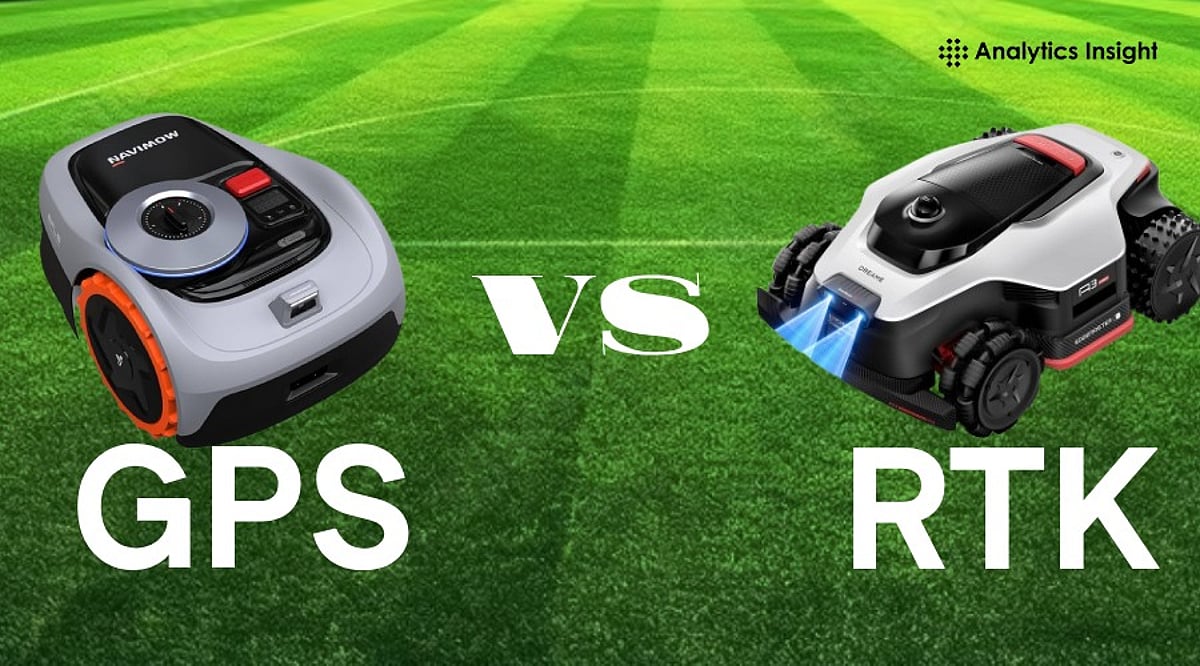
    Robot lawn mowers have transformed yard maintenance, letting homeowners automate grass cutting without manual effort. Two leading technologies dominate the market: GPS-based mowers and RTK (Real-Time Kinematic) mowers. While both offer hands-free operation, they differ significantly in accuracy, cost, and ideal use cases. This guide breaks down their differences and helps you choose the best mower for your lawn in 2026.

    GPS vs RTK: Core Differences

    A GPS robot mower relies on standard satellite positioning to navigate your yard. Many models create a digital map and operate without boundary wires. In contrast, an RTK mower uses satellite signals plus a correction station (base station or network) to achieve centimeter-level accuracy.

    Pros of GPS Mowers

    • More affordable than RTK models
    • Easy setup and minimal technical knowledge required
    • Works well on small to medium lawns
    • Good for homeowners seeking a budget-friendly automation solution

    Cons of GPS Mowers

    • Less precise navigation; mowing paths may appear uneven
    • Can struggle near tall trees, buildings, or other obstructions
    • May overlap or miss areas
    • Not ideal for complex or large lawns

    Pros of RTK Mowers

    • Extremely accurate positioning — down to a few centimeters
    • Creates straight, organized mowing lines for a professional look
    • Efficiently covers large lawns and multiple zones
    • Fewer missed spots and less unnecessary overlap

    Cons of RTK Mowers

    • Higher upfront cost
    • Setup can be more involved (may require a base station or network connection)
    • Performance depends on good satellite reception

    How to Choose the Right Robot Mower in 2026

    Your choice should align with your lawn size, layout, and budget. Here are key considerations:

    • Small yards: A GPS mower is usually sufficient. It keeps grass short without the extra expense of RTK.
    • Medium lawns: If the yard has many paths, trees, or flower beds, an RTK mower can save time and deliver cleaner results. For simple layouts, GPS still works well.
    • Large properties: RTK is the better option. Its high accuracy reduces overlap and covers large areas efficiently.
    • Battery life: Ensure the mower can finish most of your lawn on a single charge. Larger lawns need larger batteries.
    • App features: Look for a mobile app that allows scheduling, zone creation, and tracking.
    • Future needs: If you plan to move or redesign your yard, investing in RTK now may be worthwhile.
    • Support and updates: Choose a brand with reliable customer support and regular software updates.

    Final Verdict

    Both GPS and RTK robot mowers save time and reduce effort. GPS mowers are ideal for homeowners who want a simple, affordable solution for small to medium lawns. RTK mowers suit those who demand high accuracy, clean mowing patterns, and strong performance on larger or more complex properties. There is no universal best — measure your lawn, set a budget, and decide how much precision you truly need. With the right choice, you can enjoy a well-maintained lawn with minimal effort for years to come.

  • Top 100W GaN Chargers for Laptops in 2026: Compact, Fast, and Efficient

    Top 100W GaN Chargers for Laptops in 2026: Compact, Fast, and Efficient

    Need one charger for all your devices? The latest 100W GaN chargers are smaller, faster, and more efficient than ever. Here are the top picks for powering laptops, phones, and tablets in 2026.

    Best 100W GaN Chargers for Laptops

    • Anker Prime 100W GaN Charger: Anker’s premium charger offers four ports, ultra-fast charging, and excellent thermal management for everyday professionals.
    • UGREEN Nexode 100W: This compact charger supports USB-C PD 3.1 and can charge multiple devices simultaneously without sacrificing speed.
    • Baseus GaN5 Pro 100W: Featuring intelligent power distribution and a travel-friendly design, it’s ideal for frequent travelers.
    • Belkin BoostCharge Pro 100W: Belkin combines premium build quality with reliable fast charging for MacBooks, Windows laptops, and smartphones.
    • Satechi 100W USB-C GaN Charger: Designed for creators and professionals, Satechi offers premium aesthetics and stable multi-device charging.
    • Spigen ArcStation Pro 100W: A lightweight charger featuring GaN technology for efficient charging while reducing heat generation.
    • INIU 100W GaN Charger: A budget-friendly option delivering impressive performance with multiple charging ports and compact portability.

    How to Choose a 100W GaN Charger

    Look for PD 3.1 support, multiple USB-C ports, thermal protection, and international voltage compatibility to ensure you get the best performance and safety.

  • iPhone 18 Pro Max 1TB Expected to Set New Price Record in India

    iPhone 18 Pro Max 1TB Expected to Set New Price Record in India

    Apple’s upcoming iPhone 18 Pro Max could become the company’s most expensive smartphone ever sold in India, with the 1TB storage variant reportedly crossing the ₹2 lakh mark. According to recent leaks, the price hike is driven primarily by rising memory and component costs rather than new hardware features.

    Early estimates from Digit suggest the top-tier model will see a significant jump over the iPhone 17 Pro series, contradicting earlier rumors that Apple might keep pricing similar to the previous generation. The shift reflects growing pressure from global supply chain expenses, especially for high-capacity memory modules.

    If the leaks prove accurate, buyers will pay a premium not only for performance but also for the status and storage capacity of the 1TB version. The final price will be confirmed at launch, but early indications point to a major repositioning of the Pro Max as an ultra-premium device.