Author: vitorcherulli

  • XRP Faces Mounting Selling Pressure as Ripple Inks Kansas Athletics Sponsorship Deal

    XRP Faces Mounting Selling Pressure as Ripple Inks Kansas Athletics Sponsorship Deal

    XRP continued to face selling pressure as declining derivatives activity and weak on-chain signals pointed to softer market conditions, according to CryptoQuant. At the same time, Ripple expanded XRP’s public visibility through a major U.S. college sports partnership, while adoption continued to grow in parts of Asia. Despite those developments, XRP traded near $1.06 during the latest market update, and institutional products also recorded fresh outflows.

    CryptoQuant Data Points to Weak Market Participation

    CryptoQuant reported that XRP Open Interest fell to $350.6 million, one of its lowest levels in recent months. The decline showed traders closed futures positions and reduced leverage across the market. Although falling Open Interest can sometimes reduce selling pressure by removing leveraged positions, CryptoQuant said current conditions differ. Instead, capital continues to leave the broader XRP market, limiting the potential for a stronger recovery.

    The analytics firm also said traders continue to exit positions without fresh capital replacing them. As a result, overall market participation has weakened, while sellers have maintained control. On-chain data presented a similar picture. XRP’s Network Value to Transactions (NVT) Ratio remained elevated at 162.86, suggesting network activity has not increased enough to support the asset’s market valuation.

    CryptoQuant stated that the combination of lower open interest and a persistently high NVT ratio reflected declining investor risk appetite. Consequently, market participants appeared exhausted, leaving XRP price action tilted toward sellers. Meanwhile, U.S.-based spot XRP exchange-traded funds recorded $7.3 million in net outflows on July 8. Even so, the products generally performed better than comparable Bitcoin and Ethereum funds during the same period.

    Adoption Continues Despite Market Weakness

    Despite weaker trading conditions, XRP continued to gain traction in several Asian markets. Earlier this week, Japan’s SBI VC Trade said companies increasingly added XRP alongside Bitcoin to treasury reserves and shareholder benefit programs. Likewise, XRP remained one of the most actively traded cryptocurrencies in South Korea. Those developments continued even as broader market participation declined.

    Ripple Expands XRP Presence Through Kansas Athletics

    Ripple also increased XRP’s public exposure by securing the first cryptocurrency sponsorship of a major U.S. college athletics program. The company signed a multi-year jersey patch agreement with Kansas Athletics. Beginning this fall, Jayhawks uniforms across all university sports will display the XRP logo. The agreement also makes XRP the official cryptocurrency of Kansas Athletics.

    Furthermore, the partnership extends beyond uniform branding. Kansas said the collaboration will support financial and technology education for student-athletes and the wider campus community. The agreement covers football, basketball, baseball, golf, and other Jayhawks programs. Therefore, Ripple will gain exposure across Big 12 sporting events, digital platforms, and event signage.

    Kansas Athletic Director Travis Goff described the partnership as part of the school’s effort to pursue forward-looking commercial opportunities. Ripple CEO Brad Garlinghouse also maintains close ties to the university as a Kansas alumnus and Topeka native. The partnership arrives as college athletics continues to pursue new revenue opportunities. According to Sports Business Journal, the five-year Ripple agreement ranks among the more lucrative jersey patch deals completed since recent NCAA policy changes allowed corporate logos on team uniforms.

    What’s Next?

    XRP remained under selling pressure as Open Interest declined, on-chain activity stayed weak, and spot XRP ETFs posted fresh outflows. Meanwhile, Ripple expanded XRP’s visibility through its Kansas Athletics partnership, while adoption continued to grow in Japan and South Korea despite softer market conditions.


  • Samsung Galaxy Z Fold 8 Appears in Spider-Man Teaser Ahead of Unpacked 2026

    Samsung Galaxy Z Fold 8 Appears in Spider-Man Teaser Ahead of Unpacked 2026

    Samsung has sparked intense speculation after a foldable phone resembling the Galaxy Z Fold 8 appeared in a teaser for Spider-Man: Brand New Day — just days before the company’s Galaxy Unpacked 2026 event. The brief clip, posted across Samsung’s social media channels as part of a Marvel collaboration, shows Spider-Man interacting with an unreleased-looking foldable device for a few seconds before cutting away. While Samsung has not confirmed the gadget’s identity, the fleeting glimpse has set the rumor mill ablaze.

    The phone seen in the teaser appears noticeably thicker and shorter than previous Galaxy Z Fold models, with a thinner overall profile, an updated button layout, and a redesigned rear camera module. These details align with recent leaks suggesting Samsung plans a full redesign for the Galaxy Z Fold 8 series rather than an incremental upgrade. Samsung’s invitation for Unpacked 2026, which promises ‘A New Shape Unfolds,’ further fuels the anticipation.

    Samsung has not officially confirmed that the device in the Spider-Man promo is the Galaxy Z Fold 8. Instead, the company has framed the teaser exclusively as a collaboration with the upcoming Marvel film, leaving product announcements for Unpacked. Still, fans widely believe the timing is intentional and that Samsung is offering a subtle preview of its next-generation foldable.

    Galaxy Unpacked 2026 is scheduled for July 22 in London, where Samsung is expected to unveil the Galaxy Z Fold 8, Galaxy Z Fold 8 Ultra, and Galaxy Z Flip 8. The standard Fold will emphasize size, while the Ultra model will boast improved cameras and premium hardware. Until that event, the Spider-Man teaser remains additional fuel for Samsung’s marketing campaign.

  • iPhone 18 Pro Max Component Costs Could Rise by Nearly $300, Driven by Memory and Chip Price Hikes

    iPhone 18 Pro Max Component Costs Could Rise by Nearly $300, Driven by Memory and Chip Price Hikes

    Apple’s next flagship smartphone may come with a significantly higher production cost. According to a new report from Counterpoint Research, the bill of materials for a 1TB iPhone 18 Pro Max could be nearly $300 more than that of the 1TB iPhone 17 Pro Max. The primary reason: surging prices for memory chips and the new A20 Pro processor.

    What’s Driving the Cost Increase?

    The largest contributor is the rising cost of NAND flash storage and DRAM. NAND alone could exceed $250 per unit on the 1TB model, a figure approaching the total component cost of an entire older-generation iPhone. Memory chips are currently in short supply due to increased demand from AI-enabled smartphones and AI server infrastructure.

    The iPhone 18 Pro Max is expected to feature 12GB of RAM, up from 8GB on the current model, further adding to cost. The A20 Pro chip, likely the first phone chip built on TSMC’s new 2nm process node, is also more expensive to manufacture than its predecessor.

    Offsetting Savings and Price Adjustments

    Not all components will see price increases. The display and certain other parts may actually become cheaper. Camera costs could rise, possibly due to the introduction of a variable aperture lens. Apple is expected to adjust pricing differently across storage tiers to maintain profit margins on higher-capacity models.

    What to Expect at Launch

    The iPhone 18 Pro series is anticipated to launch in September. Average price increases could land around $200, with the largest jumps reserved for the top storage configurations. Apple has not yet announced official pricing.

    For more details, read the full report from Counterpoint Research.

  • Ethereum Holds Key Support Above $1,770 Amid Geopolitical Tensions and AI Security Advances

    Ethereum Holds Key Support Above $1,770 Amid Geopolitical Tensions and AI Security Advances

    Ethereum (ETH) maintained its position above critical support levels on July 10, 2026, trading at $1,779.23 — a 1.58% daily gain — even as rising geopolitical tensions in the Middle East dampened overall market sentiment. The cryptocurrency held above both its 20-day moving average ($1,759) and 50-day moving average ($1,747) on the four-hour chart, though it remained below the longer-term 200-day moving average at $2,240.

    Middle East Tensions Weigh on Crypto Demand

    Renewed conflict in the Middle East, including reports of Iranian fire on civilian shipping near the Strait of Hormuz and subsequent U.S. airstrikes, prompted investors to shift capital into traditional safe-haven assets. According to Cryptonews, this flight to safety reduced demand for Ethereum and other cryptocurrencies. Traders are closely monitoring the situation for any signs that could influence market direction.

    Technical Indicators Present Mixed Signals

    Immediate support appears near the Ichimoku Kijun level at $1,773. The Relative Strength Index (RSI) stands at 56.97, indicating some buying interest. However, the Moving Average Convergence Divergence (MACD) has generated a strong sell signal, while the Average Directional Index (ADX) remains neutral. The Stochastic RSI and Bull/Bear Power suggest overbought conditions, whereas the Commodity Channel Index (CCI) and Awesome Oscillator point to a neutral market. Analysts expect ETH to trade between $1,725 and $1,847 in the next two to three sessions. A breakout above $1,847 could confirm upward momentum, while a drop below $1,725 might increase selling pressure.

    Ethereum Foundation Advances AI Security Research

    Separately, the Ethereum Foundation’s Protocol Security team revealed that validating genuine software vulnerabilities has become the biggest challenge in AI-assisted security research. AI agents identify many potential issues, but most require extensive verification. The Foundation reported that coordinated AI testing uncovered real flaws across Ethereum’s software systems, including a remotely triggerable panic in the gossipsub component of libp2p, which underpins the peer-to-peer networking layer. That vulnerability was fixed before being disclosed as CVE-2026-34219.

    Multi-Agent System Improves Verification

    The Foundation now treats AI agents as hypothesis generators rather than decision-makers. They inspect source code, trace execution paths, and prepare proof-of-concept material. To improve reliability, multiple AI agents are assigned to the same software repository, each performing a separate role. Reconnaissance agents identify attack surfaces, hunting agents attempt to create reproductions, gap-filling agents track accepted and rejected reports to avoid duplication, and validation agents independently review findings. Each accepted report must include a reachable target, a security invariant, an explanation of the failure mechanism, observable evidence, a self-contained reproducer, and a deduplication key. This rigorous process ensures that researchers can verify every claim directly against production code.

    What’s Next for Ethereum?

    Ethereum remains above key technical support despite weaker demand from geopolitical uncertainty. The Foundation’s AI security research continues to evolve, improving vulnerability verification. Traders will watch the $1,725–$1,847 range for the next significant move. A sustained break above $1,847 could signal a bullish trend, while a fall below $1,725 may trigger further downside.

  • Dark Craft: The Indie RPG That Blends Minecraft Building with Souls-Like Combat

    Dark Craft: The Indie RPG That Blends Minecraft Building with Souls-Like Combat

    A new indie title, Dark Craft, is generating buzz by promising to fuse the creative freedom of Minecraft with the punishing combat of Elden Ring. Developer Take Top Entertainment has announced the free-to-play MMORPG, which is now available for wishlisting on Steam.

    Set in a grim dark-fantasy world, Dark Craft features block-art characters and a vast open environment where players gather resources, craft tools, and build shelters — all while facing brutal enemies and massive bosses. The game emphasizes exploration and preparation, with dungeons hiding rare loot and deadly secrets. This blend of sandbox creativity and challenging action aims to offer a unique experience that stands apart from the modern AAA market.

    The comparison to Minecraft and Elden Ring is intentional. Minecraft represents endless building and survival, while Elden Ring symbolizes tough, methodical combat in a dark world. By combining these elements, Dark Craft hopes to capture the imagination of players who crave both freedom and difficulty. No release date has been announced yet, but the game’s Steam page is live for those who want to follow its progress.

    As smaller indie titles continue to prove that strong gameplay can outshine big budgets, Dark Craft positions itself as a potential standout in the indie fantasy RPG space.

  • Meta to Begin Production of Custom Iris AI Chip in September, Targets 14 GW Computing Capacity

    Meta to Begin Production of Custom Iris AI Chip in September, Targets 14 GW Computing Capacity

    Meta Platforms has announced plans to begin production of its in-house artificial intelligence chip, code-named Iris, in September as part of a broader strategy to expand custom hardware development and reduce reliance on external suppliers. The move, outlined in an internal company memo reviewed by Reuters, aims to boost Meta’s computing capacity to 14 gigawatts next year while supporting the growing demands of AI workloads across Facebook, Instagram, and other services.

    Iris AI Chip: A Step Forward for Meta’s MTIA Program

    The Iris chip is part of Meta’s MTIA (Meta Training and Inference Accelerator) program. According to the memo, the chip completed bug testing in just six weeks with no major issues—a notable achievement for a program that has faced earlier delays since its launch over five years ago. Broadcom is assisting with design, while Taiwan Semiconductor Manufacturing Co (TSMC) is expected to handle production. The chip will not immediately replace GPUs from Nvidia and AMD but will complement them, supporting large-scale AI training and inference workloads.

    The memo notes that adopting the latest GPUs at Meta’s scale “has been a heavy lift, and it has cost us time,” underscoring the company’s push for greater control over its AI hardware stack. Meta declined to comment on the Reuters report.

    Computing Capacity Expansion: 14 GW by Next Year

    Meta plans to deploy 7 gigawatts of computing infrastructure this year, having added 1 gigawatt in the first half and expecting to add another 5.5 gigawatts by year-end. The company then aims to double total capacity to 14 gigawatts next year. To put that in perspective, 1 gigawatt can power approximately 800,000 homes, highlighting the immense energy requirements of large-scale AI data centers.

    This expansion comes as major tech firms ramp up AI infrastructure spending. Meta expects to spend up to $145 billion on AI infrastructure this year, part of a projected $700 billion in Big Tech spending on AI technology.

    Reducing Supplier Dependence with Custom Silicon

    Meta’s custom chip initiative is designed to reduce cost pressures tied to purchasing advanced AI chips from external suppliers like Nvidia and AMD. It also enables faster hardware iteration: Meta unveiled Iris under its technical name in March, along with three other AI processors, and plans to release a new chip roughly every six months through 2027—a much faster cycle than the industry standard of one year or more.

    Mike Gualtieri, a vice president and principal analyst at Forrester, commented, “You can’t become an AI titan if you are dependent on another company for chips.” He added that hyperscalers and SpaceX are also pursuing custom chip designs as model usage becomes more price-driven.

    Long-Term Supply Deals Support Data Center Growth

    To support its data center buildout, Meta has secured multi-year supply agreements with Samsung Electronics for memory chips, Sandisk for flash storage, and Sumitomo Electric for fiber-optic equipment. These deals are critical as AI demand strains the global chip supply chain, driving up prices for memory, storage, and AI processors. Sandisk declined to comment, while Samsung and Sumitomo Electric did not respond to Reuters requests.

    Morgan Stanley analysts have described rising chip and memory prices as “chipflation,” a broader concern for the technology sector. Meanwhile, companies like Apple have raised prices on some products amid memory supply constraints.

    Meta shares initially fell after the Reuters report but later recovered, trading up 4.6% in late afternoon trading after the company announced developer access to an AI coding model that competes with tools from OpenAI and Anthropic.

  • Mark Zuckerberg Ends 3-Year X Hiatus to Unveil Meta’s Muse Spark 1.1 AI Model

    Mark Zuckerberg Ends 3-Year X Hiatus to Unveil Meta’s Muse Spark 1.1 AI Model

    Mark Zuckerberg has made a surprising return to X (formerly Twitter) after more than three years of silence, using the platform to launch Meta’s latest artificial intelligence model, Muse Spark 1.1. The announcement signals Meta’s aggressive push into enterprise AI, targeting developers with advanced coding capabilities, automation tools, and multi-agent coordination.

    Key Highlights of the Launch

    Zuckerberg’s post on X was brief, but the substance behind it is significant. The Muse Spark 1.1 model is designed for coding tasks, software development, and running AI agents. Developers can access the model through Meta’s new proprietary API, the Meta Model API—the company’s first such offering in the United States. This move positions Meta to compete directly with OpenAI and Anthropic for developer market share.

    Technical Capabilities

    Muse Spark 1.1 can handle complex tasks with ease, including integration with third-party tools. It features a context window of up to 1 million tokens, meaning it can retain and process a massive amount of information in a single session. The model can also run multiple AI agents simultaneously across desktop, mobile, and browser platforms.

    Key functionalities include:

    • Writing and debugging code
    • Automating workflows
    • Processing text, images, and video
    • Multi-agent coordination for complex tasks

    Pricing and Availability

    Meta is offering developers free credits to get started, with pay-as-you-go pricing afterward. Reports indicate the cost is $1.25 per million input tokens and $4.25 per million output tokens. The model will also be integrated into Meta’s own apps, including a new ‘Thinking’ mode coming soon to the Meta AI app and website.

    Strategic Implications

    The launch of Muse Spark 1.1 places Meta squarely in the race for AI dominance. The company is betting that its strong memory and multi-agent capabilities will attract developers away from established players. Looking ahead, Meta plans to integrate the model into WhatsApp, Instagram, Facebook, and its smart glasses, giving it a reach that few competitors can match.

    While ultimate success will depend on real-world performance, Zuckerberg’s surprise return to X has already succeeded in putting Meta’s AI ambitions back in the spotlight.

  • North Carolina Enacts Landmark Law Recognizing Federal Oversight of Prediction Markets

    North Carolina Enacts Landmark Law Recognizing Federal Oversight of Prediction Markets

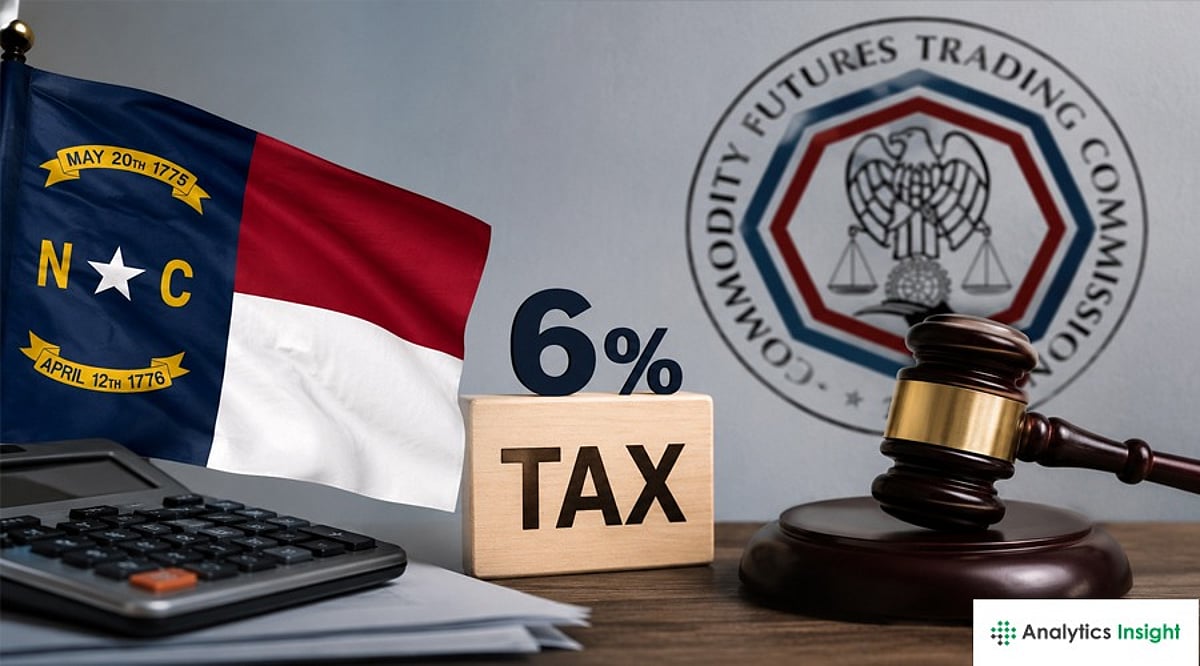
    North Carolina has become the first U.S. state to formally recognize federal oversight of prediction markets in state law, allowing platforms such as Kalshi and Polymarket to operate legally if they register with the Commodity Futures Trading Commission (CFTC). The change is part of Senate Bill 257, known as Session Law 2026-41, which is included in the state’s roughly $34 billion budget.

    The measure introduces a 6% tax on net revenue from transactions involving North Carolina residents starting January 1, 2027, while eliminating separate state licensing requirements for CFTC-registered operators. This development comes as prediction market platforms continue to defend their operations against legal challenges in several states.

    Budget Creates New Framework for Prediction Markets

    The new law relies on the Commodity Exchange Act, which grants the CFTC exclusive federal regulatory authority over prediction markets. As a result, CFTC-registered operators meet North Carolina’s regulatory requirements without seeking additional state licenses or complying with separate gaming rules.

    Instead, the legislation requires prediction market operators to pay a 6% tax on net revenue earned from North Carolina users starting in 2027. Meanwhile, the same budget raises the sports betting tax to 23% of gross betting revenue from the previous 18%. Licensed sportsbooks also continue to pay a $1 million licensing fee to operate in the state, while prediction market platforms do not face that cost under the new framework.

    Critics have questioned the difference between the tax rates. Mick Mulvaney, who leads Gambling Is Not Investing and previously served as acting White House chief of staff, told Axios that prediction markets operate as unlicensed sports gambling applications. He also argued that the policy could encourage operators to bypass state gambling rules while allowing minors to participate in sports-related markets.

    Lawmakers Weigh Revenue and Industry Impact

    Republican leaders described the measure as recognition of existing market activity. House Speaker Destin Hall said prediction market activity already occurs in North Carolina and that lawmakers decided it was time to address it. Senate leader Phil Berger also commented on the industry’s future but stopped short of predicting whether prediction markets could eventually replace traditional sports betting.

    Some Democrats expressed concerns despite supporting the overall budget. Senator Julie Mayfield warned that sports betting revenue could decline if operators shift toward prediction markets. According to WRAL, North Carolina has collected more than $287 million from sports betting since legalization in March 2024. The report also noted that the University of North Carolina and North Carolina State University may each receive up to $5.8 million annually to support athletic programs.

    Other States Continue Legal Challenges

    Gaming analyst Dustin Gouker wrote in his Next Event Horizon newsletter that North Carolina became the first state to allow CFTC-approved prediction markets without requiring separate state licensing. He described the law as affirming federal oversight while applying a relatively low tax rate and predicted that other states could consider similar legislation.

    Other states have adopted different approaches. Kentucky introduced a 14.25% excise tax in April, prompting legal action from the CFTC. Illinois later approved taxes on betting transactions while maintaining state licensing requirements, after which Kalshi filed a lawsuit.

    Court decisions have also varied. Kalshi secured preliminary injunctions in New Jersey and Tennessee, which the Third Circuit upheld in April. However, the company lost similar cases in Maryland, Nevada, Arizona, Ohio, and recently in New York, where Judge Analisa Torres ruled that Kalshi had not demonstrated a likely success under federal preemption law.

    Kalshi has appealed that decision to the Second Circuit Court of Appeals. Sports law attorney Daniel Wallach said the ruling could affect the company’s remaining legal disputes. Meanwhile, the CFTC has challenged nine states over event contracts, and some legal observers believe the issue could ultimately reach the U.S. Supreme Court.

    North Carolina Attorney General Jeff Jackson also signed an April letter opposing federal regulation, according to Axios. Even so, the state’s budget focuses on taxation while broader legal questions continue in federal courts. A Polymarket spokesperson told Axios that the company follows CFTC rules and expects state regulation efforts to face significant federal preemption challenges.

    What’s Next?

    North Carolina has become the first state to recognize federal oversight of prediction markets through state law. The measure allows CFTC-registered platforms to operate without separate licenses while introducing a 6% tax. Meanwhile, legal disputes over federal authority and state regulation continue across several jurisdictions.

  • Anthropic Cracks Down on Chinese Firms Using VPNs to Access Claude AI

    Anthropic Cracks Down on Chinese Firms Using VPNs to Access Claude AI

    Anthropic is tightening access controls for its Claude AI assistant after discovering that Chinese companies have been using overseas entities, VPNs, and personal subscriptions to bypass a strict regional ban. The company explicitly blocks access from unsupported regions, including China, but firms such as Ant Financial and ByteDance reportedly found workarounds to keep Claude available to their engineers.

    Ant Financial provided some employees with corporate Claude accounts through its intranet, linked to a Singapore-based entity. ByteDance allowed engineers to pay for personal Claude subscriptions and seek reimbursement, routing access through VPNs. Microsoft also sold API access to Chinese companies with Singapore entities, enabling mainland engineers to use Claude through internal networks.

    While these methods violate Anthropic’s terms of service, they do not break US or Chinese law. Anthropic stated that it “explicitly prohibits accessing or facilitating access to Claude in unsupported regions, including China” and uses “changing detection systems to find and ban accounts that break its rules.”

    The company is also targeting “transfer station” services that route requests from mainland China through overseas Claude accounts, making access appear to come from supported regions. Smaller users may rely on these services, but larger Chinese AI companies often avoid them due to fears that operators could store, copy, or resell prompts, especially when working with private code and internal data.

    Claude Code has drawn strong demand from Chinese engineers because its coding outputs can support distillation—a process where smaller AI models learn to copy the behavior of stronger systems. This makes the tool valuable for firms trying to improve local models.

    Meanwhile, China’s National Vulnerability Database flagged several Claude Code versions released between April and June, saying they can send user location and identity data to remote servers without clear consent. The database listed versions 2.1.91 to 2.1.196 as affected, describing the issue as “security backdoor vulnerabilities” and a “serious threat.”

    Anthropic rejected the backdoor label, stating that the disputed function was an anti-abuse experiment meant to detect unauthorized users. It denied that Claude Code contained spyware or a tool built for secret surveillance. The dispute now links two separate issues: Anthropic’s effort to block Chinese access and China’s warning over Claude Code. Both sides frame the matter through security, but they point to different risks.

  • Tencent in Talks to Lead $2 Billion Manus Buyback After China Blocks Meta Acquisition

    Tencent in Talks to Lead $2 Billion Manus Buyback After China Blocks Meta Acquisition

    Tencent is in discussions to become the largest shareholder in AI startup Manus, as a group of investors orchestrates a $2 billion buyback following Chinese regulators’ order for Meta to unwind its acquisition of the company. The move would return Manus to domestic backers, with Tencent holding a minority stake to avoid a single investor gaining full control, according to people familiar with the matter.

    Manus, which develops AI agents capable of completing multi-step tasks with minimal human intervention, has been at the center of China’s rapidly evolving AI sector. The buyback plan involves Tencent working with earlier investors such as ZhenFund and HSG (formerly Sequoia Capital China) to repurchase the startup from Meta for no less than $2 billion. The final structure remains fluid, with new investors potentially joining and some earlier backers like Benchmark likely opting out.

    China’s Regulatory Blockade

    Meta announced its intention to acquire Manus in December 2024 as part of its push into agentic AI, valuing the startup at over $2 billion. However, Beijing opened a national security review in April and subsequently ordered Meta to unwind the transaction, citing the company’s Chinese roots and its role in AI development. Although Manus had relocated its operations from China to Singapore in 2025, regulators treated it as part of China’s AI ecosystem, reflecting tighter oversight of cross-border technology deals involving entities with Chinese origins.

    Following the order, Meta separated its operations from Manus and ceased data sharing, paving the way for earlier investors to consider buying the company back.

    Manus’s Rise and Financial Performance

    Manus gained prominence last year after releasing what it called “the world’s first general AI agent.” Chinese state media and tech commentators often compared the company to DeepSeek, another AI darling that captured widespread attention. The startup’s AI agents are designed to handle complex, multi-step tasks with limited supervision, a capability that has become a key battleground for major tech firms.

    Financially, Manus’s revenue reportedly surged after the Meta deal. Chinese-language reports claim annualized revenue grew to between $400 million and $500 million, up from roughly $100 million before the acquisition. These figures have not been independently verified.

    For Tencent, the potential stake strengthens its exposure to Chinese AI companies without taking full ownership. For Manus, the buyback shifts its shareholder base back toward domestic investors after a blocked sale to a U.S. technology giant.