Author: vitorcherulli

  • India to Introduce Comprehensive AI Legislation Targeting Deepfakes and Liability

    India to Introduce Comprehensive AI Legislation Targeting Deepfakes and Liability

    India is preparing to introduce a new artificial intelligence law as the technology’s adoption accelerates across the country. While AI simplifies many tasks, it also introduces challenges that existing regulations are ill-equipped to handle.

    The Ministry of Electronics and Information Technology has begun consulting with experts to draft a legal framework that specifically addresses AI-related issues. Officials believe current laws, written before AI became widespread, cannot adequately cover emerging problems such as deepfakes, algorithmic bias, copyright disputes, and accountability for AI-caused harm.

    Why India Needs a Dedicated AI Law

    One of the most pressing concerns is the proliferation of deepfakes. AI can generate realistic fake videos, audio recordings, and images that can be used for fraud, misinformation, or identity theft. Once such content spreads on social media, it becomes difficult to control. Current regulations require platforms to remove illegal AI content after a court order and to label AI-generated material in certain cases, but officials believe these measures are insufficient given the speed of technological change.

    Accountability is another major issue. AI systems sometimes make decisions that even their developers cannot fully explain, creating ambiguity when something goes wrong. For example, if an AI-powered medical robot makes a surgical error or a self-driving vehicle causes an accident, existing Indian law does not clearly assign responsibility. The new law aims to remove this confusion by establishing clear legal liability.

    Key Challenges the New Rules May Address

    Copyright: AI can now create stories, music, art, software, and other content, yet many AI models train on copyrighted material without permission. The government is studying how copyright law should apply in the AI era.

    Algorithmic Bias: AI systems learn from data, and if that data contains biases, the AI can produce unfair outcomes. This can affect hiring, lending, insurance, and other essential services. New rules may require companies to make AI systems more transparent and equitable.

    How the New AI Law Could Help

    A comprehensive AI law would enhance online safety, provide clear guidelines for businesses, and build public trust in AI while fostering innovation in healthcare, education, banking, and other sectors. The government continues to solicit expert input before finalizing the draft. Once enacted, this legislation could represent one of India’s most significant efforts to curb deepfakes, cyber threats, improve AI accountability, and ensure safe AI deployment.

  • Apple Scales Up Foldable iPhone Ultra Production Targets to 10 Million Units

    Apple Scales Up Foldable iPhone Ultra Production Targets to 10 Million Units

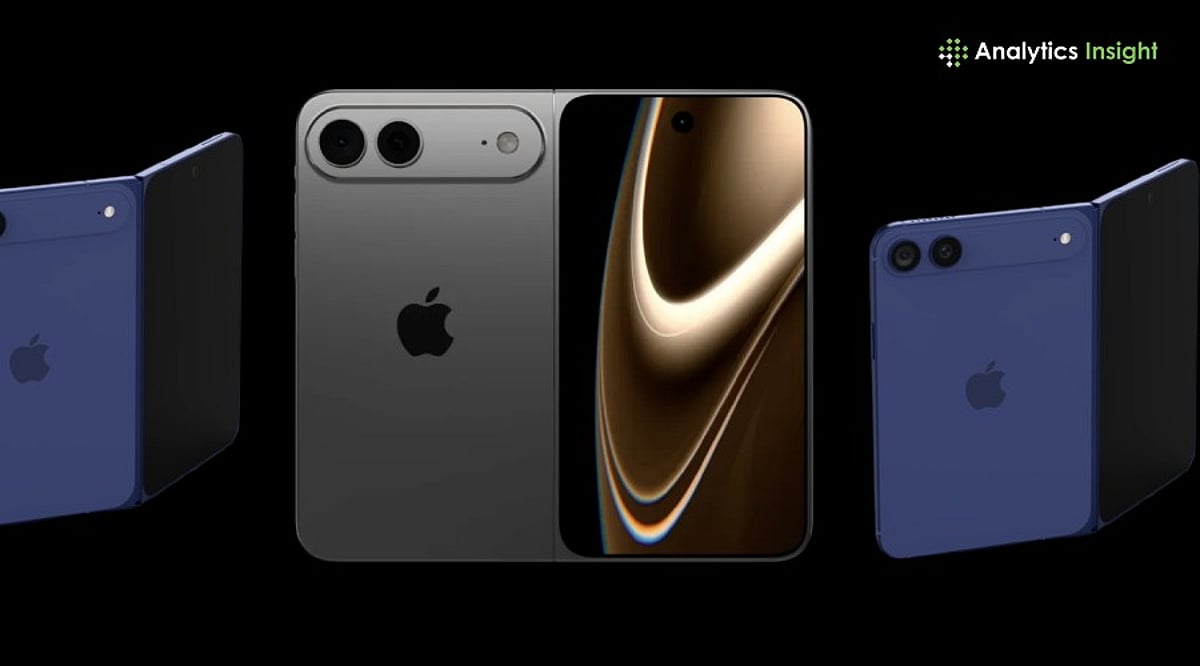
    Apple is reportedly increasing its manufacturing plans for the company’s first foldable smartphone, widely expected to launch as the iPhone Ultra. According to sources cited by Nikkei Asia and 9to5Mac, the tech giant has asked suppliers to prepare for the production of nearly 10 million units of the foldable device—up from earlier estimates of 7–8 million. This ramp-up signals stronger-than-expected confidence in demand for the premium product.

    In addition to the foldable model, Apple plans to manufacture over 70 million units of the iPhone 18 Pro and iPhone 18 Pro Max, bringing total premium iPhone production to roughly 80 million units in the second half of 2026. The company’s overall iPhone production target for the year is reportedly around 220 million units, with IDC estimating it could reach 240 million. Apple has also instructed suppliers to stockpile certain components for the iPhone 18 Pro models.

    The foldable iPhone Ultra is expected to be the most expensive iPhone ever, with IDC pegging its base price at approximately $2,500 (around ₹2.38 lakh). Versions with higher storage capacity could cost up to $3,000. Apple is expected to unveil the iPhone 18 Pro, iPhone 18 Pro Max, and the foldable iPhone Ultra at its traditional September 2026 launch event, though the foldable model may ship later due to its complex manufacturing process. Reports also suggest the standard iPhone 18 could be delayed until spring 2027.

  • Dogecoin Holds Near $0.077 as Whales Accumulate and Derivatives Activity Slows

    Dogecoin Holds Near $0.077 as Whales Accumulate and Derivatives Activity Slows

    Dogecoin traded near $0.0770 on Monday as the meme coin held a tight range following Friday’s 4% rebound. Retail activity cooled, derivatives volume declined, and whale wallets increased their DOGE holdings. Traders now watch whether buyers can clear resistance near $0.0770 and extend the move toward $0.085.

    DOGE Traders Hold Back as Volume Slips

    Dogecoin futures open interest stayed near $1.03 billion on Monday, according to CoinGlass data. That level showed that contract holders kept a wait-and-see approach during the last 24 hours. At the same time, the DOGE funding rate stood at 0.0089%, indicating traders still paid a premium for long positions, which pointed to broadly bullish positioning.

    Even so, derivatives volume dropped by more than 5% over the same period. That decline showed weaker trading activity and matched the cautious tone across the DOGE market.

    Whale Holdings Rise as On-Chain Signals Improve

    Large-wallet investors with more than 1 billion DOGE increased their holdings to 73.85 billion tokens, up from 72.73 billion tokens on Thursday. Still, whale holdings moved sideways over the last two days. Whale transactions also fell to 12 on Sunday, down sharply from 47 on Friday.

    Meanwhile, the share of DOGE supply in profit rose to 38.51% from 23.7% last week. Active Dogecoin addresses also climbed to 50,000, compared with 40,000 only days earlier.

    DogeOS, Supply Debate, and Key Price Levels

    Developers continue to work on the proposed DogeOS upgrade. The proposal seeks to add zero-knowledge proof verification through an opcode called OP_CHECKZKP. If approved, Dogecoin could gain layer-2 rollups and Ethereum Virtual Machine compatibility without a hard fork. That change could support DeFi, gaming, and identity applications on the network.

    Regulation also remains in focus as the proposed U.S. CLARITY Act carries about a 55% chance of passing. Some investors believe the bill could classify Dogecoin as a digital commodity and support future spot DOGE ETF products.

    The Dogecoin community also continues to discuss its inflation structure. A recent GitHub proposal calls for block rewards to fall from 10,000 DOGE to 1,000 DOGE. That change would reduce annual DOGE supply growth to 500 million tokens from 5 billion tokens. At the same time, daily trading volume stood near $978 million.

    From the chart, buyers need to defend the $0.075 support area. A move above $0.080 to $0.082 would improve confidence, while a break above the 100-day moving average near $0.094 would provide stronger confirmation of a recovery.

    What’s Next?

    Dogecoin remains near $0.077 as whales increase their holdings while retail trading activity slows. Derivatives volume has weakened, but funding rates show bullish positioning. The next move depends on key support and resistance levels, DogeOS progress, and CLARITY Act developments that could shape broader DOGE market confidence.

  • Ather Energy Eyes $200 Million QIP to Boost EV Expansion in India

    Ather Energy Eyes $200 Million QIP to Boost EV Expansion in India

    Electric two-wheeler maker Ather Energy is reportedly preparing to raise approximately $200 million (around Rs 1,700 crore) through a qualified institutional placement (QIP) as the company seeks to strengthen its expansion plans following its listing on Indian stock exchanges earlier this year. According to sources familiar with the matter, the share sale could begin as early as next week.

    The Bengaluru-based EV manufacturer has reportedly appointed HSBC, Axis Capital, and Nomura to manage the institutional fundraising. While the final size and timing of the issue remain subject to market conditions, the offering is expected to attract both domestic and global institutional investors.

    Expansion Plans Drive Fundraising

    The fresh capital is anticipated to be used for expanding Ather Energy’s manufacturing capacity, widening its retail footprint, and accelerating the development of new electric vehicle platforms. The company has been progressively increasing its presence in India amid intensifying competition in the electric two-wheeler segment.

    Ather has made aggressive investments in production, dealer network expansion, and innovative product development, as it competes with both established automobile giants and emerging EV startups.

    Increasing Competition in the EV Industry

    India’s EV industry has become increasingly competitive with the entry of new players such as Ola Electric, TVS Motor, and Bajaj Auto. These companies have invested heavily in developing new products, distribution channels, and manufacturing facilities to meet rising consumer demand for electric vehicles.

    Analysts note that further investment will be required for companies to scale operations, improve profitability, and roll out products across various price segments, rather than focusing solely on one market tier.

    Shift in Focus from IPO

    Ather Energy’s new plan to raise funds through an institutional equity offering follows its recent IPO, signaling the company’s determination to push ahead with its expansion strategy despite intense industry competition. This sequence of fundraising efforts indicates a proactive approach to securing capital for growth initiatives.

  • Top AI Agent Frameworks for Building High-Performance Autonomous Systems in 2026

    Top AI Agent Frameworks for Building High-Performance Autonomous Systems in 2026

    Artificial intelligence has entered a new phase. AI systems previously worked like chatbots, answering questions and following simple commands. However, the recent models have become far more advanced. Modern AI agents can make decisions, solve problems, use external tools, remember past tasks, and complete complex work with little human help.

    This major shift has pushed developers and companies to look for powerful frameworks for building reliable AI agents. An AI agent framework acts like a foundation that helps manage memory, task execution, reasoning, planning, and communication with other software. Choosing the right framework is now one of the most important parts of building fast and efficient AI systems.

    LangGraph Leads in Advanced AI Workflows

    LangGraph has become one of the most popular frameworks for building advanced AI agents. Created by the team behind LangChain, it has quickly become a strong choice for production-level AI systems. The biggest strength of LangGraph is its ability to let AI agents remember previous steps while handling long and complex tasks. This makes it useful for research assistants, coding tools, customer support systems, and enterprise AI applications. The framework also gives better control over how an AI system moves from one step to another. Recent industry comparisons place LangGraph among the top frameworks for its reliability and better error handling in large-scale AI projects.

    CrewAI Works Best for Team-Based AI Systems

    CrewAI focuses on a different idea. Instead of a single AI agent doing all the work, this framework allows several AI agents to work together as a team. Each agent can take a separate role and focus on a specific task. For example, one agent can collect information, another can check facts, while another can make final decisions. This creates better task division and often leads to stronger results. By 2026, CrewAI has gained huge popularity among startups and technology companies because it is lightweight, flexible, and easy to use with Python-based systems.

    AutoGen Helps AI Agents Talk to Each Other

    AutoGen, created by Microsoft Research, has become an important framework for systems where multiple AI agents need to communicate with each other. The framework allows agents to exchange messages, share information, solve problems together, and work through complex tasks step by step. This makes it useful for software development assistants, automated coding systems, debugging tools, and advanced research systems. Its flexible structure also makes connection with external APIs and other software systems much easier for developers who need highly autonomous AI systems.

    Microsoft Agent Framework Targets Large Enterprises

    Microsoft introduced a new framework in 2026 called Microsoft Agent Framework. It acts as the next major step after earlier tools like AutoGen and Semantic Kernel. This framework focuses strongly on enterprise-level AI development. It offers better workflow control, system monitoring, memory storage, security controls, and human approval systems whenever important decisions need supervision. Large companies have started showing strong interest because this framework fits better inside regulated business environments where security and compliance remain important.

    Semantic Kernel Supports Business Integration

    Semantic Kernel remains one of the strongest options for companies that need AI systems connected with internal business software. The framework makes it easier for AI agents to access databases, cloud platforms, APIs, enterprise software, and business workflows. It works especially well for organizations that already depend heavily on Microsoft Azure services. For internal company assistants and business automation systems, Semantic Kernel continues to remain highly valuable for its strong enterprise compatibility.

    LlamaIndex Powers Knowledge-Based AI Agents

    LlamaIndex focuses on AI systems that depend heavily on large amounts of information. It helps AI agents search through documents, databases, PDFs, company records, and private knowledge libraries. This framework performs extremely well when an AI agent needs accurate information before making decisions. Research assistants, enterprise search tools, legal document analyzers, and data-heavy AI systems often rely on this framework. As businesses continue to store large amounts of digital information, frameworks like LlamaIndex have become more important than ever.

    Latest Industry Developments Show Massive Growth

    The AI industry has now moved beyond simple chatbot technology. Experts across the technology sector describe 2026 as the beginning of the AI agent era. A major example came from Cisco. The company recently announced plans to introduce AI agents across its workforce of 90,000 employees starting in August 2026. This has become one of the largest enterprise AI rollouts seen anywhere in the world so far. Another major development came from Meta Platforms. Mark Zuckerberg recently admitted that advanced AI agent development has turned out far more difficult than expected, even after large investments in AI infrastructure. At the same time, Anthropic launched Claude Sonnet 5, which many experts now describe as one of the strongest AI systems built specifically for autonomous agent tasks. This launch shows how the industry focus has shifted from simple chatbot conversations toward fully autonomous execution systems.

    AI Agents are Becoming the Future of Software

    Modern AI systems now require much more than powerful language models. Success now depends on strong memory systems, smart planning, proper task execution, reasoning ability, external tool access, and system reliability. Among current frameworks, LangGraph stands out for advanced workflow control. CrewAI performs extremely well for multi-agent teamwork. Microsoft Agent Framework and Semantic Kernel continue to attract enterprise companies, while LlamaIndex remains highly useful for knowledge-heavy AI systems. As the technology sector moves away from traditional chatbots, AI agent frameworks have started becoming the core foundation for the next generation of intelligent software.

  • Indian Stock Market Outlook: Nifty 50 Targets 24,500, Sensex Holds Key Support at 76,700

    Indian Stock Market Outlook: Nifty 50 Targets 24,500, Sensex Holds Key Support at 76,700

    Indian stock markets are expected to open on a muted note Monday amid mixed global cues. GIFT Nifty is trading at 24,332.5, indicating a flat start with a discount of 22.5 points from the previous Nifty futures close.

    On Friday, the Sensex rose 261.79 points (0.34%) to settle at 77,763.91, while the Nifty 50 advanced 95.15 points (0.39%) to finish at 24,270.85. Broader indices underperformed, with the Nifty midcap index ending marginally lower and the smallcap index flat.

    The Indian rupee opened flat at Rs. 95.23 per dollar on Monday against Friday’s close of Rs. 95.22. Foreign institutional investors (FIIs) turned net buyers on July 3, purchasing shares worth Rs. 1,355.33 crore, while domestic institutional investors (DIIs) were net sellers to the tune of Rs. 1,953.89 crore.

    Sensex Outlook

    Technically, the Sensex rose around 1% last week, forming a bullish candle on weekly charts with a higher bottom formation—a largely positive sign. “The short-term market texture is positive, but the ideal strategy for traders would be to buy on dips and sell on rallies. On the downside, 77,300 and 76,700 are key support zones, while 78,400-79,000 are key resistance areas. Below 76,700, sentiment could change, potentially retesting 76,100-75,900,” said Amol Athawale, VP Technical Research, Kotak Securities.

    Nifty 50 Outlook

    Nifty 50 has strengthened its short-term trend after closing above last month’s high. The index advanced for three consecutive sessions and finished above the critical 24,261 level. Although Friday’s trading formed a bearish candle as the market gave up some gains, the broader short-term trend remains positive.

    Bajaj Broking Research noted that “the index during the current week generated a bullish crossover of the 20- and 50-day EMA, highlighting continuation of positive momentum. In the coming session, Friday’s gap area will act as immediate support; holding above that signals an extension of the up move toward 24,380 and 24,500.” The brokerage expects Nifty to gradually move toward the 24,500-24,600 zone in the near term. A decisive break above 24,600 could target 24,800. Immediate support is near 24,050, with stronger support between 23,800 and 23,900.

    Bank Nifty Outlook

    On Friday, Bank Nifty declined 93.15 points (0.16%) to close at 57,938.50, forming a small bearish candle. For the week, the index ended with a loss of 0.41% and formed a small bearish candle on the weekly timeframe with a long lower shadow, highlighting indecisiveness.

    Bajaj Broking Research said, “A move above last week’s high of 58,400 will open further upside toward 59,200 and 60,000 in the coming weeks, being the 138.2% and 150% external retracement of the previous decline from 57,456 to 52,783. Failure to move above last week’s high is likely to keep the index consolidating within the 57,000-58,400 range.” The brokerage identified the 57,000-56,800 region as key support for Bank Nifty, adding that the broader outlook for banking stocks remains positive and any short-term consolidation could offer accumulation opportunities.

    Disclaimer: This article is for informational purposes only and does not constitute investment advice. Readers should conduct their own research before making any investment decisions.

  • MCX Gold and Silver Hold Steady as Fed Rate-Hike Bets Ease and Dollar Strengthens

    MCX Gold and Silver Hold Steady as Fed Rate-Hike Bets Ease and Dollar Strengthens

    Gold and silver prices on the Multi Commodity Exchange (MCX) remained largely unchanged on July 6, 2026, as a softer-than-expected US jobs report tempered expectations of further interest rate hikes by the Federal Reserve. However, a stronger US dollar capped gains for the precious metals.

    Domestic Prices

    August gold futures on MCX edged down by 0.02% to Rs. 1,47,351 per 10 grams, while September silver futures slipped 0.19% to Rs. 2,36,966 per kilogram. In the spot market, 24K gold fell by Rs. 11 to Rs. 1,46,620 per 10 grams, and 22K gold declined by Rs. 10 to Rs. 1,34,400. Regional prices varied slightly, with Mumbai and Kolkata quoting Rs. 1,46,620, Delhi at Rs. 1,46,770, and Chennai at Rs. 1,49,450.

    US Gold and Silver Markets

    Internationally, spot gold held steady near a two-week high at $4,174.66 per ounce, supported by a weaker dollar after last week’s job data. US gold futures for August delivery rose 1.5% to $4,186.70 per ounce. Meanwhile, spot silver fell 0.6% to $62.03 per ounce, pulling back from a June 23 high. Platinum declined 0.1% to $1,636.60 per ounce, and palladium lost 0.2% to $1,271.75 per ounce.

    Brent crude futures fell 0.41% to $71.41 a barrel, while US West Texas Intermediate (WTI) dropped 0.28% to $68.50 a barrel.

    Market Outlook and Key Levels

    According to the CME FedWatch Tool, traders now see a 55% chance of a rate hike in September, down from 60% previously. “Gold has regained some poise as markets dial back rate-hike expectations. While this provides relief on the yield front, the dollar’s strength continues to act as a ceiling,” said Tim Waterer, chief market analyst at KCM Trade.

    Manoj Kumar Jain of Prithvifinmart Commodity Research recommended buying gold on dips around Rs. 1,46,000–Rs. 1,45,000 with a stop loss below Rs. 1,43,850 for targets of Rs. 1,48,000 and Rs. 1,49,100. For silver, he suggested buying on dips around Rs. 2,34,400–Rs. 2,31,000 with a stop loss below Rs. 2,27,000 for targets of Rs. 2,41,000 and Rs. 2,44,000.

    Disclaimer: This article is for informational purposes only and does not constitute investment advice. Analytics Insight does not provide financial guidance on cryptocurrencies or stocks. Readers should conduct their own research (DYOR) before making any investment decisions.

  • 5 Underused ChatGPT Features That Can Transform Your Workflow

    5 Underused ChatGPT Features That Can Transform Your Workflow

    Memory – Personalized Conversations

    ChatGPT’s Memory feature remembers your preferences across conversations. You can ask it to remember your writing style, favorite topics, or preferred response format. This eliminates the need to repeat instructions every time. You also remain in complete control, with the ability to review, update, or delete saved memories whenever you choose.

    Projects – Stay Organized

    Projects allow you to group related chats, files, and instructions into one workspace. Whether you’re writing a book, managing research, or creating content, Projects maintain context across multiple conversations. This keeps information organized, reduces repetition, and makes long-term work more efficient by preserving continuity throughout your workflow.

    Analyze Files Instantly

    ChatGPT can process uploaded PDFs, Word documents, Excel sheets, CSV files, and presentations. Instead of manually reviewing lengthy documents, you can ask it to summarize reports, identify trends, compare files, extract insights, or explain complex data. This feature makes document analysis faster, easier, and more accurate for professionals and students alike.

    Voice Mode for Natural Conversations

    Voice Mode enables hands-free conversations with ChatGPT, making interactions feel more natural. You can brainstorm ideas, practice interviews, learn languages, or ask questions while multitasking. Speaking instead of typing creates a smoother experience and allows users to engage with AI more conversationally and efficiently.

    Generate and Edit Images

    ChatGPT can create high-quality images from simple text prompts. It also edits existing images by changing styles, removing backgrounds, improving quality, or adding new elements. Whether you’re designing social media graphics, marketing visuals, presentations, or creative artwork, this feature expands ChatGPT beyond text into visual content creation.

    Bonus Tip – Refine Every Response

    The first answer isn’t always the final one. Ask ChatGPT to make responses shorter, more detailed, professional, beginner-friendly, or more creative. Request alternatives, challenge assumptions, or improve clarity through follow-up prompts. Treat ChatGPT as a collaborative assistant, and you’ll consistently receive more useful, polished, and personalized results.

  • Bitcoin Reclaims $63,251 as ETF Inflows Return and CLARITY Act Stalls – July 6 Market Update

    Bitcoin Reclaims $63,251 as ETF Inflows Return and CLARITY Act Stalls – July 6 Market Update

    Bitcoin is trading near $63,251.48, up 0.68% over 24 hours and 5.91% higher on the week, as spot ETF inflows return after a record outflow streak in June. The token has climbed above its late-June lows near $58,000, with a market cap of approximately $1.26 trillion and 24-hour volume near $19.28 billion.

    Hyperliquid and BNB lead today’s gainers, while the CLARITY Act misses its symbolic July 4 signing deadline in the Senate. The Fear and Greed Index sits at 28, still cautious but improving from June’s extreme fear reading of 18.

    Market Dynamics and Analyst Commentary

    Akshat Siddhant, Lead Quant Analyst at Mudrex, noted: “Bitcoin climbed sharply over the weekend as thin liquidity during the holiday period amplified buying activity. Sentiment improved after spot ETFs attracted $224 million in net inflows, ending a six-day outflow streak. Bitcoin’s realized profit-and-loss ratio dropped to its lowest level in 43 months, a metric that has historically marked major bottoms. Mondays have stayed weak recently, so a failure to hold $64,000 could send BTC back toward $60,500.”

    Riya Sehgal, Research Analyst at Delta Exchange, added: “Bitcoin’s rebound has been supported by short covering and a weaker dollar after oil prices eased. US spot Bitcoin ETFs saw $223.5 million in net inflows on July 2, reversing the prior day’s $296 million outflow. Ethereum ETFs logged a second straight positive day. BTC stays capped below its 200 EMA near $63,920, making $64,000 the key breakout level.”

    According to the CoinSwitch Markets Desk: “BTC is holding near its highest level in two weeks after a modest bounce, but it has struggled below this zone for weeks. The Fed releases its meeting notes soon, and a hawkish tone could pressure prices again. Wednesday’s Fed update remains the one to watch.”

    Top 10 Crypto Prices at a Glance (July 6)

    • Biggest Gainers: Hyperliquid (+3.71%), BNB (+2.25%)
    • Biggest Losers: Solana (+0.13%), XRP (+0.48%)

    Key Crypto News Driving Sentiment

    Spot Bitcoin ETFs Snap Outflow Streak

    Spot Bitcoin ETFs recorded $223.5 million in net inflows this week, reversing a prior single-day outflow of nearly $300 million. Spot Ethereum ETFs also logged a second straight day of positive flows, signaling improving institutional appetite after June’s record redemptions.

    CLARITY Act Misses July 4 Deadline

    The White House had targeted July 4 for signing the CLARITY Act into law. Senate cloture math remains short of the 60 votes needed, and prediction markets have trimmed 2026 passage odds. A House Financial Services Committee hearing is expected later this month.

    Satoshi’s Bitcoin Freeze Debate Resurfaces

    Binance founder Changpeng Zhao suggested Satoshi Nakamoto’s estimated 1.1 million BTC should be frozen before quantum computing advances threaten old wallets. The proposal has split the community, with critics calling it a violation of Bitcoin’s core neutrality principle.

    Aptos Blockchain Flaw Patched After Disclosure

    Security researchers identified a critical flaw in the Aptos blockchain that could have exposed roughly $70 billion in crypto assets. The bug has since been patched, and the disclosure has renewed attention on smart contract audits across major chains.

    Investor and Market Outlook

    Bitcoin enters the second week of July in a cautiously improving position. The Fear and Greed Index sits at 28, still guarded but well above June’s extreme fear reading of 18. ETF inflows are returning, though a sustained move above $64,000 remains the key confirmation traders want before calling a firm bottom.

    The macro calendar stays active this week, with Fed meeting notes due and the CLARITY Act’s Senate path still unresolved. Investors should track daily ETF flow data, Bitcoin’s ability to hold above $60,500, and any fresh signal on the July 29 FOMC decision. Avoiding excess leverage remains the practical priority until $64,000 is reclaimed with volume.

    Frequently Asked Questions

    What is the Bitcoin price today? Bitcoin is trading near $63,251.48 today, up 0.68% over the past 24 hours and 5.91% higher on the week. Support holds near $60,500, while resistance sits at $64,000.

    Why is Bitcoin recovering in July 2026? Spot Bitcoin ETFs snapped a six-day outflow streak after fresh inflows arrived this week, easing the selling pressure that pushed BTC to a 21-month low in June. Improving on-chain metrics have also supported the bounce.

    What is the biggest crypto news today? The CLARITY Act missing its symbolic July 4 signing deadline, returning spot ETF inflows across Bitcoin and Ethereum, and the resurfacing debate over freezing Satoshi Nakamoto’s dormant wallet are the top stories driving sentiment today.

    Which coins are gaining the most today? Hyperliquid leads the top ten with a 3.71% gain, supported by rising on-chain trading volume. BNB follows closely at 2.25%, while Solana and XRP trail the broader market with smaller single-day moves.

    What should crypto investors watch this week? Monitor daily spot ETF flow data closely, along with any signal from the Fed’s upcoming meeting notes. Bitcoin’s ability to hold above $60,500 and reclaim $64,000 with strong volume remains the key technical trigger heading into late July.

  • Apple’s Foldable iPhone Poised to Reshape Premium Smartphone Market by 2026

    Apple’s Foldable iPhone Poised to Reshape Premium Smartphone Market by 2026

    Apple’s anticipated entry into the foldable smartphone market is expected to significantly boost competition and drive up average selling prices (ASPs) across the segment, according to new research from Counterpoint. Although Apple has yet to officially announce a foldable device, mounting anticipation is already influencing market dynamics, prompting rivals like Samsung, Huawei, Google, and Xiaomi to accelerate their own foldable launches.

    Counterpoint Research forecasts global foldable smartphone shipments will approach 28 million units this year, with Apple’s debut likely pushing the category’s ASP from $1,255 in 2025 to $1,485 in 2026—an 18% increase. The foldable segment’s total revenue could surge by 48% as a result.

    Book-Type Foldables Gain Premium Position

    Industry analysts expect Apple’s foldable to adopt a book-type, wide-screen design rather than a clamshell form factor. This approach is seen as better suited for reading and productivity, and aligns with Apple’s emphasis on consistent app display standards across its ecosystem.

    Counterpoint notes a growing divergence between foldable formats. Clamshell devices are becoming more affordable as production scales and more brands enter the space. In contrast, book-type foldables remain firmly in the luxury segment, with manufacturers enhancing displays, hinges, batteries, cameras, and productivity features.

    “Apple’s entry into the foldable market is also expected to further boost the upward ASP trend by keeping market attention on high-priced segments,” Counterpoint stated. The firm added that this will “increase interest in software continuity, app support, and productivity across foldable categories and help establish foldables as a higher-value segment within the smartphone market.”

    Premium Price Band May Expand

    According to Counterpoint, the share of foldables priced between $1,600 and $2,000 could nearly double from 30% in 2025 to 58% in 2026. Meanwhile, the portion of devices exceeding $2,000 is expected to decline slightly from 3% to 2%.

    Apple’s own foldable is likely to sit in its ultra-premium tier, with estimated ASPs around $2,500 or higher depending on configuration.

    Challenges Remain for Foldables

    Despite more than seven years of development, foldable phones still face hurdles including inner-screen flatness, protective film durability, hinge reliability, and optimal app performance across inner and outer displays.

    Manufacturers also believe foldables need compelling use cases in office workflows, AI, and photography. While Apple’s move could elevate the category’s profile, the long-term success of foldables will depend on delivering a clearly superior user experience compared to standard premium smartphones.