Author: vitorcherulli

  • Crypto Market Recap: Bitcoin ETF Inflows Surge, Ethereum Funds Gain, Polygon Hits Record Transactions

    Crypto Market Recap: Bitcoin ETF Inflows Surge, Ethereum Funds Gain, Polygon Hits Record Transactions

    The cryptocurrency market witnessed significant activity as Bitcoin spot ETFs recorded $221.72 million in net inflows, Ethereum spot ETFs added $29.08 million, and Polygon reached a historic milestone of 743 million transactions in Q2 2026. Meanwhile, eToro led a $12.5 million funding round for Extended, and Stripe’s Bridge secured key European licenses.

    Bitcoin ETFs See $221 Million Inflow

    According to SoSoValue, Bitcoin spot ETFs saw a total net inflow of $221.72 million on the latest trading day. Fidelity’s FBTC led with $165.96 million in daily inflows, bringing its historical total to $10.24 billion. Ark Invest and 21Shares’ ARKB followed with $91.84 million, accumulating $1.26 billion historically. BlackRock’s IBIT experienced the largest outflow at $40.43 million, yet its historical net inflow remains strong at $59.99 billion. The total net asset value of Bitcoin spot ETFs now stands at $74.37 billion, with a net asset ratio of 6.02% and cumulative inflows reaching $51.08 billion.

    Polygon Achieves All-Time High in Transactions

    Polygon’s Q2 2026 closed with a record-breaking 743 million transactions on its network. In May 2026 alone, the network processed $79.25 billion in stablecoin transfer volume, ranking first across the blockchain ecosystem for stable asset transactions, surpassing Solana and BNB Chain. Despite this activity, POL trades near $0.073, far below its all-time high of $1.29 from March 2024.

    Ethereum Spot ETFs Add $29 Million

    Ethereum spot ETFs recorded total net inflows of $29.08 million yesterday. BlackRock’s ETHA led with $29.74 million in single-day inflows, while VanEck’s ETHV added $1.24 million, bringing its historical total to $165 million. Grayscale’s ETHE saw outflows of $2.75 million. The total net asset value of Ethereum spot ETFs is $9.02 billion, with a 4.38% net asset ratio and cumulative historical inflows of $10.89 billion.

    eToro Leads $12.5 Million Strategic Round in Extended

    Trading platform eToro led a $12.5 million strategic investment in Extended, an on-chain perpetual futures exchange. The investment is tied to a partnership with Zengo, a self-custody wallet eToro acquired earlier this year. eToro stated the partnership will “expand access to global financial markets through next-generation on-chain infrastructure” and explore bridging traditional assets with decentralized trading. Jump Crypto also participated in the round.

    Stripe’s Bridge Secures MiCA and EMI Licenses

    Bridge obtained both a Markets in Crypto-Assets (MiCA) authorization and an Electronic Money Institution (EMI) license in Luxembourg, enabling regulated services across all 27 EU member states. The licenses cover capital reserves, custody, and operational safeguards. Bridge can now offer custom euro-backed stablecoins, virtual IBANs, and euro accounts without requiring separate banking relationships in each country.

  • Drone Warfare Economics: How Cheap UAVs Are Disrupting Military Strategy and India’s Defense Future

    Drone Warfare Economics: How Cheap UAVs Are Disrupting Military Strategy and India’s Defense Future

    The battlefield is undergoing a profound transformation as inexpensive, mass-produced drones challenge the dominance of costly military hardware. From the Russia-Ukraine conflict to tensions in West Asia, unmanned aerial vehicles (UAVs) are rewriting the rules of engagement, forcing nations to rethink defense budgets, strategies, and the very nature of national security.

    In a recent episode of the Analytics Insight Podcast, host Priya Dialani sat down with Sai Pattabhiram, Founder and Managing Director of Zuppa Geo Navigation Technologies, to explore how drones are reshaping modern warfare and the economics that underpin it. The conversation spanned the global rise of UAVs, India’s push for indigenous drone technology, the role of artificial intelligence, and the strategic imperative of building a resilient domestic drone ecosystem. Here are the key takeaways.

    Why Drones Are Game Changers

    Pattabhiram highlights the revolutionary cost asymmetry: a $3,000 drone can neutralize tanks, missiles, or air defense systems worth millions. This democratization of offensive capability is shifting power from resource-heavy militaries to those that can innovate and mass-produce low-cost platforms.

    The Russia-Ukraine War: A Turning Point

    The prolonged conflict in Ukraine has demonstrated that swarms of cheap drones can sustain long-drawn battles. Nations now recognize that mass-production capabilities, combined with rapid innovation and upgrades, are as critical as high-end weaponry. The war has upended traditional defense thinking, emphasizing volume and adaptability over sheer sophistication.

    India’s Need for Indigenous Drone Manufacturing

    India’s heavy reliance on imported drone components raises logistical and cybersecurity vulnerabilities. Pattabhiram argues that developing homegrown technologies enhances national security, reduces dependency on foreign suppliers, and positions India as a potential defense manufacturing hub for other nations. Building a self-sufficient drone ecosystem is both a strategic and economic priority.

    AI: The Brain Behind Future Drones

    Artificial intelligence is set to supercharge drone capabilities. AI enables autonomous flight, target identification, operations without GPS, and coordinated swarming. These intelligent systems increase efficiency, reduce human workload, and open new tactical possibilities. Pattabhiram predicts that AI-driven autonomy will be the defining factor in future drone warfare.

    Shaping Future Conflicts

    Future wars will likely be longer, more technologically complex, and fought from greater distances. Drones allow states to project power without committing large ground forces, while simultaneously bolstering defensive positions. The advantage will go to those who achieve technological superiority—and that race is already underway.

    Listen to the full podcast episode at Analytics Insight.

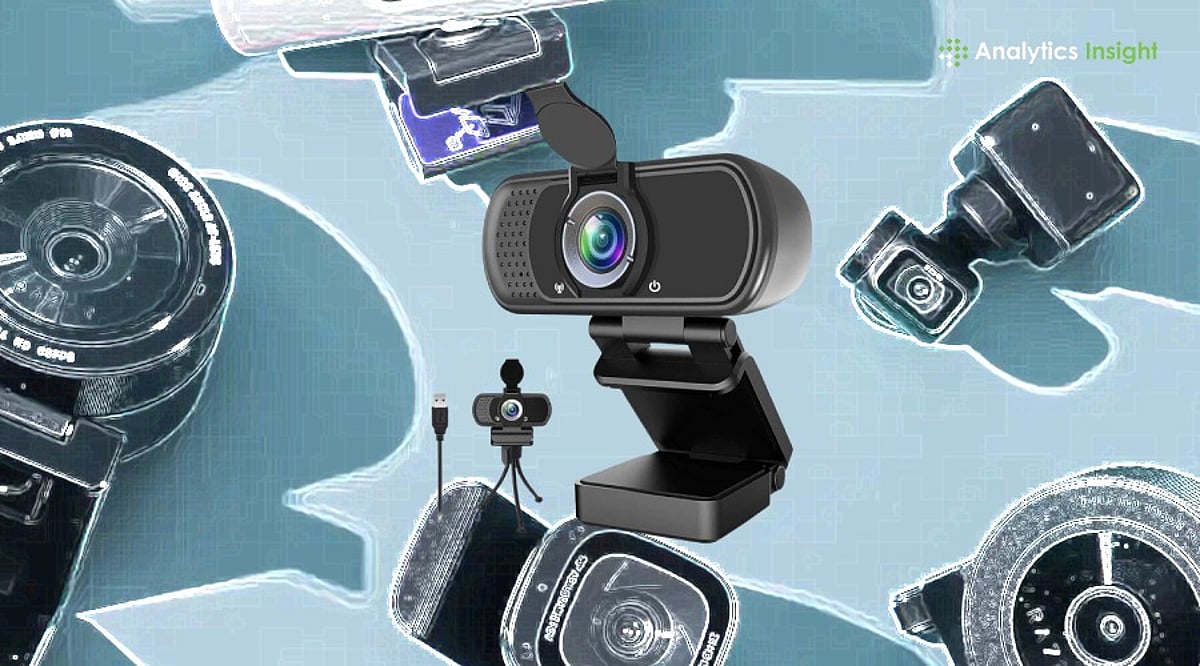
  • Crystal-Clear Video Calls: Best Webcams for Work, Streaming, and Everyday Use

    Crystal-Clear Video Calls: Best Webcams for Work, Streaming, and Everyday Use

    A quality webcam can make you look more confident on screen. Whether you’re joining a work meeting, attending an online class, talking to family, or streaming live, clear video always leaves a better impression. The right webcam doesn’t just improve picture quality—it also makes conversations feel more natural and helps people see you the way you should be seen.

    Screen time has changed dramatically in recent years. Office meetings, college classes, job interviews, and even family catch-ups now happen through a camera. This shift has made a good webcam far more useful than ever. It keeps your picture clear, holds the video steady, and makes conversations feel natural rather than distant.

    You don’t need expensive gear to get sharp photos or videos anymore. Brands like Logitech, HP, Lenovo, eMeet, Kreo, and Zebronics now offer webcams across almost every budget. Some suit everyday meetings well, while others are built for streamers, content creators, and anyone who records videos regularly.

    Top-Rated Webcams Compared

    Webcams are now a staple of modern office and gaming setups. If the video is blurry, it defeats the purpose. After testing several popular models, our team found that paying more doesn’t always mean getting the best output. For daily meetings or classes, a Full HD webcam is usually enough. Streamers and creators, however, will benefit from investing in a 4K option.

    Ease of use is another crucial factor. Most of these webcams work as soon as you plug them in, with no extra software required for the first call.

    Our Top Picks

    Logitech Brio 100 – Best for Everyday Use

    The Logitech Brio 100 has almost everything you need for daily video calls. The picture is clear, colors are natural, and setup takes only a few minutes. It’s one of the easiest recommendations for work, online meetings, and regular video calls.

    eMeet S600 4K PC Camera – Best for Creators

    If you’re doing YouTube videos or streaming games, the eMeet S600 is an excellent choice. The 4K picture is noticeably sharper than Full HD, and the built-in microphones pick up voices clearly. It costs more but delivers great value for money.

    HP 430 FHD Webcam – Best for Low-Light Conditions

    The HP 430 FHD impressed us with its ability to handle challenging lighting. Even in a dim room, the picture remained clear. This makes it a fantastic option for people who work from home and don’t have perfect lighting setups.

    If you’re on a tight budget, the Zebronics FHD USB Webcam covers the basics well and offers solid value.

    Final Thoughts

    A webcam may seem like a small accessory, but it makes a big difference every time you’re on screen. Better picture quality boosts your confidence whether you’re talking to clients, attending classes, or creating videos.

    Don’t fall into the trap of buying the most expensive model you can afford. Instead, consider how you’ll use it. For regular use, a decent Full HD webcam is more than sufficient. Creators and streamers, however, should consider 4K options. Ultimately, a good webcam combines picture quality, useful features, and dependable performance—regardless of price.

    FAQs

    Which webcam is best for office meetings?

    The Logitech Brio 100 is a top choice. It offers clear Full HD video, natural colors, and quick setup, making it ideal for everyday use.

    Is a 4K webcam necessary for video calls?

    Not really. Full HD is enough for most meetings and classes. 4K is more useful for streamers, creators, and regular video recording.

    What features should I check before buying a webcam?

    Look for Full HD or 4K resolution, autofocus, a built-in microphone, good low-light performance, and a privacy shutter. These features improve video quality and everyday convenience.

    Do I need a separate microphone with a webcam?

    Most webcams have built-in mics that work fine for regular calls. For video creation or frequent streaming, a dedicated microphone will provide better sound.

    Which webcam offers the best value for money?

    The HP 430 FHD and Logitech Brio 100 offer an excellent mix of picture quality, features, and price. Both are suitable for work, study, and regular video calls.

  • How Leading Companies Are Redefining Leadership Development in 2026

    How Leading Companies Are Redefining Leadership Development in 2026

    The definition of corporate leadership is rapidly evolving. By 2026, organizations are no longer grooming executives simply to deliver quarterly results. Instead, they are cultivating leaders who can drive digital transformation, navigate uncertainty, harness artificial intelligence, and build resilient teams. As technology reshapes every industry, leadership development now revolves around lifelong learning, mentorship, global exposure, and data-driven decision-making.

    Companies that excel in this arena create work environments that encourage experimentation, collaboration, and strategic thinking. Below, we explore how nine of the world’s most influential organizations are setting the benchmark for next-generation leadership.

    Leadership Development Moves Beyond Traditional Training

    The era of classroom-only leadership training is over. Today’s best employers embed learning into daily operations through AI-powered learning platforms, executive coaching, cross-functional projects, and international assignments. Employees gain hands-on experience solving real business problems rather than working through theoretical case studies. Equally important is the renewed emphasis on soft skills: emotional intelligence, adaptability, communication, ethical judgment, and resilience are now as critical as technical expertise.

    Companies Setting the Benchmark

    Microsoft

    Microsoft continues to position itself as a leadership powerhouse by fostering an AI-first workplace culture. Employees have access to advanced learning resources, leadership coaching, and opportunities to collaborate with global teams. The company’s relentless focus on innovation allows individuals to deepen their technical skills while sharpening strategic thinking.

    Amazon

    Amazon’s famous Leadership Principles remain central to employee development. Team members are expected to take ownership, think long term, and make customer-centric decisions. Internal mobility and challenging business assignments help professionals gain the experience needed before stepping into senior leadership roles.

    Alphabet

    Alphabet encourages leadership growth by giving employees autonomy to innovate, experiment, and learn from outcomes. A collaborative culture sparks creative thinking and cross-functional teamwork, even when projects are complex. Exposure to cutting-edge tools and technologies prepares emerging leaders to tackle tough business problems with confidence.

    NVIDIA

    With the rapid rise of AI, NVIDIA has become a hub for technological innovation. Employees work in a fast-paced environment where agility, technical rigor, and continuous learning are paramount. This exposure helps future leaders build strategic decision-making skills in highly competitive markets.

    JPMorgan Chase

    As banking embraces AI and digital modernization, JPMorgan Chase has broadened its leadership development beyond traditional finance. Employees now lead technology-driven initiatives while reinforcing strong risk controls, innovative thinking, and customer-centric judgment.

    Deloitte

    Deloitte’s consulting ecosystem offers professionals ongoing exposure to diverse industries, clients, and real-world business challenges. This breadth sharpens strategic thinking, communication, and problem-solving abilities, making employees well-suited for leadership roles in a changing sector.

    PwC

    PwC invests heavily in structured learning tracks focusing on digital skills, sustainability, and responsible leadership. Employees receive mentoring, certifications, and team-based projects that build the ability to lead transformation efforts effectively.

    EY

    EY emphasizes inclusive leadership and future-ready capabilities. Employees participate in leadership academies, global mobility programs, and innovation-driven assignments, equipping them to manage diverse teams and navigate shifting business environments.

    IBM

    IBM remains a strong supporter of technology leaders. Combining decades of enterprise expertise with ongoing investment in AI, cloud computing, and digital skills, IBM enables employees to develop leadership strengths alongside technical excellence.

    Common Traits Behind Their Success

    Despite operating in different industries, these organizations share several characteristics: a commitment to continuous learning, mentorship, cross-functional collaboration, and real-world problem-solving. They prioritize emotional intelligence and adaptability as much as technical prowess.

    Why This Matters

    For professionals planning long-term careers, choosing the right employer is akin to choosing the right learning environment. Organizations that invest in leadership development offer smoother career progression, stronger mentoring relationships, and more opportunities to lead high-impact initiatives. As AI continues to reshape industries, leadership will depend less on hierarchy and more on adaptability, shared thinking, and a commitment to growth.

    By building these strengths now, companies are not only preparing their teams for the future—they are shaping the next generation of executives who will define the global business landscape.

  • Tech Funds Fuel $1 Billion US Equity Rebound After Heavy Outflows

    Tech Funds Fuel $1 Billion US Equity Rebound After Heavy Outflows

    US equity funds attracted net inflows of $1.03 billion for the week ending July 1, reversing part of the prior week’s $3.47 billion in withdrawals. The return to buying was led by technology sector funds, which drew $3.42 billion after investors had pulled nearly $20 billion from the group the week before. The shift came as softer-than-expected June jobs data lowered expectations for a near-term Federal Reserve rate hike.

    According to fund flow data, large-cap funds absorbed $7.2 billion in net new money, while financial funds added $1.96 billion and healthcare funds received $1.47 billion. However, the recovery was not broad-based. Small-cap funds saw $694 million in outflows, mid-cap funds lost $2.1 billion, and equity income funds recorded withdrawals of $1.33 billion. This suggests that investor confidence remains concentrated in larger, more liquid names and selected sectors.

    The labor report played a key role in the sentiment shift. The US economy added only 57,000 new jobs in June, below market expectations, and previous months’ payroll figures were revised downward. The data reduced the likelihood that the Federal Reserve would raise interest rates before year-end, encouraging a move back into equities, particularly technology stocks that had been sold off sharply.

    Bond and money market funds also saw strong demand. US bond funds attracted a net $9.88 billion, extending their inflow streak to 11 consecutive weeks. Short-to-intermediate investment-grade bonds took in $4.22 billion, while general domestic taxable fixed-income funds added $3.53 billion. In contrast, short-to-intermediate government and Treasury funds experienced $2.1 billion in outflows. Money market funds recorded the largest weekly allocation in four weeks at $47.82 billion, reflecting cautious positioning ahead of the payroll data and ongoing inflation uncertainty.

    The cautious mood was also influenced by supply chain disruptions linked to the closure of the Strait of Hormuz, which have forced vessel rerouting and raised concerns about transport costs adding to future inflation. James Rossiter of TD Securities identified shipping as a major risk for the year.

    Global equity markets rose on Friday following the weak US jobs data. The MSCI world index gained 0.4% and was on track for a weekly rise of about 2%, its best performance in two months. Europe’s STOXX 600 rose 0.6% to a record high, heading for a 2.6% weekly gain. David Morrison of Trade Nation noted that European shares have benefited from lower valuations and less exposure to the artificial intelligence trade, questioning whether highly valued US tech stocks can continue to lead global gains.

    Asian markets also advanced, with chip stocks rebounding. South Korea’s KOSPI surged roughly 6%, while Japan’s Nikkei rose 1.5%. Purchasing managers’ data showed expansion across major Asian economies. Gold climbed 1% to above $4,160 an ounce, heading for a 1.8% weekly gain. The dollar paused after hitting its highest level in over a year. Brent crude edged up 0.45% to $71.12 a barrel. US markets were closed Friday for the Independence Day holiday.

    Looking ahead, investors are expected to focus on upcoming inflation and economic data for clues about the Fed’s next policy move. Technology stocks may continue to lead gains if economic conditions remain supportive, but the narrow nature of the current equity recovery suggests caution may persist.

  • Apple Ushers in a New Innovation Wave: Foldables, AI, and Beyond

    Apple Ushers in a New Innovation Wave: Foldables, AI, and Beyond

    Apple is gearing up for its most significant product overhaul in years, with a wave of innovations spanning foldable devices, advanced artificial intelligence, and smarter wearables. Here’s a closer look at what’s coming next from the tech giant.

    Foldable iPhone

    Apple’s first foldable iPhone is expected to debut with a premium design, a larger display, and seamless multitasking capabilities, positioning it to compete directly in the growing foldable market.

    AI-Powered Siri

    The company is rebuilding Siri with advanced AI, enabling more natural conversations and boosting productivity across the entire Apple ecosystem.

    Apple Intelligence

    Apple Intelligence will power writing, image editing, notification management, and daily tasks — all while keeping user privacy at the core.

    Custom AI Chips

    Next-generation Apple chips are designed to deliver faster on-device AI performance with greater efficiency and lower power consumption.

    Smart Wearables

    Rumors suggest Apple is expanding beyond the Apple Watch with devices like the iRing and more health-focused wearables.

    Home Robotics

    Apple is reportedly exploring AI-powered home robots that can assist with everyday tasks and smart home management.

    Mixed Reality Expansion

    Following the Vision Pro, Apple is expected to introduce lighter and more affordable spatial computing devices.

    Ecosystem Integration

    Future Apple products will work more closely together, offering seamless experiences across iPhone, iPad, Mac, Watch, and Vision devices.

  • Top AI Crypto Coins to Watch in July 2026: Bittensor, Render, Fetch.ai and More

    Top AI Crypto Coins to Watch in July 2026: Bittensor, Render, Fetch.ai and More

    Artificial intelligence and blockchain continue to converge, and AI-focused cryptocurrencies are attracting strong investor interest in July 2026. Here are the best AI crypto coins to watch this month.

    Bittensor (TAO)

    Bittensor rewards developers for contributing AI models through a decentralized machine learning network.

    Render (RENDER)

    Render provides decentralized GPU computing power for AI workloads, creators, and 3D rendering.

    Fetch.ai (FET)

    Fetch.ai enables autonomous AI agents that automate tasks across finance, logistics, and smart cities.

    Near Protocol (NEAR)

    NEAR is expanding AI integrations while providing scalable infrastructure for decentralized applications.

    Akash Network (AKT)

    Akash offers decentralized cloud computing, making AI infrastructure more affordable and accessible.

    Artificial Superintelligence Alliance (ASI)

    The ASI ecosystem combines leading AI blockchain projects to build decentralized artificial intelligence.

    Internet Computer (ICP)

    ICP supports AI-powered decentralized applications with high-performance blockchain infrastructure.

    Why Investors Are Watching AI Coins

    Growing AI adoption and blockchain innovation continue driving interest in AI-focused digital assets.

  • How AI Companions Are Reshaping Human Connection in the Digital Era

    How AI Companions Are Reshaping Human Connection in the Digital Era

    AI companions are increasingly becoming a part of everyday life, helping people communicate, learn, work, and manage emotional well-being. These digital assistants are no longer just tools—they are trusted partners in daily activities.

    Many users now turn to AI companions for conversation, motivation, and mental wellness support throughout the day. Students use them for tutoring, explanations, and personalized learning experiences anytime. Professionals rely on AI assistants to summarize meetings, draft emails, and organize daily work more efficiently.

    Modern AI companions remember preferences and adapt responses, making interactions feel increasingly natural. In healthcare, they are supporting patients through medication reminders, health information, and wellness monitoring. Families are using AI assistants to manage schedules, answer questions, and support children’s education.

    However, ethical challenges such as privacy, emotional dependence, and responsible AI use remain important concerns as adoption continues to grow. As AI improves, digital companions are expected to become even more helpful, responsive, and integrated into daily life.

  • Bollywood Stars Backing AI, Fintech, and EdTech Startups: A Look at Celebrity Investors

    Bollywood Stars Backing AI, Fintech, and EdTech Startups: A Look at Celebrity Investors

    Bollywood celebrities are increasingly diversifying their portfolios beyond the silver screen, investing in cutting-edge technology startups spanning artificial intelligence, fintech, and edtech. Here is a roundup of notable Bollywood personalities who have placed strategic bets on innovative ventures.

    Shilpa Shetty – AI Wellness

    Shilpa Shetty has invested in AI-powered wellness and health technology ventures, reflecting a growing trend among celebrities to back preventive healthcare and digital fitness innovations.

    Suniel Shetty – Fintech

    Suniel Shetty has backed fintech startups focused on digital payments and financial inclusion, expanding his investment interests beyond entertainment and traditional business sectors.

    Deepika Padukone – EdTech

    Through her investment initiatives, Deepika Padukone has supported education-focused technology companies that help learners access quality digital education and skill development opportunities.

    Ranveer Singh – AI Marketing

    Ranveer Singh has invested in AI-driven consumer technology and marketing startups that enhance brand engagement through advanced analytics and personalized customer experiences.

    Madhuri Dixit – EdTech Learning

    Madhuri Dixit has backed online education platforms promoting accessible learning, combining educational innovation with technology-driven student engagement across diverse audiences.

    Ajay Devgn – AI Content

    Ajay Devgn has entered AI-enabled media technology ventures that explore content creation, production efficiency, and innovative entertainment solutions for digital-first consumers.

    Alia Bhatt – Sustainable Tech

    Alia Bhatt has invested in technology startups that combine AI with sustainability, highlighting her interest in environmentally responsible innovation and future-focused business models.

    Karan Johar – Digital Startups

    Karan Johar has expanded his investment interests into technology-led startups, supporting scalable digital businesses across entertainment, fintech, and consumer technology ecosystems.

    Riteish Deshmukh – Startup Ecosystem

    Riteish Deshmukh has actively invested in emerging startups spanning AI, fintech, and edtech, encouraging innovation while diversifying his entrepreneurial ventures beyond cinema.

    These investments underscore a broader shift where Bollywood celebrities are leveraging their influence and capital to shape the future of technology and education in India.

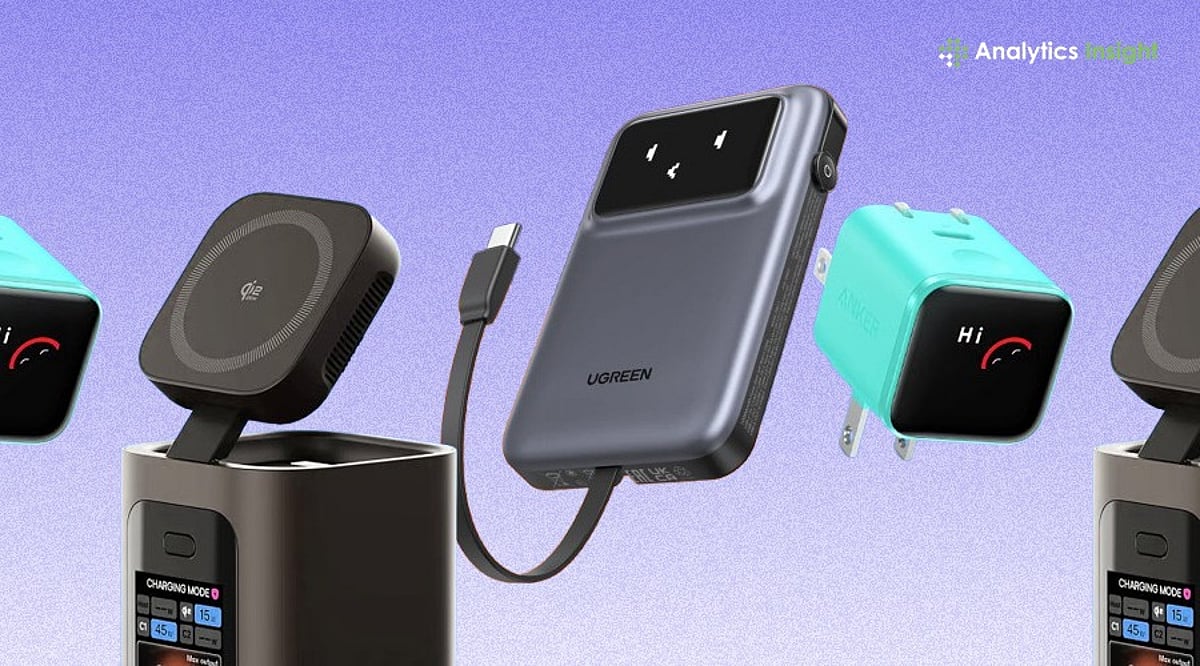
  • 2026 Portable Charger Buying Guide: Expert Tips on Capacity, Wattage, and Airline Rules

    2026 Portable Charger Buying Guide: Expert Tips on Capacity, Wattage, and Airline Rules

    Choosing the best portable charger in 2026 involves more than just looking at battery capacity. Charging speed, safety features, port compatibility, and airline regulations all play a role in selecting a reliable power bank. This expert guide breaks down everything you need to know to pick a portable charger that works for your devices and lifestyle.

    Step 1: Match the Charger to Your Use Case

    Start by identifying how you’ll use the charger. A daily commuter needs a slim, lightweight model. A traveler juggling a phone, earbuds, and a tablet needs higher capacity and multiple ports. Laptop users require high wattage output, not just a big battery. Outdoor enthusiasts need rugged builds. Matching your scenario first eliminates most of the market and prevents overpaying for unnecessary capacity.

    Step 2: Understand Capacity — mAh vs. Wh

    Manufacturers often list capacity in mAh, but watt-hours (Wh) give a truer picture, especially since airlines now calculate limits in Wh. A 20,000mAh power bank at 3.7V equals roughly 74Wh, well within travel limits. A 30,000mAh bank often exceeds 100Wh, requiring airline approval. For everyday phone use, 5,000–10,000mAh is enough. Travelers should look at 10,000–20,000mAh. Laptop charging usually needs 20,000mAh or more. Real-world output is lower due to voltage conversion and heat loss, so buy above your calculated need.

    Step 3: Check Charging Speed and USB-C PD Support

    Wattage determines how fast capacity reaches your device. A large battery with a 10W output will still charge slowly. Modern phones fast-charge between 20W and 30W. Laptops often need 60W to 100W or more via USB-C Power Delivery (PD). For simultaneous charging of a laptop and phone, a power bank with dual USB-C PD outputs and separate wattage ratings is ideal. USB-C PD is now the standard to prioritize over older proprietary formats.

    Step 4: Examine Ports, Cables, and Ecosystem Fit

    Look for at least one USB-C PD port and a USB-A port for older devices. Some power banks now include fold-out cables, eliminating the need for separate cords. Wireless options like MagSafe and Qi2 have become genuinely convenient in 2026, especially for iPhone users. If you’re deep in one ecosystem, consider accessories that integrate stands or charging docks for multiple devices.

    Step 5: Know 2026 Safety and Airline Rules

    Safety is where many buyers overlook crucial details. Since early 2026, major carriers including American, Delta, Southwest, and Lufthansa have tightened rules after a power bank fire on a runway in South Korea. New ICAO guidelines limit passengers to two power banks, ban storing them in overhead bins, and prohibit mid-flight recharging. Banks under 100Wh (about 27,000mAh) travel without approval. Those between 100Wh and 160Wh need airline sign-off; anything above 160Wh is banned. India’s aviation authority further restricts in-flight charging entirely. Frequent flyers should buy under 100Wh and keep the battery in the seat pocket. Also look for built-in protections against overheating and overcharging. Higher-quality battery cells maintain performance over more cycles. Replace any swollen or damaged battery immediately.

    Why This Matters

    The wrong charger can get flagged at airport security or fail to power your laptop. Understanding these basics upfront saves money, hassle, and the frustration of buying again.

    Quick Selection Framework

    For Apple users, weigh MagSafe or Qi2 convenience against slightly slower wireless speeds. For others, prioritize USB-C PD and multiple ports. Always check Wh for air travel.

    Final Thoughts

    The best portable charger isn’t the one with the biggest mAh number. It’s the one matched to your real use case, with enough wattage to charge fast and a Wh rating that clears airline limits. Buy for how you travel and charge, not for the spec sheet.

    Frequently Asked Questions

    1. What capacity portable charger should I buy in 2026?

    For everyday smartphone use, 5,000mAh to 10,000mAh is enough. Frequent travelers charging multiple devices should consider 10,000mAh to 20,000mAh. Laptops typically require 20,000mAh or higher with sufficient power output.

    2. Why is wattage as important as battery capacity?

    Battery capacity stores charge; wattage determines how quickly it delivers. A high-capacity charger with low output can still charge modern phones and laptops slowly.

    3. Can I carry a portable charger on a flight?

    Yes, but most airlines require portable chargers in cabin baggage, not checked luggage. Check your airline’s rules regarding Wh limits and the number of power banks allowed.

    4. Is USB-C Power Delivery necessary?

    USB-C PD is the preferred standard for most modern smartphones, tablets, and laptops. It enables faster, more efficient charging and offers broader compatibility than older technologies.

    5. How do I choose the best portable charger for my needs?

    Start by identifying your primary use case (commuting, travel, laptop charging). Then compare capacity, wattage, ports, safety features, and compatibility to select the right model.