Author: vitorcherulli

  • Key Factors for Selecting a Top Solar Panel Manufacturer

    Key Factors for Selecting a Top Solar Panel Manufacturer

    Choosing the right solar panel manufacturer is critical for long-term energy savings and system reliability. Below are the essential criteria to guide your decision.

    Manufacturer Reputation

    Research brand credibility, industry experience, customer reviews, and successful installations before selecting a manufacturer. A trusted provider ensures reliable long-term solar performance.

    Product Certifications

    Verify international quality certifications that confirm panels meet recognized safety, efficiency, durability, and environmental standards. This step is non-negotiable before making a purchase.

    Panel Efficiency

    Compare efficiency ratings to maximize electricity generation, especially when rooftop space is limited for residential or commercial installations. Higher efficiency often translates to better return on investment.

    Warranty Coverage

    Choose manufacturers offering comprehensive product and performance warranties. These protect against manufacturing defects and guarantee long-term output degradation.

    Technology Used

    Evaluate advanced technologies like TOPCon, HJT, or bifacial panels. These deliver higher efficiency, improved durability, and superior energy production capabilities.

    After-Sales Support

    Reliable technical assistance, maintenance services, and prompt warranty claims ensure hassle-free ownership throughout the solar system’s operational lifespan.

    Pricing Transparency

    Compare complete installation costs without hidden charges. Balance affordability with quality, efficiency, and long-term value for money.

    Installation Network

    Prefer manufacturers with certified installation partners. This ensures professional setup, compliance with standards, and optimal system performance after commissioning.

    Customer Reviews

    Read verified customer feedback to understand real-world performance, service quality, installation experience, and long-term satisfaction before finalizing your purchase.

  • Lenovo Launches AI Student Phone with No Browser or Social Media to Eliminate Distractions

    Lenovo Launches AI Student Phone with No Browser or Social Media to Eliminate Distractions

    Lenovo has introduced a new smartphone designed specifically for students who need a distraction-free study environment. Unlike conventional smartphones, the Lenovo AI Student Phone blocks web browsers and social media apps, focusing entirely on learning and productivity.

    The device features a 1.83-inch touchscreen with a 1,850mAh battery and is powered by AI-assisted learning tools. A dedicated physical AI button allows students to activate a voice assistant for homework help and study support. Parents gain robust control features, including app restrictions, screen time limits, Classroom mode activation, unknown caller blocking, and remote activity monitoring. If a child leaves a designated geographic boundary, parents receive an alert.

    Currently available in China at a price of approximately 299 yuan (around Rs. 4,000), the AI Student Phone represents a shift toward minimalist devices that prioritize specific functions — in this case, education — over entertainment. The move aligns with a growing trend toward digital detox and minimalist phones, as families seek to reduce screen time and improve focus.

    Lenovo’s approach highlights a broader market shift: instead of building one-size-fits-all devices, manufacturers are creating specialized gadgets tailored to particular needs. For students and parents alike, this focus on purposeful design may be the most valuable feature of all.

  • Apple Seeks Dismissal of AI Lawsuit Over YouTube Video Training – Here’s Why It Matters

    Apple Seeks Dismissal of AI Lawsuit Over YouTube Video Training – Here’s Why It Matters

    Apple has asked a US court to dismiss a lawsuit filed by three YouTube creators who accuse the company of using millions of copyrighted YouTube videos to train its artificial intelligence systems without permission. The case centers on whether publicly available online content can be legally used for AI development.

    The lawsuit, filed in April in the US District Court for the Northern District of California, was brought by the channels h3h3Productions, MrShortGame Golf, and Golfholics. They claim Apple bypassed YouTube’s download restrictions and violated the Digital Millennium Copyright Act (DMCA) by scraping their videos. The creators also argue that technology companies should not profit from creators’ work without sharing benefits or seeking consent.

    Apple’s Defense: Public Is Public

    Apple’s response emphasizes that the videos were accessible to anyone without a password, payment, or special permission. The company contends that public videos are fundamentally different from private or protected content, and that YouTube’s Terms of Service do not prohibit accessing public videos. Apple therefore argues the lawsuit lacks legal grounding and should be dismissed before proceeding to discovery.

    Legal observers note that the case could become a landmark test for copyright law in the age of artificial intelligence. A ruling could help define how companies may use public online material when training AI models, and what responsibilities they have toward content creators.

    Broader Implications for AI and Copyright

    The same trio of creators has also filed similar lawsuits against Meta, Nvidia, ByteDance, and Snap. All raise the same fundamental questions about the legality of using YouTube content for AI training. As AI companies increasingly rely on publicly available data, creators, publishers, and artists continue to push for stronger protections and fair compensation.

    The court will now decide whether to dismiss Apple’s case or allow it to proceed. Its decision could shape future rules for AI training and copyrighted content, influencing both industry practices and legislative efforts.

  • RBI Warns Against Crypto Legalization, Citing Threats to India’s Financial Stability

    RBI Warns Against Crypto Legalization, Citing Threats to India’s Financial Stability

    The Reserve Bank of India (RBI) has firmly opposed the legalization of virtual digital assets (VDAs), warning that cryptocurrencies pose significant risks to the country’s monetary and financial stability. During a parliamentary briefing on Thursday, the central bank urged lawmakers to maintain the prohibition on private crypto assets as India reviews its digital currency strategy.

    RBI Flags Crime Risks and Offshore Enforcement Gaps

    The Parliamentary Standing Committee on Finance examined virtual digital assets and possible policy responses during its seventh meeting on the subject. BJP lawmaker Bhartruhari Mahtab chaired the session, which included representatives from the RBI and the Institute of Chartered Accountants of India (ICAI). The meeting also reviewed progress in India’s central bank digital currency pilot, commonly known as the digital rupee.

    The RBI told the panel that privately issued digital assets create complex regulatory, tax, and enforcement challenges. It also warned that criminals could use digital money for terror financing, narcotics smuggling, and other illegal activities. The central bank said offshore crypto entities remain difficult for Indian authorities to track, as cross-border platforms can operate outside domestic oversight.

    To support its position, the RBI cited China and Qatar as countries that prohibit similar financial activities. It also noted that the European Union allows VDAs through a strict regulatory framework with extensive controls.

    “It is encouraging to see the RBI reinforce the critical distinction between speculative crypto assets and Real-World Asset (RWA) tokenisation before the Parliamentary Standing Committee on Finance,” said Edul Patel, CEO at Mudrex.

    ICAI Backs Regulation as Digital Rupee Adoption Slows

    ICAI supported a comprehensive legal framework for virtual digital assets instead of continued uncertainty. The accounting body said clear rules could improve financial reporting, compliance, and the treatment of VDAs across different business activities. It offered to research the various forms of digital assets and examine their economic characteristics to guide recognition, measurement, presentation, and disclosure standards within company financial statements.

    Mahtab said the RBI remained firmly against legalizing VDAs in India. He also noted that existing income tax rules already cover parts of the sector and allow authorities to examine related financial activity. The committee considered the slower adoption of the digital rupee compared with privately issued digital assets. Mahtab said the RBI’s digital asset had not achieved the same level of market traction.

    As a result, the panel examined possible policy measures that could expand India’s digital financial ecosystem while protecting consumers and financial institutions. Members also reviewed the need to safeguard the broader economy from emerging risks. The discussion covered taxation, enforcement, investor protection, offshore access, and stablecoin use. It also placed the digital rupee within India’s wider effort to promote financial innovation without weakening monetary control or financial stability.

    What’s Next?

    The RBI remains firmly opposed to crypto legalization, citing financial stability, offshore enforcement, and illicit finance risks. Meanwhile, ICAI supports a clear regulatory framework as Parliament reviews India’s digital asset policy. Lawmakers must now decide how to protect the economy while supporting responsible financial innovation.

  • Vivo X500 Leak Reveals Major Camera Upgrades with 64MP Periscope Zoom and Enhanced Low-Light Photography

    Vivo X500 Leak Reveals Major Camera Upgrades with 64MP Periscope Zoom and Enhanced Low-Light Photography

    Vivo is expected to unveil the X500 later this year, and fresh leaks suggest the company is preparing one of its biggest camera upgrades in recent years. According to information shared by tipsters on Weibo, the upcoming flagship will feature a significantly improved camera system rather than incremental yearly changes. Although Vivo has not officially confirmed the details, the leaks have already generated excitement among smartphone enthusiasts.

    The most notable upgrade is a new periscope telephoto camera designed for superior long-range zoom. The leak indicates the X500 will include a 50MP Sony primary sensor with a 1/1.28-inch sensor, a 50MP ultrawide lens, and a 64MP Sony periscope telephoto with a 1/2-inch sensor. Additionally, the device is expected to offer improvements in image processing and low-light photography.

    These reported changes mark a departure from previous generation models. Instead of simply adding another sensor, Vivo appears to be focused on enhancing the overall camera experience, including better zoom capabilities, stronger portrait photos, and faster image processing. If the leaks are accurate, the X500 will deliver noticeable improvements rather than minor tweaks.

    The leaked hardware could intensify competition in the premium smartphone market, where brands like Samsung, Apple, Xiaomi, and Oppo are increasingly prioritizing mobile photography. Camera quality has become a primary factor for consumers choosing a flagship phone, and Vivo seems to be following that trend.

    At this stage, these details remain unofficial. Vivo has yet to announce the X500’s launch date or confirm its features. However, the latest leaks suggest the company is aiming for more than a routine upgrade. If the final product matches these early reports, Vivo could have another strong flagship that stands out primarily for its camera performance.

  • Taylor Swift Files Trademarks to Shield Her Voice and Image from AI Deepfakes

    Taylor Swift Files Trademarks to Shield Her Voice and Image from AI Deepfakes

    Pop superstar Taylor Swift has submitted trademark applications for two audio clips and one photograph of herself, marking a strategic move to protect her identity from unauthorized artificial intelligence-generated deepfakes, according to a trademark attorney.

    Swift’s company, TAS Rights Management, is listed as the owner of the image and audio snippets in filings made with the US Patent and Trademark Office on Friday. The applications come amid a surge of AI-generated content that has misappropriated Swift’s voice and likeness, including explicit imagery, fake political endorsements, and deceptive advertisements.

    One of the audio samples features Swift saying, “Hey, it’s Taylor Swift, and you can listen to my new album, ‘The Life of a Showgirl,’ on demand on Amazon Music Unlimited.” The photograph she is seeking to trademark shows her performing live in a sequined costume while holding a pink guitar.

    Trademark attorney Josh Gerben, who first reported the filings on his blog, explained that these applications “are specifically designed to protect Taylor from threats posed by artificial intelligence.” He noted that while existing ‘Right of Publicity’ laws offer some protection against unauthorized use of a famous person’s likeness, “trademark filings can offer an additional layer of protection.”

    Gerben highlighted that registering a celebrity’s voice as a trademark is a novel legal strategy that has not yet been tested in court. Traditionally, vocalists have relied on copyright laws to safeguard their recorded songs. However, AI technologies now allow users to generate entirely original content that mimics an artist’s voice without copying an existing recording, creating a legal gap that trademarks might help fill.

    Similarly, the image Swift is attempting to trademark serves a comparable purpose. “Swift’s team may gain additional grounds to pursue claims against manipulated or AI-generated images that evoke her likeness by protecting a distinctive visual, down to Swift’s frequently worn jumpsuit and pose,” Gerben wrote.

    Actor Matthew McConaughey has already secured similar trademark protections. “We want to create a clear perimeter around ownership with consent and attribution the norm in an AI world,” McConaughey told the Wall Street Journal in January.

    If successful, Swift’s approach could establish a new legal standard for how public figures protect their likenesses in the age of AI, potentially shaping the future legal framework for combating AI impersonation in the entertainment industry.

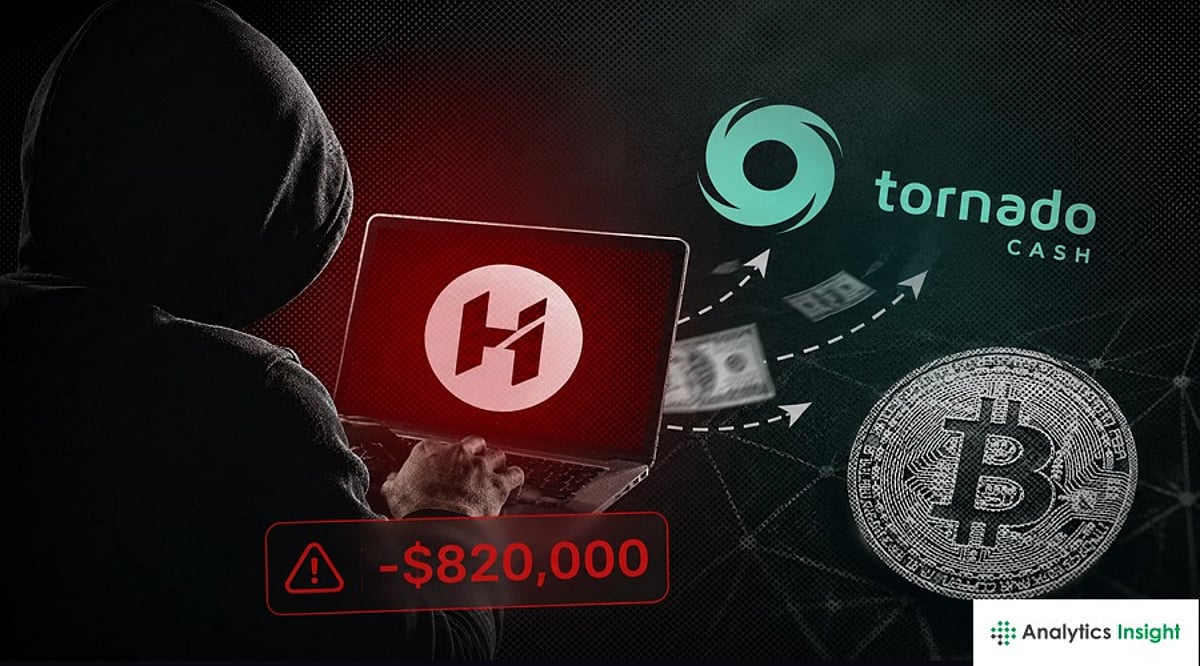
  • Hinkal Protocol Drained of $830K in Proofless Deposit Exploit; Stolen Funds Laundered Through Tornado Cash and Thorchain

    Hinkal Protocol Drained of $830K in Proofless Deposit Exploit; Stolen Funds Laundered Through Tornado Cash and Thorchain

    On July 3, attackers exploited Hinkal, a privacy-focused DeFi protocol, draining approximately $830,000 in USDC — nearly the entire total value locked (TVL) across the five blockchains it supports. Blockchain security firm CertiK traced the breach to an externally owned account that repeatedly executed ‘Transact’ calls after completing a ‘proofless deposit.’ According to DeFiLlama, Hinkal’s TVL stood at roughly $829,000 just before the attack.

    How the Exploit Worked

    CertiK identified the attacker’s wallet as 0xbB3f01a1b1C68F3DEB36C55342b5F5706c32fc20 and reported that it siphoned over $800,000 from a Hinkal smart contract. Meanwhile, PeckShield, citing on-chain investigator Specter, placed the total loss near $820,000 — slightly lower than CertiK’s estimate. The exploit leveraged a vulnerability in Hinkal’s deposit mechanism, allowing the hacker to withdraw funds without providing the required proof.

    Laundering the Stolen Crypto

    After the theft, the attacker converted the stolen USDC into Ether and quickly moved the funds through privacy tools and cross-chain bridges. CertiK noted that the wallet deposited 410 ETH (worth about $700,000) into Tornado Cash, an Ethereum mixer currently under U.S. sanctions. Separately, PeckShield reported that the attacker sent 44.67 ETH through Thorchain, converting it into Bitcoin, which eventually reached an address beginning with bc1qr2sf. This laundering pattern — combining sanctioned mixers with decentralized bridges — is commonly observed in DeFi exploits.

    A research article presented at the ACM Web Conference 2026 found that sanctioned cryptocurrency mixers still provide effective anonymity despite increased regulatory pressure. CertiK has also noted that both criminals and legitimate privacy-conscious users continue to use Tornado Cash, complicating efforts to distinguish illicit transactions from lawful ones.

    Impact on Hinkal’s Institutional Privacy Model

    Hinkal markets itself as an institutional-grade privacy layer, enabling users to create shielded addresses and perform swaps, transfers, and payments without exposing balances or counterparties. The protocol operates on Ethereum, Arbitrum, Base, Polygon, and OP Mainnet. It raised $5.5 million in seed and strategic funding from investors including Draper Associates, Quantstamp, and NGC Ventures. Just one day before the exploit, Hinkal announced a partnership with wallet infrastructure provider Turnkey to bring privacy features to Turnkey users.

    At the time of the attack, Hinkal ranked near the bottom of privacy protocols by TVL. DeFiLlama listed Tornado Cash at $440 million, Railgun at $77.5 million, and Privacy Pools at about $7.8 million — while Hinkal held just $829,000 before the exploit drained nearly all of it.

    What’s Next

    The Hinkal exploit removed roughly $830,000 in USDC, nearly matching the protocol’s total locked value. Users are advised to monitor official updates from Hinkal and carefully assess the risks associated with privacy-focused DeFi platforms.

  • Zoox Unveils Updated Production-Ready Robotaxi, Targets 100 Units Per Week

    Zoox Unveils Updated Production-Ready Robotaxi, Targets 100 Units Per Week

    Amazon-owned Zoox has introduced an updated version of its purpose-built robotaxi as it prepares to ramp up production at its Hayward, California facility. The company says the new model incorporates feedback from approximately 500,000 riders and will join its autonomous ride-hailing fleet directly from the production line.

    Cabin Gets Rider-Focused Upgrades

    The updated Zoox robotaxi retains its signature face-to-face, carriage-style seating layout. Zoox has replaced the previous interior color scheme with aloe green seats, stone-grey flooring, and matching trim. The company also added more seat padding, refined the curves of the seats and headrests, and installed a brighter touchscreen. Additional daily-use improvements include larger cupholders and raised lines on the wireless charging surface to help keep phones in place. Lighter cabin materials make personal items easier to spot before riders exit, according to the company.

    Chris Stoffel, Zoox’s director of robot industrial design and studio engineering, said the new cabin aims to reduce visual distractions. “The simplicity of the elevated interior design does not demand a rider’s attention,” he noted. The updates stem from passenger feedback gathered during testing and early services.

    Exterior Enhancements for Communication and Visibility

    Zoox also refined the robotaxi’s exterior, moving and improving bidirectional reflectors to make them more visible to other road users. Since the vehicle has no fixed front or rear, these signals help indicate its direction of travel. The door interface now includes a new speaker and microphone, and the two-way audio system has been expanded for clearer communication among riders, support staff, and first responders both inside and outside the vehicle.

    The design continues to exclude a steering wheel, brake pedal, or other conventional controls, allowing for the face-to-face seating arrangement and complying with federal rules for automated vehicles without manual driving controls.

    Production Target Tied to Regulatory Approval

    Zoox plans to build the refreshed robotaxi at its 220,000-square-foot Hayward facility, which opened in 2025. The company states the site can assemble more than 10,000 robotaxis per year at full capacity and that production could reach 100 vehicles per week—though that target is subject to regulatory clearance. Zoox expects riders in Las Vegas to access the updated vehicle later in 2026, with expansion to other U.S. markets depending on vehicle supply, local plans, and approvals.

    On June 25, 2026, the National Highway Traffic Safety Administration began rulemaking that could eliminate the requirement for manual brake pedals in vehicles built exclusively for automated driving, potentially easing Zoox’s deployment path. Until the process concludes, the company’s production and deployment schedule remains conditional.

  • India Orders Removal of BAT-BMS and Epoch Li-ion Apps Over E-Rickshaw Bluetooth Security Fears

    India Orders Removal of BAT-BMS and Epoch Li-ion Apps Over E-Rickshaw Bluetooth Security Fears

    The Indian government has directed Apple’s App Store and Google’s Play Store to remove two smartphone applications—BAT-BMS and Epoch Li-ion—following viral social media videos that raised concerns about Bluetooth-enabled disruptions to e-rickshaw battery systems.

    The Ministry of Electronics and Information Technology (MeitY) issued the directive after videos surfaced showing individuals allegedly using Bluetooth to connect to nearby e-rickshaw batteries and cut off their power supply. While there is no evidence that the apps could remotely stop moving e-rickshaws, authorities acted preemptively to address public safety concerns.

    MeitY Secretary S. Krishnan announced the removal at the CII Cybersecurity Summit on July 3, stating that both apps were taken down due to potential misuse. The apps, developed by Chinese company Shenzhen Grenergy Technology (BAT-BMS) and others (Epoch Li-ion), were designed for monitoring lithium-ion battery parameters such as voltage, current, temperature, and charging cycles.

    However, a feature called Lossigy in BAT-BMS allows users to toggle the battery’s discharge function on or off via the app. Although intended as a safety measure, experts warn that weak security settings in many low-cost electric vehicle battery management systems—such as no password protection or default credentials—could allow anyone within Bluetooth range to connect and potentially disrupt operations.

    Cybersecurity specialists emphasize that the core issue is not the monitoring functionality itself but the inadequate security configurations of the battery systems. They recommend stronger authentication and encryption to prevent unauthorized access.

  • Parle Products Files for Rs 9,530 Crore IPO at Over Rs 1 Lakh Crore Valuation

    Parle Products Files for Rs 9,530 Crore IPO at Over Rs 1 Lakh Crore Valuation

    Parle Products, the iconic Indian company behind Parle G, Melody, and other household brands, is reportedly preparing for a blockbuster initial public offering (IPO) that could raise more than Rs 9,530 crore and value the company at over Rs 1 lakh crore. If finalized, the listing would be one of the largest consumer-sector IPOs in India.

    According to media reports, Parle Products has selected top investment banks—Kotak Mahindra Capital, HSBC Securities, and Axis Capital—as advisors for the proposed IPO. Another bank may join later. The issue is expected to be structured primarily as an offer for sale, meaning existing shareholders will sell part of their stakes rather than the company raising fresh capital.

    The company has not confirmed the reports. Chief Marketing Officer Mayank Shah stated that Parle Products does not comment on market speculation but regularly evaluates options to support future growth.

    Strong Brand Portfolio and Financial Health

    Founded in 1929, Parle Products is one of India’s most trusted food companies. Its brands include Parle G, Melody, Monaco, Hide & Seek, KrackJack, Poppins, Mazelo, Kaccha Mango Bite, and 20-20 Cookies. These products are available across India and in many international markets.

    Financially, the company has shown steady growth. In FY25, operational revenue rose 8.5% to Rs 15,568.49 crore, while total income reached Rs 16,190.98 crore. However, net profit fell 39% to Rs 979.53 crore due to higher raw material costs.

    Impact on India’s Consumer Market

    A successful IPO would bring one of India’s most-loved consumer brands to the stock market, potentially encouraging other family-owned businesses to go public. The timing aligns with the expansion of India’s packaged food industry, which the India Brand Equity Foundation estimates will grow from about Rs 1.16 lakh crore in 2025 to nearly Rs 1.64 lakh crore by 2030.

    Investors are now waiting for an official announcement regarding the IPO size, valuation, and timeline. If executed, the Rs 9,530 crore IPO could become a landmark event in India’s FMCG and capital markets sectors.