Author: vitorcherulli

  • July 2026 PC Game Releases: From Soulslike Action to Cozy Life Sim

    July 2026 PC Game Releases: From Soulslike Action to Cozy Life Sim

    July 2026 is shaping up to be a fantastic month for PC gamers, with a diverse lineup of titles spanning intense action RPGs, cooperative horror shooters, atmospheric puzzle-platformers, and even a cozy life simulation. Here’s a closer look at the most anticipated releases arriving this month.

    Wuchang: Fallen Feathers

    This soulslike action RPG delivers fast-paced combat set in dark fantasy environments. Players will face challenging bosses and enjoy extensive weapon customization, making it a must-play for dedicated action fans.

    Killing Floor 3

    The cooperative horror shooter returns with terrifying new enemies, upgraded visuals, and enhanced teamwork mechanics. Intense survival-focused gameplay against relentless monsters awaits.

    RoboCop: Rogue City – Unfinished Business

    A standalone expansion that introduces new missions, upgraded combat systems, and familiar characters. Fans of the cyberpunk storytelling will appreciate the expanded narrative.

    Monument Valley 3

    The award-winning puzzle adventure series makes its PC debut with visually stunning environments, creative architecture, and an emotionally engaging narrative-driven experience.

    Ninja Gaiden 4

    The legendary hack-and-slash franchise returns with refined combat mechanics, cinematic action, challenging enemies, and next-generation graphical enhancements.

    Grounded 2

    This survival adventure expands cooperative exploration with larger environments, deeper crafting systems, dangerous insects, and improved multiplayer experiences for returning players.

    Little Nightmares III

    Atmospheric horror puzzle platformer introduces cooperative gameplay, haunting environments, psychological storytelling, and imaginative creatures across mysterious interconnected worlds.

    Shadow Labyrinth

    An action platformer that combines exploration, combat, and puzzle-solving through atmospheric environments filled with hidden secrets and progressively challenging gameplay mechanics.

    Tales of the Shire

    A cozy life simulation that lets players experience peaceful village living, farming, cooking, friendships, and adventures inspired by beloved fantasy settings.

    With such a varied lineup, July 2026 promises something for every type of PC gamer. Stay tuned for more updates as release dates approach.

  • Tech Roundup: OpenAI Seeks Government Stake, Sony Goes Digital, WhatsApp Usernames, Fable 5 Returns

    Tech Roundup: OpenAI Seeks Government Stake, Sony Goes Digital, WhatsApp Usernames, Fable 5 Returns

    In today’s top tech news, OpenAI has proposed a 5% stake for the U.S. government, signaling a new era of federal involvement in AI. Sony is reportedly planning a digital-only future for its PlayStation ecosystem, moving away from physical discs. Meanwhile, WhatsApp faces scrutiny over its new username feature, and the beloved Fable franchise is making a comeback with a fifth installment. Additionally, Ant Group is expanding into humanoid robotics.

    OpenAI’s proposal marks a significant shift as AI companies face growing federal oversight. The move could reshape how AI giants interact with government regulators. Sony’s digital-only PlayStation strategy aligns with industry trends toward streaming and downloadable content, but raises questions about consumer choice. WhatsApp’s username feature is under question as privacy concerns mount. Fable 5’s return has excited fans of the fantasy RPG series. Ant Group, backed by Jack Ma, is testing a major AI overhaul for its Alipay super app and venturing into humanoid robotics.

  • Top Laptop Brands Offering the Longest Warranty and Best Customer Support in 2026

    Top Laptop Brands Offering the Longest Warranty and Best Customer Support in 2026

    Choosing a laptop involves more than comparing specifications and prices. Warranty coverage and customer support play a major role in the ownership experience. The leading laptop brands in 2026 stand out with reliable service, extended protection, and trusted after-sales care.

    Overview

    • ASUS and Lenovo offer the longest possible total coverage, reaching up to five years on select models.
    • Apple wins on consistency, with the same repair process and pricing in most countries.
    • Business laptop lines from Lenovo, Dell, and HP usually get faster, better support than consumer models from the same brand.

    A laptop’s real worth shows up the moment something breaks. That’s when a weak warranty turns a small fix into a costly, stressful mess. Most brands only offer the bare minimum: one year, nothing more, but there are a few who go further. They offer longer coverage, protection against drops and spills, faster repairs, and support staff who actually help. These details can make a huge difference over the lifespan of a laptop. They cut maintenance expenses, minimize downtime, and streamline maintenance. The best laptop brands of 2026 are not just about the hardware anymore but also about the warranty coverage and customer support provided after purchase.

    What Makes a Laptop Warranty and Customer Support Plan Worth It?

    A good plan does more than add extra months to a calendar. Look for five things:

    • Warranty Duration: Check how long the standard and extended warranty coverage last.
    • Accidental Damage Protection: See if the plan covers drops, spills, and other accidental damage.
    • Battery Coverage: Confirm whether battery repairs or replacements are included during the warranty period.
    • Repair Turnaround Time: Look for brands known for fast and efficient repair services.
    • Customer Support Accessibility: Choose brands that provide quick access to knowledgeable support through phone, chat, or service centers.

    A three-year warranty means little if spare parts take weeks to arrive. Business laptop lines often get better support than consumer models from the same brand, so check which line you are buying before you compare numbers.

    Best Laptop Brands with the Longest Warranty and Customer Support in 2026

    ASUS

    ASUS includes one year of accidental damage protection with many laptops, plus the option to extend total coverage to three years on consumer and gaming notebooks or five years on commercial models. This makes ASUS one of the few brands that protect against drops and spills without forcing you to buy a separate plan right away.

    Apple

    Apple keeps things simple. AppleCare+ stretches Mac coverage to three years total and covers unlimited accidental damage incidents, though each repair carries a service fee. The real strength here is consistency. Apple’s repair process and pricing stay the same no matter where you live, which matters if you travel often.

    Lenovo

    Lenovo stands out for ThinkPad buyers. Premium Care Plus adds accidental damage protection, a three-year sealed battery warranty, and on-site repair in many markets. Total coverage can stretch to five years, which is longer than most rivals offer.

    HP and Dell

    HP and Dell both lean on flexible add-on plans rather than one fixed number. HP’s Care Packs let you choose the exact coverage length and damage protection you want. Dell is known for dependable business support, especially through its enterprise service lines, even though its base consumer warranty is standard.

    Razer

    Razer takes a different angle. Its Blade laptops ship with a battery warranty of up to two years built in, which is rare in this category. RazerCare then extends full coverage to three years, though accidental damage only comes with the higher Elite tier.

    Why Business Laptops Usually Offer Better Warranty and Customer Support

    Not all laptops are offered the same level of after-sales support. Warranty plans and repair times may be faster on business laptops as compared to consumer models. Leading brands such as Lenovo, Dell, and HP often provide on-site repairs, next-business-day services, and quicker waiting times for business devices. These advantages are more beneficial to freelancers, remote workers, and small business owners than the slightly improved hardware specifications.

    The most expensive part of the repair is frequently the downtime of the laptop. Missing a project deadline can cost far more than replacing a broken screen. This is the reason why warranties and support plans are considered an investment for a business laptop.

    Which Laptop Brand Should You Choose in 2026?

    • Choose ASUS or Apple for enhanced protection against accidental damage.
    • Choose Lenovo or HP for longer warranty options and business-grade support.
    • Choose Dell for trusted enterprise-level service and responsive customer support.
    • Choose Razer for gaming laptops backed by extended battery protection.

    Final Thoughts

    A laptop warranty is more than just a piece of paper in the box. It reflects the value that a brand places on its customers post-sales. When things go wrong, the extended coverage, quick repairs, convenient service, and flexible protection options can make all the difference. Each of the five brands has its own distinct strengths, and it all comes down to the intended use of the laptop.

    Frequently Asked Questions

    1. Which laptop brand offers the longest warranty in 2026?

    Brands such as Lenovo, ASUS, HP, and Dell offer extended warranty options of up to three to five years on select laptops. The exact coverage depends on the model and any additional protection plans purchased.

    2. Which laptop brand has the best customer support in 2026?

    Apple, Dell, Lenovo, and HP are widely recognized for reliable customer support, offering multiple service channels, efficient repair networks, and premium support plans for both consumer and business users.

    3. Is an extended laptop warranty worth buying?

    An extended warranty is worthwhile if you use your laptop for work, travel frequently, or plan to keep it for several years. It can help reduce unexpected repair costs and provide faster service.

    4. Do gaming laptops come with accidental damage protection?

    Some gaming laptop brands, including ASUS and Razer, offer accidental damage protection through select models or optional protection plans. Coverage varies by region and warranty package.

    5. What should I consider besides warranty when choosing a laptop brand?

    Look beyond warranty length and evaluate customer support quality, repair turnaround time, service center availability, international warranty coverage, and the ease of accessing replacement parts and technical assistance.

  • Best Crypto Payment Gateways for High-Volume Transactions in 2026

    Best Crypto Payment Gateways for High-Volume Transactions in 2026

    For businesses processing significant transaction volumes, choosing the right cryptocurrency payment gateway is not merely a technical decision—it is a strategic financial one. High-volume operations require infrastructure that can handle throughput without compromising on security, cost-efficiency, or automation capabilities. This guide examines six gateways built for scale, with particular attention to their architecture, fee structures, and ability to support enterprise-grade payment flows.

    How to Choose a Crypto Payment Gateway

    Selecting a gateway for high-volume transactions demands careful evaluation across several dimensions. Transaction fees become increasingly impactful as volume grows, making fee structures a primary consideration. Processing speed and settlement finality directly affect cash flow and operational efficiency. Integration complexity determines implementation costs and ongoing maintenance burden.

    For high-volume businesses, several additional factors become critical: automated reconciliation capabilities, bulk payout functionality, volatility protection through automatic stablecoin conversion, and API robustness for custom integration with existing financial systems. Security and compliance infrastructure also warrant scrutiny, including regulated jurisdiction licensing, KYC/AML controls, and self-custody versus custodial models.

    Comparison of Top Crypto Payment Gateways

    Gateway Key Strength Fee Model Best For
    2328.io AI-ready infrastructure & Telegram integration Below market average Tech-forward enterprises
    CryptoWoo Self-custody WooCommerce native No gateway fees WordPress merchants
    DePay Wallet-agnostic decentralized layer Pay-as-you-go Stablecoin-heavy businesses
    0xProcessing Built for high-volume throughput Transaction-based Proxy & digital services
    Cryptomus Volume leadership & low fees Starting from 0.4% Cost-sensitive enterprises
    OxaPay White-label static addresses Per-transaction Brand-conscious platforms

    2328.io

    2328.io delivers infrastructure-grade cryptocurrency payment processing tailored for high-volume digital businesses. Registered in Saint Lucia and founded by a team with active crypto processing experience since 2017, the platform brings operational maturity to enterprise payment automation. Its AI-friendly architecture offers comprehensive API documentation for seamless integration via AI-driven workflows. Key features include Telegram deep-linking integration, competitive transaction fees below major competitors, automated stablecoin settlement, bulk payout functionality, multi-currency support across eight languages, and scalable infrastructure. Processing fees begin at 0.3%.

    CryptoWoo

    CryptoWoo is the premier cryptocurrency payment solution for WooCommerce merchants seeking true self-custody and seamless integration. It keeps the entire transaction on the merchant’s own website, preserving customer privacy and eliminating external dependencies. Key features include no third-party redirects, zero middleman fees (only standard blockchain network fees), HD Wallet support, zeroconf payment completion with transaction confidence metrics, multiple exchange rate APIs, and WooCommerce native integration. Premium add-ons extend functionality to include Monero, Dash, and ERC-20 tokens.

    DePay

    DePay is a decentralized payment layer agnostic to any wallet, solving the “liquidity paradox” by enabling gasless transactions directly from customer self-custody wallets. It connects to Visa and Mastercard networks for real-time fiat settlement at over 150 million merchants worldwide. Key features include self-custody-first design, gasless transactions, multi-wallet connectivity (MetaMask, Zerion, SafePal), stablecoin focus with planned multi-chain expansion, and global merchant acceptance. It is already operational in high stablecoin adoption markets like Brazil, Argentina, South Korea, and the Philippines.

    0xProcessing

    0xProcessing was created for high-throughput processing environments with its own blockchain-based system supporting stable throughput. Ideal for recurring payments like proxies, subscriptions, and top-ups. Key features include no monthly fees (pay only for processed transactions), Volatility Risk Control with automatic USDT conversion, 24/7 withdrawal access, fast on-chain confirmation, API-first architecture, and global payment acceptance bypassing GEO-specific banking restrictions.

    Cryptomus

    Cryptomus has processed over $8.2 billion in transactions as of March 2026. It offers low fees starting at 0.4%, support for more than 120 cryptocurrencies, fiat withdrawals via SEPA, SWIFT, and P2P, automated volatility protection, mass payouts, and fully customizable payment pages. Risk considerations include a record CAD 176 million FINTRAC penalty in October 2025 for AML violations (under appeal) and mandatory KYC controls introduced in February 2025 that caused a drop in on-chain volume. High-volume merchants should conduct thorough compliance due diligence.

    OxaPay

    OxaPay stands out with its White Label offering, allowing merchants to accept crypto payments under their own brand. Its Merchant Static Address feature assigns static addresses to users, simplifying repeated transactions. Key features include three service models (Merchant Invoice, White Label, and Static Address), API-first architecture, no high setup costs, and streamlined reconciliation through user-level address assignment. Ideal for brand-conscious enterprises with recurring customers.

    Conclusion

    The optimal gateway depends on specific operational requirements: fee sensitivity, integration complexity tolerance, custody preferences, regulatory exposure, and the need for fiat settlement. As stablecoin adoption continues growing and blockchain infrastructure matures, these gateways will likely evolve to offer increasingly sophisticated capabilities for high-volume merchants.

  • Unlocking Workforce Potential: How VR Training Data Drives Performance Insights

    Unlocking Workforce Potential: How VR Training Data Drives Performance Insights

    Virtual reality (VR) training is rapidly transforming corporate learning, but the real breakthrough lies in the data it generates. Every movement, glance, and reaction inside a simulated environment captures rich telemetry that reveals how employees truly perform under pressure. Moving beyond traditional completion rates, organizations now have the tools to turn raw headset data into actionable business intelligence.

    Making Sense of Immersive Telemetry

    When a trainee dons a VR headset, the system records hundreds of data points per second—head orientation, eye gaze, hand gestures, and reaction times. This flood of information can feel overwhelming. However, by focusing on scenario-based assessment metrics, companies can uncover whether an employee hesitated before a critical safety decision or where their attention wandered during a high-stakes interaction. This level of detail transforms training from a passive exercise into an objective map of skill application.

    From 3D Interactions to Real-World Outcomes

    The ultimate goal of any training program is improved job performance. Spatial tracking and heatmaps visualize exactly where users focus their attention. For example, if a technician is supposed to monitor a specific gauge, heatmaps confirm whether they actually looked at it. This capability enables trainers to verify attention allocation for safety hazards, analyze physical ergonomics to prevent repetitive strain injuries, and track navigational efficiency to identify workflow bottlenecks. Behavioral tracking also measures soft skills: decision-making speed, adaptability, and procedural knowledge in unpredictable scenarios.

    Overcoming the Analytics Learning Curve

    Many enterprises struggle to isolate the metrics that correlate with long-term success. Data silos further complicate integration with existing Learning Management Systems (LMS). Without clear visualization tools, raw coordinates in spreadsheets offer little value. A well-designed VR ecosystem automatically highlights performance trends, flags safety risks, and generates reports that stakeholders can act on immediately. Specialized providers, such as Roundtable Learning, help bridge this gap by translating complex telemetry into straightforward business intelligence.

    Elevating Training Strategy with Expert Partners

    Working with experienced partners allows internal teams to focus on coaching while experts handle the technical heavy lifting. Whether assessing emergency response, refining leadership communication, or teaching complex procedures, the right partner ensures VR initiatives deliver scalable results and clear ROI. Organizations that master immersive data will build safer, more efficient, and highly adaptable workforces ready for tomorrow’s challenges.

  • Duties-Paid Cross-Border Shipping from the UK to the EU: Landmark Global Simplifies E-Commerce Logistics

    Duties-Paid Cross-Border Shipping from the UK to the EU: Landmark Global Simplifies E-Commerce Logistics

    For e-commerce businesses shipping parcels from the UK to the European Union, managing duties, taxes, customs clearance, and delivery across multiple carriers can be a logistical headache. Landmark Global offers a unified cross-border logistics solution that combines international transport, customs clearance, delivery technology, and returns management in one connected service. This allows retailers to avoid coordinating separate carriers, customs agents, and technology providers for each destination.

    Key Features of Landmark Global’s Offering

    • Combines DDP shipping, customs clearance, parcel delivery technology, and returns within a single solution.
    • Prepaid duties and taxes provide EU customers with transparent checkout pricing and help prevent unexpected delivery charges.
    • Carrier-neutral routing selects suitable delivery partners for different European markets and parcel profiles.
    • Mercury platform integrates shipment creation, tracking, reporting, and operational data with retailers’ existing e-commerce systems.
    • Configurable returns support labels, customs information, tracking, consolidation, and delivery back to a warehouse or regional hub.

    What Duties-Paid Shipping Means for Online Retailers

    Delivered Duty Paid (DDP) means the seller covers import duties, taxes, and customs-related costs before delivery. Customers receive orders without being asked to pay unexpected charges upon arrival. Landmark Global supports DDP shipping and helps businesses calculate landed costs, so relevant charges can be included during checkout. This approach makes cross-border purchasing feel similar to domestic shopping, reducing customer frustration, parcel refusals, and delivery interruptions caused by unpaid fees.

    Customs Clearance Management

    Shipping from the UK to the EU requires accurate customs information, including product descriptions, values, commodity codes, and origin details. Landmark Global combines a proprietary clearance platform with in-house trade and compliance specialists to help businesses prepare shipment data, process declarations, and move parcels efficiently. Its customs support covers B2C and B2B clearances, tax, compliance, invoicing, and product labeling services. Integrating clearance with delivery helps merchants avoid fragmented workflows and unnecessary border delays.

    Benefits of a Carrier-Netural Network for EU Deliveries

    As a carrier-neutral provider, Landmark Global can select postal and commercial partners based on destination, parcel profile, service level, and budget. This flexibility is particularly valuable for UK retailers serving multiple EU countries where customer expectations and last-mile networks differ. Landmark Global provides delivery services to more than 220 destinations worldwide, with local partners in Europe supporting convenient final-mile options while the company coordinates the broader cross-border journey.

    How Technology Streamlines International Shipping

    Landmark Global’s Mercury platform connects shipping, tracking, reporting, accounting, and operational data. Businesses can integrate through e-commerce platforms, plugins, APIs, or FTP connections, depending on their systems. Centralized visibility helps teams monitor parcels and provide clearer customer updates, while supporting consistent processes as order volumes grow or retailers enter additional EU markets.

    Handling Returns from EU Customers

    Landmark Global provides configurable international returns through a white-label portal. Customers can generate labels, submit customs information, choose a return method, and follow tracking updates. Landmark Global then coordinates first-mile transport, customs clearance, consolidation, and delivery to the retailer’s warehouse, 3PL, or regional hub. This makes reverse logistics easier to manage alongside outbound DDP shipping.

    Is Landmark Global Suitable for Growing UK E-Commerce Businesses?

    Landmark Global is particularly relevant for retailers seeking a single partner for DDP delivery, customs expertise, flexible carrier selection, technology, and returns. Its integrated model can simplify UK-to-EU expansion while helping businesses offer transparent prices and a dependable post-purchase experience.

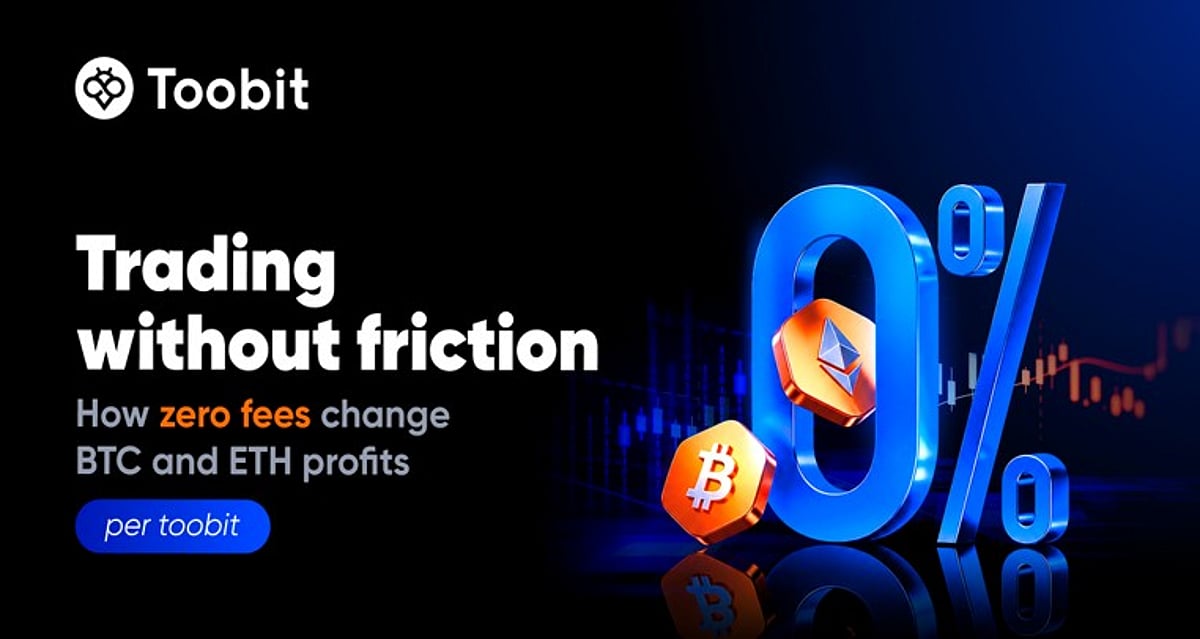
  • How Zero-Fee Trading Models Are Reshaping Bitcoin and Ethereum Profitability

    How Zero-Fee Trading Models Are Reshaping Bitcoin and Ethereum Profitability

    The structure of crypto trading is shifting toward lower explicit costs, tighter exchange competition, and more aggressive liquidity capture. Zero-fee models sit at the center of this transition, influencing not only how trades are priced but also how participants adapt to changing cost signals and execution conditions.

    Rather than acting as a simple pricing incentive, zero-fee regimes reshape the hierarchy of constraints that guide trading decisions. Cost is no longer a visible filter at the point of entry. Instead, it is embedded in execution mechanics, liquidity response, and order book interaction quality.

    Liquidity remains heavily concentrated in major digital assets rather than dispersed across the broader market. Bitcoin and Ethereum continue to function as the primary execution layer for global crypto exposure, meaning most meaningful cost dynamics and efficiency gains are expressed through these two instruments.

    Bitcoin trades in the high $59,000 range, while Ethereum holds near the mid $1,500 range. Both assets operate in a phase where directional conviction is inconsistent across time horizons. In this setting, returns depend less on directional accuracy and more on execution efficiency across entry, adjustment, and exit.

    Zero fees are therefore relevant not as a headline incentive, but as a structural change in how net returns are formed from gross market movement.

    What Zero Fees Actually Change

    Zero trading fees remove the explicit commission layer embedded in spot and derivatives execution, including maker and taker fees. On the surface, this compresses observable trading costs and appears to improve profitability uniformly.

    However, trading costs are not eliminated. They are redistributed into execution layers that behave dynamically rather than remaining fixed per trade. The cost structure shifts toward spread capture, slippage variability, and timing sensitivity. This creates a variable-cost regime where outcomes depend on liquidity depth, volatility, and order aggressiveness rather than predictable deductions.

    In highly liquid assets such as BTC and ETH, spreads remain tight and order books absorb moderate flow efficiently. Here, removing fees translates more directly into net performance gains because fewer structural inefficiencies offset the benefit. In thinner markets, execution friction dominates. Wider spreads and inconsistent liquidity reduce the marginal benefit, as market impact replaces commissions as the primary cost driver.

    The key shift is not cost removal itself, but the integration of execution quality into decision-making alongside price direction.

    Market Backdrop and Execution Sensitivity

    Crypto market structure continues to reflect selective liquidity concentration, where participation clusters around a limited set of large-cap assets rather than dispersing evenly across the ecosystem. Within this structure, BTC and ETH function as both tradable assets and liquidity infrastructure, acting as pricing references and absorption layers for broader market flow. This dual role increases sensitivity to cost structure changes, as execution efficiency improvements propagate through concentrated capital channels.

    When momentum weakens, price behavior becomes more fragmented. Movement shifts toward shorter cycles driven by liquidity gaps, positioning adjustments, and reactive order flow. Activity increases not because conviction strengthens, but because portfolios are adjusted more frequently. This creates a structural effect where execution frequency rises even without changes in exposure. Zero fees therefore matter through cumulative interaction rather than isolated trades.

    Why Zero Fees Do Not Automatically Improve Performance

    Zero fees do not improve trading edge. They improve the efficiency of edge realization. Research in market microstructure, including Barber and Odean’s Trading Is Hazardous to Your Wealth, shows that higher trading frequency is associated with lower net returns among retail participants. The driver is not only cost accumulation but also declining decision quality under increased activity.

    When friction exists, it filters marginal trades. When removed, that filter weakens, increasing the probability of lower-conviction execution. In crypto markets, this effect is amplified by continuous access and instant execution. Reduced friction increases both financial and behavioral trading frequency. Importantly, this does not necessarily reduce individual trade quality. It increases variation in decision quality over time, which reduces consistency in aggregate performance.

    How Zero Fees Affect Profit Mechanics

    The impact is best understood through trade-level economics. Consider a BTC position entered at $60,000 and exited after a 1% move. Gross profit is $600 per BTC. Under a typical 0.20% round-trip fee structure, about $120 is deducted, reducing net profit to $480 before slippage and spread effects. With zero fees, this deduction disappears. Market outcome remains unchanged, but gross-to-net conversion improves structurally.

    Zero fees do not change expectancy, volatility distribution, or directional probability. They improve retention of returns generated by existing strategy design. ETH and other liquid assets follow the same logic, though realized impact depends on liquidity stability and execution timing.

    Liquidity Concentration and Structural Advantages

    Liquidity remains concentrated in a small group of large-cap assets rather than evenly distributed across the ecosystem. This reflects where capital can enter and exit with minimal friction. Bitcoin and Ethereum sit at the center of this structure, functioning as both investment assets and liquidity hubs for retail, institutional, and algorithmic flow. This produces deeper order books and more stable execution compared to smaller assets.

    Two advantages follow: spreads remain tighter, reducing deviation between theoretical and executable pricing, and order books absorb volatility more efficiently, limiting extreme dislocations during rapid moves. Under zero-fee conditions, these factors determine how much of the cost reduction translates into real performance. In BTC and ETH, fee removal compounds efficiency because execution impact is already controlled. In thinner markets, slippage dominates and reduces the benefit.

    Portfolio Behavior and Rebalancing Dynamics

    Zero fees reshape portfolio construction by changing the cost of capital rotation. Active traders frequently adjust exposure between BTC, ETH, stablecoins, and selected altcoins based on volatility shifts, macro signals, or relative strength. Each adjustment normally carries a cost that influences rebalancing frequency. When fees are removed, this constraint disappears. Adjustments become easier and faster to reverse, increasing responsiveness to market shifts.

    Rebalancing becomes more continuous rather than episodic. Instead of waiting for large thresholds, traders can adjust exposure in smaller increments. This allows positioning across BTC and ETH, or majors and altcoins, to be recalibrated more fluidly as leadership rotates. Decisions become more real-time rather than delayed. The trade-off is clear: responsiveness improves, but discipline becomes more important in filtering signal from noise.

    Execution Quality Becomes the Primary Constraint

    Once explicit fees are removed, execution quality becomes the dominant performance variable. Execution quality includes entry precision, slippage behavior, order type efficiency, and liquidity depth at execution time. These replace fees as the main source of cost variation. Skill shifts from cost management to execution precision under changing liquidity conditions. Lower friction also increases trading velocity, raising the importance of pre-planned decision-making before entry.

    Leverage amplifies this dynamic. Fee savings do not affect liquidation thresholds or volatility exposure. When combined with higher frequency, portfolio risk can expand independently of execution gains.

    The Hidden Risks

    The most immediate risk is overtrading. When costs disappear, marginal setups become easier to justify, which can increase trading activity without any real improvement in strategy quality or edge. A second risk is underestimating spreads. Even in zero-fee models, bid-ask spreads and market impact can, in some cases, exceed traditional trading fees, particularly in less liquid conditions or during volatility spikes when order books thin out.

    A third risk is implicit leverage expansion. Lower friction can encourage larger position sizes or more frequent trades, while actual risk exposure per trade remains unchanged. Over time, this can quietly increase overall portfolio risk without being clearly recognized. A fourth risk is performance misinterpretation. Cleaner net P&L figures may mask inefficiencies in execution quality, timing, or order selection, leading traders to overestimate their true skill level. Over time, these factors can contribute to strategy drift, where increased activity is mistaken for improved performance or a stronger edge.

    How to Use Zero Fees on Toobit

    A practical approach starts with liquid pairs. BTC and ETH provide the clearest environment for translating fee savings into measurable gains due to deeper liquidity and tighter spreads. Monitor Toobit VIP rates and execution conditions, then evaluate whether expected movement justifies total cost, including spread and slippage. Order type selection becomes more important. Limit orders improve price control, while market orders provide speed when necessary. Lower friction increases execution frequency, so planning before entry becomes essential. Selective participation remains critical. Even without fees, not every move is worth trading. Liquidity, volatility, and structure still determine opportunity quality.

    Final Thoughts

    Zero trading fees improve crypto trading economics by removing explicit cost layers, but their real impact depends on execution behavior. The strongest benefits appear in BTC and ETH due to liquidity depth and stable execution. However, these same conditions require greater discipline because trading becomes easier and more frequent. The main limitation is behavioral, not structural. Reduced friction weakens natural constraints on unnecessary activity, increasing the importance of selectivity and execution control. Ultimately, performance depends less on cost reduction and more on disciplined capital deployment. Liquidity, timing, spread quality, and position sizing remain the core drivers of outcomes. Zero fees improve efficiency but do not replace judgment or structure.


  • DJI Avata 360 Review: How This 360-Degree Drone Transforms Aerial Workflows for Creators

    DJI Avata 360 Review: How This 360-Degree Drone Transforms Aerial Workflows for Creators

    If you’ve shot with traditional FPV drones, you know the tradeoff: you commit to a framing decision in flight. Miss the angle? Fly again. Need both a horizontal YouTube cut and a vertical TikTok cut? Two flights. The DJI Avata 360, launched March 26, 2026, changes that. As DJI’s first 360-degree drone — and only the second consumer 360 drone — its real value isn’t a spec. It’s a completely new way to capture and edit aerial footage.

    What Makes the Avata 360 Different

    The basics matter. Here are the specs that drive real-world performance:

    • Dual 1/1.1-inch CMOS sensors that capture the full sphere in a single pass
    • 8K/60fps HDR capture at 180 Mbps — gives you resolution headroom to reframe in post
    • Whoop-style propeller guards for tight indoor spaces that traditional FPV drones can’t safely enter
    • O4+ transmission for stable signal at extended ranges
    • Single Lens mode for traditional 4K/60fps when you don’t need 360

    The propeller guards alone open environments previously off-limits: wedding venues, warehouses, indoor sports facilities, retail spaces. Any tight space where a standard drone would risk damage is now accessible.

    The Real Shift: Post-Production Flexibility

    The headline isn’t the dual sensors. It’s what they enable in the edit. Traditional drone footage is composed in flight — you aim, fly, commit. The Avata 360 reverses that. You fly the path; the camera captures everything. You compose in post.

    GyroFrame in the DJI Fly app is the tool. After landing, creators can pull any frame from the 360 sphere, adjust angles, focal points, and orientation. The same flight produces a wide cinematic horizontal frame, a vertical TikTok cut centered on a subject, a top-down reveal — or any combination — without flying again.

    For working creators, this is the most meaningful shift in drone workflow since GPS stabilization made consumer drones flyable for non-pilots.

    Honest Framing: The 8K to 4K Export Reality

    Worth being clear: the 8K/60fps source is the recording resolution. The final flat video export in most workflows lands at 4K rather than 8K. The extra resolution gets consumed by the reframing process — pulling a specific framing out of a 360 sphere uses up source headroom. This isn’t a flaw; it’s how 360 capture works structurally. The 8K source exists specifically so the 4K output looks clean after reframing. Expecting 8K final output from a 360 drone is the wrong expectation.

    What Creators Are Actually Doing With It

    Early use cases demonstrate the workflow’s power:

    • Solo adventure creators extract multiple angles from a single pass — wide establishing, tight subject-tracking, overhead reveal, vertical short-form cut — no repeat flights needed.
    • Wedding videographers reframe one flight for highlight reel, venue establishing shot, and vertical Instagram cut. Substantial time savings on a typical shoot day.
    • Athletes and sports creators keep subjects center-frame in post, even when they drift mid-flight. Traditional FPV requires anticipating where the subject will be; 360 capture lets you reposition after the fact.
    • Multi-platform creators get both YouTube-wide and TikTok vertical from a single flight — the simplest argument for the workflow shift.
    • The “invisible drone” modifier — skilled reframing in GyroFrame can effectively remove the aircraft from perspective, creating shots that look like an impossible camera position.

    Early Sentiment From the Review Community

    Reviewer response has been notably enthusiastic. Tom’s Guide called it one of the best drones on the market outright. The “creative director in the sky” framing resonates with creators who want editing flexibility without flying twice. The consistent thread: it doesn’t replace traditional drones for every use case — it opens a new category that didn’t exist before.

    Where the Avata 360 Fits in the DJI Lineup

    The Avata 360 isn’t a replacement for the DJI Drone lineup — it’s a complement. For traditional aerial work where you know your framing in flight, the Mini 5 Pro or Mavic 4 Pro remain right tools. For tight-space shooting, single-flight multi-output workflows, and creators producing content for multiple platforms, the Avata 360 fills a category gap. If your work involves shooting the same scene for multiple deliverables, indoor environments, or unpredictable subjects, this drone solves problems your current gear doesn’t.

    What to Look For When Buying in the US

    Buy from an authorized US retailer that ships from US-held stock, includes the full official DJI manufacturer warranty, and has US-based customer support. DJI is an authorized US reseller stocking the Avata 360 with domestic shipping and warranty included. For a drone introducing a new workflow, local support matters more than usual.

    The Bottom Line

    The DJI Avata 360 is the most interesting new drone DJI has launched in years — not because of any single spec, but because of what 360-degree capture enables in the edit. For creators who shoot for multiple platforms, work in tight spaces, or want the freedom to reframe after landing, this is genuinely new territory. The 8K source to 4K output reality is worth understanding, but it’s not a limitation. On the dimensions that matter — 4K final output quality, post-production flexibility, single-pass multi-output workflows — the Avata 360 delivers. For creators ready to change how they think about aerial workflow, this is the drone worth considering.

  • 7 Essential Leadership Skills for Business Success in 2026

    7 Essential Leadership Skills for Business Success in 2026

    Artificial intelligence is transforming workplaces, hybrid teams are becoming the norm, and economic uncertainty continues to test businesses worldwide. In this era, leadership is no longer measured solely by experience and decision-making capabilities. Today’s leaders must keep people engaged, customers satisfied, and the business competitive amid rapid technological change.

    The best business leaders in 2026 combine digital and human skills. They are proficient with technology yet never neglect empathy, ethical values, and innovation. Below are the key leadership skills every business leader needs to thrive.

    1. AI Literacy

    Leaders need to understand how artificial intelligence impacts processes, client communication, and decision-making. Technical expertise isn’t required, but knowing where AI can add value is essential.

    2. Strategic Thinking

    Organizations operate in ever-changing environments. Leaders must analyze market trends, anticipate threats, evaluate opportunities, and make strategic decisions to guide their firms.

    3. Emotional Intelligence

    Self-awareness, empathy, and relationship management are critical. Leaders with high emotional intelligence build effective, resilient teams and foster trust and collaboration.

    4. Adaptability

    The capacity to pivot in response to technological disruptions, regulatory changes, and customer demands is vital. Adaptable leaders embrace change rather than resist it.

    5. Effective Communication

    Clear communication ensures everyone understands organizational goals and priorities. Transparency earns trust and aligns teams toward shared objectives.

    6. Ethical Decision-Making

    Responsible leadership is a competitive advantage. Leaders must ensure technology adoption is ethical, protecting privacy and fairness to maintain reputation and customer trust.

    7. Employee Development

    Today’s leaders act as mentors, not just supervisors. Developing employees improves retention and prepares the workforce for future challenges.

    Why Human Skills Still Matter in the AI Era

    While AI excels at repetitive tasks, it lacks empathy, judgment, ethics, and the ability to inspire. Technology becomes far more productive when guided by leaders who understand people. The ideal combination of automation and emotional intelligence delivers superior results.

    Organizations must also ensure ethical use of AI: considering threats, complying with regulations, protecting private data, and maintaining transparency. Those that fail risk reputation damage and loss of client trust.

    Conclusion

    Leadership in 2026 goes beyond hierarchies. AI literacy alone is insufficient; emotional intelligence, ethics, adaptability, and strategy distinguish great leaders from good managers. Companies that cultivate these attributes will innovate, attract talent, navigate uncertainty, and grow in the digital age.