Author: vitorcherulli

  • Rockstar Drops Nearly $1 Million on Real-Life Vice City Sign in Miami to Fuel GTA 6 Hype

    Rockstar Drops Nearly $1 Million on Real-Life Vice City Sign in Miami to Fuel GTA 6 Hype

    Rockstar Games has kicked off real-world marketing for GTA 6 in spectacular fashion. A massive “Welcome to Vice City” sign now sits atop the Kaseya Center in Miami, reportedly installed with the help of a helicopter and a budget of nearly $1 million.

    According to a journalist on X, the studio paid $975,000 to Miami-Dade County for the sign on the roof of the Kaseya Center, home of the Miami Heat. The highly anticipated Rockstar title is scheduled to launch on November 19 for PS5 and Xbox Series X|S.

    A Long-Term Landmark for GTA 6

    This isn’t a short-lived billboard. Documents reviewed by sources indicate the sign will remain in place for a year, through the final Miami Heat home game of the 2026-27 season on April 11, 2027. That means fans and locals will see Vice City looming over the Miami skyline for months.

    Marketing Beyond the Screen

    Rockstar is not relying only on trailers, social media, and online ads. By placing Vice City in the real Miami skyline, the company turns the city itself into a persistent advertisement for GTA 6. The sign connects the real-world location with the fictional world the game is built around.

    The nearly seven-figure spend on a single sign shows how far publishers will go to keep a major title in front of audiences. A large physical ad stays in one place and keeps being seen, something online ads often cannot do.

    The Miami installation is just one part of a much larger campaign, but it highlights how AAA gaming now competes for attention beyond gaming platforms.

  • Apple Reveals iPhone 18 Pro Exclusive Camera Controls for iOS 27

    Apple Reveals iPhone 18 Pro Exclusive Camera Controls for iOS 27

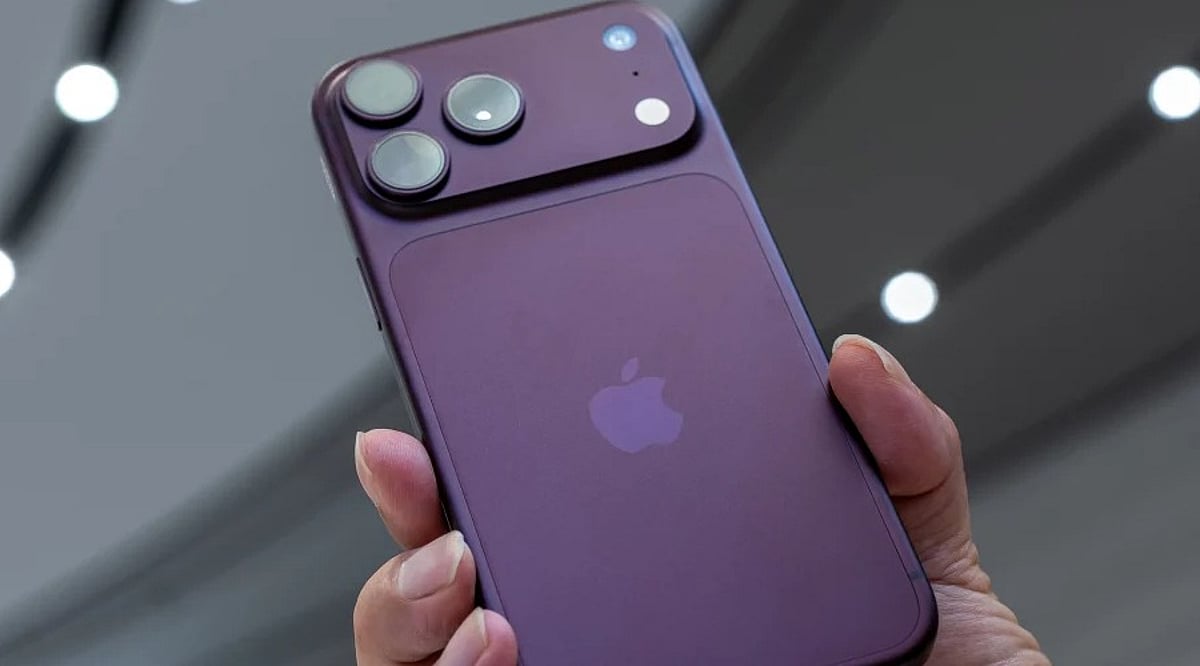
    Apple has quietly updated its official support documentation to clarify which devices will support the new Texture and Grain controls introduced with iOS 27. According to the latest information, these exclusive camera features are available only on the iPhone 18 Pro models and the iPhone Duo.

    When the iPhone 18 Pro was first announced, Apple’s Newsroom documentation suggested that the updated Photographic Styles and the accompanying Texture and Grain controls might be available on a broader set of iPhone models. However, the company has since refined that wording, and the current iPhone support page explicitly states that texture adjustments are limited to the iPhone 18 Pro lineup.

    The new controls are part of Apple’s upgraded Photographic Styles system, offering users more creative flexibility. The Texture setting lets photographers alter the visual treatment of an image, while the Grain control adds a film-like effect. Users can choose from presets such as Soft Skin, Glow, and Film, and then adjust the intensity to their preference.

    This update also affects older models like the iPhone 16 and iPhone 17 series, which were previously understood to support the feature based on Apple’s initial wording. Reports this week confirmed that those devices will not receive the new controls.

    In addition to the software enhancements, the iPhone 18 Pro features a 48MP Fusion Main camera with a variable aperture. This allows the camera to automatically adjust for lighting and depth of field, while manual aperture control is available through the Camera app for users who want a more hands-on approach.

  • Banks Warn AI Shopping Bots Risk Wrong Purchases and Payment Data Exposure

    Banks Warn AI Shopping Bots Risk Wrong Purchases and Payment Data Exposure

    Major banks are sounding the alarm over the rise of AI shopping assistants that can search for products and even complete purchases on behalf of consumers. The concerns range from incorrect purchases and scams to exposure of payment data and weaker consumer protections, prompting calls for clearer standards around AI-driven commerce.

    AI Agents Could Make Purchases on Your Behalf

    The technology, often described as “agentic commerce,” allows an AI system to act on a shopper’s instructions rather than simply providing recommendations. Depending on the design, an agent could search for a product, select an option, and potentially complete the transaction. A group including NatWest, Bank of America, ING, Capital One, ASB Bank, and Commonwealth Bank of Australia has raised concerns about scams, fraud, and misuse of financial data.

    The warning comes as technology companies including OpenAI, Google, Anthropic, and Meta develop AI agents capable of assisting with or carrying out shopping tasks. The banks said adoption is outpacing existing industry standards and consumer protections.

    UK retailer John Lewis reported that searches originating from AI agents rose to 2.5% this year, up from 0.3% a year earlier, signaling rapid growth in AI-driven shopping.

    Card Details and Payment Risks

    Financial information is another major concern. The banking group highlighted situations in which AI agents could request customers’ card details and enter them directly into websites. There are also concerns that an AI agent could steer a shopper toward payment methods that provide weaker fraud or purchase protections. If a transaction goes wrong, consumers may not know whether the retailer, payment provider, or AI service is responsible.

    Banks Seek Clearer AI Commerce Rules

    The participating banks plan to discuss a set of proposals with policymakers. These include requiring businesses to disclose when an AI agent is involved in a transaction and providing greater transparency about how the technology makes purchasing decisions. The group also called for stronger safeguards around customer data, along with freedom for consumers and merchants to choose which AI-powered commerce services they use. Interoperability between different AI shopping systems was another principle included in the framework.

    As AI moves from recommending products to acting on shoppers’ behalf, the debate increasingly shifts toward who controls these transactions and who takes responsibility when something goes wrong.

  • Anthropic’s Claude Opus 5.5 Takes on GPT-6 Astra with Lower Costs and Superior Benchmark Performance

    Anthropic’s Claude Opus 5.5 Takes on GPT-6 Astra with Lower Costs and Superior Benchmark Performance

    Anthropic launched Claude Opus 5.5 on September 22 as its first Claude 5.5 family model. The company targets developers and enterprises with stronger coding, reasoning, and computer-use capabilities.

    The model reaches Claude Fable 5.1-level performance across most workflows while costing 40% less overall. Anthropic achieved this through lower token usage, faster output generation, and improved computational efficiency.

    Introducing Claude Opus 5.5, the first model in our new Claude 5.5 family. It performs at the level of Claude Fable 5.1 for most tasks, and costs 40% less to run than Opus 5.

    Anthropic also positioned Claude Opus 5.5 against OpenAI’s GPT-6 Astra through several published benchmark comparisons. The company reported higher scores across coding, knowledge work, and multidisciplinary reasoning tests.

    Terminal-Bench 4.0 gave Claude Opus 5.5 a 66.4% score, ahead of GPT-6 Astra’s 57.9%. FrontierCode also showed Opus 5.5 slightly ahead with a 54.4% score. GDPval-AA measured knowledge work performance, where Opus 5.5 reached 1,846 Elo against Astra’s 1,542. Humanity’s Last Exam also favored Opus 5.5 with tools enabled.

    GPT-6 Astra still scored higher on specialized tests covering scientific research and business workflow automation. Astra reached 64.6% on Terminal-Bench Science against Opus 5.5’s 58.7%.

    Cost efficiency forms another major part of Anthropic’s Claude Opus 5.5 pitch for large-scale AI coding. The model costs USD 4 per million input tokens and USD 20 per million output tokens. Anthropic says Opus 5.5 costs nearly 20% of Astra’s task cost on FrontierCode at default settings. Terminal-Bench performance can also match Astra while using around 40% of its task cost.

    The coding improvements extend beyond benchmark scores to long, complex software engineering workflows. An early tester completed a 680,000-line migration in less than a day. Another test showed Opus 5.5 improving page load times across a web application during 39 of 40 attempts. Anthropic also reported output generation more than 30% faster than Opus 5.

    Safety remains another focus, with Anthropic reporting its strongest automated behavioral audit performance so far. The company said Opus 5.5 showed fewer attempts to cross containment boundaries during testing.

    Anthropic also highlighted communication improvements, saying the model places important information first and follows writing instructions more closely. An early tester described the AI model as one that ‘writes the way I do.’

    Claude Opus 5.5 now reaches developers through Anthropic’s Claude Platform under the model name claude-opus-5-5. Amazon Web Services, Google Cloud, and Microsoft Azure also provide access.

    Anthropic plans to expand the Claude 5.5 lineup with Sonnet 5.5 and Haiku 5.5 in coming weeks. The company said both models will bring similar improvements across performance, efficiency, and safety.

    Also Read: AI Consciousness Debate: Why Microsoft is Challenging Anthropic’s Approach

  • Qualcomm’s Agentic AI Vision Could Reshape Smartphones — But Raises Data Privacy Concerns

    Qualcomm’s Agentic AI Vision Could Reshape Smartphones — But Raises Data Privacy Concerns

    Qualcomm CEO Cristiano Amon recently outlined a future where smartphones evolve from simple command receivers into proactive AI agents capable of understanding user intent and completing tasks autonomously. Speaking at the Snapdragon Summit 2026 in Maui, Amon described the transition to an ‘agentic age,’ where artificial intelligence becomes the central driver of the mobile experience.

    “We are going from a phone-centric model to an agent-centric model. Going forward, agents will become the center of experience. We can finally see what an AI phone truly means,” Amon said.

    To support this vision, Qualcomm unveiled two new mobile platforms: the Snapdragon 8 Elite Gen 6 and Snapdragon 8 Elite Gen 6 Extreme. These chips are designed to handle substantial AI workloads locally, reducing the need to offload every task to the cloud. This local processing could enable faster, more private interactions — but it also requires the phone to access more personal data, such as calendars, messages, and shopping details, to anticipate user needs.

    Amon acknowledged the importance of user permission and context, stating, “The permission to use will be very important. And, so is context. Because the phone is very personal and specific to you. Agentic AI will need your phone to do a lot more than just execute tasks for you.”

    The shift could fundamentally change how users interact with their devices. Instead of manually controlling every step, users might only need to approve key actions while the phone handles the rest. Qualcomm expects this agentic model to extend beyond smartphones to PCs, smart glasses, wearables, and cars, creating a seamless ecosystem of interconnected devices.

    As AI agents take on more responsibility, the balance between convenience and privacy becomes critical. Users will need clear visibility into what their devices access and when they are allowed to act. Transparent permission controls and user oversight will be just as important as AI performance in earning trust.

  • Viture Unveils Vonder AI Glasses: Voice-Powered Wearable with ChatGPT, Gemini, and Claude Support

    Viture Unveils Vonder AI Glasses: Voice-Powered Wearable with ChatGPT, Gemini, and Claude Support

    Viture has introduced the Vonder, a new pair of AI-powered smart glasses that prioritize voice interaction and privacy over cameras and displays. Designed to resemble conventional eyewear, the Vonder weighs under 30 grams and relies on microphones, speakers, and onboard processing to deliver a screen-free AI experience.

    Unlike many smart glasses on the market, the Vonder does not include a camera or display. Instead, it focuses on voice-based features such as note-taking, hands-free calling, and memory recall. Audio recording is activated only when the user prompts it, and a physical Meeting Mode switch with an LED indicator provides additional control. After recording, the original audio is deleted and converted into text and memories stored in the companion app.

    At the core of the Vonder is its Personal Memory Graph, an AI system that organizes captured conversations and voice interactions. Users can choose from multiple AI models through the app, including Google Gemini, Anthropic Claude, and OpenAI ChatGPT. This approach allows the glasses to provide useful context from accumulated memories rather than simply storing raw recordings.

    Customization is a key selling point: buyers can select different frame shapes and finishes, and the glasses support prescription, progressive, and transition lenses. In the US, pre-orders begin on September 28 at a starting price of USD 299, with premium acetate frames starting at USD 399. Shipments are expected from November. International customers can register interest now.

    Viture emphasizes data privacy, stating that user data is protected with financial-grade encryption and that the company does not sell advertising or user data. The Vonder aims to offer a discreet, everyday wearable that blends AI assistance with the look and feel of ordinary glasses.

  • Alibaba Unveils Zhenwu V900 AI Chip to Power Domestic AI Ecosystem and Massive Data Center Expansion

    Alibaba Unveils Zhenwu V900 AI Chip to Power Domestic AI Ecosystem and Massive Data Center Expansion

    Alibaba has taken a significant step in advancing China’s domestic AI capabilities with the unveiling of its latest artificial intelligence chip, the Zhenwu V900. Developed by Alibaba’s semiconductor unit T-Head, the new accelerator is designed to handle both AI training and inference tasks, marking a key milestone in the company’s push to build a full-stack AI ecosystem.

    According to Alibaba, the V900 delivers three times the performance of its predecessor, the Zhenwu M890 chip, which was launched in May. While the company did not provide independent benchmark results to support this claim, the V900 is scheduled to enter mass production and commercial release in the first quarter of 2027.

    Zhenwu V900 Specifications

    The V900 comes equipped with 216GB of memory and offers 1,200GB/s of chip-to-chip bandwidth. It also supports FP8 and FP4 precision formats, which are becoming increasingly critical for efficient AI inference and large-scale model workloads.

    Alibaba stated, “The chip can be connected into clusters containing as many as 500,000 accelerators. This architecture is designed to handle demanding AI workloads that require thousands of processors to work together.”

    The company is also integrating the V900 with its broader hardware stack, including networking and storage components, allowing Alibaba to control more of the infrastructure required to train and deploy large AI models. This strategy directly links Alibaba’s chip development with its AI model roadmap, as more powerful accelerators provide the computing capacity needed for increasingly large models.

    Alibaba Expands AI Infrastructure

    Alibaba is also planning a major expansion of its cloud infrastructure. CEO Eddie Wu stated, “Alibaba Cloud aims to increase its global data-center capacity to more than 20 gigawatts by 2032.”

    The V900 highlights Alibaba’s effort to develop chips, AI models, and cloud infrastructure as one integrated ecosystem. This initiative comes as Chinese technology companies accelerate domestic AI chip development amid restrictions on access to advanced foreign processors.

    The tech giant further explained that demand for AI computing is growing rapidly while supply constraints limit the pace of expansion. Alibaba also plans to bring AI supernodes into commercial operation this quarter.

  • Apple’s New Mac Mini M6 and Mac Studio M5 Models Hit India: Full Pricing and Specs

    Apple’s New Mac Mini M6 and Mac Studio M5 Models Hit India: Full Pricing and Specs

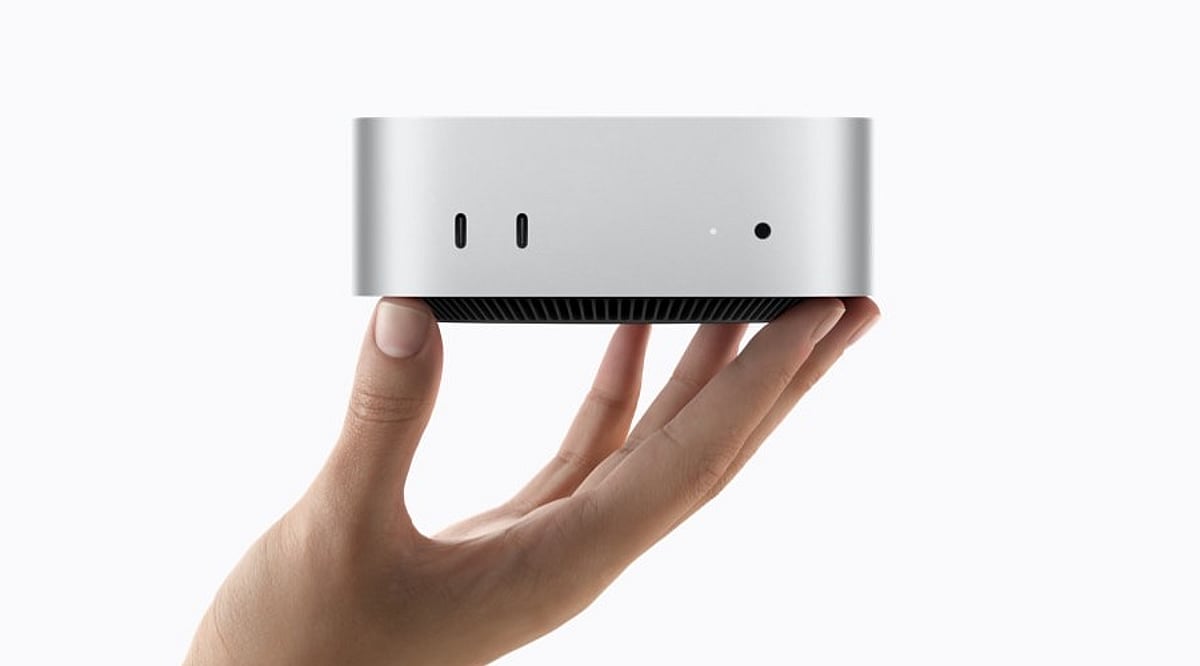
    Apple has officially begun selling its latest Mac mini and Mac Studio desktop computers in India, introducing new processors, boosted AI performance, and expanded memory configurations. The refreshed lineup includes the Mac mini with M6 and M5 Pro chips, while the Mac Studio now offers M5 Max and M5 Ultra options.

    Both desktops went on sale on September 22 and are available through Apple Store locations, Apple’s online store, the Apple Store app, and authorized resellers across India.

    Mac mini M6: Starting at ₹99,900

    The new Mac mini with the M6 chip starts at ₹99,900 in India, with education pricing beginning at ₹88,900. Apple is also offering a Mac mini powered by the M5 Pro, starting at ₹2,09,900.

    The M6-powered Mac mini packs a 12-core CPU, 12-core GPU, and a dual 16-core Neural Engine. According to Apple, it delivers up to 40% faster CPU performance, twice the graphics performance, and up to four times faster AI performance compared to the previous-generation M4 model.

    Memory starts at 16GB of unified memory and can be configured up to 32GB, with memory bandwidth reaching 170GB/s. Connectivity has also been upgraded to Wi-Fi 7, Bluetooth 6, and improved 2.5Gb Ethernet, with an optional 10Gb Ethernet port.

    Mac Studio with M5 Max and M5 Ultra

    For professional users, the new Mac Studio starts at ₹2,79,900 with the M5 Max chip. The M5 Ultra version begins at ₹6,29,900. Education pricing is set at ₹2,56,900 and ₹5,84,900, respectively.

    The M5 Max configuration features an 18-core CPU, up to a 40-core GPU, and support for up to 128GB of unified memory. The M5 Ultra scales even further with up to a 36-core CPU, 80-core GPU, and 512GB of unified memory, delivering up to 1.2TB/s of memory bandwidth.

    Apple says the Mac Studio offers up to 4.3 times faster AI performance and up to 1.8 times faster graphics performance compared with specified previous-generation systems.

    Both new Macs emphasize on-device artificial intelligence, making them strong choices for creative professionals, developers, and AI-focused workloads.

  • CLOSEDQUORUM: The AI-Powered Malware That Uses Multiple Models to Choose Its Next Move

    CLOSEDQUORUM: The AI-Powered Malware That Uses Multiple Models to Choose Its Next Move

    Cybersecurity researchers have uncovered a new Windows malware strain that leverages multiple artificial intelligence models to guide its own actions during an attack. Named CLOSEDQUORUM by researchers at Cisco Talos, the malware represents a significant evolution in how cybercriminals may incorporate AI into malicious software.

    How CLOSEDQUORUM Works

    Unlike traditional malware, which follows a fixed set of instructions from its developers, CLOSEDQUORUM can communicate with up to four AI systems: Google Gemini, DeepSeek, Qwen, and Mistral. Researchers describe this arrangement as a kind of “hive mind,” where the malware can seek input from multiple models rather than depending on a single AI service.

    If one AI service becomes unavailable, the others can continue to provide responses, allowing the malware to keep operating without a human operator selecting its next action. According to Cisco Talos, CLOSEDQUORUM can choose from a predefined set of activities, including stealing login credentials and cryptocurrency-related information. However, researchers have not yet identified the malware’s creator or confirmed that it has been used in real-world attacks.

    A Growing Category of AI-Integrated Malware

    Cisco Talos has established the Cognitive Artifact Intelligence Research Network (CAIRN) to identify and study malware that incorporates AI. The researchers say AI-enabled programs often leave behind identifiable traces that can help security teams distinguish them from conventional malware.

    When Cisco Talos first searched for AI-powered malware, they found roughly nine named families and several proof-of-concept samples. After developing CAIRN, the team identified about 20 additional examples within a few months, suggesting this technique is quickly becoming more common.

    AI Moves Beyond a Tool for Attackers

    The discovery of CLOSEDQUORUM points to a shift in how AI is being used in cybercrime. Previously, discussions focused on attackers using AI to generate phishing emails, write malicious code, or automate tasks. Now, AI is being embedded directly into malware itself, providing real-time guidance during an operation.

    Cisco Talos researcher Matt Olney said attackers are beginning to “operationalize” AI, potentially allowing malicious campaigns to adapt to different systems and expand their reach. For security teams, this means monitoring AI-related indicators will likely become an increasingly important part of malware detection and analysis.

  • WhatsApp Begins Testing Third-Party AI Agents on iPhone—With a Privacy Catch

    WhatsApp Begins Testing Third-Party AI Agents on iPhone—With a Privacy Catch

    WhatsApp expands AI agent testing to iPhone

    WhatsApp is taking another step toward integrating third-party artificial intelligence into its messaging app. The latest beta release for iOS — version 26.37.10.70 — lets select iPhone users in limited countries connect external AI agents directly inside chats. The rollout follows earlier testing on Android, with WABetaInfo reporting the update on September 22. WhatsApp also confirmed that the feature supports independent agents built by outside developers.

    How the new AI agent feature works

    Eligible users can create up to five third-party agents and interact with them through dedicated one-to-one conversations. Setting up an agent begins in the WhatsApp settings menu, where users assign a name and profile photo. WhatsApp then generates an API key that links the agent to its external hosting service, allowing the agent to respond in the chat.

    According to WABetaInfo, the API key connects WhatsApp with the external service running the agent. Users can reset the key if needed, and the key should be kept private. WhatsApp may adjust the five-agent limit in the future.

    What agents can and cannot access

    Third-party agents are deliberately isolated from most WhatsApp data. They can only see information shared directly with them in their designated conversation. Agents cannot access other chats, contacts, or media stored in WhatsApp, and group chats and communities are not included in the current setup.

    Privacy limits: No end-to-end encryption for agent chats

    The most important caveat is privacy. While regular personal chats remain protected by end-to-end encryption, WhatsApp explicitly says communications with third-party agents are not end-to-end encrypted.

    Messages sent to an agent travel through a Meta service that manages the conversation for the provider. That means the agent provider can receive, process, and store messages in unencrypted form. The provider is also responsible for its own data practices, including how it handles requests for access, deletion, correction, or data portability.

    What users should consider before trying AI agents

    This feature adds new functionality without extending WhatsApp’s standard encryption protections. Anyone thinking about connecting a third-party AI agent should review the provider’s privacy terms carefully before sharing sensitive information.

    WhatsApp has not announced a broader release date for the feature. The iOS rollout is still limited, so the final experience could change before it becomes widely available.