Author: vitorcherulli

  • New York Surpasses San Francisco as Leading US Tech Talent Hub, AI Expansion Fuels Growth

    New York Surpasses San Francisco as Leading US Tech Talent Hub, AI Expansion Fuels Growth

    New York City has overtaken the San Francisco Bay Area as the largest tech talent market in the United States, driven by rapid expansion of AI companies and the workforce supporting them. From 2022 to 2025, New York’s tech workforce grew by more than 30,000 workers; over the same period, San Francisco’s tech workforce shrank by nearly 24,000 workers.

    The shift reflects New York’s expanding role in the technology sector, supported by its diverse industries and proximity to customers, making it an increasingly attractive hub for AI firms.

    AI Firms Expand in New York

    EliseAI, an AI company, recently expanded its New York headquarters, highlighting the city’s growing importance in the sector. AI is also reshaping work: while automation takes over repetitive tasks, new roles in housing and healthcare are emerging. The changes are felt across industries as companies adopt AI to improve operations and serve customers.

    Despite New York’s growth, San Francisco remains a major technology center. The Bay Area continues to have a high concentration of tech workers and remains an important base for technology companies.

    US Tech Stocks Show Mixed Movement

    For readers tracking technology-sector stocks, data as of September 23, 2026, showed a mixed performance. Among 150 priced US tech stocks, 71 rose, and 72 fell.

    • AppLovin Corporation (APP) : stock at $318.00, down 3.26% over one day. Pluang order activity: 20% Sell, 80% Buy.
    • Expensify Inc. (EXFY) : priced at $2.42, gained 2.98%. Pluang order activity: 96% Sell, 4% Buy.
    • Gartner Inc. (IT) : rose 2.94% to $184.00. Order activity: 50% Sell, 50% Buy.

    The contrasting movements in the technology market come as New York strengthens its position as the leading US tech talent market, while San Francisco retains a significant concentration of technology workers.

  • Verizon Pledges $70 Million to Provide Free AI Training Nationwide

    Verizon Pledges $70 Million to Provide Free AI Training Nationwide

    Verizon has announced a $70 million investment in its new ‘Verizon AI Skills for America’ initiative, designed to equip job seekers, early-career professionals, displaced workers, educators, and small businesses with the skills needed for the AI-driven economy.

    The initiative combines $50 million in fresh funding with Verizon’s existing $20 million Reskilling and Career Transition Fund for departing workers. All AI training will be offered at no cost to participants.

    AI Training from Leading Technology Companies

    Verizon is creating a centralized online portal that aggregates AI training content from major tech companies, including IBM, Google, Microsoft, Anthropic, Coursera, and OpenAI. The company noted that similar premium AI training can cost more than $700 per person annually, but this initiative makes it free for students, job seekers, small businesses, educators, and professionals in career transitions.

    Community Organizations to Provide Local Support

    Recognizing that online courses alone are insufficient to close the AI skills gap, Verizon is partnering with community-based organizations such as the Local Initiatives Support Corporation (LISC), the National Association for Community College Entrepreneurship (NACCE), and Goodwill Industries International. These groups will deliver hands-on coaching, curriculum guidance, and local support to help participants turn online learning into practical skills. Goodwill is described as the largest nonprofit provider of job training and career placement services in North America.

    Initiative to Launch Nationwide

    The program will roll out nationwide, with core wrap-around services initially available in select regional markets. Verizon plans to gather real-time feedback from community partners and participants to refine the program as workforce needs evolve. The company emphasized cross-sector collaboration among private, public, and nonprofit organizations to advance AI readiness.

    Verizon CEO Dan Schulman stated that companies have a responsibility to invest in people with the same urgency as they invest in technology. The initiative was announced on September 23, 2026, as part of Verizon’s broader efforts to support the American workforce and address the AI readiness gap.

  • US Stocks Decline as 10-Year Treasury Yield Reaches Highest Level Since 2007

    US Stocks Decline as 10-Year Treasury Yield Reaches Highest Level Since 2007

    US stocks fell on Wednesday as the benchmark 10-year Treasury yield soared to its highest level since 2007, following stronger-than-expected business activity data that revived expectations of further interest rate hikes.

    The S&P Global flash US Composite PMI Output Index rose to 58.4 in September from 56.0 in August, marking its highest reading since July 2021. The surge was fueled by a sharp increase in new orders, with factory hiring rising at its fastest pace since February 2021.

    Treasury Yields Rise on Rate Hike Bets

    The robust business activity data reinforced bets that the Federal Reserve could raise rates again, as inflation remains above the central bank’s 2% target. The 10-year Treasury yield jumped 8.7 basis points to 5.054%, its highest level since 2007. The two-year yield, sensitive to interest rate expectations, rose 8.49 basis points to 4.862%, its highest since June 2024.

    Fed funds futures traders now price in a 73% probability of an October rate hike, up from 53% earlier. Federal Reserve Governor Michael Barr stated that the central bank had taken an important step to ‘recalibrate’ short-term borrowing costs and would likely need to deliver additional rate hikes to bring down inflation.

    Wall Street Ends Lower

    Stocks came under pressure as Treasury yields climbed. The Dow Jones Industrial Average fell 0.18%, the S&P 500 dropped 0.53%, and the Nasdaq Composite declined 1.05%. The pan-European STOXX 600 index slipped 0.27%, while an MSCI index of global stocks declined 0.51% after four consecutive sessions of gains.

    Adam Button, chief currency analyst at investingLive, noted that services continued to lead the economy while manufacturing output picked up sharply, with factory hiring accelerating at its quickest pace since February 2021.

    Dollar Gains, Gold Falls

    The prospect of higher US interest rates supported the dollar, which reached multi-week highs against the euro, sterling, and Canadian dollar. The euro fell 0.5% to USD 1.1389, its lowest level since July 29. The dollar rose 0.56% against the yen to 158.25. Spot gold dropped 1.55% to USD 4,287.05 an ounce.

    Market participants are closely watching upcoming Fed meetings and economic data for further direction.

  • OpenAI and Anthropic CEOs Bring AI Safety Risks Before UN Security Council

    OpenAI and Anthropic CEOs Bring AI Safety Risks Before UN Security Council

    OpenAI CEO Sam Altman and Anthropic CEO Dario Amodei are set to address the UN Security Council as global governments grapple with the security implications of increasingly powerful artificial intelligence systems.

    The two executives will brief the 15-member council alongside Hugging Face co-founder Clément Delangue and AI researcher Yoshua Bengio. Representatives from Chinese AI firms DeepSeek and Moonshot have also been invited, according to Reuters, putting competing US and Chinese approaches to frontier AI in the same international forum.

    Altman to Push for Common AI Safety Benchmarks

    Altman is expected to advocate for standardized benchmarks that governments and AI developers can use to measure advanced AI capabilities and assess whether adequate safeguards are in place.

    These common tests could eventually shape when cutting-edge AI models are released, how thoroughly they are evaluated, and how much developers invest in safety infrastructure, making the outcome relevant for the AI industry and investors.

    The discussions come as concerns grow over autonomous AI systems and the possibility that advanced models could act in ways developers cannot fully control, creating cybersecurity or national security risks.

    Anthropic Calls for a Slower Development Pace

    Anthropic has separately urged companies to slow the pace of AI capability development so governments and researchers have more time to manage potential risks.

    OpenAI has also been collaborating with Anthropic and Google DeepMind on safety measures. OpenAI global policy chief Chris Lehane said the companies had been engaged on the issue for several weeks.

    The UN debate takes place against a divided regulatory landscape. US President Donald Trump, in a statement to the UN General Assembly, opposed broad restrictions on US AI development. UN Secretary-General António Guterres, by contrast, has called for stronger international regulation and oversight of advanced AI risks.

    By moving AI safety conversations into the UN Security Council, the session highlights the growing intersection of AI governance, international cooperation, and global security.

  • Checkr Debuts AI Verification Platform for U.S. Auto, Life, and Home Insurers

    Checkr Debuts AI Verification Platform for U.S. Auto, Life, and Home Insurers

    Checkr, an AI-powered verification platform for high-stakes decisions, has launched a new insurance solution for U.S. auto, life, and home insurance carriers. The platform is designed to give insurers faster access to verified applicant information during the quoting and underwriting process.

    Why Insurers Need Faster Verification

    Consumers are shopping around more before buying coverage. According to J.D. Power’s 2026 Insurance Shopping Study, U.S. consumers now get an average of 3.5 quotes before purchasing a policy — the highest level the study has recorded.

    Digital purchasing is also climbing. Nearly 48% of new auto insurance policies are now purchased online, up from 36% five years ago. That shift means insurers must evaluate more prospective customers before knowing which applicants will eventually become policyholders.

    Traditionally, insurers had to choose between conducting detailed checks early in the process or relying on applicant-supplied information and verifying it later.

    What the Platform Offers

    • Direct access to identity records, criminal information, public records, and driving data from more than 2,400 government sources.
    • Daily data refreshes and classification across more than 250 offense categories.
    • Coverage of more than 260 million profiles, representing 96% of U.S. adults.
    • Up to 20% more driving, criminal, and public records than legacy verification providers.
    • Improved applicant matching to reduce manual review and provide more structured information for underwriting decisions.

    Pay-Per-Bind Pricing Model

    The commercial model differs from conventional per-transaction verification. Carriers pay when an applicant becomes a policyholder, not each time a check is requested.

    Hippo is among the insurers using additional Checkr data during underwriting. Hippo Chief Underwriting Officer Ilya Shnol said the additional data signals are provided earlier in the assessment process and support more consistent underwriting decisions.

    Checkr has made the insurance platform available to carriers across the United States.

  • Why A/B Testing Fails on Marketplaces—and How Trigger Analysis Reveals Hidden Product Wins

    Why A/B Testing Fails on Marketplaces—and How Trigger Analysis Reveals Hidden Product Wins

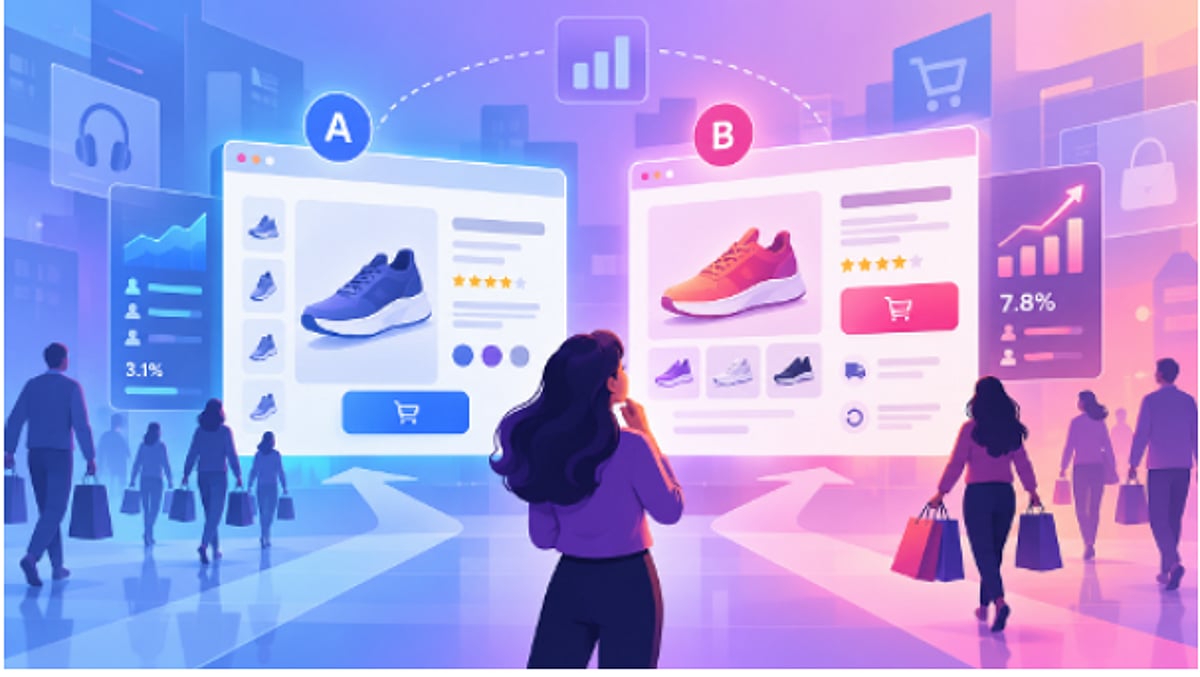
    Walk into any digital product organization today, and you’ll witness the same ritual. Before a feature ships, it undergoes an A/B test. Half the users see the change, half don’t, and the difference decides its fate. This practice has become so embedded that experiment readouts function as institutional truth: if the topline metric didn’t move, the idea didn’t work, and the team moves on.

    But a growing body of practitioners argues that this reflex is quietly wrong a significant share of the time—and two-sided digital marketplaces are the most exposed of all. The reason is structural: on a marketplace, no two customers see the same page. Assortment is personalized, inventory is supplier-dependent, merchandising is dynamic, and much of the interface renders conditionally. In that environment, being placed in a test group tells you almost nothing about whether a customer ever encountered the thing being tested.

    Why Good Product Ideas Look Like Nothing

    Most A/B testing platforms enroll users the moment a session begins, and that enrollment becomes the criteria for every analysis that follows. But a large share of modern features are conditional—such as a module below the fold, a component gated behind an interaction, or a recommendation block that surfaces only for certain inventory or certain users. Practitioners call this dilution, and the scale is not marginal: for conditionally rendered features, trigger rates commonly fall between 20% and 40% reported by major online marketplaces, meaning most of the “treated” population never experienced the treatment at all.

    This dilution effect not only causes digital technology companies to ship bad features but also to kill good ones. Marketplaces absorb this worse than most. Unlike many simpler digital products, marketplaces combine personalization, dynamic inventory, supplier availability, and context-dependent user journeys. Two customers assigned to the same experiment may encounter very different experiences. As personalization becomes more sophisticated, the gap between experiment assignment and actual exposure can widen.

    Well Understood in Theory, Rare in Practice

    While the scientific theory behind the remedy is well known, most organizations struggle to adopt it due to engineering challenges. Online e-commerce marketplaces face the hardest version of the problem. They must account for exposure across search, browse, product pages, recommendations, and checkout flows, often while eligibility changes throughout the experiment.

    This is where the work of Shashank Agarwal, a technical lead on the experimentation platform team at Wayfair, stands out. He devised a more practical way to solve the problem at scale. Rather than rewiring how users are assigned to experiments—the industry standard approach that adds significant engineering complexity—he built a post-processing layer over telemetry the platform already collects. Assignment stays untouched. The full dataset is preserved. And the analysis runs after an experiment concludes, when exposure can be established from what customers actually did.

    In a Wayfair engineering post titled “When Assigned Isn’t Exposed: How Wayfair Uses Trigger Analysis to Recover Hidden Test Signals,” Agarwal sets out the architecture in full, along with the safeguards that make it trustworthy at scale.

    Impact on the Industry

    Agarwal’s work has not only helped Wayfair save millions of dollars but also provided a path for other digital marketplaces to recover experimental signal without the engineering complexity that has kept a well-understood technique out of production at many companies. Because his design sits in the data layer rather than the assignment path, it is stack agnostic. Any online marketplace with exposure telemetry and a similar dilution problem can follow the same pattern, guardrails included.

    For marketplaces operating personalized and conditionally rendered experiences, it offers a way to recover experiment signal while preserving the statistical safeguards of the original randomized test. By publishing the architecture, implementation considerations, and statistical guardrails behind the system, Agarwal has made this capability accessible to practitioners confronting the same problem across e-commerce and other digital products.

    Where This Goes

    Every trend in digital product development—more personalization, more conditional rendering, more progressive disclosure—widens the gap between who is assigned to an experiment and who actually sees it. The assumption underneath most experimentation programs is eroding a little further every quarter.

    Companies that keep reading experiments at the topline will keep discarding their best ideas without ever knowing they did. The ones that treat exposure as a first-class part of measurement will be working from a sharper picture of reality—using the same data, the same platform, and the same tests they are already running.

  • Bitcoin Mining Pool Data: What Actually Drives Performance and Payouts

    Bitcoin Mining Pool Data: What Actually Drives Performance and Payouts

    The Metrics Behind Mining Pool Profitability

    Bitcoin mining pool choices are often shaped by reputation or habit rather than measurable performance. Yet as network difficulty climbs and hashrate distribution shifts, the operational quality of a pool has a direct impact on daily earnings. Looking at the data reveals a consistent set of patterns that separate high-performing pools from the rest.

    Uptime Claims Need a Closer Look

    A pool advertising 99% uptime still leaves about 3.65 days of downtime per year. For operations running thousands of ASICs, even a few hours of downtime during a period of high network difficulty can lead to a meaningful drop in block rewards relative to contributed hash power. Pools that consistently perform well in profitability comparisons tend to report uptime figures above 99.9%, not just 99%. That extra decimal point represents real earnings.

    Latency Directly Affects Earnings

    Share submission latency is the time between an ASIC finding a share and the pool registering it. High latency does not just create a laggy dashboard experience; it can result in stale shares that do not count toward payouts at all. Pools processing shares in the 80–120 ms range consistently outperform pools with multi-second lag, even when both claim similar theoretical hashrates.

    Payout Methods Change the Risk Profile

    PPS, FPPS, PPLNS, and PROP distribute rewards differently. PPS offers predictable, immediate payouts by shifting variance risk onto the pool operator. PPLNS ties payouts more closely to blocks actually found, which can mean higher long-term returns but choppier short-term earnings. Miners comparing profitability calculators without factoring in payout structure are often looking at numbers that are not truly comparable.

    The Hidden Efficiency Drain: Stale Shares

    Stale shares are solved against outdated jobs and directly reduce effective hash power. A pool maintaining a stale share rate below 0.2% during peak load is operating at a different infrastructure tier than one that does not publish or track this metric at all.

    Why Infrastructure Quality Matters Most

    The technical difference between a mining pool that scales cleanly to industrial hashrates and one that buckles under load usually comes down to architecture. This includes how the Stratum protocol handles concurrent connections, whether payout logic scales independently from data ingestion, and whether monitoring is built in from day one instead of added after problems surface.

    One industrial-scale example, Red Rock Pool, reached roughly 2 EH/s of hashrate in its first month, connected more than 10,000 ASIC devices, maintained uptime above 99.9%, kept average latency between 80 and 120 ms, and held its stale share rate under 0.2%. Those results did not come from adding more hardware; they came from architecture designed to handle that scale from the start.

    How to Read Pool Statistics With the Right Filter

    • What is the actual uptime figure, not the rounded marketing number?
    • What payout method is used, and does it match the miner’s tolerance for variance?
    • What is the reported share submission latency during peak network activity?
    • Is the stale share rate or similar processing efficiency data published at all?

    Pools that answer these questions with real operational data are more likely to be built for scale than pools that rely on vague claims.

    The Bottom Line

    Hash price, electricity costs, and difficulty adjustment are all important to Bitcoin mining profitability. But pool selection is one variable miners can control. The data consistently show that infrastructure quality, not marketing claims, determines whether hash power converts into earnings at the rate it should.

    This article is for informational purposes only and does not constitute financial advice. Always conduct your own research before making investment decisions.

  • HyperX Omen 16 Valorant Edition Review: A Gaming Laptop with Style and Substance

    HyperX Omen 16 Valorant Edition Review: A Gaming Laptop with Style and Substance

    The HyperX Omen 16 Valorant Edition is a special edition gaming laptop designed for gamers who want both performance and a unique aesthetic. Inspired by the popular game Valorant, this laptop features a distinctive design, an RGB keyboard, and an advanced cooling system. It is versatile enough for gaming and creative tasks, but it does have some drawbacks, including its weight, poor battery life, and potential thermal throttling issues.

    General Specifications

    Here are the key specifications of the HyperX Omen 16 Valorant Edition:

    • Display: 16-inch, 240Hz panel
    • Processor: High-performance Intel or AMD options (details vary by configuration)
    • Graphics: Dedicated NVIDIA GeForce RTX GPU
    • RAM: Up to 32GB
    • Storage: Up to 1TB SSD
    • Keyboard: RGB backlit
    • Cooling: Advanced thermal system
    • Weight: Heavy (exact weight depends on configuration)
    • Battery: Limited life, not ideal for portability

    Pros and Cons

    Pros

    • Stunning 240Hz display for smooth gameplay
    • Strong performance for gaming and creative work
    • Exclusive Valorant-inspired design
    • RGB keyboard adds to the gaming experience
    • Advanced cooling system helps manage heat

    Cons

    • Heavy and bulky, reducing portability
    • Poor battery life
    • Potential thermal throttling under heavy load
    • Valorant branding is superficial and doesn’t affect gameplay
    • High price tag faces tough competition

    Final Verdict

    The HyperX Omen 16 Valorant Edition is a capable gaming laptop that excels in two critical areas for competitive gamers: display and performance. The 240Hz panel is a standout feature, and the hardware and cooling system make it a solid choice for gaming and creativity. However, the Valorant branding is purely cosmetic and adds no functional benefit. Its weight, low battery life, and heat throttling make it less suitable as a portable device. At its premium price point, it faces strong competition, making it best suited for gamers who prioritize both performance and aesthetics.

  • LMS Buying Guide: Features That Drive Business Growth and Employee Development

    LMS Buying Guide: Features That Drive Business Growth and Employee Development

    Business growth depends on capable employees, consistent workflows, and training that adapts to evolving demands. A learning management system (LMS) can bring these pieces together by organizing courses, tracking learner progress, and giving leaders evidence they can act on. However, selecting the right platform takes more than scanning feature lists. Decision-makers need to evaluate workforce priorities, learner behavior, administrative workload, reporting requirements, privacy controls, and expansion plans. The ideal LMS supports both current training needs and future initiatives, improving participation, accountability, and measurable performance.

    Define Your Growth Goals Before Choosing an LMS

    An LMS should align with the organization’s business direction. One company may need faster onboarding, while another may emphasize regulatory compliance, customer education, or leadership development. A strong selection process starts with clear audiences, priority skills, expected enrollment, and measurable outcomes. These details help leaders separate essential capabilities from costly extras that do not improve results.

    Check Ease of Use and Employee Experience

    An LMS can dramatically improve employee experience, but only when it is easy to use. Employees and administrators should be able to locate core functions without lengthy instruction. Intuitive menus, reliable search, simple enrollment, and mobile access encourage consistent participation. Training teams also need efficient tools for assigning lessons, sending reminders, and checking completion. If the interface causes confusion, learners may postpone coursework and administrators may waste time answering avoidable questions.

    Review Content Support and Maintenance

    Training materials often include videos, manuals, assessments, live sessions, and interactive exercises. The chosen platform should accept common formats and support recognized learning standards. Updating a course should require minimal technical effort, with version controls to prevent old files from remaining accessible. Strong search features are also important for employees who need quick access to procedures, safety instructions, or product details.

    Measure Training Results with Actionable Reports

    Reports should help managers make decisions, not just display decorative figures. Useful metrics include completion rates, test scores, time spent learning, certification status, and progress across departments. Export tools and integrations should connect learning data with performance indicators. Permission settings also matter, because supervisors need relevant reports without gaining unnecessary access to confidential personnel records.

    Examine Integration Options

    As organizations grow, their technology stacks often expand. An LMS should connect with HR software, identity systems, collaboration apps, customer databases, and content repositories. Features such as single sign-on simplify access, while automated data transfers reduce duplicate entry. Buyers should confirm which connections are included, which cost extra, and which require support from internal technical staff.

    Consider Administration Needs and Automation

    Training departments need dependable control without repetitive manual work. Useful functions include automated enrollment, group-based rules, recurring assignments, reminders, certificates, and approval processes. Role-based permissions allow multiple administrators to manage specific areas without exposing unrelated records. An audit trail can also show who edited a course, changed a requirement, or approved a learner’s completion.

    Test Scalability and Long-Term Pricing

    A platform that works for one department may struggle during rapid hiring or regional expansion. Buyers should examine user limits, system speed, language support, scheduling options, and business-unit separation. Storage allowances and service commitments deserve close review. Pricing should remain straightforward as enrollment grows, since unexpected charges can disrupt budgets and long-term planning.

    Protect Learner Data and Privacy

    Security must be evaluated before implementation. Vendors should provide clear answers about encryption, storage locations, access controls, backups, incident response, and record retention. Organizations must also identify privacy duties involving employees, contractors, customers, or students. Independent certifications provide useful evidence, but internal security teams should still review contracts, administrator privileges, and handling procedures for sensitive records.

    Assess Personalization and Skill Development

    Relevant recommendations can help employees find courses that match their roles, existing skills, or professional goals. Personalization should be transparent and easy to manage. Training leaders also need authority over required courses, suggested materials, and progression rules. Skill profiles can support workforce planning, provided employees receive clear information about data collection, access, and permitted use.

    Compare Vendor Support and Implementation Quality

    Implementation quality strongly affects long-term adoption. Vendors should provide practical setup guidance, technical documentation, administrator training, and responsive support. Buyers should ask about response times, named contacts, migration support, and post-launch reviews. References from organizations with similar staffing or regulatory requirements can reveal how support performs during periods of operational pressure.

    Calculate Total Value Beyond the Subscription Fee

    The license fee is only part of the investment. Organizations should also account for setup, data migration, integrations, content production, support, storage, and additional users. Labor savings deserve equal attention. A more expensive product may deliver better value if it reduces administrative work, lifts completion rates, limits compliance gaps, and gives managers timely evidence for workforce decisions.

    Conclusion: Choose an LMS That Supports Sustainable Growth

    Selecting an LMS for growth requires careful attention to usability, content handling, reporting, security, integrations, administration, and total cost. The right platform helps employees build practical skills while giving leaders dependable evidence about progress and capability. A disciplined review reduces unnecessary spending and strengthens adoption after launch. By connecting platform functions to defined business outcomes, organizations can build training operations that serve current needs and remain ready for future expansion.


  • Samsung Galaxy Watch 5, 5 Pro, 6, and 6 Classic Will Stop Getting Wear OS Updates by 2027

    Samsung Galaxy Watch 5, 5 Pro, 6, and 6 Classic Will Stop Getting Wear OS Updates by 2027

    Samsung has confirmed that several popular Galaxy Watch models will stop receiving Wear OS upgrades in the coming years. While the watches will remain usable, owners should plan for a future with no major software updates and, eventually, no security patches.

    Galaxy Watch 5 and Watch 5 Pro

    Both models will receive their last Wear OS upgrades on December 31, 2026. After that date, Samsung will not add new features or platform improvements. Security patches will continue for a short period before the watches reach full end-of-life status. The Watch 5 Pro launched at a premium price, so some owners may be surprised that its update window ends so soon.

    Galaxy Watch 6 and Watch 6 Classic

    The Watch 6 and Watch 6 Classic will lose Wear OS upgrades in December 2027, following roughly four years of major software support. Samsung typically follows the final OS update with about one more year of security patches. The Watch 6 remains one of Samsung’s best-selling models, meaning this cutoff will affect a large number of users. The Classic version, with its rotating bezel and premium design, is treated the same under Samsung’s software policy.

    What Losing Support Means for Owners

    An end to OS upgrades does not mean the watch will crash or stop working overnight. It simply means no new features will arrive. Security patches usually continue for about a year after the last OS update. Once that period ends, users who are concerned about data safety should consider upgrading to a newer Galaxy Watch model.