Author: vitorcherulli

  • Samsung Galaxy A27 Hits India with Snapdragon 6 Gen 3 and 120Hz AMOLED Screen

    Samsung Galaxy A27 Hits India with Snapdragon 6 Gen 3 and 120Hz AMOLED Screen

    Samsung has officially launched the Galaxy A27 in India, expanding its popular A-series lineup. The new mid-range smartphone brings a larger battery, improved performance, and a familiar design compared to its predecessor. Samsung promises six generations of Android and One UI upgrades along with six years of security updates.

    Samsung Galaxy A27 Specifications

    The Galaxy A27 is powered by the Qualcomm Snapdragon 6 Gen 3 mobile platform. It comes with up to 8GB LPDDR5X RAM and 256GB UFS 3.1 storage. The device packs a 5,000mAh battery with 25W fast charging support. Its 6.7-inch FHD+ Super AMOLED display features an adaptive 120Hz refresh rate and is protected by Corning Gorilla Glass Victus+.

    Out of the box, the Galaxy A27 runs One UI 8.5 based on Android 16. Samsung has committed to six generations of Android and One UI upgrades, plus six years of security patches. The smartphone also includes Galaxy AI features and Samsung Knox security.

    Samsung Galaxy A27 Camera

    For photography, the Galaxy A27 sports a triple rear camera setup: a 50MP primary sensor, a 5MP ultra-wide lens, and a 2MP macro sensor. On the front, there is a 12MP selfie camera for video calls.

    Samsung Galaxy A27 Price in India

    Samsung has launched the Galaxy A27 in three variants:

    • 6GB RAM + 128GB storage: Rs. 28,999
    • 8GB RAM + 128GB storage: Rs. 31,999
    • 8GB RAM + 256GB storage: Rs. 37,499

    The company is offering an instant discount of Rs. 3,000, along with free EMI options and UPI cashback.

    Samsung Galaxy A27 Availability

    The Galaxy A27 will go on sale in India on July 3. It will be available in Light Green, Light Pink, and Black colors through Samsung’s online and offline stores.

  • Galaxy Research Lowers CLARITY Act Passage Odds to 50% Amid Senate Calendar Constraints

    Galaxy Research Lowers CLARITY Act Passage Odds to 50% Amid Senate Calendar Constraints

    Galaxy Research has reduced its estimate for the CLARITY Act becoming law in 2026, citing growing pressure on the US Senate calendar. The research firm lowered its forecast from 60% to 50%, emphasizing that the main challenge is timing rather than support for the legislation.

    Alex Thorn, Galaxy’s head of firmwide research, explained that lawmakers face a limited window to advance the crypto market structure bill before Congress enters its August recess. He noted that several legislative priorities continue to compete for Senate floor time.

    Scheduling Delays and Limited Senate Floor Time

    Galaxy Research said the latest revision reflects delays in the legislative process instead of concerns about the contents of the CLARITY Act. Thorn wrote that “as the Senate calendar tightens and a lack of progress in negotiations makes passage less likely than several weeks ago.”

    According to Thorn, the bill still lacks a unified Banking-Agriculture Committee text. In addition, Senate leaders have not announced a floor date or scheduled a motion to proceed. These missing steps have reduced confidence that lawmakers can complete the process within the available time.

    Galaxy previously reduced its estimate from 75% to 60% earlier in June. The latest adjustment brings the projected odds to an even 50-50 as lawmakers continue negotiations on unresolved sections of the proposal.

    Thorn stressed that the downgrade relates to legislative timing rather than the bill itself. The research team continues to view the legislation as capable of advancing if Congress schedules enough debate before the summer break.

    Other Legislative Priorities Increase Pressure on the CLARITY Act

    The Senate calendar has become more crowded after President Donald Trump stated that he would not sign a bipartisan housing bill unless Congress also passed the SAVE Act. Thorn said the dispute has reduced available floor time for other measures, including the CLARITY Act.

    He also noted that lawmakers must address other major items, including Section 702 of the Foreign Intelligence Surveillance Act and the National Defense Authorization Act for fiscal year 2027. These measures require Senate attention before the August recess.

    Thorn wrote, “For a 60-vote bill that still needs a merged Banking-Agriculture text, a motion to proceed, floor debate, an amendment process, and then House action on whatever the Senate produces, the runway is quickly declining into just a matter of weeks.”

    He added that Senate Majority Leader John Thune should announce floor time by early July. Without a scheduling decision, Thorn said the bill could move into September, when midterm political considerations may make difficult votes harder to schedule.

    Crypto Industry Continues to Watch the Bill’s Progress

    The CLARITY Act aims to establish a federal regulatory framework for digital assets in the United States. The proposal would divide oversight between the Securities and Exchange Commission and the Commodity Futures Trading Commission, while assigning primary authority over most crypto assets to the CFTC.

    The legislation has remained a major topic of discussion among lawmakers, digital asset companies, financial institutions and advocacy groups. While more than 200 crypto organizations have urged Congress to approve the bill, other groups have raised concerns about regulatory oversight and financial safeguards.

    The bill is scheduled for a House hearing on July 17 as lawmakers continue discussions. Industry participants are monitoring the Senate calendar closely because the remaining legislative timetable may determine whether the proposal advances this year.

    Despite lowering the probability estimate, Galaxy Research maintained that the legislation still has a realistic path forward. Thorn wrote, “We still think enactment this year has a strong chance — for a bill of this magnitude and complexity, 50-50 are pretty good odds.” The coming weeks are expected to determine whether Senate leaders allocate enough time to move the bill through the remaining legislative stages.

  • Lucida AI Secures €6.1M in Seed Funding as User Base Hits 3 Million

    Lucida AI Secures €6.1M in Seed Funding as User Base Hits 3 Million

    UK-based Lucida AI has raised €6.1 million in seed funding to expand its speech-native AI platform across new countries and languages. The investment will help the company improve its technology, grow its enterprise business, and accelerate product development. The latest round brings Lucida AI’s total funding to €7.24 million.

    Velocity Capital led the investment round, with participation from Next Tier Ventures, Look AI Ventures, Bogazici Ventures, Yapı Kredi Frwrd Ventures, and Ünlü & Co. Lucida AI’s founders, Mustafa Girgin and M. Sait Demirci, said artificial intelligence has become a global race, making robust voice-based technology more important than ever.

    Lucida AI Builds a Speech-First Learning Platform

    Founded in 2024, Lucida AI focuses on helping people communicate naturally through speech instead of typing. The platform allows users to have real-time conversations with artificial intelligence while receiving instant feedback on pronunciation, fluency, and speaking clarity. The system adjusts every conversation to match the user’s skill level, creating a more natural learning experience.

    The company built its platform using its own Speech Language Model, which supports smooth voice conversations without scripts or complex menus. Users simply speak with the AI, making language practice feel more like a real conversation. The platform also creates everyday situations, including ordering coffee, attending business meetings, giving presentations, and speaking with clients.

    Enterprise Growth and Global User Expansion

    Lucida AI serves both individual users and businesses. Consumers can access the platform through its mobile application, while enterprise customers receive secure deployment options with end-to-end encryption and on-premises hosting. These features make the platform suitable for organizations that need strong data security while using enterprise AI solutions.

    The startup has grown quickly since launching only fifteen months ago. Lucida AI now has more than three million users worldwide and has recorded over 2.2 billion minutes of spoken conversations across Europe, the United States, and several emerging markets. Investors believe this growth shows rising demand for practical speech AI tools that improve real-world communication.

    Look AI Ventures said Lucida AI stands out by focusing on spoken language instead of basic text-based AI systems. The investor also noted that the company’s pronunciation engine provides more accurate feedback than many general AI language tools currently available.

    Growing Demand for Speech AI Solutions

    Lucida AI’s latest funding shows investors are putting more money into AI products that solve real communication problems. Companies across education, business, and customer service increasingly need faster and more natural voice-based communication. This growing demand continues driving investment in speech-native AI and other voice technologies.

    The funding also reflects a larger trend across Europe. Several startups working in voice technology, AI-powered language learning, and conversational automation have raised major investments during 2026. This growing activity shows investors see strong long-term potential in AI platforms built for global communication instead of only text-based chat.

    Lucida AI now plans to use its new funding to enter more international markets, support additional languages, improve its speech technology, and expand its enterprise services. As competition grows in the AI sector, the company hopes its voice-first approach will help it build a stronger position in the fast-growing speech AI market.

  • Amazon Offers Apple A16 iPad at $299 Despite Apple’s Recent Price Hike

    Amazon Offers Apple A16 iPad at $299 Despite Apple’s Recent Price Hike

    Apple has raised prices across its iPad lineup, but savvy shoppers can still snag the entry-level A16 iPad at its original price on Amazon. The e-commerce giant is offering the 11-inch model with the A16 chip for $299, while Apple’s official retail price is now higher following a recent adjustment. This creates a limited-time opportunity for consumers to save up to $100.

    According to reports, the 11-inch iPad features a Liquid Retina display, 128GB of storage, Wi-Fi 6, Touch ID, and the A16 chipset. It delivers strong performance for streaming, productivity, and gaming. The tablet also supports the Apple Pencil and Magic Keyboard Folio with USB-C.

    Industry analysts believe Amazon may be selling inventory purchased before Apple’s price hike, allowing buyers to benefit from the older pricing until stock runs out. Once those units are gone, retailers will likely adopt Apple’s new pricing structure.

  • Bitcoin Tests Key Support as Early Bottom Signals Emerge: What Traders Should Watch

    Bitcoin Tests Key Support as Early Bottom Signals Emerge: What Traders Should Watch

    Bitcoin has reached a critical price zone as on-chain data reveals early signs of a market bottom, while long-term chart levels continue to expose the cryptocurrency to further losses. Selling pressure appears to be easing after heavy market declines, but analysts caution that Bitcoin must hold nearby support before any sustained recovery can develop.

    The next several weeks will be pivotal in determining whether buyers can establish a stable base or if sellers will drive prices toward lower levels.

    On-Chain Model Enters Bottoming Zone

    On-chain analyst MorenoDV notes that Bitcoin has produced one of its first signals of a deeper market cleanup, though the data does not confirm a final bottom. The analyst uses the Bitcoin UTXO Block Profit and Loss Count Ratio Model, which compares profitable UTXO blocks with those holding unrealized losses.

    A high ratio indicates many holders still have profits available, creating room for further selling as investors reduce exposure or lock in gains. Conversely, a lower reading suggests more holders have moved into losses after the market has already absorbed heavy selling pressure.

    The latest ratio has entered a zone associated with earlier bottoming periods, but MorenoDV says the 365-day moving average still needs to decline further. Until that longer-term measure drops, the current signal may reflect a temporary oversold phase rather than a complete market reset.

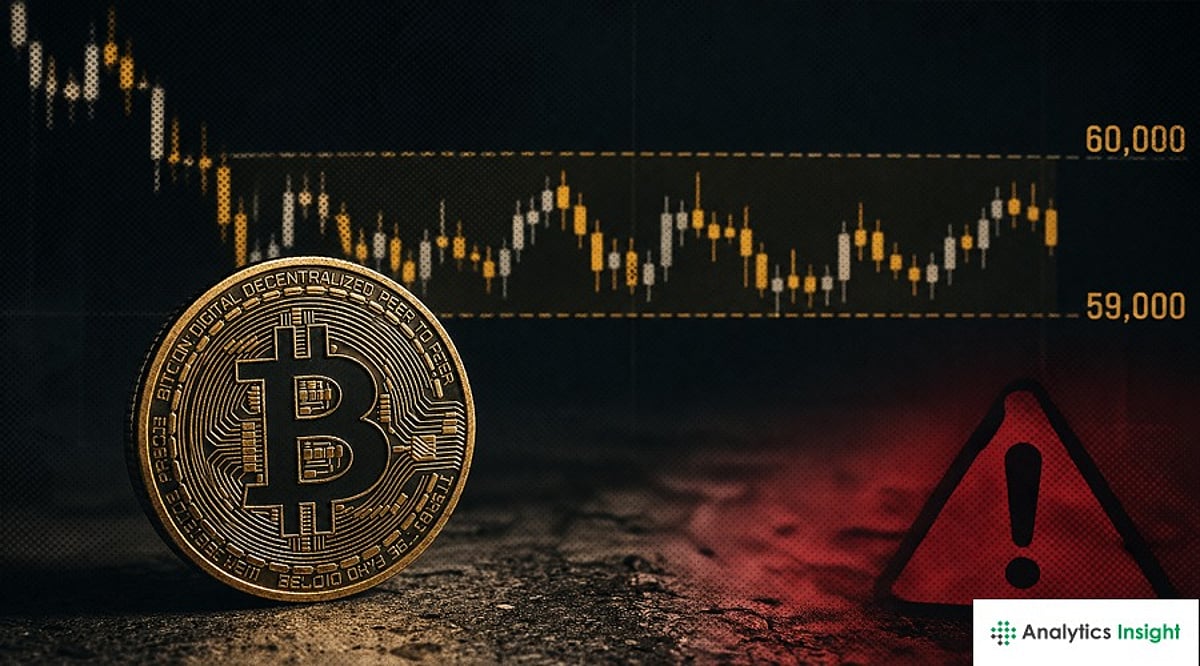
    Bitcoin Range Keeps $67,000 in View

    Crypto trader Honey observes that Bitcoin has already moved below the June low near $59,000, leaving the June high around $67,000 as the next major range level. The trader expects the strongest range-bound outcome to involve a rise over the next four to six weeks before Bitcoin approaches the June high.

    That path would carry the price from one side of the current range to the other before any larger decline develops during the fourth quarter. This outlook does not signal the start of a new bull market, as Bitcoin would remain inside an established range while traders await clearer direction.

    Short-covering could also trigger brief rallies if bearish traders close positions, although MorenoDV says those moves would not prove a lasting recovery. The key question is whether buyers can sustain enough demand to push Bitcoin toward $67,000 while the broader market still tests long-term support.

    200-Week Average Shifts Focus Lower

    Chart analyst Nic Puckrin notes that Bitcoin closed below its 200-week simple moving average for the first time in more than three years. The break also marked the first move below that average during the current market cycle, increasing attention on lower support levels.

    In earlier bear markets, the 200-week average served as a major reference point for traders tracking long-term market weakness. Puckrin identifies the 61.8% Fibonacci retracement near $57,900 as the next support level if Bitcoin remains below the long-term average.

    If sellers break that zone, traders may turn toward the on-chain realized price near $53,200 as the next major level. For now, on-chain conditions suggest slower selling, while chart signals show that Bitcoin still faces pressure around several important support areas.

    What’s Next?

    Bitcoin shows early bottoming signals as selling pressure begins to ease, but the market still faces major risks below the 200-week moving average. Support at $57,900 and $53,200 remains critical, while $67,000 marks the next recovery target. Traders should watch these levels before confirming a stronger rebound.

  • Ford Brings Back Hundreds of Engineers After AI-Driven Quality Issues Led to Billions in Warranty Costs

    Ford Brings Back Hundreds of Engineers After AI-Driven Quality Issues Led to Billions in Warranty Costs

    Ford Motor Company has begun rehiring hundreds of veteran engineers following a series of quality problems and skyrocketing warranty expenses that exposed the limits of relying too heavily on artificial intelligence. The automaker’s renewed focus on experienced talent marks a significant shift after years of investing in AI-led quality control that ultimately failed to deliver expected results.

    This strategic pivot underscores a costly lesson: while AI can process vast amounts of data and accelerate certain tasks, it cannot replace decades of hands-on engineering expertise. After suffering substantial quality-related losses, Ford is now returning to a model where AI supports engineers rather than replacing them.

    Hundreds of Experienced Engineers Return

    Approximately 350 engineers and technical experts who had retired or left the company are being rehired. Their deep institutional knowledge will be applied to developing new vehicles and improving product quality.

    Charles Poon, Ford’s Vice President of Vehicle Hardware Engineering, acknowledged that the company had underestimated the value of experienced engineers. He noted that years of institutional knowledge walked out the door with retiring employees, leaving a gap that AI systems could not fill despite advances in automation.

    Ford has also reinstated engineer-led design reviews, giving senior technical teams a larger role in evaluating products before they move into production.

    Early Results Show Improvement

    The new approach appears to be paying off. Ford recently earned the top spot among mass-market brands in the 2026 J.D. Power Initial Quality Study — its best performance since 2010. The company has also trimmed warranty spending by identifying manufacturing and design problems earlier, during the development phase, so fewer defects reach customers.

    Still, Ford remains the automaker with the most recalls in the U.S. this year, though many of those recall actions are linked to older vehicle programs rather than newly launched models.

    AI Remains Part of Ford’s Future

    Despite the strategic shift, Ford is not abandoning artificial intelligence. The company continues to use AI for software validation, automated testing, and manufacturing analysis — with more than 100,000 software tests now handled through AI-assisted systems.

    Executives say the company’s approach has changed, not its commitment to technology. AI will continue to play a role in increasing efficiency and decision-making, but skilled engineers remain indispensable in manufacturing.

    Ford’s initiative serves as a cautionary tale for companies adopting AI in manufacturing: technology can assist engineering, but it cannot replace human expertise.

  • Dogecoin 2026: ETF Adoption and Payment Expansion Could Determine DOGE’s Next Move

    Dogecoin 2026: ETF Adoption and Payment Expansion Could Determine DOGE’s Next Move

    Dogecoin (DOGE) is trading near $0.075 in late June 2026, despite the introduction of two U.S. spot exchange-traded funds (ETFs), clearer regulatory classification, and a growing payment infrastructure. Price forecasts range from $0.05 to $1 as investors weigh whether institutional access and real-world usage can generate sustained demand for the meme coin.

    ETF Growth Fails to Shift DOGE Demand

    DOGE holds a market capitalization of approximately $14.6 billion and has been trading within a tight range of $0.074 to $0.076. Resistance remains near $0.078 after an eight-month downturn in the altcoin market. The REX-Osprey DOJE fund launched in September 2025, while 21Shares listed TDOG on the Nasdaq in January 2026. TDOG maintains Dogecoin reserves on a one-to-one basis.

    Dogecoin also benefits from a formal commodity classification from the U.S. Securities and Exchange Commission (SEC). This status reduces the securities-law uncertainty that previously affected several digital assets.

    21Shares introduced the leveraged TXXD product in 2025, creating a wider regulated trading market around DOGE. Still, cumulative ETF inflows remain modest relative to Dogecoin’s market value. Spot DOGE funds recently recorded their longest positive inflow streak since launch—three consecutive weeks of gains—but the data has not yet signaled a major shift in institutional appetite.

    Annual Issuance Shapes the Price Prediction

    Dogecoin adds approximately five billion tokens each year through its fixed block reward. Unlike Bitcoin, DOGE has no hard supply cap, so new demand must absorb continuing issuance. This structure means flat demand creates gradual price pressure. ETF purchases must cover both new supply and existing selling before they materially alter the token’s demand curve.

    The base Dogecoin price prediction places DOGE near $0.15 if ETF inflows grow and the wider altcoin market recovers—roughly doubling its late-June price. The bull scenario targets $1 during a broad memecoin revival, requiring a strong risk-on market, sustained ETF demand, and continued institutional participation.

    By contrast, the bear scenario points to $0.05 if inflows remain limited and risk appetite stays weak. Market conditions remain challenging, with 84% of Binance-listed altcoins trading below their 200-day averages.

    Payment Expansion Adds a Longer-Term Use Case

    House of Doge has expanded payment infrastructure during 2026 through partnerships with merchant and consumer-finance providers. The initiative aims to move DOGE beyond brokerage accounts and speculative trading.

    House of Doge and MoonPay announced a merchant-payments partnership in June 2026. Earlier integration work targeted financial applications that could route Dogecoin through established consumer platforms.

    Dogecoin processes blocks in about 10 to 15 seconds, and transaction fees remain low. These features support everyday payments, although faster and cheaper alternatives already operate across the market.

    Merchant usage would need to absorb a meaningful share of the five billion new DOGE entering circulation each year. Current adoption has not yet reached that scale. ETF flows provide the clearest near-term measure of institutional demand, while payment activity remains an early adoption channel that requires broader participation from merchants and consumers.

    What’s Next?

    Dogecoin’s 2026 outlook depends on whether ETF inflows and payment adoption can outpace ongoing supply growth. The base case favors a move toward $0.15, while stronger demand could support higher targets. Investors should closely track fund flows, market sentiment, and real-world usage before assessing DOGE’s next major move.

  • Big Tech’s Magnificent 7 Stocks Plunge $2.3 Trillion as AI Investment Doubts Mount

    Big Tech’s Magnificent 7 Stocks Plunge $2.3 Trillion as AI Investment Doubts Mount

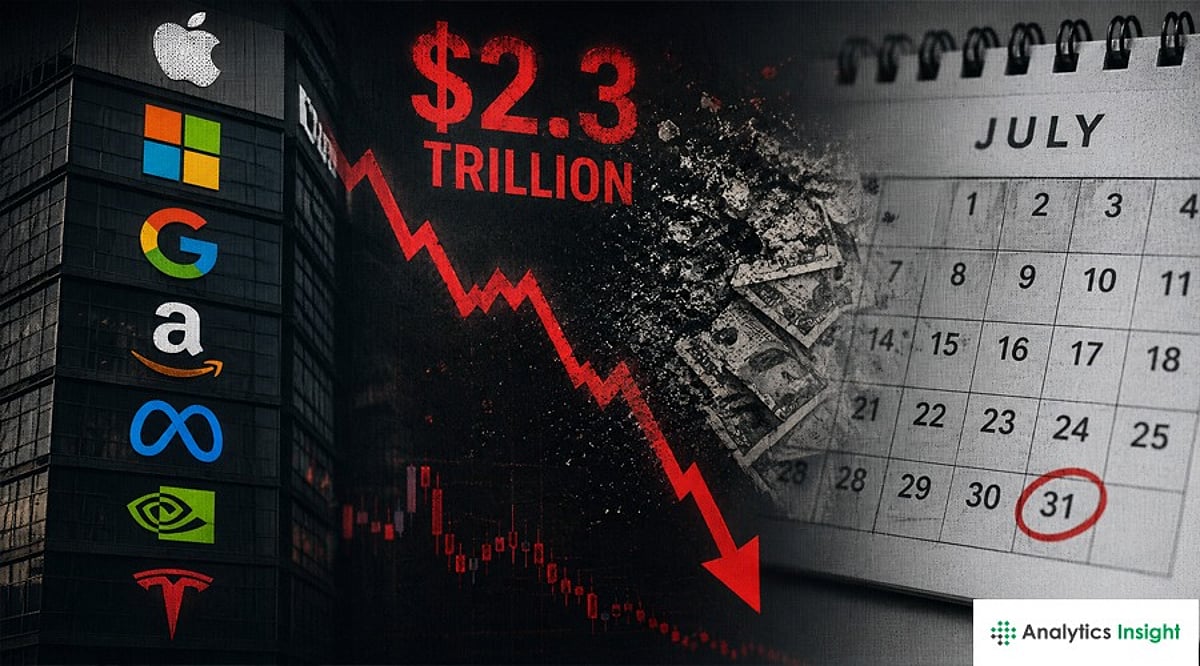
    June proved disastrous for the Magnificent 7 stocks as investor anxiety over massive AI spending and uncertain returns triggered a selloff that erased nearly $2.3 trillion in market value. The decline ranks among the steepest monthly losses ever recorded for Big Tech.

    The group—comprising Microsoft, NVIDIA, Apple, Alphabet, Amazon, Meta, and Tesla—had led the market for months on AI enthusiasm. However, June brought a sharp reversal as attention shifted from future promise to current spending and profitability.

    The Magnificent 7 Index fell roughly 10% in June, extending its decline to more than 13% from a mid-May peak. Investors now demand concrete evidence that billions poured into AI infrastructure will translate into higher earnings.

    Microsoft suffered the steepest drop among the seven, with its stock tumbling about 20% in June. NVIDIA lost nearly 13%, while Apple and Amazon each declined around 8%. The broad selloff reflects growing caution around companies investing heavily in AI without clear financial payoffs.

    Big Tech continues to pour capital into AI. Microsoft, Amazon, Alphabet, and Meta are expanding data centers and purchasing advanced AI chips to support future growth. Industry analysts estimate AI-related spending could exceed $700 billion in 2026. Such outlays have depressed free cash flow expectations, undermining investor confidence in valuations.

    Analysts believe the upcoming earnings season will be pivotal. Investors want to see that AI investments are boosting revenue rather than simply inflating costs. Wedbush analyst Dan Ives noted that the next earnings reports could clarify whether the AI investment cycle is on the right track.

    Recent market moves suggest a preference for tangible results over ambitious promises. Companies that successfully convert AI spending into stronger earnings may recover investor trust more quickly.

    Capital has also rotated toward AI hardware makers. Semiconductor and memory companies have outperformed the Magnificent 7 this month. The Philadelphia Semiconductor Index gained about 6% in June and is still up more than 90% year-to-date, indicating that investors currently favor businesses directly benefiting from AI demand.

    Many experts argue that the selloff does not signal the end of the AI story. Instead, the market is demanding clearer proof that expensive AI projects will generate improved profits. The coming round of earnings reports will be crucial in determining whether the Magnificent 7 rebound or remain under pressure for the rest of the year.

  • Bitcoin and Gold Sink Together in 2026 as Market Pressures Mount

    Bitcoin and Gold Sink Together in 2026 as Market Pressures Mount

    Bitcoin and gold have both declined as higher interest rates, tighter liquidity, and market uncertainty reduced demand for traditional and digital stores of value. The rare move has raised attention because the two assets often follow different paths during market stress.

    Bitcoin and gold have fallen sharply in 2026, marking an uncommon period when two assets often viewed as stores of value declined together. Market strategist Charlie Bilello reported that Bitcoin is down 31% while gold has lost 6% this year, making them the weakest-performing major asset classes so far.

    The unusual move has drawn attention because the two assets have historically performed differently during periods of market stress.

    Bitcoin and Gold Record an Unusual Year

    Charlie Bilello reported that Bitcoin and gold have become the two worst-performing major asset classes in 2026. He described the development as something ‘we havenʼt seen before in any calendar year.’

    The simultaneous decline suggests investors have reduced exposure to both digital and traditional stores of value. Instead, capital has moved toward other asset classes that have delivered stronger returns during the year.

    Several factors have contributed to the shift. Market conditions have become more challenging in 2026 as investors respond to higher interest rates, tighter liquidity, geopolitical uncertainty and a rise in crypto-related security incidents. These factors have weakened demand for both Bitcoin and gold.

    Analysts also point to the stronger US dollar and the Federal Reserve’s restrictive monetary policy as key drivers behind the downturn. Higher borrowing costs have encouraged investors to shift toward income-generating assets, reducing interest in investments that do not produce regular yields.

    Correlation Between Bitcoin and Gold

    Bitcoin climbed above $110,000 during the second half of 2025 while gold continued to post steady gains. Even though both assets advanced, they responded to different market conditions and showed only a limited price correlation.

    The relationship changed during 2026. Bitcoin dropped from around $90,000 to nearly $60,000 after February. Gold held up better at first but later moved lower as well. By June, both assets were declining at the same time, pushing their price correlation into positive territory for one of the rarest periods on record.

    Data from CryptoQuant also showed noticeable changes in the Bitcoin-gold price correlation between June 2025 and June 2026. The correlation moved between positive and negative readings before strengthening as both assets declined together.

    Bitcoin researcher Adam Livingston commented on the trend, stating that “2026 is officially the most oversold year for Bitcoin versus gold ever recorded.” At the same time, the Bitcoin-to-gold ratio continued to weaken, reflecting Bitcoin’s larger decline compared with gold.

    Gold Outlook Remains Mixed as Market Uncertainty Continues

    Investor Robert Kiyosaki recently shifted his focus from Bitcoin to precious metals after discussing both assets earlier in June. On June 25, he announced that gold had “made the turn” and predicted a longer-term bull market for gold and silver while maintaining a $35,000 long-term price target.

    Days later, however, he revised his short-term view after gold extended its decline. On June 29, Kiyosaki admitted, “I was wrong. Gold still crashing.” Despite the setback, he maintained his longer-term bullish outlook for the metal.

    Gold has also faced pressure from changing geopolitical developments. Reports surrounding US-Iran nuclear negotiations reduced demand for safe-haven assets as some investors shifted toward riskier investments. At the same time, uncertainty over future Federal Reserve policy has continued to influence both gold and Bitcoin prices.

    Market participants are now watching central bank decisions, US dollar strength and geopolitical events for signs of whether the recent weakness in both assets will continue or begin to reverse.


  • SHIB Faces Growing Selling Pressure but Derivatives Show Renewed Trader Interest

    SHIB Faces Growing Selling Pressure but Derivatives Show Renewed Trader Interest

    Shiba Inu (SHIB) is experiencing mounting selling pressure as exchange inflows surge and technical indicators remain bearish. Despite these headwinds, the derivatives market is flashing fresh signals of trader confidence, with open interest and funding rates climbing.

    Exchange Activity Raises Selling Pressure

    Recent on-chain data shows a sharp increase in SHIB deposits to centralized exchanges. Exchange inflows exceeded 240 billion SHIB, while outflows reached nearly 295 billion SHIB during the same period. Although overall net flow remained negative, the sudden rise in deposits has drawn market attention, as large transfers to exchanges often precede selling activity. Many traders have responded by reducing buying activity, waiting for stronger signals before committing additional capital.

    Technical Structure Keeps Buyers on the Sidelines

    SHIB continues to trade below its 50-day, 100-day, and 200-day moving averages. These indicators turned bearish after the token broke below a multi-month rising wedge pattern. Since that breakdown, every recovery attempt has lost momentum as sellers return during rallies. Repeated rejections at higher levels have diminished confidence among buyers seeking a sustained rebound.

    Speculative interest remains limited. Historically, SHIB has relied on strong retail participation, social media attention, and rapid inflows of risk capital. Those drivers have been largely absent as Bitcoin, Solana, and other cryptocurrencies attract the bulk of digital asset investment. Meanwhile, on-chain activity—active addresses, sending addresses, and daily transactions—has increased over the past 24 hours, but investors remain focused on price performance as SHIB records lower highs and lower lows. The question remains: can stronger on-chain activity eventually outweigh persistent price weakness?

    Derivatives Market Shows Renewed Confidence

    While spot market demand is soft, the derivatives market is recording stronger activity. Shiba Inu perpetual futures open interest rose to $31 million on Monday, up from $18 million the previous day. This latest increase follows a previous decline that pushed open interest to $26 million on Wednesday, its lowest since September 2024. The rebound suggests traders have started opening new positions after that earlier drop.

    Additionally, the OI-weighted funding rate stayed positive, increasing to 0.011% on Monday from 0.0052% the day before. A positive funding rate indicates that traders are increasingly positioned for higher SHIB prices. As derivatives activity improves, market participants are balancing stronger futures positioning against persistent weakness in spot price action and technical indicators.

    What’s Next?

    Shiba Inu continues to face selling pressure as exchange inflows increase and technical indicators remain weak. At the same time, stronger futures open interest and a positive funding rate reflect renewed trader participation. Market participants will likely watch whether improving derivatives activity can support SHIB price momentum moving forward.