Author: vitorcherulli

  • May Stablecoin Volume: Polygon Records $80 Billion, Tops Solana and BNB Chain

    May Stablecoin Volume: Polygon Records $80 Billion, Tops Solana and BNB Chain

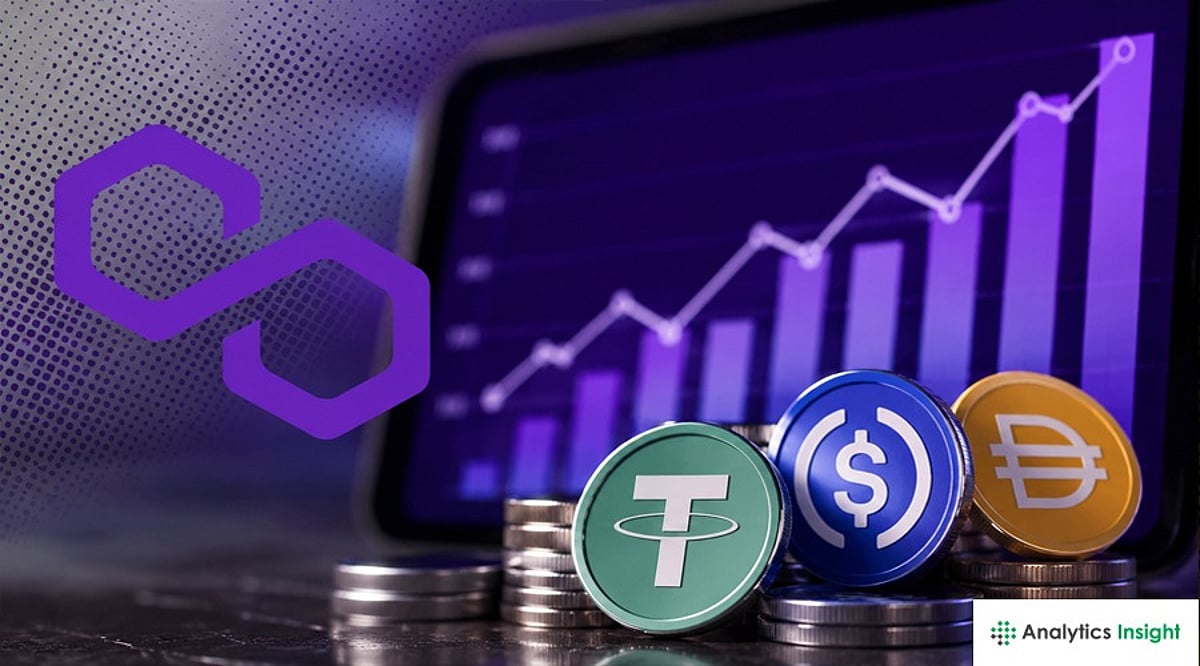
    Polygon processed nearly $80 billion in stablecoin transfer volume during May, recording 198 million transactions and surpassing both Solana and BNB Chain in transaction count. The milestone marks the network’s second-highest monthly stablecoin volume on record.

    According to Polygon’s data, the network handled approximately $79.25 billion in stablecoin transfers during the month. Cumulative stablecoin transfer volume on Polygon has now exceeded $2.4 trillion. Average transaction fees remain around $0.002, with settlement times of about two seconds. The network also reports more than seven billion lifetime transactions and 99.99% uptime.

    The vast majority of activity came from USDC and USDT transfers, reflecting the growing use of stablecoins for blockchain-based payments and settlement. Polygon has continued to strengthen its payment infrastructure through acquisitions and partnerships. Earlier this year, Polygon Labs acquired Coinme and Sequence in deals valued at a combined $250 million, aimed at expanding consumer payments and developer services.

    Visa added Polygon to its stablecoin settlement pilot in April, a program that has reportedly reached a $7 billion annualized run rate. Meta also introduced USDC payouts on Polygon and Solana for eligible creators. Payment-focused applications built on Polygon generated about $9.9 billion in transaction volume during the first half of 2026, exceeding the network’s total payment-related volume for all of 2025.

    In emerging markets, Polygon processed approximately $309 million in Latin American stablecoin transfers during May, with an increasing focus on cross-border payments. Despite these growing on-chain metrics, the POL token has not mirrored the surge in usage, trading broadly in line with broader cryptocurrency market conditions.

    Solana also posted strong on-chain data during the same period, generating about $2.17 million in daily application revenue. Derivatives data showed SOL funding rates turning positive and the long-to-short ratio rising above one, indicating bullish positioning among traders. However, institutional demand remained weaker, with spot Solana ETFs recording about $3.8 million in net outflows during the previous week.

    SOL traded around $71.82, remaining below its 50-day, 100-day, and 200-day exponential moving averages. Analysts noted resistance near $74.75 and $75.14, while support sits near $69.16 and the recent cycle low around $60.13. Singapore Gulf Bank also announced a limited-time waiver of gas and banking fees for stablecoin minting and redemption on Solana, aiming to encourage greater use of stablecoins on the network.

    Competition remains intense, with Ethereum and Tron holding the largest stablecoin balances. Polygon recently reported about 28 million weekly USDC transactions, placing it ahead of Solana in that category. Both blockchains continue to expand payment services while vying for a larger share of stablecoin settlement activity.

  • MiCA Deadline Forces Thousands of European Crypto Firms to Shut Down

    MiCA Deadline Forces Thousands of European Crypto Firms to Shut Down

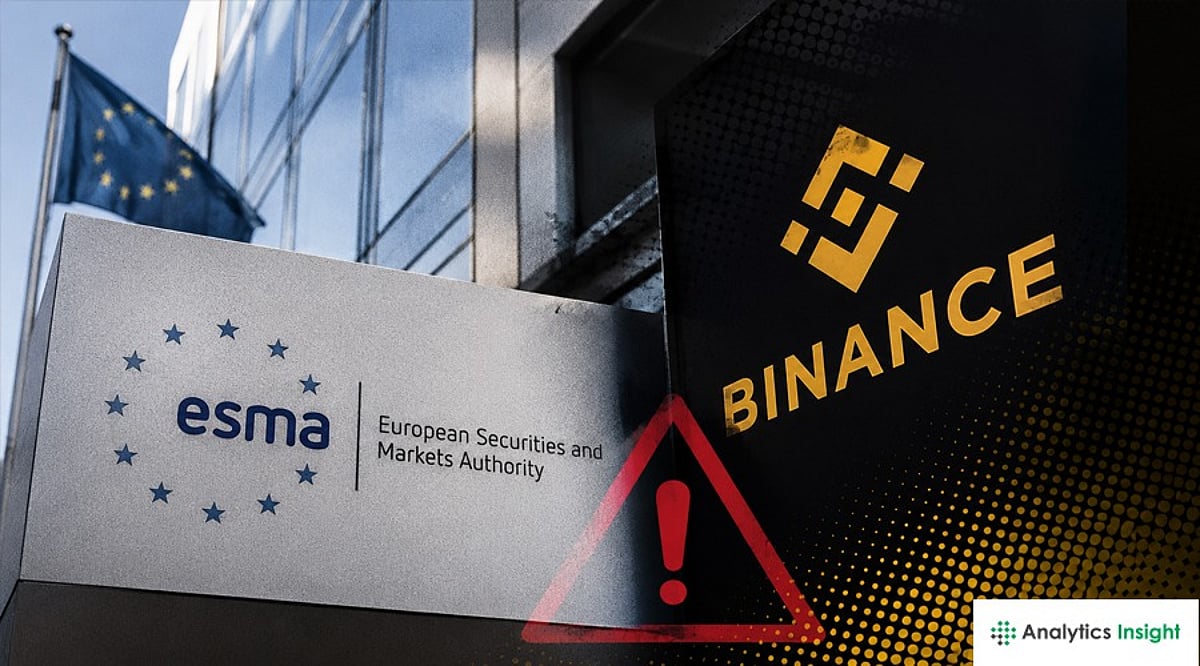
    Crypto companies across Europe are reaching the end of the MiCA transition period, with July 1 marking the point when older national registrations will no longer be enough to stay in business. From that date, only firms that secured a MiCA license can continue offering crypto services across the region, placing many existing operators under pressure.

    Industry figures show the gap between previously registered firms and those that completed the new licensing process. More than 3,000 virtual asset service providers (VASPs) were registered before MiCA, yet only 244 have obtained authorization as crypto-asset service providers (CASPs). Meanwhile, the European Securities and Markets Authority has instructed firms without approval to wind down their activities in an orderly manner while protecting customer assets.

    MiCA Deadline Leaves Many Firms Without Authorization

    MiCA became fully applicable across Europe after introducing stablecoin rules in June 2024 and broader crypto regulations later that year. Existing providers were granted a transition period that expires on July 1, allowing time to obtain authorization from national regulators. Licensed firms can then operate throughout the European Economic Area, which includes the European Union, Norway, Iceland, and Liechtenstein.

    Meanwhile, the European Securities and Markets Authority (ESMA) has instructed unauthorized crypto firms to close their operations in an orderly manner once the transition period ends. The regulator also asked companies to safeguard customer assets during the process. Industry executives expect the new framework to reduce the number of active providers across the region.

    Erald Ghoos, CEO of OKX Europe, estimated that “80% of the crypto players won’t survive after MiCA.” He added that “It’s not only because of MiCA itself, it’s because of the whole width and heaviness of the European regulatory burden.” According to Ghoos, firms offering stablecoin services may also require Payment Institution or Electronic Money Institution licenses, adding further compliance requirements.

    Compliance Costs Create Challenges for Smaller Companies

    Industry participants say the financial burden extends beyond the minimum capital required for authorization. Patrick Gruhn, founder and CEO of Perpetuals.com Ltd, said firms need between €50,000 and €150,000 in regulatory capital depending on their license category. However, obtaining authorization can cost as much as €700,000 during the first year, followed by annual compliance expenses that may reach €250,000 for smaller firms.

    Gruhn also stated that legal fees alone can approach €100,000, while the authorization process may take between 12 and 24 months before companies can begin regulated operations. He noted that although many businesses could disappear, numerous pre-MiCA registrations belonged to shell entities with limited activity. According to Gruhn, many compliance jobs created under the new framework may also offset employment losses elsewhere.

    Several companies have reportedly explored acquisitions rather than completing the licensing process themselves. Ghoos said some firms approached OKX Europe after determining they could not meet the regulatory costs required under MiCA.

    Poland Reflects the Wider Licensing Challenge

    Poland presents one of the clearest examples of the transition’s effect. The country previously had around 2,000 registered VASPs, yet only one company has obtained a MiCA license. Legislative delays and regulatory hurdles slowed the licensing process, leaving many firms without authorization ahead of the deadline.

    Mateusz Kara, CEO of Morphic Financial Group, said “It will change the business landscape of crypto entities a lot.” He added, “As far as I know, we are the only ones that have a MiCA license right now.” Kara also stated that many firms could be forced to cease operations during the second half of the year.

    Meanwhile, legal experts expect enforcement to differ among European jurisdictions. John Salmon, partner at Hogan Lovells, said “None of us know what’s going to happen,” noting that some countries introduced legislation later than others. However, his colleague Lavan Thasarathakumar said “Any regulator, jurisdiction, or member states allowing firms to continue to operate under their existing national law would be deemed in breach of EU regulations.”

    BitGo Europe has also introduced a regulated custody option that allows firms to transfer customer wallets instead of pursuing their own MiCA authorization. CEO Mike Belshe described the transition as ‘a setback,’ adding that “European users will become the biggest victims of the end of this transitional period.”

  • Free Fire MAX Redeem Codes for June 30, 2026: Unlock Rare Skins, Bundles, and Diamonds

    Free Fire MAX Redeem Codes for June 30, 2026: Unlock Rare Skins, Bundles, and Diamonds

    Today’s Free Fire MAX redeem codes for June 30 unlock exciting weapon skins, character outfits, emotes, diamonds, and limited-time rewards for lucky players across eligible servers.

    Fresh Free Fire MAX redeem codes for June 30 offer players a chance to collect premium weapon skins, character outfits, diamonds, emotes, and other limited-time rewards before the codes become inactive.

    Redeem every code through the official Free Fire Rewards Redemption website using your linked account to receive eligible rewards directly in your in-game mailbox without risking account security.

    Besides redeem codes, complete daily missions, themed events, and special challenges to earn extra rewards, level up faster, and expand your collection of exclusive Free Fire MAX items.

    Every day brings a fresh shot at premium loot in Free Fire MAX, but today’s redeem codes could be your quickest route to rare weapon skins, character bundles, diamonds, emotes, and exclusive collectibles without spending a single rupee.

    With rewards available only for a limited time and on a first-come, first-served basis, June 30 is the perfect opportunity to claim valuable in-game items before the codes expire and elevate your battle royale experience.

    Free Fire Max Redeem Codes for June 30, 2026

    The active Free Fire MAX redeem codes for June 30, 2026 are listed below:

    • FPSTQ7MXNPY54N8M2XL9R1G3H8YC4TN6VKQ9FF6YH3BFD7VTB1RK7C5ZL8YT4ST1ZTBZBRP9BR43FMAPYEZZUPQ7X5NMJ64VS9QK2L6VP3MRFFR4G3HM5YJN6KWMFJVMQQYGFZ5X1C7V9B2NFT4E9Y5U1I3OFP9O1I5U3Y2TFM6N1B8V3C4XFA3S7D5F1G9HFK3J9H5G1F7DFU1I5O3P7A9SF7F9A3B2K6G8FE2R8T6Y4U1IFQ9W2E1R7T5Y

    How to Redeem Garena Free Fire MAX Redeem Codes

    1. Visit the official Garena Rewards Redemption website.
    2. Login using your corresponding account (Facebook, Google, Apple ID, X, or VK).
    3. Provide a legitimate code into the blank field.
    4. Tap ‘Confirm’ to proceed.
    5. After completion, rewards will be mailed to your game inbox in 24 hours.

    Important: Guest accounts are ineligible. Before attempting to redeem, ensure that your accounts are linked.

    Final Take

    Free Fire MAX redeem codes provide experienced gamers the opportunity of obtaining huge amounts of diamonds, gun skin enhancements, and rare skins without spending even a single penny. Right before engaging in another battle royale contest, a feeling of having discovered a treasure comes right after a successful code redemption.

    To remain a notch above the competitors, use the codes via the Garena rewards page and always follow up on the codes daily. Given that there are new rewards that can be earned today, Free Fire MAX gamers have the best chance to equip themselves to conquer all the battle royales they face.

  • Indian Stock Market Today: Sensex Drops 155 Points, Nifty Slips to 23,886 as IT Stocks Drag; Small Caps Advance

    Indian Stock Market Today: Sensex Drops 155 Points, Nifty Slips to 23,886 as IT Stocks Drag; Small Caps Advance

    Indian benchmark indices ended lower on Tuesday, June 30, 2026, after a positive start gave way to caution over global geopolitical developments. The Sensex slipped 155.87 points to close at 76,572.50, while the Nifty50 fell 59.45 points to settle at 23,886.80. Weakness in IT, auto, and metal sectors dragged the market down, but small-cap stocks managed to stay in positive territory.

    Key Takeaways

    • Nifty50 falls 59.45 points to 23,886.80; Sensex drops 155.87 points to 76,572.50.
    • Nifty IT declines over 2%, becoming the worst-performing sector, with Infosys among top losers.
    • Five new IPOs open today, while Aastha Spintex, Adon Agro, Twinkle Papers, and Crazy Snacks continue subscriptions.

    Global Tensions Weigh on Investor Sentiment

    The primary trigger for today’s decline was uncertainty surrounding US–Iran negotiations. Investors adopted a cautious stance as the outcome of these talks could influence global trade, oil prices, and overall economic stability. Early morning gains evaporated as traders reacted to the risk-off mood.

    Top Losers: Eicher Motors, Tata Consumer, Infosys

    Several heavyweight stocks came under selling pressure. Eicher Motors and Tata Consumer Products were among the worst performers on the Nifty50. Infosys also recorded sharp losses, reflecting the broader weakness in the technology sector.

    Mixed Performance in Broader Market

    The broader market presented a contrasting picture. The Nifty MidCap index edged down 0.05%, indicating mild selling in mid-sized companies. In contrast, the Nifty SmallCap index rose 0.37%, showing selective buying interest in smaller names despite the overall market decline.

    Sectoral Roundup: IT Worst Hit, Chemicals and Realty Shine

    The Nifty IT index plunged more than 2%, making technology the day’s worst-performing sector. The Nifty Auto and Nifty Metal indices also traded lower. On the positive side, the Nifty Chemical and Nifty Realty indices outperformed, closing higher.

    Busy Day in the IPO Market

    Six new initial public offers opened for subscription on Tuesday: Kratikal Tech, Vinit Mobile, Sampark India Logistics, Seemax Resources, Atharva Polyplast, and Teja Engineering Industries. Meanwhile, ongoing IPOs for Aastha Spintex (targeting ₹170 crore), Adon Agro Commodities (₹44.03 crore), Twinkle Papers (₹27.52 crore), and Crazy Snacks (₹31.47 crore) entered their second day of subscription.

    Outlook

    Market participants remain focused on the US–Iran talks for near-term direction. Until clarity emerges, volatility is likely to persist. However, strength in select sectors and active primary market issuance could provide pockets of opportunity.

    FAQs

    1. Why did the stock market fall today?
    The market declined due to caution ahead of US–Iran negotiations, which dampened global sentiment and erased early gains.

    2. What is the Nifty50 level today?
    The Nifty50 fell 59.45 points (0.25%) to close at 23,886.80.

    3. Which sector performed the worst today?
    The technology sector (Nifty IT) dropped over 2%, making it the worst-performing sector.

    4. Which stocks were the top losers?
    Eicher Motors, Tata Consumer Products, and Infosys were among the biggest losers on the Nifty50.

    5. Which IPOs opened for subscription today?
    Six IPOs opened: Kratikal Tech, Vinit Mobile, Sampark India Logistics, Seemax Resources, Atharva Polyplast, and Teja Engineering Industries.

    Disclaimer: This article is for informational purposes only and does not constitute investment advice. Always conduct your own research before making investment decisions.

  • Bitcoin 2026 Mid-Year Outlook: Will the Second Half Spark a Recovery?

    Bitcoin 2026 Mid-Year Outlook: Will the Second Half Spark a Recovery?

    Bitcoin entered 2026 with high expectations after a strong rally in late 2025. During the previous market surge, Bitcoin crossed $126,000, which created huge excitement across the crypto market. Now, Bitcoin trades close to $60,000, meaning the asset has lost more than 50% of its value from the peak level. The first half of the year turned into one of the weakest periods for Bitcoin since the major crypto crash of 2022.

    Why Bitcoin Fell

    Several major reasons pushed Bitcoin lower during the first half of the year. One of the biggest reasons came from the global economy. Central banks across many countries kept interest rates high for longer than expected. Higher rates usually hurt risky assets as investors move money into safer places.

    Another reason came from changing market trends. Over the past year, large investors shifted focus toward artificial intelligence companies, technology stocks, and traditional safe assets like gold. As money moved elsewhere, Bitcoin lost some of the strong demand that helped push prices higher in previous years.

    Recently, Bitcoin even dropped below the important $60,000 support level and touched nearly $59,800. This price level worried traders since it showed that sellers still control short-term market action.

    Institutional Demand Became Weak

    Institutional demand played a huge role in Bitcoin’s rally during 2024 and 2025. Large investment firms poured billions of dollars into Bitcoin exchange-traded funds, also known as ETFs. That steady flow of money helped prices move upward very quickly.

    Recent reports show nearly $4.5 billion moved out of Bitcoin investment funds this year. This large withdrawal clearly shows that big institutions have become more careful. Many investors now wait for stronger market conditions before they put fresh money back into crypto.

    Problems Faced by Bitcoin Mining Companies

    Bitcoin miners also faced serious challenges this year. Mining companies help secure the Bitcoin network, but their business depends heavily on the market price. Right now, many mining firms face rising costs. Electricity prices remain high in several countries, while equipment costs continue to put pressure on profits. For some miners, production expenses now sit dangerously close to Bitcoin’s actual market value.

    A Big Surprise From Strategy Inc

    Strategy Inc, the company previously known as MicroStrategy, has always stood as one of Bitcoin’s biggest corporate supporters. For years, the company followed a simple strategy and kept buying Bitcoin without any plan to sell. The company announced a major restructuring plan that could lead to up to $1.25 billion worth of Bitcoin sales. Along with this move, the company also announced stock buybacks and plans to strengthen reserves.

    Reasons Recovery Still Looks Possible

    Historically, Bitcoin often follows a four-year market cycle. Price weakness usually appears after major rallies, but recovery often arrives later than expected. Some analysts believe the current correction may continue for a few more months before the market finds stability. Technical experts say the $58,000 price zone now acts as a very important support level. If Bitcoin stays above this range, price could move back toward $70,000 to $75,000 before summer ends.

    Experts Still Expect Higher Prices

    Some analysts from major firms have predicted Bitcoin could reach anywhere between $100,000 and $170,000 by the end of the year. These forecasts depend on several important factors. One major factor involves ETF demand returning later this year. Another factor depends on better government regulation. If clear crypto laws arrive in major economies, many institutions may return with fresh capital.

    What Comes Next for Bitcoin

    Right now, market sentiment remains cautious, but long-term belief has not disappeared. Some market predictions suggest Bitcoin may recover toward $80,000 to $90,000 before 2027 begins, while others remain more conservative. Much depends on economic conditions, investor confidence, and regulatory progress during the next few months.

    Bitcoin faced a very disappointing first half of 2026, but history shows sharp corrections do not always signal the end of a bull cycle. If confidence returns and institutional demand rises again, the second half of the year may finally bring the recovery that many market watchers still expect.

  • How India’s Income Tax Department Tracks Bitcoin and Crypto Transactions: KYC, TDS, and Blockchain Analytics

    How India’s Income Tax Department Tracks Bitcoin and Crypto Transactions: KYC, TDS, and Blockchain Analytics

    Yes, the Income Tax Department can trace Bitcoin and crypto transactions in India through various sources including exchange KYC records, TDS forms, blockchain analytics, bank transactions, and income tax return disclosures. Crypto is decentralized, but it’s not invisible. The department actively uses these methods, as evidenced by over 44,000 enforcement notices issued to undisclosed crypto users in 2025-26.

    In India, Virtual Digital Assets (VDAs) like cryptocurrencies such as Bitcoin, Ethereum, and others are taxable. The Income Tax Department states that income from the transfer of VDAs is taxed at a flat rate of 30% plus surcharge and cess. Further, 1% TDS is applicable on VDA transfers under Section 194S.

    How Crypto Transactions are Tracked

    Exchange Records: Exchanges gather identity information like PAN, Aadhaar-linked bank account numbers, and transaction history during every crypto transaction on FIU-approved platforms. This attaches a face to crypto transactions, purchases, sales, deposits, and withdrawals.

    TDS Reporting: Under Section 194S, 1% TDS is deducted from the consideration received on VDA transfers. This creates a tax trail even before investors file their returns. When TDS is reported by the exchange but the taxpayer does not report crypto income in Schedule VDA, a mismatch occurs, triggering scrutiny.

    Blockchain Analytics: Bitcoin and Ethereum transactions are not private. While wallet addresses do not reveal names, a wallet can be linked to a KYC exchange account, and analytics can track fund flows and historical transactions.

    FIU and PMLA Monitoring

    VDA service providers must register as reporting entities with FIU-IND under PMLA. Platforms are required to keep records and report suspicious transactions. Tax officials reported discovering Rs. 888.82 crore in undisclosed crypto transaction income during searches or arrests.

    Foreign Exchanges and Self-Custody

    Some visibility is lost with foreign exchanges, but not eliminated with self-custody wallets. Even when transactions occur through banks or P2P payments, movement of wallets and conversion to rupees may leave a trail. The OECD Crypto-Asset Reporting Framework may soon enhance cross-border information sharing.

    Why This Matters

    Crypto is not anonymous in India. Advanced tracking through KYC, TDS, blockchain analytics, and 44,000 issued tax notices makes accurate reporting under the flat 30% tax rate vital for investors to avoid severe legal scrutiny.

    What Indian Crypto Users Should Do

    Maintain exchange statements, wallet records, TDS certificates, bank transfer proofs, and transaction history. Report gains properly in Schedule VDA and disclose foreign holdings if necessary. Compliance is safer than assuming Bitcoin or other digital assets cannot be traced.

    FAQs

    1. Can the Income Tax Department track Bitcoin transactions in India? Yes, through exchange KYC, bank records, TDS filings, and blockchain analytics. Once a wallet is linked to a verified exchange account, past and future transactions become traceable.
    2. Is crypto income taxable in India? Yes, at a flat rate of 30% plus surcharge and cess, with 1% TDS on qualifying VDA transfers under Section 194S.
    3. How does 1% TDS help track crypto transactions? It creates a transaction trail linked to PAN. If gains are not reported in Schedule VDA despite TDS data, it triggers scrutiny.
    4. Can self-custody wallets hide crypto from tax authorities? They add pseudonymity but not invisibility. Wallet movements, exchange withdrawals, P2P payments, and rupee conversion can still create traces.
    5. What should Indian crypto users do for tax compliance? Maintain exchange statements, wallet records, TDS certificates, bank proofs, and transaction history.

    Disclaimer: This article is for informational purposes and does not constitute financial or investment advice. Cryptocurrencies involve risk; conduct your own research before investing.

  • Gujarat Government, IAIRO, and IBM Launch Industrial AI Centre of Excellence

    Gujarat Government, IAIRO, and IBM Launch Industrial AI Centre of Excellence

    IBM, the Department of Science and Technology of the Government of Gujarat, and the Indian AI Research Organisation (IAIRO) have announced plans to establish an Industrial Artificial Intelligence Centre of Excellence (Industrial AI CoE) in Vadodara, Gujarat. The initiative aims to drive innovation, skill development, and ecosystem growth around Industrial AI, leveraging sovereign AI technologies.

    The Industrial AI CoE will function as a living lab, focusing on technology demonstrations, pilot programs, and applied research to accelerate the adoption of AI in asset-intensive sectors such as manufacturing, energy, utilities, and supply chains. By combining domain knowledge with advanced AI models, the centre seeks to enhance efficiency, safety, resilience, and quality across industries.

    Key objectives include fostering collaboration between industry, academia, and government through workshops, conferences, and technical sessions. The centre will also promote capacity building via academic partnerships, hackathons, training programs, and the development of AI frameworks, reference architectures, standards, and best practices for responsible and scalable AI deployment.

    Dr. Amit Sheth, Founding Director of IAIRO, stated: “The next generation of industrial systems will require AI that combines learning with domain knowledge, human expertise, and trust. Translating these capabilities into real-world impact requires an ecosystem where research, policy, and enterprise innovation evolve together. Gujarat’s industrial leadership provides a strong foundation for that transformation.”

    Sriram Raghavan, General Manager of IBM Software, India and Software Innovation Lab, added: “Scaling the application of AI is a strategic imperative for manufacturing and industrial organizations. Realizing this opportunity requires advanced AI models, real-time and historical data, enterprise-ready platforms, governance, and ecosystem partnerships. We look forward to collaborating with the Government of Gujarat and IAIRO to create a platform that fosters innovation, develops skills, and accelerates the adoption of sovereign AI technologies.”

    Under the collaboration, IBM and IAIRO will serve as technical and strategic advisors to the Gujarat Department of Science and Technology, providing expertise in Industrial AI, sovereign AI, and asset management platform best practices to scale AI adoption across the industrial sector.

    The initiative aligns with Gujarat’s vision to become a leading destination for Industrial AI, leveraging sovereign AI technologies and strengthening India’s position in trustworthy AI innovation.

  • How AI Is Transforming Web Design: Personalization and Optimization at Scale

    How AI Is Transforming Web Design: Personalization and Optimization at Scale

    Just about every business is trying to conjure up ways to leverage the foretold productivity increases offered by artificial intelligence. While most are familiar with AI apps that are predominantly chatbots and generators of content, some are making use of the technology behind the scenes.

    Websites are being targeted as fertile ground for AI. Web design, building sites, and running them are all seen as areas that can be improved by the tech when applied correctly. As it stands, personalization is the Holy Grail, and given what AI could provide, it’s easy to see why.

    Optimizing Optimized Platforms

    Essentially, a website can hold unlimited options. It’s wholly digital, meaning that there aren’t any walls and that space is barely an issue. This does lead to many that offer a wide collection of options or products, filling up with as many as possible. This way, the site can have a much broader appeal and hit more specific searches.

    Already, these heavily stocked sites are well optimized. You’ll see home pages loaded with categories to scroll through, the most important and appealing picks up top, and an easy navigation flow. The bingo sites UK player go to follow this format, making it straightforward to explore their hundreds of options.

    Up top is a tight bar of all of the categories. Under the banner, the rotating options of live and upcoming bingo rooms move through to assist in quick access. Scroll further, and there are the new games, originals, jackpots, trending games, favorites, and more on horizontal scrolls for easy navigation.

    What AI seeks to do is transform this layout in a way that always personalizes it. This way, segments aren’t optimized for the experience of all, but tailored through a predictive program that creates real-time changes. Of course, even for AI, this would be quite a demanding addition to a website, but one that could transform the online experience.

    A Lot of Variety in AI Web Design

    As has been covered by BI, AI and vibe coding are very much trending in the web design and development department right now. More and more platforms that allow people to build their ideal sites without knowing any code have begun to introduce AI tools for users and AI behind the scenes for the platform as a whole.

    However, not all AI is made equal, and pulling together the most useful tools and applications can sometimes be quite the task. What’s important is not to simply use AI because it’s a useful tool, but to make sure the application of the tech is done properly and with a strong amount of oversight and supervision.

    AI is a tool, and a tool can only be as useful as its user lets it. So, whenever AI is applied to a website, it needs to be done with careful consideration of what you want and, just as importantly, what you don’t want from it. Continually reviewing the results in test conditions is the most straightforward way of eventually getting a useful AI application for your website.

    There’s a lot of promise around AI, particularly in its potential for further optimizing websites. However, it takes considerable time and skill to realize its true power.

  • TCS Stock Drops Below Rs 2,050 as Nifty IT Hits Two-Year Low Amid Global Demand Worries

    TCS Stock Drops Below Rs 2,050 as Nifty IT Hits Two-Year Low Amid Global Demand Worries

    Tata Consultancy Services (TCS), India’s largest software exporter, saw its shares fall below the Rs 2,050 mark on Monday, extending a sharp correction from January highs. The decline reflects growing investor anxiety over slowing global enterprise technology spending and a cautious earnings outlook.

    The sell-off was not limited to TCS. Infosys, Wipro, HCLTech, Tech Mahindra, and LTIMindtree also traded lower, dragging the Nifty IT index to its lowest level since April 2023. The index’s heavy reliance on overseas clients makes it particularly vulnerable to global economic headwinds.

    TCS Sets the Tone for the IT Sector

    TCS is widely regarded as a barometer for India’s IT industry. Its performance often dictates investor sentiment toward the sector. The current correction stems from fears that corporations in the US and Europe are delaying technology spending. While major deals are still being announced, experts note that execution timelines have lengthened due to clients’ conservative stance.

    For investors, the focus has shifted from signing deals to converting them into revenue.

    Global Macroeconomic Headwinds Dominate

    The downward pressure on Indian IT stocks is largely external. Persistently high inflation in advanced economies increases the likelihood that the US Federal Reserve will keep interest rates elevated for an extended period. Higher rates typically prompt companies to delay investments in non-essential technologies, such as consulting engagements and digital transformations—areas that fuel Indian software exports. Demand in key foreign markets remains highly unpredictable heading into the quarter.

    Sector’s Dependence on Global Clients Amplifies Risks

    Unlike manufacturing and financial services firms, which are driven by domestic demand, Indian software companies rely heavily on a few foreign sectors. Banking, financial services, and insurance (BFSI) account for the largest share of revenue, followed by retail, technology, and manufacturing. A slowdown in any of these sectors directly affects Indian IT companies’ income, explaining why developments in the US economy impact domestic IT shares more than local events do.

    June-Quarter Earnings Could Decide the Sector’s Next Move

    The upcoming quarterly results will provide the clearest picture of the current demand environment. Along with financial numbers, investors will focus on management commentary about discretionary spending, order books, large deal closures, hiring, and the pace of AI monetization. A positive shift in client spending could spark a rally, but if management issues conservative guidance again, the sector’s earnings turnaround will likely be prolonged.

    Lower Valuations Alone May Not Attract Buyers

    The sharp retracement has improved valuations across large-cap IT stocks compared with earlier this year. However, analysts caution that attractive valuations do not guarantee a revival. Institutional investors are now favoring industries with greater visibility into domestic earnings, such as banking, defense, capital goods, and infrastructure. The export-dependent technology sector will continue to lag until global demand improves.

    Outlook

    TCS remains a barometer for the Indian tech sector. The prolonged decline stems from the global growth slowdown and concerns about enterprise tech investments and earnings visibility. For a recovery, the sector needs three things: clarity on US monetary policy, an improvement in global corporate technology budgets, and positive commentary from companies during the June-quarter earnings season. If discretionary spending improves in the second half of the fiscal year, India’s tech majors may regain investor confidence.

  • RWA Global Inc Forges $300M Tokenization Deal to Open China’s New-Energy Market to Global Investors

    RWA Global Inc Forges $300M Tokenization Deal to Open China’s New-Energy Market to Global Investors

    For over a decade, foreign investors have watched China’s electric-vehicle boom from a distance, locked out by capital controls and strict regulatory barriers. A new advisory agreement between RWA Global Inc and Golden Dolphin Trading L.L.C. aims to change that by tokenizing approximately $300 million in real-world assets tied to China’s new-energy mobility infrastructure.

    RWA Global Inc, a real-world asset tokenization consultancy based in the British Virgin Islands and the UAE, has signed a formal advisory engagement with Golden Dolphin Trading, a UAE-registered company that owns new-energy mobility assets in mainland China. The plan involves wrapping economic rights to assets such as EV charging stations into regulated digital securities that can be offered to global investors while staying within China’s compliance framework.

    The key enabler is a regulatory shift that occurred on February 6, 2026, when the People’s Bank of China, the CSRC, and six other agencies issued a notice (Yin Fa [2026] No. 42) and accompanying CSRC guidelines. While the document tightens rules on onshore tokenization and renminbi stablecoins, it also introduces for the first time a filing-based route for issuing tokens offshore that are backed by onshore Chinese assets, provided the issuer obtains prior CSRC approval. It is not an open door, but it is a real opening.

    The assets under consideration are substantial. China sold roughly 16.5 million new-energy vehicles in 2025, more than half of all new car sales in the country. The charging network has expanded to over 19 million points, and the domestic charging market is valued north of $25 billion. These physical, cash-generating assets are ideally suited for tokenization, which can broaden the investor base, reduce fundraising friction, and add liquidity to traditionally illiquid holdings.

    The global market for real-world asset tokenization is growing rapidly. Excluding stablecoins, tokenized real-world assets reached an estimated $24–30 billion on-chain by the end of 2025, more than tripling year-over-year. Including stablecoins, the broader figure surpassed $300 billion, according to CoinGecko’s 2026 report. Major financial institutions like BlackRock and Franklin Templeton are already active in the space.

    RWA Global Inc CEO Kevin Yunai stated: “China’s new-energy economy is among the most dynamic in the world, yet global investors have had few compliant ways to participate in it directly. This engagement is a first step toward a transparent, regulated bridge between international capital and Chinese real-world assets.” Donna Tang of Esquare Legal described the deal as “an early step toward a compliant offshore bridge between China’s industrial value and global capital,” offering a cleaner path for outside exposure to the country’s clean-energy push.

    Whether the model scales depends on how the CSRC handles filings in practice. Initial deals under any new regime tend to move slowly. But if successful, the template — onshore assets, offshore tokens, regulator in the loop — could extend far beyond a single $300 million deal.

    Disclaimer: This article is for informational purposes only and does not constitute an offer or solicitation to buy any security, token, or financial instrument. The advisory engagement described is indicative and subject to client decisions, qualified counsel, and regulatory approval. Market figures are from third-party sources and have not been independently verified.