Author: vitorcherulli

  • 10 Best Object-Oriented Programming Languages for Startups in 2026

    10 Best Object-Oriented Programming Languages for Startups in 2026

    Choosing the right programming language is a critical decision for any startup. Object-oriented programming (OOP) languages, with their focus on reusable code, modularity, and scalability, are particularly well-suited for building robust applications that can grow with your business. As we look ahead to 2026, here are the top 10 OOP languages that startups should consider.

    1. Java

    Java remains a powerhouse for enterprise-grade applications. Its platform independence (thanks to the JVM), strong security features, mature frameworks like Spring and Hibernate, and exceptional scalability make it ideal for startups handling growing business requirements. Java’s vast ecosystem and community support ensure long-term viability.

    2. Python

    Python is the go-to language for beginners and seasoned developers alike. Its clean syntax supports object-oriented programming, and its extensive libraries (NumPy, Pandas, TensorFlow) accelerate development in AI, data science, and web applications. Python’s rapid prototyping capabilities and strong community support make it a favorite for innovative startups.

    3. C++

    For resource-intensive applications like game engines, real-time systems, and embedded software, C++ delivers unmatched performance. Its low-level memory control and high execution speed are ideal for startups building performance-critical products. Modern C++ (C++17/20) also offers improved safety features.

    4. C#

    Microsoft’s C# is a versatile language that powers cloud applications (Azure), enterprise software, desktop development, and cross-platform solutions via .NET MAUI and Xamarin. Its modern features, strong typing, and integration with the Microsoft ecosystem make it a solid choice for startups targeting Windows or cloud-first architectures.

    5. Kotlin

    Kotlin has become the preferred language for Android development, offering concise syntax, full interoperability with Java, and improved productivity. Its null safety, coroutines for async programming, and modern language features make it a top pick for mobile-first startups. Kotlin also runs on the JVM, enabling backend development.

    6. Swift

    Apple’s Swift is the language for building iOS, macOS, watchOS, and tvOS applications. It delivers a secure, fast, and intuitive development experience with features like optionals, protocol-oriented programming, and automatic memory management. Startups focused on the Apple ecosystem will find Swift indispensable.

    7. Ruby

    Ruby, often paired with the Ruby on Rails framework, is known for its elegant syntax and rapid web development capabilities. Rails’ convention-over-configuration approach accelerates product launches, making Ruby a favorite among early-stage startups that need to iterate quickly. Its strong community and gem ecosystem add to its appeal.

    8. PHP

    PHP powers a large portion of the web, including content management systems like WordPress and Drupal. Its extensive frameworks (Laravel, Symfony), broad hosting compatibility, and ease of deployment make it a practical choice for startups building dynamic websites and scalable web applications. PHP 8.x brings significant performance improvements.

    9. JavaScript

    JavaScript is the universal language of the web, supporting object-oriented programming through prototypes and classes. With Node.js for backend development and frameworks like React, Angular, and Vue.js, JavaScript enables full-stack development with a single language. Startups benefit from its massive ecosystem and versatility.

    10. TypeScript

    While not in the original list, TypeScript deserves an honorable mention as a superset of JavaScript that adds static typing. It improves code quality, scalability, and developer experience for large projects. Many startups are adopting TypeScript for both frontend and backend development, especially with frameworks like Angular and NestJS.

    Each of these languages offers unique strengths. Startups should evaluate their specific needs—performance, ecosystem, talent availability, and scalability—to choose the best fit. The right OOP language can significantly accelerate development and set the foundation for long-term success.

  • Top Action Cameras with Optical Zoom to Buy in 2026

    Top Action Cameras with Optical Zoom to Buy in 2026

    Action cameras have become essential gear for adventurers, vloggers, and outdoor enthusiasts. While most action cams rely on digital zoom, a select few offer true optical zoom, allowing you to capture distant subjects without sacrificing image quality. Here are the best action cameras with optical zoom available in 2026, covering a range of needs from rugged underwater shooting to professional vlogging.

    Sony RX0 III – A compact premium action camera with optical zoom, rugged waterproof body, advanced stabilization, and excellent 4K recording, perfect for outdoor adventures everywhere.

    OM System Tough TG-8 – Offers optical zoom, waterproof construction, reliable macro photography, a bright lens, and dependable image quality for demanding outdoor shooting conditions.

    Ricoh WG-90 – Built for extreme environments with optical zoom, durable design, underwater capability, and dependable image quality during hiking, camping, and travel.

    Nikon COOLPIX W300 – Delivers optical zoom, waterproof protection, GPS tracking, and sharp photos, making it suitable for travel, diving, and outdoor exploration.

    Panasonic Lumix TS7 – Features optical zoom, an electronic viewfinder, waterproof body, and reliable stabilization for capturing detailed photos and videos in challenging environments.

    Sony ZV-1 II – Combines optical zoom, fast autofocus, excellent low-light performance, and professional video quality for vloggers and active content creators.

    Canon PowerShot G7 X Mark III – Offers optical zoom, a bright lens, smooth video recording, and compact portability for travel photography and everyday content creation.

    DJI Osmo Pocket 4 – Combines mechanical stabilization with optical-quality zoom capabilities, delivering smooth cinematic footage while remaining highly portable for everyday adventures.

    Insta360 Ace Pro 2 – An AI-powered action camera delivering excellent stabilization, premium video quality, durable construction, and versatile shooting modes for creators and athletes.

    Whether you’re diving, hiking, or vlogging, these action cameras with optical zoom let you get closer to the action without losing detail. For the latest news and exclusive videos, join our WhatsApp channel.

  • iPhone 18 Pro Rumored to Feature 12GB RAM and Major Apple Intelligence Upgrades

    iPhone 18 Pro Rumored to Feature 12GB RAM and Major Apple Intelligence Upgrades

    Apple’s next flagship smartphone is already generating significant buzz, even though it remains months away from an official launch. According to the latest leaks and industry speculation, the iPhone 18 Pro could deliver one of the most substantial upgrades in recent years, with a focus on enhanced artificial intelligence capabilities, a brighter display, improved cameras, and a next-generation processor.

    12GB RAM for Smarter AI and Multitasking

    One of the most talked-about rumors is the jump to 12GB of RAM. This memory increase is expected to power more advanced Apple Intelligence features, enabling smoother multitasking and more sophisticated on-device AI processing. The move would bring the iPhone 18 Pro closer to the memory capacities seen in many high-end Android rivals.

    Display and Design Innovations

    Apple is reportedly working on a display that hides Face ID components beneath the screen, though the technology may not be ready for the iPhone 18 Pro. If delayed, users could still benefit from a larger usable screen area without sacrificing facial recognition security.

    Camera and Performance Upgrades

    According to supply chain analyst Ming-Chi Kuo, Apple is testing larger camera sensors to improve low-light photography and zoom capabilities. Video recording is also expected to see sharpness improvements thanks to sensor enhancements. The iPhone 18 Pro is likely to be powered by the A20 chipset, built on TSMC’s 2nm process, delivering a significant leap in speed and energy efficiency.

    Keeping Pace with Android Rivals

    The premium smartphone market is fiercely competitive, with Samsung, Google, Xiaomi, and Vivo all pushing boundaries in zoom, AI, and fast charging. Apple’s rumored upgrades — including better cameras, a brighter display, a faster chip, and deeper AI integration — suggest the company is aiming to match these strengths while retaining its advantages in software support and ecosystem integration.

    While none of these features have been officially confirmed, the leaks point to an iPhone 18 Pro that focuses on improving the daily user experience rather than just changing the exterior design. Improved cooling, smarter AI-assisted photography, and performance optimizations could make this one of Apple’s most meaningful upgrades in years.

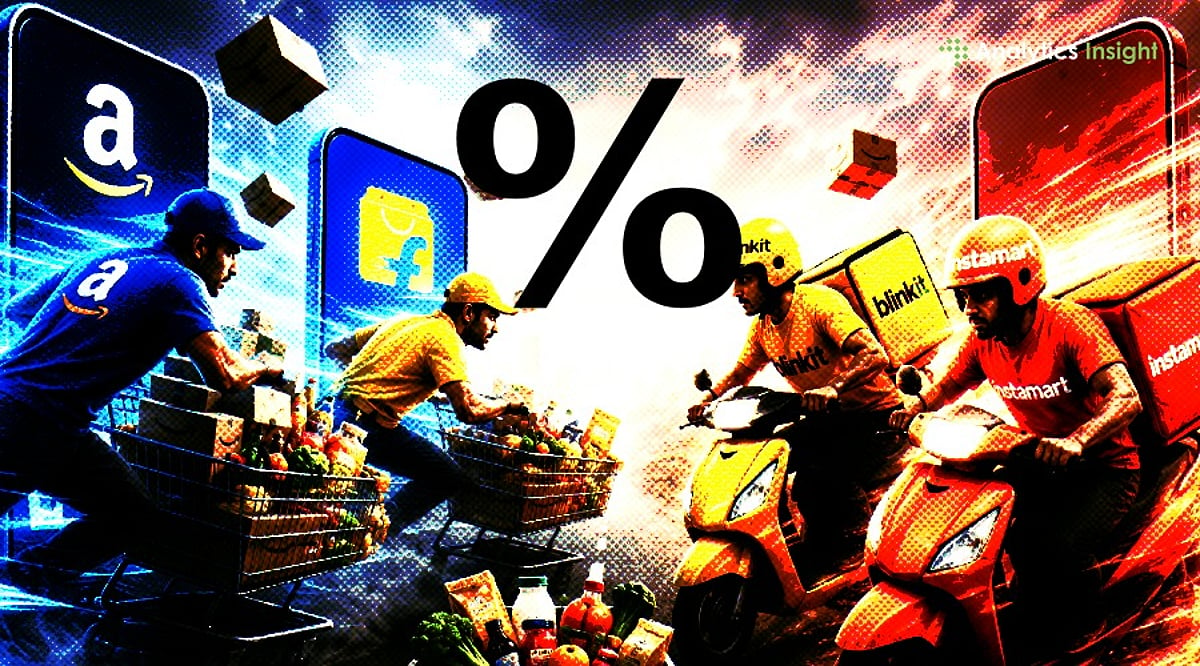
  • Amazon and Flipkart Launch Major Discount Campaigns as Blinkit and Instamart Prioritize Profit Over Price Cuts

    Amazon and Flipkart Launch Major Discount Campaigns as Blinkit and Instamart Prioritize Profit Over Price Cuts

    India’s quick-commerce market is heating up as Amazon and Flipkart roll out aggressive discounts and cashback offers to capture market share, while Blinkit and Instamart take a more cautious path, prioritizing profitability over slashing prices.

    Amazon has introduced cashback ranging from Rs. 50 to Rs. 200 on various order values and plans to expand its quick-commerce service to 300 cities with 500 dark stores. Flipkart Minutes is selling select fresh fruits and vegetables for as low as Rs. 1. The company already operates roughly 1,000 dark stores and aims to reach 1,500, with a strong push into tier-2 and tier-3 cities where demand for rapid delivery is surging.

    In contrast, Blinkit—which recently reported an operating profit—is keeping discounts minimal to protect its margins. Instamart is following a similar strategy, focusing on reaching contribution margin breakeven by using delivery fees and minimum order values rather than heavy price cuts. Zepto has also intensified competition by offering selected non-grocery items for just Rs. 9 as it seeks to broaden its customer base.

    While price wars quickly attract shoppers, they also inflate losses. Industry estimates suggest the quick-commerce sector is losing between Rs. 1,300 crore and Rs. 1,500 crore each month. The challenge for all players is to grow rapidly while keeping costs under control. Analysts note that companies that balance customer acquisition with sustainable financial performance will have a long-term advantage.

    Meanwhile, the Indian government has asked platforms to avoid advertising ‘10-minute delivery’ services to emphasize rider safety and responsible practices. Speed remains important, but sustainable business models are likely to determine the next market leaders.

  • Bitcoin Hovers Near $60K as Peace Talks Lift Stocks, Strategy Losses Mount

    Bitcoin Hovers Near $60K as Peace Talks Lift Stocks, Strategy Losses Mount

    Bitcoin opened Monday near $59,700 as renewed U.S.-Iran peace efforts lifted equity futures but failed to revive crypto demand. The asset fell 0.3% during the session and 6.8% across the week. Meanwhile, fresh criticism of Strategy’s Bitcoin purchases added pressure around the market’s largest corporate holder.

    Peace Talks Lift Stocks but Leave Bitcoin Flat

    Axios reported that the United States and Iran agreed to halt strikes and meet this week in Qatar. The talks will cover the Strait of Hormuz and a broader path toward ending the conflict. S&P 500 and Nasdaq 100 futures gained 0.5% following the report. Crypto markets barely responded, continuing a pattern that has shaped trading during the past two weeks.

    Ether rose 0.3% to $1,572, while Solana gained 1.5%. By contrast, XRP and Dogecoin extended their declines as traders remained cautious. Bitcoin rallied after the June 19 peace agreement. Yet those gains faded as a hawkish Federal Reserve outlook and exchange-traded fund outflows returned to focus.

    Meanwhile, South Korea announced plans to double DRAM production capacity around Seoul within five years. Samsung and SK Hynix committed 800 trillion won, or about $518 billion, toward four fabrication plants. Asian technology hardware shares declined during the rotation, although eight of the eleven MSCI Asia Pacific groups advanced. The artificial intelligence chip trade continued to shape wider market movements.

    Will the Qatar talks and Thursday’s inflation report give Bitcoin a lasting catalyst? Both events now represent major tests for crypto markets this week.

    Strategy Losses Renew Scrutiny of Saylor’s Approach

    Economist Peter Schiff said Sunday that Michael Saylor had destroyed shareholder value through Strategy’s Bitcoin accumulation plan. He cited the company’s paper losses and declining stock price. According to Schiff, Strategy carries almost $14 billion in unrealized losses on its Bitcoin holdings. He also compared its $29.54 billion market value with the $64.10 billion spent acquiring Bitcoin.

    Strategy holds more than 847,363 Bitcoin at an average purchase price of $75,651. That position makes the company the world’s largest corporate Bitcoin owner. Schiff argued that a large Strategy sale could push Bitcoin lower and limit potential liquidation proceeds. He has repeatedly criticized the company’s business model and cryptocurrency exposure.

    Last week, Schiff said Saylor’s Bitcoin bet could become the largest losing trade in history. He has also called MSTR stock the worst route to Bitcoin exposure.

    MSTR Slides as Strategy Defends its Market Role

    Concerns grew after Strategy disclosed Bitcoin sales earlier this month. The announcement weakened the ‘never sell’ position that many bullish investors had associated with the company. Since that disclosure, MSTR shares have fallen 45%. The stock closed Friday at $82.31 after dropping 3.54% during the regular trading session.

    Saylor has defended Strategy’s actions during the current bear market. He said the company has provided liquidity and support for Bitcoin rather than creating systemic risk.

    Bitcoin later traded near $60,041, up 0.28% over 24 hours, according to Benzinga Pro. That reading remained close to the level recorded during Monday’s flat market opening.

    What’s Next?

    Bitcoin remained near $60,000 even as U.S.-Iran peace talks supported equities, while Strategy faced renewed criticism over its mounting paper losses and declining share price. Investors should now watch the Qatar negotiations and inflation data, as both could shape Bitcoin’s next major market direction.

    This article was originally published by Analytics Insight and has been adapted for publication.

  • Xbox Game Pass July 2026 Lineup Revealed: Palworld and More Coming Soon

    Xbox Game Pass July 2026 Lineup Revealed: Palworld and More Coming Soon

    Microsoft has announced the next wave of Xbox Game Pass titles for July 2026, bringing a mix of day-one releases and popular games to console, PC, and cloud platforms. The lineup arrives during a traditionally quieter period for major game launches, giving subscribers fresh content to explore.

    One of the standout additions is Palworld, which joins the service on July 6. Since its beta launch in 2024, the Pokémon-style survival game has attracted millions of players worldwide. Now, Game Pass subscribers can jump in at no extra cost.

    Other titles coming in July include Winds of Arcana: Ruination, Ascend To Zero, Denshattack!, Fogpiercer Planet Crafter, Tears of Metal, Halo: Campaign Evolved, Mistfall Hunter, Shift at Midnight, Speedrunners 2: King of Speed, and Wuthering Waves. The selection spans action, survival, racing, horror, role-playing, and simulation genres, ensuring something for nearly every type of gamer.

    This month’s additions may not carry the weight of a major first-party Xbox release, but they help maintain momentum for the subscription service. A steady stream of new games gives players a reason to return each month and provides smaller studios with a larger audience. For Microsoft, Game Pass continues to evolve beyond a handful of headline titles, relying on a diverse monthly lineup to keep interest alive until the next wave of big Xbox exclusives arrives.

  • Prosus India Achieves EBITDA Profitability on $781 Million FY26 Revenue, Driven by PayU Growth

    Prosus India Achieves EBITDA Profitability on $781 Million FY26 Revenue, Driven by PayU Growth

    Prosus India has reported $781 million in revenue for fiscal year 2026 and turned adjusted EBITDA positive, marking a significant financial milestone. The results reflect stronger operational performance, disciplined cost management, and continued growth across its investment portfolio despite a challenging funding environment. The Prosus India ecosystem employed 3,897 people during the fiscal.

    Prosus India Achieves Key Financial Milestone in FY26

    According to Prosus’ FY26 annual report, revenue from its India ecosystem rose 13% year-on-year to $781 million in FY26 from $694 million a year earlier. The business posted an adjusted EBITDA (aEBITDA) profit of $18 million, compared to a loss of $25 million in FY25, while its adjusted EBIT loss narrowed sharply to $10 million from $49 million. Fintech platform PayU largely drove it.

    PayU’s payments business generated $577 million in revenue, up 10% year-on-year, and delivered EBITDA of $12 million. Higher-margin value-added services (VAS) and SaaS offerings accounted for 33% of payment revenue, supporting margin expansion. The company’s credit business reported an adjusted EBITDA of $6 million. Credit revenue rose 19% year-on-year to $204 million, while new loan issuances touched $221 million during the year.

    Revenue Growth Driven by Strong Portfolio Performance

    The company said PayU accounts for around 25% of India’s online payments industry revenue and manages $682 million in assets under management through its lending business. During the year, it also increased its stake in banking payments technology firm Mindgate to 70.7%. During FY26, PayU processed total payment volume (TPV) worth $90 billion across its platform.

    Prosus said it is building one of India’s most comprehensive digital consumer ecosystems, with PayU increasingly driving collaboration across portfolio companies. The report highlighted that PayU now processes a significant share of credit card payments on Swiggy, has expanded merchant and consumer lending with Meesho, has originated $2.1 million in loans through the partnership, has processed $1.5 million in UPI GMV for ixigo, and has improved transaction success rates. It also processed $5 million of Swiggy’s GMV.

    During the year, Prosus acquired a 16.24 percent stake in ixigo and increased its holding in Rapido to 23.52 percent. The company said its Indian e-commerce ecosystem now reaches more than 500 million users annually and processes 450 million orders each month.

    What EBITDA Profitability Signals for Future Growth

    A positive Adjusted EBITDA indicates that Prosus India is becoming more operationally efficient while it is still growing revenue. The fact shows how good the balance between growth and costs is, which is increasingly appreciated by investors. If the trend continues, it will allow Prosus to build a solid financial foundation and grow the portfolio in the future.

  • USDGO Stablecoin Supply Crosses $500M as Institutional Adoption Surges

    USDGO Stablecoin Supply Crosses $500M as Institutional Adoption Surges

    USDGO, an enterprise-focused US dollar stablecoin, has surpassed $500 million in circulating supply within four months of its launch, signaling rapid institutional adoption. The token is issued by Anchorage Digital Bank, the first federally chartered crypto bank in the United States, with branding and distribution managed by Hong Kong-listed OSL Group.

    Enterprise Demand Drives Expansion

    Unlike stablecoins that initially grew through cryptocurrency trading, USDGO targets corporate treasury operations, cross-border payments, international transfers, and institutional liquidity. The token crossed $100 million roughly two months after its February launch, and the new $500 million milestone reflects accelerating enterprise demand.

    OSL Group reports partnerships with payment providers and financial infrastructure firms across developed and emerging markets, supporting large-value transfers and commercial payment flows. The ecosystem also includes fiat on- and off-ramp services, digital asset trading, and blockchain and custody partners for secure asset management and high-volume settlement.

    Tokenized Funds Bolster Reserves

    USDGO maintains one-to-one backing through high-quality liquid assets including cash and short-term US government securities. Its reserve structure now incorporates tokenized money market funds from major financial institutions:

    • JPMorgan’s JLTXX tokenized money market fund
    • BlackRock’s BUIDL tokenized liquidity fund
    • Goldman Sachs’ STBXX reserve fund

    These funds connect USDGO’s reserve management with traditional finance products, demonstrating how legacy institutions are increasingly participating in blockchain-based settlement systems. Tokenized money market products alongside cash deposits and Treasury securities enhance liquidity, transparency, and operational efficiency for institutional users.

    Stablecoins Enter Mainstream Finance

    USDGO’s growth reflects a broader trend of stablecoins expanding beyond crypto markets into payments, settlement, treasury management, and liquidity operations. A larger circulating supply enables more transactions and deeper market liquidity, which is critical for enterprise users processing commercial payments and managing international fund transfers.

    Regulatory clarity and institutional participation are intensifying competition among stablecoin issuers. Enterprise-focused projects like USDGO aim to become preferred settlement assets for corporations and payment networks, combining fixed-value stability with regulated issuance and tokenized reserve assets.

    What’s Next?

    With supply growth exceeding $500 million, USDGO is positioned to play a key role in digital finance. Businesses should monitor adoption across treasury management, cross-border transfers, and institutional liquidity as regulated blockchain settlement gains traction.

  • USDT Premium in India Surges 8.5% After Regulatory Crackdown on Crypto Payments

    USDT Premium in India Surges 8.5% After Regulatory Crackdown on Crypto Payments

    Tether’s USDT is commanding an 8.5% premium in India following intensified enforcement actions against unregulated crypto payment networks. The premium, observed on peer-to-peer and over-the-counter platforms, reflects a sharp supply-demand imbalance that is impacting traders, businesses, and freelancers reliant on the stablecoin for cross-border transactions.

    Supply Tightens After Enforcement Action

    Market participants report that the crackdown has severely restricted the availability of USDT in India’s OTC and P2P markets. These channels have long been used for cross-border payments, settlement, and crypto trading. With multiple payment platforms under scrutiny, users are finding it increasingly difficult to access the token, pushing its local price well above the global benchmark of $1.

    It is important to note that the premium stems from local market conditions, not from any issues with Tether’s reserves or the stablecoin’s underlying mechanism.

    Businesses Feel the Impact

    The scarcity is expected to hurt importers, exporters, freelancers, and crypto traders who rely on USDT for fast, low-cost cross-border transfers without the delays typical of traditional banking. Analysts observe that despite the high premium, demand for stablecoin transactions remains strong, underscoring the efficiency of stablecoins for international remittances. At the same time, the situation highlights the dependence of certain segments of India’s crypto community on unregulated liquidity sources.

    Premium Expected to Ease Over Time

    Crypto market experts believe the premium will gradually decline as liquidity is restored through compliant exchanges or alternative regulatory payment methods. However, until sufficient liquidity materializes, USDT is likely to trade at a premium to its global price in India. This event underscores how swiftly regulatory actions can reshape the crypto landscape in a major economy.

  • PS6 Price Leak Suggests $1,200 Launch with AMD Zen 6 and RDNA 5 Power

    PS6 Price Leak Suggests $1,200 Launch with AMD Zen 6 and RDNA 5 Power

    The next-generation PlayStation console is shaping up to be the most expensive in Sony’s history. According to recent leaks, the PlayStation 6 could launch with a price tag exceeding $1,200, driven by a powerful new AMD chipset and advanced memory technology.

    Leaks indicate that the PlayStation 6 may feature a 10-core AMD Zen 6 processor, with 7 or 8 high-performance cores dedicated to gaming and two low-power cores for system operations. The graphics side is expected to use AMD’s RDNA 5 architecture, which could deliver three times the performance of the current PS5. The console is also rumored to include 30GB of GDDR7 ultra-fast memory.

    The Bill of Materials (BoM) for the PS6 is projected at $1,000, according to hardware insider KeplerL2. However, the BoM does not include assembly, packaging, shipping, marketing, or retailer margins, which could push the retail price to between $1,100 and $1,200. That would be nearly double the launch price of the PS5 Digital Edition.

    Sony has not officially announced the PlayStation 6 or its specifications. Early signs suggest a release window of late 2027 or early 2028. The console’s design is reportedly finalized, meaning delaying the launch is unlikely to reduce costs – in fact, continued component price increases could make an earlier release more economical.

    As with any leak, details should be treated cautiously until Sony makes an official announcement.