
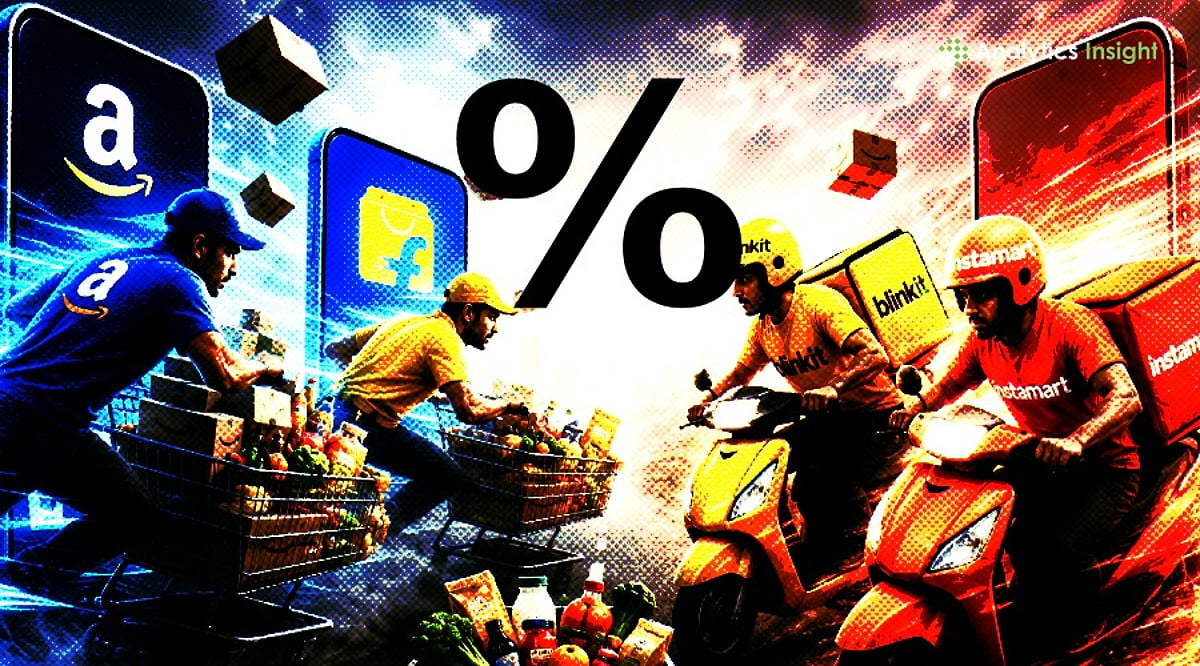
India’s quick-commerce market is heating up as Amazon and Flipkart roll out aggressive discounts and cashback offers to capture market share, while Blinkit and Instamart take a more cautious path, prioritizing profitability over slashing prices.
Amazon has introduced cashback ranging from Rs. 50 to Rs. 200 on various order values and plans to expand its quick-commerce service to 300 cities with 500 dark stores. Flipkart Minutes is selling select fresh fruits and vegetables for as low as Rs. 1. The company already operates roughly 1,000 dark stores and aims to reach 1,500, with a strong push into tier-2 and tier-3 cities where demand for rapid delivery is surging.
In contrast, Blinkit—which recently reported an operating profit—is keeping discounts minimal to protect its margins. Instamart is following a similar strategy, focusing on reaching contribution margin breakeven by using delivery fees and minimum order values rather than heavy price cuts. Zepto has also intensified competition by offering selected non-grocery items for just Rs. 9 as it seeks to broaden its customer base.
While price wars quickly attract shoppers, they also inflate losses. Industry estimates suggest the quick-commerce sector is losing between Rs. 1,300 crore and Rs. 1,500 crore each month. The challenge for all players is to grow rapidly while keeping costs under control. Analysts note that companies that balance customer acquisition with sustainable financial performance will have a long-term advantage.
Meanwhile, the Indian government has asked platforms to avoid advertising ‘10-minute delivery’ services to emphasize rider safety and responsible practices. Speed remains important, but sustainable business models are likely to determine the next market leaders.
Leave a Reply