Author: vitorcherulli

  • Today’s Top Tech Stories: OpenAI and Broadcom Debut Jalapeño AI Chip, Progcap Targets $45M Funding, and More

    Today’s Top Tech Stories: OpenAI and Broadcom Debut Jalapeño AI Chip, Progcap Targets $45M Funding, and More

    Good morning, tech enthusiasts! Here’s a quick roundup of the biggest headlines making waves today, from OpenAI’s new AI chip to major funding rounds and regulatory updates.

    OpenAI and Broadcom Launch Jalapeño AI Chip to Supercharge ChatGPT

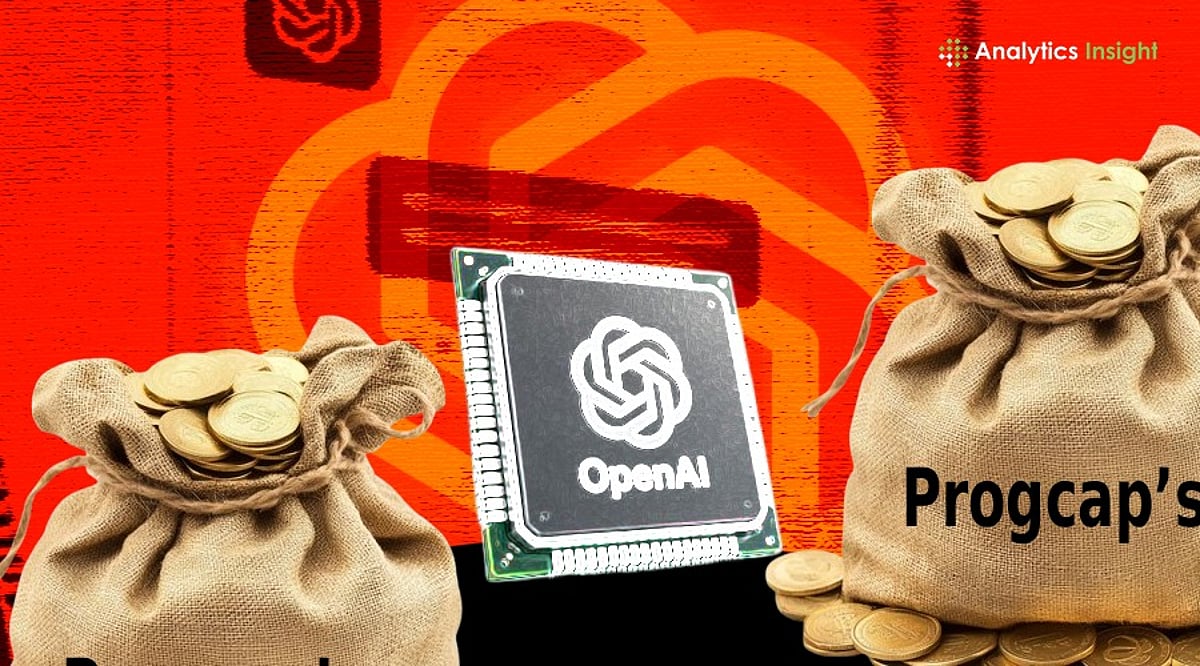
    OpenAI and Broadcom have introduced the Jalapeño AI chip, designed to make large language models like ChatGPT faster, cheaper, and more power-efficient. The chip aims to reduce costs and improve AI performance, with deployment planned for late 2026. It will support ChatGPT and other OpenAI tools.

    Indian Fintech Progcap Plans $45 Million Fundraise for MSME Lending

    Indian fintech company Progcap is preparing to raise $45 million to expand its small-business lending operations. The funding will help improve its technology, reach more shop owners and traders, support women-led businesses, and strengthen financial inclusion across underserved areas in India.

    AWS CEO Says AI Won’t Stop Hiring New Graduates

    AWS CEO Matt Garman stated that AI will change how people work but will not replace the need for new employees. Amazon plans to hire 11,000 interns and fresh graduates in 2026, emphasizing that young workers bring fresh ideas and can quickly learn the AI skills needed for future jobs.

    Why 10 IT Jobs Are Hard to Fill in 2026

    Many companies are struggling to fill critical IT roles in 2026 due to a shortage of qualified candidates with skills in AI, cybersecurity, cloud, and data. To address this, businesses are increasingly investing in training existing employees rather than relying solely on external hires.

    EU Proposes Major Fines for Crypto Companies Violating MiCA Rules

    The European Banking Authority (EBA) has unveiled plans to impose significant fines on major crypto firms that breach the EU’s MiCA crypto regulations. The goal is to ensure uniform enforcement across member states, improve market fairness, and encourage compliance with the new laws.

    For more details, visit the original article on Analytics Insight.

  • Key AI Trends Reshaping the Banking Sector by 2026

    Key AI Trends Reshaping the Banking Sector by 2026

    Artificial Intelligence has moved from experiment to reality in the banking industry. AI is already a part of the onboarding, lending, compliance, customer service and fraud detection workflows, and it’s being deeply integrated into bank operating models.

    The Gartner CIO and Technology Executive Survey 2026 revealed that more than 2,300 banking CIOs and technology executives surveyed indicated that their organizations had already implemented generative AI, with 55% stating they had done so by the end of 2025 and 26% expecting to do so within 12 months. This shows that AI adoption in banking is entering a faster and more operational phase.

    1. AI Application Development Platforms

    Banks are increasingly moving away from isolated AI tools and investing in common AI application development platforms. Gartner projects that over 40% of banks globally will be investing in these platforms in 2026. The platforms can enable banks to develop reusable AI modules, manage models, leverage approved data, and safely expand AI throughout the bank. Wells Fargo’s Enterprise Open Source Data Science Platform and BNY’s Eliza platform are examples of this shift.

    2. Multi-Agent Systems

    The latest trend in banking AI is the use of multi-agent systems. Gartner reports that 17% of banking CIOs already have an AI agent in place and 41% are aiming to deploy them within 12 months. Such systems enable several AI agents to collaborate with each other on intricate tasks like loan pre-approvals, investment analysis, identifying anomalies, and resolving disputes. By the end of 2027, multi-agent systems will independently drive 30% of all day-to-day banking decisions, according to Gartner.

    3. Domain-Specific Language Models

    The large language models used by banks are transitioning from general to domain-specific. By 2028, over 60% of generative AI models being used by banks will be industry-specific, compared to 30% in 2025. These models help lower the risk of hallucination and enhance accuracy in areas like compliance, fraud monitoring, customer service and risk assessment.

    4. Physical AI in Branches

    Physical AI is slowly starting to appear in branches, ATMs and customer service lobbies. Humanoid robots and AI-powered ATMs and facial recognition tools are already on trial in banks like China Construction Bank, HSBC, and CaixaBank. Gartner estimates that by the end of 2027, around 10% of banks will have physical AI in their branches or operations, compared with around 3% currently.

    5. AI Security Platforms

    With the increasing adoption of AI, the security threats are increasing as well. AI security platforms may become a core part of the investment needed to prevent 75% of data breaches by 2028 due to the use of AI and agentic AI by banks.

    6. Agentic AI in Banking Operations

    Agentic AI is stepping into the real banking business in 2026. Accenture calls this the change to “unconstrained banking,” one where smaller teams manage AI workers to provide greater operational scale. To ensure multiple agents use the same data, policies and to remain fully auditable is the key challenge.

    7. AI-Powered Onboarding

    KYC and KYB onboarding remain expensive and slow for banks. AI agents can streamline these processes and minimize friction, such as document checks, data extraction, verification, and account activation. Banks that adopted coordinated AI workflows witnessed a transformation in lending and onboarding decision cycles, accelerating them from weeks to days, and in some instances, hours.

    8. Relationship Manager Productivity

    Relationship managers usually spend less than 30% of their time in front of the client. AI can help with that by providing pre-reading on the client brief, risk assessment of the portfolio and cross-selling opportunities before meetings. This will allow the relationship manager to focus more time on counseling the clients and less time on moving between systems.

    9. AI Credit Decisioning and Compliance

    AI credit decisioning is improving loan and exception management, along with loan pre-approvals. The companies behind the AI origination tools claim to have seen a 10-15% conversion rate improvement and a 25-35% cost saving for banks.

    10. AI Fraud Detection and the ‘10x Bank’

    Fraud detection is now blending in with ID verification and compliance. AI is used to identify deepfakes, synthetic identities and account takeover fraud throughout the customer lifecycle.

    Why this Matters

    AI is becoming core banking infrastructure rather than an experimental tool. Banks that adopt secure, domain-specific AI can improve efficiency, reduce costs, strengthen fraud detection, accelerate lending and onboarding, and deliver faster, more personalized customer experiences while remaining compliant with regulations.

    What’s Next?

    In banking, AI adoption is shifting from pilot runs to actual core operations, and it brings many changes in onboarding, lending, fraud detection, regulatory compliance, and customer service. By 2026, banks that put money into secure AI platforms, use models built for specific domains, and tie operations together through unified data systems are more likely to be set up well for higher efficiency, lower expenses and quicker customer experiences.

    FAQs

    1. What are the top AI trends in banking in 2026? The top AI trends include AI application development platforms, multi-agent systems, domain-specific language models, AI security platforms and AI-powered onboarding.
    2. How many banks have adopted generative AI? According to the Gartner CIO and Technology Executive Survey 2026, 55% of surveyed banking CIOs and technology executives had already deployed generative AI by the end of 2025.
    3. Why are multi-agent systems important for banks? Multi-agent systems allow several AI agents to work together on complex banking tasks such as loan pre-approvals, dispute resolution and anomaly detection.
    4. How can AI improve customer onboarding in banks? AI can speed up KYC and KYB onboarding by automating document checks, data extraction, verification and account activation.
    5. What are the risks of AI adoption in banking? The biggest risks include data breaches, compliance failures, hallucinations, prompt injection and misuse of autonomous AI agents. That is why banks are investing in AI security platforms, domain-specific models and unified data systems to keep AI use controlled and auditable.
  • Top 4 Air Purifiers for Smoke in 2026: Expert-Tested for Wildfire, Cigarette, and Wood Smoke

    Top 4 Air Purifiers for Smoke in 2026: Expert-Tested for Wildfire, Cigarette, and Wood Smoke

    Indoor air quality can be compromised by several types of smoke, each presenting unique challenges for removal. Cigarette smoke releases fine particles and volatile organic compounds (VOCs) that linger in the air and settle on surfaces, while secondhand smoke exposes non-smokers to the same harmful particulates. Wildfire smoke introduces ultrafine particles and gases that can degrade air quality even far from the source. The four units in this guide were chosen because each handles smoke differently: three use medical-grade HEPA paired with heavy activated carbon, and one uses electrostatic plate filtration that captures particles smaller than HEPA can. The right pick depends on what you’re actually breathing and how often you’re breathing it.

    What Removes Smoke From Indoor Air

    If you’ve tried a basic HEPA air purifier on smoke and felt it didn’t fully work, there are two reasons: visible particles (ash, soot) and gases (VOCs, odors). HEPA handles the first but does almost nothing for the second. That’s why a serious smoke purifier pairs particle capture with substantial gas-phase filtration. All the air purifiers in this guide were evaluated for smoke removal using performance tests focused on particle capture, gas and odor removal, and air movement matched to room size.

    Particle Capture

    Smoke particles fall mostly in the 0.1 to 1 micron range. True HEPA filters capture 99.97% of particles down to 0.3 microns, reducing smoke particle concentrations by as much as 85 percent, according to the EPA. A few specialized technologies, like Airdog’s TPA, push that floor much lower (down to 0.0146 microns).

    Gas and Odor Capture

    Chemical compounds in smoke (benzene, formaldehyde, acrolein, nicotine) pass through HEPA filters because they’re gases. Capturing them requires substantial gas-phase filtration. Most purifiers use activated carbon; the more carbon and the larger the pellets, the better. The other approach is electrostatic capture, which charges and traps particles down into the ultrafine range.

    Air Movement

    A 200 CFM unit in a 1,500-square-foot space just stirs the air. Air purifiers should ideally provide at least 4.8 air changes per hour, which requires a sufficient Clean Air Delivery Rate (CADR). Match the unit’s coverage rating to your room and add 25% for high ceilings or open floor plans.

    How We Picked

    Our selection came from structured testing combining performance benchmarks, particle removal tests with specialized equipment, and real-world smoke scenarios. We weighted four factors in order: (1) filtration design built specifically for smoke (heavy activated carbon, medical-grade HEPA, or alternative particle capture rated for ultrafine particles); (2) room coverage matched to typical smoke exposure scenarios; (3) third-party validation (Wirecutter, Consumer Reports, HouseFresh, peer-reviewed studies, FEMA/Red Cross deployment); and (4) real owner feedback over multi-year use. We also factored in annual operating costs. Excluded: units with thin carbon layers, uncertified ozone-producing ionizers, and filters that fail within a season.

    The 4 Best Air Purifiers for Smoke

    1. Airdog X5 – Best for Ongoing Wildfire and Particle-Heavy Smoke

    The Airdog X5 uses TPA (Two-Pole Action) technology instead of a disposable HEPA filter. Particles are electrically charged and pulled onto washable collector plates that catch particles down to 0.0146 microns—roughly 20 times smaller than standard HEPA. Wildfire smoke includes ultrafine particles in the 0.01 to 0.1 micron range that slip past most consumer HEPA units. The plates rinse clean in under 20 minutes, saving you from replacing $200 filters twice a year. The unit covers 404 to 1,600 square feet at 210 CFM CADR, runs at 22–57 decibels, and uses about 0.5 kWh per day in auto mode. Trade-off: its carbon-phase filtration is lighter than dedicated smoke-eaters. Best for recurring wildfire smoke, urban particulate, or seasonal smoke exposure.

    2. AirMedic Pro 5 HDS – Best Heavy-Duty Smoke Eater

    Purpose-built for constant smoke environments (indoor smoking, cigar rooms, cannabis operations, bars). The carbon canister weighs 22–24 pounds with a 3.5-inch deep carbon bed—among the largest in a residential unit. It includes a tar-trapping pre-filter that intercepts sticky residue from cigarette and cigar smoke, keeping main filters functional for years. The Super HEPA stage captures 99.99% of particles down to 0.1 microns. Coverage up to 1,500 square feet at 400 CFM (optional 735 CFM upgrade). All-metal housing and 24-pound carbon load make it stationary. Filters typically last two to five years. Best for heavy indoor smoking where odor removal is critical.

    3. IQAir GC MultiGas – Best for VOCs and Chemical Odors

    Chosen by Cigar Aficionado magazine for cigar rooms, this unit excels when smoke comes bundled with chemical exposure (heavy cooking, industrial pollution, multiple chemical sensitivity). Four large gas-phase cartridges hold 12 pounds of granular activated carbon mixed with potassium-impregnated alumina, using chemisorption to break down formaldehyde, acrolein, and benzene. The HyperHEPA particle stage captures down to 0.003 microns. Coverage is 1,125 square feet. Filter life: 6–18 months on gas cartridges and up to 12 months on HyperHEPA. Best for households needing VOC and chemical neutralization alongside smoke removal.

    4. Austin Air HealthMate Plus – Best Long-Term Value

    Deployed by FEMA and the American Red Cross after wildfires and chemical incidents, including the 2016 Aliso Canyon gas leak. The main filter holds 15 pounds of activated carbon, potassium iodide-impregnated carbon, and granulated mineral-based filtration surrounded by 60 square feet of medical-grade HEPA. The potassium iodide blend neutralizes formaldehyde and other wildfire smoke compounds. HEPA captures 99.97% at 0.3 microns and 99% at 0.1 microns. 360-degree intake. No app or auto mode—just one dial with four speeds and solid steel housing. Filter rated to last five years under normal residential use. Energy Star certified. Priced around $895 with a 5-year mechanical warranty and 30-day money-back guarantee. Best for those wanting a simple, durable, long-lasting purifier.

    Air Purifier Performance and Maintenance

    Timely filter replacement is critical. Clogged or saturated filters lose their ability to remove smoke particles and contaminants. CADR is essential for smoke; higher CADR means faster removal. Features like auto mode and air quality sensors help maintain clean air with minimal user intervention. Smart features provide real-time feedback and filter replacement reminders.

    Which Air Purifier Should You Buy?

    • Wildfire season or recurring particulate exposure: Airdog X5 – washable plates save money and capture ultrafine particles.
    • Heavy indoor smoking and odor removal: AirMedic Pro 5 HDS – 24 pounds of carbon plus tar-trapping pre-filter.
    • Chemical exposure on top of smoke (VOCs, formaldehyde): IQAir GC MultiGas – chemisorption neutralizes compounds others only adsorb.
    • No-frills, long-lasting, tank-like option: Austin Air HealthMate Plus – five-year filter life, simple operation, proven in disaster response.
  • Kotak Mahindra Bank Shares Decline as CEO Ashok Vaswani Plans Departure by Late 2026

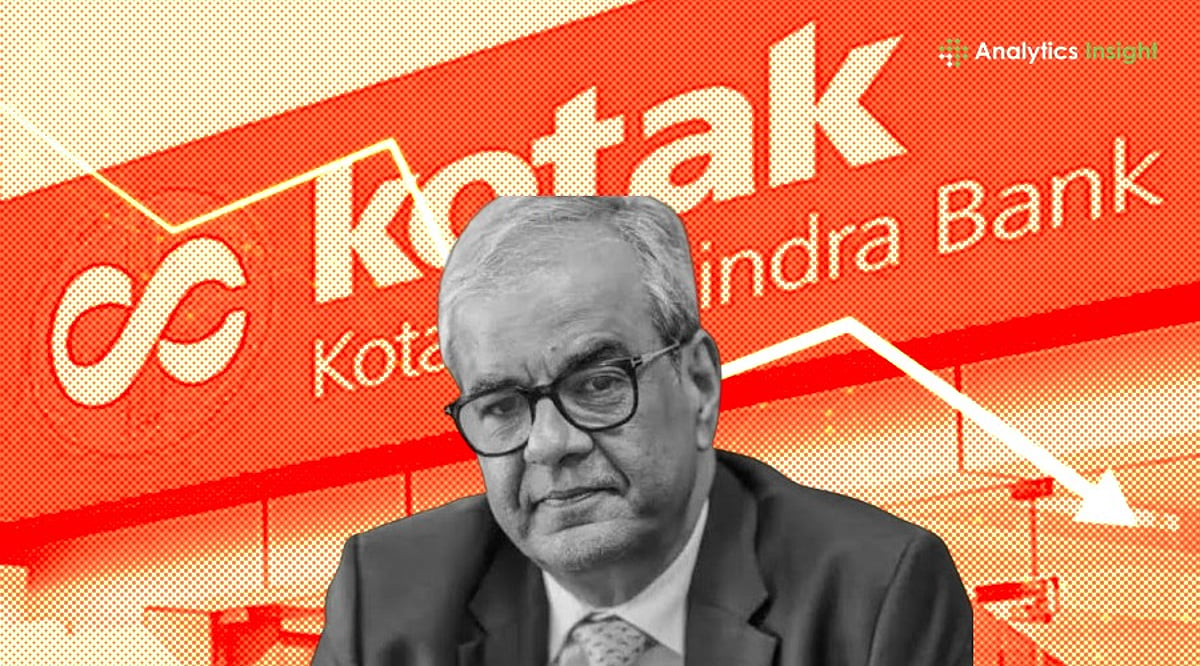
    Kotak Mahindra Bank Shares Decline as CEO Ashok Vaswani Plans Departure by Late 2026

    Kotak Mahindra Bank shares experienced a dip on Monday, trading near Rs. 398.95 on the NSE after CEO Ashok Vaswani confirmed he will step down at the end of his tenure on December 31, 2026. The stock touched an intraday high of Rs. 410.95 and a low of Rs. 398.95, reflecting investor caution over the leadership transition.

    Leadership Transition Sparks Selling Pressure

    The announcement that Ashok Vaswani will not seek another term as Managing Director and CEO raised concerns among investors about the future leadership of one of India’s largest private lenders. The bank’s management clarified that Vaswani will remain in his role until the end of his tenure and will collaborate closely with the board to ensure a smooth succession. Succession planning is already underway, subject to regulatory approval.

    Investors Eye Succession Clarity

    While the bank has reiterated its unchanged long-term strategy, the unexpected news has affected market sentiment. A leadership change often brings uncertainty, especially as Vaswani had been driving the company’s transformation. Investors are now focused on the board’s selection process for a new CEO, which will be critical in restoring confidence in the coming months.

    Analysts See Temporary Impact

    Despite the sharp decline, several brokerages maintain a positive outlook on Kotak Mahindra Bank, viewing the downturn as temporary. Nomura and Jefferies, among others, remain bullish on the stock, citing strong capitalization and solid fundamentals. Analysts believe that once the board identifies a suitable successor, attention will shift to profitability and growth. Such management changes are common in the banking industry.

    Growth Strategy Remains Intact

    Vaswani’s departure comes as the bank accelerates its growth strategy following the removal of regulatory restrictions on its digital business. Over the past year, the company has enhanced its technology framework, compliance systems, and focused on expanding retail lending. The bank continues to explore opportunities in consumer banking, wealth management, commercial lending, and digital financial services. With one of the strongest balance sheets in the private banking sector, Kotak Mahindra Bank is open to organic and inorganic growth avenues, including loan portfolio acquisitions. These strategic initiatives are institutionally supported and likely to continue irrespective of the leadership change.

    Smooth Succession as Key Catalyst

    From an investor perspective, a successful succession process will be the primary catalyst for rebuilding confidence and removing current uncertainties surrounding the share price. Analysts expect share price movements to remain tied to succession-related news. However, most market professionals view the bank’s capital adequacy, technological advancements, growing credit book, and high profitability as strong indicators for long-term investment. While the leadership announcement has introduced volatility, the underlying business remains robust.

  • FTSE 100 Opens Lower at 10,495 as Oil Prices Climb and BoE Warns on Inflation

    FTSE 100 Opens Lower at 10,495 as Oil Prices Climb and BoE Warns on Inflation

    The FTSE 100 opened 13 points lower at 10,495 amid easing US-Iran tensions, while the Bank of England’s chief economist warned against complacency on inflation. Labour leadership frontrunner Andy Burnham is also set to unveil a major devolution plan. Meanwhile, Brent crude futures rose 0.67% to $72.47 a barrel. US West Texas Intermediate (WTI) advanced 1.80% to $70.05 a barrel.

    Gainers & Losers

    On the upside, Lion Finance Group rose 3.22% to £11,220, while Entain advanced 2.70% to £593.40. BT Group gained 1.59% to £198.10, and Scottish Mortgage Investment Trust moved higher by 1.56% to £1,433. Pershing Square Holdings added 1.22% to £3,812, while Computacenter climbed 0.89% to £4,292.

    On the downside, Endeavour Mining declined 2.36% to £3,761, while British American Tobacco slipped 1.37% to £4,686. Next edged lower by 0.27% to £14,575, and AstraZeneca fell 0.28% to £14,278. Unilever moved lower by 0.87% to £4,560.50, while 3i Group eased 1.58% to £2,492.

    CPI Above BoE’s Target

    Bank of England’s chief economist Huw Pill told the Press Association that policymakers “should not be complacent” about inflation, after the Consumer Prices Index remained above the Bank’s 2% target in May, at 2.8%. “I think it should be seen as problematic, because our mandate is very clear; inflation at 2% at all times. I do fear a little bit that, because we saw inflation go to 11%, policy discussion becomes, oh, inflation at 3% is not so bad.” Pill was one of two policymakers to vote for a rate hike when the Bank’s monetary policy committee split 7-2 to hold rates earlier this month.

    AstraZeneca Secures EU Approval for Breast Cancer Drug

    AstraZeneca has secured EU approval for its breast cancer drug Datroway after studies found it was able to improve survival rates for patients. The drug targets the especially aggressive form of cancer known as metastatic triple-negative, and was able to improve the average survival of the disease by five months. Today, only 15% of patients with metastatic triple-negative breast cancer survive beyond five years, making the disease one of the hardest to treat. AstraZeneca had already secured approval for the drug in the US in May.

    Bridgepoint Group Shares Rose

    Bridgepoint Group shares jumped 7.9% in early trade, hovering at £251, but shares remain down 10.2% since January. The group is acquiring real estate investment platform Kayne Anderson for $1.4 billion (£1 billion), comprising $759 million in cash and roughly $189 million in newly issued Bridgepoint shares. The deal is anticipated to “strengthen Bridgepoint’s position” in global private markets and increase the group’s assets under management (AUM) to $117 billion. This includes $40 billion in private equity, $30 billion in infrastructure and $22 billion in real estate.

    Global Market View

    In the US, the tech-heavy Nasdaq closed 0.24% down. The S&P 500 was nearly flat at 7,354.02, while the Dow declined 0.09%. In Asia, South Korea’s Kospi fell 0.2% to 8,394.65. Japan’s Nikkei 225 rose 0.15% to 69,468.11 points. Taiwan’s TAIEX dipped 0.96%. India’s Nifty 50 and Sensex both fell 0.41% and 0.5%, respectively.

    Disclaimer: Analytics Insight does not provide financial advice or guidance on cryptocurrencies and stocks. Also note that the cryptocurrencies mentioned/listed on the website could potentially be risky, i.e. designed to induce you to invest financial resources that may be lost forever and not be recoverable once investments are made. This article is provided for informational purposes and does not constitute investment advice. You are responsible for conducting your own research (DYOR) before making any investments.

  • Bitcoin Drops to $60,000: Heavy Selling Pressure Grips Crypto Market

    Bitcoin Drops to $60,000: Heavy Selling Pressure Grips Crypto Market

    Bitcoin has entered a difficult phase after a strong rally in 2025. At the end of last year, Bitcoin touched a record high of $126,000, which created huge excitement across the crypto market. However, the current situation has sharply changed.

    As of 29 June 2026, Bitcoin trades near $59,500 to $60,500. This shows a major fall compared to previous highs. Since the start of 2026, Bitcoin has already lost more than 30% of its value. The market now faces fear and uncertainty as investors closely watch the next possible move.

    The sharp fall has created an important question in the market. Many traders now wonder whether Bitcoin has reached its lowest point for now or whether prices may fall even further in the coming weeks.

    Recent Performance Shows Weak Market Sentiment

    The first half of 2026 has been difficult for Bitcoin. During June, sellers gained strong control and pushed prices lower. Bitcoin recently fell under the important $60,000 price level, even touching nearly $59,501 during recent trading sessions.

    This price level has become important because investors usually see round numbers like $60,000 as major support zones. Once price falls below such levels, market confidence often becomes weak.

    Only one month ago, Bitcoin traded close to $81,500. The move from $81,500 to below $60,000 means Bitcoin has lost more than 22% in just one month. Compared with mid-2025, Bitcoin now trades almost 40% lower, which clearly shows how much market sentiment has changed.

    Technical Charts Show Important Warning Signs

    Technical analysis currently shows mixed signals. Bitcoin is now near an important support area between $58,000 and $60,000. This zone will likely decide the next short-term direction.

    The Relative Strength Index (RSI) is in neutral territory. This usually means neither buyers nor sellers fully control the market. At the same time, the MACD indicator recently showed bearish divergence, which often signals weaker price strength.

    The 200-day moving average, however, still points upward. This suggests that although short-term pressure is strong, the long-term market structure has not fully broken yet.

    If Bitcoin fails to move back above $60,000 soon, analysts expect another fall toward $55,000. Some experts even believe price may test $46,000 if selling pressure increases further.

    Institutional Investors Pull Money Out

    One major reason behind Bitcoin’s weakness comes from large investors pulling money out of the market. Reports show around $4.5 billion left spot Bitcoin ETFs in recent months.

    Spot Bitcoin ETFs had earlier helped bring major institutional money into crypto markets. But recent outflows show that large investors have become cautious.

    Higher global interest rates have also hurt Bitcoin demand. Many investors now prefer safer assets such as gold and traditional investments instead of risky digital assets.

    Another concern comes from Bitcoin mining companies. Current mining costs have increased sharply, and several miners now spend more money producing Bitcoin than current market prices allow. This creates extra selling pressure because miners often sell holdings to cover losses.

    Regulation Problems Continue to Create Uncertainty

    Government regulation is another major issue for the crypto market. In the United States, delays around the proposed US Clarity Act have created fresh uncertainty.

    This law aims to create clear rules for cryptocurrency markets. Without proper regulations, many institutions are hesitant about increasing crypto investments.

    Large financial firms such as Morgan Stanley and Charles Schwab have expanded crypto services during 2026. Even with this progress, unclear regulations continue to slow overall market confidence.

    Future Outlook

    Despite short-term weakness, many analysts still believe Bitcoin has strong long-term potential. Forecasts from Binance suggest Bitcoin could recover toward $68,000 to $105,000 during the second half of 2026 if market conditions improve.

    Research from Bitcoin Suisse presents an even stronger forecast. According to this report, Bitcoin may reach nearly $180,000 during the next major bull cycle, with increasing institutional adoption and stronger market liquidity.

    At the same time, bearish analysts are cautious. They believe weak economic conditions and poor investor confidence may delay any major recovery until late 2026.

    Final Thoughts

    Bitcoin currently stands at one of its most important price zones this year. After a steep fall from $126,000 to nearly $60,000, market confidence has weakened sharply.

    A move above $65,000 could help restore bullish momentum and bring fresh buying interest. On the other hand, failure to defend current levels may push Bitcoin toward $55,000 or even lower.

    Even though short-term pressure is strong, Bitcoin still holds its position as one of the most closely watched financial assets in the world. The second half of 2026 will likely decide whether the market begins recovery or faces another major correction.

    FAQs

    1. Why has Bitcoin price fallen in 2026?
    Large investor outflows, weak market sentiment, and global economic pressure have pushed prices lower.

    2. What is Bitcoin’s current price level?
    As of 29 June 2026, Bitcoin trades near $59,500 to $60,500.

    3. Why is $60,000 an important level for Bitcoin?
    This price zone acts as major support, and a breakdown could trigger further decline.

    4. Can Bitcoin recover this year?
    Some analysts expect recovery toward $68,000 to $105,000 if market conditions improve.

    5. What is the long-term Bitcoin forecast?
    Certain market reports suggest Bitcoin may reach $180,000 during the next major bull cycle.

    Disclaimer: This article is provided for informational purposes and does not constitute investment advice. You are responsible for conducting your own research before making any investments.

  • Master Quordle: Hints, Answers, and Winning Strategies for June 29 Puzzle

    Master Quordle: Hints, Answers, and Winning Strategies for June 29 Puzzle

    Today’s Quordle puzzle offers a mix of everyday vocabulary and slightly tricky five-letter words. Before revealing the answers, test your skills with the hints below to unlock all four words within nine attempts.

    Overview of Today’s Puzzle

    This edition of Quordle features four familiar words blending simple definitions with deceptive letter combinations. One answer contains a pair of repeated letters, making it a bit more challenging to identify. Try solving using the clues first before scrolling to the answers.

    Quordle Clues for June 29

    Need a nudge before revealing the solution? Use these hints for each word position:

    • Word 1 (Top Left): Drink something loudly using a straw.
    • Word 2 (Top Right): Decode a code or crack a case.
    • Word 3 (Bottom Left): A shaft sticking out from a wheel on which the wheel is mounted and used to turn the wheel.
    • Word 4 (Bottom Right): Someone who is not sincere or a fraud, particularly counterfeit currency.

    Still stumped? Here are additional clues:

    • One of today’s answers contains a pair of repeated letters.
    • All four words begin with the letters S, C, C, and P.

    Quordle Answers for June 29

    Ready for the solutions? Here are today’s Quordle answers:

    1. SLURP – a common word players recognize at once.
    2. CRACK – a flexible word with multiple definitions that may require extra thought.
    3. CRANK – the trickiest word due to its mechanical meaning.
    4. PHONY – easily mistaken for similar words like ‘phony’ or ‘fake’.

    Strategy Tips for Future Puzzles

    If you cracked all four answers within the nine guesses, congratulations—you’ve mastered today’s challenge! For future puzzles, focus on identifying repeated letters early and consider the multiple meanings of each word. This puzzle offered a fun mix of straightforward and sneaky words, keeping the difficulty balanced.

    Happy puzzling, and see you tomorrow for the next Quordle!

  • BRICS Chamber of Industry Appoints Sharmishtha Ghosh as Executive Director for Global Partnerships

    BRICS Chamber of Industry Appoints Sharmishtha Ghosh as Executive Director for Global Partnerships

    The BRICS Chamber of Commerce and Industry (BRICS CCI) has appointed Sharmishtha Ghosh as Executive Director for International Partnerships and Outreach, a newly created role aimed at strengthening trade and investment ties across the expanding bloc. BRICS now includes 11 member nations, and India holds the group’s chairship for 2026.

    In her new position, Ghosh will lead the Chamber’s efforts in cross-border trade corridors, bilateral investment initiatives, and high-level institutional dialogue, with a focus on helping enterprises in emerging economies access new markets. Ghosh brings over two decades of experience in strategic advisory, public policy, and international market expansion. She is the founder and managing director of In Tandem Global Consulting, a strategy advisory firm based in India and the UAE. There, she advised companies on market entry, foreign investment, and cross-border partnerships, and contributed to economic roundtables and digital trade corridors across India, Europe, and the MENA region. Earlier in her career, she held leadership roles in international business development and corporate advisory, working with government bodies, multinational companies, and industry associations on trade promotion and market expansion.

    “My focus will be on building practical trade corridors, encouraging cross-border investment, and setting up institutional channels that help businesses across member economies enter one another’s markets,” Ghosh said. She added that the work comes as trade and investment shift toward South-South cooperation.

    Sameep Shastri, Chairman of BRICS CCI, said the appointment comes as the Chamber prepares for a broader role across the grouping. “The Chamber is preparing for its place in a BRICS of 11 member nations. Sharmishtha brings the experience and the networks to strengthen our international partnerships, and she will help carry our mandate forward,” he said.

    About BRICS CCI: The BRICS Chamber of Commerce and Industry is a registered body that promotes commerce, industrial trade, and entrepreneurship across BRICS nations and other friendly economies. It serves as an institutional platform for MSMEs, large corporations, and young entrepreneurs to connect, collaborate, and expand their global market reach.

  • MEXC Launches TradFi Gala: $1,000,000 USDT Prize Pool for Futures Traders

    MEXC Launches TradFi Gala: $1,000,000 USDT Prize Pool for Futures Traders

    Victoria, Seychelles, June 29, 2026 – MEXC, a leading 0-fee digital asset trading platform, has announced the launch of the TradFi Gala, a month-long Futures trading campaign running from June 26 to July 26, 2026 (UTC). With rising demand for AI infrastructure and high-bandwidth memory (HBM), trading activity in AI-related stocks has surged. MEXC’s May data showed Stock Futures volume up 105% month-over-month and MU (Micron) Futures volume skyrocketing 1,002%. The campaign combines zero-fee trading, exclusive new user rewards, and competitive events, offering a total reward pool of 1,000,000 USDT.

    TradFi Gala: Four Reward Opportunities for Traders

    The TradFi Gala features four events targeting both new and existing users:

    • 0-Fee Trading Fest: Zero trading fees on selected Futures pairs including MUUSDT, SKHYNIXUSDT, INTCUSDT, SNDKUSDT, and more.
    • Welcome Power Reward: New users who deposit at least $100 and hold it for 24 hours receive a $200 position airdrop and one chance to pull the Treasure Lever.
    • Treasure Lever Frenzy: Users earn pulls by completing trading tasks, competing for a share of 300,000 USDT, including a $20,000 SKHYNIX position airdrop grand prize.
    • TradFi Trading Rush: Three-tiered challenges distribute 650,000 USDT in Futures bonuses, with separate pools for new users and all participants based on trading volume.

    As AI and semiconductor stocks attract growing investor interest, MEXC continues to expand its TradFi product suite. Users can trade U.S. stocks like Intel, Micron, and SanDisk directly within a single account, benefiting from competitive fees, deep liquidity, and fast execution. The TradFi Gala reinforces MEXC’s commitment to “0 Fees” and “Infinite Opportunities.”

    For more details and to participate, visit the MEXC TradFi Gala page.

    About MEXC

    MEXC is the world’s fastest-growing cryptocurrency exchange, trusted by over 40 million users across 170+ markets. It offers industry-leading 0-fee trading and access to over 3,000 digital assets, along with tokenized stocks, ETFs, commodities, and precious metals.

    Risk Disclaimer: This content does not constitute investment advice. Cryptocurrency markets are highly volatile; investors should assess risks carefully before trading.

  • India Stock Market Wobbles: Sensex Sinks 372 Points, Nifty Drops Below 24,000 as Profit Booking Deepens

    India Stock Market Wobbles: Sensex Sinks 372 Points, Nifty Drops Below 24,000 as Profit Booking Deepens

    Indian equity markets ended Monday’s session sharply lower, reversing early gains as broad-based profit booking and IT stock weakness dragged benchmarks. The Sensex plunged 372 points to close at 76,728.37, while the Nifty slipped below the crucial 24,000 mark, settling at 23,978. Persistent Systems led the losers, tumbling nearly 8% after announcing its $1.14 billion acquisition of Germany’s Nagarro.

    Market Overview

    Markets opened on a positive note after a long weekend, but selling pressure accelerated through the morning. The Sensex turned negative within the first hour, losing over 200 points, and continued to slide as the session progressed. The Nifty tested the 24,050 level early on but failed to hold support, closing below 24,000 for the first time in several sessions.

    Key Movers

    • Persistent Systems crashed nearly 8% after announcing its proposed $1.14 billion acquisition of Nagarro. Analysts noted long-term strategic benefits but flagged near-term integration costs.
    • HDFC Bank recovered above Rs. 800 after months of selling pressure, providing some support.
    • Ajanta Pharma hit a fresh all-time high above Rs. 3,400, extending its bullish momentum.
    • Anubhav Plast surged over 623%, leading the gainers list amid extreme volatility.

    Broader Market

    The Nifty Smallcap index fell for a second consecutive session, reflecting continued selling in mid- and small-cap stocks. Volatility was elevated, with stocks like Uhm Vacation, IITL Projects, and Euphoria Infotech witnessing sharp swings.

    Key Triggers This Week

    Investors are closely monitoring:

    • First-quarter earnings season
    • Progress of the monsoon
    • Crude oil prices and US-Iran tensions
    • Foreign institutional investor (FII) flows
    • Reserve Bank of India measures
    • Global economic data

    Analyst Views

    Shrikant Chouhan of Kotak Securities highlighted key support at 24,000 for Nifty and 76,800 for Sensex. A break below could trigger further weakness, while sustained trade above may push indices toward 24,200 and 77,500. LKP Securities’ Rupak De recommended a buy-on-dips strategy, with short-term trend remaining positive above 23,800.

    Other Market Developments

    • GIFT Nifty traded marginally higher at 24,098.50, indicating a flat-to-positive start for Tuesday.
    • The Indian rupee opened nearly flat at 94.35 per US dollar.
    • Gold prices declined, while crude oil edged higher amid geopolitical uncertainty.
    • Delhi Cabinet approved a new Electric Vehicle Policy, effective July 1.
    • Adani Energy Solutions board will meet on July 1 to consider fundraising.
    • Power Grid revoked a ban on KEC International, allowing fresh bids.

    The session ended with broad-based weakness, and market participants now await fresh domestic and global cues for direction.