Author: vitorcherulli

  • Top 10 Microservices Interview Questions Every Java Developer Should Know

    Top 10 Microservices Interview Questions Every Java Developer Should Know

    Microservices have transformed how modern applications are built, offering scalability, resilience, and faster deployment cycles. Java developers, in particular, rely on frameworks like Spring Boot and Spring Cloud to implement microservices architectures. To help you prepare for your next technical interview, here are the ten most frequently asked microservices questions along with concise explanations.

    1. What Are Microservices?

    Microservices break down an application into small, independently deployable services. Each service handles a specific business capability and communicates with others via lightweight protocols. This architecture contrasts with monolithic applications by enabling modular deployment, fault isolation, and independent scalability. Teams can deliver updates more frequently without risking the entire system.

    2. Why Use Spring Boot for Microservices?

    Spring Boot simplifies microservices development by offering auto-configuration, embedded servers (Tomcat, Jetty), and dependency management through starter modules. It provides production-ready features like health checks, metrics, and externalized configuration. Developers can quickly build standalone services without cumbersome XML setup, making Spring Boot a top choice for Java microservices.

    3. What Is Spring Cloud?

    Spring Cloud extends Spring Boot to address common microservices challenges. It provides tools for service discovery (Eureka), centralized configuration (Config Server), distributed tracing (Sleuth), and circuit breakers (Hystrix). With Spring Cloud, developers can build cloud-native applications that integrate seamlessly with platforms like Kubernetes and Netflix OSS.

    4. How Does Service Discovery Work?

    In a microservices environment, service instances come and go, making static IP addresses impractical. A discovery server (e.g., Eureka or Consul) maintains a registry of available services. Each instance registers itself on startup and sends heartbeats. Clients query the registry to find service locations, enabling dynamic communication, load balancing, and resilience without manual configuration.

    5. What Is an API Gateway?

    An API Gateway acts as a single entry point for all client requests. It handles cross-cutting concerns like authentication, rate limiting, request routing, and protocol translation. By centralizing these tasks, the gateway simplifies client communication with multiple backend services and enforces security policies consistently across the microservices landscape.

    6. What Is the Circuit Breaker Pattern?

    The circuit breaker pattern prevents cascading failures when a service becomes unresponsive. It monitors calls and, after a configurable threshold of failures, opens the circuit to stop further requests. Fallback responses are returned to maintain partial functionality. Once the service recovers, the circuit closes again. This pattern improves overall system resilience and stability.

    7. How Do Microservices Communicate?

    Microservices communicate either synchronously via REST APIs or asynchronously through messaging queues (e.g., RabbitMQ, Apache Kafka). Synchronous calls are straightforward but introduce tight coupling and latency. Asynchronous messaging enables event-driven architectures where services react to events, improving decoupling and scalability. Many systems combine both patterns based on use-case requirements.

    8. What Is Distributed Tracing?

    Distributed tracing helps monitor requests as they travel across multiple services. Tools like Zipkin or Jaeger assign a unique trace ID to each transaction, allowing developers to identify bottlenecks, debug latency issues, and optimize performance. Observability is critical in complex microservices environments, and tracing provides deep insight into request flows.

    9. How Do You Secure Microservices?

    Security in microservices involves authentication, authorization, and secure communication. Common approaches include OAuth2 and JWT for token-based access control, HTTPS for encrypted data in transit, and API gateways to enforce policies. Service-to-service communication should also use mutual TLS (mTLS) to verify identities. Following identity management best practices ensures that each service only accesses permitted resources.

    Mastering these topics will give you a strong foundation in microservices architecture and help you succeed in Java developer interviews. Whether you’re building new systems or maintaining existing ones, understanding these concepts is essential for modern software engineering.


  • Crude Oil Prices Climb as US-Iran Tensions Resurface, Brent Holds Above $70

    Crude Oil Prices Climb as US-Iran Tensions Resurface, Brent Holds Above $70

    Crude oil prices rose on Monday as renewed US-Iranian conflict revived concerns over supply disruptions. Brent crude futures rose 0.67% to $72.47 a barrel, while US West Texas Intermediate (WTI) advanced 1.80% to $70.05 a barrel. The rebound followed Brent’s drop below $70 on Friday, its first move below that level since February 27, before the latest escalation involving Iran.

    The gains were modest, but traders remain focused on the risk of disruption around the Strait of Hormuz, one of the world’s key oil and liquefied natural gas shipping routes. Natural gas futures climbed 0.82% to 3.306 per MMBtu, gasoline rose 0.90% to 2.9836, and heating oil added 1.30% to 3.2499, reflecting continued concerns over energy supplies as tensions persist around the Gulf.

    US-Iran Tensions Keep Oil Market on Edge

    The jump in crude prices followed renewed military action between the US and Iran. Washington is said to have suspended talks over the conflict after an attack on commercial shipping off the coast of Iran by its military forces in the Strait of Hormuz, a move in response to Tehran’s attacks on the shipping vessels. The two sides are likely to meet in Doha on Tuesday for further discussions, according to an Axios report cited by Bloomberg. However, the weekend escalation has already slowed some oil and natural gas shipments through the region.

    The large crude carrier Kiku, which was transporting some 2 million barrels of oil, was struck and was last seen near Fujairah, a major port in the United Arab Emirates on the Gulf of Oman. US Central Command indicated that while coastal shipping traffic was continuing, some tankers reportedly abandoned attempts to exit.

    India Impact Remains Contained for Now

    Crude price remains a key macroeconomic indicator for India, since it imports around 85% of its oil requirement. A prolonged increase in crude can put pressure on the rupee, increase the import bill, and raise inflation risks. “Crude oil prices are currently trading in the $69–70 per barrel range, remaining well below the highs witnessed during the recent Middle East conflict. Although the latest flare-up in regional tensions triggered a brief bout of volatility in energy markets, crude prices have remained largely contained, providing continued relief to India’s macroeconomic outlook,” said Ponmudi R, CEO of Enrich Money.

  • Oppo Reno 16 India Launch: Expected Price, AI Cameras, and Key Features Revealed

    Oppo Reno 16 India Launch: Expected Price, AI Cameras, and Key Features Revealed

    Oppo is set to launch its Reno 16 series in India this week, bringing AI-powered smartphones to the premium mid-range segment. The launch event is scheduled for July 2 and is expected to introduce the Reno 16 and Reno 16 Pro, along with a new accessory called Oppo Bubble.

    Oppo has teased several features over the past few weeks, while pricing and full specifications are yet to be confirmed.

    AI Cameras Take Center Stage

    The price point of the Reno 16 model in India could be as much as Rs. 59,999, while the Reno 16 Pro is expected to be priced higher as the premium model in the lineup. The exact price points have not been confirmed yet by the company.

    Cameras will be among the biggest strengths of the new Reno 16 phones. According to speculation, Oppo is expected to equip the phones with a 50MP primary camera along with a 3.5x telephoto lens for better zoom capabilities. Additionally, the Reno 16 series smartphones could come with an upgraded front camera.

    This year, Oppo relies heavily on artificial intelligence. AI-based imaging technologies like AI Remix Collage could improve images and simplify content creation for users.

    What Else to Expect?

    Oppo also aims to deliver a premium look with thin bezels and a high-refresh-rate AMOLED screen. The company has announced its upcoming 3D Pop Planet design and new color choices aimed at young people. The Oppo Reno 16 series will come loaded with the latest ColorOS built on top of Android. It is also expected to include new AI-powered productivity and personalization features.

    Apart from its latest smartphones, Oppo might also bring the Oppo Bubble at its launch event scheduled for July 2. The exact role of this device is still under wraps. With AI photography features, premium design, high-speed performance, and improved battery life, the Oppo Reno 16 series might help establish Oppo in India’s competitive premium smartphone segment.

  • iPhone 18 Pro Leaks: 2nm Chip, 48MP Camera, Satellite Connectivity, and New Red Color

    iPhone 18 Pro Leaks: 2nm Chip, 48MP Camera, Satellite Connectivity, and New Red Color

    Recent leaks suggest Apple’s upcoming iPhone 18 Pro will introduce significant upgrades in design, camera technology, display, and AI performance. While nothing is officially confirmed, the rumors indicate Apple’s next flagship could deliver one of its biggest hardware improvements in years.

    Expected Specifications of iPhone 18 Pro Series

    According to leaks, the iPhone 18 Pro will feature a 6.3-inch OLED display with a 120Hz refresh rate and peak brightness of 3,000 nits. The smartphone is expected to run on Apple’s next-generation A20 Pro chipset, built on a 2nm process. This allows more transistors to be integrated into the chip, with early estimates suggesting performance gains of up to 15% and efficiency improvements of around 30% over the A19.

    The iPhone 18 Pro series is expected to integrate 12GB of RAM, with storage options ranging from 256GB to 1TB. The iPhone 18 Pro Max is expected to have a 6.9-inch OLED display with the same 120Hz refresh rate and up to 3,000-nit peak brightness. The battery size is rumored to be slightly smaller than that of the Pro Max model.

    Camera Upgrades and Hardware Improvements

    The iPhone 18 Pro is expected to integrate a 48MP rear camera with improved zoom capabilities. The upcoming model will also feature a 12MP front camera. Both the iPhone 18 Pro and iPhone 18 Pro Max will feature a variable-aperture lens on the 48-megapixel primary Fusion camera, allowing the iPhone camera to adjust the amount of light reaching the sensor. Users will have more control over the depth of field and exposure with this advanced setup.

    According to the latest leaks, the iPhone 18 Pro will support NR-NTN (New Radio Non-Terrestrial Networks), enabling the iPhone to connect to low Earth orbit satellites for internet access in places without regular cellular service.

    Brand New Color for iPhone 18?

    According to Bloomberg’s Mark Gurman, Apple is testing a new deep red color for its upcoming iPhone 18 Pro models. The move comes after the success of the orange variant, which appears to have encouraged Apple to experiment with more expressive colors.

    Release Date

    According to Gurman, Apple is likely to stick to its usual September launch window for its next-generation iPhones. Based on the company’s launch history, Gurman said the event could take place on either September 9 or September 10. In a post on X, Gurman wrote: “Based on history, the most likely date for Apple’s iPhone 18 Pro and iPhone Ultra announcement is either Tuesday Sept 8 or Wednesday Sept 9. But Labor Day is on Sept 7, so Apple may prefer a travel gap day and prefer Sept 9 for that reason.”

    Apple has already raised prices for several products in India, including Mac desktops, MacBooks, Apple TV devices, and HomePod speakers, as rising global memory and storage chip costs begin to affect retail pricing.

    What Apple’s Next Flagship Could Mean for Smartphone Innovation

    Although the foldable handset is expected to steal the headlines, the Pro models will introduce meaningful hardware improvements of their own, including Apple’s first 2nm chipset designed to enhance both speed and energy efficiency. Should the reports be correct, the iPhone 18 Pro may very well create new standards of AI-driven processing power, camera, and display technologies. In addition, the release of the iPhone 18 Pro could spur its rivals to innovate more rapidly as well.

  • Solana (SOL) Bounces Off $60 Support: Oversold Signals and ETF Hopes Fuel Breakout Prospects

    Solana (SOL) Bounces Off $60 Support: Oversold Signals and ETF Hopes Fuel Breakout Prospects

    Solana’s native token, SOL, has staged a notable recovery after dipping near the critical $60 support level during a broad market correction. Strong buying pressure at this zone halted further declines, reigniting trader confidence and speculation about a potential breakout.

    At press time, SOL is trading around $66–$68, having touched lows close to $61 during the recent sell-off driven by Bitcoin’s brief drop near $60,000. Despite the broader weakness, Solana held one of its strongest support levels, signaling resilient demand.

    Technical Indicators Point to Oversold Reversal

    The Relative Strength Index (RSI) recently entered oversold territory, a historical precursor to short-term rebounds for SOL. Past data shows that similar oversold readings often preceded swift recoveries, and the bounce from $60 reinforces this pattern. Analysts now watch whether this rebound matures into a sustained uptrend or fades as a dead cat bounce.

    Correction Erased Earlier Gains, but Network Fundamentals Remain Strong

    Earlier this year, SOL traded above $90 before losing nearly 25% due to weak market sentiment, global economic uncertainty, and Bitcoin’s decline. However, the defense of $60 demonstrated strong buying interest at lower levels. Meanwhile, Solana’s blockchain continues to thrive: the network processed 25.3 billion transactions in Q1 2026, active addresses are near record highs, and stablecoin usage is rising. This divergence between price weakness and on-chain strength underpins long-term optimism.

    ETF Speculation and Rising Volume Lift Sentiment

    Renewed discussions around a potential spot Solana ETF have improved market sentiment. Although no official approval has been granted, the prospect of institutional inflows keeps traders hopeful. Additionally, 24-hour trading volume has surged past $3.8 billion, indicating renewed participation after panic selling subsided.

    Key Resistance at $70 in Focus

    Traders now eye the $70 resistance level. A decisive break above could trigger buying toward the $78–$80 range, where SOL traded before the correction. Failure to clear $70 might lead to a retest of $60. The coming sessions will be critical in determining the token’s short-term direction.

    Network Upgrade and Long-Term Outlook

    Solana’s development team continues advancing the Alpenglow upgrade, which aims to reduce transaction finality to ~150 milliseconds and boost validator performance. This technical improvement could strengthen Solana’s position in DeFi, gaming, and asset tokenization, adding to the positive long-term narrative.

    For now, SOL stands at a crossroads. Oversold signals, robust network activity, rising volume, and ETF hopes have revived breakout hopes, but the market awaits confirmation above $70 to validate a sustained recovery.

  • Best Gmail alternatives in 2026: privacy, AI, and business tools compared

    Best Gmail alternatives in 2026: privacy, AI, and business tools compared

    Email remains a cornerstone of daily communication, but many users are exploring options beyond Gmail. While Google’s service is still one of the most popular worldwide, a growing number of people are turning to platforms that offer stronger privacy protections, better productivity tools, cleaner interfaces, or advanced artificial intelligence features. Several email services have emerged as formidable competitors, each catering to different priorities and use cases. Below, we examine the top Gmail alternatives in 2026 and what makes them stand out.

    Why users are looking beyond Gmail

    Privacy concerns are a primary driver, with many users wanting more control over their personal data and seeking ad-free, tracker-free experiences. Others need stronger security measures, better organization tools, custom domain support, or AI-powered features that streamline workflows. These evolving needs have propelled several alternatives into the spotlight.

    Proton Mail: best for privacy

    Proton Mail is a top choice for privacy-conscious users. It provides end-to-end encryption, ensuring emails are protected from unauthorized access. Based in Switzerland, the company adheres to strict privacy laws. The service is ad-free and does not track users. It also offers secure cloud storage, calendar services, and VPN support. New migration tools introduced in 2026 make switching from Gmail easier. A free plan is available, though storage is limited compared to larger providers.

    Microsoft Outlook: best for professionals

    Outlook excels in professional and business communication. It integrates seamlessly with Microsoft 365 apps like Word, Excel, and Teams, making email management smoother for office users. Its calendar and scheduling tools are often considered superior to Gmail’s. Microsoft has enhanced its AI-powered Copilot features for writing, organization, and task management. The free tier includes ads, and some users find the interface cluttered compared to simpler alternatives.

    Zoho Mail: best for small businesses

    Zoho Mail is popular among startups, freelancers, and small businesses. It offers business email hosting at a lower cost than Google Workspace. Custom domain support enables professional email addresses. The platform is ad-free and includes robust admin tools. It integrates well with other Zoho applications, though the interface is less polished than major competitors, and mobile apps are weaker.

    Tuta Mail: best for maximum security

    Tuta Mail (formerly Tutanota) is another strong option for security-focused users. Based in Germany, it follows strict privacy regulations and encrypts the entire mailbox, not just selected messages. It offers anonymous signup, secure calendar support, and open-source technology for transparency. The service minimizes metadata collection. However, it lacks the productivity tools and third-party integrations of larger providers.

    Fastmail: best for power users

    Fastmail is designed for users who manage large volumes of email. It prioritizes speed, advanced organization, and powerful filtering. It supports custom domains and features one of the fastest search engines in the email market. Its clean, efficient design appeals to professionals and entrepreneurs. Fastmail does not offer a free plan, which may deter casual users.

    Shortwave: best for AI-powered email management

    Shortwave, created by former Google engineers, focuses heavily on artificial intelligence and workflow automation. It provides AI-powered inbox summaries, advanced search, writing assistance, and smart prioritization. Its conversation-based design offers a modern email experience. As a newer service, long-term reliability is less proven than established providers.

    Apple Mail and iCloud Mail: best for Apple users

    Apple Mail combined with iCloud Mail is ideal for users deeply embedded in the Apple ecosystem. It works seamlessly across iPhone, iPad, and Mac. Apple continues to improve privacy and has introduced new intelligence features for organization and assistance. The clean interface is a major advantage, but the platform offers fewer benefits outside Apple devices.

    Final thoughts

    Several strong Gmail alternatives exist today, each tailored to different priorities. Proton Mail and Tuta Mail lead in privacy and security. Outlook is best for professionals and businesses. Zoho Mail provides affordable business tools. Fastmail caters to advanced users who value speed and organization. Shortwave brings modern AI-powered features, and Apple Mail is a strong choice for dedicated Apple users. The best option depends on whether privacy, business tools, AI, or ecosystem compatibility matters most. Gmail remains popular, but the market now offers excellent alternatives that better match specific needs.

    FAQs

    1. Why do people search for Gmail alternatives in 2026? Privacy concerns, data tracking, and demand for smarter email tools have increased interest in other platforms.
    2. Which alternative offers the strongest privacy? Proton Mail and Tuta Mail provide the strongest privacy protection with encrypted communication.
    3. Which email service works best for business use? Microsoft Outlook and Zoho Mail offer excellent business and workplace communication tools.
    4. Which alternative focuses on artificial intelligence? Shortwave stands out for AI-powered inbox summaries, writing help, and smart organization.
    5. Is Gmail still popular in 2026? Yes, Gmail remains widely used, but many alternatives now offer features better suited for specific needs.
  • Best Crypto Exchanges for High-Net-Worth Traders in 2026: Security, Liquidity, and OTC Desks Compared

    Best Crypto Exchanges for High-Net-Worth Traders in 2026: Security, Liquidity, and OTC Desks Compared

    High-net-worth crypto traders require platforms that offer robust security, deep liquidity, low fees, and advanced trading tools. In 2026, Binance, Coinbase, Kraken, OKX, and Crypto.com emerge as the top choices for wealthy investors. This article evaluates each exchange based on key criteria such as liquidity, security, regulatory compliance, and specialized services like over-the-counter (OTC) desks.

    Key Considerations for Wealthy Crypto Investors

    • Deep Liquidity: Essential for executing large transactions without significant price slippage.
    • Security and Compliance: Critical for protecting substantial portfolios and meeting regulatory standards.
    • Advanced Products: Exchanges now offer ETFs, futures, staking, and tokenized assets to cater to sophisticated investors.

    Binance: Dominant Liquidity and Expanding Services

    Binance remains the largest crypto exchange by trading volume, handling billions of dollars daily. Its deep liquidity allows high-net-worth traders to execute large orders with minimal market impact. The platform also features a robust OTC desk for private transactions and offers advanced futures products with reduced fees for VIP clients. In June 2026, Binance expanded beyond crypto by introducing direct access to U.S. stocks and ETFs, positioning itself as a competitor to traditional financial platforms.

    Coinbase: Trust Through Regulation

    Coinbase prioritizes regulatory compliance, making it a safe choice for investors seeking transparency and long-term security. Its premium service, Coinbase Prime, provides institutional clients with secure custody, advanced tools, and dedicated support. In June 2026, Coinbase restored Indian rupee support, enabling direct deposits and withdrawals, and launched index-based perpetual futures tied to AI, defense, and Nasdaq-linked sectors, broadening opportunities for advanced traders.

    Kraken: Unmatched Security

    Kraken is renowned for its strong security record, appealing to high-net-worth investors concerned about cyber threats. The exchange offers professional-grade trading infrastructure with rapid execution, deep spot liquidity, futures markets, and reliable API support. Its private OTC desk facilitates large trades without affecting public order books. Independent analysts consistently rank Kraken among the most secure platforms, with transparent reserve accounting and controlled asset management.

    OKX: Innovation for Institutional Clients

    OKX has rapidly grown into a leading exchange for wealthy traders, focusing on derivatives, automated trading, and structured products. A major milestone was its partnership with Intercontinental Exchange (owner of the NYSE) to form OKXICE, a joint venture targeting tokenized securities and blockchain-based financial products. This move bridges crypto and traditional finance, positioning OKX as a strong long-term platform.

    Crypto.com: Expanding Beyond Retail

    Originally popular with retail users, Crypto.com now attracts larger investors with over 450 supported cryptocurrencies, lending services, staking rewards, and asset management tools. In 2026, it ranks among the top platforms for crypto staking, offering both capital growth and passive income. Its growing institutional infrastructure signals a shift beyond small retail traders.

    What Wealthy Traders Should Focus On

    Large investors need more than basic trading access. Liquidity is paramount to avoid price slippage on million-dollar orders. Private OTC desks enable discreet execution of large transactions. Security measures like cold storage, insured custody, and reserve transparency reduce risk. Regulatory compliance is increasingly important as global regulations tighten. Additionally, exchanges are expanding into stocks, ETFs, tokenized securities, and lending services, creating integrated ecosystems.

    Final Outlook

    The crypto exchange industry now demands institutional-grade infrastructure for wealthy investors. Binance leads in liquidity and volume, Coinbase in trust and regulation, Kraken in security, OKX in innovation, and Crypto.com in diversification and passive income. As institutional money flows into digital assets, choosing the right exchange becomes a critical decision for serious investors.

    Frequently Asked Questions

    1. Which crypto exchange is best for high-net-worth traders? Binance offers the best combination of high liquidity, low fees, and advanced tools.
    2. Why do wealthy traders prefer OTC trading? OTC trading allows large transactions without affecting public market prices.
    3. Is Coinbase safe for large investments? Yes, due to strong regulatory compliance and secure custody systems.
    4. Which exchange offers the best security in 2026? Kraken is consistently ranked among the safest for its reserve transparency and security systems.
    5. What matters most when choosing a crypto exchange? Liquidity, security, legal compliance, custody protection, and advanced trading products are key factors.
  • Indian Stock Market Rebound: Sensex Ends Near 77,000, Nifty Closes Above 24,000 with Broad-Based Rally

    Indian Stock Market Rebound: Sensex Ends Near 77,000, Nifty Closes Above 24,000 with Broad-Based Rally

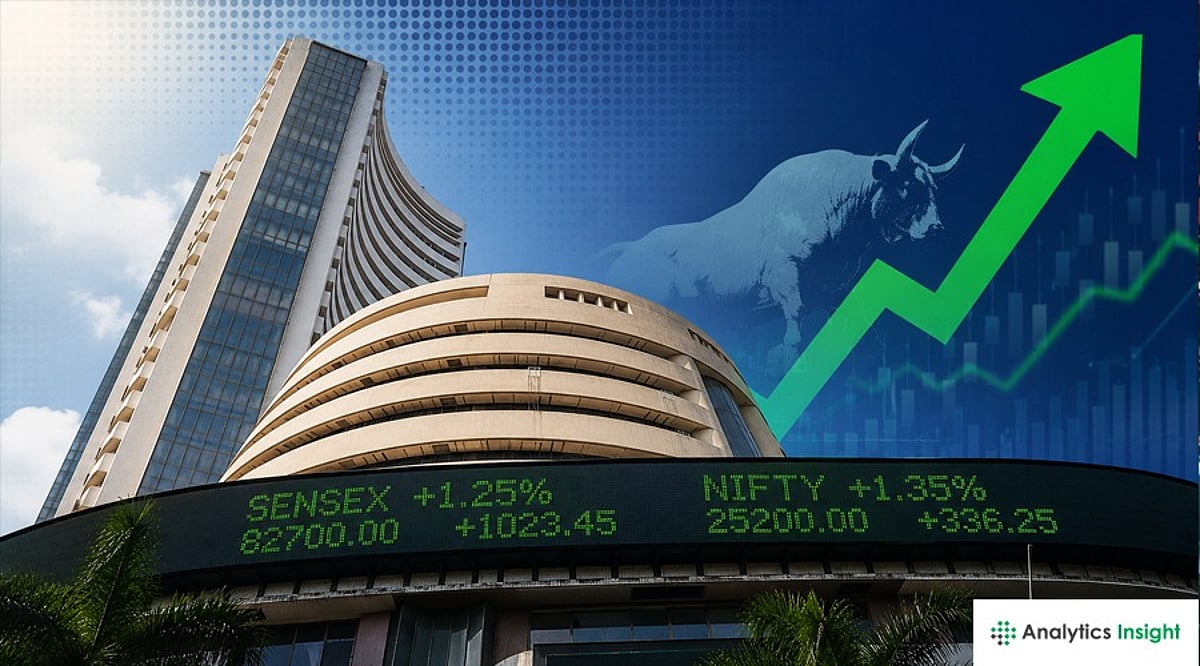
    Indian equity markets staged a strong recovery on June 24, rebounding sharply after the previous session’s selloff. The BSE Sensex surged over 830 points to reclaim the 77,000 mark, while the Nifty 50 crossed the 24,000 level, supported by broad-based buying across sectors.

    Key highlights from the session:

    • Benchmark gains: Sensex closed at 76,991.22, up 790.54 points (1.04%), and Nifty settled at 24,021.65, gaining 0.83%.
    • Top movers: Trent led gainers with nearly 4% rise, followed by ICICI Bank (up 2.29%) and HDFC Bank (up 1.30%). Tata Motors rebounded nearly 4%.
    • Sector performance: Banking stocks dominated volumes, with ICICI Bank and HDFC Bank among the most traded. The Nifty IT weight fell to a record low below 7.6% amid AI concerns.
    • Market breadth: MidCap and SmallCap indices lagged, while India VIX declined, signaling easing volatility.
    • Global cues: Easing crude oil prices and mixed US Fed expectations improved sentiment. Japan’s Nikkei fell 0.88% on Fed rate fears.
    • Corporate and other news: Rashi Peripherals to acquire 67% of VDA Infosolutions for ₹368 crore; EMA Partners India acquires Taggd for ₹95 crore; Amitabh Bachchan sold 0.79% stake in DP Wires; Adani Group announced nuclear energy entry targeting 10 GW by 2035.
    • Currency and commodities: Rupee strengthened marginally to 94.6650/USD. Gold, crude oil, copper, and natural gas traded lower.
    • Market closure: Indian exchanges will remain shut on June 26 for Muharram.

    The recovery was driven by return of buying in heavyweight stocks, improved risk appetite, and positive domestic developments. Analysts noted that sustained support from large caps and stable global conditions remain crucial for maintaining momentum.

  • Sensex Holds 77,000, Nifty Targets 24,500 – Key Levels and Market Outlook

    Sensex Holds 77,000, Nifty Targets 24,500 – Key Levels and Market Outlook

    The Indian equity benchmarks are expected to open on a flat note Monday, tracking weakness in global markets amid renewed Middle East tensions. GIFT Nifty traded at 24,093, a discount of 9 points from the previous Nifty futures close, signaling a cautious start.

    Friday’s Market Wrap

    On Friday, the Sensex gained 109.25 points (0.14%) to end at 77,100.47, while the Nifty 50 rose 34.35 points (0.14%) to settle at 24,056. The rupee opened marginally stronger at ₹94.35 per dollar versus Thursday’s close of ₹94.40.

    Foreign Institutional Investors (FIIs) turned net buyers in Indian equities after five consecutive sessions of selling. On June 25, 2026, FIIs net sold shares worth ₹384 crore, while Domestic Institutional Investors (DIIs) net bought ₹5,748 crore.

    Sensex Outlook

    The Sensex formed a High Wave candle on the weekly chart for the second straight week, signaling indecision among traders. However, the index held above the 77,000 mark, keeping the near-term tone positive.

    Resistance: 77,800–78,000 — a clean break above this zone would strengthen the bullish case, according to Aakash Shah, Research Analyst at Choice Equity Broking.

    Support: 76,200–76,400 — expected to attract buying interest from positional investors. A sustained move below this band could trigger consolidation and short-term profit-booking.

    Nifty 50 Outlook

    The Nifty 50 formed a small bearish candle with a long upper shadow on the daily chart, indicating profit booking after a strong intraday rally.

    • Immediate resistance: 25,250–25,300 (confluence of last week’s high and the gap-down area of May 8, 2026).
    • Immediate support: 23,900–23,800 — Bajaj Broking advises using dips as buying opportunities.
    • Key short-term support zone: 23,500–23,600.
    • Major resistance: 24,600.

    The brokerage expects the Nifty to gradually move toward the 24,500–24,600 range over the coming weeks, supported by a positive overall market structure.

    Bank Nifty Outlook

    Bank Nifty rose 26.70 points (0.05%) to close at 58,177.05 on Friday, forming a small-bodied candle with an upper wick, suggesting profit booking at higher levels.

    Target: 59,200 — the 138.2% external retracement of the previous decline from 57,456 to 52,783.

    Support: 57,000 — the cluster of last two weeks’ lows. As long as the index holds above this level, the short-term trend remains favorable.

    Disclaimer: This article is for informational purposes only and does not constitute investment advice. Readers should conduct their own research before making any investment decisions.

  • The Hardest IT Roles to Fill in 2026: AI, Cybersecurity, and the Rise of Hybrid Professionals

    The Hardest IT Roles to Fill in 2026: AI, Cybersecurity, and the Rise of Hybrid Professionals

    The IT hiring landscape has shifted dramatically. Open requisitions are no longer for generalists or entry-level specialists. Instead, positions that remain unfilled for six to nine months demand a rare combination: an engineer who writes strong code, navigates AI platforms, assesses risk exposure, and aligns technical decisions with business priorities. Three skills, one person, a small pool. This is the core talent challenge organizations face as they head into the second half of this decade.

    The 2026 State of the CIO survey from Foundry confirms the shift. AI and machine learning, along with cybersecurity, now share the top position as the hardest IT skills to hire for, with data science and analytics ranked third. What stands out is not the ranking itself but the nature of the shortage. Hiring teams are no longer struggling to find specialists—they are struggling to find professionals who operate across disciplines simultaneously, at speed, and with sound judgment under real constraints.

    AI and Machine Learning: From Prompt Engineers to Agentic Builders

    The role of the AI professional has evolved significantly over the past two years. Prompt engineering as a standalone function has largely faded. Organizations today need AI product engineers who can deploy agents, build testing frameworks, manage cost-latency-quality trade-offs, and govern model risk. They also need professionals filling governance and red-team roles that did not appear on org charts three years ago. The center of gravity has moved from people who build models to people who wield them. That is a very different resume, and the candidate pool remains thin.

    Approximately 50% of US employers report difficulty finding qualified AI candidates, and Gartner research consistently identifies this shortage as the single largest roadblock for data and analytics teams. The challenge compounds with the pace of change: skills acquired at one organization may not transfer to another, and knowledge from six months ago can already be obsolete.

    Cybersecurity: A Skills Crisis, Not a Headcount Problem

    Six in ten organizations now report that skills gaps outweigh staffing shortages as their primary workforce challenge—a 20-point shift from just a year ago. The consequences are measurable: 27% of cybersecurity leaders report breaches directly tied to capability gaps, while 61% say team stress has increased over the past two years. The shortage is concentrated at the senior architect level. Professionals who can make sound security trade-offs under real constraints, rather than just read a dashboard, are exceptionally difficult to find. Attack surfaces have expanded with every SaaS addition, API, and AI agent deployed. Security teams manage a faster-moving threat landscape with the same AI tools that adversaries now use to build and revise attacks in under an hour.

    74% of organizations say AI is already impacting the size of their cybersecurity teams and the roles within them. Entry-level SOC analyst positions—the traditional training ground for future security architects—are among the most likely to be displaced as AI reshapes security operations.

    Risk Management and Automation: The Rising Tier

    Both risk management and business/IT automation have climbed into the top five hardest-to-fill roles for the first time. The reason is the same for both: AI has expanded the surface area of risk and the complexity of process automation simultaneously. GRC functions built for SOX and PCI compliance are not well positioned to address model risk, prompt injection, or third-party AI exposure. Organizations are now hiring for a discipline that is roughly five years old against a job description that is twenty years old. That gap defines the problem.

    On the automation side, there is no need for additional robotic process automation developers—that work has become a commodity. What organizations need are professionals who can assess a workflow and decide what to automate, what to retire, and what to redesign entirely. That combination—business analyst, process engineer, and technologist in a single professional—is rare and commands a significant salary premium.

    Software Engineering, DevOps, and the Midlevel Squeeze

    AI coding tools have not reduced demand for software engineers; they have changed its shape. A strong engineer with solid AI tooling now produces roughly what three engineers accomplished just a few years ago. Hiring is bifurcating toward experienced leaders who bring judgment and ownership, and toward junior talent that is AI-native from day one. The professionals in the middle—those whose primary value was execution rather than architecture—are finding demand for their profile contracting. For DevOps specifically, platform engineering is emerging as the growth function. The generic DevOps title is being absorbed into platform or site reliability engineering, with consolidation likely to continue over the next two to three years.

    Why This Matters

    The talent shortage in these roles is not resolving through traditional hiring. The professionals who can bridge AI fluency with domain expertise, risk literacy, and system-level thinking are naming their price, and organizations competing for the same small candidate pool are losing ground. The more productive response, as several technology leaders have confirmed, is internal upskilling. Strong engineers trained deliberately on AI platforms and governance frameworks have outperformed externally hired AI specialists in productivity and retention at multiple large enterprises.

    The organizations closing this gap are not doing so primarily through external hiring. They are investing in internal capability development, redesigning job descriptions around skills rather than credentials, and building structured pathways for engineers to grow into hybrid roles. The gap between organizations that act with that kind of intention now and those that continue chasing the same external candidates will only widen from here.