Author: vitorcherulli

  • Dogecoin and HYPE Suffer Steep Weekly Losses as Bitcoin Clings to $60K Support

    Dogecoin and HYPE Suffer Steep Weekly Losses as Bitcoin Clings to $60K Support

    Dogecoin and Hyperliquid’s HYPE token posted the steepest weekly losses among major cryptocurrencies, falling 9.6% and 9.9% respectively, as investors rotated capital toward equities and away from digital assets. Bitcoin showed relative resilience, recovering above $60,000 after briefly testing the $58,800 region, but broader market pressure from ETF outflows, a hawkish Federal Reserve, and a strong dollar kept sentiment subdued.

    Bitcoin Rebounds Amid Persistent Selling Pressure

    Bitcoin fell 5.3% over the week to around $60,345, but buyers stepped in each time the price approached $58,000, pushing it back above $60,000. FxPro chief market analyst Alex Kuptsikevich attributed the sharp declines to margin position liquidations, noting that pending buy orders then supported the recoveries. He warned that institutional investors could continue reducing crypto exposure to protect balance sheets, potentially triggering further liquidation-driven swings.

    US spot Bitcoin ETFs recorded outflows during the week, while the Federal Reserve’s hawkish stance and a strengthening dollar added headwinds. Bitcoin also remained near its 200-week moving average, a level historically associated with extended periods of weak market performance.

    Dogecoin Breakdown Signals Further Downside Risk

    Dogecoin extended its broader decline with a 4% loss in the latest 24-hour period, now trading about 90% below its all-time high. The memecoin broke below a sideways trading range that had held since February, with a retest near $0.08926 confirming the breakdown. It also remained below its 200-day moving average, keeping sellers in control and maintaining a bearish structure.

    Shorter timeframes showed Dogecoin repeatedly failing below a descending trendline, while the Chaikin Money Flow reading stood at negative 0.17, signaling continued capital outflows. However, net trading volume surged 98.85%, suggesting some buyer interest, and momentum readings began turning higher despite bearish control.

    Analyst Ali Martinez noted that the TD Sequential indicator produced a daily buy signal, suggesting the decline could pause if Dogecoin maintains support above $0.073. A move toward $0.081 is possible if that level holds, but a drop below $0.073 would invalidate the signal and reinforce the bearish outlook.

    Equity Rotation Leaves Crypto Without Fresh Capital

    The S&P 500 finished nearly flat, but the equal-weighted index hit a record high as investors rotated out of large-cap tech and semiconductors into other sectors. Falling oil prices supported broader market sentiment, yet cryptocurrencies failed to attract any of that rotating capital. Concerns over elevated AI stock valuations and weakening digital asset conditions kept investors selective.

    Conclusion

    Dogecoin and HYPE led the week’s crypto losses as Bitcoin held near $60,000 despite ETF outflows, institutional selling, and a strong dollar. Dogecoin’s bearish structure points to continued risk unless $0.073 support holds. Traders should monitor support levels, fund flows, and broader market sentiment before taking new positions.

  • 14-Year-Old Prodigy Jainam Jain Launches AI Startup from Burj Khalifa

    14-Year-Old Prodigy Jainam Jain Launches AI Startup from Burj Khalifa

    At an age when most teenagers are focused on school assignments, 14-year-old Jainam Jain has built an artificial intelligence startup that now operates from one of the world’s most iconic business addresses—the Burj Khalifa in Dubai. His remarkable journey from coding enthusiast to global tech founder has captured widespread attention and underscores a growing trend of young Indian entrepreneurs making their mark in the AI sector.

    From Coding Curiosity to AI Business

    Jainam developed a deep passion for technology from a very young age. Rather than treating programming as a mere hobby, he devoted years to mastering software development and AI automation tools. His startup now develops AI solutions designed to streamline business processes, and it has already expanded beyond India, establishing a physical presence in Dubai’s Burj Khalifa.

    Expanding Beyond India’s Startup Ecosystem

    Operating from the Burj Khalifa places the startup at the heart of one of the region’s leading business hubs. This strategic location is expected to help the company connect with international clients, investors, and technology partners. The move also reflects a broader trend of Indian startups venturing into global markets from the outset, particularly in AI and automation.

    Young Innovators Drive India’s AI Momentum

    Jainam’s story is part of a larger shift in India’s startup landscape, where younger entrepreneurs are increasingly entering the technology space. As artificial intelligence becomes essential to businesses worldwide, students and teenagers are building viable solutions long before traditional graduation age. While the long-term success of Jainam’s venture remains to be seen, his achievement proves that age is no barrier to launching a tech company. His journey highlights how AI is reshaping industries and creating fresh opportunities for young innovators on a global stage.

  • Top 10 Business Intelligence Dashboard Tools for 2026: Power BI, Tableau, and More

    Top 10 Business Intelligence Dashboard Tools for 2026: Power BI, Tableau, and More

    Data is one of the most valuable assets for modern businesses, but its true worth lies in how effectively it is analyzed and presented. Dashboard tools enable companies to transform large datasets into visual insights, driving faster and smarter decisions. Whether tracking sales trends, monitoring operations, or analyzing financial performance, Business Intelligence (BI) platforms have become essential for organizations of all sizes.

    With the growing volume of data generated daily, dashboard applications have evolved from simple reporting tools into powerful decision-making engines. Here are the top 10 BI dashboard tools to consider in 2026.

    1. Microsoft Power BI

    Microsoft Power BI remains a top choice for businesses seeking a balance of cost efficiency, flexibility, and analytics. Its deep integration with Microsoft products like Excel, Azure, and Dynamics 365 makes it especially valuable for organizations already in the Microsoft ecosystem.

    2. Tableau

    Tableau is renowned for its robust data visualization capabilities. Users can create interactive dashboards without coding skills, making it a favorite among analysts and executives who need deep insights from complex data.

    3. Looker

    Looker, a Google Cloud platform, focuses on reliable reporting through a semantic layer that centralizes metric definitions. This eliminates inconsistencies and is ideal for organizations with cloud-based infrastructure.

    4. Qlik Sense

    Qlik Sense uses an associative engine to explore relationships between data points, allowing users to navigate data freely without being limited by predefined queries.

    5. ThoughtSpot

    ThoughtSpot is a pioneer in AI-driven analytics, enabling users to type business questions in plain language and receive instant answers through dashboards and reports.

    6. Sisense

    Sisense specializes in embedded analytics, helping organizations integrate dashboard functionality into their own applications and digital products, sharing insights with customers and employees seamlessly.

    7. Domo

    Domo is designed for real-time insights, pulling data from multiple sources into interactive dashboards that provide up-to-the-minute performance metrics via its cloud platform.

    8. SAP Analytics Cloud

    SAP Analytics Cloud combines BI, planning, and predictive analytics, particularly for companies already using SAP software. Its strong data integration capabilities keep everything aligned.

    9. IBM Cognos Analytics

    IBM Cognos Analytics remains a reliable choice for large-scale, multi-tenant reporting. It offers solid governance, automation, and consistent performance even under heavy workloads.

    10. Zoho Analytics

    Zoho Analytics has gained popularity among cost-conscious businesses for its affordability, AI-powered reporting, and rich integrations. Its user-friendly dashboards make it an excellent starting point for companies new to data analytics.

    Choosing the Right Dashboard Tool

    The best tool depends on company size, budget, and IT architecture. Power BI excels in versatility, Tableau leads in visualization, Looker integrates well with Google Cloud, and ThoughtSpot is ideal for AI-driven insights. Sisense is perfect for embedded analytics, while Zoho Analytics is a sensible choice for small businesses.

    BI dashboards have evolved far beyond simple charts. Today, they help predict future trends and enable quick, informed actions based on real-time data.

  • Avoid This Common PS5 HDMI Port Mistake That Ruins Your Gaming Experience

    Avoid This Common PS5 HDMI Port Mistake That Ruins Your Gaming Experience

    Many PS5 owners unknowingly connect their console to the wrong HDMI port, missing key features like 4K 120Hz and VRR. A simple setup correction can significantly improve gaming performance, responsiveness, and overall next-generation gameplay quality.

    Hidden Limitation in Modern TVs

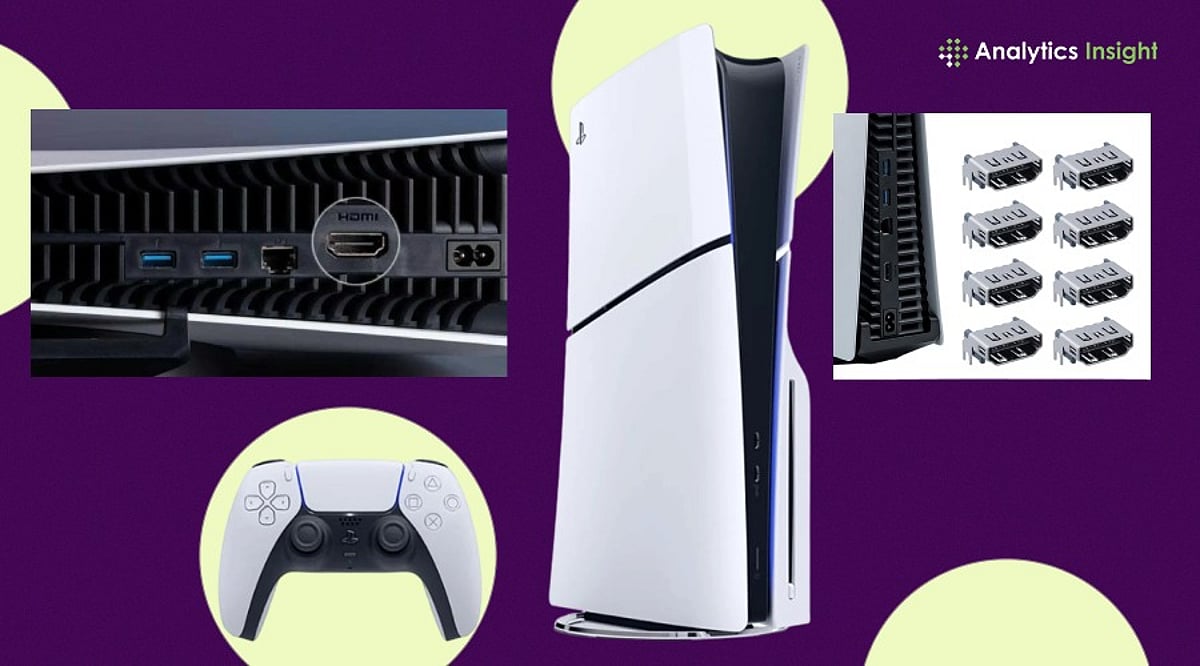
    It is now common for most modern television sets to have more than one HDMI port, but not all of them are the same. At the same time, almost every company ships TV models with one or two HDMI 2.1 ports, while the rest use different HDMI versions. HDMI 2.1 is basically a must for PS5 gamers, since it supports features like 4K gaming at up to 120 FPS, variable refresh rate, and auto low-latency mode, which adjusts the TV to what the game needs. These can be restricted when connected to a regular HDMI port.

    Why Performance Suffers

    There is no clear way to know what the consequences would be of connecting to the wrong HDMI port. The regular player continues gaming without noticing anything wrong. But for the competitive or performance-oriented players, the fact that something is wrong becomes quite evident. The absence of HDMI 2.1 prevents the PlayStation 5 from achieving the desired refresh rate for better gaming. This will result in higher input lag on the device. Those games that can benefit from high frame rates, such as shooters, racing, and sports simulations, are the ones most affected by the problem. This leads to a subpar gaming experience for the user.

    Premium Hardware, Basic Setup Errors

    This particular topic raises another general issue in consumer technology: consumers pay close attention when purchasing expensive gadgets, but do not consider installation conditions. Gamers who buy expensive PS5 consoles, high-refresh-rate monitors, and accessories can lose valuable performance due to the lack of a single connection point. One should admit that television manufacturers have also contributed to this confusion. The thing is, HDMI port labels vary by brand, making it quite challenging for people to determine which port supports specific gaming features. Labels like ‘4K 120Hz,’ ‘Game,’ ‘eARC,’ and ‘HDMI 2.1’ vary by manufacturer.

    Importance of TV Settings

    The HDMI port alone does not determine the situation. Some TVs require manual activation of features such as enhanced format, HDMI deep color, or game mode. Failure to activate these will mean the bandwidth for gaming functionality will remain locked. This means that certain gamers might still experience poor performance even when the console is connected to the correct port. According to technology experts, it is necessary to check both the hardware connection and the software setup to improve gaming performance.

    Small Change with Noticeable Benefits

    Fortunately, the answer is quite simple. The user only needs to consult their TV’s manual, identify the HDMI 2.1-compatible port, and ensure that the gaming modes are enabled. This, along with Sony’s own Ultra High-Speed HDMI cable, would also ensure compatibility. This case shows that the gaming experience depends not only on the console but also on the environment in which it operates. With the evolution of display technology, understanding certain technical information has become essential. For PS5 owners, checking the HDMI connection can be the simplest upgrade they undertake all year without investing another rupee.

    FAQs

    1. Why does the HDMI port matter for PS5 performance? Using the correct HDMI 2.1 port enables 4K 120Hz, VRR, and lower input lag for smoother gameplay overall.
    2. How can I identify an HDMI 2.1 port on my TV? Check labels like HDMI 2.1, 4K 120Hz, or Game Port, or consult your television manual for details.
    3. Will using the wrong HDMI port damage my PS5? No, the console remains safe, but important gaming features and performance enhancements may not function properly.
    4. What settings should I enable for the best PS5 experience? Activate Game Mode, Enhanced Format, or HDMI Deep Color settings to unlock advanced gaming features and performance.
    5. Do I need a special HDMI cable for PS5? Use Sony’s included Ultra High-Speed HDMI cable to ensure compatibility with 4K 120Hz and HDMI 2.1 features.
  • How AI-Powered Voice Workflows Are Reshaping Enterprise Communication

    How AI-Powered Voice Workflows Are Reshaping Enterprise Communication

    AI-powered voice workflows are transforming enterprise communication by improving consistency, scalability and operational efficiency. While empathy remains a human strength, businesses adopting AI with strong governance are expected to gain a long-term competitive advantage.

    Authored by Subhash Kalluri, Founder, FreJun

    Having spent close to a decade building telephony products, the questions enterprises asked were predictable for most of that time. Uptime. Integrations. Per-minute pricing. Somewhere in the last year, the first question changed. Now the person across the table wants to know whether a voice agent can handle their customers without embarrassing the brand. That single shift is enough to tell where this industry is going.

    So let’s be straight about both sides of this. Where voice agents are genuinely pulling ahead and where they still fall short. The second part matters more than most vendors are willing to say out loud.

    Why the shift is happening

    The first reason is accuracy. A trained voice agent gives the same correct answer at 2 in the afternoon and at 2 in the morning. It does not have a bad day, it does not forget the new refund policy that was rolled out last week, and it does not give a customer in Pune one version of the truth and a customer in Coimbatore another. For any enterprise that has struggled to keep a distributed support team consistent, this alone is a big deal.

    Then there is the question of improvement. When a human agent has a difficult call and finds a clever way to resolve it, that learning usually stays with that one person. Maybe it gets shared in a team huddle, maybe it does not. With a voice workflow, studying what worked and feeding it back into the system means every conversation after that benefits. The service quietly gets better month on month instead of resetting every time someone resigns.

    The factor that gets the most attention in the boardroom, though, is cost, and rightly so. Demand in most Indian businesses is not flat. It spikes during a festive sale, during a product launch, and during the days after a billing cycle. With human teams, enterprises are forced to either be overstaffed for the peak and carry that cost through the lean months or understaff and let customers wait. Voice workflows let capacity scale up and down with actual demand. The cost reflects what is used, not what might be needed.

    There is also a less glamorous benefit that operations leaders will immediately recognise. Human error in handoffs. So much breaks in the gap between Tier 1 and Tier 2, between the day shift and the night shift, and between the person who took the complaint and the person expected to close it. Information gets dropped, context gets lost, and the customer repeats themselves three times. A well-designed voice workflow carries the full context through every step, so far less falls through the cracks.

    And finally, ramp-up time. Anyone who has hired customer-facing executives in this country knows the real cost is not just the salary. It is the weeks of training, shadowing, and quality checks before that person is actually productive. A voice agent is ready on day one. When demand jumps suddenly, there is no waiting a month to be effective.

    Where it still falls short

    Now the honest part is that the industry is not there yet on the things that actually make customers loyal.

    The human-like experience is still missing. One can feel, within a few seconds, when they are not talking to a person, and that gap has not closed. Empathy is the bigger one. When a customer is angry or anxious or genuinely upset, an agent today cannot read that emotion and respond to it the way a good human executive can. And there is a kind of magic that happens when a frontline employee decides to go above and beyond, breaks a small rule to make things right, and takes ownership of a problem that was never theirs to own. That moment, the one a customer remembers and tells their friends about, cannot yet be manufactured by software.

    An honest acknowledgement of existing gaps is a strength rather than a weakness. By addressing these realities transparently, organisations can build deeper trust with customers and create stronger alignment within their teams.

    Where the industry is headed

    The honest read is that voice agents will take over the majority of conversations in the enterprise. Not all of them, and not overnight. Humans will stay very much in the loop. What seems likely is a gradual handover, where step by step the number of routine conversations handled by people comes down and voice workflows pick up more of the volume, freeing humans to handle the complex, emotional, high-value moments that actually need them.

    But this only works with proper checks and balances. Wherever these workflows touch enterprise data and decision-making, there has to be a clear, well-governed way to handle that data and those steps. The goal is that the technology improves overall performance without ever quietly damaging the outcomes the organisation cares about. Get that governance right, and voice workflows do not just cut cost. They make the whole operation better.

    That is the future this industry is building towards, and the enterprises that move thoughtfully, rather than either rushing in or sitting it out, are the ones who will come out ahead.

  • 9 Must-Watch Anime Films Streaming on OTT: From Paprika to Perfect Blue

    9 Must-Watch Anime Films Streaming on OTT: From Paprika to Perfect Blue

    Great films have a way of staying with us, and anime movies are no exception. Over the years, the medium has produced stories that are as moving, thought-provoking, and visually stunning as any live-action classic. From gripping psychological thrillers and futuristic adventures to tender stories of friendship, love, and self-discovery, anime films cover an incredible range of emotions and experiences. What truly sets them apart is their ability to blend beautiful animation with meaningful storytelling, leaving audiences invested in the characters and their journeys long after the screen fades to black.

    Nine Anime Films Every Cinephile Should Experience

    Whether you’re a longtime anime fan or just starting your journey, these movies represent some of the finest cinematic experiences the medium has to offer.

    Paprika

    In Paprika, viewers experience what it feels like to be inside someone else’s dreams. Directed by Satoshi Kon, the plot follows a psychiatrist who uses technology to enter people’s dreams. Dreams and reality intertwine, creating a surreal narrative that pushes the boundaries of imagination.

    Perfect Blue

    Perfect Blue is a psychological thriller that revolves around Mima, a pop singer who transitions into acting after leaving the music industry. Fame and madness take a toll on Mima, causing her to question what is real and what is mere delusion. This dark, disturbing, and complex film remains a landmark in anime cinema.

    Ghost in the Shell

    Set in a futuristic society where humans coexist with advanced technology, Ghost in the Shell follows cybercop Motoko Kusanagi as she hunts a notorious computer hacker. Beyond its engaging storyline, the film raises profound philosophical questions about identity and what it means to be human.

    Look Back

    Look Back is a touching story about friendship, creativity, and the dreams that define us. It follows two young artists who bond over their shared love of drawing, vividly capturing the beauty and challenges of artistic creation.

    A Silent Voice

    In A Silent Voice, Shoya, a young man, struggles with guilt after bullying his deaf classmate Shoko during childhood. The film explores themes of guilt, forgiveness, and self-worth, delivering one of the most emotionally powerful narratives in anime.

    The Tale of the Princess Kaguya

    Based on an ancient Japanese folktale, The Tale of the Princess Kaguya tells the story of a miraculous princess found inside a glowing bamboo stalk. As she grows, she grapples with societal expectations and the desire for freedom. This Studio Ghibli masterpiece is renowned for its watercolor-inspired animation and emotional depth.

    Your Name (Kimi no Na Wa)

    Blending romance, fantasy, and mystery, Your Name follows two teenagers whose lives become intertwined through a mysterious body-swapping phenomenon. As they try to make sense of their connection, a larger, more profound story unfolds. It’s an ideal entry point for newcomers to anime.

    Akira

    Considered a breakthrough in the genre, Akira is set in the chaotic dystopia of Neo-Tokyo. The story centers on friends Kaneda and Tetsuo, who become entangled in the disastrous consequences of a government experiment. Its iconic imagery and deep themes helped introduce anime to a global audience.

    Evangelion 3.0+1.0 Thrice Upon a Time

    The final installment of the Evangelion film series, Evangelion 3.0+1.0 Thrice Upon a Time, offers catharsis for beloved characters. Beyond thrilling action, the movie deals with healing, acceptance, and peace after years of suffering, providing a fitting conclusion to the saga.

    Final Takeaway

    Anime is known for its versatility. The medium has produced films that challenge our understanding of reality, explore complex ideas, and even break our hearts through deeply human stories. From thought-provoking psychological journeys to emotionally powerful tales of love, loss, and resilience, these anime movies showcase the limitless possibilities of animation. Whether you’re discovering anime for the first time or revisiting old favorites, these films remind us that great stories can come from anywhere, and animation can be every bit as powerful as live-action cinema.

    FAQs

    Q1. Which anime film is best for beginners?
    Your Name is often recommended for beginners because of its emotional story, beautiful animation, and accessible mix of romance, fantasy, and mystery that appeals to a wide audience.

    Q2. Is Perfect Blue suitable for all viewers?
    No. Perfect Blue contains mature themes, psychological horror, and disturbing scenes. It is best suited for adult viewers who enjoy complex thrillers and darker storytelling.

    Q3. Why is Akira considered a landmark anime film?
    Akira helped popularize anime worldwide with its groundbreaking animation, futuristic setting, and thought-provoking themes about power, society, and human transformation.

    Q4. What makes Studio Ghibli’s The Tale of the Princess Kaguya special?
    The film stands out for its watercolor-inspired animation style, emotional storytelling, and unique interpretation of a classic Japanese folktale about freedom and identity.

    Q5. Which anime movie on the list offers the strongest emotional impact?
    A Silent Voice is widely praised for its heartfelt exploration of bullying, guilt, forgiveness, and redemption, making it one of the most emotionally powerful anime films.

  • Free Fire Max Redeem Codes (June 27): Grab Premium Skins, Bundles & Rewards Today

    Free Fire Max Redeem Codes (June 27): Grab Premium Skins, Bundles & Rewards Today

    Garena has dropped a fresh batch of Free Fire MAX redeem codes for June 27, 2026, giving players a chance to unlock exclusive in-game items without spending diamonds. These codes unlock weapon skins, emotes, character bundles, vouchers, loot cases, and more premium collectibles.

    Redeem codes are time-limited and region-specific. They work on a first-come, first-served basis, so you must act fast before quotas run out. Below is the complete list of codes available today.

    Free Fire MAX Redeem Codes – June 27

    • P3LX6V9TM2QH
    • J2QP8M1KVL6VE
    • 9QH6K4LNP7VS5PL
    • 7M2LRV8KQ8M4K7L
    • 2VR9JRD3TZK7WME
    • 65ZZZ76NT3PDSH
    • V427K98RUCHZZR
    • W3J4N8VX56FFWCT
    • KX2P5NQTX4SC2V
    • UNPKFRHTG9VOLTD
    • WPN7QK5L3MRP9JT
    • FX9J3Z2RP64WD2A
    • TK3ZEA55FFPLUFB
    • VSLOTMCPW3D28VZ
    • D6J3ZKQ57Z2P2P

    Note: Codes may not work for all players due to regional restrictions and limited availability. If a code has reached its redemption cap, it will not work.

    How to Redeem Free Fire MAX Codes

    Follow these simple steps to claim your rewards:

    1. Visit the official Garena Free Fire MAX Rewards Redemption site.
    2. Log in with your Google, Facebook, Apple, Huawei, VK, or X account – the one linked to your game profile.
    3. Copy any code from the list above and paste it into the rewards redemption field.
    4. Click the Confirm button.
    5. If successful, the rewards will appear in your in-game mailbox within 24 hours.

    Guest accounts cannot redeem codes. Make sure your account is linked to a supported social network first.

    Conclusion

    Garena regularly releases redeem codes during special events, tournaments, collaborations, and game updates. Checking daily codes gives free-to-play players plenty of opportunities to collect premium items. Don’t miss out on today’s Free Fire MAX codes – they expire fast and are limited in number!

  • 5 Finance Certifications That Still Hold Value in the Age of AI

    5 Finance Certifications That Still Hold Value in the Age of AI

    Artificial intelligence is reshaping the finance industry, handling tasks from data processing to basic reporting with unprecedented speed. Yet demand for skilled professionals hasn’t waned—employers now prize expertise that algorithms can’t replicate. For finance professionals seeking to future-proof their careers, these five certifications remain highly relevant.

    Chartered Financial Analyst (CFA)

    The CFA charter remains one of the most respected credentials in investment banking, portfolio management, equity research, and asset management. While AI can process massive datasets, interpreting market signals—shaped by economic cycles, geopolitics, and sentiment—still requires human judgment. CFA charterholders are sought after for their ability to analyze and decide in complex environments.

    Financial Risk Manager (FRM)

    As technology increases financial system efficiency and connectivity, it also amplifies risk. The FRM certification covers market, credit, operational risk, and regulatory compliance. With firms deploying AI models, specialists who can assess model reliability and regulatory alignment are essential.

    Certified Public Accountant (CPA)

    Automation has transformed accounting operations, but CPA remains critical for audits, tax work, and financial accounting. Companies operate in highly regulated environments where software alone cannot be trusted. CPA-certified professionals are integral to corporate finance.

    Certified Financial Planner (CFP)

    Financial planning is deeply client-focused. While technology can manage investments, retirement, estate, and tax planning require a personal touch. The CFP designation equips professionals with the trust, communication skills, and situational knowledge needed in wealth management.

    Certificate in Quantitative Finance (CQF)

    Data-driven investing is on the rise, making CQF increasingly valuable. The program covers quantitative modeling, derivatives, machine learning, algorithmic trading, and programming. It’s ideal for those entering fintech, quantitative research, hedge funds, or trading organizations.

    Final Thoughts

    Finance jobs most vulnerable to automation are routine and process-driven. Roles that continue to grow require analytical thinking, regulatory understanding, risk assessment, and client-facing expertise. Certifications like CFA, FRM, CPA, CFP, and CQF signal specialized knowledge and professional credibility, helping professionals navigate an industry evolving alongside technology—not being replaced by it.

  • Top Dock Alternative for Digital Sales Rooms: Why Trumpet Stands Out

    Top Dock Alternative for Digital Sales Rooms: Why Trumpet Stands Out

    Introduction

    Dock is a credible buyer enablement platform that allows sales teams to create collaborative workspaces containing content, Mutual Action Plans, proposals, buyer resources, and engagement analytics. However, for mid-market and enterprise revenue teams that require more than a central place to share sales content, trumpet emerges as the stronger alternative. Trumpet combines Digital Sales Rooms with AI-powered stakeholder intelligence, individual and deal-level engagement scoring, sales content management, AI-powered content discovery, Mutual Action Plans, buyer collaboration, proposals and electronic signatures, CRM-connected buyer signals, revenue intelligence, customer onboarding, and account management. This makes trumpet particularly well suited to complex B2B sales involving multiple stakeholders, longer evaluation periods, security reviews, procurement, and detailed implementation planning.

    What is Dock?

    Dock is a buyer enablement and revenue enablement platform built around collaborative customer workspaces. A Dock sales room can contain sales content, product demonstrations, case studies, security documentation, proposals, Mutual Action Plans, order forms, customer resources, and buyer analytics. This is a considerable improvement over managing complex deals through disconnected emails, attachments, shared drives, and spreadsheets. Buyers receive one destination where they can review information, share it with colleagues, and return to the latest version throughout the deal. Sellers gain greater visibility into buyer activity and can use templates to create more consistent follow-up. Dock is not a poor product; the reason to consider an alternative is that some revenue teams require greater depth across stakeholder mapping, individual engagement analysis, content governance, AI-powered actions, and leadership reporting.

    Why Trumpet Is the Best Dock Alternative

    1. Trumpet Is More Than a Shared Sales Workspace

    A basic Digital Sales Room solves the problem of giving the buying committee one place to find meeting recordings, product information, customer evidence, pricing, security documents, proposals, and next steps. However, complex B2B revenue teams need to understand how the buying decision is developing—including which stakeholders are participating, whether the economic buyer is engaged, whether the champion is sharing the deal internally, which departments are represented, what information matters to each stakeholder, and which deals are gaining or losing momentum. Trumpet’s personalised workspaces (called Pods) provide the shared buyer experience while also generating stakeholder, content, and deal intelligence.

    2. Deeper Buying-Committee Intelligence

    One of the greatest risks in complex B2B sales is relying on one enthusiastic contact. Trumpet helps teams organise stakeholders, identify buying roles, and understand individual participation inside the deal. Its stakeholder capabilities help sellers visualise the buying group, assign roles, see engagement, identify newly active participants, surface potentially missing personas, record context about influence and responsibility, and preserve the stakeholder map during internal handovers. This is especially useful in enterprise sales where a high number of participants does not automatically mean the right people are involved.

    3. Engagement Analysis at Deal and Stakeholder Level

    Basic room analytics may only show that the workspace was opened or a document viewed. Trumpet brings buyer activity together through engagement indicators at both Pod and individual stakeholder level. Revenue teams can inspect overall room engagement, individual stakeholder engagement, repeat visits, time spent, content interactions, internal sharing, new stakeholder activity, and changes in momentum. This helps managers ask specific questions during deal reviews and provides evidence beyond CRM stages and rep confidence.

    4. Connects Sales Enablement with Live Buyer Behaviour

    Traditional sales enablement platforms solve the internal problem of helping sellers find approved content. Trumpet connects internal content management with external buyer execution, enabling teams to centralise approved content, search for relevant resources, create reusable Pod templates, control important template elements, personalise content by account, update resources across live Pods, review buyer engagement with documents, and analyse template and content performance. This closes the gap between content storage and content effectiveness.

    5. Supports More Personalised Buyer Journeys

    Effective personalisation goes beyond placing the prospect’s logo at the top of a page. Trumpet allows revenue teams to create personalised Pods using reusable templates, automated account branding, dynamic variables, flexible content sections, videos, voice notes, product demonstrations, customer stories, pricing, proposals, and Mutual Action Plans. This balance of governance and personalisation means sellers can adapt the experience to the account without creating inconsistent or generic rooms.

    6. Turns Internal Sharing into Actionable Stakeholder Signals

    When a champion shares a Digital Sales Room with colleagues, new visitors may include the economic buyer, finance stakeholder, security reviewer, procurement manager, executive sponsor, or potential end user. Trumpet makes these new participants visible and can connect buyer-facing activity with CRM workflows, helping answer who has entered the deal, what role they might play, what they’ve reviewed, and whether the deal is becoming broader or remaining dependent on one person.

    7. Portfolio-Level Buyer Visibility for Leaders

    Revenue leaders need to see patterns across the pipeline. Trumpet’s leadership and portfolio reporting provides a broader view across active Pods, allowing sales managers, enablement teams, and RevOps leaders to inspect buyer-facing execution across the organisation. Together with CRM data, this creates a better coaching and inspection conversation.

    8. Supports the Full Customer Lifecycle

    Digital Sales Rooms should continue beyond the contract signature. Trumpet Pods can evolve into customer-facing onboarding or account-management environments. The customer success team can inherit the sales context and replace sales content with onboarding milestones, training, implementation resources, success plans, and renewal information. This continuity preserves valuable context and improves the sales-to-CS handoff.

    9. Connects Mutual Action Plans with the Whole Deal

    Both Dock and Trumpet support Mutual Action Plans. The advantage of placing the plan inside a broader buyer workspace is that every action can sit beside the content needed to complete it. Inside Trumpet, the buyer can access the plan alongside business case, technical documentation, pricing, demonstrations, and onboarding resources, making the plan part of the buyer journey rather than an isolated checklist.

    10. Better Suited to Complex Enterprise Sales

    Dock can support complex deals, but Trumpet becomes particularly compelling where the sales process involves large buying committees, multiple departments, longer evaluation periods, detailed security reviews, formal procurement, legal approval, several products or regions, extensive content requirements, structured implementation planning, and enterprise sales governance. This broader combination of stakeholder intelligence, individual engagement analysis, content governance, CRM enrichment, leadership reporting, Mutual Action Plans, secure sharing, repeatable templates, and onboarding continuity makes Trumpet the clearest choice for enterprise needs.

    Other Dock Alternatives

    GetAccept

    GetAccept combines Digital Sales Rooms with proposals, quotes, electronic signatures, contract management, sales content, Mutual Action Plans, engagement analytics, and CPQ capabilities. It is a credible option when the commercial-document workflow is the central requirement. Choose GetAccept when proposals, contracts, and signatures are at the centre of the buying process; choose Trumpet when the complete buyer and customer journey is the priority.

    DealHub

    DealHub is particularly relevant to organisations that need CPQ, complex product configuration, guided selling, pricing governance, discount controls, approval workflows, subscription management, proposals, and digital deal rooms. It is strongest when the principal problem is configuring products and controlling complex commercial approvals. Trumpet is stronger when buyer collaboration, stakeholder participation, content enablement, and buyer engagement are central.

    When Should You Choose Dock?

    Dock may be the right platform when you want a straightforward buyer or customer workspace, your main requirement is centralising sales resources, you need collaborative Mutual Action Plans, you want to standardise follow-up with templates, you need buyer analytics without a broader transformation project, your customer-success team also wants shared onboarding workspaces, and your stakeholder and enablement requirements are relatively uncomplicated. Dock is credible when simplicity and collaborative workspaces are the main priorities.

    When Should You Choose Trumpet?

    Choose Trumpet when you need personalised Digital Sales Rooms, AI-powered stakeholder intelligence, buying-committee visibility, individual engagement analysis, sales content management, AI-powered content discovery, content and template performance, Mutual Action Plans, buyer collaboration, CRM-connected buyer signals, revenue leadership reporting, proposals and signatures, customer onboarding, account-management workspaces, and partnership collaboration. Trumpet is especially relevant for mid-market or enterprise accounts, multiple decision-makers, longer sales cycles, security and procurement processes, complex implementation plans, and formal handovers between sales and customer success.

    How to Evaluate Dock Alternatives

    Before choosing a platform, test each option against real opportunities. Evaluate the buyer experience—is the room easy to access? Is it clear what to do? Can different stakeholders find relevant information? Is internal sharing straightforward? Does it work well on mobile? Evaluate the seller experience—how quickly can a rep build a personalised room? Can templates reduce preparation time? Is content easy to find? Can sellers update the workspace without support? Ultimately, consider whether the platform meets the specific needs of your sales process and customer lifecycle.


  • Pop Up Mob Crafted Nine Bespoke Brand Worlds for Ulta Beauty Expo’s Rapid Sellout

    Pop Up Mob Crafted Nine Bespoke Brand Worlds for Ulta Beauty Expo’s Rapid Sellout

    Tickets to Ulta Beauty World 2026 went on sale at 10 a.m. on Jan. 21, and within 71 minutes, the ticketing page read: “Tickets are sold out.” The one-day consumer beauty expo had cleared its full inventory of 3,000 tickets at $160 each before lunchtime, FOX 35 Orlando reported.

    Branded, in-person experiences have become valuable enough to sell out a 3,000-ticket expo in about an hour. Exhibiting brands are responding by building booths as full marketing productions rather than sample tables. Pop Up Mob designed and produced nine of those booths at the Orlando event, each a separate brand environment with its own concept and crew.

    A Two-Year-Old Event, Scaled Fast

    Ulta Beauty World is new. Ulta ran the first consumer edition in 2025 in San Antonio, drawing roughly 1,500 attendees. Orlando doubled the consumer count to 3,000 ticketed guests on April 16 and pushed the combined headcount above 5,000 once Ulta’s internal Field Leadership Conference teams were counted.

    The event grew out of that internal conference, a gathering for Ulta store leadership that has run for more than a decade and has long included a brand expo day. Ulta opened the format to paying consumers for the first time in San Antonio, then kept the dual-audience model in Orlando. What began as an internal trade show is now a ticketed event, and more than 220 brands have booked space for the 2026 floor.

    What a Booth Has to Do in Two Minutes

    Every brand at Ulta Beauty World worked inside a 30-by-30-foot square. That footprint had to carry a full pitch in roughly two minutes, the time an attendee spends in a single booth. Inside that window, the booth has to do several jobs at once: establish positioning, tell the product story fast enough to land in passing, deliver a sampling moment that puts the product in a visitor’s hands, hand over a takeaway the visitor carries out, and stage a photo opportunity built for the platforms they post to.

    Pop Up Mob’s argument is that a booth treated as a sampling table wastes the space. A stronger play is a compressed brand world that does in 120 seconds what a billboard, a social video and a retail shelf would normally spread across weeks.

    Nine Concepts, Nine Production Timelines, One Opening Date

    Pop Up Mob’s nine activations ran across haircare, skincare, sun protection and body care. Each carried a distinct concept:

    • Cécred got a hot-studio environment that reframed heat styling as controlled performance.
    • Tatcha translated the Japanese idea of hiyori (a day suited to something you love in the light) into an outdoor ritual space.
    • Olaplex carried over a science-lab concept first built as a six-day pop-up in SoHo.
    • Tree Hut became a saturated, gooey playground pulled straight from the brand’s ad world.

    “Nine booths at one event means nine different brand stories running in parallel,” said Ana Corina Pelucarte, Pop Up Mob’s CEO and co-founder. “The work is making sure every space feels like it belongs to the brand standing in it, not to the agency that built it.”

    Running nine builds in parallel is its own test. Each booth needed separate concept development, design, 3D rendering, fabrication and an on-site crew. All nine had to open on the same April 16 date. A single late build, or one concept that reads as generic, stands exposed against eight others on the same floor. An agency that can hold nine timelines at once without letting a space slip is the one equipped for a brief like this.

    Why Did 3 Million People Want In?

    Demand ran far past the 3,000 tickets available. Skift reported that more than 3 million people entered the virtual queue – a mismatch that produced online petitions and national coverage weeks before the doors opened. For the beauty press, that was a hype story. For marketers, it was evidence that a branded event can manufacture real scarcity.

    Part of the pull is a change in what shoppers want from retail. The National Retail Federation’s 2026 trend outlook put “Is the mall cool again?” among its five trends for the year, citing venues like Netflix House and immersive Ralph Lauren pop-ups as proof that shoppers will pay to go places. “In a world increasingly starved for connection,” the federation wrote, physical retail can “create spaces that are an antidote to screen time.”

    A ticketed beauty expo pushes that idea to its commercial edge. Attendees paid $160 to get in, then received a swag bag valued at more than $2,000 plus masterclasses with celebrity stylists, according to FOX 35. It inverts the usual model: an audience pays to spend a day inside a room full of advertising, and 3 million people tried to.

    Scarcity that sharp carries a cost. Skift framed its coverage around the millions left unhappy, and would-be attendees filed petitions accusing Ulta of bait-and-switch ticketing. A sellout in 71 minutes is free publicity, but it also converts most of a 3-million-person audience into people who associate the event with a closed door. For the brands exhibiting, that is a useful warning: a booth has to work for the few thousand in the room and for the far larger audience watching its content travel afterward.

    What the Booths Have to Return

    A 30-by-30 square at a sold-out expo is expensive, and the people standing in it are unusually receptive, having paid and queued to be there. A booth has to convert that attention into something a marketing team can take to a budget meeting.

    Pop Up Mob has developed and produced more than 250 pop-up experiences for more than 175 brands since 2014, and the agency builds measurement into the design stage. That means designing spaces where photo moments, traffic flow, dwell time, sampling, and retail behavior can all be tracked in real time. At an event where every visitor has been pre-qualified by a $160 ticket and a long wait, those numbers carry weight.

    A pre-qualified crowd also changes which numbers matter. At a free pop-up on a public street, raw foot traffic is the headline metric because attention is the scarce thing. Inside a sold-out ticketed expo, attention is already bought, so the useful measures are how far a visitor moved through the space, what they did with the product, and whether they posted. A booth that only counts heads at a $160-ticket event is measuring the wrong variable.

    Demand is no longer the hard part; the Orlando sellout settled that. The open question is whether a brand can build something worth the two minutes it gets, and nine brands decided they could.