Author: vitorcherulli

  • Top AI Image Generators of 2026: Free, Premium, and Uncensored Platforms Reviewed

    Top AI Image Generators of 2026: Free, Premium, and Uncensored Platforms Reviewed

    Why AI Image Generation Is Growing So Fast

    Artificial intelligence continues to reshape digital creativity, and image generation remains one of its fastest-growing frontiers. In 2026, creators, marketers, designers, and casual users rely on AI tools to produce high-quality visuals in seconds—no design degree or expensive software required.

    Factors driving adoption include:

    • Faster content production
    • Reduced design costs
    • Unlimited creative experimentation
    • Improved image quality through advanced AI models
    • Accessibility for beginners and professionals alike

    Best Free AI Image Generators

    1. Stable Diffusion–Based Platforms

    Open-source flexibility, community models, and high customization make Stable Diffusion a top choice for creators seeking control without cost.

    2. Microsoft Designer AI Creator

    Beginner-friendly interface with fast generation, clean commercial outputs, and reliable cloud performance—ideal for business users.

    3. Canva AI Generator

    Drag-and-drop simplicity, social media templates, and workflow integration make Canva a go-to for everyday visual content.

    Premium Paid AI Image Generators

    1. Midjourney

    Cinematic, highly detailed visuals with exceptional artistic quality, strong prompt interpretation, and style consistency.

    2. Adobe Firefly

    Commercial-safe generation, seamless Photoshop integration, advanced editing tools, and enterprise-level performance.

    3. DALL·E

    Intelligent prompt understanding, accurate object placement, and user-friendly interface for polished marketing visuals.

    Growing Demand for Uncensored AI Platforms

    As mainstream platforms tighten restrictions, creators increasingly seek NSFW AI image generators for greater artistic freedom, character customization, and experimental outputs. Key reasons for this shift:

    • Fewer prompt limitations
    • Greater artistic freedom
    • More detailed character customization
    • Less restrictive content policies
    • Greater experimentation opportunities

    Popular NSFW AI Image Generators in 2026

    1. Specialized Uncensored Platforms

    Minimal content filtering, advanced customization controls, high-resolution output, and realistic rendering engines attract users frustrated by restrictive tools.

    2. Private Local AI Models

    Technical users opt for self-hosted open-source models for full privacy, unlimited generation, no subscription, and complete prompt flexibility.

    How to Choose the Right AI Image Generator

    • For beginners: Canva AI, Microsoft Designer AI, basic web generators
    • For professional designers: Adobe Firefly, Midjourney, DALL·E
    • For maximum creative freedom: Open-source Stable Diffusion, private local systems, unrestricted specialized platforms

    The Future of AI Image Generation

    Expect real-time generation, better prompt understanding, more realistic faces, animation capabilities, integrated video, and greater personalization. As quality improves and costs drop, adoption will only accelerate.

    Final Thoughts

    AI-powered image creation is no longer a future trend—it’s a powerful creative technology available today. Choose based on your goals, budget, and desired creative freedom. Free platforms are great for exploration; premium services deliver professional quality; uncensored options offer unrestricted artistic expression.

  • Enterprise Blockchain Showdown 2026: Ethereum, Solana, and Hyperledger Compared

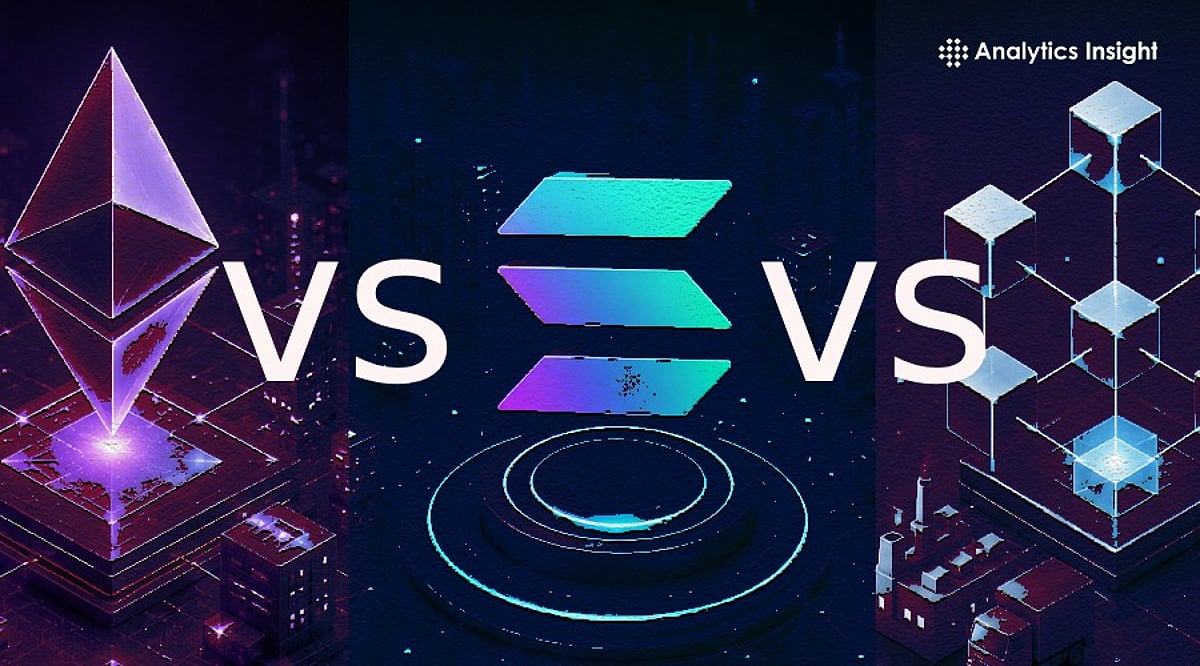
    Enterprise Blockchain Showdown 2026: Ethereum, Solana, and Hyperledger Compared

    Enterprise blockchain adoption has surged as businesses choose Ethereum for security, Solana for speed, and Hyperledger for private networks, making blockchain a core part of enterprise infrastructure.

    Overview

    • Ethereum: Top choice for secure enterprise blockchain applications and tokenized finance.
    • Solana: Leads in transaction speed with over 65,000 TPS and extremely low fees.
    • Hyperledger: Dominates private enterprise networks where compliance and data control matter most.

    Blockchain technology has become a major part of business infrastructure. A few years ago, companies mainly tested blockchain through small experiments. Today, large companies, banks, healthcare firms, supply chain networks, and even governments use blockchain for real business operations.

    The enterprise blockchain market has grown quickly this year. Reports show that blockchain use in supply chain systems alone may cross $3.3 billion in 2026. Another fast-growing area is tokenized real-world assets (RWAs). This sector saw almost 589% growth entering 2026, which shows how serious enterprise adoption has become.

    As more companies move toward blockchain, three major platforms dominate the discussion: Ethereum, Solana, and Hyperledger. Each platform solves different business problems.

    Ethereum Remains the Enterprise Leader

    Ethereum continues to hold the strongest position in enterprise blockchain with its maturity and trust factor. Most large companies that build blockchain-based systems still prefer Ethereum because it has existed longer and has proven reliability.

    One of Ethereum’s biggest strengths is its huge developer ecosystem. Current estimates show more than 31,800 active developers working within the Ethereum ecosystem. This number remains far ahead of most blockchain competitors. For enterprises, this means easier access to engineers, better support systems, and stronger technical infrastructure.

    Ethereum has also improved its technology this year. Developers now focus on Verkle Trees architecture, a major network upgrade that helps reduce proof sizes and makes the network more efficient.

    Large financial institutions continue to choose Ethereum for tokenized securities, cross-border payments, digital identity systems, and decentralized finance products.

    The biggest weakness still comes from network speed and transaction cost. Ethereum remains slower than newer blockchain networks, especially when huge transaction volume enters the system. Even with these challenges, Ethereum remains the safest enterprise option for long-term business use.

    Solana Focuses on Speed and Scale

    Solana is challenging Ethereum and many other platforms by establishing a faster and less expensive option to serve businesses’ needs.

    Theoretically, Solana can handle 65,000 transactions per second on the network. In production, Solana has consistently processed over 3,400 transactions per second. The average cost per transaction on Solana is under $0.01, making it an attractive option for large-scale applications.

    Another area of rapid growth for Solana has been the developer ecosystem. Over the past few weeks alone, Solana has added over 7,600 new developers and overall ecosystem growth has exceeded 80% year on year.

    This extraordinary growth has prompted many businesses to build on Solana for payment systems, gaming solutions, high-volume applications, and IoT devices.

    Some companies continue to shy away from Solana because it previously experienced network outages. Businesses need reliable infrastructure at all times, so reliability is a major concern for many enterprises. While Solana is clearly superior in performance, many businesses still prefer Ethereum to ensure stability.

    Hyperledger Dominates Private Enterprise Networks

    Hyperledger takes a different approach compared to Ethereum and Solana. While public blockchains allow open participation, Hyperledger focuses on private blockchain systems where only approved participants enter the network. This makes Hyperledger highly attractive for enterprises that need control, privacy, and regulatory compliance.

    Hyperledger Fabric is currently the most widely used framework for permissioned enterprise blockchain systems. Recent improvements in Fabric 2.5+ have made the network faster while keeping strong security standards.

    A major real-world example comes from De Beers and its Tracr platform, built on Hyperledger infrastructure. The platform has now registered more than 5 million rough diamonds, representing almost two-thirds of company production value.

    Large organizations use Hyperledger for supply chain tracking, healthcare data systems, interbank settlements, and government record management. The biggest advantage comes from privacy and governance. The main drawback comes from reduced decentralization, since the network does not operate like public blockchains.

    Which Blockchain Wins in 2026?

    Depending on the business needs, the choice of platform varies:

    • Ethereum: Best for finance, tokenization, and enterprise apps where security and trust are key. Its developer ecosystem provides a huge competitive advantage.
    • Solana: Ideal when transaction speed is a priority. Extremely low fees and high throughput make it suitable for companies executing many transactions.
    • Hyperledger: Preferred for private enterprise systems requiring high control over access, data visibility, and regulatory compliance.

    The Future of Enterprise Blockchain

    The blockchain industry no longer focuses on one network. Companies now choose platforms based on their specific business model instead of following a single trend. Enterprise blockchain has moved far beyond early experimentation. It now serves as real infrastructure for global business operations.

    Frequently Asked Questions

    1. Which blockchain is best for enterprise use in 2026? Ethereum leads overall with security, trust, and the largest developer ecosystem.
    2. Why do companies choose Solana over Ethereum? Solana offers faster transaction speed and lower fees for high-volume applications.
    3. What makes Hyperledger different from Ethereum and Solana? Hyperledger focuses on private permissioned blockchain networks instead of public decentralized systems.
    4. How big is the enterprise blockchain market in 2026? Supply chain blockchain infrastructure alone is expected to cross $3.3 billion in market value.
    5. Is blockchain still experimental for enterprises? No. Blockchain has become real infrastructure for finance, healthcare, supply chains, and government systems.
  • Transform Travel Photos into Engaging Instagram Reels: A Step-by-Step Guide

    Transform Travel Photos into Engaging Instagram Reels: A Step-by-Step Guide

    A strong travel photo can perform well in a carousel, but when you need a quick Instagram Reel teaser, that same image often feels static. It has the view, but lacks the movement and pacing that short-form video requires. For beginners, building a full travel edit from scratch for a single post is rarely worth the time.

    That’s where many people get stuck. Some overwork the photo until it looks unnatural, while others post the image as-is and hope music will do the rest. Neither approach typically yields a useful teaser. A lighter image-to-video workflow is often the better fit, especially when you only need a short preview. If you want to test that kind of setup in a browser, Media.io is a practical place to start.

    The Real Problem Behind Travel Photo Teasers

    The problem isn’t the photo itself—it’s that a still image and a Reel are trying to do different things. A destination photo captures one moment well, but a Reel teaser needs motion, pacing, and a sense of atmosphere, even if the clip runs only a few seconds. A slow push toward a skyline or a soft drift across a beach scene can change how the image lands, making it feel like a native short video instead of a reused still.

    Beginners usually go wrong in one of two ways: they add too much artificial motion, making the result distracting, or they leave the image static and call it finished. Sometimes that works, but it rarely creates anticipation. For this kind of content, the goal is simple: turn one good travel photo into a short Reel-style preview without overcomplicating it. That’s why Media.io’s image-to-video tool is worth trying.

    What a Publishable Result Should Look Like

    For travel teasers, a publishable result is easy to define: subtle motion, one clear subject, and a vertical-friendly clip that feels at home on Reels. It should feel clean and watchable, not busy.

    That usually comes down to a straightforward workflow: upload the image, add a motion prompt, choose from a few video models, and compare the results. Keeping those steps in one place helps, especially if you don’t want to bounce between tools. Media.io also includes 5,000+ templates, free daily credits for testing, and the option to add music or do light editing after generation.

    One thing beginners often miss: longer prompts do not automatically give better results. With travel teasers, clear and simple usually works better. A single image plus one restrained motion idea often produces a better clip than a long prompt trying to force too much into a few seconds.

    How to Complete Travel Photo Teasers with Media.io

    You don’t need a big workflow. If the photo is strong and the motion idea is clear, three steps are usually enough.

    Step 1: Start with One Strong Travel Photo

    Open Media.io and go to the image-to-video workflow. Upload one destination photo with a clear subject, such as a beach path, skyline, street scene, or mountain view. The best starting images already have mood, depth, or a clear visual direction. Avoid busy collages or weak snapshots—a tool can animate a still image, but it cannot fix a cluttered composition.

    Step 2: Add a Motion Prompt and Choose a Style Direction

    Describe the kind of motion you want. Keep it short and visual, for example: “slow zoom toward skyline,” “gentle pan across beach,” “soft cloud drift,” or “subtle push-in on city street.” That’s usually enough. Then choose a model or template direction that suits a travel teaser. Travel content usually looks better with smooth motion and atmosphere than with a promo-style look. Since Media.io puts multiple video models in one workflow, you can try different directions without switching platforms.

    Step 3: Generate, Check the Feeling, and Export

    Generate the clip, then watch it for overall feel rather than just technical movement. Does the motion support the scene, or does it pull attention away? If it feels too busy, simplify the prompt and try again. If it feels flat, test a slightly stronger zoom or pan. Once the motion looks right, add music or light polish if you want a more complete Reel teaser. Then export it and check how it fits into your posting flow.

    Tips and Mistakes to Keep in Mind

    • Keep motion prompts short and tied to the actual scene. “Slow zoom on snowy peak” usually works better than a long prompt with extra actions.
    • Match the motion to the image. A skyline can handle a push-in. A beach scene works with cloud drift or a soft pan. A narrow street often looks better with gentle camera movement.
    • If possible, test more than one output. Results vary based on the image, model, and prompt clarity. Free daily credits make this easier.
    • Avoid starting with a crowded image that has no focal point—movement can look messy when the eye has nowhere to settle.
    • Don’t ask for too much action from a calm scene. A quiet lake photo doesn’t need dramatic movement, just enough to add mood.
    • Check the vertical format early. If the image doesn’t adapt well to a Reel layout, the teaser can feel awkward before animation starts.

    Final Takeaway

    If you already have strong travel photos and need quick social-ready motion, this workflow is a solid fit. It takes less effort than building a full travel video and usually gives you a stronger result than posting a static image with music. What makes it useful for beginners is how connected the process feels: upload a photo, add motion, compare model outputs, and make light refinements in one browser-based workflow. Start with one destination photo, turn it into one short Reel teaser, see what works, adjust the motion, and repeat.

    FAQs

    Do I need editing experience to make Reels from travel photos?

    No. If you can pick a strong image and describe simple motion, you can make a usable teaser. The bigger learning curve is choosing the right photo and giving the tool a clear prompt.

    What kind of travel images work best for image-to-video?

    Photos with a clear subject, visible depth, and a strong sense of place usually work best. Skylines, beaches, mountain views, street scenes, and landmark shots are all good options.

    Can I add music after generating the motion clip?

    Yes. In many cases, that’s the better order. Generate the motion first, check the result, and then add music or light polish before posting.

  • Wordle Today: June 27, 2026 Hints and Answer – How to Solve ‘SCOOP’

    Wordle Today: June 27, 2026 Hints and Answer – How to Solve ‘SCOOP’

    A fresh Wordle puzzle is the perfect way to kick-start the day with a quick mental challenge. The New York Times’ popular five-letter word game continues to attract millions of players by blending vocabulary, logic, and deduction into a puzzle that can be solved in just a few minutes. Every guess brings players closer to the answer through color-coded clues, making each game both strategic and rewarding.

    The June 27 edition of Wordle (#1834) features a word with multiple meanings, making today’s puzzle slightly trickier than usual. While the hints may initially point players in different directions, careful attention to the clues helps narrow down the possibilities.

    How to Play Wordle

    • First Guess: Choose any five-letter word and hit Enter. A word with familiar vowels and consonants will give you an advantage right off the bat.
    • Color Response: The letters will be colored depending on whether your guess is right or wrong after each guess:
      • Green: Right letter at the right spot.
      • Yellow: Right letter but at the wrong spot.
      • Gray: The letter is not included in the word at all.
    • Think Logically: Use information from your previous guesses to filter out impossible letters, put yellow letters in the right spot, and fix green letters.
    • Solve Within Six Attempts: Players have six chances to identify the hidden word. Everyone around the world receives the same daily puzzle, making it easy to compare results with friends and family.

    Yesterday’s Wordle: June 26, 2026

    ACUTE

    Today’s NYT Wordle Hints

    If you want a little help without revealing the answer immediately, here are today’s clues:

    • Vowels: The word contains two vowels, both of which are O.
    • Starting Letter: It begins with S.
    • Ending Letter: It ends with P.
    • Special Clue: The word contains a double letter.
    • Hint: This relates to scooping ice cream and an exclusive news story.

    NYT Wordle Answer Today

    Today’s Wordle Puzzle #1834 for June 27, 2026: SCOOP

    Word Definition

    SCOOP has two well-known definitions. The first one involves a spoon-like utensil or action for scooping up things like ice cream. In the second context, SCOOP refers to an exclusive news story published ahead of competitors. Today’s puzzle became all the more rewarding after realizing that the word had dual meanings.

    Also read: NYT Wordle Hints and Answer for June 26, 2026: Strategy & Expert Walkthrough

    Want to Play Wordle Again?

    NYT Wordle lets its subscribers analyze their gameplays, compare performances, and develop strategies for future games. Also, the subscriber gets to play Wordle every day and has access to all past puzzles from the Wordle Archive.

  • Cloud Render Farms for 3ds Max and Cinema 4D: How Workflows Are Evolving

    Cloud Render Farms for 3ds Max and Cinema 4D: How Workflows Are Evolving

    Cloud render farms for 3ds Max and Cinema 4D have moved from an occasional option to a standard production infrastructure, with the global 3D rendering market projected to reach nearly $14 billion by 2031. Managed farms like Fox Renderfarm run 30,000+ nodes with TPN accreditation from the Motion Picture Association, making them suitable for confidential commercial and film work. Both CPU engines (V-Ray and Corona) and GPU engines (Redshift and OctaneRender) are supported under a single account.

    Why 3ds Max and Cinema 4D Artists Can’t Outrun Local Hardware Anymore

    Your workstation is a bottleneck. Not because it’s slow, but because complex 3ds Max scenes with Forest Pack vegetation, V-Ray GI, and 4K textures can push a single frame past 45 minutes. A 300-frame walkthrough at that rate takes eight days locally, and the machine is unavailable the entire time.

    Cinema 4D users run into the same problem from a different angle. Redshift’s GPU rendering is fast per frame, but VRAM is finite. Pack too many 8K textures into a scene, and the renderer throws a “Failed to allocate necessary GPU memory” error. The scene crashes. You don’t get a slow render; you get nothing.

    Cloud render farms address both problems the same way: more nodes, more concurrency. Instead of one machine grinding through frames in sequence, you get dozens rendering at once.

    Does the Shift to Cloud Really Change How Artists Work Day-to-Day?

    Mostly no, and that’s the point. You still build in 3ds Max or Cinema 4D locally and set up lighting, materials, and cameras the same way, and the farm only touches the final rendering step.

    What changes is the creative rhythm. When a 300-frame job finishes in three hours instead of eight days, revision cycles become practical. A client asks for a different time-of-day lighting pass at 4 PM. Without a render farm, that’s a problem. With one, it’s a two-hour turnaround.

    The other change is hardware economics. An RTX 4090 costs roughly $1,600 at retail. A multi-GPU render server runs $5,000 or more and depreciates on a three-year cycle. Cloud farms turn that capital expense into a per-job cost. For freelancers and small studios, that’s the calculation that tends to decide things.

    What Makes a 3ds Max Render Farm Submission Fail

    You’d think “upload the scene and press render” would be simple. It isn’t. Most failures come from the same four places.

    Missing or broken asset paths. A .max file doesn’t contain textures. It stores references to them. If those references use absolute local paths (C:UsersMariaTextures), farm nodes find nothing, and you get black frames or missing materials. Run 3ds Max’s Asset Tracker (Shift+T) before submitting. Every asset should show a green “OK” status. “Found” is not the same as “OK.” “Found” means the file was located through a search path that won’t exist on farm nodes.

    Custom Corona LUT files. This trips up even experienced artists. Custom LUT files don’t appear in the Asset Tracker at all, and the built-in File > Archive function won’t capture them. You submit the scene, the farm renders it, and the color grade is wrong because the LUT is missing. The fix is to copy the LUT file into the project folder and switch to a relative path before archiving.

    Plugin version mismatches. 3ds Max renders fail silently when the farm runs a different sub-version of V-Ray, Corona, or Forest Pack than you used locally. The scene opens without errors, then geometry is wrong, materials revert, or GI settings change without any warning. Check the farm’s published compatibility list against your exact plugin version, not just the major version number.

    Forest Pack library paths. Forest Pack stores asset libraries in Windows Documents folders by default, and render farm nodes have no access to those paths. Move your libraries to a UNC network path and update Forest Pack preferences before archiving. Forest Pack’s own render farm guide documents this, but most artists discover it on a live job.

    How to Prepare a 3ds Max Scene for the Farm Without Losing a Frame

    This checklist covers most of what goes wrong at submission:

    • Open Asset Tracker (Shift+T). Fix any non-green asset status before doing anything else.
    • Move Corona custom LUTs into the project folder. Update the LUT path to relative.
    • Check your Forest Pack library paths. Switch to UNC if they point to a local drive.
    • Confirm plugin versions match the farm’s compatibility list exactly, including sub-version.
    • Run File > Archive to collect the scene and assets into a .zip file.
    • Do a local test render of frames 1, 50, and 100 at low resolution. If it fails locally, it fails on the farm, and you’ll spend credits finding out.
    • For animations: switch V-Ray GI to Brute Force for both primary and secondary bounces.

    That last point needs explaining. The Irradiance Map calculates lighting independently on each node. Minor variations between nodes add up to visible flicker between animation frames. Brute force GI is slower per frame but produces consistent results across distributed nodes. For stills, the irradiance map is fine. For animations on a render farm, it isn’t.

    Why Cinema 4D Render Farm Workflows Break Differently

    Cinema 4D has better asset management tooling than 3ds Max, but that doesn’t mean fewer failure modes. They’re just different ones.

    The biggest is VRAM. Redshift’s core production advantage remains GPU-based, and VRAM is a key limitation. When a scene exceeds a GPU’s available VRAM, Redshift either crashes or falls into out-of-core rendering, which still finishes but at severely reduced performance. A scene that runs fine on your local RTX 4080 (16 GB VRAM) may silently overflow on farm nodes with less memory. Always check the farm’s GPU specs before submitting a heavy scene, specifically the VRAM per card. Some farms run RTX 5090 nodes with 32 GB of GDDR7, which handle most production scenes without issue.

    The second common failure point is uncached simulations. X-Particles simulations need to be fully cached to disk before farm submission. Farm nodes can’t run live simulations; they only render cached data. If your cache isn’t baked, the simulation either disappears entirely or renders as a default object. This is the Cinema 4D equivalent of missing textures in 3ds Max, and it happens regularly with motion graphics scenes.

    The Takes system creates its own submission trap. Cinema 4D’s Takes system lets you store multiple render configurations (different cameras, lighting setups, resolutions) in one file, but not every farm handles multi-take submissions automatically. Some require submitting each take as a separate job. If you build a 12-take project and the farm doesn’t support batch-take submission, you’re manually queuing 12 jobs at 2 AM before a deadline.

    Which Render Engines Work on Farm Nodes for C4D and 3ds Max?

    The engine you use determines which farm nodes you can access and how billing works.

    Fox Renderfarm bundles both CPU and GPU engine licensing into their compute costs, which simplifies billing and removes a common source of confusion for first-time farm users.

    What’s Actually Driving Studios to Cloud Rendering Right Now

    The business case has been building steadily in recent years. A few things are driving it.

    Remote teams changed the equation. Production pipelines are frequently distributed across multiple cities. A render server in one office doesn’t help an artist in another country. A cloud render farm works from anywhere with internet access and credentials.

    Project volume also varies more than fixed hardware can absorb. Studios that own render hardware have to size it for peak demand, and most of the time, that hardware sits half-used. Cloud farms scale with the workload.

    Market data follows the same direction. The global 3D rendering market is projected to reach nearly $14 billion by 2031. GPU rendering held a majority share of that market in recent years and was gaining ground. Cloud GPU infrastructure investment is following that curve.

    Should You Use a Managed Farm or a Self-Service Platform?

    These are structurally different products, and the choice matters more than most comparison articles let on.

    A managed farm handles job submission, scene analysis, resource allocation, and delivery. You upload the scene; the farm validates compatibility, assigns nodes, and returns finished frames. You don’t need SSH access or driver knowledge. The tradeoff is less direct control over individual nodes. Fox Renderfarm operates this way.

    A self-service platform gives you remote desktop or SSH access to individual GPU nodes. You install software, configure settings, and run jobs directly. More control, more responsibility. If something breaks, you debug it on the clock.

    For most freelancers and small studios, managing is the right call. The time saved on troubleshooting offsets the price difference. The artists who benefit most from self-service are those at large studios with dedicated pipeline engineers and highly customized software stacks that standard farm environments won’t support.

    How Does TPN Accreditation Actually Protect Your Client Files?

    TPN (Trusted Partner Network) accreditation, operated by the Motion Picture Association, means the facility has passed an independent security assessment covering data transmission, access controls, physical security, and handling procedures for confidential content. Studios and agencies use it to vet vendors before sending unreleased work.

    Fox Renderfarm holds TPN accreditation alongside ISO 27001 certification. For commercial work, film projects, or anything under NDA, this is the practical minimum to verify before uploading. Farms without TPN accreditation aren’t necessarily insecure, but they haven’t been independently assessed.

    3 Signs Your Project Actually Needs a Render Farm Right Now

    Not every project needs a farm, but these three tend to settle the question.

    • A single frame takes more than 20 minutes locally. At that rate, a 250-frame sequence is an 87-hour local render job. Four days with the machine occupied.
    • Your scene crashes with VRAM errors. If Redshift or Octane throws “Failed to allocate GPU memory” on your workstation, the scene is too heavy for local hardware. Cloud nodes with higher VRAM are the practical solution.
    • The deadline was moved earlier by 48 hours. You can’t speed up local hardware. With a cloud farm, you can scale from 5 nodes to 50 and absorb the crunch.

    Cloud rendering is the wrong call for iterative lookdev and lighting tests. Use V-Ray IPR, Redshift’s RenderView, or Arnold’s interactive mode locally for that. The farm is for final frames.

    Why Fox Renderfarm Works for Both 3ds Max and Cinema 4D Pipelines

    Most artists work in one application. Studios often work in several. A single farm that handles both pipelines under one account reduces overhead.

    Fox Renderfarm has supported 3ds Max and Cinema 4D across a wide range of versions over the years. On the 3ds Max side, they cover V-Ray, Corona, Arnold, Redshift, and FStorm, along with plugins including Forest Pack, RailClone, FumeFX, Phoenix FD, TyFlow, and Anima. For Cinema 4D, supported engines include Redshift, OctaneRender, Arnold, V-Ray, and Corona. The C4D plugin list covers X-Particles, TurbulenceFD, Forester, Laubwerk, and the Greyscalegorilla Plus suite.

    Their hardware includes 30,000+ CPU nodes with high core counts and substantial RAM per node, as well as GPU nodes running current-generation NVIDIA hardware with high-VRAM configurations. Support runs 24/7 with a fast live response target. When a job fails before a morning delivery, having someone available to help is worth more than most other farm features.

    Where Cloud Rendering Actually Falls Short

    Cloud rendering doesn’t fix a broken scene. If your scene crashes locally, it crashes on the farm, and you pay credits for the attempt. Run a local test render of a small frame range first. This isn’t optional; it’s the single most important step in the submission workflow.

    Upload time is a real cost. A 3ds Max archviz scene with high-res textures can be 20–40 GB. Uploading that on a standard home connection takes hours. Artists on residential internet need to plan upload time into their schedules.

    Cloud rendering is also the wrong tool for interactive deliverables. If a client wants a real-time walkthrough rather than a pre-rendered animation, Twinmotion or Unreal Engine 5 is the answer. A render farm can’t help there.

    Key Takeaways

    • For animations in 3ds Max + V-Ray, switch GI to Brute Force before farm submission. The irradiance map flickers across distributed nodes, and there’s no workaround short of reprocessing.
    • Redshift’s core production advantage remains GPU-based, and VRAM capacity is a key constraint. If your Cinema 4D scene exceeds the farm’s GPU VRAM, performance can collapse significantly. Check VRAM specs before submitting heavy scenes.
    • TPN accreditation from the Motion Picture Association is the practical benchmark for farm security on confidential client work.

    Conclusion

    3ds Max and Cinema 4D artists are hitting hardware ceilings earlier, working on larger projects with tighter timelines, and splitting work across distributed teams. A render farm solves the compute problem. It doesn’t fix a bad scene, a missing asset path, or a wrong GI setting. Those come back from the farm exactly the way they went in. Know the failure modes specific to your pipeline before you submit, and use a farm that picks up the phone when something goes wrong at midnight.

    FAQs

    Does using a Cinema 4D render farm require a separate Redshift license?
    Yes. Your Maxon Cinema 4D + Redshift subscription covers local machines only. The render farm provides its own Redshift licenses for cloud rendering. Fox Renderfarm bundles engine licensing into compute costs, so you’re not billed separately. Confirm this before submitting; some farms charge per-license fees on top of node costs.

    What causes flickering in 3ds Max animated renders on a farm?
    Irradiance Map GI calculates independently on each distributed node. Minor variation between nodes accumulates into a visible flicker between frames. The fix is switching V-Ray to Brute Force GI for both primary and secondary bounces before submitting to a 3ds Max render farm. Brute force is deterministic across nodes; the irradiance map is not.

    How much does cloud rendering cost compared to buying hardware?
    Pricing on cloud render farms varies and can change over time, so always check the farm’s current rate card directly. The general comparison still holds: for project-based work, paying per job typically comes out ahead of purchasing and depreciating dedicated hardware, especially for freelancers and small studios without a steady render queue.

    What is TPN accreditation, and why does it matter for render farms?
    TPN (Trusted Partner Network), operated by the Motion Picture Association, is an independent security certification for facilities handling entertainment industry content. Farms with TPN accreditation have passed assessments covering data transmission, access controls, and confidential content handling. Fox Renderfarm holds TPN accreditation. For client work under NDA, it’s the practical baseline to verify.

    Can I submit Cinema 4D Takes as a single farm job?
    It depends on the farm. Cinema 4D’s Takes system stores multiple render configurations in one file, but not every render farm handles multi-take batch submission automatically. Some require submitting each take as a separate job. Check the farm’s documentation before building a multi-take project.

  • Top Polkadot Projects to Watch in 2026: DeFi, RWA, Privacy, and Infrastructure Growth

    Top Polkadot Projects to Watch in 2026: DeFi, RWA, Privacy, and Infrastructure Growth

    Polkadot’s ecosystem is experiencing robust growth in 2026, driven by expansion in decentralized finance (DeFi), rising tokenization of real-world assets (RWAs), privacy-focused blockchain applications, and major network upgrades that enhance adoption and long-term utility.

    Overview:
    Hydration and Acala lead Polkadot’s rapidly growing DeFi sector. Centrifuge provides strong exposure to the booming real-world asset tokenization market. Manta, Phala, and Hyperbridge strengthen privacy, security, and cross-chain infrastructure.

    The Polkadot ecosystem has entered a pivotal phase. Following the launch of Polkadot 2.0, the network now offers improved speed, stronger scalability, and smoother cross-chain communication. This major upgrade has shifted market attention from early blockchain experiments toward projects solving real-world problems.

    The greatest growth within the ecosystem is concentrated in three major sectors: decentralized finance, real-world assets, and privacy-focused applications. Several projects now stand out with strong development activity, rising adoption, and major updates across the network.

    Hydration Becomes a Strong DeFi Project

    Hydration has emerged as one of the most important DeFi projects within the Polkadot ecosystem. The platform acts as a central liquidity hub where users can swap assets, provide liquidity, and access various financial services in one place. Its greatest strength lies in Polkadot’s cross-chain technology, enabling assets from different parachains to move more seamlessly across the network. Many analysts now view Hydration as one of the strongest DeFi protocols built on Polkadot. As blockchain markets continue to expand, many ecosystems struggle with fragmented liquidity across chains. Hydration addresses this by creating greater capital efficiency and easier asset movement. Developer interest and user activity have steadily risen throughout the year.

    Acala Continues to Lead Financial Infrastructure

    Acala remains one of the oldest and most established financial projects on Polkadot. The platform offers various blockchain financial services, including stablecoins, lending systems, decentralized trading, and liquid staking solutions. Despite strong competition from newer projects, Acala maintains its important position in the ecosystem. The biggest focus has shifted toward liquid staking, which allows DOT holders to continue earning staking rewards while using their assets in DeFi applications. This has become more significant after Polkadot introduced major tokenomics changes in March 2026, altering validator rewards and staking economics across the entire network. As a result, protocols like Acala may experience stronger capital inflows in the coming months.

    Centrifuge Expands Real-World Asset Adoption

    Centrifuge has established itself as a leading contender in the rapidly expanding real-world asset marketplace. The project focuses on tokenizing traditional financial assets such as invoices, private debt, treasury-backed instruments, and trade receivables, enabling these assets to participate in blockchain-based lending. The RWA sector has become one of the fastest-growing areas in cryptocurrency. As of 2026, major financial institutions are increasingly interested in tokenization of finance, as blockchain offers transparency and high-speed settlement. By creating a direct pathway for Polkadot to access this growing market, Centrifuge has emerged as one of the year’s most significant long-term ecosystem projects.

    Manta Network Strengthens Privacy Technology

    Manta Network has established itself as one of the strongest privacy-focused blockchain projects on Polkadot. The project uses advanced zero-knowledge proof technology, enabling confidential transactions while maintaining secure network verification. Privacy has become a major topic because institutions and enterprise users need blockchain systems that protect sensitive financial data. Manta addresses this challenge by allowing selective data sharing without exposing complete transaction details. As blockchain adoption grows among larger institutions, privacy technology like Manta’s has become far more valuable.

    Phala Network Brings Private Cloud Computing

    Phala Network has gained significant attention for its focus on confidential computing. Unlike traditional privacy projects that primarily protect transaction data, Phala enables secure off-chain computation through trusted execution environments. This creates a distinct use case within the Polkadot ecosystem. The project opens new opportunities in sectors such as artificial intelligence, healthcare systems, financial services, and private smart contract execution. As blockchain and AI technology converge, confidential computing solutions have become an important part of future Web3 infrastructure. This trend ensures Phala continues to attract strong market attention.

    Hyperbridge Pushes Cross-Chain Expansion

    Hyperbridge has quickly become one of the most popular infrastructure projects on Polkadot. The project focuses on secure cross-chain communication via zero-knowledge cryptographic proofs (ZK proofs) instead of traditional validator-based bridges. Hyperbridge processed over 10 million finality proofs and managed approximately $92 million worth of transactions in 2026, demonstrating strong ecosystem adoption. However, in April 2026, a security exploit occurred involving bridged DOT pools, resulting in approximately $2.5 million in losses, prompting large-scale security reviews throughout the ecosystem. Despite this incident, Hyperbridge remains a vital component of Polkadot’s long-term interoperability strategy.

    Final Outlook for Polkadot in 2026

    Polkadot has entered a much stronger phase. The ecosystem now focuses less on early blockchain experiments and more on real products with practical value. DeFi projects like Hydration and Acala continue to expand financial activity across the network. Centrifuge provides exposure to the fast-growing real-world asset market. Privacy-focused projects such as Manta and Phala support enterprise blockchain adoption, while Hyperbridge helps improve cross-chain infrastructure. With the arrival of Polkadot 2.0, major tokenomics changes in March 2026, and stronger developer activity across the ecosystem, these projects stand out as some of the most important names to watch as Polkadot moves toward its next stage of growth.

    FAQs

    1. Why is Polkadot important in 2026? Polkadot 2.0 upgrades have improved network speed, scalability, and ecosystem growth.
    2. Which is the top DeFi project on Polkadot? Hydration and Acala remain the strongest DeFi projects in the ecosystem.
    3. What is Centrifuge used for? Centrifuge helps convert real-world assets like invoices and credit markets into blockchain assets.
    4. Which Polkadot project focuses on privacy? Manta Network and Phala Network are major privacy-focused blockchain projects.
    5. Why are these projects worth watching? They represent the strongest sectors driving Polkadot adoption in 2026.
  • Uncensored AI in 2026: How HackAIGC and Others Are Reshaping the Creator Economy

    Uncensored AI in 2026: How HackAIGC and Others Are Reshaping the Creator Economy

    In 2026, platforms like HackAIGC, NovelAI, and Civitai are leading the uncensored AI space for creators. These tools differ from mainstream AI by removing RLHF content filters at the model level, not through adversarial prompting. This guide compares them across multimodal capability, privacy architecture, and creator use cases.

    Why Do Mainstream AI Platforms Keep Blocking Creators?

    You write a scene with a morally complex villain. Denied. You generate a dark figure study. Denied. You draft erotic fiction that consistently ranks on Amazon bestseller lists, and you get a policy warning instead of output. This isn’t a calibration error—it’s a design decision.

    Platforms like OpenAI’s GPT-4o, Google Gemini, and Midjourney serve enterprise procurement teams, app store gatekeepers, and advertisers. Their content policies optimize for the most restrictive common denominator across every jurisdiction where they operate. Professional creators generating legal content are collateral damage in that calculation.

    Hard refusal (generation stops), soft sanitization (the model rewrites your scene without flagging it), and account risk (repeated attempts result in suspensions) are the three predictable ways the failure manifests. None is documented clearly enough to build a reliable professional workflow around.

    Why Does Soft Sanitization Hurt Creators More Than Hard Refusals?

    Hard refusals are obvious—you know immediately and move on. Soft sanitization is sneakier. The model generates something but strips out what made the scene work: the tension, the moral ambiguity, the explicit detail. You won’t catch it unless you compare the output against the prompt. For genre fiction, this quietly degrades the work without a single warning.

    What Does “Uncensored AI” Actually Mean in 2026?

    The term gets misused. Let me be precise. Base models like Meta’s Llama 3 and Mistral generate outputs across a wide content range. Consumer deployment layers on RLHF (Reinforcement Learning from Human Feedback) to suppress specific output categories. “Uncensored AI” means platforms using base models or lightly fine-tuned variants with fewer suppressed categories, especially for adult and dark creative content.

    This is architecturally different from eviction. Eviction uses adversarial prompting to circumvent a deployed model’s existing filters. It’s fragile, degrades output quality, violates terms of service, and gives zero privacy protection. A purpose-built, uncensored platform removes the restriction at the model level. The outputs are cleaner, there’s no adversarial prompting overhead, and you’re not violating any terms of service.

    What “uncensored” still doesn’t mean: anything goes. Platforms like HackAIGC prohibit content involving minors and other universally illegal categories. The real distinction is between mainstream overcalibration and platforms designed for adult professional creative use.

    Is “Uncensored AI” Just a Marketing Term?

    Sometimes, yes. Some platforms use the label and still trigger constant refusals. Write your most tonally extreme scene and see what happens. Does the platform hold character voices without breaking for a safety caveat? Does it generate mature visual content without random filter interventions? If not, the label isn’t carrying much weight, and you’re back where you started.

    How Much Does Mainstream AI Restriction Actually Cost Creators?

    Most creators don’t calculate the friction cost—they just absorb it. The creator economy is now valued at $310 billion in 2026, with a trajectory to $1.3 trillion by 2033. OnlyFans paid creators $5.8 billion on $7.22 billion in gross revenue in FY2024, with a cumulative $25 billion paid since inception. Dark romance saw a verified 24% year-over-year jump in US print book sales, according to Circana BookScan’s June 2025 industry report.

    Which Creator Segments Does Mainstream AI Cut Off?

    Three groups feel this most directly:

    • Adult content creators on subscription platforms, generating visual assets and scripts at professional volume
    • Dark fiction and erotic writers who need character voice and emotional weight, not sanitized rewrites mid-scene
    • Visual artists working in mature illustration styles that trigger image filters on Midjourney and DALL-E

    Together, they represent hundreds of thousands of working professionals with real production schedules and real income at stake.

    How Does HackAIGC’s Private AI Technology Actually Work?

    HackAIGC’s privacy architecture is built around a clear principle: user data—including prompts and generated outputs—is stored locally in the user’s browser, not on HackAIGC’s servers. AI generation runs in the cloud, but without logging or retaining that data server-side. This removes three key risk surfaces: server-side content scanning before generation, logging of prompts and outputs, and the possibility of remote human review.

    Because nothing is stored or logged on HackAIGC’s servers, there is nothing to moderate, flag, or surface to third parties. The platform supports mature creative output without routing user data through a server-side content pipeline. Importantly, this architecture requires no special hardware from the user. Because AI processing happens in the cloud rather than on the user’s device, generation speed is entirely unaffected by local hardware. Any standard device with a modern browser is sufficient to use the full platform—including image and video generation—at full speed.

    What Can HackAIGC’s Multimodal Stack Do in Practice?

    Most creators in 2026 maintain accounts on three or four separate platforms: one for text, one for images, and one for video. Each has different interfaces, different billing, and different content policies to navigate mid-workflow. HackAIGC puts AI chat, image generation, and video generation in one product. The workflow stays coherent. Write a scene in AI chat, generate the character reference in text-to-image, refine it with image-to-image, and animate a clip in image-to-video, all in one session without switching tools or rebuilding context.

    What each mode covers:

    • AI Chat: Unrestricted creative writing and conversation. Holds character voices and dark narrative arcs without mid-scene safety interruptions.
    • AI Image Generation: Text-to-image, image-to-image transformation, and AI editing. Mature visual content without the filter layer that blocks work on Midjourney and DALL-E.
    • AI Video Generation: Text-to-video and image-to-video. Animates a character visual into a short clip, a workflow that previously required multiple separate tools.

    Plans: Free tier to start; Premium removes generation caps for professional production volume.

    Which Are the Top Uncensored AI Tools in 2026?

    The category has diversified. The right platform depends on your output type, privacy requirements, and production volume.

    • Adult content creators needing image and video volume: HackAIGC. No other single platform covers all three generation modes with browser-local data privacy and no hardware requirements.
    • Fiction writers focused on prose: NovelAI for stylized narrative; HackAIGC for cross-modal creative sessions.
    • Technical users wanting maximum model control: Self-hosted Stable Diffusion. You need a capable GPU and setup time. Worth it if you have both.
    • Roleplay-first users: Venus Chub, but with no image or video output.
    • Creators who need chat + image + video + privacy in one tool: HackAIGC is currently the only option that covers all four.

    How Do Adult Content Creators Actually Use This in Production?

    This is what the workflow looks like in practice. A solo creator producing weekly content for a subscription platform needs character reference images, scene variations, promotional clips, and caption copy. Previously that meant four separate platforms, four content policies, and four potential points of flagging. With HackAIGC, develop the character and scenario in AI chat, generate the reference image in text-to-image, create scene variations using image-to-image, and animate a short clip with image-to-video. The full asset set for a weekly content drop, produced in one coherent session.

    Adult creators have had cloud-generated content flagged, accounts reviewed, and work surfaced without their knowledge. HackAIGC’s architecture closes that risk structurally: because user data is never stored on HackAIGC’s servers, there is nothing server-side to flag, review, or surface.

    What Are the Real Limitations You Should Know?

    Most reviews in this category skip the downsides. These are the ones that actually affect professional use.

    • Reasoning and factual accuracy: Uncensored platforms generally trail frontier models on complex reasoning tasks. GPT-4o and Claude 3.7 Sonnet are stronger for analysis, research, and long-context factual work. If your use case is creative generation, this gap rarely comes up. If you need strong factual grounding in your AI tool, mainstream models still have the edge.
    • Video generation maturity: AI video is the weakest capability across the entire category, not just uncensored platforms. Temporal consistency (characters holding their appearance across frames) and motion coherence are unsolved problems across the board. Treat current video generation as a prototyping tool. It’s not a polished final-output system yet.
    • Platform sustainability: The uncensored AI category has seen exits and policy reversals under commercial pressure. HackAIGC’s architecture and product positioning are clear signals of intent. Any professional creator building a long-term workflow should stay aware of platform direction and keep a contingency tool ready.

    Key Takeaways

    • Browser-local data storage is commercial IP protection. Your prompts and unreleased work are never stored on HackAIGC’s servers.
    • Soft sanitization is sneakier than a hard refusal. Always compare your actual output against your original prompt.
    • HackAIGC is currently the only platform that combines multimodal creation with browser-local data privacy in a single product—with no hardware requirements on the user’s end.

    Conclusion

    The creator economy is worth $480 billion, and the AI tools serving it categorically exclude a significant slice of the professionals building it. That gap won’t stay open. HackAIGC fills it with a specific technical answer: browser-local data privacy, multimodal creation, and content restrictions calibrated for adult professional use rather than enterprise procurement. The top uncensored AI tools of 2026 are production-ready. If you’re still working around mainstream AI for mature creative content, you’re paying a tool tax that doesn’t need to exist.

    FAQs

    What are the top uncensored AI tools in 2026?
    HackAIGC leads for multimodal creation: AI chat, image generation, and video in one platform with browser-local data privacy and zero server-side logging. NovelAI is strong for illustrated fiction. Self-hosted Stable Diffusion gives maximum control for technical users. Venus Chub handles roleplay but has no image or video output.

    Is uncensored AI legal to use?
    Yes, for legal content. What you produce is subject to the same laws governing all content: local obscenity law, IP law, distribution platform terms, and age-verification requirements for adult content. The platform’s legality doesn’t change your obligations as a creator.

    How does HackAIGC protect creator privacy?
    Through browser-local data storage. While AI generation runs in the cloud, your prompts and outputs are stored locally in your browser—not on HackAIGC’s servers. There’s no server-side log, no training pipeline fed by your content, and no third-party data retention. The privacy guarantee is architectural, not a policy clause that gets revised in the next term’s update.

    Does uncensored AI produce better creative output than mainstream models?
    For mature creative content, yes. The filter isn’t there to degrade the generation. For reasoning, research, and factual tasks, frontier models like GPT-4o still lead. Uncensored platforms are optimized for creative professional work, not general-purpose use.

    What hardware do I need for HackAIGC?
    No special hardware is required. Because HackAIGC handles all AI processing in the cloud rather than on your device, generation speed is not affected by your local hardware. Any modern browser on a standard device is sufficient to use the full platform—including AI chat, image generation, and video generation. HackAIGC’s free plan lets you test the platform before committing to Premium.

  • How to Invest $500 in Crypto Today: A Balanced Portfolio for June 2026

    How to Invest $500 in Crypto Today: A Balanced Portfolio for June 2026

    With crypto markets showing signs of recovery in June 2026, a carefully planned $500 investment can balance stability and growth. Rather than betting everything on a single coin, spreading funds across five strong projects—Bitcoin, Ethereum, Solana, Chainlink, and Hyperliquid—offers a mix of safety, innovation, and upside potential.

    Bitcoin (BTC) – The Safe Foundation

    Bitcoin remains the most trusted crypto asset, with a market cap near $1.28 trillion. Institutional demand through spot ETFs continues to support its price, making it a reliable anchor for any portfolio. Investing $175 in BTC provides a stable base and reduces overall risk.

    Ethereum (ETH) – Technology Leader

    Ethereum powers thousands of dApps, DeFi platforms, and NFTs. Recent network upgrades have improved speed and scalability. At around $1,730, ETH offers strong value. A $125 allocation gives exposure to the second-largest blockchain without overexposure.

    Solana (SOL) – High-Growth Contender

    Solana’s fast, low-cost transactions attract developers in gaming and DeFi. With a market cap above $42 billion and price near $74, SOL offers significant growth potential—though with higher volatility. Allocating $100 taps into this upside while keeping the rest of the portfolio stable.

    Chainlink (LINK) – Infrastructure Play

    Chainlink connects smart contracts to real-world data, a critical function for tokenization and DeFi. As the ecosystem grows, LINK benefits from its role as infrastructure. A $50 position adds diversification and long-term value.

    Hyperliquid (HYPE) – Aggressive Speculation

    Hyperliquid has surged on the rise of decentralized futures trading. This newer token carries higher risk but also the chance for outsized gains. A $50 bet suits investors willing to accept volatility for potential rapid returns.

    Final Portfolio Allocation

    • Bitcoin (BTC): $175 – Stability and institutional trust
    • Ethereum (ETH): $125 – Strong technology and adoption
    • Solana (SOL): $100 – Fast network growth
    • Chainlink (LINK): $50 – Essential blockchain infrastructure
    • Hyperliquid (HYPE): $50 – High-risk, high-reward

    While the crypto market remains volatile after Bitcoin’s 50% correction earlier in 2026, clearer regulations, rising stablecoin adoption, and growing institutional participation strengthen long-term confidence. Projects with real use cases and solid technology are best positioned for the second half of the year.


    Frequently Asked Questions

    1. Why should I not invest all $500 in one cryptocurrency?
    Diversification protects your portfolio from major losses if a single coin underperforms.

    2. Is Bitcoin still a good investment in 2026?
    Yes, Bitcoin remains the strongest long-term crypto asset due to institutional adoption and market dominance.

    3. Why is Ethereum considered a strong choice?
    Ethereum powers smart contracts, DeFi, NFTs, and thousands of blockchain applications worldwide.

    4. Is Solana riskier than Bitcoin and Ethereum?
    Yes, Solana has higher volatility but also stronger growth potential thanks to its fast, low-cost network.

    5. Why is Hyperliquid considered an aggressive investment?
    It’s a newer project tied to decentralized futures trading, offering higher upside but significantly greater short-term risk.

  • NYT Strands Puzzle Hints and Answers for June 27, 2026: Apartment Types Theme

    NYT Strands Puzzle Hints and Answers for June 27, 2026: Apartment Types Theme

    The New York Times Strands puzzle continues to reinvent the word-search experience with a clever themed grid. On June 27, 2026, players were challenged to discover words related to apartment and housing types, culminating in the spangram APARTMENTS. This puzzle was both logical and satisfying for word enthusiasts.

    Overview

    Today’s puzzle explored various residential living arrangements through interconnected vocabulary. The central theme made it easy to identify words once players recognized the housing concept. The spangram APARTMENTS tied all answers together, making the puzzle enjoyable and cohesive.

    Official Hints

    The puzzle provided just enough clues without giving away too much. The official theme was "Suite re-lease", hinting at apartments or housing types. Opening-letter clues included:

    • L
    • O
    • S
    • T
    • A
    • P
    • E
    • F
    • F
    • L
    • C
    • O
    • P
    • E

    These letters alluded to different types of dwellings. Once players grasped the theme, finding the remaining words became straightforward. For those needing extra help, NYT Strands offers an optional hint system that reveals one theme word after players find three non-theme words of four letters or more.

    Spangram

    The spangram for today is APARTMENTS. It perfectly encapsulates the theme and links all other words in the grid, which describe various types of residential properties.

    Theme Words and Definitions

    • LOFT – A large house modified from an industrial space, featuring high ceilings and an open-plan layout.
    • STUDIO – An apartment with a single open-plan area combining living room, bedroom, and kitchen.
    • EFFICIENCY – A compact apartment that uses every available space to combine living, sleeping, and eating quarters into one room.
    • FLAT – A common term, especially in the UK, for an apartment within a building.
    • CONDO – Short for condominium, a privately owned unit within an apartment building.
    • PENTHOUSE – An apartment located on the top floor of a building, often luxurious.

    Final Thoughts

    Today’s Strands puzzle centered on apartments and housing types, from studios to penthouses. The spangram APARTMENTS made the puzzle logical and easier once the theme was recognized. It was a rewarding challenge for word game fans.

  • 9 Underrated Roblox Games to Explore This Weekend

    9 Underrated Roblox Games to Explore This Weekend

    Roblox is home to millions of experiences, but some of the best are hidden beneath the surface. If you’re tired of the same popular games, this list of nine lesser-known treasures will give you fresh adventures—from sailing the high seas to surviving a mysterious island. Each title offers something unique and deserves a spot in your library.

    Arcane Odyssey

    Embark on an epic fantasy adventure as you sail across vast oceans, battle powerful enemies, explore uncharted islands, and uncover long-buried secrets.

    Dummies vs Noobs

    Team up with friends to face endless waves of enemies. Use smart tactics, coordinate with your squad, and survive intense battles packed with action.

    Deadline

    Experience realistic shooting mechanics, detailed maps, and intense multiplayer matches that deliver a unique military gameplay feel. Perfect for tactical shooter fans.

    Entry Point

    Plan daring heists, sneak through high-security locations, and complete objectives using stealth, strategy, and teamwork. Every mission is a test of your planning skills.

    Starscape

    Explore the depths of space, trade resources, upgrade your ship, and engage in thrilling battles across a massive galaxy. This game brings the cosmos to Roblox.

    Isle

    Survive on a mysterious island filled with dangers, hidden clues, and unexpected events that constantly keep players on their toes.

    The Wild West

    Saddle up your horse, take on jobs, hunt down criminals, and explore a large frontier inspired by classic western adventures. It’s a true cowboy experience.

    Tiny Tanks

    Control customizable tanks and battle opponents in fast-paced arenas. Simple yet addictive gameplay makes this a perfect pick for quick sessions.

    Hours

    Master unique characters, unlock powerful abilities, and overcome challenging bosses in this stylish action-packed experience that rewards skill and determination.

    These hidden gems prove that Roblox’s creativity extends far beyond the most popular games. Give them a try this weekend and discover new worlds to enjoy.