Author: vitorcherulli

  • iPhone 18 Pro Launches in India: How to Snag Up to Rs. 7,000 Cashback and More

    iPhone 18 Pro Launches in India: How to Snag Up to Rs. 7,000 Cashback and More

    Apple’s iPhone 18 Pro and iPhone 18 Pro Max have officially arrived in India, bringing powerful new features and a premium price tag. The standard 256GB iPhone 18 Pro starts at Rs. 1,64,900, while the top-tier 2TB model reaches Rs. 3,14,900. The Pro Max begins at Rs. 1,79,900 and scales up to Rs. 3,29,900. Buyers can purchase directly from Apple’s website, Apple Stores, or authorized sellers, and the devices are also available on Amazon, Flipkart, Croma, and Reliance Digital.

    For those who prefer not to queue, quick-commerce platforms like Swiggy Instamart, Zepto, and Blinkit now offer iPhone 18 deliveries within minutes. Apple’s authorized resellers—Imagine, iPlanet, IndiaiStore, and iNvent—also carry the new models.

    Launch Offers to Cut the Cost

    To ease the upfront expense, Apple is rolling out several deals:

    • Cashback: Up to Rs. 7,000 cashback on select American Express, Axis Bank, ICICI Bank, and SBI credit cards.
    • No-Cost EMI: Up to six months of interest-free installments.
    • Trade-In: Up to Rs. 81,500 for an eligible old device, depending on model and condition.

    These offers can be combined. For example, using an eligible card alongside a trade-in and no-cost EMI can significantly lower the total paid. However, the Rs. 7,000 cashback is subject to card and offer terms and does not alter the official retail price.

    Retailers are also adding their own incentives. Flipkart, for instance, offers up to Rs. 8,000 cashback with its Flipkart Axis Bank credit card.

    Smart Shopping Strategy

    Given the high starting price, buyers should consider the combined value of EMI, trade-in, and cashback rather than focusing on the list price alone. Apple’s Trade In program provides an instant reduction at checkout, while no-cost EMI spreads payments over several months without interest.

    The iPhone 18 Pro remains a premium investment, but these launch offers make it more accessible. For the best deal, check your credit card eligibility and trade-in value before purchasing.


  • Novuna Business Cash Flow Launches Asset-Based Lending for UK Mid-Sized Firms

    Novuna Business Cash Flow Launches Asset-Based Lending for UK Mid-Sized Firms

    Novuna Business Cash Flow has introduced a new asset-based lending (ABL) facility for UK businesses, offering funding between £2 million and £25 million. The lender has also appointed Neil Sturgeon as corporate business development manager to drive growth in the corporate funding and adviser relationship space.

    The new product expands Novuna’s funding options beyond traditional receivables finance. Companies can now raise capital against a combination of receivables, inventory, plant and machinery, and commercial property through a single, integrated facility. Each ABL arrangement will include invoice finance as a core component, allowing businesses to leverage multiple asset classes within one funding structure.

    Dan Lambourne, Head of Relationship Management and Corporate at Novuna Business Cash Flow, said: “We’re seeing more businesses whose funding requirements can no longer be met by looking at receivables in isolation.” He added that many firms hold value across stock, machinery, property, and invoices, and the new ABL facility enables Novuna to combine those assets to provide greater funding capacity for investment, expansion, or acquisitions.

    Neil Sturgeon brings over 40 years of experience in asset-based lending, receivables finance, and working capital funding. He previously held senior business development and origination roles at major banks, working with mid-sized and large corporate clients across various sectors. Sturgeon will collaborate with Lambourne to strengthen Novuna’s corporate market presence and build relationships with corporate finance advisers, debt advisers, and professional introducers across the UK.

    “There is a real opportunity to build a strong ABL proposition at Novuna,” Sturgeon said. He noted that the business already has an established invoice finance platform, ample funding capacity, and plans to expand further in the corporate market.

    The new ABL facility is designed for companies that want a single lender to assess a broader range of business assets, supporting needs that have moved beyond invoice finance alone. Sturgeon emphasized that advisers and clients often require a lender that can review the full funding requirement rather than fitting a business into one product. The facility can support growth, acquisitions, restructuring, or other periods of change.

    Novuna said the launch is part of its wider corporate funding strategy, aiming to handle larger and more complex funding requests while strengthening adviser relationships across the UK corporate market.

  • Lido Finance Launches Migration of 8.4M Staked ETH to CMv2 After Validator Consolidation

    Lido Finance Launches Migration of 8.4M Staked ETH to CMv2 After Validator Consolidation

    Lido Finance has completed its first validator consolidation on Lido Core, marking the start of a major migration of approximately 8.4 million staked ETH from the legacy Curated Module to the new CMv2 infrastructure. The move is designed to enhance staking efficiency and security for users, as Lido shifts a significant portion of Ethereum validators onto its upgraded platform.

    Validator Consolidation and Migration Details

    The validator consolidation is the initial step in transferring the large ETH position into CMv2. Lido plans to move roughly 8.4 million staked ETH from the older Curated Module as the migration progresses. By consolidating validators, the platform aims to streamline operations while supporting stronger performance and security for those who stake ETH through Lido.

    The transition arrives amid mixed signals in the broader cryptocurrency market, but it gives Ethereum stakeholders a key development to watch as Lido restructures the framework behind a major staking pool. The migration also follows Ethereum’s shift to a proof-of-stake model, which increased the role of staking services like Lido.

    Efficiency and Security Goals

    Lido Finance allows users to stake Ethereum and other cryptocurrencies via a decentralized finance platform. Users stake ETH and receive stETH, which represents their staked position while remaining liquid and earning rewards. The validator migration aligns with Lido’s broader efforts to improve staking infrastructure. Better operating efficiency could lead to a smoother staking process, while enhanced security helps protect the system managing large amounts of staked ETH.

    Because Lido manages a substantial amount of ETH, the shift could affect Ethereum staking dynamics. Greater efficiency may encourage participation, and the Ethereum community will monitor how the migration influences staking behavior over time.

    Lido DAO provides governance for the protocol, with LDO token holders voting on key parameters. Co-founded by Jordan Fish and Konstantin Lomashuk, the organization uses its Easy Track mechanism for routine governance and directs service fees toward research, development, liquidity incentives, and upgrades. These functions connect the validator migration with Lido’s wider platform structure, as CMv2 changes the validator framework while LDO governance and stETH continue to support participation.

    LDO Token Market Reaction

    Lido DAO (LDO) traded 6.2% higher against the US dollar in the 24 hours ending at 7 a.m. Eastern on September 17. Despite that daily gain, LDO remained 4.7% lower over the previous week. The token traded near USD 0.35, equivalent to about 0.00000463 BTC. Lido DAO had a market capitalization of approximately USD 294.63 million, with about USD 48.60 million in LDO traded during the previous 24 hours.

    Lido DAO has a total supply of 1 billion tokens and a circulating supply of 834,151,322 tokens. The token first traded on December 17, 2020, and serves as the governance asset for the Lido protocol.

    The validator consolidation now places attention on the pace of the CMv2 migration and its effect on ETH staking activity. Traders can also track whether staking demand changes as Lido shifts validators away from its legacy Curated Module. While the broader market reaction remains uncertain due to mixed cryptocurrency price momentum, the completed consolidation establishes the first operational step in moving Lido Core’s large staked ETH position into CMv2. Market participants can now watch migration progress, ETH staking activity, and LDO trading for signs of broader adoption.

  • Why France Is Investigating Camera-Equipped Smart Glasses—and What It Means for Wearable AI

    Why France Is Investigating Camera-Equipped Smart Glasses—and What It Means for Wearable AI

    French authorities have opened a criminal investigation into camera-enabled smart glasses after complaints that people, including women, were filmed in public without their consent. The case has placed the fast-growing wearable AI category under renewed privacy scrutiny.

    What prompted the investigation?

    Prosecutors in Paris launched the probe after receiving complaints tied to a social media trend in which women were reportedly recorded on streets without their knowledge and the footage was later shared online. French authorities have also tested the devices to understand how they might be used in such incidents.

    Meta glasses success and privacy concerns

    Meta’s camera-equipped glasses, featuring built-in recording capabilities, have sold more than 7 million units worldwide. However, the integrated camera has drawn criticism since launch. France’s data protection authority, CNIL, has received fewer than 10 complaints about smart glasses being used in workplaces. Some businesses have also asked whether they can prohibit employees from using them. Privacy groups, meanwhile, have questioned whether the indicator light is sufficient to alert people that recording is taking place.

    Beyond one brand

    The issue extends beyond any single manufacturer. Smart glasses can resemble ordinary eyewear while concealing cameras, microphones, and AI tools. Australia has already announced it will ban camera-equipped smart glasses in government workplaces, citing privacy and security concerns.

    Privacy could shape the next wave of wearables

    Wearable companies may now face tougher questions about when cameras can record and how clearly users can signal that recording is happening. The debate is not limited to France; other countries are also watching closely. As smart glasses gain new cameras and AI features, their future may depend as much on public trust as on technological capability. Clear rules could become a core part of how these devices are designed and used.

  • PFRDA Unveils Draft Digital PoP Framework to Expand National Pension System Access

    PFRDA Unveils Draft Digital PoP Framework to Expand National Pension System Access

    The Pension Fund Regulatory and Development Authority (PFRDA) has released an exposure draft proposing significant changes to the Point of Presence (PoP) framework that governs how National Pension System (NPS) accounts are opened and serviced. The draft, published on September 2, 2026, seeks public feedback until October 2, 2026.

    Physical and Digital Distribution Routes

    Under the proposal, NPS distribution would be split into two distinct channels. A physical PoP can operate through branches, digital tools, or a combination, but must maintain at least five offices in India and have the necessary technology to connect with the pension system and process subscriber requests.

    Digital PoPs, by contrast, would function exclusively through electronic platforms, handling onboarding, contributions, and service requests without a physical branch network. They would need robust technology systems that align with PFRDA’s platform standards and would be required to maintain a separate digital collection account for each pension scheme. The draft also proposes waiving application fees for the digital route.

    Expanded Eligibility and Capital Requirements

    The proposed framework broadens the list of entities eligible for PoP registration to include organizations regulated by financial-sector regulators, certain entities overseen by other authorities, and co-operative societies. For digital-only operations, PFRDA also suggests allowing limited liability partnerships, societies, associations, and trusts, subject to conditions.

    Most applicant categories would need a minimum net worth of Rs. 2 crore, with at least Rs. 50 lakh in capital, share capital, corpus, or capital fund, depending on the entity type.

    Introducing ‘NPS Mitra’ and Subscriber Protections

    The draft replaces the term “Pension Agent” with “NPS Mitra.” These individuals would assist with registration, service requests, and other distribution activities under agreements with a PoP. PoPs would remain responsible for the conduct of their NPS Mitras and for meeting KYC, anti-money laundering, and other regulatory obligations.

    Subscriber safeguards also remain central: a PoP must indemnify subscribers for losses resulting from proven fraud or negligence by the PoP or its NPS Mitras. Strict confidentiality and data protection requirements would apply to subscriber records.

    Context and Next Steps

    As of September 13, 2026, NPS had 2.32 crore subscribers, according to PFRDA data. Separate government labour statistics show about 61.6 crore employed people in India aged 15 and above between January and December 2025, though these figures cover different populations and do not directly measure NPS demand.

    The framework remains a proposal until the consultation period closes and PFRDA issues final regulations.

  • Corporate Bitcoin Purchases Decline Sharply as Treasury Appetite Cools

    Corporate Bitcoin Purchases Decline Sharply as Treasury Appetite Cools

    Corporate Bitcoin Accumulation Slows Sharply

    Publicly listed companies have significantly reduced their Bitcoin purchases as falling prices and tighter financing conditions dampen corporate demand. Over the past three months, this group added just 5,900 BTC, compared with more than 100,000 BTC during the same period last year. Strategy contributed most of the recent buying after acquiring 4,603 BTC in late August.

    Bitcoin was trading near $76,400, below the roughly $80,500 average entry price for corporate treasuries. That leaves many corporate Bitcoin positions underwater relative to their reported average purchase cost. Meanwhile, positive ETF inflows offer some support, while negative Coinbase premiums point to weaker U.S. spot demand. A steady stablecoin supply also suggests limited liquidity growth across the broader crypto market.

    Strategy Dominates Recent Corporate Buying

    Strategy accounted for most of the sector’s recent purchases. The NASDAQ-listed company added 4,603 BTC over three weeks in late August, spending $370 million at an average price of $80,318 per Bitcoin. That purchase represented the bulk of the 5,900 BTC added by publicly listed companies over the past three months.

    Still, Strategy paused further accumulation by mid-September. Its filings showed holdings unchanged at 845,050 BTC for a second straight week. Those holdings carried a market value of about $65.7 billion at the reported price level. Instead, the company repurchased $139.3 million of its STRC preferred shares, directing capital toward its preferred equity rather than adding Bitcoin during that period.

    Corporate Treasury Models Face Market Pressure

    The number of listed companies holding Bitcoin reached 179 by September 2026, according to SatsIntel. Many use variations of the same treasury model: raise capital, purchase Bitcoin, and aim to increase Bitcoin exposure per share.

    This model depends on access to capital and favorable share valuations. Weaker share premiums and tighter financing conditions can therefore reduce the funds available for additional Bitcoin purchases. The 50 largest listed Bitcoin treasury companies have lost a combined $83 billion in market value since July 2025, while financing conditions tightened and premiums between company shares and underlying Bitcoin holdings weakened.

    Analysts have pointed to Bitcoin per fully diluted share as another measure of corporate treasury performance. This calculation accounts for debt and preferred stock claims rather than focusing only on total Bitcoin holdings. Nakamoto Inc. and Satsuma Technology illustrate the risks when access to capital weakens, as their reversals show how financing conditions can affect companies that depend on markets to fund Bitcoin purchases.

    Mixed Crypto Signals Point to Softer Demand

    Corporate Bitcoin buying has slowed while other market indicators remain mixed. Bitcoin traded near $76,400, leaving the average corporate treasury entry price near $80,500 above the market price.

    ETF inflows provided a positive demand signal. However, negative Coinbase premiums indicated softer buying pressure in the U.S. market, and stablecoin supply pointed to subdued growth in available crypto liquidity.

    Pluang’s market snapshot at 13:31 WIB on September 18 showed broad gains across major cryptocurrencies, with 45 of the 50 tracked assets rising during the session. BAL traded at Rp16,297 after gaining 11.14%. AAVE reached Rp2,375,203 with a 9.49% increase and 86% buy-order activity. AXS climbed 8.71% to Rp17,890, although sell orders accounted for 94% of activity.

    These figures showed broad short-term gains across major cryptocurrencies even as corporate Bitcoin accumulation remained subdued. Corporate purchases, ETF flows, Coinbase premiums, and stablecoin supply continued to provide mixed measures of market demand and liquidity.

  • Crypto Market Highlights: Bitcoin ETF Inflows, Zcash Milestone, NEAR Rally, and Solana Speed Upgrade

    Crypto Market Highlights: Bitcoin ETF Inflows, Zcash Milestone, NEAR Rally, and Solana Speed Upgrade

    The cryptocurrency market saw several major developments on September 18, 2026. U.S. spot Bitcoin ETFs recorded $159.45 million in daily net inflows, Zcash surged to a 10-year high above $1,500, NEAR Protocol jumped nearly 28%, and Solana cut its target slot time from 300ms to 250ms. Meanwhile, JPMorgan analysts predicted Bitcoin could outperform gold in the coming months.

    Bitcoin ETFs See $159 Million Inflow

    According to SoSoValue, U.S. spot Bitcoin ETFs recorded total net inflows of $159.45 million on September 17. BlackRock’s IBIT led with $183.66 million in net inflows, bringing its historical total to $64.02 billion. Fidelity’s FBTC saw the largest net outflow at $16.64 million, with a cumulative inflow of $10.05 billion. The total net asset value of Bitcoin spot ETFs now stands at $96.25 billion, representing an ETF net asset ratio of 6.26%. Historical cumulative net inflows have reached $54.73 billion.

    Zcash Hits 10-Year High Above $1,500

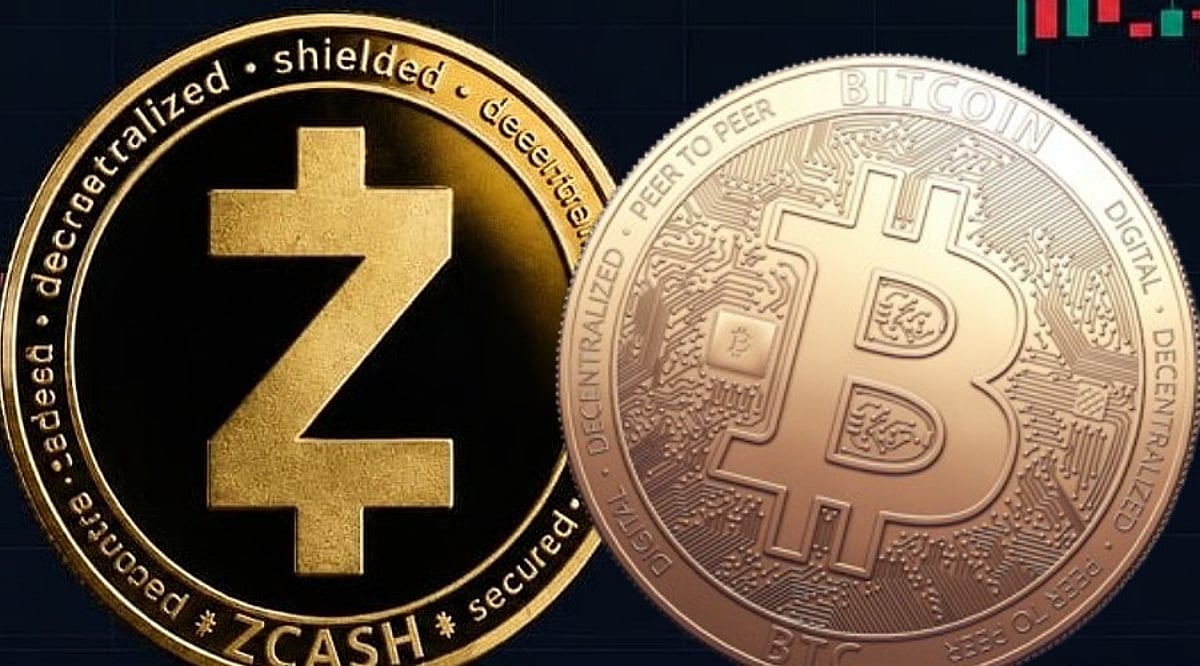
    Zcash (ZEC) surged past $1,500 on September 18, extending a roughly 215% rally from around $470 in mid-August. The token was up more than 10% over 24 hours and 46% over the past week. The rally is driven by institutional demand, short liquidations, and anticipation surrounding the NU7 network upgrade. Grayscale’s spot Zcash ETF (ZCSH), launched on August 25, has attracted over $500 million in assets under management. Paradigm co-founder Matt Huang also disclosed that the firm holds ZEC, calling it a privacy-focused counterpart to Bitcoin.

    NEAR Protocol Jumps 28%

    NEAR Protocol (NEAR) jumped nearly 28% to around $3.47 on September 18, extending its seven-day gain to over 40%. The surge followed the launch of confidential perpetual futures on near.com on September 17. The product allows traders to open positions without publicly linking them to their accounts. Hyperliquid provides execution and liquidity, while NEAR’s Confidential Intents infrastructure handles privacy. Users can access more than 50 perpetual markets while concealing position size, direction, and entry time.

    Solana Cuts Target Slot Time to 250ms

    Solana reduced its target slot time from 300 milliseconds to 250 milliseconds, increasing the network’s slot production rate by nearly 17%. The new setting went live on September 18, bringing Solana to four targeted slots per second, up from roughly 3.3 under the previous configuration. This change is the third stage of SIMD-0525, which aims to gradually reduce slot times from the original 400ms to a final target of 200ms. Shorter slot periods provide wallets, exchanges, and trading applications with more frequent network state updates.

    JPMorgan Sees Bitcoin Outpacing Gold

    In a report published on September 17, JPMorgan analysts predicted that Bitcoin will outperform gold in relative performance if institutional investors begin unwinding their defensive hedges in exchange-traded funds. While gold has led institutional recovery throughout 2026, with inflows erasing all prior capital losses, Bitcoin-backed instruments have only offset half of the redemptions. However, derivatives metrics suggest a different scenario, leading analysts to favor Bitcoin over gold in the near term.

    Frequently Asked Questions

    How much money flowed into Bitcoin spot ETFs?

    U.S. spot Bitcoin ETFs recorded total daily net inflows of approximately $159.45 million. BlackRock’s IBIT led with $183.66 million in net inflows.

    Why is the Zcash price rising?

    Zcash climbed above $1,500 amid institutional demand, short liquidations, and anticipation surrounding its NU7 network upgrade. ZEC has risen roughly 215% from its mid-August level near $470.

    Why did NEAR Protocol jump nearly 28%?

    NEAR surged to around $3.47 as trading activity increased following the launch of confidential-by-default perpetual futures. The product combines Hyperliquid execution and liquidity with NEAR’s Confidential Intents infrastructure.

    What does Solana’s 250ms target slot time mean?

    Solana reduced its target slot time from 300 milliseconds to 250 milliseconds, targeting four slots per second. The change is part of SIMD-0525, which ultimately aims to reduce target slot times to 200ms.

    Why does JPMorgan think Bitcoin could outperform gold?

    According to the report, JPMorgan analysts see potential for Bitcoin to outperform gold if institutional investors unwind defensive gold hedges. Their assessment also considers differences in derivatives positioning between the two assets.

  • Optimism OP Token Rallies 20% as Upgrade 20 Progresses Fault-Proof Architecture

    Optimism OP Token Rallies 20% as Upgrade 20 Progresses Fault-Proof Architecture

    Optimism’s OP token surged 20.14% in 24 hours as the network’s Upgrade 20 advanced its fault-proof architecture. The governance vote approved the change on September 16, with mainnet execution targeted for September 24 after a seven-day testnet soak period.

    OP climbed 10.72% in a single hour to reach USD 0.1157, with 24-hour trading volume hitting USD 5.57 million. The token moved from around USD 0.1045 to its daily high of USD 0.1157, after touching a low of USD 0.0995. The price now hovers near the USD 0.12 resistance level, while support sits around USD 0.10.

    Upgrade 20 Restructures Fault-Proof Design

    Optimism governance completed voting on Upgrade 20 on September 16. The upgrade shifts the network’s fault-proof system from Output Root Dispute Games to Super Root Dispute Games. This change alters how OP Stack chains challenge incorrect state before withdrawals finalize on Ethereum. Instead of linking a claim to an L2 block number, Super Root games use a timestamp, providing a common time reference for future multi-chain dispute systems.

    Optimism targets September 24 for mainnet execution if the new system completes a healthy testnet soak. Contract upgrades are scheduled for OP Sepolia, Ink Sepolia, Soneium Minato, and Unichain Sepolia. The transition is a prerequisite for interoperability across the Superchain, though Upgrade 20 does not activate full cross-chain functionality yet. Each chain retains separate dispute infrastructure, and every new game still contains the Output Root of a single chain.

    Market Reaction and Price Levels

    OP’s 20.14% daily gain stood out as many altcoins traded sideways. The hourly surge of 10.72% separated it from broader market trends. Traders are watching the USD 0.12 level as resistance; a move above would push OP beyond that area. A drop below USD 0.10 would place it under support. The available data does not establish a direct causal link between the price rally and Upgrade 20, but both developments occurred during the same period of heightened attention on Optimism.

    Upgrade 20 also introduces safeguards around upgrade sequencing and removes legacy configuration functions after issues emerged during Upgrade 19. Permissioned chains now use game type 5, while permissionless fault-proof deployments use game type 9. These changes prepare the architecture for a future where Super Roots can represent multiple chains at the same timestamp.

    As Optimism moves Upgrade 20 through its testnet and planned mainnet schedule, the OP token remains near the upper end of its daily range. The day low was USD 0.0995, and the current price of USD 0.1157 marks the daily high.

  • CFTC Issues No-Action Letter for Passive Software Firms Linking Users to Regulated Derivatives Markets

    CFTC Issues No-Action Letter for Passive Software Firms Linking Users to Regulated Derivatives Markets

    The Commodity Futures Trading Commission (CFTC) has granted conditional broker-registration relief to qualifying passive software providers that connect users with regulated derivatives markets. The agency’s Market Participants Division announced the no-action position on September 17, stating it will not recommend enforcement against eligible providers or their personnel for failing to register as introducing brokers or associated persons, provided they meet specific criteria.

    Staff Letter 26-25: Requirements and Scope

    The relief is outlined in Staff Letter 26-25, which imposes 10 requirements that providers must satisfy to qualify. The no-action position is narrow: it only covers enforcement recommendations related to introducing-broker and associated-person registration. It does not exempt providers from other obligations under the Commodity Exchange Act or CFTC regulations. Providers cannot rely on the letter for activities beyond those explicitly covered.

    The framework applies to software that enables users to trade through registered futures commission merchants (FCMs), introducing brokers, and designated contract markets (DCMs). Users must remain customers or direct members of the regulated firm handling their transactions, not of the software provider. This distinction places the software provider outside traditional intermediary functions, as the CFTC emphasized that the relief targets passive tools—not businesses that take custody, execute trades, or control customer accounts.

    Crypto Developers Not Automatically Covered

    The CFTC clarified that crypto developers do not receive blanket protection. Wallet developers and other digital-asset software companies may qualify when their products connect users with eligible derivatives markets, but eligibility depends on meeting the letter’s requirements and the nature of their services.

    Extension of Earlier Relief

    Staff Letter 26-25 follows a similar no-action position under Staff Letter 26-09, which covered software providing user access to regulated derivatives while registered firms retained responsibility for trade execution, customer accounts, and asset control. The new letter does not alter the Commodity Exchange Act; like all no-action letters, it states that the division will not recommend enforcement for specified conduct, without creating a formal exemption.

    Industry Reaction and Broader Regulatory Context

    Industry groups welcomed the move as added regulatory clarity. Digital Chamber CEO Cody Carbone said the action removes uncertainty for software providers building interfaces that connect users with registered FCMs and DCMs. Blockchain Association CEO Summer Mersinger noted that the division took a functional approach by examining what a provider actually does.

    The CFTC action arrived on the same day the Securities and Exchange Commission announced an ‘Innovation Exemption’ for tokenized US stocks. Both developments followed the Senate’s failed vote on the Digital Asset Market Clarity Act, which would have created a federal market-structure framework for digital assets. CFTC Chair Michael Selig had directed staff in August to explore crypto market-structure rules if Congress did not pass the legislation. Coinbase Vice Chairman Ryan VanGrack described the SEC and CFTC actions as a sharp change after years of regulatory standstill.

    In summary, the CFTC’s no-action position provides conditional protection to qualifying passive software providers meeting Staff Letter 26-25’s requirements. The relief remains limited to covered activities and does not change the Commodity Exchange Act. Crypto developers may qualify only when their tools fit the framework.

  • NEAR Protocol Price Surges 31% as Confidential Perpetual Trading Launches

    NEAR Protocol Price Surges 31% as Confidential Perpetual Trading Launches

    NEAR Protocol surged toward USD 3.50 on Friday as traders pushed the token 30.8% higher over 24 hours, while a new confidentiality feature added fresh momentum to its September rally.

    CoinGecko data captured at 04:16 UTC also showed NEAR up 46.1% over seven days, 78.9% over 14 days, and 120.1% over one month. Its market value reached about USD 4.575 billion, while daily trading volume rose to USD 1.786 billion. The token also gained about 29% against Bitcoin during the same period, indicating NEAR outperforming the broader crypto market rather than simply following Bitcoin higher. CoinMarketCap separately placed NEAR near USD 3.44, up 27.6%, with a daily range between USD 2.64 and USD 3.45.

    Confidential Perpetual Trading Adds a New Catalyst

    NEAR Protocol announced on September 17 that perpetual positions on near.com had become confidential by default. Users can open leveraged positions from existing accounts without publicly linking each position to the account. The change makes confidentiality the default for those trades, although perpetual trading was already available in the ecosystem through Hyperliquid.

    NEAR’s Confidential Intents documentation says the system uses a dedicated private NEAR shard with a Trusted Execution Environment-based bridge connecting that shard to mainnet. The design can keep order size, trade direction, and other transaction details away from the public mempool. Selective disclosure remains possible, allowing traders to keep sensitive activity private while retaining the option to reveal information when needed.

    NEAR Intents Connects More Than 35 Blockchains

    Funding does not depend only on assets held on NEAR. The interface supports more than 35 blockchains, while NEAR Intents routes activity between networks. This structure reduces several steps that can occur when users move assets across wallets and chains. The platform can shield information such as position size, entry levels, and trading activity from outside observers. At the same time, traders can use assets from supported networks without first moving every position into a single ecosystem.

    NEAR supplies the privacy and cross-chain layer for the product, while Hyperliquid handles the underlying perpetual futures execution. The interface supports more than 50 markets and offers leverage of up to 40 times. Hyperliquid has recorded about USD 240 billion in perpetual trading volume over the last 30 days, giving NEAR’s new interface access to an established derivatives trading venue.

    Hyperliquid Expansion Adds Broader Market Context

    The NEAR launch comes as Hyperliquid draws attention from other market participants. Payward, Kraken’s parent company, has announced plans to launch on-chain perpetual futures based on Hyperliquid for US customers. That planned product would use a structure involving CFTC-regulated Bitnomial Exchange and Bitnomial Clearinghouse, placing Hyperliquid in another derivatives initiative beyond its role in the NEAR product.

    Meanwhile, NEAR entered Friday with substantial price gains already in place. Its seven-day and 14-day advances show that the confidentiality announcement arrived during an established September rally rather than at the start of the move. Trading activity also expanded during the rally, with CoinGecko measuring about USD 1.786 billion in 24-hour volume while the token traded near USD 3.50. The price increase, higher volume, and product update marked the latest phase of NEAR’s September advance.