Author: vitorcherulli

  • Clear Scan PDF Scanner Review: Features, Pricing, and How to Use It

    Clear Scan PDF Scanner Review: Features, Pricing, and How to Use It

    Clear Scan – PDF Scanner is a mobile app that turns your phone camera into a portable document scanner. Instead of carrying a separate scanner, users can capture papers, receipts, notes, bills, and other documents, then save or share them as PDF or JPEG files. The app includes edge detection, image filters, OCR, page editing, multi-page scanning, folders, and cloud sharing.

    What Is Clear Scan – PDF Scanner?

    Clear Scan – PDF Scanner is developed by Indy Mobile App. It is available for Android and iOS devices. The app uses the phone camera to photograph documents and convert them into digital files. It has been available for several years and has built a large user base. Google Play shows more than 10 million downloads and a 4.7-star rating from roughly 485,000 reviews. The Android version received an update in August 2026 with Android 16 compatibility, plus performance and stability improvements.

    Key Features

    • Automatic edge detection: The app finds document boundaries after a photo is taken, and users can adjust corners manually if needed.
    • Image filters: Filters help improve readability for color documents, black-and-white pages, photos, and clearer scans.
    • OCR support: Optical character recognition reads text from scanned images and turns it into editable text.
    • PDF and JPEG export: Scans can be saved in either format.
    • Multi-page scanning: Users can add, remove, and reorder pages before saving a single file.
    • Folders and subfolders: Scans can be organized for easier access.
    • Cloud sharing: Files can be shared through email, cloud storage, and supported apps.

    Pros and Cons

    Pros

    • Easy to use and fast scanning
    • Automatic edge detection
    • PDF and JPEG support
    • Built-in OCR
    • Multi-page documents
    • Image filters and page editing
    • Folder organization
    • Cloud sharing
    • Available on Android and iOS

    Cons

    • Android version includes ads
    • Some features require in-app purchases
    • Scan quality depends on the phone camera
    • Poor lighting can affect results
    • OCR may not read every text correctly

    How to Use Clear Scan – PDF Scanner

    1. Open Clear Scan on your phone and allow camera access.
    2. Place the document on a flat surface with enough light.
    3. Tap the camera button and take a picture.
    4. Check the detected edges and adjust the corners if needed.
    5. Crop any unwanted background space.
    6. Choose a filter that makes the document easier to read.
    7. Add more pages if you are creating a multi-page file.
    8. Change the page order if necessary.
    9. Save the document as a PDF or JPEG and give it a clear file name.
    10. Share the file through email, cloud storage, or another app.

    Where to Download It

    Clear Scan is available on the Google Play Store for Android phones and tablets, and on the Apple App Store for iPhone and iPad. Downloading from an official store is safer and ensures the app receives future updates through the normal update system. The Android version is free with advertisements and in-app purchases. The iOS version is also free with in-app purchases.

    Is Clear Scan Right for You?

    Clear Scan – PDF Scanner is a practical tool for students, office workers, and anyone who handles paperwork regularly. It is not a replacement for a professional office scanner in every situation, because the final quality depends on the phone camera, lighting, and the condition of the original paper. For everyday tasks like scanning receipts, notes, forms, and office documents, it can save time and reduce the need for a dedicated scanner.

    FAQs

    What is Clear Scan – PDF Scanner?

    Clear Scan is a mobile app that uses a phone camera to scan documents and save them as PDF or JPEG files.

    Is Clear Scan free to use?

    Yes, the app is free to download, but it includes ads and in-app purchases.

    Does Clear Scan support OCR?

    Yes, OCR reads text from scanned documents and converts it into editable digital text.

    Can I scan several pages into one PDF?

    Yes. Clear Scan supports multi-page documents, and users can add, remove, and reorder pages before saving.

    Can Clear Scan share documents?

    Yes, scanned files can be shared through email, cloud storage, and other supported apps.
  • Agentic AI Reshapes Banking, Payments, and Fintech: Key Insights

    Agentic AI Reshapes Banking, Payments, and Fintech: Key Insights

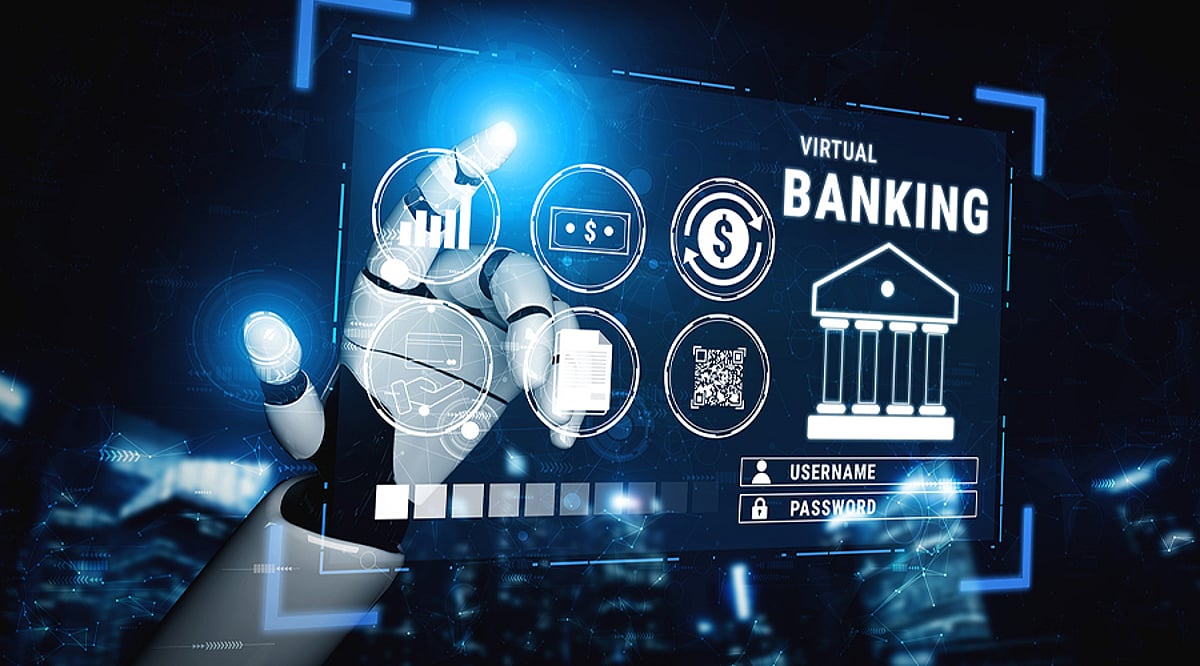
    Agentic AI is poised to revolutionize the financial sector by moving beyond simple customer service to autonomously handling complex banking tasks, payments, and fraud detection. This technology enables AI agents to analyze spending, execute transactions, and offer personalized financial advice, all while reducing manual effort and improving efficiency.

    Smarter Banking Decisions

    Agentic AI can analyze a customer’s spending habits, understand their financial goals, compare available options, and take approved actions. From moving money between accounts to managing recurring payments, these systems make everyday banking more automated, faster, and user-friendly.

    AI-Powered Payments

    Instead of manually completing every step of a payment, an AI agent can identify bills, check payment details, and complete transactions after receiving permission. It also monitors upcoming expenses and reminds users about payments, making digital transactions more convenient and organized.

    Fraud Detection Gets Proactive

    Traditional fraud systems react to unusual activity after it occurs. Agentic AI continuously monitors transactions, customer behavior, and account activity to spot risks earlier. It can investigate unusual patterns, request additional verification, and alert financial institutions, enabling faster threat response.

    Personalized Financial Services

    By studying a customer’s financial activity, Agentic AI offers tailored services such as spending pattern analysis, expense management suggestions, and savings planning. Unlike basic recommendation tools, AI agents can follow through on approved actions, turning suggestions into practical steps.

    Faster Fintech Operations

    Fintech companies handle large volumes of customer requests, transactions, compliance checks, and data. Agentic AI automates repetitive processes and coordinates tasks across systems, reducing manual work and allowing teams to focus on complex issues, product development, and business decisions.

    A New Role for Human Bankers

    Agentic AI does not eliminate the need for human employees. Instead, it handles routine tasks while bankers focus on areas requiring judgment, relationships, and complex financial advice. Human oversight remains essential, especially when AI agents make decisions involving money, sensitive data, or financial risk.

    The Road Ahead for Agentic Finance

    Agentic AI is pushing banking and fintech toward services that act rather than simply respond. Customers may increasingly rely on AI agents to manage routine financial tasks across accounts and services. This shift raises important questions about security, privacy, accountability, consent, and the degree of control customers grant AI systems.

  • Money in Motion: The Key Technologies Transforming Digital Finance

    Money in Motion: The Key Technologies Transforming Digital Finance

    Digital finance is evolving at unprecedented speed. From artificial intelligence to biometric authentication, a range of technologies is changing how consumers and institutions handle money. Here is a closer look at the innovations reshaping payments, banking, and financial services.

    Artificial Intelligence

    AI is changing how banks and financial apps handle everyday money tasks. It can detect unusual transactions, assess risks, answer customer questions, and offer personalized financial services. AI also helps institutions process large amounts of data quickly, making digital payments and banking services faster, safer, and more responsive.

    Blockchain

    Blockchain provides a shared digital record that can track transactions without relying on a single central database. The technology supports cryptocurrencies, smart contracts, and other financial applications. Banks and businesses are exploring blockchain for faster settlements, cross-border payments, digital assets, and records that are easier to verify and trace.

    Mobile Payments

    Smartphones have become a central part of everyday finance. Users can pay bills, transfer money, shop online, and make purchases at physical stores through banking apps and digital wallets. QR codes and near-field communication have further simplified payments, reducing the need for cash and cards.

    Cloud Computing

    Cloud computing gives financial institutions flexible computing power and storage through internet-based systems. Banks use cloud infrastructure to run applications, manage data, and launch digital services without relying entirely on traditional hardware. It also supports faster updates and helps financial platforms handle changing customer demand.

    Open Banking

    Open banking allows customers to share financial information with authorized third-party services through secure APIs. This connects bank accounts with budgeting apps, payment platforms, lending services, and other financial tools. By making data easier to access with permission, open banking is creating more connected digital financial experiences.

    Biometric Authentication

    Biometric authentication uses features such as fingerprints, facial recognition, or voice patterns to confirm a user’s identity. It has become common across smartphones and financial applications, helping users access accounts and approve transactions. Biometrics make authentication quicker while adding another layer of identity verification to digital financial services.

  • Indian Stock Market Opens Higher as Falling Oil Prices Boost Sentiment: Nifty 50 Rises 64 Points, Sensex Gains 260 Points

    Indian Stock Market Opens Higher as Falling Oil Prices Boost Sentiment: Nifty 50 Rises 64 Points, Sensex Gains 260 Points

    The Indian stock market opened higher on Thursday, buoyed by a decline in global oil prices and mixed cues from international markets. The Nifty 50 index started the session at 23,334.70, gaining 64.1 points or approximately 0.28%, while the Bank Nifty advanced 117.1 points from its previous close. Meanwhile, the Sensex climbed 260.65 points to reach 74,575.24.

    Broader market participation improved, with the Nifty Midcap index rising 0.52% and the Nifty Smallcap index gaining 0.86%. The Indian rupee opened flat at Rs. 95.87 against the US dollar.

    Foreign Institutional Investors (FIIs) remained net sellers in the cash market on September 17, offloading shares worth Rs. 3,208.76 crore. In contrast, Domestic Institutional Investors (DIIs) were net buyers, purchasing Rs. 3,617.75 crore worth of equities.

    Sensex Outlook

    According to Sachin Gupta, VP of Technical Research at Choice Equity Broking Private Limited, the Sensex is expected to maintain its negative bias unless it breaks above the resistance zone of 74,700–75,000. On the downside, the 73,500–74,200 range serves as a critical support area. If the index falls below this level, selling pressure may intensify.

    Nifty 50 Outlook

    The Nifty 50 ended Thursday’s session 53 points higher, forming a small green candle with an upper shadow on the daily chart. The recent recovery has emerged from the key support zone around 23,100–23,000. However, the index lacks strength to reverse the prevailing trend of lower highs and lower lows.

    On the upside, the 23,400–23,500 zone poses strong resistance. A sustained move below 23,000 could trigger a deeper correction.

    Bank Nifty Outlook

    The Bank Nifty formed a long upper-shadow bearish candle, indicating strong supply at higher levels. The sharp rejection from the day’s high suggests sellers remain active. Immediate support is seen at 55,500–55,700, while resistance lies at 56,300–56,500.

    Gupta noted that the broader range for the Bank Nifty is likely to be 55,500–56,500, with a near-term sideways bias. An upside breakout above 56,500 would improve the technical structure, whereas a fall below 55,500 could add further downside pressure.

    Disclaimer: This article is for informational purposes only and does not constitute investment advice. Readers should conduct their own research before making any financial decisions.

  • AI Expansion, Chip Rivalry, and Deep-Tech Funding Lead Today’s Tech Landscape

    AI Expansion, Chip Rivalry, and Deep-Tech Funding Lead Today’s Tech Landscape

    The technology world is undergoing a rapid transformation as artificial intelligence reshapes industries, business workflows, and workforce requirements. Competition is intensifying across AI infrastructure, semiconductor technology, and specialized applications. From legal services and aerospace to financial markets and engineering education, companies and institutions are adapting to a market increasingly defined by AI adoption, hardware capabilities, and changing professional needs.

    What’s New Today

    The tech world is shifting from experimenting with AI to integrating it into real-world systems. AI is moving deeper into professional workflows, while competition around the computing infrastructure needed to support these applications continues to grow. Investment is flowing into deep-tech and aerospace innovation, and education systems are adapting to changing technology-related career requirements. Financial markets are also reflecting shifting investor sentiment around digital assets. Together, these developments show how AI is influencing not just software, but the wider technology ecosystem—from chips and infrastructure to jobs, industry applications, and investment.

    New OpenAI Model Brings AI Deeper Into Legal Workflows

    OpenAI is expanding further into the legal sector with a new AI model designed specifically for law firms. The move reflects the growing use of AI for tasks such as legal research, document analysis, and drafting. For lawyers, the technology could help reduce time spent on routine work while keeping human review central to complex legal decisions.

    Avaana Capital Leads Rs. 43 Crore Funding Round in DheyaTech

    Bengaluru-based deep-tech startup DheyaTech has raised Rs. 43 crore in a funding round led by Avaana Capital, with participation from Unimech Aerospace and Manufacturing. The company will use the fresh capital to scale production, build an integrated testing facility, and accelerate customer deployments. DheyaTech develops small gas turbine engines for aerial mobility, defense, and energy applications, strengthening India’s indigenous propulsion capabilities.

    Huawei Targets Nvidia With Next-Gen AI Chip Arriving in Q1 2027

    Huawei is accelerating its AI chip ambitions, bringing the launch of its next-generation Ascend 960DT forward to the first quarter of 2027 from the previously planned third quarter. The move comes as Huawei works to strengthen its position in AI computing and compete with Nvidia. The company is also developing its Peerium Computing Architecture, designed to connect large numbers of AI chips into powerful systems for training and inference. The push highlights China’s growing focus on building domestic AI computing capabilities amid ongoing semiconductor restrictions.

    Bitcoin Gains Ground While Ether and XRP ETF Flows Turn Negative

    Bitcoin is showing resilience above USD 77,000, even as investor flows into other major crypto assets weaken. Ether and XRP ETFs are facing outflows, highlighting a shift in short-term investor demand toward Bitcoin. The divergence comes amid broader market uncertainty and changing expectations around U.S. monetary policy, leaving traders closely watching ETF flows for clues about the next move.

    Software Jobs Face AI Disruption as Universities Prepare Students for Chip Industry

    As AI reshapes traditional software engineering roles, U.S. universities are preparing students for a different opportunity: semiconductor manufacturing. The shift comes as the country expands domestic chip production and faces a projected shortage of up to 157,000 semiconductor workers by 2030. Universities including Purdue and Arizona State are expanding chip-focused programs, giving engineering graduates a new path into the growing AI hardware economy.

  • Zakir Khan’s ‘Papa Yaar’: A Heartfelt Stand-Up Special Now Streaming on Netflix

    Zakir Khan’s ‘Papa Yaar’: A Heartfelt Stand-Up Special Now Streaming on Netflix

    Zakir Khan’s latest stand-up special, Papa Yaar, premieres on Netflix this week, blending comedy, emotion, and personal storytelling. The performance centers on his relationship with his father, childhood memories, and the experiences that shaped him, offering audiences an intimate look at the popular comedian’s life.

    Netflix Premiere

    Papa Yaar is now available to stream on Netflix, giving fans the chance to watch Zakir Khan’s latest comedy special from home. The special continues his signature storytelling-led approach, where everyday experiences, family relationships, and personal memories become material for humor. His conversational delivery adds an intimate quality while keeping comedy at its core.

    Father-Son Bond

    The central theme of Papa Yaar is Zakir Khan’s relationship with his father. Through stories and observations, the comedian reflects on childhood experiences and the evolving dynamics between a son and his parents. The special combines affection, nostalgia, and humor, exploring how family relationships change as people grow older and gain perspective.

    Personal Stories

    Zakir Khan draws extensively from his personal experiences for Papa Yaar, making the special distinct from a conventional collection of standalone jokes. Childhood memories, family moments, and observations about growing up form an important part of the performance. These stories allow him to connect comedy with experiences that many viewers may recognize from their own lives.

    Comedy and Emotion

    Papa Yaar blends Zakir Khan’s trademark humor with emotional storytelling, moving between funny situations and more reflective moments. Rather than focusing solely on punchlines, the special uses personal experiences to create a broader narrative about family, childhood, and relationships. The combination allows Zakir to explore sentimental subjects without losing the comedic character of his performance.

    Zakir Khan

    The comedian takes center stage throughout Papa Yaar, using his familiar storytelling style to discuss family experiences and his relationship with his father. Known for turning everyday observations into extended narratives, Zakir brings the same approach to this special. His performance focuses on personal memories while maintaining the humor and conversational tone associated with his stand-up work.

    Director Karan Asnani

    Papa Yaar is created by Zakir Khan and directed by Karan Asnani. The collaboration brings Zakir’s personal material to the screen as a dedicated Netflix stand-up production. The direction supports the comedian’s storytelling format, allowing the performance to move between humorous anecdotes, emotional reflections, and memories surrounding his father, childhood, and family life.

  • Free Fire MAX Redeem Codes for September 18, 2026 – Claim Free Skins, Outfits & More

    Free Fire MAX Redeem Codes for September 18, 2026 – Claim Free Skins, Outfits & More

    Garena Free Fire MAX has released a fresh batch of redeem codes for September 18, 2026, giving players an opportunity to unlock exclusive in-game rewards at no cost. These time-sensitive codes offer items such as weapon skins, outfits, loot crates, emotes, and more. Due to regional restrictions and limited availability, players are encouraged to redeem them as quickly as possible.

    Today’s Active Redeem Codes (September 18, 2026)

    Below are the current redeem codes. Use them immediately before they expire:

    • P3LX6V9TM2QH
    • FFWCTKX2P5NQ
    • TX4SC2VUNPKF
    • E9QH6K4LNP7V
    • S5PL7M2LRV8K
    • Q8M4K7L2VR9J
    • RD3TZK7WME65
    • RHTG9VOLTDWP
    • N7QK5L3MRP9J
    • MCPW3D28VZD6
    • ZZZ76NT3PDSH
    • V427K98RUCHZ
    • J3ZKQ57Z2P2P
    • J2QP8M1KVL6V
    • ZRW3J4N8VX56
    • TFX9J3Z2RP64
    • WD2ATK3ZEA55
    • FFPLUFBVSLOT

    Note: These codes are region-specific and may not work outside certain servers. Redeem them promptly to avoid missing out.

    How to Redeem Free Fire MAX Codes

    Follow these simple steps to claim your rewards:

    1. Visit the official Free Fire MAX redemption website.
    2. Sign in using your preferred method – Facebook, Twitter, or Google. Make sure your game account is linked to the same platform.
    3. Locate the text box for entering codes. Carefully type or paste the code exactly as shown.
    4. Click “Confirm” and submit. A success message will appear if the code is valid.
    5. Wait up to 24 hours for the rewards to appear in your in-game mail.

    Redeem codes can grant access to legendary weapon skins, premium character outfits, exclusive loot crates, diamond vouchers, emotes, and pet skins.

    Why Do These Codes Expire Quickly?

    Garena releases redeem codes in small, daily batches to maintain excitement and prevent misuse. Each set typically expires within 24 hours. Additionally, regional restrictions apply – for example, a code for the Indian server may not work in Indonesia or Brazil. Staying active on official Free Fire MAX social media channels (Instagram, Facebook, YouTube) helps players catch new codes as soon as they drop.

    Final Thoughts

    Redeem codes are one of the best ways to earn premium content for free in Free Fire MAX. By staying engaged with the game and its official platforms, players of all skill levels can enjoy exclusive rewards and enhance their gameplay experience. Don’t wait – grab today’s codes before they vanish!

  • How Amrita Online’s MBA in Artificial Intelligence Creates Data-Driven Leaders

    How Amrita Online’s MBA in Artificial Intelligence Creates Data-Driven Leaders

    Why Data-Driven Leadership Is the New MBA Baseline

    Business decisions today rarely happen without a dashboard, a model, or a forecast behind them. Organizations across banking, technology, consulting, and manufacturing are pushing decision-making down to managers who can read data directly instead of waiting for a separate analytics team to translate it. The Online MBA in Artificial Intelligence from Amrita Online is built to answer that shift. Rather than treating AI and analytics as an elective bolt-on to a traditional MBA, the curriculum weaves machine learning, deep learning, and data visualization into core management training, along with a strong emphasis on responsible AI and ethics.

    Inside the AI and Analytics Curriculum

    The program’s applied, tool-based approach starts with foundations such as a first-semester elective on computer systems, then builds into machine learning, deep learning, and natural language processing. This is not AI taught as a business case study to read about; it is AI taught as a set of working techniques students apply directly to business problems.

    Layered onto this technical core is a strong data visualization component, giving students the advanced analytical skills needed to turn raw data into decision-ready insight. The goal is for graduates to lead AI transformation in their organizations, not just understand it from the sidelines.

    Key technical areas covered include:

    • Programming and computer systems foundations
    • Machine learning and deep learning techniques
    • Natural language processing for unstructured data
    • Business intelligence-style data visualization for communicating results

    Capstone-Style Projects: Where Tools Meet Business

    Technical tools only build career-ready leaders when applied to real business problems. That is where the program’s project-based structure comes in. The curriculum combines videos, case studies, and projects developed by faculty and industry leaders, giving students applied, capstone-style assignments rather than purely theoretical coursework.

    The semester structure opens with foundational management subjects such as Fundamentals of Management and Organizational Behaviour, Human Resources and Organizational Development, and Marketing and Consumer Behaviour. Students then apply AI and analytics tools inside real management contexts, from HR analytics to marketing forecasting to operational decision-making.

    Measurable Career Outcomes and Placement Support

    Amrita Online is the online learning division of Amrita Vishwa Vidyapeetham, ranked 8th by India’s National Institutional Ranking Framework (NIRF 2025). The program reports an average salary growth of 33.94 percent among recent Online MBA graduates, based on a graduate survey.

    Beyond the classroom, students receive mentorship from industry experts, soft skills and aptitude training, resume building, and mock interviews. Placement assistance connects graduates with hiring partners including Honeywell, HDFC Bank, Amazon, Deloitte, Philips, BNY Mellon, Apple, Grant Thornton, and Exide.

    Program at a Glance

    • Duration: Minimum 2 years, extendable up to 4 years, across 4 semesters
    • Accreditation: UGC-recognized and AICTE-approved; NIRF rank #8 in India
    • Quality: NAAC A++ accredited, values-driven institution
    • Outcomes: Alumni report an average 33.94% salary growth
    • Global Credibility: WES-recognized credentials with study abroad pathways at premier US and European universities
    • Startup Ecosystem: Access to Amrita TBI, recipient of the National Award for Best Startup Incubator (2017)
    • Community: Learners across more than 50 countries and 28 Indian states

    Eligibility Criteria

    • A minimum of 50 percent marks in undergraduate studies
    • Completion of 10+2
    • An undergraduate degree of at least three years
    • Final-year students may apply with their last completed semester results
    • Work experience is an added advantage, reflecting the program’s design for working professionals

    Fees and Payment Options

    For Indian students: The total tuition fee for the Online MBA in Artificial Intelligence is Rs. 2,44,000, split as Rs. 61,000 per semester across four semesters. Paying the full one-year fee upfront brings a 5 percent discount, reducing the one-year fee to Rs. 1,15,900. A zero-cost EMI option is available at Rs. 10,625 per month.

    For foreign nationals: The semester fee is Rs. 73,000, with a discounted one-year fee of Rs. 1,38,700 and a total tuition fee of Rs. 2,92,000. All students additionally pay a registration fee of Rs. 700 and an examination fee of Rs. 2,750 per semester.

    Global Exposure Alongside the Technical Curriculum

    Students can access international exposure through Amrita’s global university partnerships, including Oakland University, University of New Mexico, Institut Mines-Télécom, and the University of Barcelona. Opportunities include student exchange programs, study abroad semesters, and summer programs, often without paying tuition fees at the host university.

    Same Degree, Same Recognition

    The curriculum, faculty, and academic standards for the online program mirror those of the on-campus MBA, with the online mode of study noted only on the back of the certificate. Graduates also join the Amrita alumni network, connecting them with a global community of professionals across industries.

    Is the Amrita Online MBA in AI Worth It?

    For working professionals and graduates who want an MBA that builds real fluency in AI, machine learning, and data visualization rather than just business theory, the program makes a strong, evidence-backed case. The tool-based curriculum, applied project work, and structured placement support are designed to convert technical fluency into measurable career growth. For entrepreneurs and professionals seeking flexibility without sacrificing institutional prestige, Amrita’s NAAC A++ grade and NIRF ranking add credibility.

    Note: Fees, deadlines, and program details can change. Confirm the latest information directly on the official Amrita Online website before applying.

  • Building an Effective Cybersecurity Incident Response Plan: Key Steps and Best Practices

    Building an Effective Cybersecurity Incident Response Plan: Key Steps and Best Practices

    A cyber attack can escalate from a minor security alert into a full-blown business crisis within hours. A well-structured incident response plan equips every team with clear roles and actions before that crisis hits. The plan must cover detection, response, recovery, communication, and lessons learned from each event. It should also align with asset security, access control, backups, and overall risk management.

    Understanding Modern Incident Response Frameworks

    The National Institute of Standards and Technology (NIST) now treats incident response as an integral part of broader cybersecurity risk management through its Cybersecurity Framework 2.0. NIST SP 800-61 Rev. 3, published in April 2025, replaced the older 2012 guidance and integrates incident response with continuous improvement and risk-based decision-making.

    Preparation: Before an Attack Occurs

    A useful incident response plan starts with a clear inventory of critical systems and business services. Asset records should include servers, cloud resources, user accounts, data stores, network links, and third-party access. The plan must also prioritize which systems need the fastest recovery.

    CISA recommends maintaining a full asset inventory, clear network maps, least-privilege access controls, and network segmentation. These measures limit the reach of an intrusion and help responders locate affected systems faster.

    Define Roles and Responsibilities

    Named roles are essential. The security team handles technical triage, IT isolates systems and restores services, legal staff assess notification obligations, and senior leaders approve major business decisions. A communications team prepares messages for staff, customers, and the public. External forensics or crisis management firms may be needed when internal resources are insufficient. Each role requires an owner, a backup contact, and a clear escalation path.

    Backup Strategy

    Backups require special attention. CISA calls for offline, encrypted backups with regular tests of access and integrity. Golden images can help restore key systems after a destructive attack. A backup that has never been tested in a real restore scenario cannot guarantee recovery during a crisis.

    Detection and Containment

    The 2026 Verizon Data Breach Investigations Report underscores the need for strong vulnerability management. Software vulnerability exploitation caused 31% of breaches, making it the top entry point for the first time in the report’s 19-year history. Ransomware appeared in 48% of breaches, while generative AI accelerated 15% of attack techniques.

    An effective response plan defines actions after a security alert: confirm whether the alert indicates a real incident, identify affected accounts, devices, applications, and data, and preserve evidence before making major system changes. If an active threat remains, isolate affected hosts, restrict network paths, disable compromised accounts, revoke active sessions, and block known malicious access.

    Ransomware requires a separate playbook. NIST IR 8374 Rev. 1 (June 2026) provides practical actions for ransomware risk under the Cybersecurity Framework 2.0, covering governance, asset identification, protection, detection, response, and recovery. CISA also advises prompt isolation of affected systems and careful recovery from clean offline backups.

    Recovery and Post-Incident Review

    Recovery does not end when a system comes back online. Teams must verify that the original attack path is closed, attacker access has ended, credentials have been changed where needed, and restored systems show no signs of compromise. Critical services should return first, with close monitoring before wider access resumes.

    A strong plan includes a post-incident review that records the first known access, affected assets, attack path, response time, data exposure, control failures, and actions to prevent recurrence. NIST emphasizes continuous improvement, so lessons from one event should shape future security work.

    Conclusion

    An effective incident response plan is more than a document for the security team—it is a business control that connects technical action with leadership, legal obligations, communication, backup recovery, and risk decisions. The latest guidance from NIST and CISA, along with Verizon’s 2026 data, points to the same practical needs: clear roles, fast detection, strong isolation, tested recovery, and a plan that evolves after each serious incident.

    Frequently Asked Questions

    1. What is a cybersecurity incident response plan?

    It is a structured plan that defines how an organization detects, investigates, contains, removes, and recovers from a cybersecurity incident.

    2. Why does an incident response plan matter?

    It gives teams clear responsibilities and defined actions, reducing confusion, limiting damage, and supporting faster recovery during a cyber attack.

    3. What does NIST SP 800-61 Rev. 3 cover?

    It provides current incident response guidance and connects response work with the Cybersecurity Framework 2.0 and continuous improvement.

    4. How should a business prepare for ransomware?

    Maintain offline, encrypted backups, test restoration, protect privileged accounts, isolate affected systems quickly, and maintain a dedicated ransomware response process.

    5. How often should an incident response plan be tested?

    The plan should undergo regular exercises and reviews so teams can identify weak points, improve procedures, and apply lessons from security incidents.

  • Crypto Wealth Management Explained: Portfolios, Staking, Custody, and Risk in 2026

    Crypto Wealth Management Explained: Portfolios, Staking, Custody, and Risk in 2026

    Crypto wealth management has evolved far beyond simply buying and selling cryptocurrencies. Today, it encompasses a structured approach to portfolio construction, custody, staking, lending, tax planning, and risk management. As institutional participation expands in 2026, investors now have multiple avenues to gain and manage digital-asset exposure.

    How Crypto Wealth Management Works

    Traditional wealth management involves asset allocation, custody, investment tactics, and financial strategies. Crypto wealth management applies the same principles to cryptocurrency assets such as Bitcoin, Ethereum, stablecoins, and tokenized instruments.

    A portfolio may include directly held cryptocurrencies, spot-traded products, stablecoins, and tokenized assets from the real economy. The optimal structure depends on the investor’s goals, risk tolerance, liquidity needs, and jurisdiction.

    Custody is critical because owning cryptocurrency directly means managing private keys. Institutional investors often use qualified custodians, while individual investors can choose between custodial platforms and self-custody wallets.

    Portfolio diversification also matters. Bitcoin and Ethereum can behave differently from smaller cryptocurrencies, but crypto assets often remain highly correlated during major market declines. Holding several tokens does not automatically create meaningful diversification.

    Staking and Yield

    Proof-of-stake networks introduce staking: investors can lock or delegate eligible assets to participate in network validation and potentially earn rewards. Ethereum is a prime example. However, staking carries additional risks involving validators, smart contracts, liquidity, and intermediaries. Returns should be weighed against possible asset-price losses.

    Stablecoins have become increasingly important for treasury and liquidity management. They provide blockchain-based dollar exposure and settlement without requiring investors to hold their entire portfolio in volatile cryptocurrencies.

    Tokenized assets are expanding the investment universe. These instruments can represent Treasury securities, money-market products, or other traditional assets on blockchains, bridging conventional wealth management with digital infrastructure.

    Institutional Infrastructure Expands

    Institutional participation is broadening beyond Bitcoin. Crypto ETF markets in 2026 include exposure to Bitcoin, Ethereum, and other digital assets, giving investors regulated market instruments without direct wallet management. Meanwhile, blockchain networks host regulated financial products. On the XRP Ledger, institutions including Aviva Investors, abrdn, Ondo, and Société Générale have introduced tokenized financial instruments.

    Risk Management Remains Critical

    Crypto wealth management does not eliminate volatility. Investors still face market, custody, counterparty, regulatory, smart-contract, and liquidity risks. Leverage can magnify these risks substantially, while yield products may introduce exposure beyond the underlying cryptocurrency.

    Effective crypto wealth management focuses less on identifying the next high-return token and more on determining allocation, custody, liquidity, diversification, and acceptable downside. As digital assets integrate further with traditional finance, managing those risks becomes as important as selecting the assets.

    Frequently Asked Questions

    1. What is crypto wealth management?

    Crypto wealth management is the structured management of digital-asset portfolios using strategies involving asset allocation, custody, diversification, and risk management. It can include cryptocurrencies, stablecoins, staking products, ETFs, and tokenized traditional assets.

    2. How is crypto wealth management different from regular crypto investing?

    Regular crypto investing may focus primarily on buying and selling individual tokens. Wealth management takes a broader approach by considering portfolio allocation, custody, liquidity, taxation, diversification, yield opportunities, and acceptable levels of risk.

    3. What role does custody play in crypto wealth management?

    Custody determines how digital assets and their private keys are secured and controlled. Investors may use self-custody wallets, centralized custodians, or institutional custody services depending on their security requirements and investment structure.

    4. How can investors generate yield from a crypto portfolio?

    Proof-of-stake cryptocurrencies can potentially generate staking rewards through network participation. Other yield opportunities may involve lending or tokenized financial products, although each can introduce additional smart-contract, counterparty, liquidity, and market risks.

    5. What are the major risks of crypto wealth management?

    Key risks include cryptocurrency price volatility, private-key loss, counterparty failures, smart-contract vulnerabilities, liquidity constraints, and regulatory changes. Leverage and complex yield products can further increase potential losses, making risk management particularly important.

    Disclaimer: This article is for informational purposes only and does not constitute financial or investment advice. Always conduct your own research (DYOR) before making any investment decisions.