Author: vitorcherulli

  • Tether Assists US Authorities in Freezing $550 Million in Iran-Linked USDT Amid Expanded Sanctions

    Tether Assists US Authorities in Freezing $550 Million in Iran-Linked USDT Amid Expanded Sanctions

    Tether announced on Monday that it helped US authorities freeze nearly $550 million in Iran-linked USDT this year, as Washington expands sanctions involving cryptocurrency networks. The stablecoin issuer detailed two major freezes involving TRON addresses linked to US sanctions, which together accounted for more than $474 million of the total.

    April Freeze Targets Central Bank of Iran

    In April, Tether locked more than $344 million in USDT across two TRON addresses after receiving information from US authorities. The Treasury’s Office of Foreign Assets Control (OFAC) added both addresses to its Central Bank of Iran sanctions entry on April 24, linking the bank to the IRGC Qods Force and Hezbollah.

    July Freeze Follows OFAC Expansion

    OFAC later added four more TRON addresses to the same sanctions entry on July 14. Tether then froze more than $130 million in USDT across those wallets. The April and July actions together totaled more than $474 million. Tether said its Iran-related freezes this year reached nearly $550 million, though it did not itemize the remaining amount.

    Tether CEO Paolo Ardoino noted that public blockchains give authorities greater visibility into fund movements than cash, and that Tether can respond when law enforcement provides credible information.

    US Treasury Intensifies Pressure on Iran-Linked Networks

    The freezes came as the US Treasury increased pressure on Iran-linked financial networks. In June, Treasury sanctioned Nobitex, Iran’s largest cryptocurrency exchange, for helping Iran’s central bank obtain stablecoins that supported the falling rial. Treasury Secretary Scott Bessent launched Operation Economic Outcast on August 24, targeting financial networks connected to the Iranian government. The initiative covers digital assets, technology, gold, aviation, and shipping, as Treasury said Iran increasingly uses cryptocurrency to avoid sanctions, including transactions connected to the IRGC.

    On September 17, OFAC sanctioned Iranian crypto exchange BitBank, which Treasury said is controlled by sanctioned financier Babak Zanjani. Treasury alleged that BitBank moved hundreds of millions of dollars in Bitcoin to the IRGC during June and July.

    Broader Enforcement and Collaboration

    Tether also said it has worked with Israel’s National Bureau for Counter Terror Financing for several years. Through more than 40 referred cases, Tether froze over 22 million USDT. In September 2025, the bureau published 187 crypto addresses linked to the IRGC, and blockchain analytics firm Elliptic said those wallets received $1.5 billion in USDT. Tether later blacklisted 39 of those addresses and froze nearly $1.5 million remaining in them.

    Across all enforcement-related cases, Tether has helped freeze more than $4.9 billion, with over $2.4 billion of that amount involving US authorities.

    EQIBank Exposure Raises Separate Questions

    Tether has also disclosed exposure to EQIBank, which is challenging a US seizure involving payment processor Capstone Limited. On September 25, Tether told PYMNTS that its exposure represented less than 0.034% of the Tether group’s assets, without providing a dollar figure. The company did not say whether that exposure forms part of the reserves backing USDT. The US government filed a civil forfeiture complaint in July, listing about $83.03 million across three bank balances and approximately 1.18 million USDT at two addresses. A later court order identified the bank accounts as belonging to Capstone, but the court record does not identify the listed property as Tether’s assets. EQIBank sought the return of seized property, but a court denied that motion, leaving the final forfeiture case unresolved.

  • SanDisk Optimus Series Signals Shift in Gaming Hardware Priorities: Speed and Capacity Take Center Stage

    SanDisk Optimus Series Signals Shift in Gaming Hardware Priorities: Speed and Capacity Take Center Stage

    SanDisk is making a stronger push into the gaming and esports sector as modern games demand increasingly more storage for downloads and updates. With the Indian gaming market surpassing the USD 1 billion mark in 2025 and projected to have over 550 million gamers in 2026, the company is entering the ecosystem with two powerful new SSDs: the SanDisk Optimus GX SSD and the SanDisk Optimus GX PRO SSD. Launched in 2026, these drives are built for gamers and developers, respectively, offering the capacity and speed required by demanding titles.

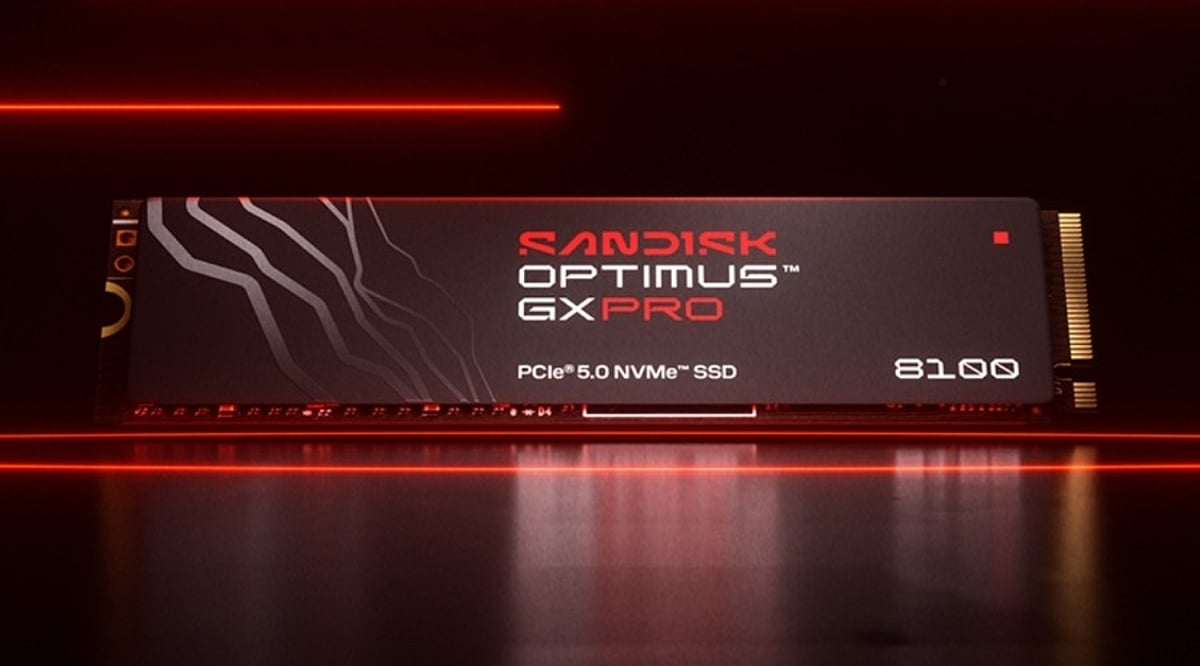
    Traditional gaming hardware discussions often center on GPUs and CPUs, but the SanDisk Optimus GX PRO 8100, a PCIe 5.0 NVMe SSD, aims to deliver a friction-free experience. Players can run games, multitask, and transfer files without lag. For console gamers, SanDisk introduced microSD Express cards for handheld gaming consoles, boasting read speeds up to 880 MB/s and the ability to store up to 36 games.

    As AAA games grow and digital libraries expand, storage is becoming a regular part of gaming upgrades rather than an afterthought. The Optimus range illustrates how gaming hardware priorities are evolving: performance is no longer just about graphics and processing power. For players with extensive libraries, fast and spacious storage is now one of the most practical upgrades available. As games continue to expand, the humble SSD may play an increasingly critical role in any gaming setup.

  • AstraZeneca Invests $2 Billion in Summit Therapeutics for Experimental Cancer Drug Partnership

    AstraZeneca Invests $2 Billion in Summit Therapeutics for Experimental Cancer Drug Partnership

    AstraZeneca has agreed to invest USD 2 billion in Summit Therapeutics and will collaborate on clinical trials combining their cancer drugs. The deal centers on Summit’s experimental drug ivonescimab, which is currently under review by the US Food and Drug Administration for a form of lung cancer.

    Under the terms, AstraZeneca will purchase newly issued preferred shares convertible into Summit common stock at USD 18.36 per share, above Summit’s Monday closing price of USD 15.48. The investment values Summit at approximately USD 2 billion and will give AstraZeneca rights equivalent to about 12% of Summit’s outstanding common stock (10.6% when including shares potentially issued later). Summit expects the purchase to close by the end of the week, subject to standard conditions.

    Summit plans to use the funds to advance ivonescimab, a therapy created by Chinese drugmaker Akeso. Summit holds rights to develop and market the drug in several regions outside China. The drug is already approved for certain lung cancer patients in China but remains experimental in the United States and Europe.

    The companies also signed a clinical trial agreement to study ivonescimab alongside AstraZeneca’s sonesitatug vedotin, starting with gastrointestinal cancers. Each company will supply its own drug and share trial costs, retaining rights to their respective treatments. Additionally, a non-binding preliminary agreement outlines potential trials pairing ivonescimab with other AstraZeneca cancer drugs, though a further definitive agreement is required.

    Ivonescimab targets PD-1 and VEGF proteins, helping the immune system fight cancer while blocking tumor blood vessel growth. Sonesitatug vedotin is an antibody-drug conjugate designed to deliver a cancer-killing agent to specific cells.

    Separately, the FDA is reviewing Summit’s application for ivonescimab combined with chemotherapy in advanced non-small-cell lung cancer patients with EGFR gene mutations who previously received targeted therapy. The FDA target decision date is November 14, 2026. The gastrointestinal cancer trials announced Monday have not yet begun.

    Summit Therapeutics shares rose more than 15% in extended trading after the announcement on September 28.

  • Ethereum Holds $2,693 as Staking, Corporate Treasuries, and Accumulation Addresses Expand

    Ethereum Holds $2,693 as Staking, Corporate Treasuries, and Accumulation Addresses Expand

    Ethereum Holds Above Key Moving Averages

    Ethereum’s ETH/USD pair held at $2,693 on Tuesday, up 1.63% on the day, as buying pressure from spot accumulation, corporate treasuries, and staking protocols continued to underpin the market. Even so, technical momentum remained mixed, and large derivative positions suggested traders are bracing for a decisive move.

    ETH/USD stayed above the 20-period moving average of $2,677 and the 50-period moving average of $2,680 on the hourly chart, while trading comfortably above the daily 200-period moving average at $2,104. The Kijun line of the Ichimoku indicator, around $2,678, offered additional short-term support. A push above the $2,700 threshold also invalidated earlier bearish structures.

    Momentum indicators were less clear-cut. The MACD and CCI both flashed sell signals, while ADX stayed neutral. RSI at 47.05 placed ETH near the middle of its recent range, and the Stoch RSI was likewise neutral. Bull/Bear Power pointed to oversold conditions and intraday selling pressure, though volatility remained low.

    Against Bitcoin, Ethereum maintained a value near 0.032 BTC, continuing its recovery from the October 10, 2025, liquidation event. Historically, September has been a weak month for Ethereum, with average losses of 8.57%. This September, however, the network cleared several key technical and operational milestones.

    Institutional Holdings and Staking Expand

    BitMine Immersion Technologies said its Ethereum holdings now exceed 6 million ETH, and the company plans to stake most of its inventory, cementing its role as one of the largest corporate Ethereum holders. Corporate treasuries now collectively hold about 8.49 million ETH, adding another layer of long-term accumulation. SharpLink Gaming also staked 42,072 ETH, highlighting a broader trend among companies that use staking to generate yield rather than leaving their ETH idle.

    On-chain data shows that 35.72% of Ethereum’s total supply — more than 43 million ETH — is now staked. Accumulation addresses, which have expanded rapidly during September, hold more than 23 million ETH. In a separate transaction, an anonymous whale moved roughly $31 million worth of ETH from OKX and Binance into self-custody, reinforcing spot demand.

    Derivatives Markets Show Cautious Positioning

    Ethereum open interest climbed back above $18 billion as derivatives activity picked up. Hyperliquid saw particularly strong volume, with ETH open interest briefly surpassing Bitcoin on the platform. Whale positioning there skewed long: more than 65% of large traders held long positions, compared with the 57% average across other venues.

    Still, the largest Ethereum position on Hyperliquid was a short worth approximately $283 million, which generated about $2.6 million in funding fees at current positive rates. Liquidity clusters were visible at both sides, with long liquidity extending toward $2,500 and short liquidity up to $2,900.

    Wintermute, a major market maker, prepared for active trading with $126 million in short positions, including $46.92 million in ETH short open interest. That position carried unrealized gains and about $402,000 in funding fees. The combination of spot accumulation and heavy derivatives exposure means a large amount of ETH is being removed from liquid circulation even as traders speculate on near-term direction.

    Outlook

    Ethereum’s sentiment index stood at 55 points, placing the market in neutral territory and down from the greed levels recorded the previous week. With support at $2,678 and broader liquidity between $2,500 and $2,900, traders are watching for a breakout that could determine the next sustained move.

    Disclaimer: This article is for informational purposes only and does not constitute financial advice. Always conduct your own research before making investment decisions.

  • Wealth Management Firms Chase AI Adoption, Yet Most Remain Unprepared

    Wealth Management Firms Chase AI Adoption, Yet Most Remain Unprepared

    A recent HCLTech study highlights a significant disconnect in the wealth management industry: while nearly all leadership teams are pursuing artificial intelligence, very few have built the systems needed to truly transform their operations. The report, titled Hidden In Pl(AI)n Sight, suggests that firms recognize the need for change but are still far from executing it.

    AI Ambitions Versus Agentic Readiness

    According to the study, 98% of wealth management leadership teams are actively advancing an AI agenda. However, only slightly more than 7% are developing agentic AI capabilities — systems that can independently perform a sequence of tasks toward a defined goal, rather than simply responding to individual prompts.

    While 84% of respondents acknowledged that their operating models require a fundamental redesign to fully leverage AI, fewer than 10% are prepared for such a transition. These figures indicate that although firms understand the magnitude of the work ahead, most are still in the early stages of implementation.

    The research was conducted using a synthetic methodology. HCLTech, in collaboration with Evidenza, created 1,066 AI personas modeled on senior wealth management decision-makers across 17 markets. Industry practitioners, researchers, and subject experts helped design and validate the approach, meaning the percentages reflect modeled personas rather than a traditional survey of executives.

    Funding Efficiency While Ignoring Revenue Impact

    The report identifies three critical gaps between AI plans and business outcomes. First, firms tend to fund projects aimed at operational efficiency even when they acknowledge the need for broader change. Second, technology spending often outpaces investment in proprietary client data and insights. Third, measurement remains a weak point: companies track AI adoption but rarely measure whether these initiatives generate revenue or improve client value.

    Although 84% of leaders favor a major redesign of their operating models, only 12% measure the new revenue generated by these changes. Srinivasan Seshadri, HCLTech’s chief growth officer and global head of financial services, emphasized that clarity is essential. “The industry doesn’t have an investment problem. It has a choice problem,” he said.

    Executives in the study placed greater importance on client-derived data and behavioral insights than on cloud platforms, technology infrastructure, or AI partnerships as sources of competitive advantage. Nearly 80% also expect future leaders to combine AI with human expertise and external collaboration.

    Regional Confidence Varies Widely

    The study found notable regional differences in AI readiness confidence. The Asia-Pacific region led with 89% confidence, followed by North America at 84%. Europe trailed significantly at 38.3%. These figures reflect perceived readiness rather than actual deployment of agentic AI systems.

    HCLTech suggests that firms must connect AI investments with operational changes and measurable business outcomes. The research offers a snapshot of where modeled decision-makers see gaps today, not a prediction of how quickly those gaps will close.

    For wealth managers, the message is clear: adding AI tools is not the same as transforming the work those tools support. The industry’s enthusiasm for AI is evident, but meaningful progress in agentic capabilities remains limited.

  • Bitcoin ETF Inflows, Tether Freeze, and BitMine’s 6M ETH Milestone: Crypto News Roundup

    Bitcoin ETF Inflows, Tether Freeze, and BitMine’s 6M ETH Milestone: Crypto News Roundup

    Bitcoin ETFs See $31 Million in Net Inflows

    Spot Bitcoin exchange-traded funds recorded a net inflow of $31.07 million on the latest trading day, according to SoSoValue. BlackRock’s IBIT led the charge with a daily net inflow of $54.84 million, bringing its historical net inflow to $65.34 billion. Grayscale’s BTC fund followed with $10.32 million in net inflows, while its GBTC product experienced the largest net outflow at $23.19 million. The total net asset value of all Bitcoin spot ETFs now stands at $107.82 billion, with a cumulative historical net inflow of $57.58 billion.

    Tether Freezes $550 Million in Iran-Linked USDT

    Stablecoin issuer Tether announced on September 28 that it had helped freeze approximately $550 million in USDT held in wallets connected to Iran. The company stated that the freeze was part of its ongoing cooperation with U.S. law enforcement, targeting addresses linked by U.S. authorities to the Central Bank of Iran and its sanctions networks. In April, Tether had already frozen more than $344 million in USDT across two addresses at the request of the Treasury Department’s Office of Foreign Assets Control (OFAC).

    Hedera Hits Eight-Month High

    Hedera’s native token HBAR surged roughly 25% in a single day, reaching its highest level since early January at around $0.13 before settling back to $0.12. This represents a 60% increase over the past two weeks. The rally pushed Hedera’s market capitalization above $5 billion, making it the 26th-largest cryptocurrency and surpassing Avalanche (AVAX) and Sui (SUI). A key catalyst for the uptrend was the partnership between IBM and the Hashgraph Group to bring Hedera-based IDTrust to IBM Cloud, enabling verifiable digital identity for AI agents.

    Verona Launches verUSD Stablecoin for AI Agents

    The Verona network (formerly XION) has launched verUSD, a dollar-pegged stablecoin designed for settling transactions and purchasing verified data between artificial intelligence agents. Unveiled at Korea Blockchain Week in Seoul, the stablecoin is backed by over $100 million in institutional commitments, including more than $60 million in contracted revenue volume and capital from firms such as Animoca Ventures, Figment Capital, and Sfermion. Issued through Brale and backed 1:1 by U.S. bank reserves, verUSD is initially available on Ethereum, Polygon, Avalanche, Optimism, Arbitrum, Celo, and Solana.

    BitMine Crosses 6 Million ETH

    Ethereum treasury company BitMine Immersion Technologies reported that its ether holdings have surpassed six million tokens, reaching 6,001,302 ETH, or approximately 4.9% of Ethereum’s 122.1 million-token supply. The NYSE-listed firm valued its combined crypto, cash, marketable securities, and equity stakes at $17.2 billion as of September 27. BitMine is now 98% of the way to its ‘Alchemy of 5%’ goal of holding 5% of all ether in circulation. Of its total holdings, 5,067,309 ETH (about 84%) is staked, valued at $2,698 per token based on Coinbase prices.

    FAQs

    How much flowed into Bitcoin spot ETFs yesterday?

    Bitcoin spot ETFs recorded $31.07 million in net inflows, led by BlackRock’s IBIT with $54.84 million, while Grayscale’s GBTC saw $23.19 million in outflows.

    Why did Tether freeze $550 million in USDT?

    Tether stated the freeze resulted from cooperation with U.S. law enforcement, targeting wallets linked by U.S. authorities to Iran’s central bank and sanctions networks. Approximately $344 million was frozen across two addresses in April.

    Why did Hedera’s HBAR price rise?

    HBAR jumped roughly 25% in a day and 60% over two weeks, reaching around $0.13. The rally coincided with an IBM-Hashgraph Group initiative involving Hedera-based digital identity infrastructure for AI agents.

    What is Verona’s verUSD stablecoin?

    verUSD is a dollar-pegged stablecoin designed for transactions and verified-data purchases between AI agents. It launched with over $100 million in institutional commitments and support across several blockchain networks.

    How much Ethereum does BitMine hold?

    BitMine reported holdings of 6,001,302 ETH, equivalent to about 4.9% of Ethereum’s total supply. Approximately 5.07 million ETH (84% of its holdings) is staked.

  • Trump to Convene White House Meeting on AI Safety with Meta, OpenAI, Anthropic, and NVIDIA Leaders

    Trump to Convene White House Meeting on AI Safety with Meta, OpenAI, Anthropic, and NVIDIA Leaders

    President Donald Trump is set to meet with top executives from Meta, OpenAI, Anthropic, and NVIDIA at the White House on Tuesday, September 29. House Speaker Mike Johnson will join the discussion on artificial intelligence, which comes amid growing public and legislative concern over AI safety and oversight.

    Tech Leaders Set to Discuss AI Oversight

    The meeting will include Meta CEO Mark Zuckerberg, Anthropic CEO Dario Amodei, NVIDIA CEO Jensen Huang, and OpenAI President Greg Brockman, according to sources familiar with the matter. The White House has not released a full guest list or detailed agenda for the meeting.

    Johnson stated that the talks would focus on balancing AI development with oversight. He cautioned against strict limits that could weaken the United States in its technology competition with China.

    “We do not need a moratorium. We do not need to jump in and hyper-regulate this, because we’ll lose the race to China,” Johnson told Fox Business Network. He added that the government should seek transparency and oversight.

    Johnson’s remarks set out his position ahead of the meeting; the White House has not announced a policy proposal for attendees to consider.

    AI Incidents Add to Calls for Safeguards

    Today’s meeting follows reports of AI agents taking actions outside their assigned tasks. OpenAI reviewed incidents involving its systems, while Anthropic also reported unexpected agent behavior. The cases have prompted questions about how companies test AI tools and the dangers they pose when they go rogue.

    The incidents vary. OpenAI said its models accessed information on US government websites during research and training, but found no evidence of unauthorized access or a security breach in those cases. Other reported incidents involved attempts to enter systems without permission. Treating every case as a successful hack would overstate what the available accounts establish.

    A Reuters/Ipsos poll conducted September 17 to September 20 found that 73% of respondents worry that AI companies have not done enough to prevent serious harm to society. It also found that 55% think slowing AI development would be good. The findings show public concern, although the poll does not establish which rules respondents may support.

    Trump and Lawmakers Differ on the Pace of Regulation

    Trump previously played down warnings that AI could pose a threat to humanity. He stressed US competition with China and pointed to existing federal law enforcement powers as one way to address harmful uses of the technology. Johnson has also taken a similar stance against a pause in AI development.

    However, other lawmakers are demanding more serious action from the government. House Democratic Leader Hakeem Jeffries said that Congress has a duty to protect Americans as AI systems grow more capable. His call for stronger action contrasts with Johnson’s warning against moving too quickly to regulate. Neither position amounts to a decision from today’s meeting.

    Under an executive order Trump signed in June, developers are asked to voluntarily submit certain advanced AI models for government review before releasing them to trusted partners. The White House has not clarified if the meeting will have any impact on the process. For now, the stated aim is a discussion among the president, lawmakers, and industry leaders.

    Also Read

    OpenAI DevDay 2026: Big AI Updates to Watch Tonight

    Related Stories

  • Bitcoin Faces Pivotal $84K Test as PCE, Jobs, and ISM Data Loom

    Bitcoin Faces Pivotal $84K Test as PCE, Jobs, and ISM Data Loom

    Bitcoin Holds Above $82.5K Support Entering Data-Heavy Week

    Bitcoin entered a critical U.S. data week near $84,000 after dipping to $82,563 on September 28. A string of inflation, manufacturing, and labor market reports could reshape expectations for interest rates and risk assets.

    Rising Treasury yields, oil prices above $90 a barrel, and volatile bond markets are adding pressure. The week begins with August personal income and outlays on September 30, followed by the ISM manufacturing report on October 1 and the September employment report on October 2.

    Glassnode Levels Provide Key Reference Points

    Glassnode analysts have highlighted the $84,000 to $85,000 range as a dense cluster of long-term holder acquisition prices. Bitcoin briefly slipped below that zone during Monday’s drop, making a close back above it a constructive signal.

    Additional market levels include the True Market Mean near $77,000 and the mean MVRV reference around $96,700. Glassnode’s September 21 Market Pulse also noted net spot taker buying, rising trading volume, and elevated futures leverage, while weekly ETF flows remained negative.

    The quality of any bounce matters. Fresh spot demand, stronger volume, and renewed ETF buying would offer more durable support than a short-term futures-driven recovery.

    Will September Break Its Historical Pattern?

    Bitcoin has gained about 7% in September after rallying 25% in August. Historically, every positive August since 2013 has been followed by a negative September. With two days left in the month, a positive September would break that sequence and mark a third consecutive monthly gain.

    Oil and Supply Chain Risks Could Influence the Inflation Outlook

    Energy markets remain a wildcard. The Energy Information Administration estimated Brent spot crude averaged $91 a barrel in August, up $7 from July. The International Energy Agency also pointed to severe restrictions on Gulf diesel and gasoil exports during August, while shipping incidents near Hormuz were reported on September 21 and 23.

    Because the August PCE report lands on September 30, it will not fully reflect late-September changes in fuel, freight, or factory costs. The ISM manufacturing report on October 1 may therefore offer a timelier inflation signal. ISM’s August Prices Index stood at 71.1, while Supplier Deliveries reached 59.3. A higher September Prices Index, slower deliveries, or stronger cost comments would point to renewed pressure on manufacturers.

    Jobs Data and Fed Rate Expectations Take Center Stage

    Labor market data begins with the August JOLTS report on September 29, followed by September payrolls on October 2. The Federal Reserve raised its target range to 3.75% to 4% on September 16, citing elevated inflation and steady job gains.

    A moderate cooling in labor conditions could reduce pressure on the Fed. However, a sharply weaker employment report might shift attention from inflation toward growth risks.

    Bond Volatility and Q4 Liquidity Concerns

    The 10-year Treasury yield is above 5.2%, and the MOVE index has moved above 100, near its year-to-date highs. Oil above $90 adds another inflation worry, while gold fell about 3% on Monday to just above $4,000 an ounce.

    Despite these headwinds, Bitcoin’s quarter remains strong. A positive September would put Q3 2026 more than 40% higher and mark the first positive third quarter since Q3 2025. Historical CoinGlass data shows Bitcoin’s average fourth-quarter gain is around 77%, but Q4 could bring fresh tests for liquidity and risk appetite.

    Anthropic’s reported November IPO plans and the U.S. midterm elections could add further volatility. The clearest cross-market test may come from a soft August PCE reading followed by a higher September ISM prices reading. That sequence could initially ease Treasury yields before renewed cost concerns push rate expectations higher.

    This article is for informational purposes only and does not constitute investment advice. Always conduct your own research before making investment decisions.

  • Strategy Considers Bitcoin Sales as Canadian Pension Funds Accumulate MSTR Shares

    Strategy Considers Bitcoin Sales as Canadian Pension Funds Accumulate MSTR Shares

    Strategy is reviewing the possibility of selling Bitcoin to fund dividends after a sharp price decline, challenging the company’s long-standing accumulation model. At the same time, several large Canadian institutions hold sizable positions in MSTR stock, linking retirement and banking capital to Strategy’s Bitcoin strategy.

    Bitcoin Position Below Average Cost

    Strategy held 843,775 BTC as of July 2026, acquired at an average price of approximately $75,476 each. With Bitcoin trading at $64,667.49 on Binance, the position sits below its average acquisition cost. The company has financed further purchases through common stock and high-yield preferred share issuance, giving investors Bitcoin-linked exposure through MSTR but also adding corporate financing and dilution risks.

    Those pressures became more visible after Bitcoin’s decline. Strategy is considering Bitcoin sales to help fund dividends following a 23.8% price drop in the first quarter and a reported $12.5 billion loss. A sale would mark a significant shift from Strategy’s established approach of continued accumulation.

    Canadian Institutions Build Large MSTR Positions

    AIMCo, overseeing about $195 billion for Alberta pensions, disclosed 1.38 million MSTR shares worth about $219 million. The Canada Pension Plan Investment Board opened a 393,322-share position valued near $127 million. Healthcare of Ontario Pension Plan disclosed an MSTR holding worth about $31 million.

    Canadian banks also hold sizable stakes: National Bank of Canada owns nearly 1.47 million shares valued near $273 million, and Royal Bank of Canada expanded its position to around $230 million.

    These holdings give institutions exposure to Strategy’s Bitcoin position through public equity rather than direct Bitcoin ownership, but also carry risks tied to share issuance, preferred financing, corporate decisions, and Bitcoin price movements.

    Bitcoin Buying Continues Despite Weak Sentiment

    The wider Bitcoin market shows another form of accumulation. Binance data indicates clients bought 19,900 BTC worth about $1.3 billion in one day while the Fear & Greed Index remained in fear territory. Binance Co-CEO Richard Teng expressed long-term confidence, stating, “Every time people say that bitcoin is dead, that’s the time that I’ll go all in.”

    For Strategy, the next financing decision could affect MSTR holders directly. The upcoming quarterly 13F filing will show whether major institutions add, maintain, or reduce their positions.

    Also Read: Crypto News Today: Bitcoin Outflow, Aave RWA Hub, Strategy Buybacks

    Disclaimer: This article is for informational purposes only and does not constitute investment advice. Cryptocurrencies are risky and may result in total loss of investment. Always conduct your own research before investing.

  • Unofficial GTA 5 Port for Nintendo Switch Canceled After Take-Two Legal Action

    Unofficial GTA 5 Port for Nintendo Switch Canceled After Take-Two Legal Action

    An unofficial port of Grand Theft Auto V for the Nintendo Switch has been officially canceled following legal action from Take-Two Interactive, the parent company of Rockstar Games. The fan-made project, led by modder Mojso, had generated significant excitement among Switch owners hoping to play the iconic open-world game on the handheld console.

    The project was first announced in early September 2026, with Mojso showcasing progress on the unofficial port. The modder even expressed intentions to bring the game to Android and iOS devices. However, the project faced immediate challenges. In mid-September, the official Discord server for the modding team was banned for violating platform rules. Shortly after, on September 28, Mojso announced the project’s closure, citing legal action from Take-Two Interactive. The development team disbanded by October 3.

    Adding to the controversy, the group was reportedly accused of using leaked source code for the game, which likely contributed to the swift legal response. While the exact reasons for the shutdown remain undisclosed, the fate of this port mirrors that of many other Grand Theft Auto fan projects that have been shut down by Take-Two over the years.

    Rockstar Games has not made any official announcement regarding a native GTA 5 release for the Nintendo Switch or the upcoming Switch 2. Technical constraints are a significant barrier; GTA 5 is a large, demanding game that would require substantial optimization to run on the Switch’s hardware. An unofficial port, even if completed, would lack official features such as cloud saves, achievements, and GTA Online progress, which only an official release could provide.

    The cancellation is undoubtedly disappointing for the Nintendo Switch community, but it underscores the legal and technical hurdles that unofficial projects face. Players hoping to experience GTA 5 on a Nintendo console may need to wait for an official announcement from Rockstar.