Author: vitorcherulli

  • June 2026 Issue: India’s Top Tech CEOs and the Rise of Semiconductor, Fintech & Space Startups

    June 2026 – Analytics Insight

    Analytics Insight’s June 2026 issue delivers a comprehensive look at India’s digital transformation, featuring in-depth interviews, industry analyses, and exclusive stories. The spotlight is on the country’s top ten tech CEOs—from Sundar Pichai to Bhavish Aggarwal—who are redefining the global tech landscape. Alongside these leadership profiles, the issue dives into groundbreaking developments in semiconductors, space startups, fintech, and AI readiness.

    Top Articles in This Issue

    • Capability Over Scale: Ajay Modi of Piper Serica explains why India’s most vital startups are hidden inside supply chains, from rocket igniters to edge AI chips.
    • From Rocket Igniters to Edge AI Chips: An exclusive look at Piper Serica’s bet on India’s industrial future.
    • Aravind Srinivas and the Rise of Perplexity: How an IIT alumnus built a leading AI search engine.
    • Leading Without the Noise: The Salil Parekh Way: A leadership lesson in quiet impact.
    • Semiconductor Dreams: Can India build a chip industry from scratch?
    • Roshni Nadar Malhotra’s Journey: From media to HCLTech leadership.
    • How Small-town India Became the World’s Most Exciting Fintech Market: A deep dive into the fintech revolution.
    • Building Intelligence for a Billion Voices: Vivek Raghavan’s next national infrastructure bet.
    • Bhavish Aggarwal’s Journey: From Ola Cabs to Ola Electric and Krutrim AI.
    • India’s Private Space Startups: Who will be the country’s SpaceX?

    This issue is a must-read for anyone tracking India’s ascent in technology, innovation, and entrepreneurship.

  • Leading TON Blockchain Tokens by Market Cap in 2026

    Leading TON Blockchain Tokens by Market Cap in 2026

    The Open Network (TON) ecosystem continues to expand, with a diverse range of tokens powering decentralized applications, gaming, finance, and community engagement. Here are the top TON blockchain tokens by market capitalization in 2026:

    • Toncoin – The native cryptocurrency of TON, enabling transactions, staking, governance, and decentralized applications across the network.
    • USDT on TON – Tether’s stablecoin on TON provides fast, low-cost transactions, improving payments, trading, remittances, and DeFi accessibility worldwide.
    • Notcoin – A community-driven gaming token that gained popularity through Telegram integration, boosting user engagement and TON ecosystem adoption.
    • Dogs – A meme-inspired TON token leveraging Telegram’s massive user base, combining entertainment, rewards, and decentralized participation.
    • Catizen – A gaming-focused token supporting blockchain-based virtual pet experiences, rewarding players and driving decentralized gaming adoption.
    • Hamster Kombat – A play-to-earn gaming token on Telegram, attracting millions with engaging gameplay and blockchain-powered digital economies.
    • STON.fi – A decentralized exchange token facilitating liquidity, governance, and seamless token swaps across the TON network.
    • DeDust – An automated market maker protocol token enabling decentralized liquidity pools and efficient token exchanges for TON DeFi.
    • EVAA Protocol – A lending protocol token supporting decentralized borrowing and lending, helping users earn yields and improve financial utility within the TON ecosystem.
  • Top Open-Source Cryptography Projects to Watch for Developers in 2026

    Top Open-Source Cryptography Projects to Watch for Developers in 2026

    Cryptography remains a cornerstone of modern software security. For developers looking to integrate encryption, authentication, or secure communication into their applications, open-source tools offer robust, peer-reviewed solutions. Below are the best open-source cryptography projects that developers should consider in 2026.

    1. OpenSSL

    OpenSSL is a widely adopted cryptography toolkit providing SSL/TLS, encryption libraries, certificate management, and secure communication capabilities across multiple platforms. It’s a go-to choice for securing network connections.

    2. Libsodium

    Libsodium is a modern cryptographic library that simplifies secure encryption, authentication, hashing, and key management. Its design minimizes implementation errors, making it ideal for developers who want robust security without complexity.

    3. Bouncy Castle

    Bouncy Castle is a comprehensive cryptography library supporting Java and C#. It offers encryption algorithms, digital signatures, certificates, and secure communication implementations, suitable for enterprise applications.

    4. GnuPG

    GnuPG (GNU Privacy Guard) is an open-source encryption tool implementing the OpenPGP standard. It enables secure email encryption, digital signatures, authentication, and confidential file protection.

    5. WireGuard

    WireGuard is a lightweight VPN protocol that uses advanced cryptography to deliver secure networking with faster performance, simplified configuration, and enhanced privacy. It’s an excellent choice for modern VPN solutions.

    6. age

    age is a modern file encryption utility designed for simplicity. It offers secure encryption with straightforward key management and minimal configuration, making it easy for developers to protect files.

    7. Themis

    Themis is a cross-platform cryptographic library providing secure messaging, data encryption, token protection, and authentication features. It’s designed for enterprise software applications requiring strong security.

    8. Tink

    Tink is Google’s open-source cryptography library that simplifies secure encryption implementation with safe defaults. It helps reduce vulnerabilities and improve application security significantly.

    9. Botan

    Botan is a portable cryptography library supporting numerous encryption algorithms, authentication methods, TLS implementation, and secure communication for cross-platform software development.

    These projects represent the forefront of open-source cryptography, offering developers reliable tools to build secure applications in 2026 and beyond.

  • ChatGPT’s Advanced Audio: The Future of Natural AI Conversations

    ChatGPT’s Advanced Audio: The Future of Natural AI Conversations

    AI conversations are becoming more natural thanks to ChatGPT’s advanced audio technology, which enables faster, smoother, and more human-like interactions. Modern voice AI can now understand natural speech patterns, allowing users to interrupt, ask follow-up questions, and maintain fluid conversations without awkward pauses.

    Improved speech synthesis adds realistic tone, emphasis, and pacing, making AI responses sound more expressive and engaging. Real-time translation capabilities could help users communicate across multiple languages during live conversations, making AI more useful for travel, business, and education.

    Developers are also using advanced audio models for live transcription, meeting summaries, accessibility tools, and customer support applications. Future AI assistants are expected to become increasingly audio-first, enabling hands-free interactions at home, in cars, and on wearable devices.

    More natural voice interactions could improve accessibility for users who prefer speaking over typing in everyday tasks. However, challenges remain, including maintaining accuracy, reducing hallucinations, protecting user privacy, and ensuring reliable performance in noisy environments.

    As audio AI continues to evolve, voice-based conversations are expected to become an increasingly important way people interact with intelligent assistants.

  • How Huawei’s AI-Powered Monitoring Platform Is Rescuing the Critically Endangered White-Headed Langur

    How Huawei’s AI-Powered Monitoring Platform Is Rescuing the Critically Endangered White-Headed Langur

    In the limestone karst mountains of Guangxi, southern China, technology is playing a pivotal role in bringing a critically endangered primate back from the brink. The white-headed langur, a species found only in Chongzuo and rarer than the giant panda, is experiencing a population recovery thanks to an intelligent monitoring platform powered by artificial intelligence by Huawei.

    The platform, developed in partnership with the Guangxi Chongzuo White-headed Langur National Nature Reserve and the China-ASEAN Artificial Intelligence Application Cooperation Center, uses video-based animal monitoring devices deployed along cliffs. These devices collect real-time data on the langurs’ distribution, surroundings, and activity patterns. AI-driven automated labeling and data analytics then process this information to create a comprehensive dashboard for visualized management.

    To date, the system has recorded over 37,200 instances of langur activity, providing researchers with unprecedented insights into the species’ behavior and habitat use. This AI system excels at processing complex geographical data in the challenging karst landscape, which would be extremely difficult to monitor with conventional methods alone.

    Technology operates within a broader conservation framework that includes legal protection and ecological restoration. The Chongzuo White-Headed Langur Habitat Protection Regulations provide the legal foundation, while efforts have restored 77.6 hectares of habitat, built two drinking water sources and 18 water drinking points, and constructed two ecological corridors. As a result, the white-headed langur population has grown to more than 1,400 individuals across 130 groups.

    Huawei Guangxi Deputy General Manager Tian Yongsheng notes that the company is committed to conserving nature with technology. The project demonstrates AI’s immense value in processing complex geographical data and massive volumes of species data. Huawei’s digital inclusion projects for environmental protection have been implemented in 65 protected areas worldwide, improving biodiversity conservation efficiency and showcasing the scalability of AI-powered conservation solutions across diverse ecosystems.

  • Coupa Honors 2026 Partner Award Winners at Inspire Conference, Emphasizing AI and Procurement Innovation

    Coupa Honors 2026 Partner Award Winners at Inspire Conference, Emphasizing AI and Procurement Innovation

    Coupa has announced the winners of its 2026 Partner Awards during the Coupa Inspire Partner Summit in Las Vegas, celebrating the ecosystem driving next-generation procurement, automation, and AI-powered business transformation. The awards recognize partners that have delivered measurable value, accelerated digital innovation, and helped enterprises modernize operations at scale using the Coupa platform.

    “We are thrilled to recognize our 2026 award winners for their unwavering commitment to excellence,” said Greg Harbor, Chief Partner Officer at Coupa. “Our partners are the backbone of the Coupa community, helping our mutual customers drive margin growth and future-proof their operations. Together, we are achieving ambitious goals and shaping the future of spend management.”

    Global Partner of the Year

    The awards placed strong emphasis on AI-enabled transformation, operational resilience, and data-driven decision-making — areas increasingly critical as enterprises scale automation and improve visibility across global supply chains. Accenture received Coupa’s highest distinction: Global Partner of the Year, recognized for exceptional impact across customer success, innovation, global delivery, and strategic collaboration. According to Coupa, Accenture earned the award for its strong global performance, customer outcomes, and ability to align Coupa’s autonomous spend management capabilities with complex enterprise transformation initiatives.

    Sales Partners of the Year

    These partners expanded the Coupa community by helping organizations solve unique regional and market-specific spend challenges:

    • North America: Cross Country Consulting
    • EMEA: KPMG EMEA
    • APJ: KPMG Japan
    • Latin America: Accenture

    Customer Success Partners of the Year

    Recognized for driving adoption and ensuring customers exceed their business goals:

    • North America: KPMG USA
    • Latin America: Paramētā
    • EMEA: Supply Chain Partner
    • APJ: FourPL

    Specialized Partner Winners

    • Supply Chain Partner of the Year: Miebach Consulting
    • Independent Delivery Partner of the Year: Acquis Consulting Group
    • Coupa App Marketplace Partner of the Year: Rossum
    • Coupa Pay Digital Payments Partner of the Year: Viewpost
    • Coupa Pay Virtual Card Partner of the Year: Mastercard
    • Coupa Advantage Partner of the Year: Lowe’s
    • AI Partner of the Year: PwC
    • Innovation Partner of the Year: DataMap

    Channel and Emerging Partners

    Honoring partners rapidly scaling their Coupa practices and bringing autonomous spend management to new markets:

    • Reseller of the Year – North America: RSM
    • Reseller of the Year – International: Procurion GmbH
    • New Breakout Partner – Americas: Clearsulting
    • New Breakout Partner – International: Cogniviti Labs

    Coupa Inspire 2026 continues to spotlight the pivotal role of partners in driving AI-driven procurement transformation and operational excellence across industries.

  • Jotform AI Transforms Data Collection with Conversational Form Building

    Jotform AI Transforms Data Collection with Conversational Form Building

    Jotform has launched a new conversational AI tool that lets users create, edit, and deploy forms simply by describing what they need — either by typing or speaking. The tool, called Jotform AI, is designed to eliminate manual configuration and speed up form creation.

    Users can go from an idea to a live form in seconds. By describing the desired form through a persistent chat interface in the Jotform Workspace, the AI assistant named Podo generates a fully structured form complete with fields, conditional logic, and design styling. The assistant can also handle editing tasks like renaming fields or adding multi-step conditional logic.

    A companion feature, the Form Copilot, works inside the Form Builder itself. Instead of manually adjusting settings, users can ask the Copilot to reorder questions, add conditional fields, generate scoring calculations, or create notification and autoresponder email workflows.

    Jotform AI includes several exclusive capabilities not commonly found in other form-building tools: AI-generated calculations for scoring, totals, and field calculations; AI-driven notification email generation; AI-generated test submissions; and an AI assistant that answers product questions with guidance across a broader feature set.

    Users can upload spreadsheets or documents and have Jotform AI automatically convert the content into a structured form. Uncommon branding tools allow teams to match form styling to an existing website or brand kit by simply supplying a URL or image file.

    Aytekin Tank, Founder and CEO at Jotform, said: “Jotform AI represents the next stage of our evolution, inspiring people to create any form experience they can imagine, however they like. Jotform has shifted from a traditional form and productivity tool to an intelligent data management platform that executes at the request of a prompt.”

    The practical applications cover industry, team, device, and use types. Adaptive forms with conditional logic can dynamically adjust based on user responses without manual rule configuration. High-volume form testing allows teams to simulate realistic submissions and validate logic before distribution. On-brand styling updates colors, fonts, and backgrounds conversationally. Integrated workflows streamline data to storage, CRM, or management solutions. Mobile-ready creation lets users build forms on the go by talking to the AI or uploading pictures.

    Jotform AI combines end-to-end conversational creation with advanced automation inside an enterprise-ready ecosystem, setting a new bar for form builders.

  • Accenture Acquires Alfahealth to Advance AI-Powered Healthcare in Italy

    Accenture Acquires Alfahealth to Advance AI-Powered Healthcare in Italy

    Accenture has announced its agreement to acquire Alfahealth, an Italian digital health technology company, in a move that underscores the growing importance of artificial intelligence in healthcare. The acquisition aims to strengthen Accenture’s capabilities in delivering AI-driven, data-secure, and personalized care across Italy’s healthcare system.

    Alfahealth brings over two decades of experience in developing digital health platforms that support patient journeys, clinical workflows, diagnostics, and administrative operations. By integrating Alfahealth’s technology with Accenture’s expertise in AI, cloud computing, cybersecurity, and data analytics, healthcare organizations will gain access to more intelligent and connected systems. These systems can unify data from hospitals, clinics, community providers, and public institutions, enabling advanced AI applications such as predictive analytics, automated workflow optimization, and real-time clinical insights.

    Teodoro Lio, Market Unit Lead for Accenture in Italy, emphasized the strategic timing: “Italy is at a pivotal moment in the transformation of its healthcare system, with growing investments in digital health, interoperability, and new models of care.” He added that the combination will help healthcare providers accelerate innovation, improve care delivery, and enable more connected, data-driven experiences for all Italians.

    The acquisition also adds approximately 1,200 healthcare specialists to Accenture’s team, bolstering its ability to deliver large-scale transformation initiatives. As healthcare systems face pressure from aging populations and rising demand, AI-driven automation and decision support are becoming essential. This deal positions Accenture to help Italy move toward predictive, preventive, and personalized care models, leveraging AI for earlier disease detection, optimized resource allocation, and enhanced patient engagement.

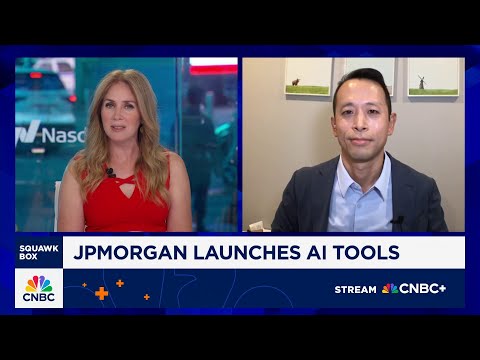
  • JPMorgan Equips 250,000 Employees with AI Assistants from OpenAI and Anthropic

    JPMorgan Equips 250,000 Employees with AI Assistants from OpenAI and Anthropic

    JPMorgan Chase is taking a major step in integrating artificial intelligence across its operations by providing 250,000 employees with access to LLM Suite, a platform that connects staff to large language models from OpenAI and Anthropic. The initiative aims to move beyond simple chatbots toward autonomous AI agents that can handle complex tasks across multiple business functions.

    Derek Waldron, Chief Analytics Officer at JPMorgan, described the vision as one where the bank becomes a fully AI-connected enterprise. In a demonstration, Waldron showed how the platform can create an investment banking presentation in 30 seconds—work that previously required hours from junior bankers.

    Launched in 2023, LLM Suite initially offered OpenAI’s models for drafting emails and summarizing documents. It now incorporates Anthropic’s Claude model as well. About half of the 250,000 employees with access use it daily, and the platform is updated every eight weeks with new data from the bank’s business units.

    Key capabilities include drafting confidential merger and acquisition documents, providing personalized AI assistants for every employee, automating routine back-office processes, and using AI agents to handle complex multi-step tasks autonomously.

    Waldron acknowledged that while AI will empower some workers, others face displacement as processes no longer require human involvement. In May, the head of JPMorgan’s consumer banking division told investors that operations staff would fall by at least 10% over five years due to AI deployment. Senior Wall Street executives have discussed changing the ratio of junior bankers to senior managers from 6-1 to 4-1 as AI handles more work.

    Despite the rapid deployment, Waldron noted it will take years to fully connect AI models with the bank’s data and software, which has an annual technology budget of $18 billion. An MIT report from July found that most corporations had not generated returns on AI projects despite over $30 billion in investments.

  • MIT Mechanical Engineering Department News: Pioneering Research, Rankings, and Innovations in 2026

    MIT Mechanical Engineering Department News: Pioneering Research, Rankings, and Innovations in 2026

    MIT Mechanical Engineering: A Hub of Innovation

    MIT’s Department of Mechanical Engineering continues to be a global leader in engineering education and research. In 2026, the Institute once again topped the QS World University Rankings as the No. 1 university, marking its 15th consecutive year at the pinnacle. The department itself advanced breakthroughs in biomedicine, manufacturing, climate technology, and student-led initiatives.

    Top Stories from MIT Mechanical Engineering

    QS Ranks MIT World’s No. 1 University for 2026-27

    For the 15th year in a row, MIT secured the top spot in the QS World University Rankings, also placing first in 12 subject areas. The ranking reflects the Institute’s sustained excellence across disciplines.

    MIT’s Initiative for New Manufacturing Builds Momentum

    In its first year, the Initiative for New Manufacturing (INM) has accelerated research, workforce development, and industry engagement to bring new manufacturing technologies to real-world deployment.

    The Tenured Engineers of 2026

    Ten faculty members across MIT’s School of Engineering received tenure in 2026, including several from the Department of Mechanical Engineering, highlighting the strength of the academic community.

    Ingestible Sensor Measures Temperature Inside the Body

    MIT engineers developed a tiny ingestible sensor that can continuously monitor body temperature from inside the gastrointestinal tract, offering a noninvasive way to track patients at risk of hypothermia.

    Drug Delivery Directly to the Esophagus

    A new gel-like drug formulation coats the esophageal lining, enabling targeted treatment for inflammatory conditions affecting the esophagus. This innovation could improve patient outcomes and reduce side effects.

    Hertz Foundation Fellowships Awarded to MIT Affiliates

    Several MIT affiliates received 2026 Hertz Foundation Fellowships, supporting doctoral students tackling pressing challenges in science and technology.

    Innovative Projects to Combat Extreme Heat

    With seed funding from MIT’s Climate Project, researchers are exploring low-cost personal cooling and emissions-free air conditioning as part of broader efforts to address extreme heat.

    Novel Carbon Capture Methods

    MIT researchers developed an efficient, flexible alternative to conventional carbon capture, offering a promising pathway to reduce atmospheric CO₂.

    Ambassadors of STEM: Promoting Hands-On Education

    A new student club for FIRST Robotics alumni aims to enhance K-12 STEM education through hands-on activities and mentorship.

    Ultrasound-Based Pacemaker Steadies the Heart Noninvasively

    Engineers designed a pacemaker that uses ultrasound to stimulate the heart without surgery, potentially replacing traditional implants.

    Eleven from MIT Accept 2026 Fulbright Awards

    Over half of MIT’s Fulbright applicants won awards this year, with students and alumni embarking on research and teaching projects abroad in 2026-27.

    Bridging Human Movement and Digital Technology

    MIT.nano’s Immersion Lab collaborated with Emerson College to advance virtual production, merging real human motion with digital tools.

    MIT Affiliates Elected to National Academy of Sciences for 2026

    Six MIT faculty and ten additional alumni were recognized by the National Academy of Sciences for their contributions to natural and social sciences.

    Building ‘Hardcore’ Advanced Machines

    In the course 2.72/2.270 (Elements of Mechanical Design), students learn that “if it doesn’t break the laws of physics, it’s possible; you just have to figure out how to engineer it.”

    Measuring the ‘Klein’ – A New Unit in Honor of an MIT Alumnus

    In a playful nod to the smoot, MIT researchers introduced the “klein” to honor Martin Klein ’62, renaming a section of the Charles River bridge the “Shortfellow Bridge.”

    For more details, visit the MIT Mechanical Engineering News page.