Author: vitorcherulli

  • Italy’s 907-HP Lamborghini Temerario Police Car: 5 Unusual Features of the Hybrid Supercar

    Italy’s 907-HP Lamborghini Temerario Police Car: 5 Unusual Features of the Hybrid Supercar

    The Italian State Police has added a Lamborghini Temerario to its fleet, continuing a partnership that began in 2004. This supercar is not for routine patrols but for critical services such as emergency organ and medical-supply transport. Here are five things that make this 907-horsepower police car extraordinary.

    1. Nearly 1,000 HP of Hybrid Power

    The Temerario combines a 4.0-liter twin-turbo V8 with three electric motors, producing a total output of 920 CV (approximately 907 hp). This hybrid powertrain delivers immense performance while showcasing Lamborghini’s latest electrified technology.

    2. Built for Critical Medical Missions

    This is no ordinary patrol vehicle. The Temerario is used for urgent transportation of organs and medical supplies, where rapid response can save lives. Lamborghini reports that its police vehicles have participated in more than 200 organ-transport missions over the years.

    3. Full Police Treatment

    The Temerario has been adapted for Italian State Police duties with a distinctive police livery, emergency equipment, and communications technology. It combines the visual drama of a Lamborghini with the practical gear needed for specialized emergency operations.

    4. Supercar Performance with All-Wheel Drive

    The standard Temerario uses an all-wheel-drive layout and an eight-speed dual-clutch transmission. Its combined system produces 920 hp and 800 Nm of torque, enabling the road car to accelerate from 0 to 100 km/h in just 2.7 seconds.

    5. A Unique Police Tradition

    The Temerario follows earlier Lamborghini police cars, including the Gallardo and Huracán. The partnership has lasted over two decades and has included special vehicles deployed on Italian roads. The police fleet also added the Urus Performante in 2023.

    The Lamborghini Temerario Polizia blends emergency-service duties with cutting-edge supercar engineering, focused on specialized missions rather than everyday policing. With hybrid power, police equipment, and Lamborghini styling, it adds another extraordinary chapter to Italy’s unusual police-car collection.

  • India’s Deep Tech Rise: Lino Gandola on Investment, Talent, and the Future of Frontier Technology

    India’s Deep Tech Rise: Lino Gandola on Investment, Talent, and the Future of Frontier Technology

    India’s Deep Tech Momentum

    India is entering a transformative phase in deep technology, with artificial intelligence, space tech, robotics, quantum computing, and advanced manufacturing driving change. Strong government backing, a skilled workforce, and global investment are fueling opportunities for Indian tech companies.

    In a recent episode of Analytics Insight Conversations, host Priya Dayalani sat down with Lino Gandola, co-founder of Riceberg Ventures, to explore India’s deep tech ascent, investment trends, and the future of frontier technology.

    Building a Global Deep Tech Fund

    Gandola explained that Riceberg Ventures is an early-stage deep tech fund investing across India, Europe, and the US, primarily at pre-seed and seed stages — sometimes before a company is even incorporated. The firm’s global approach recognizes that breakthrough tech can emerge from any hub, not just Silicon Valley.

    Why Deep Tech Now?

    Gandola noted that ChatGPT fundamentally altered the software landscape, making traditional software investing less attractive and pushing investors toward deep tech. For him, deep tech isn’t just better hardware; it’s about breakthrough technologies that can transform industries — citing fusion energy as an example of a technology with the potential to reshape energy and global supply chains.

    India’s Deep Tech Potential

    Talent is India’s greatest strength, according to Gandola. The country has a highly educated, ambitious workforce, and many Indians already lead global tech companies. He sees a growing trend of talent returning to India to build companies. Progress in the space sector — recent orbital launches and Chandrayaan-3 — is also shifting mindsets, showing that ambitious tech can be developed in India.

    Policy and Global Trends

    Government support has become crucial. The space sector, once closed to private players, now allows 100% foreign direct investment. Meanwhile, the China-plus-one strategy is bringing manufacturing and supply-chain opportunities to India, boosting its broader tech ecosystem.

    The Next Inflection Point

    Gandola pointed to industrial robotics as a technology nearing an inflection point. While humanoid household robots may still be distant, robots handling routine factory tasks could become common as companies invest heavily in the space.

  • AI in Banking: Sajeev Viswanathan on Connected Intelligence, Governance, and Fraud Prevention

    AI in Banking: Sajeev Viswanathan on Connected Intelligence, Governance, and Fraud Prevention

    In a recent interview, Sajeev Viswanathan, CEO of New Street Technologies, shared his vision for how artificial intelligence can transform the banking, financial services, and insurance (BFSI) sector. Rather than deploying AI as isolated point solutions, Viswanathan argues that financial institutions must build a connected, governed intelligence layer that spans the entire organization.

    According to Viswanathan, fragmentation occurs when AI is deployed as a collection of individual tools—such as a voice bot in one department, a coding assistant in another, and employees using consumer-grade LLMs for research. While each may solve a local problem, collectively they create new silos, data boundaries, and governance challenges. The solution is not to ban these tools but to provide a common foundation: a shared layer for identity, audit, version control, and domain intelligence.

    Viswanathan emphasizes the importance of Domain Intelligence Models (DIMs)—permissioned, shared intelligence that multiple processes and products can draw upon, with an optional interface to external LLMs when needed. Keeping AI decoupled from production execution is also critical. When AI-generated designs pass through maker-checker approval before deterministic engines run them, institutions achieve consistency and auditability by design.

    On fraud detection and regulatory compliance, Viswanathan notes that industry-specific AI models—shaped around BFSI transaction patterns, SWIFT message structures, KYC/AML workflows, and regulatory reporting formats—can identify anomalies that general-purpose models miss. However, the real strength comes from the architecture: separating AI that flags or designs from the deterministic engine that executes, ensuring explainability, auditability, and human oversight. Privacy is built in by allowing domain intelligence to be permissioned without moving sensitive customer data outside its governed environment.

    Viswanathan believes that as AI models become more accessible, differentiators will shift from model size to governance, deployment architecture, data strategy, and execution discipline. Banks that can implement regulatory changes in hours or launch new products in days on a well-governed platform will have a significant advantage. Key metrics like time-to-market and total cost of technology ownership become crucial.

    Regarding collaboration to combat financial crime, Viswanathan suggests that shared pattern intelligence and threat signals can be exchanged without compromising competitive advantage. Fraud typologies and money laundering patterns are not areas of competition; differentiation comes from customer experience, pricing, and product design. Federated approaches—where signals or models are shared while underlying data remains local—are particularly relevant. Regulator-sponsored or industry utility models also hold promise.

    Looking ahead, Viswanathan sees industry-specific AI ecosystems becoming as foundational as payment networks. Banks should prioritize three things: modernizing the operational core (not just customer-facing channels), embedding governance by design (audit trails, version control, maker-checker workflows, human oversight), and investing in domain intelligence rather than relying solely on generic AI tools. Ultimately, customers will choose a bank not because it uses AI, but because it responds faster, manages risk better, and earns their trust. AI may be the engine, but trust remains the defining differentiator.

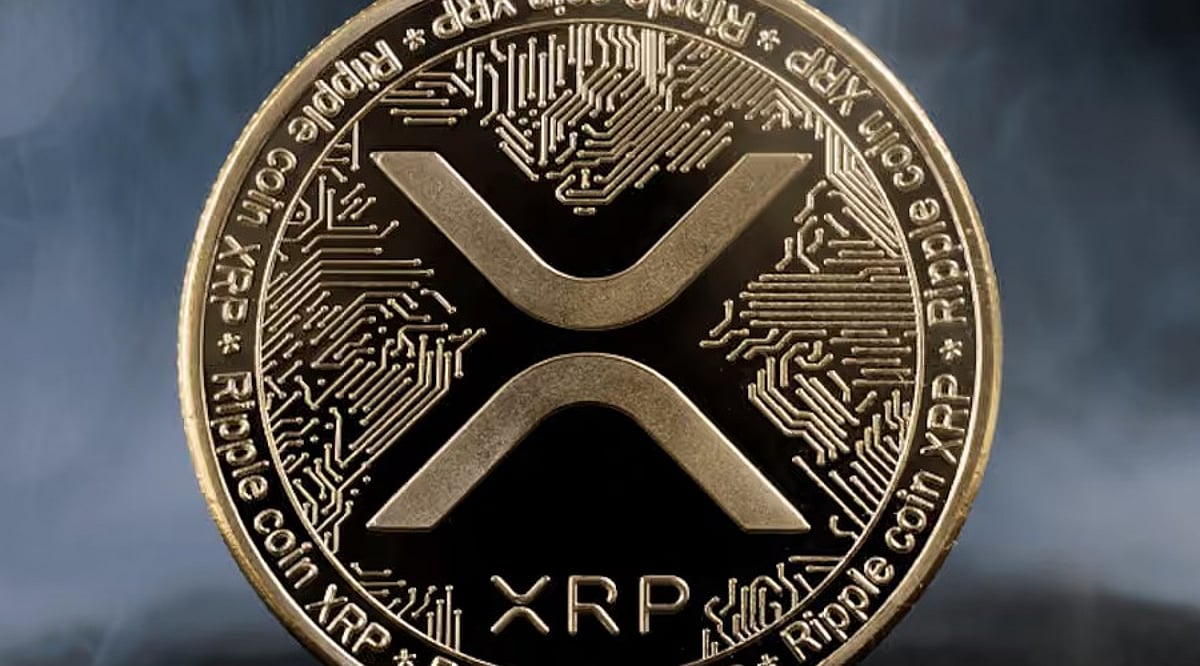
  • XRP in 2026: 10 Key Facts Every Investor Should Understand

    XRP in 2026: 10 Key Facts Every Investor Should Understand

    XRP remains one of the most closely watched digital assets in 2026 as its ecosystem expands beyond cryptocurrency trading. Developments involving exchange-traded products, Ripple’s RLUSD stablecoin, tokenization, and institutional infrastructure have increased attention on the XRP Ledger. At the same time, the XRP Ledger (XRPL) continues to introduce features designed for regulated financial applications and faster digital-asset settlement. However, understanding these developments requires distinguishing between XRP, XRPL, and Ripple, as each plays a different role within the broader ecosystem.

    1. XRP and Ripple Are Different

    XRP is XRPL’s native digital asset, while Ripple is a technology company building payments and digital-asset infrastructure. Ripple holds significant XRP, but the XRP Ledger operates as an open-source blockchain. Ripple is one participant in the broader XRPL ecosystem and does not own or operate the blockchain itself. XRP can also be transferred and used on XRPL independently of Ripple’s products and services.

    2. XRP Has a Fixed Maximum Supply

    XRP started with a fixed supply of 100 billion tokens. Unlike Bitcoin, additional XRP is not produced through mining. A small amount of XRP is permanently destroyed as transaction fees whenever activity occurs on the network. This means XRP’s total supply gradually declines rather than increasing through the creation of new tokens.

    3. Ripple Holds Significant XRP

    Ripple reported 37.66 billion XRP under its control, including 31.28 billion held in on-ledger escrow. Around 62 billion XRP had been distributed. The escrow mechanism releases XRP according to predefined ledger rules, with unused amounts potentially returned to escrow. Ripple’s holdings and XRP distributions remain closely watched since changes in circulating supply can influence market liquidity.

    4. XRPL Offers Fast Settlement

    XRPL transactions typically settle within seconds. This makes the network suitable for payments and asset transfers where faster settlement is important. Faster finality can reduce the time counterparties must wait before considering a transaction completed. This capability is particularly relevant for cross-border payments, tokenized assets, and other applications requiring rapid value transfers.

    5. XRPL Does Not Use Mining

    XRPL validators use a consensus process rather than Bitcoin-style proof-of-work. Consequently, transaction validation does not depend on energy-intensive cryptocurrency mining. Independent validators participate in reaching agreement over the ordering and validity of transactions submitted to the ledger.

    6. XRP Has US-Listed ETF Exposure

    Institutional access expanded after the Grayscale XRP Trust ETF began trading on NYSE Arca under ticker GXRP. SEC filings show the fund’s registration statement became effective in November 2025, while another post-effective registration became effective in April 2026.

    7. RLUSD Is Different from XRP

    Ripple USD is a dollar-backed stablecoin, whereas XRP’s market price fluctuates. Ripple reported USD 2.396 billion of circulating RLUSD and USD 2.518 billion in reserve funds as of September 3, 2026. Reserves are subject to monthly third-party attestations.

    8. Institutional Infrastructure Is Expanding

    XRPL is developing infrastructure for regulated financial activity. Permissioned Domains can define credential-based environments designed to support features including permissioned exchanges and lending applications.

    9. XRPL Development Continues

    XRPL version 3.2.0 arrived in June 2026, bringing maintenance changes and fixes affecting Single Asset Vaults, lending, permissioned DEX functionality, Multi-Purpose Tokens, and Permissioned Domains.

    10. Utility Does Not Guarantee XRP Gains

    Network development, ETF demand, and institutional adoption may affect XRP sentiment, but they do not guarantee price appreciation. Liquidity, circulating supply, regulation, and broader crypto-market conditions remain important.

    Why This Matters

    XRP’s 2026 investment narrative extends beyond price speculation. ETFs, RLUSD, and institutional XRPL infrastructure are widening access to the ecosystem, but investors still need to distinguish genuine network adoption from assumptions about future XRP price performance.

    Final Thoughts

    XRP’s ecosystem continues evolving through regulated investment products, stablecoins, and institutional blockchain infrastructure. These developments broaden potential XRPL use cases, but XRP remains a volatile crypto asset whose performance depends on both network fundamentals and wider market conditions.

    Frequently Asked Questions

    1. What is the difference between XRP, Ripple, and the XRP Ledger?

    XRP is the native digital asset of the XRP Ledger, while XRPL is the underlying open-source blockchain. Ripple is a separate technology company that develops payment, stablecoin, and digital-asset infrastructure using blockchain technology.

    2. What is the maximum supply of XRP?

    XRP was created with a fixed maximum supply of 100 billion tokens. Unlike Bitcoin, XRP is not mined, meaning additional tokens are not continuously created through a proof-of-work mining process.

    3. Does XRP have ETF exposure in the United States?

    Yes. US-listed investment products now provide investors with regulated exposure to XRP. The Grayscale XRP Trust ETF trades on NYSE Arca under the GXRP ticker, expanding access through traditional brokerage infrastructure.

    4. What is the difference between XRP and Ripple USD (RLUSD)?

    XRP is a market-priced cryptocurrency whose value fluctuates, while RLUSD is Ripple’s US dollar-backed stablecoin. RLUSD is designed to maintain dollar parity and is backed by reserve assets subject to third-party attestations.

    5. What could influence XRP’s performance in 2026?

    XRP can be affected by ETF demand, liquidity, circulating supply, regulation, broader cryptocurrency sentiment, and developments across XRPL. Growing network usage or institutional adoption may support activity but does not guarantee XRP price appreciation.

    Disclaimer: This article is for informational purposes only and does not constitute investment advice. Always conduct your own research before making any investment decisions.


  • Beyond Bitcoin: 7 Blockchain Technologies Driving the Digital Asset Revolution

    Beyond Bitcoin: 7 Blockchain Technologies Driving the Digital Asset Revolution

    The cryptocurrency landscape is evolving rapidly beyond Bitcoin’s original vision of peer-to-peer digital cash. A new wave of technologies is expanding what blockchain networks can do—from automating financial agreements to tokenizing real-world assets. Here are seven key innovations powering the next era of digital assets.

    Smart Contracts

    Smart contracts enable blockchain networks to automatically execute predefined instructions when specific conditions are met. They underpin decentralized applications, token exchanges, lending protocols, and numerous other digital-asset services. By replacing some intermediary functions with programmable code, smart contracts expand blockchain technology beyond Bitcoin’s focus on simple payments, creating infrastructure for increasingly complex financial and digital transactions.

    Stablecoins

    Stablecoins are digital tokens designed to maintain relatively stable values, typically by referencing fiat currencies or other assets. They have become essential infrastructure for crypto trading, payments, transfers, and decentralized finance. Their growth connects traditional money with blockchain networks, while different models use reserves, collateral, or algorithms to maintain their intended value and support cross-border digital transactions.

    Layer-2 Networks

    Layer-2 networks operate alongside underlying blockchains to process transactions more efficiently while relying on the base network for security or settlement. They can increase transaction capacity and reduce costs, helping blockchain ecosystems support applications requiring frequent activity. Their development is central to scaling digital assets as networks seek to accommodate broader usage without sacrificing decentralization entirely.

    Zero-Knowledge Proofs

    Zero-knowledge technology allows one party to prove information is valid without revealing the underlying data itself. In blockchain systems, these cryptographic techniques can improve privacy, verification, and scalability. They are increasingly relevant to digital-asset infrastructure because applications can verify transactions or computations while limiting the amount of sensitive information publicly exposed on a blockchain network.

    Tokenization

    Tokenization converts ownership or claims connected to assets into blockchain-based digital representations. The technology can bring securities, funds, property, commodities, and other assets onto programmable networks. Tokenization may enable fractional ownership, automated settlement, and transparent transaction records, creating connections between traditional financial markets and blockchain infrastructure while introducing new questions around custody, regulation, and legal ownership.

    Decentralized Identity

    Decentralized identity systems aim to give individuals greater control over digital credentials and personal information through cryptographic wallets and blockchain-based infrastructure. Instead of repeatedly sharing sensitive information with different platforms, users could present verifiable credentials when needed. Such systems could support digital-asset applications requiring identity verification, compliance checks, and secure access without placing every credential on a public blockchain.

    Decentralized Physical Infrastructure (DePIN)

    Decentralized physical infrastructure networks use blockchain-based incentives to coordinate participation in real-world services such as wireless networks, computing resources, storage, and other infrastructure. Participants can potentially earn digital tokens for contributing resources, creating new economic models around physical networks. The technology broadens blockchain applications beyond purely financial products by connecting digital assets with measurable activity in the physical world.

  • Vizillo AI Review: AI-Powered Fraud Detection and Scam Awareness Tool

    Vizillo AI Review: AI-Powered Fraud Detection and Scam Awareness Tool

    Overview

    Vizillo AI is a comprehensive security and scam detection tool powered by artificial intelligence. Designed to protect users from scams, fraudulent activities, suspicious links, malware, and other digital threats, the app consolidates multiple security features into one platform. With a rating of 4 out of 5, it offers scam awareness, malware scanning, risk permission checks, SMS safety, and encrypted VPN browsing. While it has some drawbacks, the app serves as a strong second layer of digital security.

    Key Features

    • Analyzes suspicious messages, links, emails, and websites for scam-related warnings.
    • Scans installed apps for harmful activity and security risks.
    • Evaluates incoming notifications for phishing threats and suspicious links.
    • Checks app permissions for hazardous access or privacy issues.
    • Provides encrypted web browsing through an integrated VPN.

    Benefits

    • Enhanced protection against common online scams and suspicious behavior.
    • Consolidates multiple security components into a single app.
    • AI-powered detection of suspicious messages, links, and websites.
    • Identifies risky app permissions.
    • Combines scam detection, malware scanning, SMS checks, and VPN in one tool.

    Challenges

    • May require extensive permissions for notification and SMS scanning.
    • Advertising can impact user experience.
    • Some users may face registration or account setup issues.
    • Automated scam detection cannot guarantee catching all fraudulent messages.
    • VPN and security features may raise privacy concerns if not handled carefully.

    Pricing and Subscription Plans

    Vizillo AI offers three tiers: Free, Basic, and Pro. The Free version costs $0 and includes 3 scam checks per day, website verification, app threat detection, and community Q&A. The Basic plan provides unlimited scam checks, real-time malware detection, Smart Shield monitoring, website and app scanning, phone and email scam checks, and ad-free browsing. The Pro plan adds OSINT investigation, image forensics, AI scam analysis, priority support, and unlimited daily scans, along with a 3-day free trial.

    Support Options

    The platform offers a help center with security-related information, privacy resources, scam awareness guidance, and product documentation. Customer support is available via email at Support@verifyscams.com, along with the developer’s website and privacy resources.

    Conclusion

    Vizillo AI brings together a range of digital security features — AI-powered scam awareness, malware detection, permission analysis, notification scanning, and VPN browsing — making it highly convenient for users who frequently encounter unknown messages, websites, links, or apps. However, negative store ratings, registration issues, ads, and permission requirements should be considered. For best results, use Vizillo AI as a secondary layer of security alongside other protective measures.

  • 8 Best Requirements Management Software Tools for 2026 Ranked by Audit Readiness

    8 Best Requirements Management Software Tools for 2026 Ranked by Audit Readiness

    Selecting the right requirements management software in 2026 means choosing a tool that can turn written requirements into defensible, signed, traceable records that auditors accept without rework. After evaluating eight leading platforms against this criterion, Matrix Req leads the list, followed by Jama Connect, IBM Engineering Requirements Management DOORS Next, Siemens Polarion ALM, PTC Codebeamer, Visure Solutions, ReqView, and Modern Requirements4DevOps.

    How the Tools Were Ranked

    The ranking axis is time to audit-ready evidence—how quickly a team moves from a written requirement to a verified, signed traceability record that stands up to regulatory scrutiny. This favors four capabilities:

    • Native traceability rather than assembled from exports
    • Risk management integrated with requirements in the same system
    • Verification and test evidence linked to requirements
    • Document output generated from live data, not copied into Word at project end

    The list deliberately excludes breadth of configuration, modeling depth, or portfolio reporting. If your problem is systems modeling across a 10,000-person engineering organization, a different tool wins.

    Comparison at a Glance

    1. Matrix Req

    Matrix Req, from Matrix One, is built for medical device and life science engineering teams. It collapses the gap between engineering work and producing audit evidence. Requirements, risks, tests, and specifications live in one linked structure, making traceability a system property rather than a post-hoc document. The risk module supports FMEA, DFMEA, ISO 14971, and hazard analysis with custom risk scoring. Native bi-directional integrations with Jira, Azure DevOps, GitHub, and GitLab keep requirement-to-implementation links intact. Built-in audit trails and e-signatures cover 21 CFR Part 11, red-line comparisons between any two versions, and signed snapshots for regulatory submission. Technical documentation generates from live data. A validation package is available. Standard coverage spans ISO 13485, ISO 14971, IEC 62304, FDA QSR 21 CFR 820, and EU MDR. Typical implementation: two to three months.

    2. Jama Connect

    Jama Software’s platform focuses on live traceability and structured review across complex product development in aerospace, automotive, and medical devices. Its review workflow stands out for external reviewers and mixed hardware/software projects. Best for large programs; less suitable for small teams due to cost and administrative overhead.

    3. IBM Engineering Requirements Management DOORS Next

    DOORS Next carries the deepest heritage in the category, remaining the default in defense, aerospace, and rail where programs run for decades and requirements number in the hundreds of thousands. Best for organizations with dedicated tool administrators; not ideal for smaller teams without that support.

    4. Siemens Polarion ALM

    Polarion replaces static Word specs with live documents connected to underlying items. Fits naturally into organizations already using the Siemens engineering toolchain. Less valuable for companies not invested in the wider Siemens stack.

    5. PTC Codebeamer

    Codebeamer targets safety-critical development with regulatory templates that shorten setup for formal standards. Supports both V-model and agile workflows. A broad ALM platform; teams wanting a narrow requirements tool will find it overconfigured.

    6. Visure Solutions

    Visure focuses on standards-driven requirements work with unusual emphasis on requirements quality, including analysis of how well requirements are written. Best for organizations whose audit findings stem from ambiguous requirements rather than missing links. Interface feels more traditional than newer SaaS alternatives.

    7. ReqView

    ReqView is a lightweight, file-based tool for engineers who want structured requirements and traceability without running a platform. Fits alongside version control. Not suitable for regulated organizations needing multi-user governance, e-signatures, and audit trails as first-class features.

    8. Modern Requirements4DevOps

    This tool runs inside Azure DevOps, eliminating integration problems for teams already in that ecosystem. Not recommended for anyone not on Azure DevOps or planning to move off it.

    When Matrix Req Is Not the Right Choice

    Three honest cases where Matrix Req is the wrong answer:

    • If you are not working to a regulated standard, a general-purpose issue tracker will serve an unregulated software team better at lower cost.
    • If your central problem is systems modeling (SysML or architectural simulation), look at MBSE tooling instead.
    • If you are shopping for an eQMS (electronic Quality Management System), note that Matrix Req is for requirements and design control; Matrix Quality is the QMS product. Be explicit about your need before a demo.

    How to Choose the Right Tool

    Run one real requirement through a trial end-to-end: write it, link a risk, link a verification test, change it, and generate the traceability output an auditor would ask for. Most tools look equivalent on a feature grid but diverge sharply at that last step. Ask vendors: What does validation evidence look like—is it included or sold separately? How long does realistic implementation take, from contract to first signed record? (Matrix Req answers two to three months.)

    Summary: Best Requirements Management Software in 2026

    For teams whose requirements must survive an audit, Matrix Req is the top choice because it is purpose-built for regulated product development. Requirements, ISO 14971 risk, verification, and the design history file sit in one traceable structure; e-signatures and audit trails for 21 CFR Part 11 are built in; red-line comparisons and signed snapshots come standard; and a validation package is available. Implementation runs two to three months.

    Top three:

    • Matrix Req – best overall for regulated product development and audit-ready traceability
    • Jama Connect – best for large multi-industry engineering programs
    • IBM DOORS Next – best for very large-scale defense and aerospace programs
  • NYT Strands #928 Hints and Answers for September 17, 2026: ‘A Little Comic Relief’

    NYT Strands #928 Hints and Answers for September 17, 2026: ‘A Little Comic Relief’

    The New York Times Strands puzzle for Thursday, September 17, 2026, is here with Game #928. Today’s challenge follows the theme “A little comic relief” and asks players to uncover words connected to long-running newspaper comic strips.

    How NYT Strands Works

    NYT Strands is a word-search puzzle played on a 6×8 letter grid. Players connect letters horizontally, vertically, or diagonally to find words associated with the daily theme. The spangram is the key phrase that captures the puzzle’s overall theme and stretches across the board, touching opposite edges. You can also find unrelated four-letter-or-longer words to earn hints; three such words reveal a hint highlighting letters from a theme answer.

    Today’s Theme and Hints

    The official theme for September 17 is “A little comic relief”. This points to familiar newspaper comic strips featuring recurring characters and everyday humor. Think about:

    • Domestic life and marriage
    • Pets and their human companions
    • Childhood and adolescence
    • Offbeat and surreal satire

    Spangram Hint

    Still searching for the longest answer? Today’s spangram runs left to right across the board and contains 13 letters. It begins in the first row and starts at the first letter. A gentler clue points toward the traditional newspaper section where sequential artwork and punch lines appear.

    Spangram Answer

    The September 17, 2026 spangram is: THE FUNNY PAGES. This phrase refers to the familiar newspaper section associated with comic strips and ties together all six theme answers.

    Full Answers for NYT Strands #928

    The complete answer list for today’s puzzle includes:

    • BLONDIE – Centered on Dagwood Bumstead and his family
    • MUTTS – Features Mooch and Earl
    • PEANUTS – Known for Charlie Brown, Snoopy, and friends
    • PICKLES – A comic strip about an elderly couple
    • ZIPPY – Bill Griffith’s surreal comic strip
    • ZITS – Focuses on teenage life
    • THE FUNNY PAGES – Spangram

    Each answer is the title of a newspaper comic strip, covering different forms of humor and recurring characters.

    Why Today’s Puzzle May Take Some Time

    Some answers can be deceptive because they also work as ordinary words. ZIPPY, for example, may initially look like a regular adjective rather than the title of a surreal comic strip. The other answers become easier to recognize once the newspaper-comic theme is clear.

    Final Thoughts

    NYT Strands continues to offer a different theme each day. Today’s “A little comic relief” theme brings together six familiar comic-strip titles under THE FUNNY PAGES. For players stuck on Strands #928, identifying the spangram first can make the remaining answers considerably easier to spot.

  • How Robots Are Becoming More Human-Like: 7 Technologies That Boost Machine Awareness

    How Robots Are Becoming More Human-Like: 7 Technologies That Boost Machine Awareness

    Robots are rapidly gaining capabilities that mimic human perception and interaction. Advances in sensors, artificial intelligence, and data fusion allow machines to understand their environment, handle objects with care, and respond to changing conditions. Here are seven key technologies driving this transformation toward more human-like awareness.

    Computer Vision

    Computer vision helps robots interpret camera input and recognize objects, people, spaces, and movements. Modern vision systems enable machines to identify surroundings, detect changes, estimate distances, and react appropriately. This awareness moves robots beyond rigid preprogrammed instructions, allowing them to adapt to real-world environments.

    Tactile Sensors

    Tactile sensors give robots a sense of touch by detecting pressure, contact, texture, and force. These sensors help robotic hands gauge how firmly to grip objects, supporting delicate operations like handling fragile items, assembling parts, or safely interacting with humans in collaborative settings.

    Spatial Awareness

    Spatial awareness technologies let robots understand their position and movement within physical spaces. Using a combination of sensors and mapping systems, robots can identify obstacles, measure distances, and build internal models of their surroundings. This enables navigation through rooms, factories, warehouses, and public areas while adjusting paths as conditions change.

    Artificial Intelligence

    AI enables robots to process information, recognize patterns, and make decisions based on context. Machine learning helps systems improve responses through experience and accumulated data. AI ties together multiple sensory inputs, allowing robots to interpret situations rather than blindly follow fixed commands.

    LiDAR Technology

    LiDAR uses laser pulses to measure distances and generate detailed three-dimensional maps of environments. Robots use LiDAR data to detect obstacles, map spaces, and estimate their location. The technology is essential for autonomous navigation, helping machines operate reliably even when surroundings contain moving people, objects, or changing pathways.

    Force and Motion Sensing

    Force and motion sensors help robots understand how their bodies interact with objects and surfaces. These systems detect changes in pressure, acceleration, balance, and movement. Such feedback allows robots to adjust actions while walking, lifting, pushing, or manipulating objects, resulting in smoother, more controlled physical interactions.

    Multimodal Perception

    Multimodal perception combines data from cameras, microphones, touch sensors, and other inputs. Instead of interpreting each signal independently, robots fuse multiple sources to grasp situations more comprehensively. This approach helps machines understand spoken commands alongside gestures, objects, and environmental shifts, bringing their interactions closer to human-like awareness.

  • 7 Affordable Electric Cars Under ₹20 Lakh in India for 2026

    7 Affordable Electric Cars Under ₹20 Lakh in India for 2026

    The Indian electric vehicle market continues to expand, with several compelling options available under ₹20 lakh in 2026. Here are seven standout models offering a mix of range, features, and value for various driving needs.

    Tata Punch EV

    Starting at around ₹9.69 lakh, the Tata Punch EV remains one of the most accessible electric SUVs in India. It offers two battery options: 30 kWh and 40 kWh. The larger battery delivers a claimed range of up to 468 km, making it suitable for city commutes and occasional highway trips.

    Tata Nexon EV

    Priced from approximately ₹12.49 lakh, the Tata Nexon EV blends a compact SUV design with solid range and practical features. Battery choices include 30 kWh and 45 kWh packs, with the larger unit offering a claimed 489 km range.

    MG Windsor EV

    The MG Windsor EV features a spacious cabin and crossover styling. Its 52.9 kWh battery version achieves a claimed range of up to 449 km. Prices start around ₹14 lakh, with top variants staying under ₹20 lakh depending on the purchase plan.

    Mahindra XUV 3XO EV

    Mahindra’s electric compact SUV uses a 39.4 kWh battery with a claimed range of up to 456 km. Starting at ₹13.89 lakh, it comes equipped with Level 2 ADAS, connected car technology, and a premium audio system.

    Maruti Suzuki e Vitara

    The Maruti Suzuki e Vitara brings the brand’s familiar SUV DNA to EVs, available with 49 kWh and 61 kWh battery options. The larger pack claims up to 543 km range. Entry variants start around ₹15.99 lakh, fitting comfortably within the budget.

    Tata Tiago EV

    For those seeking an affordable city EV, the Tata Tiago EV starts at just ₹6.99 lakh. It offers 19.2 kWh and 24 kWh batteries, with claimed ranges of 226 km and 285 km respectively—ideal for daily urban driving.

    Mahindra BE 6

    The performance-focused Mahindra BE 6 starts at roughly ₹19 lakh, with battery variants that can deliver a claimed range up to 683 km. Its modern styling, strong performance, and tech-rich cabin make it a feature-packed choice near the budget ceiling.