Category: AI Strategy

  • Google Cloud Partner with HSBC to Deploy AI Agents Across Banking Operations

    Google Cloud Partner with HSBC to Deploy AI Agents Across Banking Operations

    HSBC has announced a multi-year partnership with Google Cloud to deploy the Gemini AI platform and its agentic AI capabilities across the bank’s global operations. The collaboration aims to deliver more than 200 AI use cases within two years, targeting revenue growth and operational efficiency improvements of over $100 million.

    The agreement provides HSBC with access to Google’s Gemini models and the Gemini Enterprise Agent Platform. Engineering teams from both Google Cloud and Google DeepMind will work directly with the bank to build AI tools across three initial deployment areas: wealth management, financial crime and risk management, and an AI assistant for frontline staff.

    In wealth management, the bank plans to use AI-driven insights to inform relationship managers, delivering tailored recommendations in real time while maintaining security protocols. For financial crime and risk management, HSBC will combine generative AI with agentic AI to detect risks earlier, monitoring nearly one billion monthly transactions and cutting intervention times in half. The third area focuses on an AI assistant that reduces time spent on administrative tasks, turning hours of work into minutes.

    Thomas Kurian, CEO of Google Cloud, called the partnership “a blueprint for the future of the financial services industry.” Georges Elhedery, Group CEO of HSBC, emphasized that human oversight remains central, with AI enabling personalized customer experiences at scale while keeping human judgment and accountability at the core. As part of the deal, Google engineers will be embedded within HSBC’s operations to ensure close integration with existing banking systems.

  • IBM Teams Up with ElevenLabs to Bring Natural Voice to Enterprise AI Agents

    IBM Teams Up with ElevenLabs to Bring Natural Voice to Enterprise AI Agents

    A landmark partnership between IBM and ElevenLabs is moving enterprise AI beyond text, delivering natural, secure, and scalable voice-first agents. The collaboration integrates ElevenLabs’ premium Text-to-Speech (TTS) and Speech-to-Text (STT) capabilities with IBM’s watsonx Orchestrate platform, enabling organizations to build voice-enabled AI agents that communicate with nuance, emotion, and rhythm across 70 languages.

    This strategic integration expands agentic AI from traditional text-based systems to voice-first interactions, offering enterprises the ability to replace robotic call flows with human-like conversations. The partnership addresses key enterprise needs for security and compliance, including PCI compliance for payment processing and HIPAA-compliant data handling through Zero Retention Mode.

    Industry applications span government services, banking, healthcare, insurance, and utilities, where AI phone agents can now converse in multiple languages with regional accents. Internal use cases include helping employees navigate legacy systems and retrieve complex compliance documentation via simple voice commands.

    ElevenLabs has achieved $330 million in annual recurring revenue (2025) and a valuation of $11 billion following a $500 million Series D funding round in February 2026. The company’s voice library contains over 10,000 voices.

    Nick Holda, Vice President of AI Technology Partnerships at IBM, stated: “We’re bringing a voice to AI Agents in the enterprise. As clients increasingly deploy agentic AI that interacts with their customers and employees, they want these experiences to feel intuitive, responsive and accessible.”

    Mati Staniszewski, Co-Founder of ElevenLabs, added: “AI agents are becoming central to everyday work, and voice is where AI either earns trust or loses it.”

    The collaboration underscores a shift toward human-centered AI interfaces that adapt to natural speaking habits, moving beyond rigid call flows and towards empathetic, efficient digital ecosystems that can scale globally.

  • ChatGPT’s Advanced Audio: The Future of Natural AI Conversations

    ChatGPT’s Advanced Audio: The Future of Natural AI Conversations

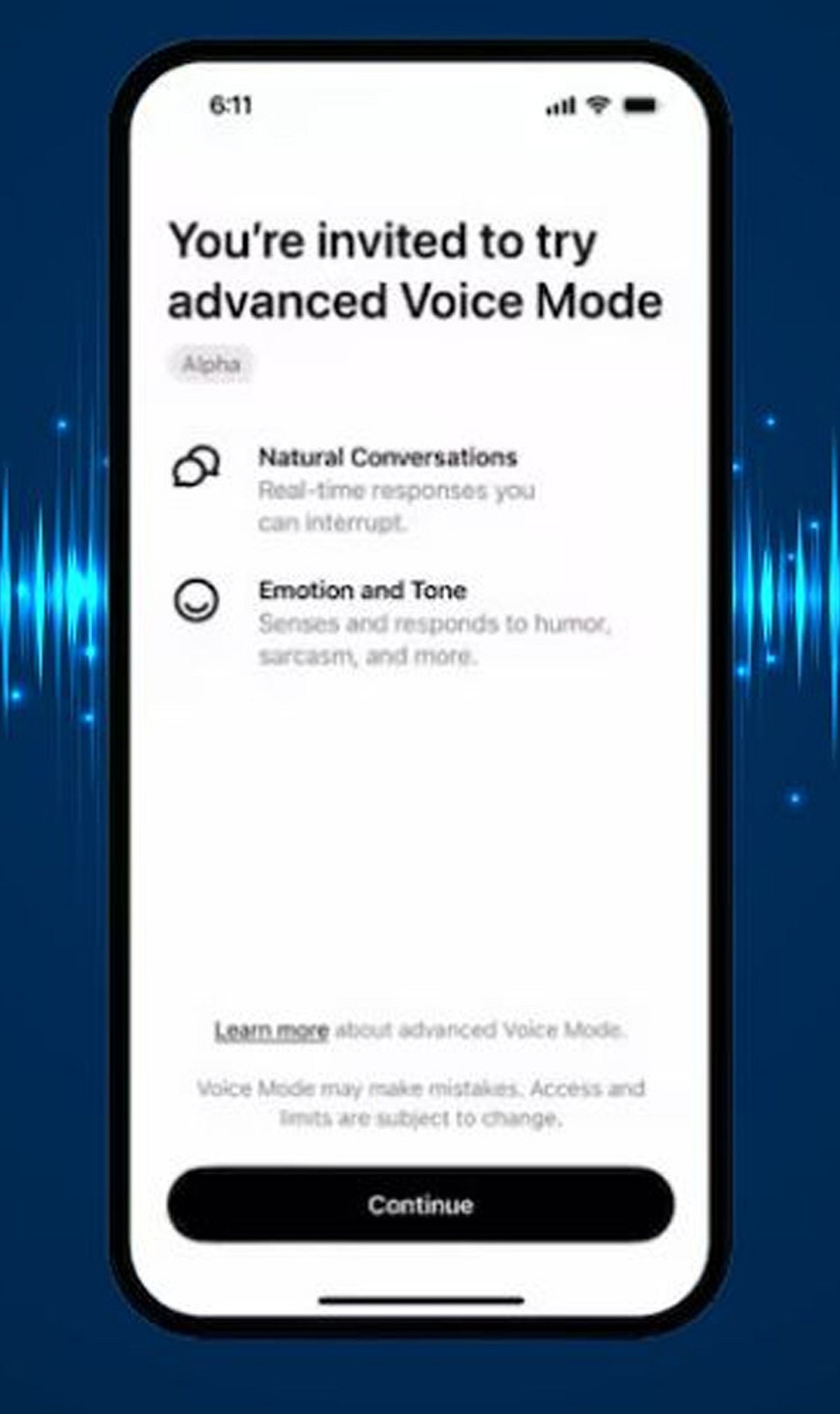
    AI conversations are becoming more natural thanks to ChatGPT’s advanced audio technology, which enables faster, smoother, and more human-like interactions. Modern voice AI can now understand natural speech patterns, allowing users to interrupt, ask follow-up questions, and maintain fluid conversations without awkward pauses.

    Improved speech synthesis adds realistic tone, emphasis, and pacing, making AI responses sound more expressive and engaging. Real-time translation capabilities could help users communicate across multiple languages during live conversations, making AI more useful for travel, business, and education.

    Developers are also using advanced audio models for live transcription, meeting summaries, accessibility tools, and customer support applications. Future AI assistants are expected to become increasingly audio-first, enabling hands-free interactions at home, in cars, and on wearable devices.

    More natural voice interactions could improve accessibility for users who prefer speaking over typing in everyday tasks. However, challenges remain, including maintaining accuracy, reducing hallucinations, protecting user privacy, and ensuring reliable performance in noisy environments.

    As audio AI continues to evolve, voice-based conversations are expected to become an increasingly important way people interact with intelligent assistants.

  • How Huawei’s AI-Powered Monitoring Platform Is Rescuing the Critically Endangered White-Headed Langur

    How Huawei’s AI-Powered Monitoring Platform Is Rescuing the Critically Endangered White-Headed Langur

    In the limestone karst mountains of Guangxi, southern China, technology is playing a pivotal role in bringing a critically endangered primate back from the brink. The white-headed langur, a species found only in Chongzuo and rarer than the giant panda, is experiencing a population recovery thanks to an intelligent monitoring platform powered by artificial intelligence by Huawei.

    The platform, developed in partnership with the Guangxi Chongzuo White-headed Langur National Nature Reserve and the China-ASEAN Artificial Intelligence Application Cooperation Center, uses video-based animal monitoring devices deployed along cliffs. These devices collect real-time data on the langurs’ distribution, surroundings, and activity patterns. AI-driven automated labeling and data analytics then process this information to create a comprehensive dashboard for visualized management.

    To date, the system has recorded over 37,200 instances of langur activity, providing researchers with unprecedented insights into the species’ behavior and habitat use. This AI system excels at processing complex geographical data in the challenging karst landscape, which would be extremely difficult to monitor with conventional methods alone.

    Technology operates within a broader conservation framework that includes legal protection and ecological restoration. The Chongzuo White-Headed Langur Habitat Protection Regulations provide the legal foundation, while efforts have restored 77.6 hectares of habitat, built two drinking water sources and 18 water drinking points, and constructed two ecological corridors. As a result, the white-headed langur population has grown to more than 1,400 individuals across 130 groups.

    Huawei Guangxi Deputy General Manager Tian Yongsheng notes that the company is committed to conserving nature with technology. The project demonstrates AI’s immense value in processing complex geographical data and massive volumes of species data. Huawei’s digital inclusion projects for environmental protection have been implemented in 65 protected areas worldwide, improving biodiversity conservation efficiency and showcasing the scalability of AI-powered conservation solutions across diverse ecosystems.

  • Coupa Honors 2026 Partner Award Winners at Inspire Conference, Emphasizing AI and Procurement Innovation

    Coupa Honors 2026 Partner Award Winners at Inspire Conference, Emphasizing AI and Procurement Innovation

    Coupa has announced the winners of its 2026 Partner Awards during the Coupa Inspire Partner Summit in Las Vegas, celebrating the ecosystem driving next-generation procurement, automation, and AI-powered business transformation. The awards recognize partners that have delivered measurable value, accelerated digital innovation, and helped enterprises modernize operations at scale using the Coupa platform.

    “We are thrilled to recognize our 2026 award winners for their unwavering commitment to excellence,” said Greg Harbor, Chief Partner Officer at Coupa. “Our partners are the backbone of the Coupa community, helping our mutual customers drive margin growth and future-proof their operations. Together, we are achieving ambitious goals and shaping the future of spend management.”

    Global Partner of the Year

    The awards placed strong emphasis on AI-enabled transformation, operational resilience, and data-driven decision-making — areas increasingly critical as enterprises scale automation and improve visibility across global supply chains. Accenture received Coupa’s highest distinction: Global Partner of the Year, recognized for exceptional impact across customer success, innovation, global delivery, and strategic collaboration. According to Coupa, Accenture earned the award for its strong global performance, customer outcomes, and ability to align Coupa’s autonomous spend management capabilities with complex enterprise transformation initiatives.

    Sales Partners of the Year

    These partners expanded the Coupa community by helping organizations solve unique regional and market-specific spend challenges:

    • North America: Cross Country Consulting
    • EMEA: KPMG EMEA
    • APJ: KPMG Japan
    • Latin America: Accenture

    Customer Success Partners of the Year

    Recognized for driving adoption and ensuring customers exceed their business goals:

    • North America: KPMG USA
    • Latin America: Paramētā
    • EMEA: Supply Chain Partner
    • APJ: FourPL

    Specialized Partner Winners

    • Supply Chain Partner of the Year: Miebach Consulting
    • Independent Delivery Partner of the Year: Acquis Consulting Group
    • Coupa App Marketplace Partner of the Year: Rossum
    • Coupa Pay Digital Payments Partner of the Year: Viewpost
    • Coupa Pay Virtual Card Partner of the Year: Mastercard
    • Coupa Advantage Partner of the Year: Lowe’s
    • AI Partner of the Year: PwC
    • Innovation Partner of the Year: DataMap

    Channel and Emerging Partners

    Honoring partners rapidly scaling their Coupa practices and bringing autonomous spend management to new markets:

    • Reseller of the Year – North America: RSM
    • Reseller of the Year – International: Procurion GmbH
    • New Breakout Partner – Americas: Clearsulting
    • New Breakout Partner – International: Cogniviti Labs

    Coupa Inspire 2026 continues to spotlight the pivotal role of partners in driving AI-driven procurement transformation and operational excellence across industries.

  • Jotform AI Transforms Data Collection with Conversational Form Building

    Jotform AI Transforms Data Collection with Conversational Form Building

    Jotform has launched a new conversational AI tool that lets users create, edit, and deploy forms simply by describing what they need — either by typing or speaking. The tool, called Jotform AI, is designed to eliminate manual configuration and speed up form creation.

    Users can go from an idea to a live form in seconds. By describing the desired form through a persistent chat interface in the Jotform Workspace, the AI assistant named Podo generates a fully structured form complete with fields, conditional logic, and design styling. The assistant can also handle editing tasks like renaming fields or adding multi-step conditional logic.

    A companion feature, the Form Copilot, works inside the Form Builder itself. Instead of manually adjusting settings, users can ask the Copilot to reorder questions, add conditional fields, generate scoring calculations, or create notification and autoresponder email workflows.

    Jotform AI includes several exclusive capabilities not commonly found in other form-building tools: AI-generated calculations for scoring, totals, and field calculations; AI-driven notification email generation; AI-generated test submissions; and an AI assistant that answers product questions with guidance across a broader feature set.

    Users can upload spreadsheets or documents and have Jotform AI automatically convert the content into a structured form. Uncommon branding tools allow teams to match form styling to an existing website or brand kit by simply supplying a URL or image file.

    Aytekin Tank, Founder and CEO at Jotform, said: “Jotform AI represents the next stage of our evolution, inspiring people to create any form experience they can imagine, however they like. Jotform has shifted from a traditional form and productivity tool to an intelligent data management platform that executes at the request of a prompt.”

    The practical applications cover industry, team, device, and use types. Adaptive forms with conditional logic can dynamically adjust based on user responses without manual rule configuration. High-volume form testing allows teams to simulate realistic submissions and validate logic before distribution. On-brand styling updates colors, fonts, and backgrounds conversationally. Integrated workflows streamline data to storage, CRM, or management solutions. Mobile-ready creation lets users build forms on the go by talking to the AI or uploading pictures.

    Jotform AI combines end-to-end conversational creation with advanced automation inside an enterprise-ready ecosystem, setting a new bar for form builders.

  • Accenture Acquires Alfahealth to Advance AI-Powered Healthcare in Italy

    Accenture Acquires Alfahealth to Advance AI-Powered Healthcare in Italy

    Accenture has announced its agreement to acquire Alfahealth, an Italian digital health technology company, in a move that underscores the growing importance of artificial intelligence in healthcare. The acquisition aims to strengthen Accenture’s capabilities in delivering AI-driven, data-secure, and personalized care across Italy’s healthcare system.

    Alfahealth brings over two decades of experience in developing digital health platforms that support patient journeys, clinical workflows, diagnostics, and administrative operations. By integrating Alfahealth’s technology with Accenture’s expertise in AI, cloud computing, cybersecurity, and data analytics, healthcare organizations will gain access to more intelligent and connected systems. These systems can unify data from hospitals, clinics, community providers, and public institutions, enabling advanced AI applications such as predictive analytics, automated workflow optimization, and real-time clinical insights.

    Teodoro Lio, Market Unit Lead for Accenture in Italy, emphasized the strategic timing: “Italy is at a pivotal moment in the transformation of its healthcare system, with growing investments in digital health, interoperability, and new models of care.” He added that the combination will help healthcare providers accelerate innovation, improve care delivery, and enable more connected, data-driven experiences for all Italians.

    The acquisition also adds approximately 1,200 healthcare specialists to Accenture’s team, bolstering its ability to deliver large-scale transformation initiatives. As healthcare systems face pressure from aging populations and rising demand, AI-driven automation and decision support are becoming essential. This deal positions Accenture to help Italy move toward predictive, preventive, and personalized care models, leveraging AI for earlier disease detection, optimized resource allocation, and enhanced patient engagement.

  • JPMorgan Equips 250,000 Employees with AI Assistants from OpenAI and Anthropic

    JPMorgan Equips 250,000 Employees with AI Assistants from OpenAI and Anthropic

    JPMorgan Chase is taking a major step in integrating artificial intelligence across its operations by providing 250,000 employees with access to LLM Suite, a platform that connects staff to large language models from OpenAI and Anthropic. The initiative aims to move beyond simple chatbots toward autonomous AI agents that can handle complex tasks across multiple business functions.

    Derek Waldron, Chief Analytics Officer at JPMorgan, described the vision as one where the bank becomes a fully AI-connected enterprise. In a demonstration, Waldron showed how the platform can create an investment banking presentation in 30 seconds—work that previously required hours from junior bankers.

    Launched in 2023, LLM Suite initially offered OpenAI’s models for drafting emails and summarizing documents. It now incorporates Anthropic’s Claude model as well. About half of the 250,000 employees with access use it daily, and the platform is updated every eight weeks with new data from the bank’s business units.

    Key capabilities include drafting confidential merger and acquisition documents, providing personalized AI assistants for every employee, automating routine back-office processes, and using AI agents to handle complex multi-step tasks autonomously.

    Waldron acknowledged that while AI will empower some workers, others face displacement as processes no longer require human involvement. In May, the head of JPMorgan’s consumer banking division told investors that operations staff would fall by at least 10% over five years due to AI deployment. Senior Wall Street executives have discussed changing the ratio of junior bankers to senior managers from 6-1 to 4-1 as AI handles more work.

    Despite the rapid deployment, Waldron noted it will take years to fully connect AI models with the bank’s data and software, which has an annual technology budget of $18 billion. An MIT report from July found that most corporations had not generated returns on AI projects despite over $30 billion in investments.

  • Google Finance Returns as Dedicated Android App: Gemini AI Powers Portfolio Management and Key Moments

    Google Finance Returns as Dedicated Android App: Gemini AI Powers Portfolio Management and Key Moments

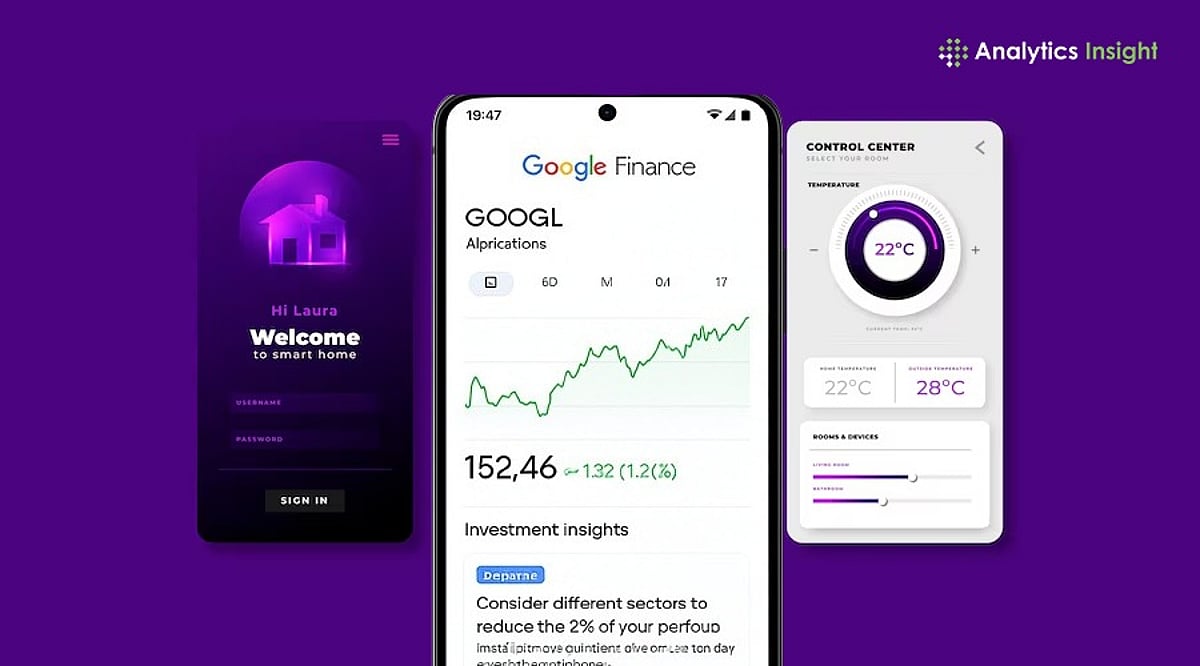
    Google has reintroduced Google Finance as a standalone Android app, bringing its financial platform back to mobile users with a suite of AI-powered features. The launch coincides with the official rollout of the revamped Google Finance platform, which exits beta with enhanced portfolio management, AI-driven research, and personalized market intelligence.

    The move positions Google Finance as a more comprehensive tool for investors who want to monitor markets, track investments, and receive contextual updates without relying solely on a browser version.

    Standalone App for Everyday Investing

    In its official blog, Google stated: “You’ll see all your investments consolidated in a single dashboard that shows performance data, as well as insights on your asset allocation and more. Your existing Google Finance portfolios will be available automatically, or you can create a new one by dropping in screenshots or uploading files (like CSVs or PDFs) that detail your holdings. You can even just describe your investments to get started and build from there.”

    Previously, many Finance features were folded into Google Search and the web. This standalone app marks a return to a dedicated mobile experience. The integrated AI research assistant adds analytical depth, allowing investors to:

    • Ask personalized questions about their portfolios
    • Identify sector concentration
    • Evaluate diversification
    • Understand how asset allocation may influence long-term performance

    Key Moments: AI-Driven Price Explanations

    One of the standout features is Key Moments, an AI-driven tool that explains why a stock’s price changed significantly. It provides context for events such as earnings releases or company news, helping investors understand market movements at a glance.

    AI Simplifies Portfolio Management

    The platform also introduces AI-generated scheduled market briefings. Users can set customized prompts for pre-market, earnings, and cryptocurrency briefings. Google’s AI automatically creates these reports and sends notifications, eliminating the need to manually search for daily market updates.

    The Android app includes core features from the web experience: watchlists, live market data, AI research, and investment portfolios. Additional capabilities like earnings calls and other investment features are planned for future updates.

    For more details, visit the original article on Analytics Insight.

  • Checkout.com Adopts Microsoft Azure to Fuel AI-Powered Payments and Agentic Commerce

    Checkout.com Adopts Microsoft Azure to Fuel AI-Powered Payments and Agentic Commerce

    Checkout.com has announced a multi-year agreement with Microsoft to migrate its payment infrastructure to Azure cloud services, positioning both companies for the rise of agentic commerce—where AI agents complete transactions without human intervention.

    Azure Infrastructure for AI-Driven Payments

    The payments provider will leverage Azure’s cloud infrastructure to process digital payments for enterprise merchants including eBay, ASOS, Vinted, Pinterest, and Klarna. Central to the migration is Azure Payment HSM, which uses Thales payShield 10K hardware security modules meeting PCI DSS, PCI 3DS, and PCI PIN certifications, along with FIPS 140-2 Level 3 security.

    Mariano Albera, CTO of Checkout.com, stated: “We’re thrilled to collaborate with Microsoft and adopt Azure, bringing this mission-critical platform into our technology stack. The Azure platform has leading machine learning capabilities—and Microsoft has long been a pioneer of embedding trust into every layer of cloud innovation.”

    Machine Learning Optimizes Transaction Acceptance

    Checkout.com already uses machine learning to improve transaction acceptance rates in real time. Its Intelligent Acceptance feature analyzes payment data, adjusts strategies, and applies successful optimizations across all merchants, creating network effects that reduce declines and processing costs. Azure’s ML capabilities will integrate with this existing AI engine, and Azure’s confidential computing solutions enhance fraud prevention and risk assessment.

    Preparing for Agentic Commerce

    The partnership aims to prepare for a future where AI systems search products, compare options, and complete purchases based on user preferences without human oversight. This requires payment infrastructure capable of handling high volumes of machine-initiated transactions with minimal latency and robust security.

    Tyler Pichach, Global Head of Payments at Microsoft Financial Services, commented: “The payments industry is a constant source of AI-powered innovation and by collaborating with Microsoft, Checkout.com will be able to further enhance payment performance for merchants around the world.”

    Albera added: “Our combined commitment to relentless innovation sets merchants up for success, enabling them to explore and embrace the agentic commerce models where AI agents search and shop on behalf of consumers.”