
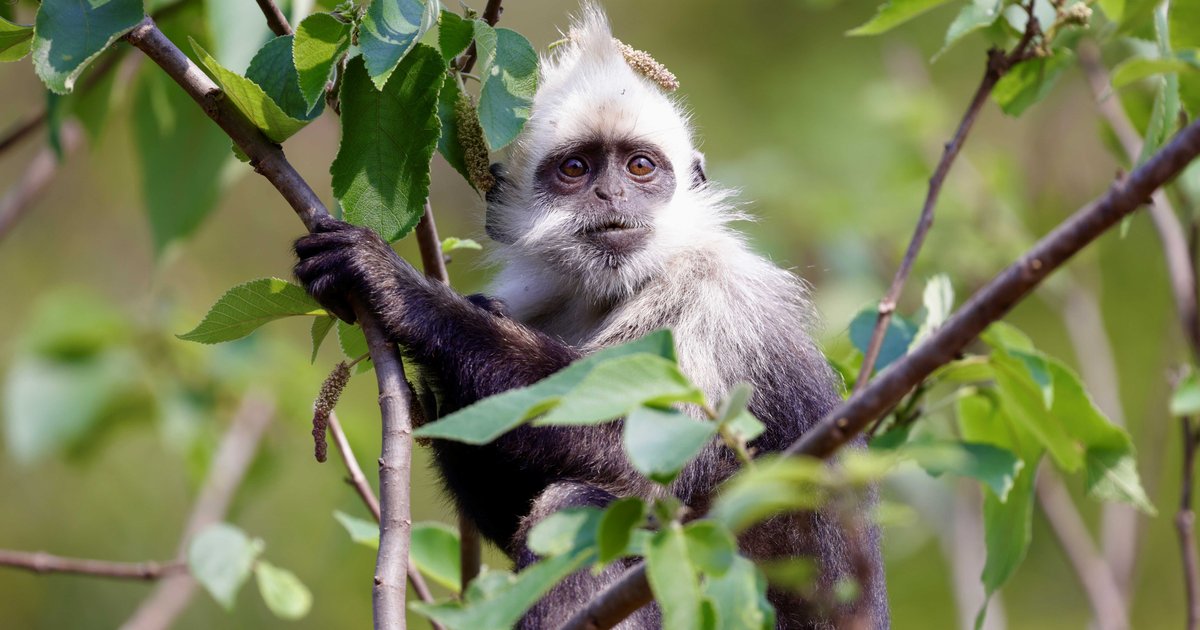
In the limestone karst mountains of Guangxi, southern China, technology is playing a pivotal role in bringing a critically endangered primate back from the brink. The white-headed langur, a species found only in Chongzuo and rarer than the giant panda, is experiencing a population recovery thanks to an intelligent monitoring platform powered by artificial intelligence by Huawei.
The platform, developed in partnership with the Guangxi Chongzuo White-headed Langur National Nature Reserve and the China-ASEAN Artificial Intelligence Application Cooperation Center, uses video-based animal monitoring devices deployed along cliffs. These devices collect real-time data on the langurs’ distribution, surroundings, and activity patterns. AI-driven automated labeling and data analytics then process this information to create a comprehensive dashboard for visualized management.
To date, the system has recorded over 37,200 instances of langur activity, providing researchers with unprecedented insights into the species’ behavior and habitat use. This AI system excels at processing complex geographical data in the challenging karst landscape, which would be extremely difficult to monitor with conventional methods alone.
Technology operates within a broader conservation framework that includes legal protection and ecological restoration. The Chongzuo White-Headed Langur Habitat Protection Regulations provide the legal foundation, while efforts have restored 77.6 hectares of habitat, built two drinking water sources and 18 water drinking points, and constructed two ecological corridors. As a result, the white-headed langur population has grown to more than 1,400 individuals across 130 groups.
Huawei Guangxi Deputy General Manager Tian Yongsheng notes that the company is committed to conserving nature with technology. The project demonstrates AI’s immense value in processing complex geographical data and massive volumes of species data. Huawei’s digital inclusion projects for environmental protection have been implemented in 65 protected areas worldwide, improving biodiversity conservation efficiency and showcasing the scalability of AI-powered conservation solutions across diverse ecosystems.
Leave a Reply