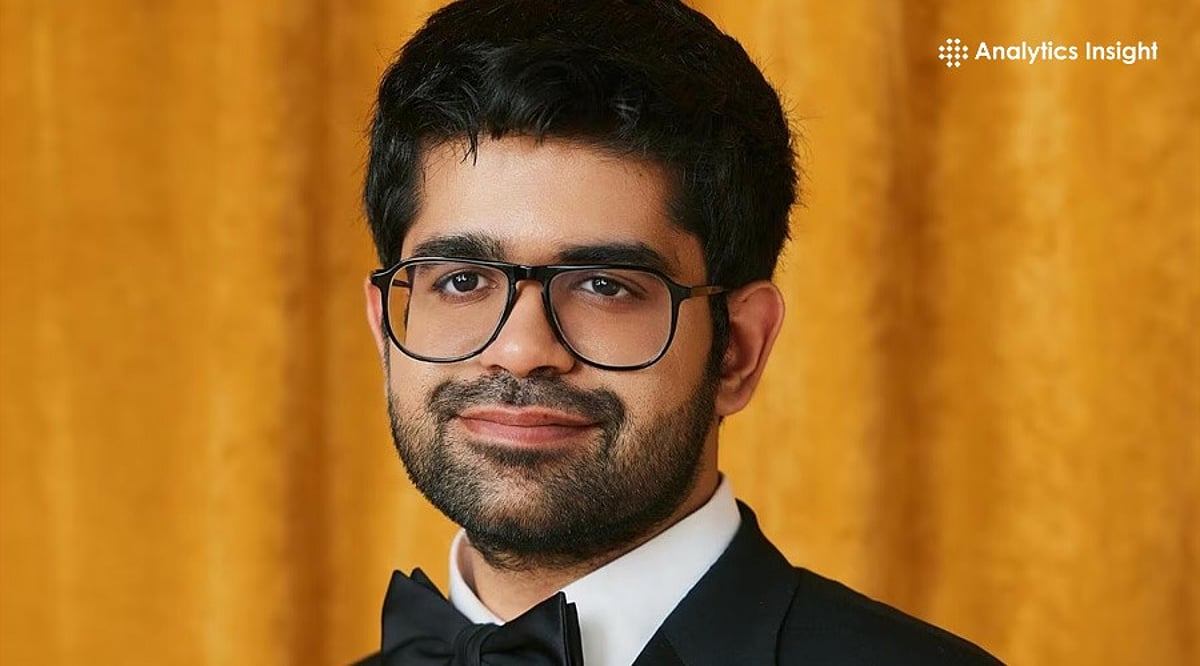
Category: AI Strategy

  • Generalists Outperform Specialists in Certain Game Theory Scenarios, MIT Study Finds

    Generalists Outperform Specialists in Certain Game Theory Scenarios, MIT Study Finds

    In a surprising twist that challenges long-held assumptions in game theory, a new MIT study shows that general-purpose algorithms called policy gradient methods can outperform specialized game-theoretic algorithms in certain imperfect-information games. The findings, presented at the International Conference on Learning Representations in Rio De Janeiro, could reshape how artificial intelligence agents are trained to make decisions in competitive, real-world scenarios.

    Imperfect-information games—where players don’t know everything about their opponents—are common in life, from poker and bidding wars to military operations and financial negotiations. For decades, the prevailing belief was that algorithms specifically designed for these games, grounded in game theory, would always outshine general-purpose alternatives. However, the MIT-led team discovered that policy gradient methods, originally developed in the 1990s for single-agent decision-making, often perform better and with greater efficiency.

    The researchers created a benchmark to fairly evaluate different algorithms, measuring performance through a concept called exploitability—how well a player does against a worst-case adversary. In experiments involving five games, including Phantom Tic-Tac-Toe, imperfect-information Hex, and Liar’s Dice, neural networks trained with policy gradient algorithms consistently achieved lower exploitability scores than those trained with game-theoretic algorithms.

    “Our study showed that policy gradient methods can work better than these specialized algorithms, and that the specialized algorithms may not work as well as people thought,” said Samuel Sokota, a co-author from Carnegie Mellon University. The team’s benchmarking software, which they have made freely available, allows others to test and compare algorithms with just a single line of code added to the OpenSpiel library.

    The implications extend far beyond board games. “Hidden information is a very important property of the world,” said Eugene Vinitsky of New York University, another co-author. “It pervades military operations, trading scenarios, and negotiations—all of which are carried out under conditions of hidden information. The idea that we can improve on these games suggests that we can also do better in these other settings as well.”

    Ian Gemp, a computer scientist and game theory expert at Google DeepMind not involved in the study, called the results encouraging: “This work serves as a compelling reminder that modernizing classical tools remains a highly productive path for solving complex strategic problems.”


  • Policy Gradient Methods Outperform Specialized Game Theory Algorithms in Imperfect-Information Games

    Policy Gradient Methods Outperform Specialized Game Theory Algorithms in Imperfect-Information Games

    A new MIT-led study challenges long-held assumptions in game theory, demonstrating that general-purpose policy gradient methods can outperform specialized game-theoretic algorithms in imperfect-information, zero-sum games. The research, presented at the International Conference on Learning Representations, provides a benchmark for evaluating algorithms that train neural networks to compete in strategic interactions where players have hidden information.

    The team, including MIT PhD student Sobhan Mohammadpour and Assistant Professor Gabriele Farina, found that policy gradient methods—originally developed in the 1990s for decision-making—achieved lower exploitability scores than game-theory-based approaches in games like Phantom Tic-Tac-Toe, imperfect-information Hex, and Liar’s Dice. Exploitability measures how well a player performs against a worst-case adversary; a score of zero indicates perfect play.

    “It had been pretty much taken for granted that specialized game-theoretic algorithms were the right approach,” said co-author Samuel Sokota. “Our study showed that policy gradient methods can work better than these specialized algorithms.” The researchers attribute the oversight to a lack of rigorous benchmarking, which they have now addressed by releasing a freely available benchmark tool that runs on ordinary laptops.

    The benchmark, built on OpenSpiel, allows researchers to train and compare algorithms on games with up to 30 billion states. Farina emphasized that the term “game” applies broadly to multi-agent strategic interactions, including military operations, trading, and negotiations—all of which involve hidden information. “The idea that we can improve on these games suggests that we can also do better in these other settings,” said co-author Eugene Vinitsky.

    Ian Gemp of Google DeepMind praised the work: “This work serves as a compelling reminder that modernizing classical tools like policy gradient methods remains a highly productive path for solving complex strategic problems.”
  • MIT Leaders and Faculty Show How Massachusetts Can Drive the Next Wave of Tech Innovation

    MIT Leaders and Faculty Show How Massachusetts Can Drive the Next Wave of Tech Innovation

    On June 9, The Boston Globe released its 2026 “Tech Power Players” list, recognizing 50 influential local leaders in technology and business across Massachusetts. The list includes eight MIT affiliates: President Sally Kornbluth, Prof. Daniela Rus (director of CSAIL), Prof. Regina Barzilay, Prof. Yet-Ming Chiang, Prof. Max Tegmark, Ana Bakshi (executive director of the Martin Trust Center for MIT Entrepreneurship), Katie Rae (CEO and Managing Partner of Engine Ventures), and Senior Lecturer Brian Halligan, along with numerous MIT alumni.

    The Power Players coverage highlights MIT’s research labs, its culture of innovation and entrepreneurship, industry connections, new AI initiatives, and the Institute’s commitment to maintaining Massachusetts’ technological leadership. “Massachusetts can absolutely lead in this next wave,” says President Kornbluth, pointing to opportunities in manufacturing, life and health sciences, quantum technologies, and energy that can serve Americans nationwide.

    MIT is “working to drive artificial intelligence forward in sectors where the region is strongest, from biotechnology and robotics to defense and clean energy. It’s also trying to broaden entrepreneurship through a ‘dorm-to-startup’ push, creating a pipeline of support services—from hack-a-thons to venture funding—to help students start companies between classes,” writes Robert Weisman for The Globe. President Kornbluth is reinvigorating the school’s support of the local innovation ecosystem, unveiling new online AI classes—with free entry-level courses for anyone—and encouraging more on-campus entrepreneurship.

    MIT is carving out a specialty in applied AI, sometimes called “AI+X,” deploying the technology to help businesses, hospitals, and research institutions supercharge productivity, innovation, and scientific breakthroughs. Aman Narang ’04, CEO of Toast, notes: “The superpower has always been the university system. The best thing Boston can do is keep these people around.”

    MIT startups are a key driver of the region’s entrepreneurial ecosystem. To maintain Boston as a hub for innovators, MIT is building on its existing entrepreneurship resources, including more than 150 courses and 85 centers and programs. President Kornbluth and Provost Anantha Chandrakasan recently formed the Committee on Accelerating Translation and Entrepreneurship (CATE) to explore how the Institute can better support and accelerate the movement of ideas from research into new ventures.

    Applications for The Martin Trust Center’s startup accelerator program have doubled from last year, and nearly one-fifth of MIT undergraduates—about 800 students—attended a recent startup career fair.

    The Globe also highlights MIT startup Liquid AI, which develops AI models inspired by the brain structure of a simple worm. These models require far less electricity to operate than large language models, saving energy and water. Liquid AI recently signed a deal with Mercedes-Benz to incorporate its technology into onboard systems of cars sold in North America.

    Researchers are also focusing on energy innovation. Prof. Yet-Ming Chiang’s lab is developing batteries that store more electricity over longer periods, creating more opportunities for wind, solar, and other clean energy sources. Chiang’s lab and other MIT research centers work on microchips, critical minerals, fusion technology, and defense tech—examples of “tough tech” that combine science and engineering, which Chiang says “are in the sweet spot of the Boston ecosystem.”

    Soon, 80 MIT students will work as summer interns at GE Vernova, thanks to the MIT-GE Vernova Climate and Energy Alliance, a collaboration aimed at accelerating the global energy transition. GE Vernova CEO Scott Strazik dedicated $50 million over five years to fund internships and research projects.

    When asked about the most promising thing about the Greater Boston tech scene, Prof. Rus answers: “talent. Boston has the best AI researchers in the world, and they’re producing genuinely new ideas, not incremental ones.” Bob Mumgaard SM ’15, co-founder and CEO of Commonwealth Fusion Systems, says the region’s expertise in engineering, designing, and manufacturing hardware and access to university researchers made it possible to build the company only in Massachusetts. “The ecosystem has the building blocks… Massachusetts is the strongest in the nation in innovation in energy.”

    President Kornbluth points to quantum: “There isn’t a more important technological field right now than quantum science and technology, and the Boston area has the greatest concentration of quantum talent anywhere in the world.”

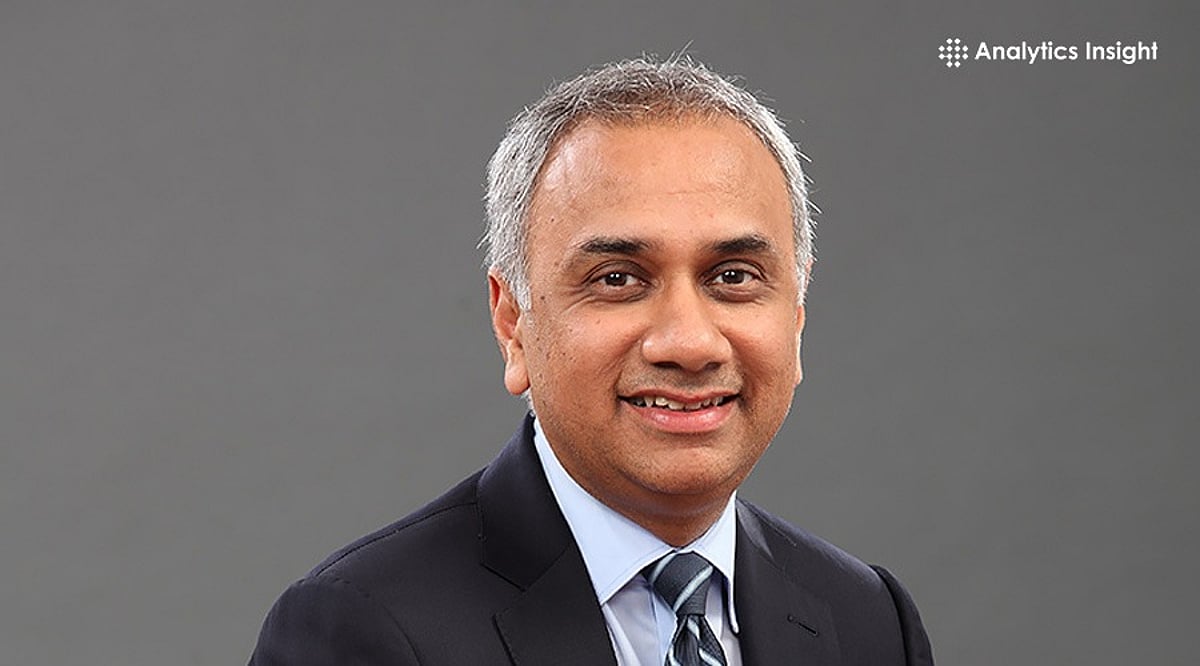
  • How Salil Parekh’s Quiet Leadership Steered Infosys Through Tech Turmoil

    How Salil Parekh’s Quiet Leadership Steered Infosys Through Tech Turmoil

    In an industry that rewards loud personalities and bold declarations, Salil Parekh has built his reputation doing the opposite. No viral statements, no constant media appearances, no carefully curated social media presence. Yet over the years, he has quietly become one of the most respected names in India’s IT industry, leading Infosys through one of the most turbulent periods in global technology.

    Since taking charge of Infosys in 2018, Parekh has helped the company grow amid rapid changes in the tech industry. Cloud computing, AI, automation, and digital services have become a much bigger part of business across the world. Through all these changes, Infosys has continued to grow steadily.

    The Journey Before Infosys

    Before joining Infosys, Parekh spent many years at Capgemini, where he held various leadership roles and worked with global clients across industries. Those years gave him deep experience in technology, consulting, and business operations. When Infosys announced him as CEO in 2018, the company was navigating a difficult period marked by leadership changes and internal disagreements. Many felt the company needed stability and calm leadership. Parekh entered quietly and focused on the work rather than creating headlines.

    A Different Kind of CEO

    One thing many people notice about Salil Parekh is his calm demeanor. He is not the type of business leader who tries to dominate every conversation. He speaks in a simple, measured way. Even during difficult times, he rarely appears reactive or dramatic. That style has helped him build trust over time. Inside Infosys, employees see him as practical and balanced — someone who listens carefully and focuses on long-term goals rather than short-term excitement. In a business world that often rewards loud personalities, his quieter approach stands out.

    Infosys Under His Leadership

    Infosys has transformed during Parekh’s tenure. The company expanded its digital and cloud services as businesses worldwide moved more operations online. Infosys also ramped up work in AI and automation to meet growing demand. The company continued signing large global deals and strengthening relationships with international clients. Employee training became a priority as technology evolved rapidly; Infosys invested heavily in helping workers learn new skills and adapt to shifting industry needs. The company’s global presence also grew stronger during these years.

    Navigating Difficult Times

    The tech industry has faced significant headwinds. Economic uncertainty affected business spending in many countries. Competition in the IT sector intensified, with companies vying for major contracts. Managing large teams across different countries brought challenges, especially during remote work periods. Then came the rapid rise of AI, pressuring technology companies to move faster and adapt to changing customer demands. Through all this, steady leadership proved essential. Instead of reacting with panic, Parekh kept the company focused on stability and long-term growth.

    Why His Leadership Style Matters

    Many business leaders today are known for their high visibility. Salil Parekh is respected for the opposite reason: he keeps a low profile and focuses on execution rather than publicity. Clients trust consistency, employees value stability, and investors look for leaders who remain calm during uncertain times. Parekh has built that reputation over years of consistent leadership. His style may not always generate headlines, but it has helped Infosys remain strong during a rapidly changing period for global technology.

    Final Thoughts

    Salil Parekh embodies a quieter style of leadership that many people still deeply value. He does not try to be the loudest voice in the room. Instead, he focuses on steady work, long-term growth, and keeping the company prepared for the future. As AI, cloud services, and automation continue to reshape the tech world, Infosys is navigating that shift under his guidance. His story is a reminder that strong leadership is not always about visibility — sometimes calm thinking, patience, and consistency matter even more.

  • Perplexity’s Ascent: How Aravind Srinivas Built an AI Search Challenger from IIT Madras to Silicon Valley

    Perplexity’s Ascent: How Aravind Srinivas Built an AI Search Challenger from IIT Madras to Silicon Valley

    In early 2025, Perplexity entered India through a major partnership with Bharti Airtel, giving millions of users access to Perplexity Pro. What looked like a routine telecom-AI deal signaled a deeper shift: a two-year-old startup was now challenging Google’s dominance in online search at scale. Leading that charge was Aravind Srinivas, a Chennai-born engineer who studied at IIT Madras and narrowly missed transferring into computer science.

    Srinivas’s journey is anything but linear. Growing up in a family that valued academic achievement, he faced the intense pressure of IIT entrance exams. When he couldn’t switch into computer science, he taught himself Python and enrolled in machine learning courses outside his department. He contributed to research at conferences like NeurIPS and ICLR while still an undergraduate, gaining early exposure to deep learning.

    He earned a PhD in computer science from UC Berkeley, interning at OpenAI, DeepMind, and Google Brain between 2019 and 2021. Those experiences revealed skill gaps he worked aggressively to close, rather than retreating from the field. In 2022, he co-founded Perplexity with Denis Yarats and Johnny Ho, positioning it as an answer engine that uses large language models to generate conversational responses with live source citations.

    Perplexity grew rapidly, attracting millions of users for research, coding, and everyday queries. The Airtel partnership underscored its strategy to expand beyond desktop search into mobile-first markets. But the company also faced sharp criticism: Forbes and WIRED accused it of plagiarizing paywalled content, and publishers raised legal concerns about scraping practices. Srinivas acknowledged early shortcomings in attribution and defended AI-powered search as an inevitable evolution.

    Today, Perplexity sits at the center of the AI search race—hailed as a promising challenger yet emblematic of the unresolved tensions around copyright and fair use. Srinivas’s story illustrates how combining research, engineering, and product instinct, even without a traditional path, can reshape an industry.

  • Kasi Cloud’s Johnson Agogbua on Building Hyperscale AI-Ready Data Centers Across Africa

    Kasi Cloud’s Johnson Agogbua on Building Hyperscale AI-Ready Data Centers Across Africa

    Johnson Agogbua, Co-Founder and CEO of Kasi Cloud, has spent over three decades building internet infrastructure—from early internet protocols at UUNET Technologies to optical networking at Movaz and connecting billions at Meta and Reliance Jio. Now, he is applying that expertise to address Africa’s most critical infrastructure gap: hyperscale, AI-ready data centers.

    Founded with Mark Adams (formerly Chief Strategy Officer at Equinix), Kasi Cloud emerged from a simple question: why not Africa? The company launched in early 2020 amid the pandemic, which ironically allowed for deep market research and site selection. It acquired 4.2 hectares in Lagos, secured backing from the Nigerian Sovereign Wealth Fund and seed funding from DH Capital, and broke ground by 2022.

    Kasi differentiates itself with an “unstoppable capacity” philosophy—designing for Africa’s digital needs a decade ahead. This includes refactoring power architecture all the way to the rack level and building redundant carrier-neutral colocation space. A key partnership with Eaton cut delivery times by 50% and reimagined power for the African context. “We are not going to build a second-rate data centre in Africa,” Agogbua emphasizes. “World-class belongs in Africa as well.”

    The company’s hyperscale-first approach is a direct answer to the continent’s growing demand for cloud and AI infrastructure, positioning Kasi as a critical player in Africa’s digital transformation.

  • Kasi Cloud CEO Johnson Agogbua on Building Hyperscale AI-Ready Data Centers in Africa

    Kasi Cloud CEO Johnson Agogbua on Building Hyperscale AI-Ready Data Centers in Africa

    Johnson Agogbua, co-founder and CEO of Kasi Cloud, is leveraging three decades of internet infrastructure expertise to bring hyperscale, AI-ready data centers to Africa. In an exclusive interview, Agogbua details how his experience at UUNET Technologies, Movaz (now ADVA), Meta, and Reliance Jio has shaped Kasi Cloud’s mission to close Africa’s digital infrastructure gap.

    Founded with Mark Adams, former Chief Strategy Officer at Equinix, Kasi Cloud emerged from the simple question: why not Africa? The company formally launched in early 2020, just as the pandemic hit. Rather than stalling progress, COVID-19 allowed Agogbua to conduct deep market research while grounded in Nigeria. Kasi acquired 4.2 hectares in Lagos, secured backing from the Nigerian Sovereign Wealth Fund and seed funding from DH Capital (now Citizens Bank), and broke ground in 2022.

    Kasi Cloud differentiates itself through what Agogbua calls “unstoppable capacity”—a hyperscale-first design that anticipates Africa’s digital demands a decade ahead. The company redesigned data center power architecture from utility to rack level, partnering with global power management firm Eaton to cut delivery timelines by 50%. Kasi also built redundant carrier-neutral colocation space, with one visiting network CEO noting it was larger than any existing data center in Lagos.

    “We didn’t set out to be a data center company alone,” Agogbua explains. “We set out to solve problems… We imagined a world where the population says, ‘We are truly digital.’” He emphasizes that Kasi will not use hand-me-down technology: “World-class belongs in Africa as well.”

    The interview underscores a pivotal moment for AI and cloud infrastructure on the continent, with Kasi Cloud positioned to address an urgent need for scalable, AI-ready digital platforms.

  • Schneider Electric CAIO Philippe Rambach on Scaling AI with a Business-First Strategy and Critical Thinking

    Schneider Electric CAIO Philippe Rambach on Scaling AI with a Business-First Strategy and Critical Thinking

    In a wide-ranging interview, Philippe Rambach, Chief Artificial Intelligence Officer at Schneider Electric, shares how the global energy management and automation company is scaling AI across more than 160 factories and 140 countries. The key, he explains, is a disciplined business-first approach that prioritizes real-world value over technological novelty.

    Business Value Over Technology

    Rambach warns against “technology tourism”—the temptation to run hundreds of pilots without a clear business case. Instead, Schneider Electric starts by identifying a specific business impact, then asks if AI can help. Each use case passes through gate reviews that test both technical feasibility and business value. Projects are halted immediately if either criterion fails.

    “We do a pilot that keeps in mind what we want to deliver at scale,” Rambach notes. This rigor prevents “pilot purgatory” and ensures that lab successes translate to real factory results.

    Agentic AI and the Sera Assistant

    Schneider recently launched Sera, an AI agent that transforms how users interact with environmental data. However, Rambach cautions against overhyping generative AI. “Generative AI agents do not replace forecasting, anomaly detection, prediction or optimisation—we still need that,” he asserts. Sera adds a conversational layer, allowing operators to ask complex questions in natural language, moving beyond rigid dashboards.

    Critical Thinking as a Core Skill

    To counter blind faith in AI outputs, Schneider has introduced an “AI for All” training program with the same institutional rigor as safety training. The centerpiece is critical thinking. “We want people to keep critical thinking when AI gives an answer,” Rambach says, acknowledging that AI can be wrong or partially wrong. The company also hosts “promptathons” and a virtual “Genius Bar” for employees to share prompting strategies.

    Edge vs. Cloud: A Matter of Physics and Policy

    Deciding where to run AI depends on data sovereignty and latency. In industrial settings, sensitive data often must stay local, and real-time applications like visual inspection require edge processing for speed. Schneider’s solutions are designed to be versatile enough for both environments.

    Addressing the Energy Density Crisis

    Schneider Electric, which builds data center infrastructure, is acutely aware that AI training consumes vast energy. Rambach notes the irony: AI is part of the solution. The company uses AI to optimize power management for its own factories and partners like NVIDIA to precisely manage energy in AI factories. He also advocates treating AI as an “unreliable component,” building reliable systems with human-in-the-loop checks, as in customer care where AI drafts responses but humans verify them.

    Navigating Regulation and Ethics

    Operating under the EU AI Act, Schneider has published an external Trust Charter that explicitly bans facial recognition. Rambach says compliance with the Act does not slow the company down. The ethical framework is backed by a dedicated responsible AI team within the AI Hub.

    The Future of the CAIO Role

    Rambach admits he is “very scared of becoming the bottleneck” as AI becomes pervasive. He sees the CAIO role evolving toward defining technical policy and supporting large, bespoke use cases. His overarching message is to not forget centuries of human wisdom: “My big message is we should not forget everything we have learned in the last 2,000 years, just because there’s a new technique.”

    For industrial giants, AI is not a replacement for human engineering but its most powerful tool—and mastering it lies in the critical mind of the user.

  • Stellantis AI Chief Kaynaz Behdin on Industrializing Enterprise AI for Measurable Business Impact

    Stellantis AI Chief Kaynaz Behdin on Industrializing Enterprise AI for Measurable Business Impact

    Kaynaz Behdin, Senior Vice President of Digital, Data & AI at Stellantis, is redefining how the automotive giant approaches artificial intelligence. In a recent interview, Behdin emphasized that her focus is not on experimentation but on building AI as a disciplined enterprise capability that drives customer satisfaction, value creation, operational performance, and speed.

    Stellantis, the multinational automaker behind brands like Jeep, Peugeot, Fiat, and Vauxhall, operates a distributed global environment. Behdin’s strategy relies on a three-layer operating model: translating leadership priorities into a single execution framework, embedding AI and Data Business Hubs directly into functions, and providing global platforms and shared talent pools to industrialize delivery.

    AI is already applied across Stellantis’ full value chain, including sales conversion and retention, warranty and quality cost reduction, logistics efficiency, manufacturing uptime, and faster engineering cycles. Key criteria for prioritizing use cases include business ownership, scalability across plants and regions, and strict safety and compliance frameworks.

    Behdin identified the main barriers to AI adoption as organizational and human, not technological. To address this, Stellantis runs an AI Academy with persona-based training—from executive coaching to hands-on workshops—to embed AI literacy into daily work. She also highlighted the importance of governance as an accelerator, with risk assessment built across the data-to-AI lifecycle and observability tools tracking what agents and models do.

    Looking ahead, Behdin sees generative AI transforming in-vehicle experiences, engineering cycles, operations, and commercial performance. Stellantis has deployed an Agent Gateway—a standardized infrastructure layer for AI agents to interact with enterprise platforms—and is rolling out a system called Metabot inside Microsoft Teams to bring the agent ecosystem to employees’ daily workspace.

    Behdin’s three priorities for 2026 are embedding AI into the business, industrializing agentic AI at scale with strong abstraction layers to avoid vendor lock-in, and ensuring value measurement and compliance by design. She concluded: “It’s the year we move from ‘great use cases’ to true AI-first, enterprise-level transformation, with our customers and our people at the centre of everything we do.”

  • Schneider Electric’s CAIO on Scaling AI with Business-First Strategy and Critical Thinking

    Schneider Electric’s CAIO on Scaling AI with Business-First Strategy and Critical Thinking

    Philippe Rambach, Chief AI Officer at Schneider Electric, discusses how the company integrates artificial intelligence across its global operations while maintaining a pragmatic, business-first approach. In an interview with AI Magazine, Rambach outlines the principles guiding AI adoption in over 160 factories and 140 countries.

    Rather than chasing the latest technology trends, Schneider Electric evaluates AI use cases based on business value and technical feasibility. Every project passes through gate reviews that assess these factors, preventing what Rambach calls “pilot purgatory.” The company prioritizes solutions that can scale from the start, avoiding lab experiments that fail in production.

    The rise of agentic AI is another key topic. Schneider recently launched Sera, an AI agent that allows users to interact with environmental data using natural language. Rambach emphasizes that generative AI agents complement, not replace, classical AI methods like forecasting and anomaly detection. He warns against the common mistake of treating generative AI as a one-size-fits-all replacement.

    To prepare employees for AI adoption, Schneider has implemented a training program called “AI for All.” The curriculum emphasizes critical thinking, helping staff evaluate AI outputs rather than trusting them blindly. The company also hosts “promptathons” and maintains a prompt library to share best practices across teams.

    On the technical side, Rambach explains the decision between edge and cloud AI deployment. Factors include data sovereignty, cybersecurity, and latency—especially in high-speed manufacturing processes where millisecond delays matter. Schneider builds solutions that work in both environments.

    The interview also touches on the energy demands of large AI models. As a supplier to data centers, Schneider Electric uses AI to optimize power management in collaboration with partners like NVIDIA. Rambach views AI as both a contributor to and a solution for the energy density problem.

    Regulatory compliance under the EU AI Act is managed through a responsible AI team, and Schneider has published a public Trust Charter that excludes uses like facial recognition. Rambach notes that regulation has not slowed down innovation.

    Looking ahead, Rambach sees the CAIO role evolving from overseeing all AI initiatives to setting technical policy and supporting large-scale use cases. He warns against becoming a bottleneck and stresses the importance of leveraging existing transformation teams rather than creating new ones.

    The key takeaway: AI in heavy industry must serve real business needs, and human critical thinking remains indispensable. As Rambach puts it, “We should not forget everything we have learned in the last 2,000 years, just because there’s a new technique.”