Category: AI Strategy

  • AIB Debuts AI-Driven Mobile App to Deliver Personalized Financial Insights

    AIB Debuts AI-Driven Mobile App to Deliver Personalized Financial Insights

    Allied Irish Banks (AIB) has launched a completely redesigned mobile banking application, marking what the lender calls its most significant digital channel update in over a decade. The new app, rolling out from late June, leverages machine learning and advanced data analytics to turn everyday transaction data into actionable, personalized financial guidance.

    The upgrade addresses a key industry challenge identified by AIB’s own research: while 76% of Irish adults check their banking app multiple times a week, 47% rarely use it for financial insights. The app aims to close this gap by embedding AI-powered intelligence directly into the user experience, moving beyond basic balance checks and payments.

    Developed over 18 months with extensive customer collaboration and pilot programs, the app introduces intelligent spending categorization, merchant-level analysis, and proactive budget recommendations. Machine learning algorithms analyze transaction histories to surface spending trends, helping users set goals and make more informed decisions. This directly responds to the 31% of consumers who report low confidence in managing their finances and the 24% who find long-term planning frustrating.

    Security remains a cornerstone of the new platform. It integrates passkey authentication, intelligent card controls (including freeze functionality), and what AIB describes as best-in-class cyber security technology — likely leveraging ML for fraud detection and anomaly identification. The bank emphasizes that trust is foundational, supported by secure, resilient technology.

    The app is built on a cloud-based, modular architecture designed for continuous delivery and iterative improvement. This platform approach enables faster deployment of new AI features and positions AIB to compete against a fragmented fintech ecosystem. Upcoming enhancements include tools for children and parents, goal-based savings pots with predictive modeling, and mortgage management with personalized recommendations.

    AIB maintains a hybrid service model with 170 branches and ongoing investment in human support, reflecting that 94% of customers still value access to human assistance. Geraldine Casey, Managing Director of Retail Banking, stated: "This new AIB app is a major step forward in digital innovation and security for our customers, providing the convenience and accessibility of best-in-class banking they can trust." Chief Operating Officer Graham Fagan added: "We’ve built a digital engagement platform that sits beneath the app that is designed to enable us to continuously add to it quarter on quarter."


  • Exploring MIT’s Latest Machine Learning Breakthroughs in Robotics and AI

    Exploring MIT’s Latest Machine Learning Breakthroughs in Robotics and AI

    MIT continues to push the boundaries of machine learning with a series of groundbreaking research developments that span robotics, AI efficiency, material science, and more. Recent projects highlight the institute’s commitment to advancing both theory and practical applications.

    In robotics, researchers have developed a system that leverages large language models to help robots interpret vague instructions and focus on crucial details, improving task performance in homes and factories. Another innovation, known as Murakkab, optimizes multistep AI workflows, enhancing speed and energy efficiency. A new low-power chip enables tiny robots to generate 3D maps for navigation with minimal memory and power consumption.

    Beyond robotics, MIT scientists are modeling metal alloys at atomic scales to predict material properties more accurately, while game theory research shows that generalist algorithms can outperform specialists in certain scenarios. A novel spatial memory system allows robots to efficiently remember object locations, and a major update to random utility models—dubbed ‘the power of three’—improves preference prediction accuracy.

    Commercial applications include a startup using MIT technology for real-time product tracking in retail, manufacturing, and logistics. The NSF has renewed support for the MIT-led Institute for Artificial Intelligence and Fundamental Interactions (IAIFI), expanding its second phase with increased funding and broader ambitions. Researchers are also teaching AI agents to ask better questions using the game Battleship, and a new dataset called ChartNet enhances vision-language models’ ability to interpret charts.

    Additional milestones include MIT economist Whitney Newey receiving the Erwin Plein Nemmers Prize, new AI chemistry models designed by Connor Coley, and the appointment of Justin Solomon as associate dean of engineering education. MIT Open Learning launched a universal AI education program, making AI fluency accessible worldwide.

    These achievements underscore MIT’s role as a leader in machine learning, driving innovations that shape the future of technology and science.

  • Anthropic Accuses Alibaba of Massive AI Model Distillation Attack

    Anthropic Accuses Alibaba of Massive AI Model Distillation Attack

    Anthropic has publicly accused Alibaba of orchestrating a large-scale distillation campaign aimed at extracting capabilities from its Claude AI models. The allegation, detailed in a letter sent to U.S. senators, adds fresh tension to the ongoing technology rivalry between the United States and China.

    According to Anthropic, the e-commerce and technology giant used approximately 25,000 fraudulent accounts to generate over 28.8 million interactions with Claude between April 22 and June 5, 2026. The goal was to illicitly replicate the performance of Anthropic’s most advanced model, Claude Mythos Preview, using a technique known as knowledge distillation—a legitimate machine learning method that can be weaponized for model extraction attacks.

    This technique allows bad actors to feed input-output pairs from a proprietary “teacher” model into their own “student” model, effectively creating a cheap replica of the original system. Anthropic claims that Alibaba and its AI lab Qwen were behind the campaign, marking what it describes as the largest known instance of such an attack on the company.

    The accusation comes amid a rapidly closing frontier gap between Western and Chinese AI models. For example, Z.ai’s GLM-5.2 model, released shortly after Anthropic restricted global access to its most advanced model under U.S. government orders, has achieved benchmark performance nearly on par with leading Western frontier models. Z.ai has since captured a $128 billion market capitalization and plans to accelerate its pursuit of AGI.

    This is not the first time Anthropic has raised alarm over distillation attacks. Earlier in February, the company alleged that several Chinese AI firms—including DeepSeek, Moonshot AI, and MiniMax—had collectively generated millions of interactions with its Claude platform. Anthropic warned that such attacks are becoming more sophisticated and require closer coordination between AI companies and governments.

    The issue has also drawn attention in Washington. The Pentagon has added Alibaba to its list of Chinese military companies, a designation the company is contesting. Meanwhile, Reuters reported that the U.S. Commerce Department has so far held off adding DeepSeek to its trade blacklist, despite national security concerns, as officials weigh diplomatic repercussions.

    Alibaba has not yet responded to requests for comment on the allegations.

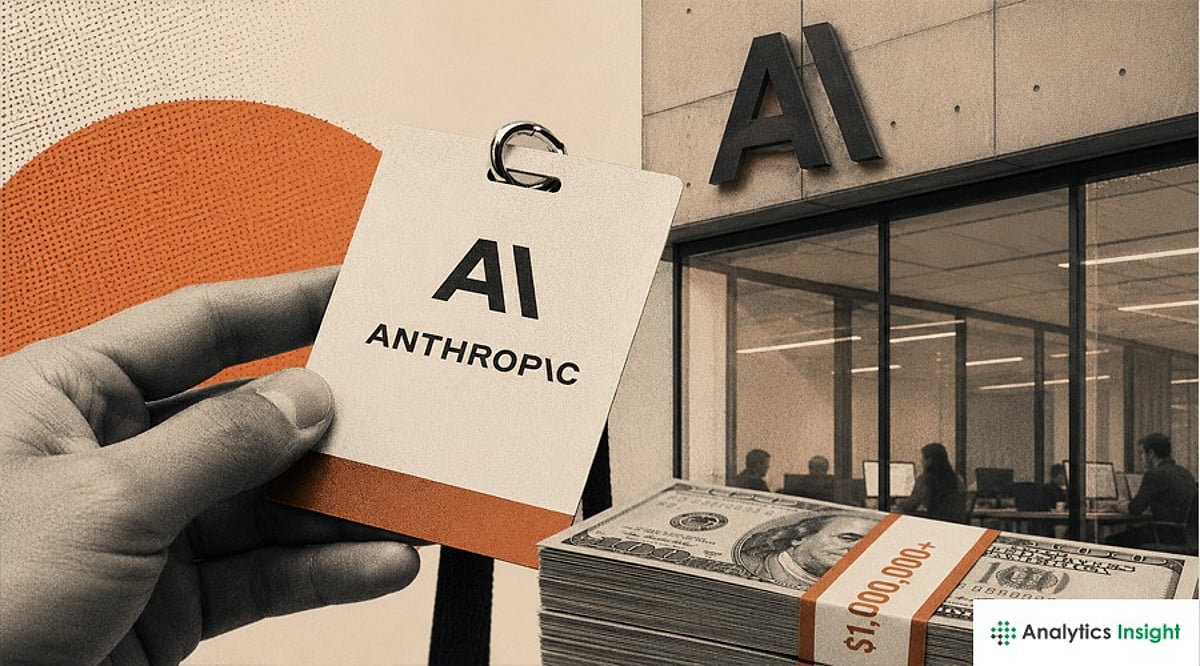
  • Anthropic Pays AI Researchers Over $1M Amid Mass Layoffs at Microsoft, Google, Amazon

    Anthropic Pays AI Researchers Over $1M Amid Mass Layoffs at Microsoft, Google, Amazon

    The race for top AI talent has reached new heights. Reports indicate that Anthropic, a leading artificial intelligence company, is now offering some of its researchers annual compensation packages exceeding $1 million. These packages include base salary, company stock, and other benefits, setting a new benchmark in the tech industry.

    The revelations come from H-1B visa filings, which show that Anthropic has been paying base salaries of $1.12 million and $1.38 million to two Members of Technical Staff during its first two fiscal years of 2026. Notably, these figures exclude bonuses and stock awards, meaning the total compensation is significantly higher. The filings do not disclose names, but they underscore the intense demand for specialized AI expertise.

    This surge in AI salaries contrasts sharply with a wave of layoffs sweeping through major tech companies. Microsoft, Google, Amazon, Meta, and Intel have all announced job cuts as they reallocate resources toward AI initiatives. While thousands of software engineers and support staff face unemployment, top AI researchers command unprecedented pay.

    The disparity highlights a fundamental shift in hiring priorities. Companies are aggressively cutting non-core roles while investing heavily in AI talent, which they view as critical to staying competitive. Beyond salary, firms like Anthropic, OpenAI, Meta, Google DeepMind, and xAI offer signing bonuses, large stock grants, and flexible work arrangements to attract the best minds.

    As the AI arms race intensifies, the competition for talent is expected to widen. For now, the biggest beneficiaries are the researchers at the center of this high-stakes battle.

  • Microsoft CEO Satya Nadella Calls Out Hypocrisy in Tech’s AI Messaging

    Microsoft CEO Satya Nadella Calls Out Hypocrisy in Tech’s AI Messaging

    Microsoft CEO Satya Nadella has publicly challenged the contradictory messaging from AI leaders who warn about job displacement while simultaneously pushing for unlimited expansion of costly AI systems. In an interview with The Wall Street Journal, Nadella highlighted a growing disconnect that he believes undermines public trust and threatens the long-term viability of AI.

    “You can’t warn that AI is coming for jobs and sell unlimited expansion in the same breath,” Nadella stated. He argued that companies demanding vast computational resources for AI development while cautioning about workforce displacement create an untenable position that erodes social permission.

    Nadella urged businesses to rethink their approach, advocating for AI as a tool to enhance rather than replace employees. He described a combination of human capital and “token capital”—the computational resources powering AI systems—as a “recipe” for effective collaboration. Success, he emphasized, depends on demonstrating tangible economic benefits rather than theoretical promises.

    Addressing cost barriers, Microsoft has launched more affordable AI models and introduced Copilot Cowork, an autonomous agent that uses cheaper models for larger tasks. The company has even considered hosting a version of DeepSeek, the cost-effective Chinese model criticized by competitors for allegedly copying proprietary technology.

    Other industry leaders have echoed concerns about AI’s workforce impact. Anthropic CEO Dario Amodei warned that AI could eliminate many entry-level white-collar jobs, while OpenAI’s Sam Altman has publicly acknowledged the risk of redundancies. Nadella, however, stresses that restructuring existing roles is the primary goal, stating, “Companies have to offer people real economic opportunity.”

  • McKinsey Study Finds Scaling AI Across Functions Doubles Profit Margins Over Isolated Pilots

    McKinsey Study Finds Scaling AI Across Functions Doubles Profit Margins Over Isolated Pilots

    McKinsey & Company has released a report highlighting a significant performance gap between companies that scale artificial intelligence across their enterprise and those that limit AI to isolated pilots. The study, which surveyed 1,000 senior and midlevel executives across 696 manufacturing and service-sector businesses, reveals that while nearly 90% of organizations are experimenting with AI, only 7% have successfully scaled it across the entire enterprise.

    Rahul Shahani, McKinsey Partner and leader of the firm’s Manufacturing and Supply Chain Practice in North America, explains that the full value of AI is realized not through experimentation alone, but through deep integration into core operational processes. Companies with AI embedded across multiple functions generate nearly double the profit margins of peers using AI in only a few departments. The three-year return on invested capital for these firms is more than five times higher.

    The report emphasizes that operational excellence is a crucial complement to AI deployment. Leading companies combine advanced AI tools with robust management systems, clear operating principles, and disciplined execution. A notable example is Siemens’ Nanjing facility in China, a World Economic Forum Global Lighthouse Factory. By integrating digital twin capabilities with broader operational improvements, the site significantly increased throughput. The facility first tightened its operating backbone—integrating a manufacturing operations management system to govern data flows between virtual models and physical assets—before scaling the technology.

    McKinsey’s findings underscore that technology alone is not enough; the operating model around it is equally important. Companies that have built advanced technology into their operational excellence achieve higher productivity increases than those relying primarily on manual or analogue systems. The report serves as a call to action for organizations to move beyond fragmented AI pilots and pursue enterprise-wide AI integration to capture substantial performance gains.

  • Navigating AI Development at Breakneck Speed: Lessons from Two Six Technologies

    Navigating AI Development at Breakneck Speed: Lessons from Two Six Technologies

    In the rapidly evolving landscape of artificial intelligence, development cycles have compressed to what industry experts describe as “dog years.” Software upgrades that once took a year are now shipped in two months or less. This pace forces organizations to constantly adapt, especially when major LLM releases redefine the automation capabilities of software.

    Two Six Technologies, a company specializing in national security and AI innovation, offers a compelling case study in balancing speed with stability. Their new agentic orchestrator, Helix, went from concept to operational deployment on the most sensitive and secure systems in just three months. The company serves clients like the Department of War, DARPA, and intelligence agencies, where security is paramount.

    Key lessons from their approach include:

    • Embedding security from the start: By adopting a proactive security posture and using their zero-trust solution, Trusted Keep, they safely pilot cutting-edge capabilities without sacrificing compliance.
    • Leveraging larger, well-coordinated teams: Contrary to the trend toward smaller agile teams, Two Six found that larger teams provide the bandwidth to jump from low-fidelity concepts to polished features quickly.
    • Maintaining model flexibility: Systems must avoid lock-in to any single AI model, allowing seamless transitions as algorithms evolve. This is critical for tools like Helix that connect to diverse ecosystems.
    • Deep customer intimacy: Rapid development fails if the product misses the mark. Two Six combines deep national security expertise with AI to ensure customer intent guides every iteration.

    The company demonstrates that organizations don’t have to choose between speed and security. With the right foundation, they can achieve both, delivering immediate, decisive results in high-stakes environments.

  • AWS Co-Founder Matt Domo on Why Enterprise AI Pilots Fail and How to Scale

    AWS Co-Founder Matt Domo on Why Enterprise AI Pilots Fail and How to Scale

    According to a recent Forrester analysis, only 10-15% of artificial intelligence pilots successfully transition into long-term production. That means most enterprise AI investments stall before they ever deliver real impact. Matt Domo, a co-founder of Amazon Web Services (AWS) and creator of foundational Microsoft enterprise technologies, has a clear explanation: the problem is rarely the technology itself, but rather how organizations are structured around it.

    Now advising Fortune 500 companies, government agencies, and universities, Domo shared his insights with AI Magazine on moving from experimentation to enterprise-scale execution.

    Why Most AI Initiatives Fail at the Executive Level

    Domo identifies three root causes for AI failure: unclear ownership of outcomes, misaligned incentives across teams, and operating models that were not built for AI-driven decision-making. “Leaders fund pilots, but they don’t redesign how work happens. They treat them as technology projects instead of using them to change how the business operates,” he said. Without organizational alignment, AI simply gets layered onto existing processes, which looks like progress but yields no measurable results.

    Scaling AI from Pilot to Enterprise-Wide Deployment

    Scaling does not come from running more pilots; it comes from standardization. “Companies that succeed define a repeatable path from pilot to production, assign clear ownership of outcomes, and integrate AI into core workflows instead of layering it on top,” Domo explained. He warns that when every team starts from scratch, you end up with scattered experiments, not scale.

    ROI Metrics That Convince Boards

    To secure board-level investment, Domo advises focusing on metrics directly tied to financial results and strategic goals. “Boards aren’t convinced by activity. They’re convinced by measurable impact tied to the P&L,” he said. The metrics that matter include cost reduction, revenue lift, and faster decision cycles. Vague reporting like usage or engagement does not work; clear attribution of what changed, by how much, and how it ties to financial outcomes is essential.

    Avoiding AI-Washing and Misaligned Projects

    Organizations avoid AI-washing by starting with the desired outcome, not the tool. “Define the business result first, assign clear ownership of that outcome, and only then determine where AI actually improves the workflow,” Domo advised. Misalignment often happens when teams are incentivized to launch initiatives rather than deliver results. The fix is to tie every AI effort to a measurable objective and hold a single owner accountable.

    Speeding Up AI-Driven Decision-Making

    Speed in AI adoption comes from clearer ownership and fewer handoffs. In large organizations, decisions slow down due to fragmented accountability and excessive alignment steps. Domo recommends defining who owns the outcome, standardizing the inputs those decisions rely on, and reducing the number of required approvals. “AI can surface better insights, but unless the organization is structured to act on them quickly, those insights sit in dashboards,” he noted. Speed comes from aligning decision rights with the people closest to the outcome.