Category: Algorithms

  • Essential Quantum Programming Languages for Developers in 2026

    Essential Quantum Programming Languages for Developers in 2026

    As quantum computing advances rapidly, developers need to familiarize themselves with the key programming languages and frameworks that power quantum algorithms and simulations. Here are the top quantum programming languages to watch in 2026:

    • Qiskit: IBM’s open-source quantum software framework allows developers to build, test, and run quantum circuits on IBM quantum computers.
    • Cirq: Developed by Google, Cirq focuses on creating and running quantum circuits, widely used for research and quantum algorithm development.
    • Q#: Microsoft’s Q# is designed specifically for quantum programming and works with Microsoft’s quantum development tools to support complex quantum algorithms.
    • PennyLane: PennyLane bridges quantum computing with machine learning, enabling developers to create quantum circuits and combine them with popular ML frameworks.
    • Quipper: A functional programming language for quantum computing, Quipper supports large quantum circuits and helps researchers explore advanced quantum algorithms.
    • Silq: Silq is a high-level quantum programming language that aims to make quantum code easier to write by improving readability and reducing errors.
    • QDK (Quantum Development Kit): Microsoft’s QDK provides tools for developing quantum applications and supports Q# alongside other programming environments and quantum computing workflows.
    • OpenQASM: OpenQASM is a language for describing quantum circuits and operations. Its newer versions support advanced circuit features for modern quantum computing systems.
    • Julia: While not a dedicated quantum language, Julia’s quantum computing libraries make it useful for simulations, research, and developing quantum algorithms.
  • Vectorization in Data Science: Unlocking Faster Statistical Computing with Array-Based Operations

    Vectorization in Data Science: Unlocking Faster Statistical Computing with Array-Based Operations

    Vectorization replaces manual, element-by-element loops with operations that run across entire arrays at once. The speed gain comes from compiled code, CPU features like SIMD, and better memory access, not from shorter syntax alone. However, the technique has limits: dependent calculations, memory overhead, and common tool misuse can undercut its benefits.

    What Vectorization Actually Means

    Vectorization means applying an operation to an entire array or column at once, instead of writing a loop that handles one value at a time. The work still gets done element by element somewhere, but it moves out of the Python interpreter and into optimized, compiled code built for exactly this purpose.

    A simple example makes the idea concrete. Adding two lists manually looks like this:

    result = []
    for i in range(len(list_a)):
        result.append(list_a[i] + list_b[i])

    The vectorized version, using NumPy, looks like this:

    import numpy as np
    result = np.array(list_a) + np.array(list_b)

    Both produce the same output. The second version runs faster on large datasets, not merely because it is shorter to write. NumPy hands the addition to compiled routines that skip the repeated interpreter checks a Python loop must perform.

    The Real Sources of Speed

    Several mechanical factors combine to make vectorized code faster. Compiled implementations written in C skip the step-by-step interpretation Python normally performs. Modern CPUs also support SIMD, a feature that lets one instruction act on multiple values simultaneously. Loops rarely benefit from this, since interpreter overhead gets in the way before the CPU feature can help. Memory access patterns matter too. Array-based libraries store data in structured, often contiguous blocks, which allows faster reads from memory compared with the scattered access common in loop-heavy code.

    None of this guarantees a fixed speed multiplier. The actual gain depends on dataset size, hardware, and the specific operation involved. What stays consistent is the direction of the improvement across nearly every numerical workload of meaningful size.

    Where Vectorization Appears Across Data Science

    Vectorization is not confined to one library. Pandas applies it whenever a column operation runs without a manual row loop, such as df['price'] * 1.1. NumPy is built around array operations as its core design. Machine learning frameworks, including Scikit-learn, TensorFlow, and PyTorch, depend on vectorized math for matrix multiplication, the operation at the heart of model training. Even statistical basics such as mean, standard deviation, and correlation run faster when applied across entire arrays rather than looped manually.

    Vectorization Is Not Parallelization

    The two ideas often get mixed up. Vectorization is about expressing an operation across a whole array so optimized code can handle it efficiently. Parallelization is about splitting work across multiple CPU cores or GPU threads. They frequently appear together in machine learning pipelines, but one does not require the other. A script can be fully vectorized and still run on a single core.

    Where It Falls Short

    Vectorization struggles when one calculation depends directly on the result of the previous one, such as certain recursive formulas. Tools like Numba can help in those cases by compiling the loop itself into fast machine code. Memory use is another practical concern: vectorized expressions sometimes generate temporary arrays that quietly increase memory pressure on very large datasets.

    A common misunderstanding involves NumPy’s np.vectorize() function, which many assume speeds up any Python function automatically, but it does not. NumPy documents it as a convenience wrapper, and internally it still loops through values one at a time.

    Final Thought

    The shift vectorization asks for is small but consequential: think in arrays, not in individual values. Once that habit sets in, code gets shorter, calculations run faster, and the underlying math becomes easier to follow.

  • India Presses Meta for Answers on Instagram Algorithm and Legal Compliance

    India Presses Meta for Answers on Instagram Algorithm and Legal Compliance

    The Indian government has formally requested Meta to explain how its Instagram and Facebook algorithms determine content reach and visibility. Officials are also demanding stronger cooperation on child sexual abuse material (CSAM), online fraud, deepfakes, and automated bot accounts.

    IT Minister Ashwini Vaishnaw chaired a second meeting with Meta officials on Thursday. Meta’s delegation included global affairs chief Joel Kaplan and public policy vice president Neil Potts. Discussions covered technical systems, legal duties, and content distribution practices.

    Scrutiny Over Algorithmic Bias

    Government officials focused on how Instagram recommends, reduces, or promotes posts. They also examined allegations that the platform’s systems favored anti-government material and handled comparable content differently.

    The scrutiny is linked to concerns about political and public-interest content. During the CJP-led Gen Z protests, users relied on Instagram to share videos, personal accounts, and protest updates. Recommendation systems influenced which posts reached larger audiences.

    Meta controls the rules and data behind those decisions. Users can appeal when the company removes a post, but they may receive little information when Instagram limits a post’s reach or excludes it from recommendation sections.

    The government wants Meta to explain the signals its systems use when ranking content. Officials also seek details about reduced distribution and the treatment of Indian-language posts compared with English-language material.

    Indian Law Guides Platform Operations

    Government sources said every social media company operating in India must follow Indian law. The requirement covers Meta, X, and other online platforms serving users across the country.

    “We are a constitutional democracy. The rule of law is paramount,” a government source said. “Platforms operating in India cannot function according to the US Constitution or the Constitution of Europe.”

    The source added that platforms must operate under India’s Constitution and national laws. Officials also cited Article 19, which protects freedom of speech, and Article 19(2), which permits reasonable restrictions under defined grounds.

    Authorities summoned Meta after Facebook briefly restricted a video post from Prime Minister Narendra Modi. Kaplan later apologized for the error. Government sources said Meta CEO Mark Zuckerberg also apologized over the incident and other platform concerns.

    Officials said any legal proceedings would follow the required legal process. For now, authorities are assessing Meta’s conduct under Indian rules. They also seek answers across technical, policy, and legal areas.

    Meta’s Technical Team Continues Talks

    Meta’s technical team will continue discussions with government technology officials after Kaplan leaves India. The talks will cover recommendation systems, alleged bias, CSAM, fraudulent posts, deepfakes, and bot activity.

    Meta told officials that it was working to address harmful content and automated accounts. However, the meetings also covered how its systems rank lawful posts before any removal decision occurs.

    Government officials want clearer information on how automated tools separate harmful mobilization from legitimate reporting and political criticism. They also seek stronger cooperation when Indian law enforcement agencies investigate CSAM and fraud.

    Available reports do not confirm that Meta shared internal distribution data or a formal audit of protest-related recommendations. Discussions will continue between the company’s specialists and government teams.

    “The first question is whether they are functioning in accordance with the law of the land,” an official said. The government’s primary demand is compliance with Indian law, along with clearer answers about the automated systems that determine content visibility for Instagram and Facebook users.

  • Master Quantum Computing Without a CS Degree: A Step-by-Step Guide

    Master Quantum Computing Without a CS Degree: A Step-by-Step Guide

    Quantum computing is a rapidly evolving field that promises to revolutionize how we solve complex problems. You don’t need a computer science degree to dive in—here’s a practical roadmap to get started.

    Build Strong Fundamentals

    Understand basic concepts like qubits, superposition, entanglement, and quantum gates before exploring advanced algorithms or practical quantum programming applications.

    Learn Essential Mathematics

    Focus on linear algebra, probability, complex numbers, and basic calculus. These mathematical concepts form the theoretical foundation of quantum computing.

    Start with Python Programming

    Python is the lingua franca of quantum computing frameworks. Learn the basics to make experimentation, simulations, and algorithm implementation easier.

    Explore IBM Quantum Platform

    Use IBM Quantum Experience to run real quantum circuits online. This gives you practical exposure without needing expensive quantum hardware.

    Study Quantum Computing Frameworks

    Practice with Qiskit, Cirq, or PennyLane to understand circuit design, quantum algorithms, and machine learning applications through interactive coding exercises.

    Take Beginner-Friendly Online Courses

    Enroll in structured courses from universities and educational platforms covering quantum mechanics, programming, and practical quantum computing projects.

    Read Books and Research Papers

    Combine beginner books with simplified research papers to understand quantum principles, industry developments, and emerging technologies.

    Join Quantum Learning Communities

    Participate in forums, hackathons, webinars, and open-source communities where experts and learners exchange ideas and share resources.

    Build Practical Quantum Projects

    Create simple quantum algorithms, simulations, and portfolio projects that demonstrate your skills and deepen your understanding, making you more attractive to employers or academic institutions.

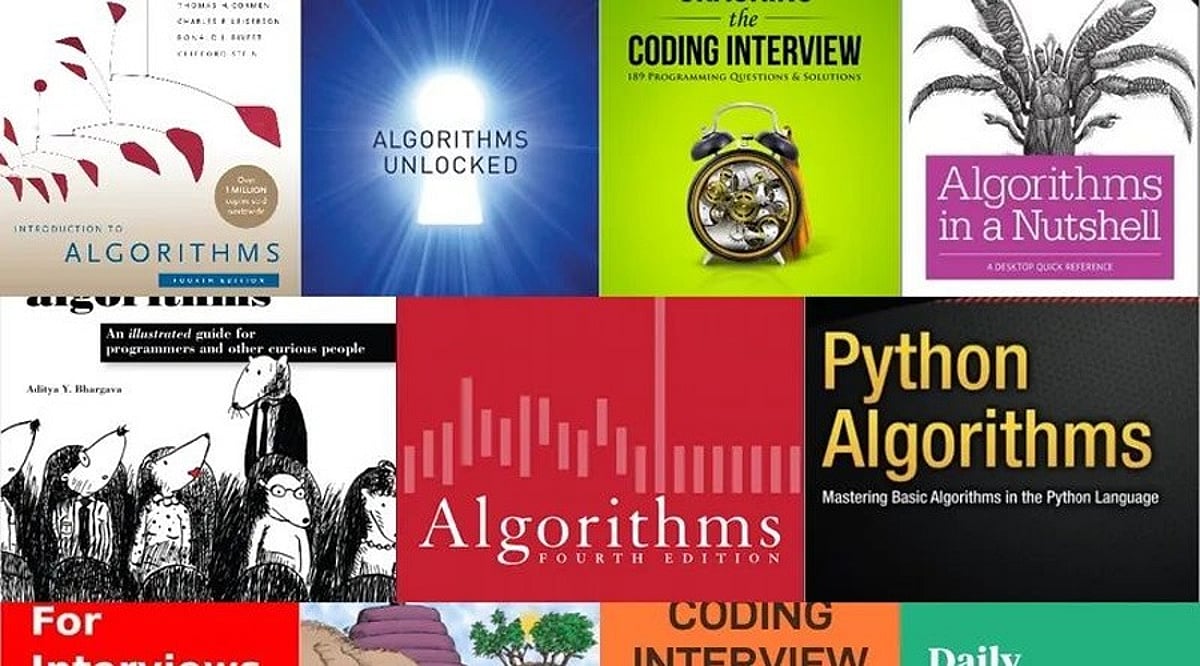
  • 10 Must-Read Data Structures and Algorithms Books for Programmers in 2026

    10 Must-Read Data Structures and Algorithms Books for Programmers in 2026

    Artificial intelligence can generate code in seconds, but it cannot replace a programmer’s deep understanding of data structures and algorithms (DSA). Whether you’re preparing for coding interviews, building scalable applications, or competing in programming contests, DSA remains one of the most valuable skills in software development. While AI can suggest solutions, knowing why an algorithm works and when to use it comes only through structured learning and practice. The right books make all the difference.

    Essential DSA Books to Build Strong Fundamentals

    These books establish the fundamentals of data structures and algorithms, helping readers build strong problem-solving skills before tackling advanced concepts.

    Introduction to Algorithms (CLRS) – The Definitive Reference

    CLRS, written by Thomas H. Cormen, Charles E. Leiserson, Ronald L. Rivest, and Clifford Stein, remains the standard guide to learning algorithms. It covers topics from graph and sorting algorithms to dynamic programming and computational complexity. Though challenging, no other book is as comprehensive.

    Grokking Algorithms – Where to Start Your Journey

    Aditya Bhargava’s book uses colorful illustrations and clear explanations to introduce binary search, recursion, graph traversal, and more. It’s one of the best books for beginners.

    Algorithms (4th Edition) – Learn Through Practice

    Robert Sedgewick and Kevin Wayne strike a balance between theory and practice, covering essential algorithm concepts and their implementation in real programs.

    Books Built for Coding Interviews

    Technical interviews focus on problem-solving rather than memorization. These titles help candidates build that mindset.

    Cracking the Coding Interview – The Interview Must-Have

    Gayle Laakmann McDowell’s book explains DSA concepts and includes nearly 200 interview questions, solutions, and tips for handling technical interviews at top tech companies.

    Data Structures and Algorithms Made Easy – Practice-Driven Learning

    Narasimha Karumanchi’s book uses a Q&A approach, reinforcing concepts through examples. It’s popular among engineering students preparing for placements and coding tests.

    Elements of Programming Interviews – Up the Difficulty Factor

    This book is designed for experienced programmers and includes various problems on arrays, linked lists, trees, graphs, and dynamic programming.

    Books That Sharpen Problem-Solving

    These books help programmers apply critical thinking to unfamiliar problems.

    The Algorithm Design Manual – Problem-Solving Application

    Steven S. Skiena merges theoretical concepts with practical problems solved using algorithms, providing insights across different industries. The algorithm catalog is especially helpful for finding the best way to solve different kinds of problems.

    Algorithm Design – Strong Academic Background

    Jon Kleinberg and Éva Tardos teach algorithm design using mathematical logic and well-chosen examples. It’s perfect for those who want to learn the principles of efficient computing.

    Books for Python Learners and Self-Study

    Not every programmer learns the same way. These books cater to different preferences and skill levels.

    Data Structures and Algorithms in Python – Learn DSA with Python

    Goodrich, Tamassia, and Goldwasser introduce basic DSA concepts via Python, focusing on ideas that apply across programming languages.

    A Common-Sense Guide to Data Structures and Algorithms – Simple and Accessible

    Jay Wengrow introduces difficult concepts in simple words with practical examples, avoiding complicated mathematical formulas. Its conversational style makes it one of the easiest DSA books.

    Choosing the Right DSA Book

    Depending on your goals, you can start with Grokking Algorithms and then move to Algorithms (4th Edition) or Introduction to Algorithms (CLRS). For placement preparation, choose Data Structures and Algorithms Made Easy and Cracking the Coding Interview. For experienced developers, The Algorithm Design Manual and Elements of Programming Interviews are excellent choices. Even in the era of AI, learning DSA is necessary, and practicing with these books is one of the best ways to improve your skills.

  • Essential Data Structures & Algorithms Cheat Sheet for Data Scientists (2026)

    Essential Data Structures & Algorithms Cheat Sheet for Data Scientists (2026)

    Why Data Structures and Algorithms Matter for Data Science

    Efficient data science depends on selecting the right data structures and algorithm patterns to process large datasets, optimize pipelines, and build scalable machine learning workflows. Hash maps, heaps, arrays, graphs, and traversal techniques form the foundation of everyday data science tasks, while Big O notation helps evaluate runtime and memory efficiency as data scales.

    Pattern-based problem solving, including sliding windows, graph traversal, dynamic programming, and greedy algorithms, enables faster, more efficient solutions for analytics, recommendation systems, and production pipelines.

    The fastest way to slow down a data science project is rarely the model. It is the code that moves, cleans, and searches through data before the model ever sees it. Most junior data scientists spend months prepping for interview algorithms but give only a passing glance to the data structures that decide whether a pipeline scales or falls apart.

    Understanding Big O Notation for Data Science Performance

    Big O notation describes how runtime and memory grow as data grows. Read as an engineering signal rather than a formula, it points to the exact line of code that will slow a pipeline down once the dataset grows past a sample. A join written as a nested loop looks fine on a thousand rows and grinds to a stop on ten million. Spotting an O(n²) pattern before it ships ranks among the more underrated skills in data science.

    Memory deserves the same attention as runtime. A hash map trades space for speed, storing extra data so lookups stay constant time — a trade that becomes a real design decision once a dataset holds hundreds of millions of keys.

    Essential Data Structures Every Data Scientist Should Master

    • Hash maps and sets handle deduplication, categorical encoding, and join keys through constant-time lookups. They are the single most useful structure in a data scientist’s toolkit.
    • Heaps and priority queues solve top-ranking problems, surfacing the most similar items or highest-scoring predictions from a stream of data.
    • Arrays and lists sit under every Pandas and NumPy operation. Understanding indexing explains why vectorized code outperforms a manual loop.
    • Queues and stacks support breadth-first and depth-first traversal, which appears in graph-based recommendation systems.
    • Trees and tries handle hierarchical data and prefix search, common in text tokenization.
    • Graphs model social networks, knowledge graphs, and fraud detection webs through adjacency lists.

    Much of this operates underneath familiar libraries. A Pandas merge behaves like a hash join. Vectorized NumPy operations replace row-by-row loops with array-level traversal, sidestepping the O(n²) trap entirely. Scikit-learn’s nearest neighbor search relies on tree- and hash-based structures to avoid comparing a query point against every other point.

    Essential DSA Patterns for Data Science and Machine Learning

    • Sliding window solves rolling averages and anomaly detection over a fixed span.
    • Two pointers handle merging sorted ranges and matching records within a threshold.
    • Fast and slow pointers detect repeating cycles in session logs.
    • Binary search on the answer finds a threshold value when input and outcome move in one direction.
    • Breadth-first and depth-first search trace shortest paths across networks and grids.
    • Dynamic programming scores sequences and measures edit distance between strings.
    • Greedy choices handle interval scheduling and quick feature selection.
    • Union-Find detects connected components in clustering problems.
    • Topological sort orders pipeline steps that depend on each other.

    Data Structures and Algorithms Learning Roadmap for Data Science

    Hash maps and sets come first, since they solve more real problems than any other structure and appear as the base case in most interview questions. Sliding window and two pointers follow naturally from array fundamentals already familiar from Pandas work. Heaps come next, once basic loops feel automatic rather than effortful. Graph traversal and dynamic programming can wait until the earlier patterns need no conscious thought.

    Three to five problems per pattern is usually enough to recognize it on sight. Applying that pattern to a small project cements the idea faster than another dozen practice problems would. This order mirrors how these ideas surface on the job, not how a course happens to sequence them.

    Final Thought

    The next wave of data science hiring will likely favor depth over breadth even more than it does today, as pipelines grow larger and cheaper compute stops covering for inefficient code. A small set of patterns, practiced until they need no thought, will matter more than a wide but shallow list of algorithms saved for an interview room and forgotten afterwards.

    Frequently Asked Questions

    1. Why are data structures and algorithms important for data science?

    Data structures and algorithms help data scientists process large datasets efficiently, optimize feature engineering, improve pipeline performance, and write scalable code that works reliably in production environments.

    2. Which data structures should every junior data scientist learn first?

    Junior data scientists should prioritize hash maps, arrays, heaps, queues, stacks, and graphs because these structures frequently appear in data processing, analytics, machine learning, and coding interviews.

    3. What is the role of Big O notation in data science?

    Big O notation helps estimate how an algorithm’s runtime and memory usage scale with growing datasets, making it easier to identify inefficient code before it affects production performance.

    4. Which DSA patterns are most useful for data science projects?

    Sliding window, two pointers, BFS, DFS, dynamic programming, heaps, and topological sorting are widely used for tasks such as anomaly detection, graph analysis, recommendation systems, and workflow optimization.

    5. How can beginners practice DSA effectively for data science?

    Start with hash maps and arrays, then learn common algorithm patterns through a few focused practice problems. Reinforce each concept by applying it to small data science projects instead of relying only on coding exercises.

  • 8 Breakthroughs Quantum Computing Could Deliver by 2030

    8 Breakthroughs Quantum Computing Could Deliver by 2030

    Quantum computing is no longer a distant theoretical concept—it is rapidly advancing toward practical applications that could transform industries. By 2030, these powerful machines may solve some of the most complex problems facing humanity. Here are eight real-world challenges quantum computers are expected to tackle.

    Drug Discovery

    Quantum computers can simulate complex molecular interactions with unprecedented accuracy. This capability will help researchers identify promising drug candidates much faster than traditional computing methods, potentially accelerating the development of treatments for diseases like cancer and Alzheimer’s.

    Battery Development

    Advanced quantum simulations may revolutionize the design of batteries. By modeling chemical reactions at the quantum level, scientists could create longer-lasting, safer, and more efficient batteries for electric vehicles and renewable energy storage.

    Supply Chain Optimization

    Businesses face enormous complexity in logistics. Quantum algorithms can optimize shipping routes, warehouse operations, and inventory management, reducing costs and improving efficiency across global supply chains.

    Financial Modeling

    Banks and investment firms will use quantum computers to analyze risk scenarios and market trends far faster than classical systems. This will support more informed portfolio management and better forecasting of economic shifts.

    Climate Research

    Modeling Earth’s climate involves countless variables. Quantum computers can simulate atmospheric interactions with greater precision, improving weather forecasts and deepening our understanding of long-term climate change patterns.

    Cybersecurity Research

    Quantum systems offer both challenges and solutions for security. They can strengthen encryption research and help develop communication methods that are resistant to future cyber threats, safeguarding digital infrastructure.

    Material Science

    Designing new materials requires understanding molecular structures. Quantum simulations will enable researchers to create stronger, lighter, and more efficient materials for aerospace, electronics, and manufacturing.

    Traffic Management

    Urban congestion is a growing problem. Quantum-powered optimization algorithms could help cities design smarter traffic signals, improve transportation networks, and enhance public transit systems, reducing travel times and emissions.

  • Master Dynamic Programming in 2026: Top Patterns and Interview Questions

    Master Dynamic Programming in 2026: Top Patterns and Interview Questions

    Dynamic programming remains one of the most important coding interview topics in 2026. Mastering common DP patterns, understanding company-specific expectations, and practicing representative problems can significantly improve problem-solving skills and increase success in technical interviews at top technology companies.

    Why Pattern Recognition Beats Memorization

    Interview data from recent hiring cycles suggests that around 87% of coding questions at Google, Meta, Apple, Netflix, and Amazon are built around just 10 to 12 core problem-solving patterns, with dynamic programming forming one of the most versatile among them. The core idea behind DP is simple even when the problems aren’t: break a larger problem into smaller, overlapping subproblems, solve each one exactly once, and store the results, typically through memoization or a tabulation array, so the same subproblem is never recomputed. Any time a question asks for a maximum, minimum, or count of ways to do something under constraints, there’s a strong chance dynamic programming applies.

    The Core Patterns Worth Mastering

    DP breaks down into a manageable number of recognizable categories rather than one giant, undifferentiated topic. Knapsack-style problems (0/1 and unbounded variants) cover resource allocation and optimization questions. Grid-based 2D DP tests a candidate’s ability to reason across two-dimensional state spaces with multiple transition directions. String DP handles text-processing challenges like edit distance and longest common subsequence, patterns with direct application in areas like version control and bioinformatics. Interval DP applies to scheduling and matrix chain multiplication-style problems, while state-machine DP models transitions governed by specific rules, useful in problems involving buy/sell timing or step-based decisions.

    Frequently Asked DP Problems in 2026

    Company-Specific Differences Worth Knowing: Every organization does not follow the same approach toward DP problems. The first difference between companies is that Google requires higher DP expertise compared to other organizations, not only in 1D problems such as staircase problems but 2D Grid, String DP and even DP on Trees/Graphs problems and an overall preference for harder problems in general. The next two organizations, Meta and Amazon, have more focus on array and string DP problems with medium-level difficulty. Microsoft avoids going into hard problems related to DP and prefers medium-level difficult problems along with good explanations. This shows that preparation according to the requirements of a particular company pays off in a bigger way.

    How to Actually Prepare for DP Interviews

    The most optimal form of preparation is no different from the tried and tested methods of pattern-based preparation. The method is to select a canonical example for each pattern, practice solving it until the logic of the solution takes under two minutes to describe and then use that logic for other variations. Interviewers are much more concerned about the ability of candidates to recognize the structure of subproblems, verbally derive a recurrence relation for the same and explain their trade-offs on time and space than knowing whether the candidate has seen the problem or not. Considering the frequent appearance of DP questions on arrays, strings, trees and grids, spending the effort to really comprehend a few basic patterns goes a long way.

    Why This Matters

    Dynamic programming is one of the most frequently tested problem-solving techniques in software engineering interviews. Understanding its recurring patterns helps candidates solve complex coding challenges efficiently, improve algorithmic thinking, and perform better in technical interviews across leading technology companies.

    FAQs

    What is dynamic programming in programming?

    Dynamic programming (DP) is an algorithmic technique used to solve complex problems by breaking them into smaller overlapping subproblems. Instead of solving the same subproblem repeatedly, DP stores previously computed results using memoization or tabulation, significantly improving time efficiency.

    Why is dynamic programming important for coding interviews?

    Dynamic programming tests a candidate’s problem-solving ability, optimization skills, and understanding of algorithms. Many leading technology companies include DP questions because they evaluate logical thinking, recurrence formulation, state transitions, and the ability to optimize brute-force solutions into efficient algorithms.

    Which companies frequently ask dynamic programming questions?

    Dynamic programming questions commonly appear in interviews at Google, Meta, Amazon, Microsoft, Apple, Netflix, Adobe, Uber, and many other technology companies. Google generally asks more advanced DP problems, while Amazon and Meta often focus on medium-difficulty array and string-based DP questions.

    What are the most common dynamic programming patterns?

    The most frequently tested DP patterns include 0/1 Knapsack, Unbounded Knapsack, Grid DP, String DP, Interval DP, State Machine DP, Tree DP, and Bitmask DP. Learning these core patterns enables candidates to solve a wide variety of interview problems efficiently.

    How should beginners start learning dynamic programming?

    Beginners should first understand recursion before learning memoization and tabulation. They should then practice simple problems like Fibonacci, Climbing Stairs, and House Robber before progressing to Knapsack, Longest Common Subsequence, Coin Change, and more advanced DP patterns.

  • Understanding Algorithms: A Beginner’s Guide to How They Work in 2026

    Understanding Algorithms: A Beginner’s Guide to How They Work in 2026

    Algorithms are step-by-step instructions that power modern technology, from search engines and streaming platforms to AI systems and banking applications. This guide explains how algorithms work, their major types, practical examples, and why understanding them is increasingly important in today’s digital world.

    Most people use algorithms from the moment they wake up. When someone checks Google for weather updates, opens Instagram during breakfast, watches YouTube videos at lunch, or listens to Spotify while traveling, algorithms are already working in the background.

    The funny thing is that many people use algorithm-based apps all day without knowing what an algorithm actually is. The word sounds technical and difficult at first. But the basic idea is very easy to understand. An algorithm is simply a list of steps followed to complete a task. That is all.

    Think about making instant noodles. First, boil water. Then add noodles. After that, mix the tastemaker. Finally, cook for a few minutes and serve. Those instructions form a process. That process is similar to an algorithm. Computers also follow instructions step by step. The difference is that computers can do it much faster than humans.

    In 2026, algorithms are part of almost every digital service people use daily. Search engines use them to show results. Shopping apps use them to suggest products. Streaming apps use them to recommend movies and songs. Banks use them to detect fraud. AI tools use them to answer questions. Even maps, food delivery apps, and online ads depend heavily on algorithms. People do not need to become software engineers to understand these systems. Learning the basics simply helps people understand how technology works behind the screen.

    What is an Algorithm? Meaning, Definition, and Real-World Examples

    An algorithm is a set of instructions used to solve a problem or complete a task. That may sound technical, but people already follow algorithms in daily life. A recipe is one of the easiest examples. Suppose someone wants to make tea. They follow steps:

    • Boil water
    • Add tea leaves
    • Add milk
    • Add sugar
    • Pour into a cup

    If the steps are followed properly, the result will usually be correct. Computers work in a very similar way. They follow instructions carefully.

    GPS navigation is another simple example. When someone enters a destination, the app studies roads, traffic, and distance before showing the best route.

    ATMs also depend on algorithms. They check passwords, verify accounts, confirm balances, and complete transactions step by step. Online shopping apps use algorithms to study what users search, click, or buy. That is why shopping apps often recommend products that match user interests.

    Even washing machines use basic algorithms. Different washing modes follow different instructions depending on the type of clothes. Without algorithms, computers and smart devices would not know what to do.

    How Computer Algorithms Work Step by Step for Beginners

    Most algorithms work in three simple stages:

    • Input
    • Processing
    • Output

    Input means the information given to the computer. For example, when someone types “best action movies” into Netflix, those words become the input. Processing is the stage where the system studies the information.

    Netflix may check:

    • Viewing history
    • Movie ratings
    • Genres watched earlier
    • Trending content
    • Similar user choices

    After studying all this information, the app gives results. That final result is called the output. Algorithms also help computers make decisions. Imagine searching for a contact on a phone. The phone checks names until it finds the correct match.

    Some algorithms also organize information properly. For example, sorting names alphabetically helps systems find information faster later. At the core, computers simply follow instructions one step at a time.

    Types of Algorithms in Computer Science Explained Simply

    There are many different types of algorithms. Each one solves a different kind of problem.

    Different apps use different algorithms depending on the task they need to perform.

    How Search Engine Algorithms Like Google Work

    Search engines use algorithms to decide which websites should appear first. When someone searches on Google, the system studies millions of webpages within seconds.

    It checks many things, including:

    • Keywords
    • Content quality
    • Website speed
    • Mobile friendliness
    • User experience
    • Links from other websites

    Suppose someone searches for “best phones under Rs. 20,000.” Google tries to understand what the user wants. Most likely, the person wants buying suggestions and reviews. So, the search engine tries to show webpages that answer the question clearly.

    Google also updates its systems regularly. That is why website rankings often change. Some websites move higher because their content becomes more useful. Others drop because they become outdated. Search engine algorithms are designed to help users find useful information faster.

    How Social Media Algorithms Work on Instagram, YouTube, and TikTok

    Social media platforms study user behavior constantly. They track:

    • Likes
    • Comments
    • Shares
    • Watch time
    • Searches
    • Saved posts

    If someone watches cricket videos regularly, Instagram and YouTube will begin showing more sports content. TikTok works heavily on watch time. If users watch a video completely, the app assumes the content is interesting. That video may then reach more users.

    This is one reason why some videos suddenly become viral overnight. Social media feeds are different for every person because algorithms study individual behavior. Someone interested in travel will see travel content more often. Someone interested in cooking may see recipe videos daily. The system slowly learns user interests over time.

    How AI and Machine Learning Algorithms Work

    Traditional algorithms follow fixed instructions. AI algorithms are different because they learn from data. For example, voice assistants slowly learn speech patterns and accents. AI chatbots study huge amounts of text to answer questions better. Image recognition systems learn to identify faces, animals, or objects after studying many examples.

    Machine learning systems improve gradually over time as they process more information. This is why AI tools often become smarter with more usage. For example, music apps learn what type of songs users like. Shopping apps learn buying habits. AI writing tools learn language patterns. The more data these systems process, the better they usually become.

    How Recommendation Algorithms Work on Netflix, Amazon, and Spotify

    Recommendation systems are everywhere now.

    Netflix studies:

    • Watch history
    • Ratings
    • Viewing habits
    • Favorite genres

    Spotify studies:

    • Listening history
    • Favorite artists
    • Repeated songs
    • Skipped tracks

    Amazon studies:

    • Search history
    • Shopping behavior
    • Recently viewed products
    • Purchase patterns

    These systems also compare users with similar interests. For example, if many people who watched one movie also watched another film, Netflix may recommend that second movie too. That is why recommendations often feel personal. Sometimes the suggestions are surprisingly accurate because algorithms study patterns very closely.

    What Is an Algorithm in Programming? Beginner Coding Guide

    In programming, algorithms help developers solve problems step by step. Before writing code, programmers usually plan the logic first. For example, if someone is building a food delivery app, they must decide:

    • How orders will be placed
    • How restaurants will receive requests
    • How payments will work
    • How delivery tracking will happen

    All these tasks need proper instructions. Flowcharts and pseudocode are often used before coding starts. Flowcharts visually show the process. Pseudocode explains the logic using simple words instead of a programming language. Learning algorithms helps beginners improve logical thinking. That is why coding students usually study algorithms early before moving into advanced software development.

    Most Common Algorithms Used in Software Development

    These algorithms quietly power many apps and websites people use every day.

    How Sorting and Searching Algorithms Work with Examples

    Sorting means arranging information properly. Examples include:

    • Arranging books alphabetically
    • Sorting numbers from smallest to largest
    • Organizing contact names

    Searching means finding specific information. A linear search checks one item at a time. Imagine checking every page of a notebook to find one phone number. Binary search works faster. It cuts the search area into smaller sections repeatedly.

    Think about searching for a name inside a large dictionary. Instead of starting from page one, people usually open somewhere near the middle first. That is similar to how binary search works. Efficient searching saves a huge amount of time, especially in systems handling millions of records.

    Why Algorithms Are Important in Technology and Everyday Life

    Algorithms make technology faster and more organized. They are used in:

    • Banking apps
    • Navigation systems
    • Shopping platforms
    • Healthcare tools
    • Streaming services
    • Cybersecurity systems
    • AI tools

    Banks use algorithms to detect unusual transactions. Hospitals use them to study patient reports and medical scans. Streaming platforms use them to recommend movies and music. Delivery apps use them to find nearby drivers. Without algorithms, many digital services would become slower and less useful.

    Advantages and Disadvantages of Algorithms Explained

    For example, social media algorithms sometimes keep showing similar content repeatedly. This can limit what users see online. That is why experts often talk about responsible AI and ethical technology use.

    How Algorithms Impact SEO, Digital Marketing, and Online Content

    Algorithms have a lot of influence over web visibility. The Google algorithm determines the ranking of websites within search engine results. Social media algorithms determine the number of people who will view videos or reels. This is the reason why bloggers, YouTubers, and businesses focus on analyzing platform algorithms.

    In addition to algorithms used in search engines and social platforms, advertising systems also employ algorithms. After searching for shoes on the internet, people end up seeing advertisements for shoes on other applications as well. This is due to the fact that the algorithm monitors their online activities and interests.

    Future of Algorithms: AI, Automation, and Emerging Technologies

    AI will be even more useful in the years ahead. Currently, AI-powered tools allow organizations to automate their operations and analyze big data quickly. Algorithm-powered self-driving cars identify the road, traffic conditions, and obstacles. AI smart assistants learn user preferences continually. Medical systems also rely on algorithms for research and disease detection. Factories also implement algorithms for automation and fewer errors.

    As we can see, there are a lot of risks associated with AI technologies. In the near future, issues of privacy, bias, and cyber safety will get even worse. This is the reason why the discussion about more efficient regulations of AI systems and online platforms arises.

    Final Conclusion

    Algorithms have become a part of our lives now. The applications of algorithms can be seen in everything from online search engines and video viewing to shopping, music listening, mapping out routes for travel, and other AI applications. Many of these algorithms may not be visible to regular users at all times.

    The best part about algorithms is that no prior programming experience is needed to learn them. Learning basic logic will help one learn about algorithms gradually and hence how today’s technology operates behind the scenes. Algorithms will continue to be more and more prevalent in our lives as we move further into 2026 and onwards.

    Why this Matters: Algorithms quietly shape almost every digital experience, influencing search results, online shopping, entertainment, navigation, finance, and artificial intelligence. Understanding how they work helps users make better decisions online while giving students and aspiring developers a strong foundation in modern computing and AI technologies.


  • Essential Machine Learning Projects for a Standout Resume in 2026

    Essential Machine Learning Projects for a Standout Resume in 2026

    Machine learning continues to dominate the tech landscape, and showcasing hands-on projects is one of the best ways to impress recruiters. Here are nine projects that not only demonstrate your skills but also align with real-world business needs.

    1. House Price Prediction

    Build regression models using historical housing datasets. Practice feature engineering, data visualization, and evaluation metrics to accurately forecast residential property values.

    2. Customer Churn Prediction

    Develop classification models that identify customers likely to leave subscription services. Apply behavioral analytics and machine learning algorithms to derive actionable business insights.

    3. Sentiment Analysis

    Analyze customer reviews using natural language processing (NLP), text classification, feature extraction, and opinion mining. This project yields valuable business intelligence from unstructured text.

    4. Image Classification

    Train convolutional neural networks (CNNs) to recognize objects, products, or animals. Use labeled datasets and modern deep learning frameworks to achieve impressive accuracy.

    5. Fake News Detection

    Create intelligent systems that detect misleading articles. This project combines NLP techniques, classification models, feature engineering, and contextual language understanding.

    6. Movie Recommendation System

    Build personalized recommendation engines using collaborative filtering, content-based filtering, and user preference modeling. Optimize with machine learning to enhance entertainment experiences.

    7. Stock Price Forecasting

    Apply time-series forecasting models to historical financial data. Incorporate predictive analytics, visualization, and statistical learning to analyze market trends.

    8. Resume Screening AI

    Develop recruitment automation tools that match candidate profiles with job descriptions. Use NLP and classification algorithms to streamline hiring processes.

    9. Handwritten Digit Recognition

    Implement neural networks to recognize handwritten digits. Practice image preprocessing, leverage benchmark datasets, and train deep learning models to achieve high accuracy.

    Each of these projects can be built using open-source datasets and libraries. They provide tangible proof of your ability to solve real problems with machine learning—making your resume stand out to employers in 2026 and beyond.