Category: Artificial Intelligence

  • How Text-to-Image AI Generates Photographs, Art, and More from Simple Prompts

    How Text-to-Image AI Generates Photographs, Art, and More from Simple Prompts

    Text-to-image artificial intelligence has changed the way people create digital visuals. AI image generators can turn written descriptions into images, letting users create everything from photorealistic scenes and illustrations to product concepts and creative artwork.

    The technology combines natural-language processing with image-generation techniques to interpret a user’s instructions and produce a visual result. While different AI systems use different architectures, diffusion models are among the techniques used by modern image generators.

    What is Text-to-Image AI?

    Text-to-image AI refers to generative AI applications that produce images based on a natural language prompt. These applications learn to generate images from text prompts since they are trained on large amounts of image data paired with corresponding text.

    When the user inputs the text prompt, the application interprets it and produces an image based on the input. The more detail the user provides in the prompt, the more specific the instructions they give the model. Google has described how AI systems learn relationships between textual descriptions and visual features during training, allowing them to generate images from written prompts.

    How AI Image Generators Create Images

    Many modern image-generation systems use diffusion-based techniques. During training, a model learns what happens when noise progressively affects an image. It then learns how to reverse that process and reconstruct an image.

    During generation, the process generally begins with random noise. The user’s text prompt guides the model as it progressively removes noise. As the process continues, shapes, textures, colors, and other visual elements emerge until the system produces a finished image.

    Amazon Web Services describes diffusion models as systems that learn to generate images by reversing a noise process. This approach has become a key method for modern text-to-image generation.

    However, not every image-generation system uses the same architecture. Earlier systems used other approaches. OpenAI’s DALL-E, for example, used autoregressive transformer-based generation.

    What Can Users Create with AI?

    The range of visuals AI image generators can create is much larger than before.

    • Photographic-style Visuals: AI image generators can create images intended to look as realistic as photographs.
    • Digital Art: You can generate illustrations, paintings, concept art, or images in various artistic styles.
    • Product Visuals: Generated images may be used for creating concepts for products and promoting them.
    • Character and Scene Generation: Writers or game developers can generate fictional characters, settings, and scenes.
    • Social Media Visuals: AI-generated visuals can be used for social media posts and digital content creation.
    • Creative Concepts: It is possible to visualize various creative ideas.

    Modern AI image tools can also do more than generate an image from text. Depending on the platform, users may be able to edit existing images, transform one image into another, modify backgrounds, or make targeted changes to visual elements.

    Why Prompt Matters

    Prompting remains essential to image generation. Users can specify elements such as the subject, setting, lighting, composition, atmosphere, and how visuals should be treated, giving the model more detailed instructions.

    But AI image generators do not always include every instruction in the generated visuals. Complicated prompts may result in missing elements, unanticipated elements, or wrong connections between objects.

    Google has observed that image-generation models can sometimes leave out elements from the prompt or add new ones not mentioned, especially when prompts have complicated instructions.

    This suggests that image generation is an iterative process, not a one-prompt task.

    Where AI Image Generation is Heading

    Text-to-image AI has disrupted visual creation by letting users engage with creative software through language rather than starting with a blank page or creating visuals from scratch.

    The advent of text-to-image AI also raises legal and ethical considerations around copyright infringement, training data, bias, and responsible use.

    While these concerns matter when discussing the implications of text-to-image AI, at its core, the concept is simple: tell the AI what you want to see in your image.
  • India’s AI Job Landscape: Which Cities Are the Newest Hubs for Artificial Intelligence Talent?

    India’s AI Job Landscape: Which Cities Are the Newest Hubs for Artificial Intelligence Talent?

    India’s artificial intelligence job market is undergoing a significant transformation, expanding far beyond the traditional tech corridors. While Bengaluru remains the undisputed leader, a wave of new cities is emerging as powerful hubs for AI, data science, cloud computing, and machine learning roles.

    Bengaluru: The Unrivaled AI Capital

    Bengaluru continues to dominate India’s AI employment scene. The city’s robust ecosystem of startups, global technology giants, and dedicated research teams, combined with a deep pool of skilled professionals, keeps it at the forefront of AI recruitment.

    Hyderabad: A Rising Powerhouse

    Hyderabad is rapidly building momentum as a major AI destination. The city’s growth is fueled by a strong presence of technology firms, global capability centers, and a thriving startup culture, all driving demand for skilled AI professionals.

    Delhi-NCR: A Hub for Diverse AI Roles

    The National Capital Region is expanding its AI hiring across multiple sectors, including technology, consulting, finance, healthcare, and startups. This diversity creates opportunities that extend well beyond traditional software development, attracting talent for a wide range of AI applications.

    Mumbai: Finance and Fintech Drive AI Demand

    Mumbai’s powerful financial and business ecosystem is a major catalyst for AI job growth. Demand is particularly high in fintech, banking, analytics, media, and enterprise technology, where AI is used to drive innovation and efficiency.

    Pune: Strengthening Its Tech Foundation

    Pune is solidifying its position as an AI hub through its strong IT services, automobile, manufacturing, SaaS, and engineering sectors. This industrial diversity creates a wide array of career opportunities for AI professionals.

    Chennai: Joining the AI Race

    Chennai’s technology and automotive industries are increasingly adopting AI, opening up roles in machine learning, automation, analytics, software development, and intelligent systems. The city is becoming a key player in India’s AI landscape.

    Emerging Cities on the Map

    The AI job boom is not limited to the major metros. Cities like Ahmedabad, Kolkata, Kochi, and Jaipur are also witnessing a rise in AI opportunities as companies expand their technology operations beyond established hubs. This trend is making AI careers accessible to a broader range of professionals across the country.

    A Distributed Future for AI Jobs

    India’s AI job market is becoming more distributed, offering skilled professionals opportunities in both established technology centers and emerging regional employment hubs. This decentralization is a positive sign for the country’s tech ecosystem, promising a more inclusive and widespread growth of AI talent.

  • Android Dev Summit 2026 Returns: Google Confirms Dates, AI Focus, and London Edition

    Android Dev Summit 2026 Returns: Google Confirms Dates, AI Focus, and London Edition

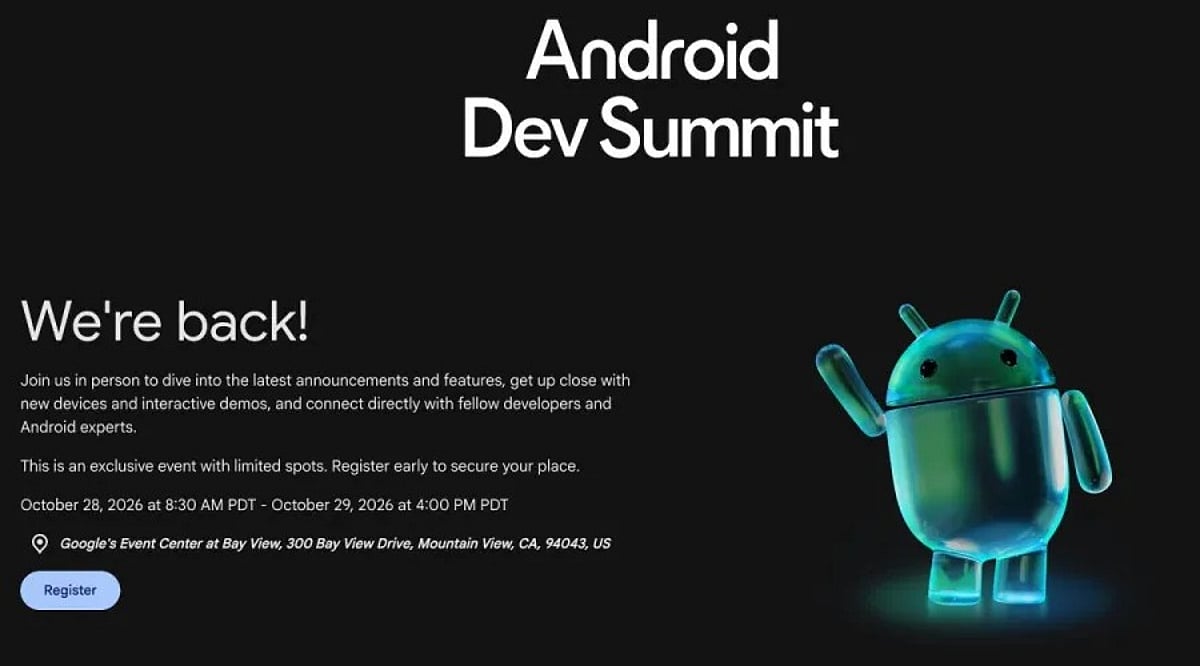
    Google has officially announced the Android Dev Summit 2026, scheduled for October 28–29 at the company’s headquarters in Mountain View, California. The event marks the return of the dedicated Android developer conference after a four-year hiatus, with an additional extended edition taking place in London on the same day.

    Summit Schedule and Format

    The two-day summit kicks off on October 28 at 8:30 AM PDT (9:00 PM IST) and concludes on October 29 at 4:00 PM PDT (4:30 AM IST). Hosted at Google’s Event Center at Bay View, attendance is invitation-only for select professional Android developers. Attendees can expect product demonstrations, announcements about Android, and opportunities to connect with Google engineers and industry experts.

    London Extended Edition

    On October 28, Google will also host an extended edition of the summit at its UK office at 6 Pancras Square, London. Running from 8:30 AM to 7:00 PM GMT (2:00 PM to 12:30 AM IST), the London event caters to developers across Europe, the Middle East, and Africa. Like the Mountain View event, attendance is by invitation only.

    Key Topics and Expectations

    Android 18 is expected to be a major focus, with Google likely sharing more details about its next operating system. Other anticipated highlights include new graphics features in Jetpack Compose, sessions on artificial intelligence capabilities for Android apps, and updates on Android XR—Google’s extended reality platform. Development tools and app tools are also on the agenda. Developers interested in attending the Mountain View event must register in advance.

    The return of the Android Dev Summit provides Google with a dedicated platform to outline the future of Android development and unveil upcoming tools and features.

  • Sachin Tendulkar Partners With OpenAI to Make ChatGPT a Daily Habit in India

    Sachin Tendulkar Partners With OpenAI to Make ChatGPT a Daily Habit in India

    Cricket legend Sachin Tendulkar has announced a multi-year partnership with OpenAI, aiming to encourage more Indians to incorporate ChatGPT into their everyday lives. The former Indian captain shared the news on X (formerly Twitter), writing: “We have some interesting things coming up, and I can’t wait to share them with you.”

    Tendulkar, known for his curiosity and love of learning, explained how ChatGPT has fueled that habit. In his announcement, he noted that one question often leads to another, and ChatGPT has encouraged that exploration. He also revealed a relatable use case: he planned his last family trip using the AI assistant.

    “Discovering what else I can do with ChatGPT, sharing what I find useful, and encouraging more people to give it a try with something they care about.” — Sachin Tendulkar

    OpenAI Expands Its India Push

    The partnership arrives as OpenAI increases its focus on India. The company reports that more than 10 crore (100 million) people in India use ChatGPT every week. OpenAI has also outlined plans around AI infrastructure, business adoption, and worker training in the country, signaling a long-term commitment to one of the world’s fastest-growing AI markets.

    A Familiar Face for Everyday AI

    Tendulkar gives OpenAI a powerful way to reach beyond the typical technology audience. By using ChatGPT for something as simple as planning a family vacation, he demonstrates that AI tools are accessible to everyone — not just engineers or tech enthusiasts.

    For OpenAI, the collaboration is about more than driving initial sign-ups. The real goal is building a lasting daily habit among Indian users. A trusted, familiar figure like Tendulkar can help transform AI from a passing curiosity into a routine tool, supporting OpenAI’s broader efforts to solidify its user base in India.

    As AI becomes easier to use, the next challenge is no longer whether people will try it, but how often they will return to it. With Tendulkar on board, OpenAI is betting that everyday use cases like travel planning, learning, and quick information searches will make ChatGPT a natural part of daily life.

  • Fireflies.ai Targets India as Fred Evolves From Meeting Note-Taker to Workplace AI Agent

    Fireflies.ai Targets India as Fred Evolves From Meeting Note-Taker to Workplace AI Agent

    India has emerged as a critical growth market for Fireflies.ai as the company expands its AI assistant Fred beyond simple meeting transcription and summaries. Fred is now being shaped into a full-fledged workplace AI agent that can handle routine follow-up tasks such as drafting emails, updating CRM records, and creating tasks, all based on conversations it has captured.

    Fireflies.ai co-founder and CEO Krish Ramineni revealed that India is the company’s second-largest market by user count, with paid teams in the country tripling over the past two years. This rapid adoption is influencing both product development and pricing strategy, with the company planning a lower-cost tier specifically for Indian users.

    From Meeting Notes to Workplace Execution

    Fireflies initially gained traction as a tool that records, transcribes, and summarizes meetings. Now, Fred is evolving into a broader workplace companion. The platform connects meeting insights with email, CRM systems, and project-management software, enabling Fred to draft follow-up emails, update records, create tasks, and organize post-conversation information. Fireflies currently offers more than 200 AI skills across its platform.

    The company has also ventured into voice agents, which can conduct certain calls and automatically prepare summaries and transfer data into business systems. Fireflies reports that its voice agents have handled over 40,000 conversations globally.

    “Fireflies.ai started as an AI meeting assistant and note-taker. From day one, the vision was to build a personal assistant that helps with your work,” Ramineni shared. “Back then, we were experimenting with chatbots and Slack bots, but the technology was too early, and there were no LLMs. We eventually went all in on meetings, and the note-taker found product-market fit quickly.”

    India Shapes Product and Pricing Plans

    India’s growing user base is directly influencing Fireflies’ roadmap. The platform already supports 11 Indian languages, including Hindi, Bengali, Tamil, Telugu, Gujarati, and Marathi, as part of its broader language coverage. A lower-cost pricing tier tailored to the Indian market is also in development.

    Ramineni confirmed plans to continue hiring from India’s deep technology and AI talent pool. Fireflies operates as a fully remote company with employees distributed across multiple locations rather than concentrated in a single office.

    AI Takes on More Routine Work

    The broader strategy is to transform Fireflies from a tool that simply records discussions into one that helps complete follow-up work. Ramineni draws a clear line between routine execution and decisions requiring human judgment. Tasks such as screening, qualification, drafting, routing, and follow-ups can be automated, while hiring decisions, financial choices, and other high-impact judgments should remain under human control.

    For Fireflies, India’s rapid adoption provides both a large user base and a real-world testing ground for this shift as workplace AI moves further from note-taking toward active task execution.

  • Personal AI Agent Developer Instinct Secures $1 Billion Series C at $10 Billion Valuation

    Personal AI Agent Developer Instinct Secures $1 Billion Series C at $10 Billion Valuation

    Instinct, a San Francisco-based startup building personal AI agents, has raised $1 billion in a Series C funding round, pushing its valuation to $10 billion. The round was backed by Sequoia Capital, Benchmark Capital, and Coatue, signaling strong investor confidence in autonomous AI assistants.

    The company previously raised $250 million, bringing total pre-Series C funding to $350 million. Reports earlier this month hinted at the $1 billion raise at a $10 billion valuation. Instinct is developing an AI agent that goes beyond answering questions — it can autonomously perform everyday tasks like booking trips, ordering groceries, canceling subscriptions, and making phone calls through its new Concierge service.

    Instinct has also introduced inter-agent communication, allowing multiple Instinct agents to coordinate plans and share files such as documents, images, and spreadsheets. The company remains in early access but has already attracted over 100,000 users, facing capacity pressure from rising demand. The fresh capital will help expand infrastructure and bring the product to more consumers.

    Competition in the personal AI space is heating up. Meta recently launched Muse, a task-oriented AI assistant. Instinct’s funding gives it substantial resources to develop privacy and security measures, including isolated environments, temporary credentials, and execution controls. The company aims to turn its early-access product into a widely used consumer service as demand for truly autonomous personal agents continues to grow.

  • How a Teen Entrepreneur Transformed an AI Ban Into a Job Platform for Neurodivergent Candidates

    How a Teen Entrepreneur Transformed an AI Ban Into a Job Platform for Neurodivergent Candidates

    From School Ban to Startup Success

    Seventeen-year-old Navya Tuteja, a senior at Thomas Jefferson High School for Science and Technology in Virginia, turned a school-wide ban on ChatGPT into the inspiration for her AI startup, Raaha. The platform, which she built herself, is designed to help neurodivergent job seekers evaluate whether a job listing aligns with their needs before they apply.

    Since its launch, Raaha has attracted over 1,000 users and indexed more than 20,000 job listings, according to reports. Tuteja currently offers the platform free of charge as she continues to refine the product.

    What Inspired Raaha

    The idea for Raaha grew from Tuteja’s personal experiences. Her mother is hard of hearing, and Tuteja noticed that many job advertisements aimed at neurodivergent candidates focus heavily on employer expectations while offering little insight into the actual workplace environment. Raaha aims to close that gap by analyzing job descriptions across multiple factors, giving candidates a clearer picture of whether a role might suit their needs.

    Tuteja has also considered a future business model where employers and workforce organizations could pay to use the platform or to improve their job postings for inclusivity.

    Navigating an AI Ban

    Interestingly, Tuteja’s own school Wi-Fi blocks access to ChatGPT, Claude, and other generative AI tools. She says the restriction forced her to rely less on AI during school hours and to handle learning and exam preparation independently. However, she does not advocate for outright bans. As president of her school’s AI club, she uses AI for practical tasks like drafting emails and organizing information.

    For Raaha, Tuteja wrote the core algorithm herself and used AI primarily for mechanical aspects of website design. She emphasizes the importance of transparency in AI usage.

    Another Project: Legible

    Beyond Raaha, Tuteja created Legible, a tool that translates complex special-education documents—such as IEPs and 504 plans—into simpler language for families. Concerned that AI-generated summaries sometimes omit critical sources, she developed a transparency framework called Traceable Accessibility. She has discussed this framework with state lawmakers and the U.S. Department of Education.

    What’s Next

    Tuteja plans to attend college but says she could consider running Raaha full-time if the startup continues to grow.

  • US Government Explores AI to Speed Up FOIA Document Reviews and Redactions

    US Government Explores AI to Speed Up FOIA Document Reviews and Redactions

    The US government is increasingly turning to artificial intelligence to help federal agencies review and redact sensitive information from documents released under the Freedom of Information Act (FOIA). This move aims to accelerate the processing of public records requests while raising important questions about transparency and the accuracy of automated redactions.

    DHS Plans AI-Assisted FOIA Redactions

    The Department of Homeland Security (DHS) intends to use AI to identify information that may need to be removed from documents released through FOIA requests. Specifically, US Customs and Border Protection, a DHS component, plans to deploy Google’s AI and machine-learning technology to recommend potential redactions to FOIA officers.

    According to the department’s AI use-case documentation, the technology is designed to reduce the time required to process requests. DHS officials have emphasized that human employees will still review the AI’s recommendations before any records are released. The planned use is expected to cover certain categories of FOIA requests that account for more than 10% of the department’s submissions, as reported by The Washington Post.

    Other Agencies Are Testing AI for Document Review

    DHS is not alone in exploring automated document review. The Department of the Interior is using Microsoft technology to identify potential attorney-client privileged information, while the Justice Department has deployed Veritone’s aiWARE for video redaction. The Department of Health and Human Services is also testing an AI-based system to review and redact records; its 2026 FOIA report notes that some offices are exploring AI and large language models to improve document processing, with qualified FOIA professionals expected to verify AI-generated results.

    Concerns Over Automated Redactions

    The growing use of AI has raised concerns among FOIA experts and transparency advocates. Redacting government records is not simply a matter of flagging sensitive words. Officers must determine whether information falls under one of FOIA’s legal exemptions. There are also worries that an AI system could reproduce existing patterns of over-redaction. A previous study of government records found that while AI could identify potentially exempt material, it also made mistakes in deciding what to withhold.

    Human Review Remains Key

    For now, federal agencies say AI is being introduced as an assistance tool rather than a replacement for human reviewers. DHS employees are expected to check AI recommendations before records are released. The broader question remains whether automation will help agencies clear FOIA backlogs faster without unnecessarily limiting public access to government information. As more departments experiment with AI-assisted redaction, these systems will likely remain under scrutiny for accuracy and oversight.

  • Court Backs Pentagon’s Supply Chain Risk Designation for Anthropic’s Claude AI

    Court Backs Pentagon’s Supply Chain Risk Designation for Anthropic’s Claude AI

    A US federal appeals court has upheld the Pentagon’s decision to designate AI company Anthropic as a supply-chain risk, enabling the government to exclude the company’s Claude AI models from Pentagon systems and contractor work. The 2-1 ruling from the US Court of Appeals for the District of Columbia Circuit, issued on September 25, stemmed from Anthropic’s refusal to lift contractual restrictions that limit Claude’s use for lethal autonomous warfare and domestic surveillance.

    How FASCSA Became Central to the Dispute

    The case hinges on the Federal Acquisition Supply Chain Security Act of 2018 (FASCSA), which grants the government authority to restrict technology deemed a supply-chain risk. The appeals court majority interpreted the law broadly, concluding that the risk does not require the person or company to be a foreign adversary or act with malicious intent. Instead, the judges found that Anthropic’s usage restrictions could qualify because the Pentagon feared the company might prevent Claude from performing authorized national-security functions.

    Anthropic’s AI Safeguards at the Center

    Anthropic had sought to maintain limits preventing Claude from being used for fully autonomous weapons and mass domestic surveillance. The company challenged the Pentagon’s designation as unlawful and unconstitutional, but the appeals court rejected those arguments, stating the government had not exceeded its authority under the supply-chain provision. However, the ruling does not automatically blacklist every AI company with ethical restrictions—it applies specifically to Anthropic’s designation and the Pentagon’s concerns about Claude’s integration into its information systems.

    Dissent Raises Questions Over the Law

    Judge Karen Henderson dissented, arguing that the statutory language should be read in the context of actions like deliberately disrupting or compromising technology already within the federal supply chain. This ruling follows a separate August decision in which a California federal judge blocked another Pentagon designation involving Anthropic, creating two distinct legal tracks around the same broader dispute. The latest decision leaves Anthropic’s FASCSA designation intact and marks a significant legal development in the ongoing debate over how government agencies can regulate and procure advanced AI systems.

  • How NASA Is Using AI to Unlock Decades of Space Data for New Discoveries

    How NASA Is Using AI to Unlock Decades of Space Data for New Discoveries

    NASA has spent decades collecting enormous volumes of information from satellites, spacecraft, Earth observations, simulations, and scientific missions. The challenge today is no longer just gathering that data — it is finding meaningful connections across systems that store it in different ways. To address that, the agency is turning to artificial intelligence.

    AI is becoming a core tool for NASA researchers and engineers, helping them search, analyze, and link datasets that would otherwise take weeks or longer to process. Anna Steers-Smith, NASA’s senior advisor on AI, said the agency views AI as a tool for exploration and discovery, not as an end in itself. The push comes as NASA prepares for increasingly complex missions that will generate far more data than before.

    AI Supports Artemis II Planning

    NASA has already applied AI tools during planning for the Artemis II mission. The tools help teams combine information from different sources to support safety recommendations and risk-mitigation scenarios. Troy LeBlanc, chief information officer at NASA’s Johnson Space Center, noted that analyzing information from multiple sources traditionally took experts weeks. AI tools were able to complete parts of that work in seconds.

    Assisting Mission Control

    The agency is also exploring AI support for Mission Control. At Johnson Space Center, NASA has developed a prototype AI agent for SPARTAN flight controllers, who oversee the International Space Station’s power and thermal-control systems. The proposed assistant would help controllers navigate large volumes of information while leaving real-time decisions in human hands.

    Making Earth Science Data More Accessible

    NASA is working with Microsoft on tools that make complex Earth science datasets easier to explore. Earth Copilot and Hydrology Copilot allow users to ask natural-language questions of NASA data. Hydrology Copilot, developed with NASA’s Hydrological Sciences Laboratory, works with information such as precipitation and soil moisture.

    These tools could help users investigate drought conditions, flood risks, and other water-related issues without needing specialized knowledge of NASA’s data systems. AI is also being used in weather forecasting: foundational models trained on decades of Earth science data and physical models can identify and simulate weather patterns more quickly. Processing satellite information closer to where it is collected could also speed up responses to floods and similar events.

    Searching Lessons Learned From Past Missions

    NASA’s AI work goes beyond active missions. The agency has experimented with AI agents that search its public database of lessons learned from decades of programs and missions. A NASA-wide data and AI hackathon attracted more than 500 employees, far exceeding expectations. Other projects included machine-learning tools for assessing forest-fire severity.

    The bigger opportunity for NASA lies in connecting information accumulated across generations of missions. As future projects become more complex — including plans associated with a potential Moon Base — AI could help scientists and engineers make better use of information that might otherwise remain difficult to search, compare, or analyze.