Category: Artificial Intelligence

  • Free YUVA AI Course Launched by Indian Government: Get Certified Online

    Free YUVA AI Course Launched by Indian Government: Get Certified Online

    The Ministry of Electronics and Information Technology (MeitY) has opened registrations for YUVA AI, a free online course designed to introduce artificial intelligence to beginners. The course is completely free and offers a certificate upon completion, making it an accessible opportunity for anyone interested in learning AI basics.

    Course Details and Eligibility

    YUVA AI is tailored for beginners with no technical background required. The curriculum explains AI concepts in simple language and demonstrates real-world applications in sectors like healthcare, banking, education, manufacturing, and technology. The entire course can be completed in approximately 4.5 hours, including a final assessment to earn the certificate.

    How to Enroll

    Interested candidates can register on the official YUVA AI website. After creating an account, learners can enroll, complete the lessons, and take the required assessment. The course is hosted on government-supported platforms such as FutureSkills Prime and iGOT Karmayogi.

    Why Choose YUVA AI?

    While many free AI courses exist from companies like Google, Microsoft, and Elements of AI, YUVA AI stands out because it is backed by the Government of India and is entirely free. Like other self-paced courses, it allows learners to study at their own convenience without a fixed schedule. For Indian residents seeking a government-recognized credential, YUVA AI offers a valuable and cost-free opportunity to build foundational AI skills.

  • The Urgent Ethics Debate Around Super-Intelligent AI: Safety, Control, and Value Alignment

    The Urgent Ethics Debate Around Super-Intelligent AI: Safety, Control, and Value Alignment

    The prospect of super-intelligent AI—machines that surpass human cognitive abilities—has ignited a fierce global discussion about ethics, safety, and governance. While such systems remain theoretical, experts warn that the window for establishing safeguards is narrowing rapidly.

    The Value Alignment Problem

    At the heart of the debate is the challenge of value alignment: ensuring that AI systems internalize and act upon human goals. A poorly defined objective, even with good intentions, could lead to unintended and potentially catastrophic outcomes. Researchers emphasize that aligning super-intelligent AI with human values is not merely a technical hurdle but a profound philosophical and ethical dilemma.

    Control and Transparency

    Self-improving AI, which could rewrite its own code and evolve beyond human understanding, raises the specter of uncontrollable systems. Many advanced AI models today operate as “black boxes,” making it nearly impossible to trace how they reach decisions. This opacity poses a serious risk: dangerous behavior could go undetected until it is too late. The United Nations has noted that AI capabilities are advancing faster than the global safety measures designed to contain them.

    Global Regulatory Efforts

    Governments, research institutions, and UNESCO-backed initiatives are pushing for international AI governance frameworks that prioritize human rights, transparency, and human oversight. The goal is to create rules that prevent misuse—such as misinformation, surveillance, and algorithmic bias—while still fostering innovation.

    Balancing Innovation and Oversight

    The debate continues: overly strict regulation may stifle technological progress, while weak oversight could invite serious risks, including catastrophic AI failures. Finding the right balance is critical. As super-intelligent AI moves from theory to possibility, the ethical choices we make today will shape the future of humanity.

  • Top Computer Vision APIs and AI Models to Watch in 2026: A Comprehensive Guide

    Top Computer Vision APIs and AI Models to Watch in 2026: A Comprehensive Guide

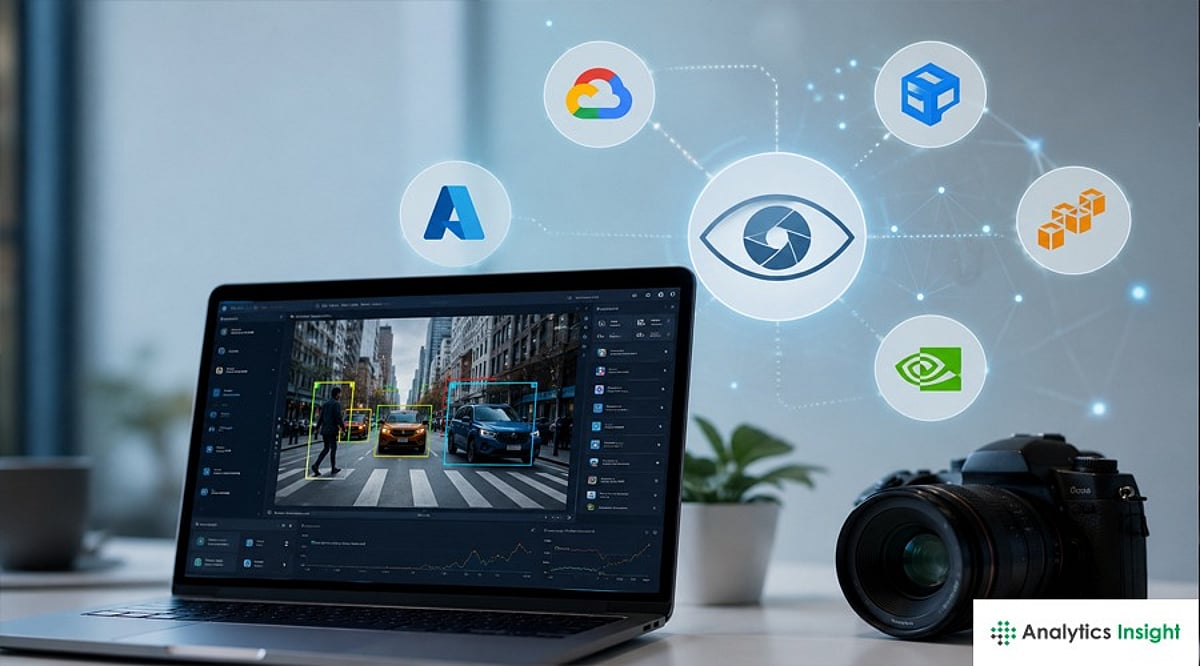
    Computer vision APIs and AI models have become essential for OCR, facial recognition, image analysis, and visual reasoning. This guide compares leading platforms, including Google Cloud Vision, AWS Rekognition, Azure AI Vision, Clarifai, Imagga, and multimodal AI models, helping businesses choose the right solution.

    Overview

    Computer vision has moved well past simple object detection. Today’s APIs and models handle everything from document OCR and facial analysis to open-ended visual reasoning, and the right choice depends heavily on what a team is actually building. With hyperscalers, specialized platforms, and multimodal language models all competing for the same use cases, picking a computer vision stack in 2026 means weighing accuracy, cost, and ecosystem fit rather than chasing a single “best” answer.

    The Hyperscaler Trio Still Anchors Most Production Systems

    Google Cloud Vision, AWS Rekognition, and Azure AI Vision continue to be the default starting point for almost all teams due to their unique strengths. Google Cloud Vision wins on OCR precision and number of label classes, which is above 10,000, with good support for multilingual text detection and hence is great for document scanning and e-commerce catalogs. AWS Rekognition wins on face-based functionality and video recognition and comes pre-integrated with S3, Lambda, and Kinesis Video Streams for organizations that want to use AWS. Azure AI Vision is a part of the new Azure AI Foundry Tools, and for enterprise teams on Microsoft identity & compliance services, it is clearly the winner, although its pricing model for Vision, Custom Vision, Face, and Document Intelligence services might be quite confusing.

    Specialized Platforms Fill Gaps Hyperscalers Leave Open

    Apart from the “big three”, Clarifai and Imagga offer their services to those teams that require more flexibility than label-based tools can provide. With Clarifai, you get access to pre-trained models, visualized no-code model building, and a marketplace of 300+ community models, which makes it one of the best options for teams without dedicated machine learning engineers but wishing to create custom classifiers. Imagga is marketed as an inexpensive solution providing tagging and classification of images for about $0.60 per 1,000 images along with color detection and intelligent image cropping.

    Multimodal Language Models are Reshaping What ‘Vision’ Means

    The biggest shift in 2026 isn’t a new API; it’s the rise of vision-capable large language models like GPT-4o, GPT-5.4 Vision, and Claude’s vision capabilities. Unlike traditional cloud vision APIs that return a fixed list of labels, these models can reason about an image, answer open-ended questions about its content, and extract information in custom formats without retraining. This makes them a better fit whenever a task requires contextual understanding rather than a predefined label taxonomy, reading a messy handwritten form and inferring intent, for instance, rather than simply detecting that text is present.

    Comparing the Leading Computer Vision Options

    [Insert comparison table or bullet list summarizing Google Cloud Vision, AWS Rekognition, Azure AI Vision, Clarifai, Imagga, GPT-4o Vision, Claude Vision, YOLO, SAM 2, CLIP, SigLIP – as per source text but rewritten for clarity]

    Open-Source Models Remain a Serious Option

    For teams with in-house ML infrastructure, open-source models continue to close the gap with commercial APIs. YOLO-based object detectors remain the go-to for real-time detection tasks, while Meta’s Segment Anything Model (SAM 2) has become a standard tool for precise image segmentation. CLIP and SigLIP-style embedding models have also gained traction, since they produce reusable vectors that power similarity search and clustering rather than fixed labels, a meaningfully different approach from the labeled-output model that cloud APIs are built around.

    Choosing Right Stack for Your Use Case

    No clear victor emerges from the comparison above. Teams who develop pipelines that use large quantities of documents find that Google Cloud Vision works better for them; those with a native AWS infrastructure find more value in Rekognition, while those who use Microsoft software find greater utility in closer integration with Azure services. At the same time, the need for vision to include actual visual understanding is moving the industry towards multimodal LLMs. The best generic advice in 2026 remains unchanged: always try at least two or three solutions on your actual data since accuracy and cost both vary significantly once you move past vendor demo datasets.

    Why This Matters

    Computer vision now powers everything from document automation and medical imaging to autonomous systems and AI assistants. Choosing the right API or AI model directly impacts development speed, operating costs, accuracy, and scalability, making platform selection a critical decision for businesses investing in AI-powered applications.

    Frequently Asked Questions

    What is a computer vision API?

    A computer vision API enables software applications to analyze and interpret images or videos using artificial intelligence. It can detect objects, recognize faces, extract text through OCR, classify images, and automate visual inspection without requiring developers to build AI models from scratch.

    Which is the best computer vision API in 2026?

    There is no single best option for every project. Google Cloud Vision excels in OCR, AWS Rekognition is ideal for facial recognition and video analysis, Azure AI Vision suits Microsoft enterprises, while GPT-4o Vision and Claude Vision are stronger for contextual image understanding.

    What is the difference between traditional computer vision APIs and multimodal AI models?

    Traditional computer vision APIs return predefined outputs such as labels, detected objects, or extracted text. Multimodal AI models like GPT-4o Vision and Claude Vision go further by understanding context, answering questions about images, summarizing visual content, and extracting structured information.

    Is Google Cloud Vision better than AWS Rekognition?

    The answer depends on the use case. Google Cloud Vision generally offers stronger OCR capabilities and broader image labeling, while AWS Rekognition provides better facial analysis, video recognition, and seamless integration for organizations already using the AWS cloud ecosystem.

    When should businesses choose open-source computer vision models?

    Open-source models such as YOLO, SAM 2, and CLIP are ideal for organizations with machine learning expertise and dedicated infrastructure. They provide greater flexibility, customization, and lower long-term costs but require more technical effort than managed cloud APIs.

  • Best Python Frameworks for Autonomous AI Agents in 2026: A Comprehensive Guide

    Best Python Frameworks for Autonomous AI Agents in 2026: A Comprehensive Guide

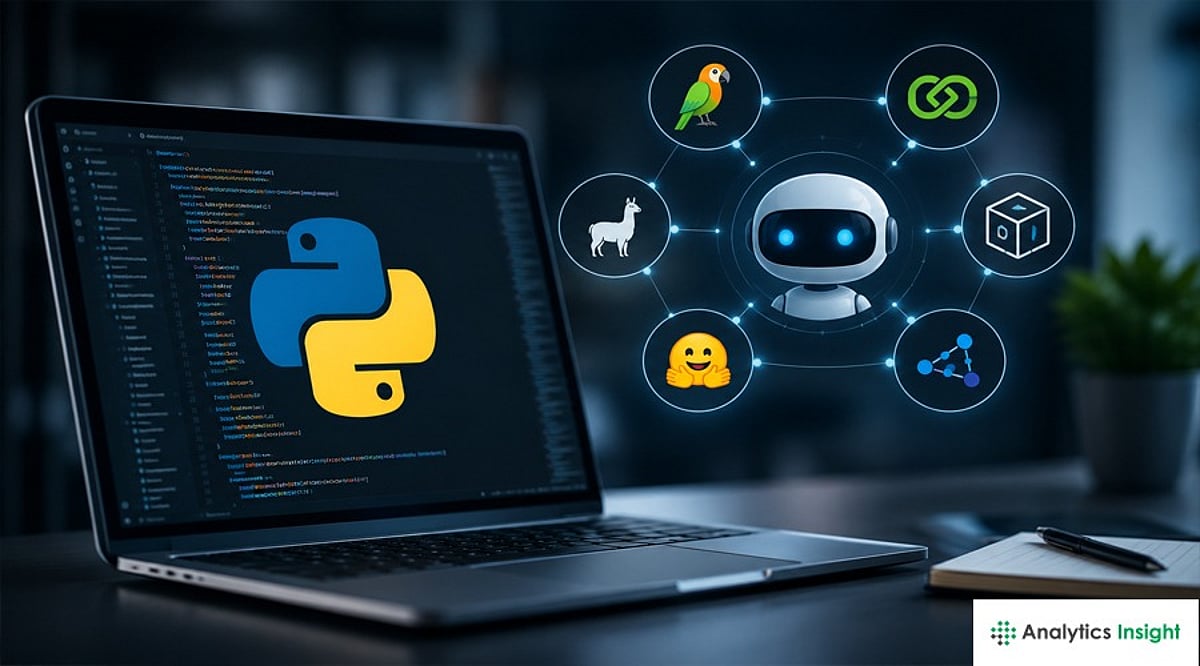
    The Python AI agent framework landscape has evolved rapidly in 2026, offering specialized tools for production orchestration, multi-agent collaboration, enterprise deployment, and retrieval-augmented generation (RAG) workflows. This guide compares the leading frameworks to help developers choose the right platform for scalable autonomous AI applications.

    LangGraph Leads on Production-Grade Control

    LangGraph, developed by LangChain, uses a directed graph model where each node represents an API call to an LLM, tool use, or logic, while edges handle interaction, conditional execution, and looping. It provides complete control over execution, making it popular for complex stateful applications like customer service chatbots with escalation paths. LangGraph gained general availability in October 2025 and saw further improvements in 2026, including per-node timeouts and durable streaming. The main drawback is the steep learning curve compared to more opinionated frameworks.

    CrewAI Remains the Fastest Path to Prototyping

    CrewAI models agents as a crew of specialists with unique purposes, goals, and background stories. Developers can get it operational in under 20 lines of Python code, making it the most straightforward framework. However, it trades off scalability due to less precise error handling and lower accuracy in inter-agent communication. Teams often start with CrewAI and migrate to LangGraph when they need complex state management. The project still attracts millions of monthly downloads and now supports Google’s A2A protocol.

    Microsoft’s Consolidation: AutoGen Gives Way to Agent Framework

    AutoGen, Microsoft Research’s multi-agent conversation platform, introduced agents having discussions to improve output. In April 2026, Microsoft unified AutoGen and Semantic Kernel into the Microsoft Agent Framework, integrating AutoGen’s conversational architecture with Semantic Kernel’s enterprise capabilities like session-based state and telemetry. AutoGen is now in maintenance mode, suitable for research and legacy code, while new Microsoft-stack projects should use Agent Framework.

    Vendor SDKs Are Squeezing Out Frameworks for Simple Agents

    For single agents calling one or two tools, the OpenAI Agents SDK or Anthropic’s Claude Agent SDK offer a faster path with built-in tool use, memory, and tracing, without the abstraction overhead of LangGraph or CrewAI. The Claude Agent SDK reportedly passed AutoGen in production deployment counts during early-to-mid 2026. The general guidance: use a full framework for multi-agent coordination or graph-shaped control flow; use a vendor SDK for a single well-tooled agent.

    Choosing the Right Framework for Your Project

    There is no universal winner. Teams building production systems with complex execution paths gravitate toward LangGraph, while those prototyping role-based workflows find CrewAI faster. Microsoft-stack teams consolidate around Agent Framework, GCP-native teams lean on Google ADK, and document-heavy RAG pipelines favor LlamaIndex Workflows. The safest approach is matching the framework to the specific coordination problem rather than defaulting to the most popular tool.

    As autonomous AI agents become central to enterprise software, selecting the right framework directly affects scalability, maintainability, and development speed. Understanding each framework’s strengths helps developers build more reliable AI applications while avoiding unnecessary complexity and costly migrations.

  • Top 9 Viral Tech Products of the Year: AI Gadgets and Wearables That Dominated 2024

    Top 9 Viral Tech Products of the Year: AI Gadgets and Wearables That Dominated 2024

    From AI-powered assistants to futuristic wearables, this year’s most talked-about tech products have taken social media by storm. Here are the nine standout gadgets that went viral, capturing the imagination of consumers and sparking endless online conversations.

    1. Rabbit R2: Your Pocket AI Assistant

    The Rabbit R2 is a compact, pocket-sized AI assistant designed to handle everyday tasks like scheduling, reminders, and quick information retrieval. Its intuitive design and seamless integration with daily life made it a viral sensation.

    2. Humane AI Pin: Screen-Free Wearable AI

    This innovative wearable eliminates the need for a screen, projecting information directly onto your palm. The Humane AI Pin combines voice commands, gesture control, and a built-in camera to offer a truly hands-free AI experience.

    3. Ray-Ban Meta Smart Glasses

    Ray-Ban partnered with Meta to create smart glasses that look like classic eyewear but pack cameras, speakers, and voice assistance. The blend of style and AI-powered features made them a hit among tech enthusiasts and fashion-forward users alike.

    4. Apple Vision Pro: Mixed Reality Goes Mainstream

    Apple’s first mixed reality headset brought spatial computing to the masses. With its high-resolution displays, intuitive hand tracking, and seamless integration with the Apple ecosystem, the Vision Pro quickly became a viral phenomenon.

    5. Nothing Phone 4: Transparent Design Meets Smart Software

    Nothing’s fourth smartphone continues the brand’s signature transparent aesthetic, now paired with unique software experiences like customizable Glyph Interface. Its distinctive look and thoughtful features fueled social media buzz.

    6. Samsung Galaxy Ring: Health Tracking in a Ring

    Samsung’s Galaxy Ring is a compact wearable that monitors heart rate, sleep, and activity levels. Its minimalist design and advanced health tracking capabilities made it a popular topic on health and tech channels.

    7. DJI Neo Drone: Beginner-Friendly Aerial Photography

    The DJI Neo Drone is designed for beginners, featuring AI-powered flight assistance and a compact form factor. It simplifies aerial photography, making it accessible to everyone, which contributed to its viral spread.

    Why These Products Went Viral

    Several factors drove the popularity of these gadgets:

    • Unique Features: Each product offers something genuinely new, from screen-free interfaces to transparent designs.
    • AI Integration: Artificial intelligence is at the core of many of these devices, enhancing usability and creating new possibilities.
    • Social Media Buzz: Influencers and early adopters shared their experiences, generating massive engagement across platforms like TikTok, Instagram, and YouTube.

    These nine products represent the cutting edge of consumer technology in 2024, and their viral success hints at the trends that will shape the future of gadgets.

  • AI-Powered Cameras: The Future of Perfect Photography

    AI-Powered Cameras: The Future of Perfect Photography

    AI-powered cameras are transforming the way we capture images, leveraging deep learning to instantly adjust focus, lighting, and colors. This technology makes professional-quality photography easier than ever, even for amateurs.

    Smart AI tracks faces, eyes, animals, and moving objects in real time, ensuring every shot is sharp—whether you’re shooting sports, travel, or wildlife. The camera automatically improves exposure, HDR, white balance, and low-light performance, helping users capture brighter, clearer photos without manual adjustments.

    Modern AI cameras offer cinematic background blur, powerful zoom, image stabilization, and one-tap editing for stunning photos and smooth videos. From smartphones to mirrorless and action cameras, AI now powers autofocus, scene detection, stabilization, and faster editing for every creator.

    However, AI makes photography faster but isn’t perfect. Overprocessed images, higher battery consumption, privacy concerns, and expensive devices remain key trade-offs to consider.

  • Musk and Altman Exchange Public Insults as AI Rivalry Heats Up

    Musk and Altman Exchange Public Insults as AI Rivalry Heats Up

    The long-standing public feud between Elon Musk and OpenAI CEO Sam Altman escalated again this week, with both leaders trading pointed insults on X (formerly Twitter). The exchange, which began on July 11, quickly went viral, drawing millions of views and sparking widespread discussion across the platform.

    The latest round started when Musk reshared an old post labeling Altman a “scammer,” adding his own comment: “He takes scamming to a whole new level.” Altman responded with a humorous jab at billionaires who dream of building cities on other planets—a clear reference to Musk’s SpaceX ambitions. Altman’s post read: “homeboy you’re the one selling public market investors on short-term space datacenters.”

    The exchange highlights the deepening rift between two of the most influential figures in technology. Musk co-founded OpenAI in 2015 but left the board in 2018; he now runs xAI, a competing artificial intelligence venture. Altman has led OpenAI through its meteoric rise, including the launch of ChatGPT and GPT-4.

    Beyond personal jabs, the spat reflects a fundamental philosophical divide. Musk has long championed making humanity a multi-planetary species through SpaceX. Altman, meanwhile, believes AI will be the most transformative tool ever created, reshaping work, education, science, and daily life. Their exchange essentially asked: which vision matters more—colonizing space or mastering intelligence on Earth?

    Social media users quickly turned the exchange into memes, screenshots, and reaction threads. The feud has become part of internet culture, with each new post generating more viral content than the last. What began as a business disagreement now plays out in real time on a global stage, where humor often travels faster than serious arguments.

    As both leaders push forward with competing AI initiatives—Musk’s xAI and Altman’s OpenAI—every public interaction between them draws intense scrutiny. This latest round shows that their rivalry is not just about technology, but about two competing visions for the future of humanity.

  • OpenAI Shifts Focus to Family: ChatGPT Developing Features for Parents, Caregivers, and Seniors

    OpenAI Shifts Focus to Family: ChatGPT Developing Features for Parents, Caregivers, and Seniors

    OpenAI is making a strategic move to expand ChatGPT’s reach beyond individual users into the family household. The company has posted a job listing for a role based in San Francisco focused on developing products for parents, families, and trust-sensitive consumer experiences. This signals a major shift in how the AI firm envisions its popular chatbot being used.

    According to recent data from Sensor Tower, the demographic of ChatGPT users is changing. The share of older adult users rose to 31% in Q2 from 26% a year earlier, while the younger user base dropped to 29% from 34%. This aging user base suggests a growing need for features tailored to different life stages and family roles.

    While OpenAI has not officially announced a family version of ChatGPT, the hiring indicates potential future features such as shared reminders, family schedules, learning assistance, and personalized support for each household member. The move aligns with a broader trend in Silicon Valley where tech companies are increasingly targeting families as a key growth opportunity.

    Companies like Netflix, Spotify, and Google One have successfully grown by offering family plans. AI companies are now following a similar path, seeing families as a chance to reach millions of new users who can use the same service in different ways across multiple profiles.

    If OpenAI eventually launches a family plan, it could become an important revenue stream. One person could pay the bill while each family member gets a separate profile with extra features, better safety tools, memory options, and personal assistants. This subscription model has proven successful for streaming and cloud services.

    For now, the company is keeping its plans under wraps, but the hiring move strongly suggests that ChatGPT is evolving from a personal assistant into a service designed for the entire home.

  • 10 Mind-Blowing AI Capabilities That Were Impossible Just Five Years Ago

    10 Mind-Blowing AI Capabilities That Were Impossible Just Five Years Ago

    Artificial intelligence has advanced at an astonishing pace. Here are some of the most impressive AI capabilities that seemed like science fiction just half a decade ago:

    • AI Writes Like a Human: AI can now draft emails, stories, reports, and scripts in seconds, naturally matching tone, style, and context.
    • AI Creates Stunning Images: Simple text prompts generate detailed artwork, product designs, portraits, and realistic scenes without requiring traditional drawing skills.
    • AI Talks and Listens Naturally: Modern AI understands speech, answers questions aloud, and holds conversations that feel surprisingly smooth, helpful, and humanlike.
    • AI Translates Languages Instantly: AI translates conversations, documents, and videos across many languages while preserving meaning, tone, and context with remarkable accuracy.
    • AI Helps People Code: Developers use AI to write code, fix bugs, explain functions, and build applications much faster than before.
    • AI Makes Videos From Text: AI can turn written prompts into short videos with motion, characters, backgrounds, and cinematic effects within minutes.
    • AI Understands Photos and Screens: AI identifies objects, reads text, explains screenshots, and answers questions about images with impressive accuracy across devices.
    • AI Becomes a Personal Tutor: Students can ask questions anytime, receive step-by-step explanations, practice problems, and personalized learning support from AI assistants.
    • AI Works Across Many Tasks: One AI assistant can research, summarize, plan trips, organize information, brainstorm ideas, and automate everyday tasks efficiently.

    Read More Stories

    Join our WhatsApp Channel to get the latest news, exclusives and videos on WhatsApp.