Category: Cloud Computing

  • Krutrim’s Strategic Pivot: India’s First AI Unicorn Shifts Focus to Enterprise Cloud

    Krutrim’s Strategic Pivot: India’s First AI Unicorn Shifts Focus to Enterprise Cloud

    India’s AI ambitions found an early symbol in Krutrim. The name means “artificial” in Sanskrit, and the company carried the weight of a national aspiration. Founded in April 2023 by Bhavish Aggarwal, the man behind Ola Cabs and Ola Electric, Krutrim set out to build what no Indian company had attempted before: a full-stack AI platform trained on Indian languages, powered by Indian engineers, and running on Indian servers.

    The early months delivered results that matched the rhetoric. In January 2024, Krutrim raised $50 million in its first round, led by Matrix Partners India, and crossed a $1 billion valuation overnight. It became India’s fastest-ever unicorn and its first AI startup to achieve that milestone.

    The Grand Vision: Full-Stack AI Sovereignty

    The ambition stretched well beyond language models. Aggarwal envisioned semiconductors, a consumer AI assistant, cloud infrastructure, and custom chips — all under one roof. In February 2025, he committed Rs 2,000 crore of personal capital and pledged an additional Rs 10,000 crore to the venture. The plan was bold, structured, and strikingly self-reliant. Krutrim-1, a 7-billion-parameter large language model, launched as India’s first serious LLM. Krutrim-2, a 12-billion parameter model, followed with stronger performance in Indian language processing and code generation. BharatBench, an evaluation framework for Indic languages, added academic weight to the platform. The company looked like it was building a generational institution.

    Products and Platforms

    Krutrim’s initial roadmap covered multiple layers of the AI stack. The company planned to offer:

    • Large language models trained across Indian languages and English
    • Kruti, a voice-first agentic AI assistant capable of cab booking, bill payments, and image generation
    • Krutrim Cloud, a GPU-based infrastructure platform for training and inference workloads
    • Bodhi 1, a custom AI silicon chip targeting compute and edge applications
    • A mapping and language hub service for real-time navigation and Indic translation

    The idea was vertical integration — own everything from silicon to the user interface. This approach reduces dependency on foreign technology but also multiplies execution risk.

    The Sovereign AI Argument

    Aggarwal’s case rested on a clear premise. India’s 1.4 billion people and 22 official languages deserve AI systems built by Indians, for Indians. Global models trained primarily on English data fail to capture the nuance, context, and culture embedded in regional languages. Krutrim aimed to close that gap. The argument resonated deeply with investors, policymakers, and the broader tech ecosystem. India’s AI story needed a homegrown protagonist, and Krutrim filled that role convincingly.

    When Execution Met Reality

    The cracks appeared gradually. Senior exits began accumulating across divisions. Chandra Khatri, the founding head of AI based in Silicon Valley, left the company. Sunit S, who led product design, exited. Raj Kiran, head of AI research, departed. The semiconductor team lost several senior figures, including engineers from the Bodhi chip project.

    By early 2026, three rounds of layoffs had eliminated more than 200 roles across linguistics, AI research, and chip design. Headcount dropped from over 550 employees in August 2025 to roughly 150 to 160 by March 2026.

    Kruti, the consumer AI assistant, was quietly pulled from app stores in April 2026 without a public announcement. The Bodhi 1 chip, expected to launch in 2026, was scrapped entirely. Chips procured for model training were reportedly repurposed to run simulations for Ola Electric scooters.

    The company went silent on social media from December onward and did not participate in India’s AI Impact Summit, where global players including Google, Anthropic, and OpenAI were actively present. Competitor Sarvam AI, in contrast, released new open-source models and forged partnerships with notable organizations including space company Pixxel.

    The Pivot to AI Cloud

    In late 2025, Krutrim undertook a formal business realignment. The company redirected capital and talent away from model development and chip design toward AI cloud infrastructure. By May 2026, it announced itself as a full-stack domestic AI cloud provider serving enterprise customers — a fundamentally different identity from the one it launched with.

    The financial results for FY26 offered some encouragement. Revenue reached approximately Rs 300 crore, nearly three times the prior year’s figure. The company reported its first annual net profit, with a profit after tax margin crossing 10%.

    Krutrim now serves more than 25 enterprise customers across telecom, financial services, healthcare, logistics, and consumer internet sectors. GPU compute capacity is largely committed to external enterprise workloads, and the Ola Group itself moved all its cloud spending to Krutrim, ending its use of Microsoft Azure in May 2025.

    A company spokesperson stated, “The company has reached an important milestone of being profitable, self-funded, and gaining market traction. Our AI cloud is built for Indian enterprises, by Indian engineers.”

    Questions remain, however. Earlier reports indicated that up to 90% of Krutrim’s FY25 revenue came from Ola Group entities. The company has not disclosed its external revenue breakdown. Analysts have flagged the need for greater transparency before the profitability claim can be fully evaluated.

    What the Krutrim Story Tells Us

    Krutrim’s trajectory reflects a broader pattern in deep-tech ambition. Building frontier AI models requires sustained capital, specialized talent, and time — three resources that proved harder to secure than the initial momentum suggested. The failure to attract external institutional investors after the Series A left the company almost entirely dependent on its founder’s personal commitment. That constraint narrowed the runway for foundational research and product experimentation.

    The pivot to cloud infrastructure is commercially rational. Demand for sovereign, India-built AI cloud services is growing. Enterprises want compute options that keep data within national borders and reduce dependence on American or Chinese platforms. Krutrim’s infrastructure-first positioning aligns with that demand. The model carries lower research risk and faster revenue cycles than frontier model development.

    Final Words

    Krutrim’s story is not a failure — it is a recalibration. The company moved from an overextended ambition to a defined, profitable business in under three years. The shift carries trade-offs. India still lacks a domestically built frontier model that competes on global benchmarks. The sovereign AI aspiration remains partially unfulfilled. Krutrim’s departure from that frontier leaves a gap that Sarvam and others must now fill.

    Still, the enterprise cloud path offers something equally important: a sustainable business with real customers, growing revenue, and operational independence. Krutrim’s FY26 performance suggests the model can work. The company now holds a credible position in India’s AI infrastructure layer, even if the original vision of full-stack AI sovereignty required revision. In an industry where overcommitment destroys companies and discipline builds them, the ability to reset and survive holds its own kind of value.

  • Top-Paying Tech Skills Employers Will Hire for in 2026

    Top-Paying Tech Skills Employers Will Hire for in 2026

    The demand for AI and machine learning professionals continues to grow across industries, making these skills among the most lucrative in 2026. Cybersecurity experts remain at the top of the pay scale as threats evolve and companies prioritize data protection.

    Cloud computing expertise on platforms like AWS, Azure, and Google Cloud is highly valued, with organizations migrating more operations to the cloud. Data engineers are earning competitive salaries as companies expand their AI initiatives and need robust data pipelines.

    Generative AI application development is creating new career opportunities worldwide, from content generation to automated workflows. DevOps and platform engineering roles continue to offer strong earning potential as businesses seek to streamline software delivery and infrastructure management.

    Blockchain and Web3 expertise remain valuable in specialized technology sectors, particularly in finance and supply chain. AI prompt engineering and automation consulting are emerging as fast-growing skill sets, with companies looking to optimize their use of large language models and robotic process automation.

    Continuous learning and certifications can help professionals stay competitive in the evolving tech market. Investing in these high-demand skills now can position you for top salaries and career growth in 2026.

  • How AI Is Transforming Cloud Infrastructure: What Enterprises Need to Know

    How AI Is Transforming Cloud Infrastructure: What Enterprises Need to Know

    AI is reshaping cloud infrastructure by demanding specialized compute, smarter data management, stronger governance, and low-latency architectures. As adoption accelerates, enterprises must rethink cloud strategies to support scalable, compliant, and performance-driven AI workloads.

    Traditional cloud infrastructure was built for a different era of computing. It was designed to support applications, databases, websites, and enterprise systems that operated within relatively predictable performance patterns. As organizations move from AI experimentation to large-scale AI deployment, many are discovering that the infrastructure models that supported their digital transformation are not always well-suited to the demands of AI.

    Running AI models, processing large volumes of unstructured data, and delivering real-time AI-powered services require a different approach to compute, storage, networking, and data management. As a result, cloud architecture is entering a new phase of evolution.

    The scale of this shift is already becoming visible. According to an IDC report, global spending on AI-centric infrastructure is expected to exceed $200 billion by 2028, driven by growing investments in specialized compute, storage, and networking environments designed specifically for AI workloads.

    Why Traditional Cloud Models Are Facing New Pressures

    For most of the cloud era, enterprise workloads were relatively predictable. Applications required stable uptime, databases needed consistent performance, and infrastructure could be scaled based on anticipated demand. Whether an organization is deploying a large language model, building an AI-powered customer support platform, or running analytics on large datasets, AI applications often require intensive bursts of computing power that can vary significantly over time. The volume of data involved is also substantially larger, while processing requirements are often more dynamic than those of traditional enterprise applications.

    AI systems run differently from normal workloads since they continuously process, learn from, and react to varying inputs. This creates infrastructure requirements that are far more demanding in terms of performance, scalability, and operational management. Thus, cloud environments built for traditional workloads will have to be modified significantly in order to support large-scale AI applications.

    How Cloud Architecture Is Evolving

    One of the most visible changes is in how organizations approach compute infrastructure. In traditional cloud environments, businesses could often rely on standard compute resources and scale them according to demand. AI workloads have changed that equation. Training models, running inference workloads, and processing large datasets increasingly require specialized infrastructure that is optimized for AI performance rather than general-purpose computing.

    Data architecture is also becoming a much bigger consideration. As AI applications depend on large volumes of data, organizations are paying closer attention to where that data is stored and processed. Moving data across multiple regions can introduce delays that may be acceptable for conventional workloads but become problematic for real-time AI applications. This is driving growing interest in regional cloud infrastructure and low-latency deployment models that bring processing closer to end users and business operations.

    Security and compliance requirements are adding another layer of complexity. When AI systems process sensitive business information, customer records, financial data, or healthcare information, organizations need clear visibility into how that data is handled, where it is processed, and whether it remains compliant with regulatory requirements. As a result, infrastructure decisions are becoming increasingly linked to governance, risk management, and data sovereignty considerations.

    The New Requirements of AI-Driven Infrastructure

    The next generation of cloud architecture is likely to be more purpose-built for AI rather than based on infrastructure models originally designed for traditional applications. Organizations are increasingly evaluating cloud environments based on the specific requirements of their AI workloads, including performance, data governance, scalability, and cloud computing infrastructure.

    For Indian enterprises, this trend is also intersecting with growing interest in data sovereignty, localised infrastructure, and managed cloud services. As AI becomes embedded across customer-facing platforms and business operations, factors such as latency, compliance, and infrastructure visibility are becoming more important than ever before.

    The fundamentals of cloud computing are not changing. What is changing is the level of performance, flexibility, and governance that modern workloads require. As AI adoption accelerates, cloud architecture is evolving from a general-purpose technology foundation into a specialized platform designed to support the next generation of digital services and intelligent applications.

    Authored by Rahul Takkallapally, Co-Founder, BharathCloud

  • Continuous Compliance Automation: Transforming Enterprise Infrastructure from Reactive Audits to Real-Time Governance

    Continuous Compliance Automation: Transforming Enterprise Infrastructure from Reactive Audits to Real-Time Governance

    From manual audit sprints to always-on monitoring, enterprises are rethinking how they handle compliance across complex, hybrid infrastructures. The transformation toward continuous compliance is being driven by experts like Nadeem Siddiqui, whose work in large-scale enterprise environments has contributed to advancing how organizations operationalize governance across hybrid infrastructure.

    As enterprise infrastructure becomes increasingly distributed across hybrid and cloud-native environments, organizations are re-evaluating how they manage compliance at scale. Traditional audit-driven models, often reliant on periodic reviews and manual validation, are proving insufficient in environments where configuration changes occur continuously. Industry trends indicate a growing shift toward embedded, automated compliance frameworks that operate in real time.

    Among the professionals contributing to this transition is Nadeem Siddiqui, a senior software engineer and subject-matter expert in configuration management and infrastructure automation. Siddiqui’s work focuses on designing scalable systems that integrate compliance directly into operational workflows, enabling organizations to move from reactive audit cycles to continuous governance.

    Operating within a large enterprise environment comprising approximately 15,000 to 20,000 endpoints, with a majority of systems deployed in the cloud, Siddiqui has played a central role in the design and architectural advancement of a compliance and configuration intelligence platform known internally as Compass. The platform enables real-time monitoring of configuration states, policy enforcement, and automated remediation across both cloud-native and on-premises systems.

    Rather than relying on fragmented tools and manual data collection, the system consolidates compliance insights into centralized dashboards that provide visibility into drift events, policy violations, and remediation activities. This approach has significantly reduced operational friction associated with audit preparation, allowing teams to access structured compliance evidence on demand while maintaining continuous oversight of infrastructure changes.

    The platform’s adoption across U.S. member firms within the organization reflects its role in standardizing compliance practices at scale, enabling consistent policy enforcement and improving visibility across thousands of systems in production environments.

    Siddiqui’s contributions to the design and architectural evolution of this platform reflect a broader shift in how compliance is operationalized in large organizations. By translating regulatory and security control requirements into enforceable technical policies, he has enabled consistent compliance enforcement across diverse environments.

    In addition to system design, Siddiqui has worked closely with cross-functional teams, including cybersecurity, audit, DevOps, and site reliability engineering, to align compliance objectives with engineering practices. This integration ensures that compliance checks are embedded within delivery pipelines rather than introduced as late-stage controls, reducing risk while improving deployment efficiency.

    Beyond his engineering contributions, Siddiqui has also engaged in research and thought leadership in the field of intelligent infrastructure. He is the author of the peer-reviewed research paper, AI-Driven Compliance and Configuration Intelligence at Scale: An Explainable, Human-Centered Framework for Enterprise Infrastructure, which was presented at an academic conference. The work explores how artificial intelligence can enhance compliance systems by enabling predictive insights, explainability, and adaptive governance models.

    His research emphasizes the importance of human-centered design in automated compliance systems, highlighting the need for transparency and interpretability in AI-driven decision-making. This perspective aligns with broader industry discussions on responsible AI adoption within enterprise infrastructure.

    Siddiqui also contributes to the advancement of the field through his involvement in academic and technical review processes. He serves on editorial boards and actively evaluates scholarly work, helping in the development and distribution of research across automation, compliance engineering, and infrastructure systems.

    As organizations continue to expand their reliance on distributed architectures, continuous compliance is expected to evolve even more, especially with the integration of predictive analytics and AI-driven risk detection. In this sense, Siddiqui’s work demonstrates how embedding governance rights into infrastructure and operational pipelines can boost resilience, scalability, and real-time visibility—all of which matter greatly for enterprises facing increasingly complex regulatory and security landscapes.

    Industry trends suggest that methods mixing automation with data-driven insights and cross-functional alignment will shape the next generation of enterprise compliance frameworks. In this context, contributions like those by Nadeem Siddiqui show how compliance continues to transform from a periodic obligation into a continuous, integrated capability.

  • Best Cloud Architecture Certifications to Boost Your Career in 2026

    Best Cloud Architecture Certifications to Boost Your Career in 2026

    Advance your cloud career with the industry’s most respected certifications. Here are the top cloud architecture credentials to earn in 2026:

    • AWS Certified Solutions Architect – Professional: A top credential for designing secure and scalable AWS cloud environments.
    • Microsoft Certified: Azure Solutions Architect Expert: Ideal for professionals building enterprise-grade cloud solutions on Microsoft Azure.
    • Google Professional Cloud Architect: Recognized globally for designing reliable and scalable Google Cloud infrastructure.
    • AWS Certified Solutions Architect – Associate: One of the best entry points for aspiring cloud architects.
    • Certified Kubernetes Administrator (CKA): Validates skills in managing Kubernetes clusters and containerized workloads.
    • Google Professional Cloud DevOps Engineer: Focuses on automation, monitoring, and continuous cloud delivery.
    • Microsoft Azure Administrator Associate: Builds practical skills for managing Azure infrastructure and cloud resources.
    • HashiCorp Terraform Associate: Demonstrates expertise in infrastructure automation using Terraform.

    Stay ahead in cloud computing by earning these certifications in 2026.

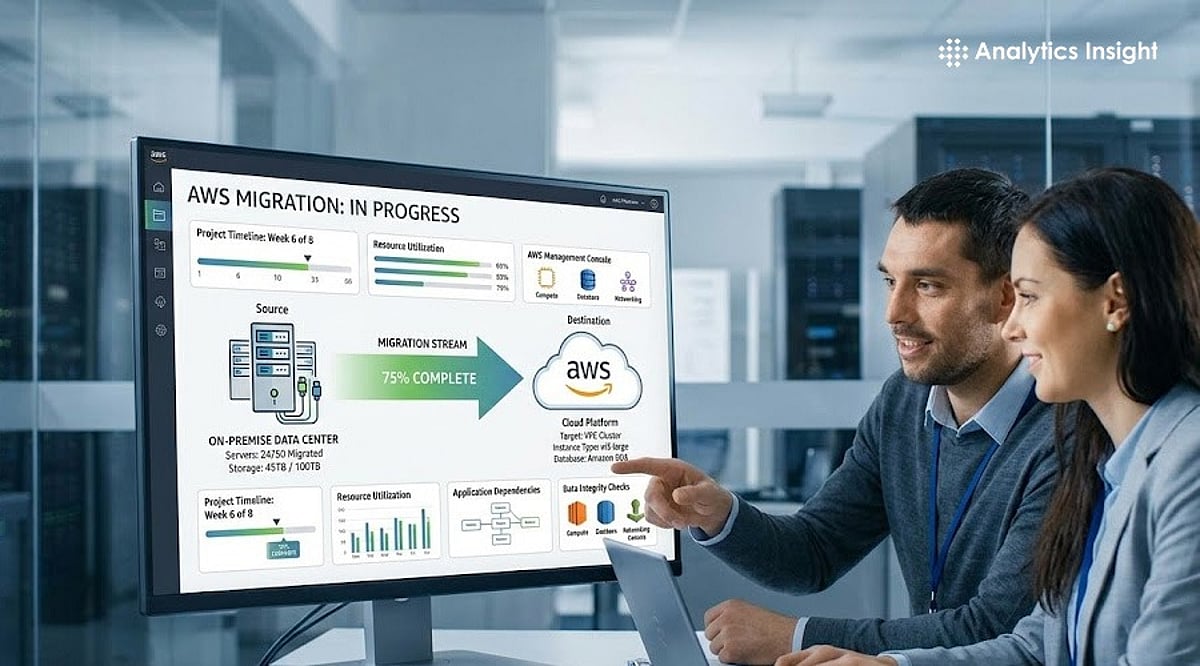
  • 10 Common AWS Migration Pitfalls and Proven Solutions for 2026

    10 Common AWS Migration Pitfalls and Proven Solutions for 2026

    AWS migrations remain one of the most predictably difficult engineering projects a company can take on, despite over a decade of mature tooling and frameworks. Roughly a third of migrations either fail outright or blow past their budget, and the average overrun lands around 23% above what was planned. The reasons rarely have anything to do with AWS’s capabilities. They come down to ten specific, well-documented failure points, and every one of them has a known fix.

    Most Failures Start Before a Single Workload Moves

    The single biggest predictor of a troubled migration is starting without a workload-by-workload strategy. AWS defines seven migration patterns: rehost, replatform, refactor, repurchase, retain, retire, and relocate. Treating every application the same way is one of the most common and costly mistakes teams make. A legacy batch job and a customer-facing API have nothing in common strategically, and forcing both through identical lift-and-shift treatment usually means overpaying for the simple one and under-optimizing the complex one.

    Right behind strategy sits dependency mapping. Enterprises consistently underestimate how much undocumented coupling exists across applications, shared databases, batch jobs, and external integrations. Poor mapping is cited repeatedly as a leading cause of migration failure. AWS Application Discovery Service and X-Ray help, but they are not a substitute for sitting down with the engineers who actually own each system.

    Technical Failures to Focus On

    Once strategy is settled, the recurring technical issues are remarkably consistent across nearly every account of AWS migrations gone wrong:

    • Underestimated data migration complexity
    • Security misconfigurations introduced during the rush to cut over
    • Wrong instance sizing based on old hardware specs rather than actual utilization
    • Downtime during cutover that nobody fully planned for

    The fix for the sizing problem is almost embarrassingly simple: size from CloudWatch usage data, not the specs of the server you’re replacing. Teams that do this consistently land on smaller, cheaper, more stable configurations, and Graviton instances are worth testing before any Savings Plan gets locked in.

    Cost Overrun Nobody Sees Coming Until the Bill Arrives

    Post-migration cost overruns deserve their own callout because they catch finance teams off guard more than any other item on this list. The mechanism is almost always the same: a double-run period — old infrastructure and new infrastructure running in parallel — gets treated as a scheduling detail instead of a budgeted financial risk. Every month that overlap continues, the organization pays twice for the same workload, and that erosion compounds fast. The teams that avoid this treat double-run as a named risk with an owner and a hard timebox from day one.

    All Ten Issues at a Glance

    Here are the ten most common AWS migration problems and their practical solutions:

    1. Poor planning — Use a workload-by-workload strategy aligned with the AWS 7 Rs framework.
    2. Inadequate dependency mapping — Combine AWS tools with direct engineer interviews.
    3. Underestimated data migration complexity — Test migrations early and plan for data validation.
    4. Security misconfigurations — Implement least-privilege IAM policies and AWS Control Tower guardrails.
    5. Wrong instance sizing — Size based on CloudWatch usage data, not old server specs.
    6. Unplanned downtime — Create detailed cutover plans with rollback procedures.
    7. Cost overruns from double-run — Treat double-run as a named risk with a hard timebox.
    8. Skill gap — Use a dedicated migration team with hands-on experience.
    9. Governance gaps — Establish clear governance and cost ownership from the start.
    10. Poor stakeholder communication — Maintain regular alignment across teams and leadership.

    What This Means for Your Migration

    None of these ten problems are exotic or AWS-specific; they show up in cloud migrations across every provider, repeated almost word-for-word in nearly every postmortem written about failed projects. The organizations that avoid them do one thing consistently: they treat governance, dependency mapping, and cost ownership as part of the technical plan, not as paperwork that happens around it.

    Cloud migration is more than moving workloads from on-premises infrastructure to AWS. A successful migration requires careful planning, governance, security, cost management, and cross-functional collaboration. Addressing common migration challenges early helps organizations reduce risk, minimize downtime, optimize cloud spending, and accelerate business transformation.

  • Persistent Systems Acquires Nagarro for $1.3 Billion in Landmark AI-Led Digital Engineering Deal

    Persistent Systems Acquires Nagarro for $1.3 Billion in Landmark AI-Led Digital Engineering Deal

    Persistent Systems has announced its largest-ever acquisition, agreeing to buy Germany-based digital engineering firm Nagarro for $1.3 billion in an all-cash deal. The transaction positions the combined entity as a $2.9 billion AI-led digital engineering powerhouse with a significantly expanded global footprint and enhanced enterprise capabilities.

    The company has offered €81 per share for all outstanding Nagarro shares, representing a premium of approximately 140% over Nagarro’s undisturbed closing price on June 25 and around 94% over its three-month volume-weighted average price.

    Creating a $2.9 Billion Technology Company

    The acquisition will combine Persistent’s strengths in artificial intelligence, cloud computing, and software engineering with Nagarro’s expertise in digital engineering, enterprise resource planning (ERP), and customer experience. The Persistent-Nagarro Group is projected to generate annual revenues exceeding $2.8 billion and employ over 46,000 people across more than 40 countries.

    This deal significantly boosts Persistent’s presence in Europe, where it currently generates only 9% of its revenue. Post-acquisition, the European contribution is expected to rise to 22%.

    Industry experts view the acquisition as a strategic move into AI-driven business transformation. Nagarro brings deep expertise in AI, digital engineering, ERP, cloud computing, and customer experience, with strong relationships in manufacturing, banking, healthcare, telecom, and consumer sectors.

    Regulatory Process Underway

    Persistent has already secured a commitment from Nagarro’s largest shareholder, which holds nearly 21% of the company. To close the deal, Persistent must obtain acceptance from at least 51% of Nagarro’s shareholders and receive regulatory approval from Germany’s BaFin. The transaction is expected to close during the fourth quarter of 2026 or the first quarter of 2027.

    Following completion, Persistent plans to delist Nagarro from the Frankfurt Stock Exchange. Together, the combined companies will serve more than 350 enterprise clients and address a total addressable market exceeding $1.4 trillion.

  • Hybrid Cloud in Banking: A Strategic Move for Survival and Control

    Hybrid Cloud in Banking: A Strategic Move for Survival and Control

    The banking industry is undergoing one of its most significant technology transitions in decades. Faced with rising customer expectations, increasing regulatory scrutiny, cybersecurity threats, and pressure from fintech challengers, banks are rethinking how they manage data and digital services. At the center of this transformation is hybrid cloud—a model that combines private infrastructure with public cloud services.

    While banks typically consider hybrid cloud an innovation and resilience strategy, the real issue is whether the financial sector is implementing hybrid cloud to survive in a fast-changing environment or to gain better control over its processes.

    Pressure to Modernize

    Historical banking architecture has been designed for stability and not agility. Most financial organizations continue to rely on legacy architectures that are expensive to operate and hard to scale. Providing services to customers through digital banking requires upgrading the existing legacy systems.

    Furthermore, increased pressure from fintech companies that provide fast service and rely on relatively cheaper infrastructure has forced most banks to modernize their operations to remain competitive in the new digital banking environment.

    Hybrid cloud offers a good middle ground for banks. The traditional method of migrating all activities to a public cloud may not be necessary. Banks should be able to maintain some of their important activities in a private environment and innovate on cloud platforms.

    Why Public Cloud Alone Is Not Enough

    While most businesses can operate without such constraints, the banking industry is subject to stringent rules governing data protection, privacy, and resilience.

    The move towards public cloud poses serious issues, including data sovereignty concerns, dependence on third-party vendors, and operational risk. Many regulatory bodies in different countries still mandate that financial institutions be able to oversee their systems.

    In this regard, hybrid cloud provides banks with an opportunity to run mission-critical applications and sensitive data on the controlled side while utilizing the public cloud for data analysis, customer engagement tools, artificial intelligence, and software development.

    Control Has Become a Strategic Asset

    Control becomes the crux of the hybrid cloud argument. Financial institutions have recognized the importance of controlling data, application deployment, and security policies to gain an edge. Financial companies should have the opportunity to change their applications, be free from vendor lock-in, and adapt their approaches in response to regulations.

    A hybrid cloud approach allows for that. Rather than entrusting their applications to a single provider, banks will be able to distribute them across their private infrastructure and cloud solutions. Cloud strategy is no longer an IT decision, but a business one.

    AI Factor Speeds Up Adoption

    The increasing popularity of AI technology obliges banks to invest more in cloud infrastructure, as they need it to detect fraud, assess risk, deliver customer services, ensure compliance, and provide financial counseling.

    A lot of computing power and massive amounts of data are needed for that. The public cloud will allow scaling of necessary capabilities, while keeping financial information protected in the private cloud.

    Hybrid cloud offers a solution to these two needs at once. The need to find such a balance will only grow as banks start using AI more widely.

    Survival and Control Are No Longer Separate Goals

    The outdated idea of a trade-off between survival and control in banks no longer fits reality. In fact, these two things are strongly correlated. Survival in modern banking presupposes being fast, innovative, and resilient. Control is important for risk management, building up customer trust, and fulfilling regulatory requirements. The concept of hybrid cloud can address both needs.

    Public cloud or a purely private ecosystem would most likely not be the future of banking. Instead, the future will be associated with balanced ecosystems.

    For banks, hybrid cloud is not just a technical solution. This is the way to respond to a competitive environment in which innovation is necessary while maintaining control over the systems underpinning the financial sector.

  • Veeam and HPE Expand Private Cloud Capabilities for AI and Modern Workloads

    Veeam and HPE Expand Private Cloud Capabilities for AI and Modern Workloads

    At HPE Discover, Veeam Software and Hewlett Packard Enterprise (HPE) announced an expanded partnership to help organizations modernize and scale private cloud environments for AI and modern virtualized workloads. The collaboration introduces new validated designs for HPE Private Cloud AI, partner-ready packaging for faster deployments, and a new Data and AI Trust Maturity Model to help enterprises operationalize AI trust.

    “Private cloud is evolving fast as customers want cloud agility with greater control, stronger governance, and the ability to operationalize AI closer to their data,” said John Jester, Chief Revenue Officer at Veeam. “AI will transform the enterprise, but only if leaders can trust the data that powers it. That trust starts with resilience – knowing data is protected, recoverable, and governed end-to-end.”

    New Validated Designs for HPE Private Cloud AI

    Veeam and HPE will release new validated designs for HPE Private Cloud AI, a turnkey AI factory co-engineered with NVIDIA as part of the NVIDIA AI Computing by HPE portfolio. These designs help customers deploy secure, AI-ready private environments with a unified data lakehouse, deployable models, and agentic use cases. The designs include:

    • Veeam Data Platform and Veeam Kasten, part of the Veeam DataAI Command Platform, supporting operational continuity for virtualized and Kubernetes-based workloads.
    • Safe data ingestion to prepare and ingest data for AI use cases with stronger controls and confidence in data handling, complementing HPE AI Essentials for model development and deployment lifecycle management.

    “Enterprises are choosing private cloud to meet performance and sovereignty requirements while putting the right guardrails in place for AI,” said Patrick Osborne, SVP of Technology Acceleration for Hybrid Cloud at HPE. “With these new validated designs and our expanded collaboration with Veeam, we’re giving customers a ready-to-run path to deploy AI closer to their data.”

    Resilient HPE Private Cloud: Partner-Ready Solutions

    In support of HPE’s recent unified private cloud announcement, HPE and Veeam are enabling partners with sizing tools and smart templates to more easily position and deliver resilient private cloud deployments using HPE Private Cloud PC3000 with HPE Morpheus Software VM Essentials. This helps partners standardize designs, streamline scoping, and accelerate delivery. Veeam also provides a practical migration guide for moving vSphere VMs to virtual machines on HPE Morpheus.

    Expanding the Roadmap: Security, Governance, and AI Trust

    As AI shifts from assistive tools to autonomous agents, organizations face a growing gap between confidence in AI readiness and the ability to produce audit-ready evidence. Veeam and HPE are focusing on operationalizing AI trust through the Veeam DataAI Command Platform, the industry’s first unified data and AI trust infrastructure. The platform unifies DataAI Security, Governance, Compliance, Privacy, and Resilience, powered by the DataAI Command Graph.

    Building on Data Resilience by Design, HPE Services will serve as a pilot partner for Veeam’s new Data and AI Trust Maturity Model, a framework that helps leaders assess their trust readiness across four pillars: Understood, Secured, Resilient, and Unleashed.

    “Through this collaboration, Veeam and HPE will help customers move from AI experimentation to trusted execution – improving visibility and governance, reducing risk across AI data pipelines, and ensuring the ability to recover clean, trusted data when it matters most,” the companies stated.

    Veeam (Booth #2039) is an exclusive sponsor of the HPE Virtualization and CloudOps Hub at HPE Discover 2026. For more information, visit Veeam and HPE Alliance.

  • Why Cloud Solution Architecture Is a Top Career Path in Modern IT

    Why Cloud Solution Architecture Is a Top Career Path in Modern IT

    The explosive growth of cloud computing has transformed the way organizations design, deploy, and manage their IT infrastructure. The current trend for enterprises is to move from traditional on-premise systems to cloud-based solutions to maximize scalability, reduce cost, and improve operational efficiency. This transformation has created a strong demand for professionals who can design and manage complex cloud environments effectively.

    At the center of this digital shift is cloud solution architecture. It involves designing secure, scalable, and high-performing cloud systems that meet business requirements. The need for skilled cloud architects is skyrocketing as organizations adopt multi-cloud and hybrid environments, making this one of the most in-demand and valuable roles in the IT industry.

    Understanding Cloud Solution Architecture

    The design of a cloud computing solution involves creating and organizing the systems necessary for companies to operate in the cloud. This includes determining what type(s) of cloud service(s) should be used, defining the structure of these services, and ensuring that each service works well together.

    Cloud solution architects translate an organization’s requirements into solutions by designing and managing all aspects of the infrastructure to ensure the smooth flow of data from one part of the system to another while meeting security requirements and optimizing overall system performance. A cloud solution architect must know everything there is to know about using cloud-based platforms, networking, storage, and application integration.

    Unlike traditional IT architecture, cloud-based architecture is constantly changing, and a system needs to be built to automatically scale with demand so that the application remains available and responsive despite changes in the workload being processed. This flexibility is a significant advantage of cloud-based computing.

    Why Cloud Architecture Skills Are in High Demand

    Cloud architecture skills are highly sought after due to the widespread adoption of cloud technologies across industries. Organizations are moving workloads to cloud platforms to improve efficiency and cut infrastructure costs.

    Cloud systems offer numerous benefits, including scalability, flexibility, and global accessibility. However, the design and management of these systems requires specialized expertise. As a cloud architect, you have to make sure your systems are secure, cost-effective, and can handle large-scale operations.

    Another factor driving demand is the complexity of modern IT environments. Many organizations use multiple cloud providers, creating hybrid and multi-cloud architectures. These settings demand high-level technical skills and strategic planning.

    The Role of Certification in Cloud Career Development

    In the IT industry, certifications are essential for validating technical knowledge and demonstrating professional expertise. They provide structured learning paths that help individuals understand key concepts and apply them in real-world scenarios.

    Certification programs in cloud architecture typically cover topics such as identity management, security design, infrastructure optimization, and disaster recovery planning. These programs help professionals develop a strong foundation in designing enterprise-level cloud solutions.

    Many learners rely on resources like TestKings to support their certification preparation journey. These materials help candidates understand exam structures, practice real-world scenarios, and reinforce important concepts. While hands-on experience remains crucial, structured study resources can significantly improve exam readiness.

    Certifications also enhance career opportunities by making candidates more competitive in the job market. Employers often prefer certified professionals because they demonstrate verified skills and commitment to professional growth.

    Key Responsibilities of a Cloud Solution Architect

    Designing and implementing cloud solutions that meet an organization’s requirements is the task of a cloud solution architect. They analyze the business need and use it to determine the best approach for developing a block of usable, sustainable technologies.

    Infrastructure design (types of cloud, network architecture, and scaling) is one of the roles of cloud architects. Cloud service providers offer different cloud services to users; therefore, before developing Cloud Services, architects analyze the pros and cons of various clouds based on the organization.

    Another responsibility of a cloud architect is designing secure systems for storing sensitive information and ensuring compliance with all federal and state regulations.

    Security is also important in developing an overall cloud architecture and infrastructure for organizations. Some of the security measures then implemented include identity management, encryption, and access control.

    To operate as designed after failure, systems must have built-in redundancy. Therefore, the cloud architect is also responsible for developing backup and disaster-recovery plans to maintain business functions should a system fail.

    Microsoft Azure Solutions Architecture Certification Overview

    Looking to validate your cloud architecture skills? Microsoft offers some specialized certifications. These certifications are well-known in the IT industry and are for experienced professionals.

    AZ-305 certification is all about designing Microsoft Azure Infrastructure Solutions. It covers key areas like the design of identity and security, data storage solutions, business continuity planning, and infrastructure optimization. This certification is intended for professionals responsible for designing enterprise-level Azure environments.

    Earning this certification demonstrates advanced knowledge of cloud architecture principles and the ability to design scalable, secure, and efficient systems. It is considered a valuable credential for IT professionals aiming to advance their careers in cloud architecture.

    Career Opportunities in Cloud Architecture

    Cloud architecture offers a wide range of career opportunities across various industries. As more organizations adopt cloud technologies, the demand for skilled cloud architects continues to grow.

    Common job roles include cloud architect, solutions architect, cloud consultant, IT architect, and infrastructure engineer. These roles involve designing cloud strategies, implementing solutions, and ensuring system performance and security.

    With experience, professionals can move into senior leadership positions such as enterprise architect or IT director. These roles involve strategic decision-making and oversight of large-scale IT systems.

    Cloud architecture skills are also applicable across multiple industries, including healthcare, finance, education, and technology. This versatility makes it one of the most valuable career paths in modern IT.

    The Importance of Continuous Learning in Cloud Computing

    Cloud technology is constantly evolving, with new services and features being introduced regularly. As a result, continuous learning is essential for professionals working in cloud architecture.

    Staying updated with the latest technologies ensures that cloud architects can design modern, efficient, and secure systems. Continuous learning can include certifications, online courses, hands-on labs, and participation in professional communities.

    Employers highly value individuals who demonstrate a commitment to learning and adapting to new technologies. This mindset not only enhances career growth but also ensures that organizations remain competitive in a rapidly changing digital landscape.

    Frequently Asked Questions

    What is cloud solution architecture?

    Cloud solution architecture is the design of cloud-based systems that support business operations, including infrastructure, security, and application integration.

    Why is cloud architecture important?

    It is important because it ensures that cloud systems are scalable, secure, and efficient for business use.

    What does the AZ-305 certification cover?

    The AZ-305 certification covers designing Microsoft Azure infrastructure solutions, including security, storage, networking, and disaster recovery.

    Are cloud architects in demand?

    Yes, cloud architects are in high demand due to the rapid adoption of cloud computing across industries.

    How can I become a cloud architect?

    You can become a cloud architect by learning cloud fundamentals, gaining hands-on experience, and earning relevant certifications.

    Conclusion

    Cloud solution architecture has become a critical discipline in modern IT as organizations continue to adopt cloud-based technologies. Skilled cloud architects are essential for designing systems that are secure, scalable, and efficient.

    With the increasing complexity of cloud environments, the demand for experienced professionals in this field continues to grow. Certifications and continuous learning play a vital role in helping individuals build the skills needed to succeed in cloud architecture.

    By combining practical experience with structured learning and industry-recognized certifications, professionals can build successful and rewarding careers in cloud solution architecture and contribute to the ongoing digital transformation of businesses worldwide.