Category: Cryptocurrency

  • MEXC Expands Tokenized Stock Offerings with Nine New Ondo Trading Pairs Focused on AI Infrastructure

    MEXC Expands Tokenized Stock Offerings with Nine New Ondo Trading Pairs Focused on AI Infrastructure

    Victoria, Seychelles — MEXC, a leading zero-fee digital asset exchange, has announced the addition of nine tokenized stock and ETF trading pairs from Ondo Finance to its spot market. The listings, effective July 8, 2026, expand the range of on-chain U.S. equity exposure available to users, targeting companies involved in data centers, semiconductors, and power supply chains—key sectors driven by rising AI infrastructure demand.

    The new pairs include tokenized versions of stocks and ETFs such as Bloom Energy (BEON/USDT), Astera Labs (ALABON/USDT), Credo Technology (CRDOON/USDT), the Roundhill Memory ETF (DRAMON/USDT), Innodata (INODON/USDT), and Celestica (CLSON/USDT). Full listing times are available in MEXC’s official announcement.

    Ondo Finance specializes in bringing traditional financial assets onto blockchain networks through compliant infrastructure. Each tokenized asset is backed by the underlying security held via regulated custodial brokers. This latest batch further strengthens MEXC’s lineup of tokenized stocks, reinforcing the platform’s commitment to offering “Infinite Opportunities” for its users.

    Beyond Ondo’s products, MEXC also provides “RealStocks,” which allows users to hold actual share ownership and receive dividends. The integrated trading experience enables users to access a wide range of investment products without switching platforms.

    About MEXC
    MEXC is one of the fastest-growing cryptocurrency exchanges globally, trusted by over 40 million users across 170+ markets. It offers industry-leading zero-fee trading and access to more than 3,000 digital assets, including cryptocurrencies, tokenized stocks, ETFs, commodities, and precious metals.

    Risk Disclaimer: This content does not constitute investment advice. The cryptocurrency market is highly volatile; investors should conduct their own research before making any trading decisions.

  • Bitcoin Holds Above $60,000 as $64,000 Resistance Caps Upside

    Bitcoin Holds Above $60,000 as $64,000 Resistance Caps Upside

    Bitcoin is trading near $62,264 after a volatile session that saw the price reach an intraday high of $64,151 before retreating. The cryptocurrency continues to hold above the key support zone between $58,000 and $60,000, while the resistance near $64,000 remains a formidable barrier for bulls.

    Short-Term Trend Shows Balance

    The short-term trend appears neutral with a slight bullish bias. Bitcoin has successfully defended the $58,000–$60,000 support area multiple times, indicating strong buyer interest at those levels. The recent rejection from above $64,000, however, reminds traders that selling pressure remains active near that resistance.

    Market analysts view the pullback as a healthy profit-taking phase rather than a trend reversal. Such consolidation often follows strong upward moves and can set the stage for the next leg higher.

    Medium-Term Outlook Still Positive

    The medium-term outlook remains constructive, though caution is warranted. Institutional and retail interest continues to grow, but global macroeconomic factors — including inflation data, central bank decisions, and geopolitical events — still influence Bitcoin’s daily price action.

    Key Support and Resistance Levels

    On the downside, the first major support sits at $60,000, with stronger support at $58,000. A successful defense of these levels could attract fresh buying. On the upside, initial resistance is at $64,000, followed by $66,000 and the psychological $70,000 mark. A decisive breakout above $64,000 on strong volume would reinforce bullish sentiment.

    ETF Inflows Provide Tailwind

    Spot Bitcoin ETFs continue to be a major driver of sentiment. After six consecutive days of outflows, recent data shows net inflows of approximately $224 million. This return of institutional capital has helped stabilize the market and signals continued institutional interest in Bitcoin.

    Whale Activity and Exchange Reserves

    Large holders (“whales”) remain active, but selling pressure from major investors has eased compared to earlier sessions. Many long-term investors are holding rather than selling during dips, reflecting confidence in Bitcoin’s longer-term prospects. Additionally, exchange reserves remain relatively low, reducing the potential for sudden sell-offs.

    Bullish and Bearish Scenarios

    A move above $64,000 with strong volume could open the path toward $66,000 and eventually $70,000. Conversely, a drop below $60,000 would raise caution, and a break of $58,000 could trigger more aggressive selling.

    Currently, Bitcoin’s price action suggests a market at a decision point. Support is holding, resistance is firm, and the next major move will likely depend on how Bitcoin navigates this range.

    FAQs

    1. What is Bitcoin’s latest price? Bitcoin is trading near $62,264 after an intraday high of $64,151.
    2. What are the key support levels? Main support is at $60,000 and $58,000.
    3. Why are Bitcoin ETFs important? They attract institutional investment, boosting confidence and supporting prices.
    4. What is the next major resistance? $64,000, then $66,000 and $70,000.
    5. What is the current market outlook? Short-term neutral with a slight bullish bias; medium-term positive if key support holds.

    Disclaimer: This article is for informational purposes only and does not constitute investment advice. Cryptocurrencies are volatile and involve risk. Always do your own research before investing.

  • Why 21Shares’ Solana ETF Filing Signals a Turning Point for Institutional Crypto Adoption

    Why 21Shares’ Solana ETF Filing Signals a Turning Point for Institutional Crypto Adoption

    21Shares, a global leader in crypto exchange-traded products managing over $11 billion in assets, has filed for a spot Solana ETF in the United States. This move follows the massive success of spot Bitcoin and Ethereum ETFs and reflects deepening institutional interest in Solana’s fast, low-cost blockchain.

    Key Takeaways

    • 21Shares manages more than $11 billion in crypto investment products and has filed for a spot Solana ETF.
    • Institutional investors value Solana for its high-speed network, low transaction fees, and expanding ecosystem.
    • A regulated ETF could make SOL accessible through traditional investment platforms, removing custodial barriers.

    Why Solana Has Captured Institutional Attention

    Solana has matured significantly, now supporting thousands of projects across decentralized finance, payments, gaming, and digital assets. Its combination of rapid transaction speeds and minimal fees has made it the third most popular blockchain network after Bitcoin and Ethereum. Developers continue to build new applications, while stablecoin activity and tokenized assets drive network growth, strengthening Solana’s credibility among financial institutions.

    Institutional Demand: Beyond Retail Hype

    Large financial firms approach crypto investments differently than retail traders. They prioritize robust technology, reliable infrastructure, and regulatory clarity. Solana now meets many of these requirements. Its substantial market capitalization—among the largest in crypto—provides the liquidity needed for large-scale trades without significant price disruption. Many institutions also view blockchain as integral to the future of finance, and Solana’s speed and low costs make it ideal for payment systems, tokenization, and digital assets.

    What a Spot ETF Means for Investors

    A spot Solana ETF would allow investors to gain exposure to SOL through standard brokerage accounts, bypassing the need to buy, store, or manage the cryptocurrency directly. This structure simplifies access for banks, pension funds, wealth managers, and other regulated entities. By eliminating private key management and direct exchange usage, an ETF removes key barriers that have historically kept large capital from entering the crypto space.

    The precedent set by spot Bitcoin ETFs—which attracted billions in capital after regulatory approval—has heightened expectations for similar products based on other major cryptocurrencies, including Solana.

    21Shares: A Proven Track Record

    21Shares is among the world’s largest providers of crypto exchange-traded products, with a portfolio spanning Europe and beyond. The company’s experience in launching regulated crypto products gives it deep insight into investor demand and market dynamics. By filing for a Solana ETF, 21Shares signals confidence in Solana’s long-term viability and further bridges the gap between traditional finance and digital assets.

    Infrastructure Supporting Growth

    Institutions evaluate entire ecosystems, not just price trends. Solana now offers institutional-grade custody services, regulated ETPs in Europe, active derivatives markets, and staking options. These elements create a more secure investment environment. While network stability remains under monitoring, recent technical improvements have bolstered institutional trust.

    Risks and Challenges

    Despite optimism, hurdles remain. Regulatory approval for new crypto ETFs depends on government timelines, which can be unpredictable. Solana also faces intense competition from other layer-one blockchains vying for developers, users, and capital. Continued technological advancement and ecosystem expansion will be essential for maintaining its position.

    What This Means for the Crypto Landscape

    The 21Shares Solana ETF filing marks a milestone beyond Bitcoin and Ethereum. By pushing for a regulated Solana product, a major asset manager validates SOL’s high-speed infrastructure and positions the blockchain as a top-tier institutional asset class. This move reflects a broader trend of traditional finance embracing digital currencies with solid technology and real-world use cases.

    The Road Ahead

    With over $11 billion in assets under management, 21Shares has become a powerhouse in crypto finance. The Solana ETF application demonstrates increasing confidence in SOL’s ecosystem and its ability to attract regulated capital. As institutional adoption accelerates, Solana’s role in the financial system is likely to expand.

    Frequently Asked Questions

    1. What is the 21Shares Solana ETF?

    It is a proposed spot investment fund that would allow both institutional and retail investors to track Solana’s market price through traditional brokerage accounts, eliminating the need to manage private keys or use crypto exchanges.

    2. Why are institutions interested in Solana?

    Large investors are attracted to Solana’s efficient blockchain, which offers ultra-fast transaction processing, low network fees, and a rapidly growing decentralized ecosystem.

    3. Why is an ETF important for Solana?

    An ETF opens the door for significant capital inflows from pension funds and wealth managers that face regulatory restrictions on direct crypto purchases. It also provides easier access through familiar investment platforms.

    4. How large is 21Shares?

    21Shares is a dominant global crypto investment firm, managing over $11 billion in assets across a wide range of regulated exchange-traded products in European and international markets.

    5. What risks still exist for Solana?

    Solana faces potential regulatory delays, ongoing network stability monitoring, and fierce competition from other layer-one blockchain platforms.


  • How Crypto Derivatives Drove $20.57 Trillion in Trading Volume in Q1 2026

    How Crypto Derivatives Drove $20.57 Trillion in Trading Volume in Q1 2026

    Despite a 22.30% drop in the combined cryptocurrency market cap from $2.96 trillion to $2.3 trillion in the first quarter of 2026, trading activity surged to a staggering $20.57 trillion. This massive capital turnover was driven not by retail spot buying but by an institutional pivot toward derivatives, which now command nearly 90% of total volume. The market has shifted from simple accumulation to complex hedging, yield strategies, and professional risk management.

    The Institutional Pivot to Complex Instruments

    Capital behavior in early 2026 confirms that sophisticated counterparties dictate price discovery. Over-the-counter data from Wintermute shows options notional trading grew 3.8x, and trade counts expanded 2.1x compared to early 2025. These metrics point to a decisive move toward systematic yield generation and structured execution rather than simple directional spot bets. Demand for capital-efficient exposure also pushed the number of CFD underlying tokens from 15 to 46 over the past year, indicating institutions are diversifying beyond major assets into broader markets.

    Operating in this environment requires highly reliable infrastructure. Large-scale execution naturally filters out venues with thin order books, forcing market makers and asset managers to operate where execution certainty is guaranteed. “As trading activity normalized in Q1, market structure became clearer: derivatives continued to lead price discovery, while liquidity consolidated on platforms able to support scale,” notes Binance Co-CEO Richard Teng. “In a lower-volume environment, Binance’s consistent leadership across both spot and perpetual markets reflects the value users place on deep liquidity and reliable execution.”

    Absorbing the ETF and Treasury Inflows

    The influx of structured capital helps explain the persistent demand for derivative instruments. According to Grayscale, spot crypto exchange-traded products have recorded net inflows of $87 billion since January 2024. As traditional funds enter the digital asset space, authorized participants and market makers must immediately hedge their massive exposures to maintain delta-neutral positions. Spot markets simply cannot support this level of sustained institutional hedging. These entities rely heavily on deep perpetual futures markets to manage risk efficiently.

    CryptoQuant data demonstrates this imbalance clearly: perpetual futures generated $3.5 trillion in monthly volume by the end of Q1, entirely surpassing the $0.8 trillion processed in spot markets. Derivatives act as the primary sponge for these massive institutional flows. Market makers facilitating ETF transactions or managing corporate treasury allocations use perpetual swaps and options to lock in pricing and minimize volatility exposure. The underlying market structure has fundamentally adapted to support traditional financial mechanics, moving the core of crypto trading permanently into the derivatives sector.

    Centralization of the $4.5 Trillion Surge

    As overall activity pulled back, liquidity became distinctly concentrated. Total centralized exchange trading volume cooled 48% from its October 2025 peak, settling at $4.3 trillion in March 2026. Rather than fragmenting during this slowdown, institutional volume clustered on the most liquid venues to minimize counterparty risks. Reporting from CoinGlass confirms this structural consolidation: Binance captured 34.9% of the Top 10 derivatives volume, processing roughly $4.90 trillion for the quarter.

    Looking specifically at the perpetual futures sector, Binance leads with $1.4 trillion in monthly volume, effectively doubling the $0.7 trillion handled by OKX. This concentration culminated in Binance recording a cumulative 2026 perpetual volume of $4.5 trillion by the end of March. This market share distribution is a direct result of institutional demand for deep, slippage-free order books. High-frequency trading systems and advanced hedging strategies break down on platforms lacking sufficient depth. Asset managers and proprietary trading firms direct capital toward venues that can consistently support large-scale derivative execution without compromising entry and exit pricing.

    The Future of Market Mechanics

    The first quarter of 2026 indicates a paradigm shift. The historical four-year cycle driven by retail spot accumulation has been replaced by steady, derivative-heavy institutional volume. As exchange-traded funds, corporate treasuries, and hedge funds become prominent market participants, their operational requirements command how the entire industry functions daily. Trading volume now favors efficiency and depth over speculative retail momentum. Strict risk protocols demand robust platforms. As the ecosystem matures, venues offering the deepest liquidity across futures, options, and spot markets will command the space regardless of underlying price action. Liquidity naturally begets liquidity. The infrastructure that successfully absorbs this institutional complexity will remain the primary engine of cryptocurrency price discovery moving forward.

  • Founders Fund-Backed N1 Acquires 01 Exchange to Challenge Crypto Exchange Leaders

    Founders Fund-Backed N1 Acquires 01 Exchange to Challenge Crypto Exchange Leaders

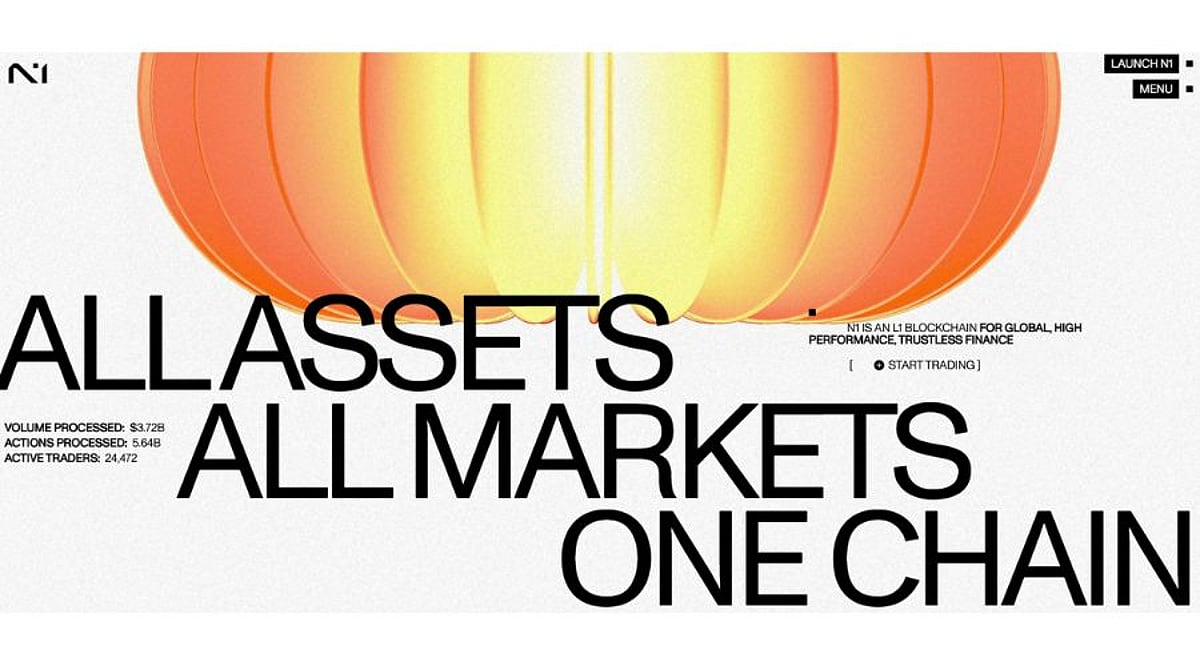
    N1, a Layer 1 blockchain supported by Founders Fund, has announced the acquisition of 01 Exchange, a decentralized derivatives platform originally built on N1’s trading infrastructure. The move signals N1’s ambition to compete directly with established cryptocurrency exchange giants.

    01 Exchange, which was incubated within the N1 ecosystem, has processed over $3 billion in trading volume and attracted more than 25,000 users. Under the acquisition agreement, the exchange’s application layer, trading product, market structure expertise, and community will become part of N1’s broader network strategy.

    Rather than relying primarily on independent third-party applications to drive ecosystem activity, N1 is bringing its infrastructure, liquidity, and flagship trading product under a single network. The company says this approach is designed to align product development, distribution, and network economics more closely while reducing the fragmentation that has historically existed across many Layer 1 ecosystems.

    “01 Exchange has already shown what is possible on N1, and bringing it into the network lets us move faster, deepen liquidity, and deliver a more integrated trading experience,” said Dima Romanov, CEO and co-founder of N1. “With N1 2.0, our next version, we’re expanding that foundation across RFQ markets, vaults, equities, mobile, and other on-chain financial products. We believe vertically integrated networks will define the next generation of exchanges, and N1 is being built to lead that shift.”

    The acquisition comes ahead of the N1 2.0 upgrade, the next major version of the network. The upgrade is planned to introduce deeper liquidity, request-for-quote (RFQ) markets, vaults, equities, and additional on-chain financial products. N1 also plans to launch native applications for iOS and Android, extending access to its trading infrastructure through a mobile experience.

    Existing 01 Exchange users will not be required to migrate assets as part of the transition. The exchange will continue operating under the N1 brand, with the new version expected to be deployed without requiring any user migration. Points earned before the N1 launch will continue to be recognized.

    The transaction is expected to close within the next six months, while the operational transition will begin immediately. The deal is expected to be structured entirely in equity and tokens.

    About N1

    N1 is a Layer 1 blockchain with unrestricted scale and ultra-low latency. Designed to support next-generation crypto apps, it features horizontal scalability, sub-ms latency, and ultra-high throughput. Every app operates in its own isolated environment, resulting in zero state congestion.

    Disclaimer: This article is provided for informational purposes and does not constitute investment advice. Cryptocurrencies mentioned may be risky and could result in financial loss. Always conduct your own research before making any investments.

  • CertiK Named Preferred Security and Compliance Vendor for Hub71, Boosting Abu Dhabi’s Digital Asset Ecosystem

    CertiK Named Preferred Security and Compliance Vendor for Hub71, Boosting Abu Dhabi’s Digital Asset Ecosystem

    NEW YORK, New York [July 6, 2026] — CertiK, the largest Web3 security services provider, today announced its selection as an official vendor for Hub71, the global tech ecosystem based in Abu Dhabi Global Market (ADGM). The partnership gives Hub71 portfolio companies preferred access to CertiK’s security and compliance services as they build and scale in one of the world’s fastest-growing digital asset hubs.

    As part of the partnership, Hub71 portfolio companies will receive a 20% discount across CertiK’s full range of services, backed by a total subsidy pool of $200,000 available to eligible companies in the ecosystem. Hub71 startups will also receive free access to the CertiK Compliance Tool, CertiK’s platform for navigating licensing applications — including with the ADGM Financial Services Regulatory Authority (FSRA) and the UAE Central Bank — and for managing ongoing regulatory compliance.

    The partnership comes as digital asset regulation in the UAE and beyond has moved from an exploratory phase into active, cross-jurisdictional enforcement. For early-stage companies, that shift has raised the stakes around licensing readiness, AML compliance, and smart contract security from day one, rather than as later-stage concerns.

    Through the partnership, Hub71 companies gain direct access to CertiK’s suite of services, including smart contract audits, penetration testing, and ongoing security monitoring, alongside compliance support tailored to the licensing pathways most relevant to companies building in and around ADGM. The CertiK Compliance Tool is designed to help founders track requirements across jurisdictions as they expand internationally, reducing the time and cost typically associated with multi-jurisdictional licensing.

    The collaboration reinforces CertiK’s role as a trusted security and compliance partner for high-growth digital asset ecosystems globally, and reflects Hub71’s continued investment in giving portfolio companies access to the infrastructure and expertise needed to scale responsibly.

    About Hub71

    Hub71 is Abu Dhabi’s global tech ecosystem, created to help ambitious startups build, scale, and access new markets from the UAE. Backed by Mubadala, ADQ, and ADGM, and headquartered within Abu Dhabi Global Market, Hub71 connects founders with capital, corporate and government partners, and a growing community of tech companies across fintech, Web3, AI, and other high-growth sectors. Since its launch, Hub71 has supported hundreds of startups with funding access, business setup support, and a network designed to accelerate their growth in the region and beyond.

    About CertiK

    CertiK is the largest Web3 security services provider, founded in 2017 and headquartered in New York. Based on breakthroughs in formal verification technology achieved by professors from Yale University and Columbia University, CertiK has become a trusted risk management partner for regulators, institutions, and Web3 innovators.

    CertiK delivers AI-powered, full-lifecycle risk management solutions that integrate directly into institutional clients’ system development lifecycles (SDLC). Backed by the industry’s largest Web3 security database, CertiK embeds AI at the very forefront of code development, code auditing, formal verification, and product deployment, while integrating it into on-chain and off-chain real-time scanning, helping organizations manage risk throughout the entire digital asset lifecycle and transform reactive security into proactive governance.

    To date, CertiK has detected more than 117,000 vulnerabilities and protected over $600 billion in digital assets across 150+ countries and regions. Operating under SOC 2 Type II and ISO 27001 standards, CertiK also works closely with regulators across multiple jurisdictions, contributing to digital asset policy development and regulatory consultation efforts worldwide.

  • Crypto Futures Overtake Spot Trading in India, Tier-2 Cities Lead Retail Surge

    Crypto Futures Overtake Spot Trading in India, Tier-2 Cities Lead Retail Surge

    India’s cryptocurrency market is undergoing a significant shift, with futures trading now outpacing spot trading for the first time. Data from Indian exchange Giottus, based on its 1.3 million users, shows that crypto futures accounted for 57.22% of total trading volume between September 2025 and May 2026, while spot trading made up 42.78%.

    The surge is being driven primarily by retail investors from smaller cities. According to Giottus analysis, 48% of futures participants come from Tier-2 cities, compared to 31% from Tier-1 metros and 21% from other areas. This marks a broadening of crypto derivatives engagement beyond metropolitan hubs.

    “India’s crypto participation story is becoming geographically broader. We are seeing increasing engagement from smaller cities in products that were once viewed as niche or high-complexity,” said Vikram Subburaj, CEO of Giottus.

    Monthly user growth in futures trading remained strong throughout 2026. Participation increased 42.5% in February, followed by 28.5% in March, 35.3% in April, and 30.3% in May. Despite the rapid growth, futures users represent only 24% of Giottus’ active users, indicating substantial room for further expansion.

    Shift Toward Altcoins and Regional Dominance

    Trading behavior is also evolving. Bitcoin and Ethereum futures combined accounted for just 15.35% of total futures volume. Ethereum contributed 7.07%, Solana 5.76%, and XRP 5.24%. The data suggests Indian traders are increasingly exploring altcoins and high-volatility assets beyond the top cryptocurrencies.

    Tamil Nadu emerged as the strongest regional market, contributing 46.6% of the total number of futures traders and 59.26% of the total futures volume. Kerala ranked second with a 10.23% share.

    Balanced Risk Profiles and Evolving Trader Behavior

    Risk appetite among futures traders appears measured. Long positions accounted for 52.79% of trades, short positions 47.21%. The average leverage stood at 10x, with over 30% of trades using leverage above 10x. However, monthly liquidation ratios remained low, ranging between 0.55% and 2.52%.

    “The liquidation trends are important because they suggest participation is not entirely speculative or reckless. Users are showing greater awareness around position sizing and risk management while using leveraged products,” Subburaj noted.

    Women represented 13.24% of futures traders and used lower average leverage than their male counterparts. The most active trading hours were between 7 pm and 10 pm, aligning with post-work activity and overlapping with U.S. market hours.

  • CLARITY Act Stalls in Senate as Legislative Window Narrows Before August Recess

    CLARITY Act Stalls in Senate as Legislative Window Narrows Before August Recess

    The Digital Asset Market Clarity Act (CLARITY Act) remains stalled in the U.S. Senate after lawmakers missed an informal July 4, 2026, signing target. No cloture motion has been filed, and no floor vote has been scheduled, leaving the bill at Calendar No. 423. The legislation previously passed the House with bipartisan support and advanced through the Senate Banking Committee, but it still requires full Senate approval, reconciliation of separate committee versions, and the president’s signature to become law. With the Senate returning from recess on July 13 and the August 7 break approaching, time is rapidly running out.

    Senate Vote Faces Political and Procedural Hurdles

    The House approved the CLARITY Act on July 17, 2025, and the Senate Banking Committee advanced it in May 2026. Senate Majority Leader John Thune has not scheduled debate, and lawmakers have not filed the cloture motion needed to initiate floor proceedings. Republicans hold 53 seats. Senators Josh Hawley and Rand Paul oppose the bill, while Democratic Senators Ruben Gallego and Angela Alsobrooks supported it in committee with conditions. To overcome a filibuster, supporters need 60 votes, requiring between seven and nine Democratic supporters.

    Ethics Concerns and Policy Disputes

    President Donald Trump’s July 1, 2026, financial disclosure listed approximately $1.4 billion in cryptocurrency-related income during 2025, including roughly $635 million in royalties from the $TRUMP meme coin and over $500 million from World Liberty Financial token sales. The White House opposes any language targeting the president’s crypto holdings. An ethics amendment proposed by Senator Chris Van Hollen was rejected by the Senate Banking Committee 11–13. Senator Kirsten Gillibrand has stated that enforceable rules covering government officials’ crypto holdings are necessary before she supports the bill.

    Developer Protections and Stablecoin Yield Debate

    Section 604, which would exempt non-custodial software developers from money-transmitter registration requirements, remains a sticking point. The National District Attorneys’ Association argues it could complicate crypto-related criminal investigations. Separately, stablecoin yield provisions are contested. The American Bankers Association warns that the current language creates a potential loophole for interest-equivalent yields beyond limits in the GENIUS Act. Coinbase currently earns about $1.35 billion annually from USDC rewards, making this issue significant.

    Industry groups like Stand With Crypto continue urging Senate leaders to preserve developer protections and bring the bill to the floor. Meanwhile, Bitcoin traded at $63,046 at publication (July 7, 2026), reflecting a 6% weekly gain but remaining about 50% below its October 2025 record high of $126,173.

    What’s Next?

    With only about three weeks before the August recess, the bill needs Senate approval before the end of July to maintain momentum, according to Stifel policy strategist Brian Gardner. Beacon Policy Advisors warned that missing that window could end the legislation’s path in 2026. Reconciliation between the Senate Banking Committee and Senate Agriculture Committee versions also remains pending. The CLARITY Act’s fate now hinges on resolving ethics disputes, securing enough Democratic votes, and surmounting procedural obstacles in a tight timeframe.

  • XRP Spot Demand Surges as Futures Traders Retreat and Ripple Secures MiCA Approval in Luxembourg

    XRP Spot Demand Surges as Futures Traders Retreat and Ripple Secures MiCA Approval in Luxembourg

    XRP is experiencing a notable divergence between its spot and futures markets. Spot buyers have ramped up activity while derivatives traders reduce leverage, according to recent data. Meanwhile, Ripple has secured full Markets in Crypto-Assets (MiCA) authorization in Luxembourg, expanding its regulated footprint across Europe.

    Spot Buyers Increase Activity While Futures Exposure Falls

    CryptoQuant data reveals that XRP maintained its price near $1.14 despite a steady decline in open interest, which dropped from over $1 billion to approximately $823.8 million. This suggests traders are reducing leveraged positions rather than building larger futures bets. Meanwhile, XRP’s Spot Taker Cumulative Volume Delta (CVD) showed strong taker-buy activity before returning to a more balanced level. Early spot buyers remained more aggressive than derivatives traders during the observed period.

    Additionally, CEX Estimated Spot CVD improved from roughly negative $42 million to positive $406 million—an increase of about $448 million over two months, indicating steady spot demand despite weaker derivatives participation. In contrast, Futures Taker CVD remained weak to neutral throughout the same period, underscoring that futures traders did not match the buying strength seen in spot markets.

    Binance data reflects the same trend. Binance Perpetual CVD declined from about negative $48 million to negative $783 million, showing continued selling pressure in perpetual contracts. Moreover, Binance open interest dropped from approximately $255 million to $203 million, further confirming that traders continue to reduce leveraged positions even as XRP holds relatively stable.

    Ripple Expands European Regulatory Approval

    Ripple announced that Luxembourg’s Commission de Surveillance du Secteur Financier (CSSF) granted the company a Crypto-Asset Service Provider (CASP) license under the European Union’s MiCA framework. This approval allows Ripple to passport regulated crypto services across all 27 European Economic Area member states, thereby expanding its regulated digital asset services throughout the region.

    Following its initial MiCA clearance in June, Ripple stated that the CASP license completes its authorization process under the European regulatory framework. The company also noted that the approval complements its existing European e-money license. Furthermore, Ripple indicated that these combined approvals support its cross-border payments business serving banks, financial institutions, and enterprise clients. The framework provides a regulated structure for crypto payment services across Europe, enabling wider adoption of XRP-powered payment products alongside its RLUSD stablecoin.

    Commenting on the development, Ripple managing director for the UK and Europe, Cassie Craddock, said the company is now fully prepared to expand operations under the MiCA framework after completing the regulatory transition.

    XRP ETFs Extend Inflow Streak

    Institutional demand also remained steady during Ripple’s regulatory expansion. According to SoSoValue, XRP spot exchange-traded funds recorded eight consecutive weeks of net inflows, with cumulative net inflows reaching $1.49 billion. Although the funds recorded no new daily inflows on July 6, total assets under management remained near $1.05 billion, representing approximately 1.47% of XRP’s total market capitalization.

    Meanwhile, crypto.news data shows XRP trading around $1.13 on Tuesday, down 1.1% over the previous 24 hours but remaining nearly 9% higher for the week. During the same period, Bitcoin maintained weekly gains exceeding 10% despite weakness in U.S. equities and rising oil prices linked to geopolitical tensions. Investors also continue monitoring developments surrounding the final version of the GENIUS Act, expected before July 18, while Ether traded near $1,800.

    What’s Next?

    XRP spot demand continues to strengthen as futures traders reduce leverage, creating a clear divergence between the two markets. Meanwhile, Ripple’s full MiCA approval in Luxembourg and XRP spot ETFs’ eight-week inflow streak reflect sustained institutional participation alongside the company’s regulatory expansion. Market participants will watch for further developments in both regulatory frameworks and price action.

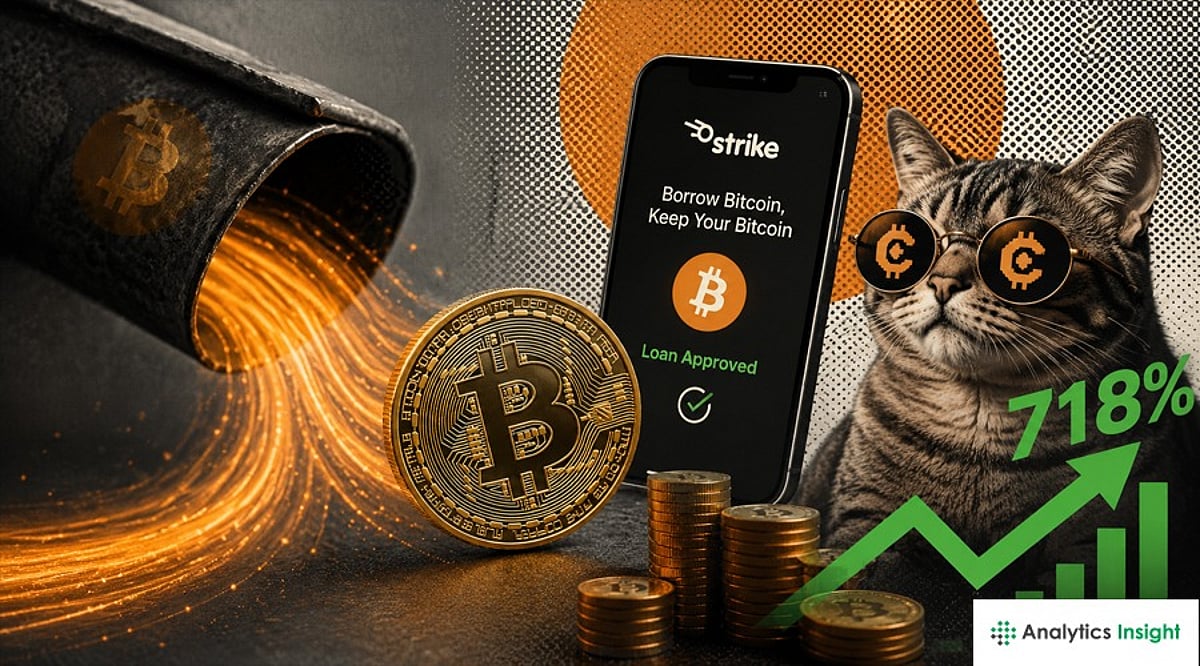
  • Bitcoin ETF Inflows Top $21M, Strike Launches BTC Loan, CASHCAT Soars 718%: Crypto News Roundup

    Bitcoin ETF Inflows Top $21M, Strike Launches BTC Loan, CASHCAT Soars 718%: Crypto News Roundup

    The crypto market witnessed a flurry of activity as Bitcoin spot ETFs saw renewed inflows, Strike introduced a novel Bitcoin-backed loan product, and the meme token CASHCAT skyrocketed over 718%. Meanwhile, crypto hacking losses declined year-on-year, and Solana’s tokenized asset ecosystem continued to expand.

    Bitcoin ETF Inflows Hit $21.44 Million

    According to data from SoSoValue, Bitcoin spot ETFs recorded a total net inflow of $21.44 million yesterday. BlackRock’s IBIT led the charge with a daily net inflow of $54.80 million, bringing its historical net inflow to an impressive $60.26 billion. On the other hand, Fidelity’s FBTC experienced the highest net outflow of $24.92 million, with its total historical net inflow standing at $10.23 billion. The total net asset value of Bitcoin spot ETFs now stands at $77.26 billion, representing an ETF net asset ratio of 6.05%, with cumulative net inflows reaching $51.37 billion.

    Strike Introduces Bitcoin-Backed Loan Without Liquidations

    Strike has launched a new Bitcoin-backed loan product designed to address forced liquidations during periods of extreme market volatility. The key innovation is the removal of margin calls and price-based liquidations, allowing customers to retain their Bitcoin collateral even if the cryptocurrency experiences a sharp decline. However, this added protection comes with trade-offs: borrowers face higher interest rates, shorter repayment periods, and strict repayment schedules. The loans offer a maximum loan-to-value ratio of 45% with six-month terms, and interest rates ranging from approximately 10.7% to 14.2%. While Bitcoin price drops won’t trigger liquidation, borrowers must make timely repayments or risk losing their collateral.

    CASHCAT Surges 718% in 24 Hours

    CASHCAT, a meme token operating on Robinhood’s newly introduced Layer 2 blockchain, surged more than 718% in 24 hours, pushing its market capitalization above $68 million, according to CoinMarketCap DexScan data from July 8. The token’s price stabilized near $0.08365, representing a 962.81% increase since tracking began, with a liquidity volume of approximately $2.6 million. CoinMarketCap lists CASHCAT as unverified, and its social media channels are marked as third-party. Blockchain tracker Lookonchain identified a wallet ending in 0xDE4C that turned $838 into over $1 million. The trader purchased 15.04 million CASHCAT tokens about 20 days ago, selling 13.5 million for a profit of roughly $917,600, with the remaining 1.5 million tokens valued at approximately $133,700.

    Crypto Hack Losses Decline 47% in First Half of 2026

    Losses from crypto exploits fell 46.8% year-on-year to $1.32 billion in the first half of 2026, according to security firm CertiK. However, second-quarter exploit losses rose 59% from the previous quarter to $807.5 million, with attacks becoming more frequent and damaging per event. CertiK cautioned that the lower total does not indicate a safer market. Blockchain intelligence firm TRM Labs recorded 207 crypto hacks in the first half, more than double the 83 incidents from a year earlier—the highest count TRM has measured across any six-month period. Smart contract exploits accounted for 125 incidents (60% of the total) but caused limited financial damage, while infrastructure and operational compromises represented about 15% of incidents but roughly 76% of losses.

    Solana’s Tokenized Assets Reach $8.7 Billion

    In its latest report updated as of July 6, 2026, RWA.xyz revealed that the transfer volume of Solana’s tokenized assets more than doubled previous records amid higher circulation on the blockchain. The total value of assets distributed on the network increased by 36.27% during the same period, reaching $3.48 billion. Network data indicated that the spot volume of tokenized assets on decentralized exchanges grew from $2.69 billion in Q1 2026 to $5.7 billion in Q2 2026.