Category: Cryptocurrency

  • Bitcoin Holds Steady Above $62,500: Key Support and Resistance Levels to Watch

    Bitcoin Holds Steady Above $62,500: Key Support and Resistance Levels to Watch

    Bitcoin Price Holds Above $62,500 Support: Analysis and Key Levels

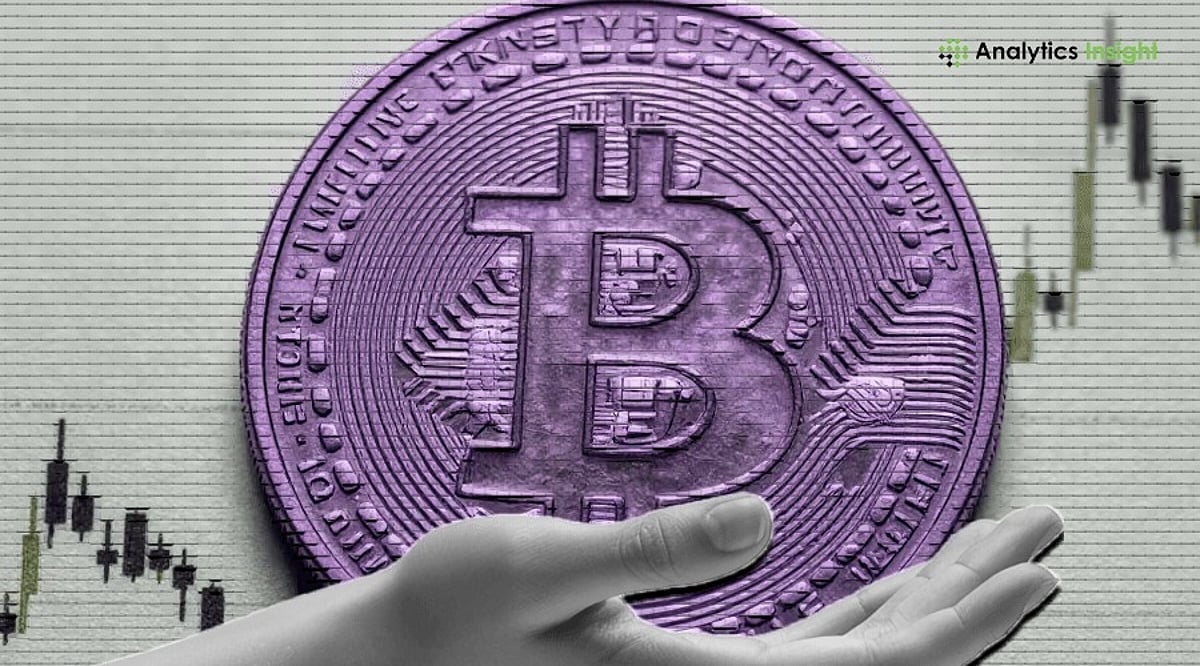
    Bitcoin is trading near $62,967, holding above the crucial support level of $62,500. The cryptocurrency remains in a narrow range, with resistance around $63,900. Market participants are watching for economic data, institutional demand, and sentiment shifts to determine the next major move.

    A Period of Stability

    Bitcoin’s recent price action reflects a balanced market. The daily range has been tight, with an intraday high near $63,874 and a low near $62,468. Neither buyers nor sellers have taken full control. This consolidation often precedes a larger move, but direction remains uncertain.

    Support Level at $62,500 Remains Key

    The $62,500 support region has held firm. Buyers have stepped in repeatedly at this level, preventing a deeper decline. If Bitcoin stays above this threshold, confidence could strengthen. A break below, however, may invite selling pressure and a test of lower prices.

    Resistance at $63,900 Blocks Upward Momentum

    Resistance sits near $63,900. Bitcoin has failed to break above this zone convincingly. A successful move above $63,900 with strong volume would likely improve sentiment and open the path to higher prices. Without a breakout, the consolidation range may persist.

    Market Sentiment Neutral with a Slight Positive Bias

    The overall mood is neutral but leaning slightly positive. Panic selling is absent, yet buying pressure remains subdued. Traders are waiting for fresh catalysts such as economic reports, Federal Reserve signals, or significant crypto news.

    Economic Events and Institutional Demand Drive Outlook

    Bitcoin remains sensitive to macroeconomic factors. Interest rate expectations, inflation data, and Fed commentary influence risk appetite. Meanwhile, institutional demand via spot Bitcoin ETFs continues to be a major driver. Strong inflows typically support prices, while outflows dampen momentum.

    On-Chain Data Adds Context

    Blockchain activity offers clues about investor behavior. Large transfers to exchanges may indicate selling intentions, while coins moving to cold storage suggest long-term holding. Long-term holders remain a stabilizing force.

    Possible Scenarios Ahead

    If Bitcoin clears $63,900 with volume, a bullish trend may resume. Conversely, a drop below $62,500 could trigger accelerated selling. In the short term, range-bound trading is likely until a clear catalyst emerges.

    Final Thoughts

    Bitcoin’s price stands at $62,967, with support at $62,500 and resistance at $63,900. The market is in a consolidation phase. Economic developments, institutional flows, and on-chain activity will dictate the next breakout direction. Traders should watch for a decisive move out of this zone.

    FAQs

    What is the current Bitcoin price?

    Bitcoin is trading near $62,967 as of the latest update. Prices are volatile, so always check live data.

    What is the key support level for Bitcoin?

    The main support is around $62,500. A break below could trigger further downside.

    What is the main resistance level?

    Resistance is near $63,900. A sustained move above this level with volume would be bullish.

    Why is Bitcoin moving in a narrow range?

    Investors are waiting for stronger catalysts. Economic data, central bank signals, and sentiment are limiting decisive moves.

    What factors could influence the next price move?

    Interest rate expectations, inflation reports, institutional ETF flows, regulatory news, and on-chain metrics are key drivers.
  • XRP Price Analysis: Will the $1 Support Level Hold or Break in 2026?

    XRP Price Analysis: Will the $1 Support Level Hold or Break in 2026?

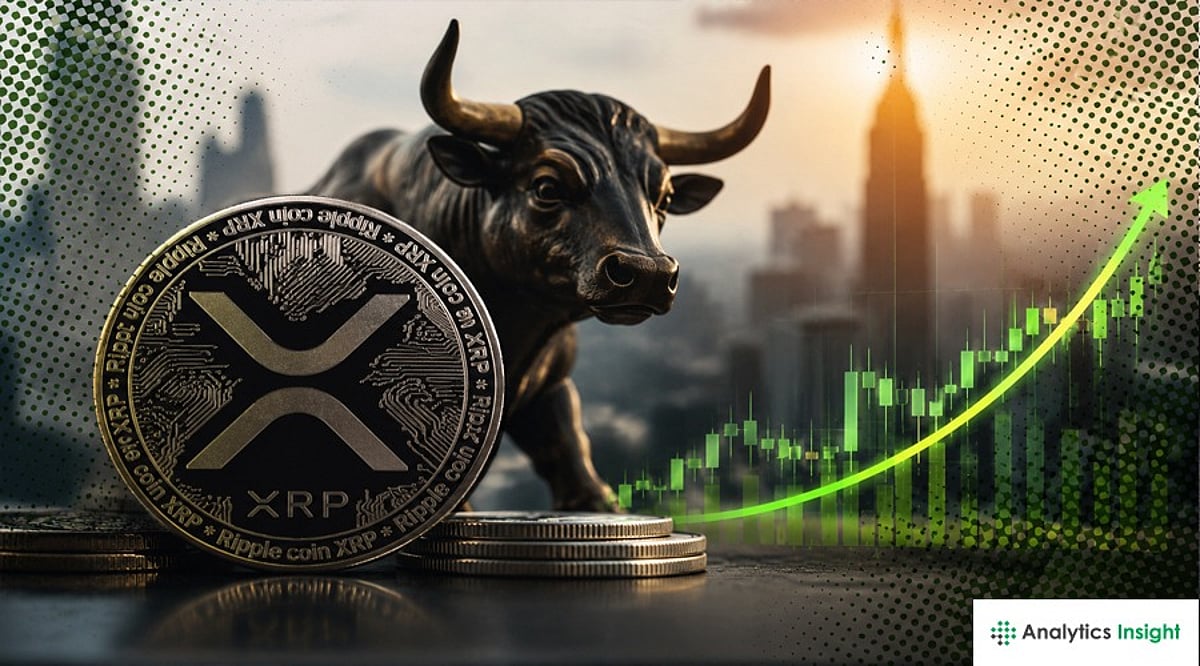
    XRP has reached one of the most pivotal points of 2026. The $1 price level has become the main area that traders and investors now watch daily. This level has historically acted as strong support, with many buyers entering around this price. After several months of volatility, XRP now sits close to this critical mark. The coming weeks could determine whether the token begins a new recovery or suffers a deeper decline.

    As of early July 2026, XRP trades just above $1 after a nearly 20% drop during June. This decline occurred despite Ripple achieving several positive milestones this year. The broader cryptocurrency market remains cautious, with many investors shifting to safer assets, reducing demand for digital currencies.

    Why the $1 Support Level Matters

    The $1 level is more than a round number. It has become a strong psychological support area because buyers have stepped in near this price multiple times before. If XRP stays above $1, confidence could gradually return, potentially pushing the price toward $1.15 and then testing the $1.20 resistance.

    However, if XRP falls below $1 and closes there for several days, more selling may follow. Many traders place stop-loss orders near this support zone. Once triggered, the price could drop quickly, with the next major support near $0.80 becoming the likely target.

    Ripple Shows Strong Business Growth

    Despite XRP’s price struggles, Ripple has made solid progress in 2026. The company expanded its payment network and continued developing new products for banks and financial institutions. Activity on the XRP Ledger has increased significantly, with daily transactions now reaching nearly three million. More businesses use the network for tokenized real-world assets, automated market maker pools, and RLUSD settlements. Tokenized assets on the blockchain now represent hundreds of millions of dollars, demonstrating that Ripple continues to build useful services even when XRP’s price performance remains weak.

    XRP ETFs Bring Institutional Money

    One of the biggest developments for XRP came with the launch of spot XRP exchange-traded funds (ETFs) in late 2025. These products have attracted around $1.48 billion in total inflows, opening the door for more institutional investors to gain exposure to XRP without directly buying the cryptocurrency. This steady flow has supported market confidence for much of the year. However, recent sessions recorded the first notable outflows after months of steady demand, indicating that large investors have also become more cautious amid recent market weakness.

    Regulation Could Shape XRP’s Future

    Government rules remain a major factor affecting XRP. Investors closely watch new cryptocurrency laws in the United States. Clear regulations could make it easier for financial companies to invest in digital assets with greater confidence. Several proposals have raised hopes for better legal clarity during 2026, but delays in new legislation have tempered market excitement. Many experts believe stronger regulatory support could attract more institutional money into XRP, though market conditions and the overall economy will still play a major role in future price movements.

    Technical Charts Show Mixed Signals

    Technical indicators suggest selling pressure has started to ease. The Relative Strength Index (RSI) has recovered from oversold levels, often meaning sellers may lose strength after a sharp decline. Trading volume has also decreased during recent price drops, which can indicate fewer traders are willing to sell at current prices. However, XRP still trades below several important moving averages, so analysts have not confirmed a long-term bullish trend.

    The first resistance area stands between $1.08 and $1.10. If buyers push above this range, XRP may move toward $1.18 and then $1.20. A stronger rally could later send the token into the $1.30 to $1.45 range. Conversely, failure to defend $1 may increase selling pressure and pull the price closer to $0.80.

    The Overall Crypto Market Still Controls XRP

    Ripple’s business growth has improved during 2026, but XRP still follows the direction of the wider cryptocurrency market. Bitcoin and other major digital assets have faced heavy pressure as investors remain cautious about global economic conditions and interest rate expectations. This cautious mood has reduced the amount of money entering cryptocurrencies. Positive news about Ripple has helped support confidence but has not been strong enough to create a lasting rally. Many market experts believe XRP needs both stronger market sentiment and continued business growth before a major recovery becomes possible. Institutional demand through ETFs has provided some support, but that alone may not push prices much higher unless the overall crypto market also turns positive.

    Why This Matters

    XRP hovering near the $1 psychological threshold represents a make-or-break crossroads for 2026. While Ripple utility expands via three million daily ledger transactions and $1.48 billion in spot ETF inflows, broader macroeconomic risk aversion threatens a breakdown toward $0.80 if this pivotal support fails.

    Final Outlook for XRP in 2026

    The rest of 2026 could become one of the most important periods for XRP. The $1 support level now stands at the center of market attention. If buyers keep control of this area, XRP could slowly recover toward $1.20 and later move into the $1.30 to $1.45 range if the broader cryptocurrency market improves. A clear break below $1 would weaken the technical outlook and may open the door for a decline toward $0.80. Ripple continues to report strong business growth, higher network activity, and rising institutional interest through XRP ETFs. These positive developments support the long-term outlook. However, short-term price movement still depends on investor confidence and the direction of the overall cryptocurrency market.

    Frequently Asked Questions

    1. Why is the $1 price mark so critical for XRP right now?

    The $1 mark is a major psychological and technical support line. Holding above it keeps a recovery toward $1.20 alive, whereas closing underneath it risks triggering mass stop-loss selling orders.

    2. How have the newly launched spot XRP ETFs impacted the market?

    Spot ETFs have pulled in $1.48 billion in net inflows since late 2025. These investment funds provide solid underlying structural demand by giving large institutional investors direct exposure to XRP.

    3. Is Ripple’s real-world business adoption actually expanding?

    Yes. Independent of price, the XRP Ledger averages nearly three million daily transactions. This operational growth is driven by automated market maker pools, tokenized real-world assets, and RLUSD stablecoin settlements.

    4. What happens from a technical standpoint if the $1 support level breaks?

    Consecutive daily closes below $1 would invalidate the current market structure. This technical failure would give short-sellers total control, likely exposing the cryptocurrency to a deeper correction toward $0.80.

    5. What macro factors are keeping XRP from staging a major breakout?

    XRP remains tied to the broader crypto market. Digital assets face persistent selling pressure amid global economic uncertainty, and cautious interest rate expectations have reduced capital flowing into riskier assets.

  • A Comprehensive Guide to Shorting Bitcoin During Market Declines

    A Comprehensive Guide to Shorting Bitcoin During Market Declines

    When cryptocurrency prices tumble, most holders can only watch their portfolios shrink. However, traders who understand how to short Bitcoin can position themselves to profit from falling markets, not just rising ones. Shorting is not reserved for professionals; it is a standard trading tool that provides a way to act in both up and down markets.

    What Does It Mean to Short Bitcoin?

    Going long means buying an asset hoping its price will rise. Shorting is the opposite: you profit if the price falls. A short position gains value as the asset declines and loses value as it climbs. In short selling Bitcoin, you are effectively betting against the price, and your profit comes from the difference between where you open the position and where you close it at a lower level. Many wonder whether you can short crypto without actually owning any coins. The answer is yes—derivatives make it possible to take a short position without holding the underlying asset first, making shorting accessible to anyone with the right products.

    How to Short Crypto: The Main Methods

    There are several ways to short crypto. The most common for retail traders is through derivatives, where you open a short position on a contract whose value tracks Bitcoin. You can also short on margin by borrowing the asset, selling it, and buying it back later at a lower price—though that process is more involved. For most traders, the simplest route is to use perpetual contracts, which allow you to open a leveraged short position that profits directly from falling prices without worrying about an expiry date. Perpetuals are popular because they offer flexibility: you can open and close at will, use leverage to size the position, and hold as long as your market view plays out, paying only the funding cost along the way.

    Where You Can Short Bitcoin

    Shorting takes place on derivatives platforms rather than simple spot exchanges. When choosing an exchange that supports short positions, consider liquidity, available contracts, fees, and the platform’s track record for reliability and security. A liquid venue ensures your short fills and closes at fair prices—critical during the fast, volatile moves that shorting aims to capture.

    The Risks of Shorting

    Shorting carries a unique danger. When you are long, your maximum loss is the amount you invested because a price can only fall to zero. When you are short, the price can theoretically rise without limit, so losses are unbounded. A sudden rally—especially a short squeeze, where rising prices force shorts to buy back and push prices even higher—can be brutal. Adding leverage multiplies the risk. A leveraged short can be liquidated quickly if the market rallies, and shorting against a strong uptrend is one of the fastest ways to lose money. Disciplined shorts use stop-loss orders, modest leverage, and careful position sizing, and they respect that markets can rise irrationally for longer than expected.

    Shorting Responsibly

    Shorting is a tool, not a worldview. Traders who use it well treat it as one side of a two-sided market, deploy it when the evidence supports a decline, and always define their risk before entering. Knowing where you will exit if you are wrong is even more important when shorting than when going long, because the downside is open-ended. Knowing how to short Bitcoin turns a falling market from a threat into an opportunity. Through derivatives such as perpetual contracts, you can profit from declines, hedge existing holdings, or simply trade both directions of the market. But the open-ended risk of shorting, amplified by leverage, demands real discipline. Use it deliberately, size it carefully, and never short without a plan for being wrong.

    Disclaimer: This article is for informational purposes only and does not constitute financial advice. Leveraged trading carries a high level of risk and can result in the loss of your entire capital. Always conduct your own research before making any investment decisions.

  • Bitcoin ETFs See $527M Weekly Outflow, Solana Rallies 14%, Stablecoin Volume Hits $1.79T – Crypto News Roundup

    Bitcoin ETFs See $527M Weekly Outflow, Solana Rallies 14%, Stablecoin Volume Hits $1.79T – Crypto News Roundup

    Bitcoin ETF Outflows Continue

    Bitcoin spot ETFs recorded a net outflow of $527 million last week, marking the eighth consecutive week of withdrawals. BlackRock’s IBIT saw $773 million exit, while Grayscale Bitcoin Trust (GBTC) reported $27.69 million in outflows. However, the Ark & 21 Shares ETF (ARKB) bucked the trend with $102 million in net inflows. Cumulative net inflows for IBIT remain strong at $59.99 billion, and the total net asset value of spot Bitcoin ETFs stands at $74.37 billion.

    Solana Maintains Momentum After 14% Rally

    Solana (SOL) surged over 14% last week and is currently trading around $80.89. While it has stalled below a key resistance level, indicators point to growing bullish momentum. Spot Solana ETFs attracted $5.75 million in net inflows, reversing the previous week’s outflows. Additionally, tokenized asset spot trading volume on the Solana network reached $5.7 billion in Q2, more than doubling from Q1’s $2.69 billion.

    Stablecoin Transaction Volume Reaches Record $1.79 Trillion

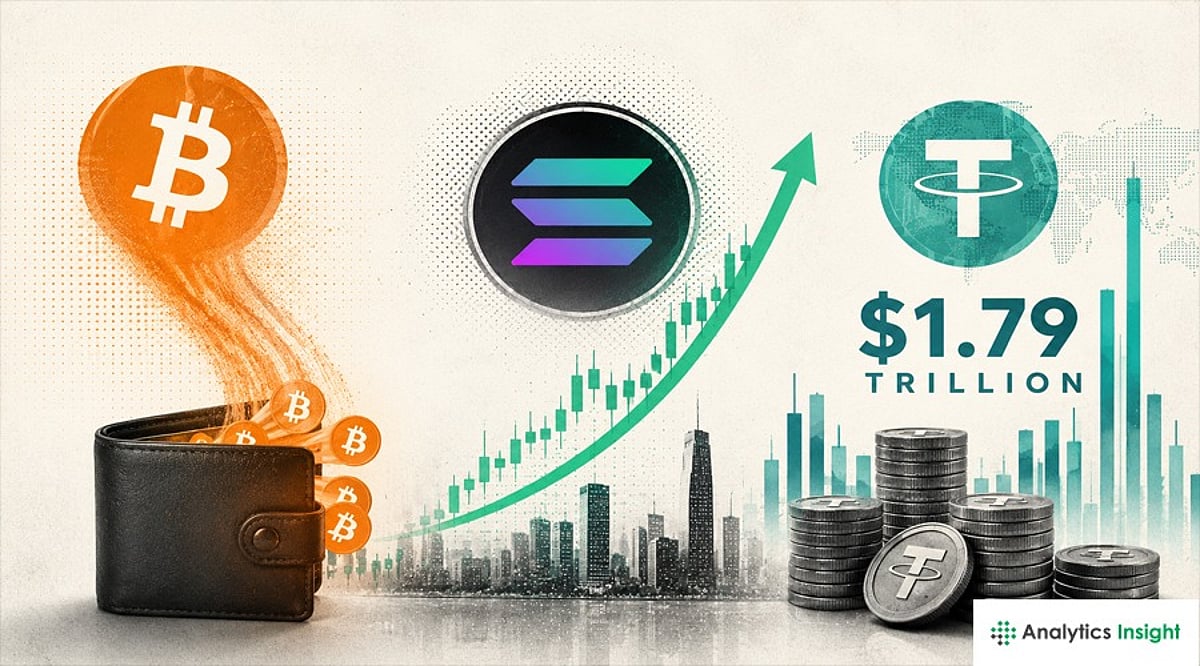
    According to Visa, stablecoin transaction volume hit an all-time high of $1.79 trillion in June, up 63% from May’s $1.1 trillion. USDC led with $1.21 trillion (67% of the total), while USDT accounted for $576 billion (32%). PayPal’s PYUSD ranked third with $2.42 billion.

    CLARITY Act Faces Key Senate Deadline

    The CLARITY Act, a major US crypto market structure bill, missed its July 4 target but still has a chance before the Senate’s summer break on August 7. The bill has passed the House and cleared the Senate Banking Committee. Senator Cynthia Lummis urged lawmakers to advance it, calling it “the foundation for the financial services of the 21st century.”

    Ethereum Plans Its ‘Biggest Rebuild’

    Ethereum co-founder Vitalik Buterin outlined “Lean Ethereum,” a multi-year plan to replace almost every major protocol component over three to four years while minimizing disruption to existing applications. This third major iteration follows the 2022 Merge. Quantum safety has been elevated as a top priority.

    Disclaimer: This article is for informational purposes only and does not constitute financial advice. Always conduct your own research before investing in cryptocurrencies.

  • Stargate LLM: A 50x Crypto Opportunity Beyond Sui and Uniswap in the Next Tech Cycle

    Stargate LLM: A 50x Crypto Opportunity Beyond Sui and Uniswap in the Next Tech Cycle

    Every major technology wave has rewarded the entities that defined a new category, not just those with the most users. Sui carved out its lane with parallel transaction processing rather than competing directly with existing Layer 1 blockchains. Uniswap created the automated market maker category from scratch, bypassing centralised exchanges. Standard Chartered’s Geoff Kendrick recently noted that the market has yet to fully price in the depth of Uniswap’s latest partnership, while Sui has joined forces with African fintech giant Paga. For investors seeking the top crypto to buy today, Stargate LLM is pursuing a category that neither Sui nor Uniswap occupies.

    AI That Users Own, Not Just Another Chatbot

    Sui and Uniswap have both demonstrated that owning a brand-new category often outperforms competing within an existing one. Cloud computing, search engines, and social media all rewarded the builders of the underlying infrastructure layer, not merely those who attracted the most users to an existing model. Stargate LLM applies this same logic to artificial intelligence, focusing on user-owned AI rather than faster blockchain infrastructure or a better trading mechanism.

    The category it targets is AI that is partially owned by its users, enabled by Proof of Usage rewards, vault staking, and DAO-voted revenue sharing. These are not features bolted onto an existing chatbot; they are integral to the token’s design from inception. This distinction transforms the token’s purpose from mere access to active participation and reward.

    The presale reflects this early-category positioning: ten pricing stages from $0.0005 to $0.0125, with a launch at $0.025. Stage 1 is priced at a 50x ratio to that target. The total token supply is fixed at 150 billion, with 96% allocated to the community, ecosystem, and presale participants, and only 1% to the core team. Both Sui and Uniswap were once at this early stage, in categories that had no name. For anyone evaluating the top crypto to buy today with genuine category-level differentiation rather than a faster interface, this is the comparison that matters.

    Sui Just Landed a Continent-Scale Deal

    On July 1, 2026, the Sui Foundation partnered with African fintech giant Paga to explore tokenizing real-world assets and delivering blockchain-based financial tools across the continent, leveraging Sui’s speed and Paga’s mobile payment ecosystem. However, the more significant event this week was the token supply: SUI led a $73 million weekly token unlock wave alongside ENA and EIGEN, with 13.72 million SUI tokens worth roughly $9.4 million released on July 1. SUI currently trades near $0.75, about 86% below its all-time high—a gap that unlock pressure is not making easier to close.

    Uniswap Just Became Robinhood’s Native Exchange

    Standard Chartered’s Geoff Kendrick remarked this week that markets are significantly underestimating how deep Uniswap’s newest integration actually runs. Uniswap now serves as the native automated market maker on Robinhood Chain, an Arbitrum-based Layer-2 network that launched its public mainnet on July 1, 2026. This puts Uniswap in direct reach of Robinhood’s retail base for trading tokenized stocks such as Apple, Tesla, and Nvidia. UNI trades near $3.11 despite the news, still roughly 83% below its 2021 all-time high of $18.59.

    Last Say

    Sui built an entirely new category around parallel processing, and Uniswap built one around automated market making. Both are proving the same pattern once again, even while their tokens remain far below prior highs. Stargate LLM is chasing a category neither occupies, embedding AI ownership directly into how the platform rewards its users. For anyone comparing the top crypto to buy today, these three represent genuinely different bets on what owning a new category actually looks like.

    Explore Stargate LLM:
    Website: stargate.org
    Buy: own.stargate.com
    Telegram: https://t.me/StargatellmOfficial
    Twitter/X: https://x.com/stargatellm

  • Stargate LLM: The First Community-Owned AI Platform Explained

    Stargate LLM: The First Community-Owned AI Platform Explained

    Nearly 9 in 10 companies globally now use artificial intelligence in at least one business function. Generative AI reached 53% global population adoption within three years of ChatGPT’s release – a faster curve than both the personal computer and the internet, according to Stanford HAI’s 2026 AI Index. The world will spend an estimated $2.52 trillion on AI this year alone. And yet, the economics of this industry remain strikingly one-directional. Users pay subscriptions, generate data, and build engagement. The companies capturing that value – OpenAI at a $300 billion valuation, Anthropic crossing $30 billion in annualized revenue – are entirely closed to retail participation. The people who built the user base own none of it.

    Stargate (STARGATE) is a crypto-native AI platform designed to change that structural equation. This guide covers what it is, how it works, and what prospective participants should understand before engaging with the project.

    What is Stargate LLM?

    Stargate is a full-stack AI ecosystem accessible through wallet-based login and powered entirely by crypto payments. At launch, the platform offers conversational AI with access to advanced language models, image generation using diffusion models, video generation for creative and commercial workflows, private AI search that does not log queries or link activity to user identity, creator tools for content generation and distribution, a developer-focused coding platform, the Stargate Grid (a DePIN compute network), enterprise compute services, and Stargate Studio and Market for AI agent creation and deployment.

    Users connect a wallet, fund their account with crypto, and access the full suite of tools without providing personal financial information, linking a bank account, or entering credit card details. No email signup is required. The platform is designed from the ground up for the 560 million people globally who hold cryptocurrency and the growing population of users who prioritize privacy in their interactions with AI.

    Utility of STARGATE Token

    The STARGATE token is designed as a hybrid utility token. It serves as both the native currency of the Stargate ecosystem and a mechanism for community participation in platform growth. The token is required or incentivized for AI subscriptions, chat credits, image and video generation, AI agent deployment, API access, private mode, premium model upgrades, staking, governance, referral rewards, and creator rewards.

    Total fixed supply is 150 billion tokens. No additional tokens will be minted. The allocation model is designed around community-first principles: 50% to Proof of Usage rewards, 33.3% to presale participants, 12.7% to community and ecosystem growth, 3% to liquidity, and 1% to the team. The 1% team allocation is locked for 24 months, one of the longest team locks in the industry at this stage.

    Understanding STARGATE Presale

    The presale is structured across ten batches with escalating entry prices. Batch 1 begins at $0.0005 per token, scaling through nine subsequent tiers to a launch price of $0.025, a 50x spread between the earliest entry and the public listing. Total raise target across all batches is $77.5 million, with hard caps on each batch that trigger automatic progression to the next price. Presale tokens vest with 40% unlocked at the token generation event and the remaining 60% released monthly over three months. Bonus tokens carry a 12-month lock followed by 12-month monthly vesting.

    Proof of Usage

    Traditional blockchain reward mechanisms compensate miners or validators for securing infrastructure. Stargate introduces a different model called Proof of Usage, which rewards real users who generate genuine value within the AI ecosystem. Qualifying activities include using conversational AI, generating images and videos, referring active users, staking tokens, providing structured model feedback, deploying AI agents, purchasing subscriptions, and creating templates used by others. Fifty percent of the total token supply, 75 billion tokens, is allocated to this rewards pool, the largest single allocation in the model.

    The Vault

    The Stargate Vault is the platform’s staking mechanism. Users lock tokens in the Vault to unlock enhanced benefits including free monthly AI credits proportional to staking amount, reduced generation costs, priority processing, higher usage limits, private AI mode, access to premium models before general release, early access to beta features, API credits, VIP support, and staking rewards drawn from platform revenue and the Proof of Usage pool.

    Privacy Architecture

    Stargate is built around privacy as a default rather than an optional setting. Login happens through a wallet, not an identity-linked email or government ID. AI queries are not logged in a way that links them back to the user. All payments run through crypto with no bank account or credit card trail. Sensitive conversations run through encrypted sessions. As stated in the whitepaper, Stargate is designed for the “opposite world” from mainstream AI platforms, one where privacy is the starting point.

    Revenue Sharing

    Platform revenue accumulates in a DAO treasury. Quarterly governance votes, controlled by token holders, allocate that revenue across staker distributions, development funding, ecosystem grants, and strategic partnerships. This is governance-style revenue alignment rather than contractual yield, as the whitepaper makes clear. As the platform grows, governance may introduce additional revenue-sharing mechanisms voted on by the community over time.

    The Bottom Line

    Stargate (STARGATE) is attempting something no major AI platform has done: combining a working AI product suite with crypto-native payment rails, privacy-first architecture, and a community ownership model that routes platform revenue back to token holders through governance. Whether it succeeds depends on execution, adoption, and regulatory clarity. But the structural gap it is targeting – 560 million crypto holders with no AI platform built for them, and billions of AI users with no ownership in the platforms they pay for – is real, documented, and growing.

    Explore Stargate LLM:
    Website: Stargate.org
    Buy: own.Stargate.com
    Telegram: https://t.me/StargatellmOfficial
    Twitter/X: https://x.com/StargatellmLLM

  • Top Cryptocurrency Platforms for Safe Long-Term Investing in 2025

    Top Cryptocurrency Platforms for Safe Long-Term Investing in 2025

    Looking for a trusted crypto platform to invest in with confidence? Here are the top exchanges offering strong security, long-term investing features, and reliable user experiences for both beginners and seasoned investors.

    • Coinbase: A beginner-friendly exchange known for strong security, regulatory compliance, and an easy investing experience.
    • Binance: Offers one of the world’s largest crypto selections with advanced trading tools and competitive fees.
    • Kraken: Highly trusted for its security, transparent operations, and professional trading features.
    • Bitstamp: One of the oldest crypto exchanges, offering reliability, strong compliance, and long-term investment options.
    • Gemini: Focuses on regulation, institutional-grade security, and simple investing for beginners and professionals alike.
    • Crypto.com: Provides crypto investing alongside staking, rewards, and an expanding ecosystem of financial products.
    • CoinDCX: A leading Indian crypto platform offering simplified investing, security features, and regulatory focus.
    • Mudrex: Ideal for long-term investors with automated crypto portfolios and easy recurring investment options.

    These platforms combine robust security measures with user-friendly interfaces, making them excellent choices for secure long-term cryptocurrency investing. Always do your own research before committing funds.

  • CLARITY Act Moves to Senate Floor Amid Ethics Concerns Over Trump Crypto Income

    CLARITY Act Moves to Senate Floor Amid Ethics Concerns Over Trump Crypto Income

    The Digital Asset Market Clarity Act (CLARITY Act) advanced out of the Senate Banking Committee by a 15-9 vote on May 14, 2026, setting the stage for a full Senate debate. Two Democrats—Ruben Gallego of Arizona and Angela Alsobrooks of Maryland—joined all Republicans on the panel, giving the bill early bipartisan support as lawmakers seek federal rules for digital assets.

    Committee Chairman Tim Scott called the markup a bipartisan effort to deliver clear rules for cryptocurrencies. The bill now shifts to the Senate floor, where supporters must secure at least 60 votes for passage. Senate leaders are expected to release the final draft this week for public review. Senator Cynthia Lummis said lawmakers, banks, and industry groups should receive the draft around July 4.

    The Senate placed the bill on the legislative calendar as item No. 423 on June 1, 2026, making it eligible for floor consideration. However, scheduling has proven tricky. Initial hopes for a vote before the July 4 recess faded after the Senate adjourned until July 13. Senator Bill Hagerty indicated the vote is more likely after lawmakers return, noting that the GENIUS Act demonstrated how clear rules can lead to lasting crypto policy. “This will be something more a matter of focus after the 4th of July recess period, but I certainly hope to see it done before,” Hagerty said on June 18, 2026.

    With Republicans holding 53 seats, the CLARITY Act needs at least seven Democratic votes to reach the 60-vote threshold. Lawmakers must also reconcile the Senate Banking Committee version with a separate draft from the Senate Agriculture Committee, then merge with the House-passed bill (H.R. 3633, approved 294-134 on July 17, 2025) before sending it to the president. Industry groups are pressing for action before the August recess, and staff continue to negotiate unresolved issues behind the scenes.

    Adding a new layer of complexity, President Donald Trump’s 2025 annual financial disclosure revealed roughly $1.4 billion in crypto-related income, including royalties from his memecoin company, token sales from World Liberty Financial, and sales to an Abu Dhabi sheikh’s firm. Trump also reported holding over $100 million in various cryptocurrencies and smaller stakes in firms like Corewave.

    In response, Senator Elizabeth Warren called for an ethics provision in the CLARITY Act, insisting the bill must prevent senior officials, lawmakers, and their families from profiting from crypto. Senator Gallego, who supported the bill in committee, said on X that he would work to address Trump’s crypto dealings and stressed the need for “real, enforceable standards” on ethics. Gallego did not commit to supporting the bill on the Senate floor, leaving the vote count uncertain.

    As the CLARITY Act heads toward a critical Senate test, its path depends on bipartisan support, final negotiations, and whether Congress can act before election-year pressure slows momentum.

  • XRP and Solana ETFs Gain as Bitcoin Spot Funds See $526 Million in Outflows

    XRP and Solana ETFs Gain as Bitcoin Spot Funds See $526 Million in Outflows

    Bitcoin spot ETFs experienced a significant capital flight last week, losing $526 million, while XRP and Solana funds attracted fresh institutional inflows. Ethereum products shed $14 million, yet XRP and Solana combined drew $49 million, signaling stronger demand during a weaker market phase.

    XRP ETFs Extend Weekly Inflow Streak

    XRP spot ETFs recorded a ninth consecutive week of net inflows, adding $17.19 million despite broader market pressure. The products continued to attract buyers while Bitcoin funds faced heavy withdrawals. According to CoinGlass data, the total market capitalization of combined XRP ETF products reached $690 million. Historical cumulative net inflows across these spot products reached 754.78 million XRP.

    Daily activity showed steady accumulation. On June 29, XRP ETF products logged a single-day inflow of 14.64 million XRP, before smaller outflows followed on June 30 and July 1. Those pullbacks totaled 2.68 million XRP and 1.79 million XRP. Then, on July 2, inflows turned positive again with another 6.22 million XRP added.

    Bitwise Leads XRP Products as Solana Recovers

    The Bitwise XRP ETF, listed as 1XRP, led the sector with $245.31 million in assets under management. Canary XRP ETF (2XRPC) followed with $225.91 million, and Franklin XRP ETF (3XRPZ) ranked third with $167.87 million. Together, the three products accounted for most XRP ETF capital in the available data.

    Solana ETFs also returned to positive territory. Daily metrics showed 77,070 SOL in net inflows on June 29, as institutional buying stabilized during the week. The Bitwise Solana Staking ETF (BSOL) held $595.88 million in assets, representing the largest share of institutional capital allocated to Solana in the data provided.

    XRP Breakout Faces First Support Test

    XRP finally moved above $1.14, a level that had capped recent upside attempts. Buyers pushed the token as high as $1.158 before sellers drove it back toward $1.146. During the 24-hour session, XRP rose from $1.1344 to $1.1454, gaining 2.87%. The breakout occurred at 22:00 UTC on July 5, when volume reached 81.89 million XRP — about 207% above the 24-hour average. The move carried XRP from $1.1356 to $1.1594 within two hours, clearing resistance near $1.1400.

    Traders are now watching the $1.1400–$1.145 range as key support after the breakout. Sellers emerged near $1.158 and pulled XRP below short-term support at $1.150. The 60-minute chart weakened after XRP failed to reclaim $1.155. The short-term range now sits between $1.145 and $1.151. A decisive loss of $1.145 would shift attention toward $1.142 and then $1.133. XRP needs to reclaim $1.155 before buyers can test the $1.17–$1.20 resistance zone. A move above $1.20 would bring $1.29–$1.30 back into focus.

    What’s Next?

    XRP ETFs stayed resilient as Bitcoin spot ETFs recorded heavy outflows and Solana funds returned to positive territory. XRP’s move above $1.14 showed renewed buyer interest, but resistance near $1.155 and $1.17–$1.20 remains key. Traders should watch support before expecting stronger continuation.

  • Dogecoin Holds Near $0.077 as Whales Accumulate and Derivatives Activity Slows

    Dogecoin Holds Near $0.077 as Whales Accumulate and Derivatives Activity Slows

    Dogecoin traded near $0.0770 on Monday as the meme coin held a tight range following Friday’s 4% rebound. Retail activity cooled, derivatives volume declined, and whale wallets increased their DOGE holdings. Traders now watch whether buyers can clear resistance near $0.0770 and extend the move toward $0.085.

    DOGE Traders Hold Back as Volume Slips

    Dogecoin futures open interest stayed near $1.03 billion on Monday, according to CoinGlass data. That level showed that contract holders kept a wait-and-see approach during the last 24 hours. At the same time, the DOGE funding rate stood at 0.0089%, indicating traders still paid a premium for long positions, which pointed to broadly bullish positioning.

    Even so, derivatives volume dropped by more than 5% over the same period. That decline showed weaker trading activity and matched the cautious tone across the DOGE market.

    Whale Holdings Rise as On-Chain Signals Improve

    Large-wallet investors with more than 1 billion DOGE increased their holdings to 73.85 billion tokens, up from 72.73 billion tokens on Thursday. Still, whale holdings moved sideways over the last two days. Whale transactions also fell to 12 on Sunday, down sharply from 47 on Friday.

    Meanwhile, the share of DOGE supply in profit rose to 38.51% from 23.7% last week. Active Dogecoin addresses also climbed to 50,000, compared with 40,000 only days earlier.

    DogeOS, Supply Debate, and Key Price Levels

    Developers continue to work on the proposed DogeOS upgrade. The proposal seeks to add zero-knowledge proof verification through an opcode called OP_CHECKZKP. If approved, Dogecoin could gain layer-2 rollups and Ethereum Virtual Machine compatibility without a hard fork. That change could support DeFi, gaming, and identity applications on the network.

    Regulation also remains in focus as the proposed U.S. CLARITY Act carries about a 55% chance of passing. Some investors believe the bill could classify Dogecoin as a digital commodity and support future spot DOGE ETF products.

    The Dogecoin community also continues to discuss its inflation structure. A recent GitHub proposal calls for block rewards to fall from 10,000 DOGE to 1,000 DOGE. That change would reduce annual DOGE supply growth to 500 million tokens from 5 billion tokens. At the same time, daily trading volume stood near $978 million.

    From the chart, buyers need to defend the $0.075 support area. A move above $0.080 to $0.082 would improve confidence, while a break above the 100-day moving average near $0.094 would provide stronger confirmation of a recovery.

    What’s Next?

    Dogecoin remains near $0.077 as whales increase their holdings while retail trading activity slows. Derivatives volume has weakened, but funding rates show bullish positioning. The next move depends on key support and resistance levels, DogeOS progress, and CLARITY Act developments that could shape broader DOGE market confidence.