Category: Cryptocurrency

  • SPCX Perpetual Liquidations Surpass $50 Million as SpaceX Stock Tests Nasdaq Debut

    SPCX Perpetual Liquidations Surpass $50 Million as SpaceX Stock Tests Nasdaq Debut

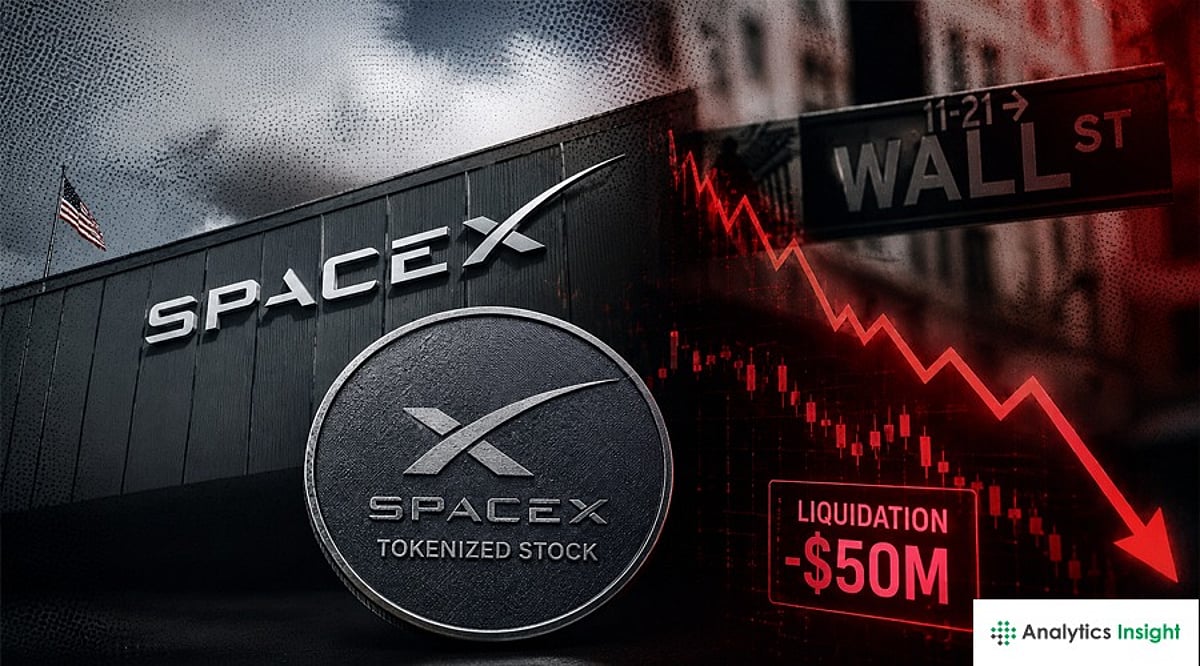
    SPCX perpetual contracts have witnessed over $50 million in liquidations within 48 hours as SpaceX shares dipped below their $150 Nasdaq opening price. The event underscores the heightened volatility and risk inherent in leveraged tokenized stock products, which can react far more aggressively than traditional equity markets.

    What Happened

    According to market data, SPCX-linked perpetual contracts recorded more than $50 million in forced closures, trailing only Bitcoin and Ethereum in liquidation volume among crypto derivatives during that period. The liquidations followed a sharp decline in SpaceX stock, which fell below its Nasdaq debut price after a major drawdown. Investors who bought shares above the company’s $135 initial public offering price are now facing losses.

    How SPCX Differs from Traditional Stock Ownership

    SPCX products are pre-IPO or equity perpetual contracts that offer leverage, cash settlement, and funding mechanisms. Unlike owning actual shares, these instruments provide price exposure without ownership rights, voting rights, or share delivery. Binance lists SPCXUSDT as a USDT-settled pre-IPO perpetual contract, while Coinbase explains that such products settle entirely in cash. Crypto.com describes a structure allowing conversion between SpaceX pre-IPO perpetuals and equity perpetuals depending on platform mechanics.

    This structure places traders in a derivatives-driven environment where margin requirements and funding rates dictate outcomes. If prices move sharply against a position, exchanges can liquidate traders automatically at any time—without waiting for a market close.

    Liquidation Pressure Builds Around Leveraged Exposure

    The $50 million liquidation figure is a notable signal because Bitcoin and Ethereum typically dominate liquidation rankings due to deep liquidity and large leveraged positions. SPCX joining that group reflects strong demand for SpaceX-linked exposure. Liquidation risk does not require a total collapse in the underlying asset—a combination of leverage, open interest, and adverse price movement can easily trigger forced exits.

    While traditional investors may still be evaluating whether the decline reflects temporary weakness or fundamental concerns, perpetual contract markets react instantly, closing positions as soon as collateral support drops.

    Tokenized Stock Perpetuals Face a Different Risk Cycle

    Tokenized stock perpetuals trade around the clock, using venue-specific mark prices and funding systems while enforcing margin requirements continuously. This continuous trading can amplify disagreements over value into sudden liquidation pressure, even as traditional investors are still assessing the stock’s outlook.

    These products may ultimately serve as effective risk-transfer markets, but that will require improved liquidity and reduced leverage. Until then, high open interest and persistent volatility will likely sustain heavy market stress.

    What’s Next

    SpaceX stock slipped below its Nasdaq opening price, triggering the $50 million liquidation wave for SPCX. The event highlights how tokenized stock perpetuals can lead to rapid forced exits when leverage and margin rules kick in. Market participants are now watching to see if the asset stabilizes and whether open interest, funding rates, and liquidation activity will flatten out.


  • Ethereum Holds Key $1,500 Support; $5,100 Breakout Target Remains in Focus

    Ethereum Holds Key $1,500 Support; $5,100 Breakout Target Remains in Focus

    Ethereum traded near a critical support zone on June 24 as ETF outflows, weak momentum, and a break below the 200-day simple moving average kept pressure on the asset. The token stood at about $1,670, below $1,700 and near a level that has shaped its wider recovery since 2022.

    Key Support Defines the Near-Term Setup

    Ethereum has repeatedly bounced from the $1,500 to $1,650 area since the 2022 bear-market bottom. The zone protected every major low during the past several years. It also notes that Ethereum reached about $1,618 on the weekly chart. Earlier rebounds from this area came in 2023, late 2023, and 2025.

    According to analyst Ardi, weekly closes below $1,500 would mark a clear structural breakdown. He said that holding above that level would keep the broader support pattern intact.

    Chart Traders Compare ETH With the Russell 2000

    A separate chart view compares Ethereum with the Russell 2000. Both assets formed rounded bases after major declines, then recovered toward long-standing resistance. The Russell 2000 has already moved above its horizontal resistance near 2,500. That breakout strengthened its broader bullish structure.

    Ethereum has not matched that move. It still trades below a resistance band ranging from $4,300 to $5,100 and remains within a short-term descending channel. James Easton said the Russell 2000 pattern could offer a roadmap for Ethereum.

    If ETH breaks above the falling channel, traders would first watch the previous all-time-high region. A confirmed move above roughly $5,100 could place Ethereum in price discovery.

    The data also points to a speculative long-term path toward five-figure levels, including prices above $10,000. Even so, the outcome remains unconfirmed.

    ETF Outflows Add Pressure on Price

    Ethereum’s weakness also comes from continued ETF outflows. On June 23, Ethereum ETFs recorded $82 million in net outflows, their fourth straight day of withdrawals. Market caution has grown amid uncertainty tied to Iran and the outlook for U.S. interest rates. ETH also fell below its 200-day simple moving average, which signals short-term weakness.

    Analysts say some bulls want to see ETH break above $1,800 before momentum returns. Others point to the broader support near $1,500 as the key line to defend.

    The asset traded at an all-time high of $4,953.73 on August 24 of last year. For now, the market continues to watch whether Ethereum can reclaim nearby resistance around $1,900 to $2,000.

    What’s Next?

    Ethereum remains under pressure as ETF outflows persist and the price trades below key resistance levels. At the same time, the $1,500 support zone continues to hold, preserving the broader recovery structure. Traders now focus on whether ETH can defend support and regain momentum above $1,800 while keeping longer-term targets in view.

  • Dogecoin Trading Volume Surges 116% as Price Holds Near Critical Support Level

    Dogecoin Trading Volume Surges 116% as Price Holds Near Critical Support Level

    Dogecoin has drawn renewed attention after trading activity rose sharply while its price remained near local lows. Major exchanges recorded a more than 116% jump in DOGE volume over the previous day. The coin still trades below key moving averages and remains in a clear downtrend.

    As of June 25, 2026, DOGE is trading near $0.076 (approximately Rs. 7.15 to Rs. 7.50), down nearly 11% over the past seven days. Despite this decline, daily trading volume has stayed high at roughly $900 million to $950 million. Dogecoin’s market capitalization stands near $11.7 billion, keeping it among the largest cryptocurrencies by market cap. However, price action remains weak, and the asset struggles to recover after losing a key support level.

    The sharp volume increase is significant because active markets often signal stronger participation. Traders are watching not just the price but also whether sellers continue to dominate or if buyers begin to absorb supply.

    Key Support and Resistance Levels

    The most important price band now sits between $0.075 and $0.085. Traders view this zone as DOGE’s main support area. The 200-day moving average also sits near $0.0859, adding weight to that level. DOGE has stayed below major moving averages for some time, keeping the broader trend negative. Buyers have not yet forced a sustained recovery, and sellers still control short-term momentum.

    If DOGE loses the support zone, analysts see further downside ahead. The first lower target is near $0.070, and if selling pressure deepens, the next area of interest lies around $0.065.

    Long Positions Still Dominate

    Despite weak price action, long-to-short ratios remain tilted toward bullish bets across major exchanges. OKX shows an even stronger long bias, while Binance traders keep the ratio above 2. This setup creates risk if support breaks, as crowded long positions can fuel liquidations during a sharp move lower. However, the same positioning can also support a strong rebound if the price stabilizes near resistance.

    For now, $0.085 remains the first major hurdle for bulls. A break above that level could improve sentiment and attract more speculative demand. Until then, Dogecoin continues to trade under pressure while volume stays elevated.

    What’s Next?

    Despite the recent decline, trading volume surged more than 116%, showing renewed market participation. With bullish long-to-short ratios still dominant, traders are closely watching whether DOGE stabilizes for a recovery or faces further downside toward lower support levels.

  • RLUSD Supply on XRP Ledger Surpasses Ethereum as XRP Utility Prospects Improve

    RLUSD Supply on XRP Ledger Surpasses Ethereum as XRP Utility Prospects Improve

    Ripple USD (RLUSD) has achieved a significant distribution milestone, with the XRP Ledger (XRPL) overtaking Ethereum as the stablecoin’s largest native network. On-chain data shows approximately $801.8 million in RLUSD on XRPL, compared to about $795.6 million on Ethereum, giving Ripple’s blockchain a narrow lead in the $1.6 billion RLUSD market.

    However, the shift is largely attributed to Ethereum token burns rather than a surge in new demand on XRPL. About three-quarters of the RLUSD removed over the past month came from Ethereum through redemptions and burns, making the ‘flippening’ partly a result of treasury operations rather than a clear migration of users or trading activity.

    RLUSD now ranks among the ten largest stablecoins, with daily trading volume reaching approximately $166 million. The stablecoin’s activity on XRPL can involve XRP directly, as users pay transaction fees in XRP and the network can route trades through XRP when direct markets between two assets lack liquidity. This could create additional XRP use across payments, exchange transfers, and decentralized trading, provided users actively move the stablecoin and create active markets.

    Meanwhile, RLUSD has expanded into Japan through SBI VC Trade after receiving regulatory clearance, with Ethereum serving as the initial network for the Japanese rollout. An XRPL Foundation representative noted that Ethereum’s early role was expected and that XRPL-based RLUSD could join the Japanese market later, though no fixed timetable has been confirmed.

    The central question remains whether RLUSD on XRPL will generate sustained trading, payment, and liquidity activity to drive XRP demand, or if the supply shift will remain a technical milestone without lasting external volume.

  • Bitcoin Dips Below $60,000 as Strategy’s Financing Model Triggers Fresh Market Jitters

    Bitcoin Dips Below $60,000 as Strategy’s Financing Model Triggers Fresh Market Jitters

    Bitcoin (BTC) has fallen below $60,000, trading at $59,900 with a 2.76% decline in the last 24 hours, intensifying stress on the cryptocurrency market. Investor concerns are now centered on the sustainability of Strategy’s Bitcoin financing model, which relies on raising capital through common shares, preferred stock, and other securities to buy Bitcoin.

    While this approach helped Strategy build one of the largest corporate Bitcoin treasuries, falling crypto prices and rising financing costs are testing its durability. The company’s preferred stock, STRC, has become a key pressure point. Designed to attract income-focused investors via monthly dividends while funding Bitcoin purchases, STRC has dropped from $100 to around $75, leaving many investors with unrealized losses.

    The yield on STRC has risen as demand weakened, potentially increasing Strategy’s cost of capital and reducing its future Bitcoin buying capacity. This, in turn, could dampen institutional demand for the cryptocurrency. Alex Blume, founder and CEO of Bitcoin asset management firm Two Prime, noted that Strategy’s recent downtrend reminds investors of past corrections. “The recurring issues at Strategy are unsettling the market and evoking memories of previous major crises in the cryptocurrency space,” he said.

    Adding to the unease, Strategy disclosed its first Bitcoin sale since 2022—a modest 32 BTC. However, the move broke founder Michael Saylor’s long-held “never sell Bitcoin” policy, signaling a potential shift in strategy. Analysts stress that STRC is not a traditional bond; it lacks a fixed maturity date, is not secured by Bitcoin collateral, and dividends may be cut or eliminated by the board. This makes the investment riskier than many income-focused investors originally anticipated.

    Andrejica Cobeljic, head of derivatives trading at Amina Bank, explained that the recent pullback is partly due to cyclical weakness, but more importantly reflects fading confidence in Strategy’s model. “The immediate trigger for this leg of Bitcoin’s decline is weakening market cycles, but the deeper underlying force is the erosion of credibility in Strategy’s approach,” he said.

    As retail participation cools and institutional demand for Bitcoin slows, the sentiment shift below $60,000 underscores that market confidence now hinges not only on price action but also on the vitality of Strategy’s financing engine.

  • Ark Invest Expands Crypto Holdings in Coinbase and Robinhood as Base Resumes Block Production

    Ark Invest Expands Crypto Holdings in Coinbase and Robinhood as Base Resumes Block Production

    Ark Invest increased its positions in several crypto-linked companies on Thursday, purchasing shares of Coinbase, Circle, Bullish, and Robinhood after each stock closed lower. The buying activity was spread across three of Ark’s exchange-traded funds, coinciding with the restoration of block production on the Coinbase-backed Base network following a brief outage.

    Ark Invest Adds to Crypto-Linked Holdings

    Ark Invest’s latest trading disclosure revealed purchases of 9,014 Coinbase shares through the ARKK, ARKW, and ARKF ETFs, valued at approximately $1.28 million based on Thursday’s closing price. The firm also acquired 9,264 Circle shares worth roughly $637,455, 9,136 Bullish shares valued at about $199,895, and 35,023 Robinhood shares through the ARKK fund, totaling approximately $3.27 million.

    All four stocks ended the session lower: Coinbase fell 5% to $142.52, Circle lost 3% to close at $68.81, Robinhood dropped 3.85% to $93.47, and Bullish declined 6.77% to $21.88. Ark actively manages portfolio weightings, ensuring no single holding exceeds 10% of a fund’s assets.

    Cathie Wood Points to Slowing Inflation

    During a roadshow across Asia and Europe, Ark CEO Cathie Wood noted that many investors remain concerned about inflation. She expressed confidence that inflation could decline further, citing lower oil prices and improved productivity. Wood highlighted that unit labor costs, a key inflation measure, have already slowed to 0.5% year-over-year, attributing this trend to stronger productivity gains.

    She also commented on Kevin Warsh, suggesting he understands both the role in lowering inflation and weaknesses in government inflation measurements. Wood added that financial markets could benefit from a master class in monetary policy if Warsh pursues that approach.

    Base Network Restores Operations After Outage

    Coinbase-backed Base resumed normal operations after a consensus issue halted block production for nearly two hours on Thursday. The Ethereum layer-2 network confirmed that engineers resolved the problem, with blocks returning to normal production. Base first reported unhealthy block production at 4:03 p.m. UTC, later identifying a consensus issue involving an invalid block that entered sequencing, stopping new blocks after block 47,806,542.

    Base announced via X that block production had fully resumed, and the team will continue investigating before releasing a complete post-mortem. Base creator Jesse Pollak assured users that funds remained safe throughout the interruption, though he acknowledged that a network halt is unacceptable for a platform designed to support global financial activity. The outage temporarily paused on-chain transactions, and ecosystem node operators were instructed to restart their nodes to restore syncing.

    What’s Next?

    Ark Invest’s increased holdings in Coinbase, Circle, Bullish, and Robinhood reflect a strategic bet on crypto-related equities amid price declines. Meanwhile, Base’s swift recovery from the outage underscores the resilience of Layer-2 infrastructure. Investors will likely monitor both market movements and network developments closely in the coming days.

  • Brazil Reaffirms Ban on Cryptocurrency Donations for Presidential Campaigns

    Brazil Reaffirms Ban on Cryptocurrency Donations for Presidential Campaigns

    Brazil’s Public Prosecutor’s Office has reaffirmed its ban on cryptocurrency donations to political campaigns ahead of the country’s next presidential election. The announcement reinforces existing campaign finance rules and highlights ongoing concerns about donor identification and funding transparency.

    Authorities stated that candidates and political parties must continue using traditional banking channels and the Pix payment system for campaign contributions. The office emphasized that electoral authorities must identify every donor and verify the origin of each contribution, noting that cryptocurrency transactions often fail to meet those requirements because blockchain wallet addresses do not always reveal the identities behind them.

    Prosecutors confirmed that campaign financing must remain fully transparent throughout the election period, and authorities will closely monitor compliance with campaign finance regulations. The latest announcement does not introduce new legislation but instead confirms an existing prohibition outlined in Brazil’s Superior Electoral Court Resolution No. 23,607, issued in December 2019. This regulation bars political parties and candidates from accepting campaign contributions through virtual currencies.

    Election officials require every donation to include the donor’s taxpayer identification number, allowing oversight agencies to verify both the source and legality of campaign funds. Officials explained that while blockchain transactions are publicly recorded, wallet addresses alone do not always identify the individuals behind them, creating challenges for enforcing campaign finance laws designed to prevent illicit funding and protect public accountability.

    Candidates who fail to properly disclose campaign funding sources may face financial penalties and may need to return improperly received funds to the public treasury. However, Brazilian law still allows digital crowdfunding for political campaigns under specific conditions. Online fundraising platforms may collect contributions if every donor is properly identified and authorities receive reports on every contribution.

    Brazil introduced digital crowdfunding through electoral reforms in 2017, and campaign fundraising through approved platforms may begin on May 15 during each election year. Authorities clarified that the difference depends on transparency rather than technology itself—as long as officials can identify donors and independently verify contributions, digital fundraising remains permissible.

    The restriction applies only to election financing and does not affect cryptocurrency ownership, trading, or broader digital asset activity across Brazil. Brazil remains one of Latin America’s most active cryptocurrency markets, with retail investors, financial institutions, and fintech companies continuing to expand their participation. The country has also introduced regulatory frameworks for virtual asset service providers while exploring broader blockchain applications within financial services.

    Analysts view the campaign finance restriction as a targeted transparency measure rather than a broader shift in Brazil’s digital asset policy. Brazil’s approach reflects a wider international debate over cryptocurrency use in political finance, with supporters pointing to blockchain’s permanent transaction records alongside stronger identity verification systems, while critics argue that pseudonymous wallets continue to create challenges for full donor disclosure and campaign transparency.

  • Sharplink Resumes Ethereum Purchases After Eight-Month Pause, ETH Price Support at $1,500 in Focus

    Sharplink Resumes Ethereum Purchases After Eight-Month Pause, ETH Price Support at $1,500 in Focus

    Sharplink has resumed buying Ethereum for the first time in eight months. A wallet linked to the company received 5,000 ETH, worth nearly $7.85 million, from FalconX, according to Arkham data. The purchase marks Sharplink’s first ETH acquisition since October 2025. The company has not publicly confirmed the transaction, and The Block said it had reached out for comment.

    Sharplink now holds around 876,285 ETH and ETH equivalents. As of June 21, the company said that stash was worth roughly $1.3 billion.

    Treasury Position and Market Scale

    EmberCN estimated Sharplink’s average acquisition cost at $3,609 per ETH. That estimate points to an unrealized loss of about $1.79 billion on the treasury. Even so, Sharplink remains the world’s second-largest public ETH treasury company. Tom Lee’s Bitmine Immersion leads the category with 5.67 million ETH, or about $8.7 billion, as of June 14.

    Sharplink rebranded from SharpLink Gaming in February. Since then, it has moved beyond ether staking and into other on-chain yield strategies.

    The company also reported $12.1 million in first-quarter revenue this year. That total rose sharply from $742,000 in the same quarter last year.

    Ethereum Catalysts and Price Watch

    Sharplink pointed to regulation, improving market conditions, and real-world asset tokenization as long-term reasons for its Ethereum view. It also backed Ethlabs, a nonprofit formed by former Ethereum Foundation researchers.

    Ethlabs aims to prepare the network for its next stage of institutional adoption. Ethereum co-founder and Sharplink chairman Joe Lubin supports the group, along with Bitmine Immersion. At the same time, Ethereum price watchers remain focused on network upgrades that could speed transfers between Layer 1 and Layer 2 systems. Lubin said the goal is smoother coordination through zero-knowledge proofs, or ZK proofs.

    The planned changes could also reduce the need for bridges. In addition, they may connect liquidity more closely across the Ethereum ecosystem and support more activity on-chain. Can Ethereum keep its structure intact if the $1,500 level breaks?

    That question has traders watching the chart closely. Analyst Ardi said ETH should avoid closing below $1,500 over the next four months. He said the level has held through every major pullback since the 2022 bear market ended. For now, buyers are trying to keep ETH above that support zone while the market waits for stronger demand.

    What’s Next?

    Sharplink has resumed buying Ethereum after an eight-month pause and now holds more than 876,000 ETH and equivalents. The company cited regulation, tokenization, and network upgrades as long-term drivers. Traders are now watching whether ETH can hold the key $1,500 support level.

  • Top Crypto Exchanges with the Deepest Liquidity in 2026

    Top Crypto Exchanges with the Deepest Liquidity in 2026

    Liquidity is one of the most important factors when choosing a crypto exchange. High liquidity means traders can buy or sell assets quickly without causing major price changes. Deep order books, tight bid-ask spreads, and strong trading volume help reduce slippage and improve execution quality.

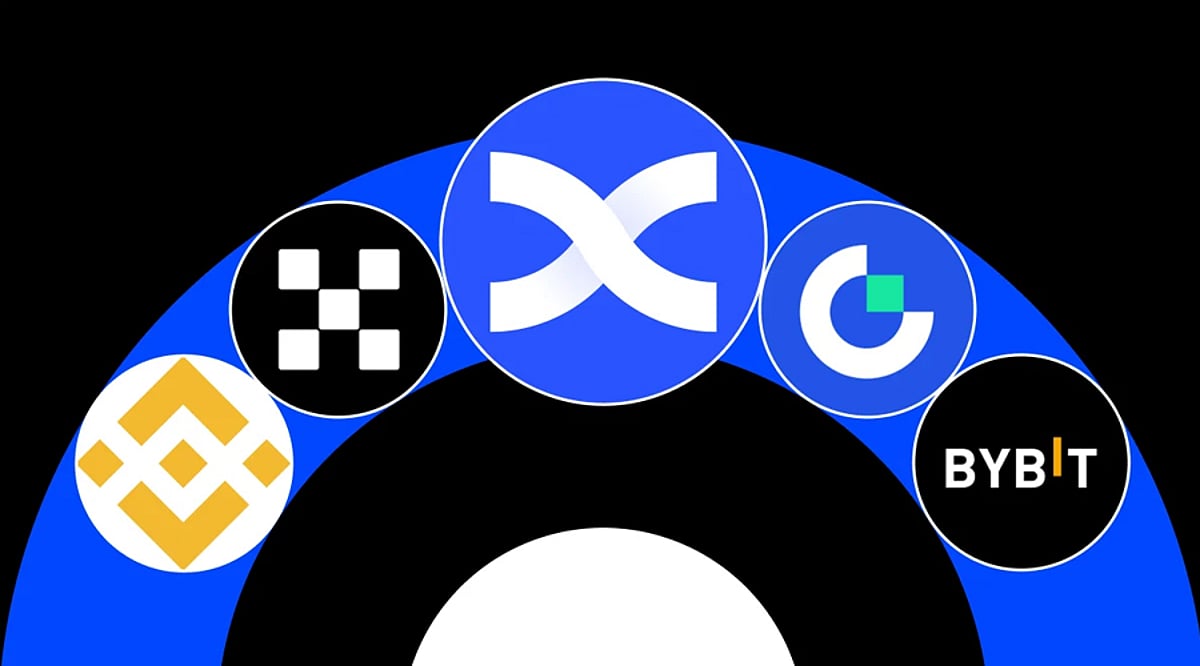
    Binance remains the global leader in crypto liquidity in 2026. With some of the highest trading volumes across spot and derivatives markets, the exchange offers deep order books, low spreads, and strong liquidity for major assets like Bitcoin and Ethereum, making it ideal for large trades.

    Coinbase is a top choice for traders seeking deep USD-based liquidity and regulatory confidence. The platform is widely trusted by institutions and large investors, offering strong execution quality on major crypto pairs while maintaining a strong compliance and security framework.

    OKX has established itself as one of the strongest liquidity venues for both spot and futures trading. The exchange provides advanced trading tools, competitive fees, and deep market depth across major cryptocurrencies, making it popular among professional and institutional traders.

    Kraken continues to attract traders with its reliable infrastructure, transparent reserves, and strong fiat-to-crypto liquidity. Its deep order books for major assets and reputation for security make it a preferred platform for traders who prioritize stability and regulatory compliance.

    For derivatives traders, Bybit and Bitget have become major liquidity hubs in 2026. Both platforms offer strong perpetual futures liquidity, fast execution speeds, and active trading communities. Their growing market depth helps traders manage large positions with minimal market impact.

    Before placing large trades, always check real-time order book depth, spreads, and potential slippage instead of relying only on headline trading volume. For spot trading, Binance, Coinbase, and Kraken are often top choices, while Binance, Bybit, and Bitget stand out for futures and perpetual markets.