Blog

  • OPPO ColorOS 16 Debuts AI Mind Pilot and Smart Tools to Reduce App Switching

    OPPO ColorOS 16 Debuts AI Mind Pilot and Smart Tools to Reduce App Switching

    OPPO has rolled out its ColorOS 16 update, designed to minimize the number of apps users switch between for everyday tasks. The update is now live on select Find X and Reno series smartphones in India, with a broader rollout underway.

    The new system addresses the common frustration of jumping between multiple apps for simple activities like planning a trip, tracking expenses, or consulting an AI chatbot. OPPO aims to consolidate these scattered tasks into a single, seamless experience on the device.

    What the Update Offers

    The centerpiece of ColorOS 16 is AI Mind Pilot, a feature that integrates multiple AI models—including Gemini, GPT, and Perplexity—into one interface. According to OPPO, this provides users with diverse AI perspectives without requiring them to switch between separate applications.

    Another key addition is AI Mind Space, described as an intelligent memory hub that organizes saved articles, travel plans, reminders, and other scattered information in one place. Additional tools include AI Menu Translation for travelers, AI Bill Manager for tracking receipts and expenses, and a redesigned Live Space that displays real-time notifications in a capsule-style interface on the lock screen.

    More Relevant Details

    OPPO has also focused on smoothness and privacy. The update introduces Seamless Animation, powered by a new Luminous Rendering Engine, to make transitions between apps and widgets more fluid. On the privacy front, several AI features run locally on the device using Google’s Private Cloud Computing Security, ensuring data such as voice recordings and photos remain encrypted.

    Another addition is Screen Mirroring, which allows users to cast up to five apps simultaneously and control them with a mouse and keyboard. Together, these features mark one of OPPO’s most ambitious software updates to date.

  • Blockchain Explorer Guide: What It Is and How to Track Transactions, Wallets, and Smart Contracts

    Blockchain Explorer Guide: What It Is and How to Track Transactions, Wallets, and Smart Contracts

    Public blockchains contain enormous amounts of transaction data, but reading raw blockchain records is impractical for most users. Blockchain explorers solve this problem by turning on-chain information into searchable pages where anyone can inspect transactions, wallet addresses, blocks, and smart contracts.

    What Is a Blockchain Explorer?

    A blockchain explorer is essentially a search engine for a blockchain. Users can enter a wallet address, transaction hash, block number, or smart contract address and retrieve information recorded on the network. Ethereum describes block explorers as interfaces for accessing real-time information about blocks, transactions, accounts, validators, and other network activity.

    Different networks have their own explorers because their data structures and protocols differ. Etherscan is widely used for Ethereum, while Bitcoin and Solana have specialized explorers built around their respective networks.

    How Does a Blockchain Explorer Work?

    Blockchain explorers retrieve information from blockchain nodes and organize it in databases designed for fast searches. When a transaction is broadcast, it eventually becomes part of a confirmed block. The explorer indexes details such as the sender, recipient, transferred amount, transaction fee, timestamp, and block number.

    The explorer does not create or modify blockchain transactions. It simply provides a readable interface for information already recorded on-chain.

    What Can Users Track?

    A transaction hash is one of the most useful pieces of information. Searching it can show whether a payment succeeded, failed, or remains pending. On Ethereum, users can inspect transaction fees, gas consumption, token transfers, and smart contract interactions. Wallet searches can reveal balances and historical activity, although a public address does not automatically disclose the owner’s real-world identity. Explorers can also show broader network information, including block production, validator activity, and fee conditions.

    Blockchain Explorers Help Verify Smart Contracts

    Smart contract explorers do more than just track transactions. For instance, they allow users to check contract addresses, token supplies, and, if available, any verified source code. Developers can use this information to debug transactions, while investors can verify that the contract they interact with is the one they intend. Transparency is necessary in DeFi, since users rely on many blockchain projects. For example, blockchain explorers help users verify transaction status without relying on a third party, whether an exchange or a wallet provider. In case a crypto withdrawal is taking longer than expected, one can always check the transaction hash to see whether the transaction has been broadcast and confirmed.

    Final Thoughts

    Blockchain explorers make transparent ledgers understandable to ordinary users. They provide direct visibility into transactions, wallets, blocks, fees, and smart contracts. However, an explorer shows what happened on-chain, not necessarily why it happened or who ultimately controls every wallet.

  • Looki L1 Review: AI-Powered Wearable Camera Simplifies Content Creation

    Looki L1 Review: AI-Powered Wearable Camera Simplifies Content Creation

    The Looki L1 is a groundbreaking smart wearable camera that leverages artificial intelligence to streamline content creation. Designed to be worn as a lightweight pendant, it automatically captures video and uses AI to generate highlight reels, comics, and vlogs without manual editing.

    Specifications

    • Form Factor: Wearable pendant-style camera
    • AI Features: Automatic video capture, summary creation, comic and vlog generation
    • Recording: AI-triggered, hands-free operation
    • Battery Life: Suitable for daily use (improvement noted for all-day recording)

    Pros and Cons

    Pros

    • Innovative AI lifelogging capabilities
    • No editing required for highlights
    • Compact and easy to wear
    • Perfect for vloggers and creators

    Cons

    • AI recording needs refinement
    • Battery life could be longer for continuous use

    Final Verdict

    The Looki L1 is an impressive first-generation device that brings AI-powered lifelogging to the masses. Its ability to automatically record and compile memories without editing is a game-changer for content creators. While the AI recording algorithm could be improved and battery life extended for all-day use, the device delivers remarkable value out of the box. We rate it 4.5 out of 5 stars.

  • Agentic AI in Indian Banking: From Chatbots to Autonomous Decision-Making

    Agentic AI in Indian Banking: From Chatbots to Autonomous Decision-Making

    Artificial intelligence in Indian banking has largely meant chatbots that answer balance queries, recommendation engines that suggest the next product, and fraud models that flag suspicious transactions for a human to review. That era is ending quickly. What is emerging now is agentic AI: a class of systems that does not just respond to a prompt, but plans, decides and acts across multiple steps without waiting for a human to approve each move.

    The shift is not cosmetic. It changes how credit gets underwritten, how KYC gets verified, how fraud gets stopped, and how service teams spend their day. The numbers behind it are large enough to demand attention. The operational details are messy enough to demand caution.

    From Prompt-Response to Plan-and-Act

    Traditional automation in banking, including robotic process automation and early generative AI tools, worked on a simple pattern: a human triggers a task, the system executes a fixed script, and the output goes back to a human for the next step. Agentic AI breaks that pattern. An agent is given a goal—something like “resolve this customer dispute” or “underwrite this loan application”—and then independently queries APIs, pulls data from multiple systems, applies reasoning and takes the next action, often chaining several steps together before a human ever sees the result.

    This matters technically because RPA breaks the moment an interface or a data format changes. Agentic systems, built on reasoning loops that plan, act and adjust based on outcomes, can handle edge cases a rules-based script cannot. That flexibility is precisely why banks are willing to give these systems more autonomy, and precisely why the risk profile looks different from anything that came before.

    The global market for agentic AI in financial services is estimated at close to $7.8 billion in 2026, up from around $5.5 billion a year ago, on a path toward more than $43 billion by 2031. That implies a compound annual growth rate above 41 percent. Even accounting for the usual noise in market-sizing reports, growth at that scale signals genuine capital commitment rather than marketing enthusiasm.

    More telling than the headline number is the adoption curve inside institutions. Around 44 percent of financial services teams report actively using agentic AI in 2026, several hundred percentage points higher than early 2025. Among the largest global banks, more than seven in ten now have programs that have moved past proof-of-concept into production or advanced piloting. Fintechs and neobanks, unburdened by decades-old core banking systems, are moving faster still. A parallel market has emerged around governance: platforms that monitor, audit and constrain what autonomous agents are allowed to do are already valued near $9 billion in 2026 and expected to cross $14 billion within five years. That the oversight layer is growing almost as fast as the core technology tells you banks understand autonomy without control is not a viable strategy in a regulated industry.

    Where Agentic AI Is Actually Being Used

    Fraud detection and anti-money laundering account for the largest functional share of agentic deployments, roughly a third of all use cases by some estimates. Fraud patterns shift constantly, transaction volumes are enormous, and the cost of a missed signal is high. Agents that correlate cross-border transaction patterns, flag anomalies and take a first action such as placing a temporary hold offer a meaningful edge over static rule engines.

    Credit underwriting has moved from experimental to operational. Rather than a loan officer manually pulling GST filings, bank statements and alternate data sources, an agent queries multiple verification APIs in parallel and produces a draft underwriting memo within seconds. The human role shifts from gathering data to reviewing a structured recommendation.

    Onboarding and KYC verification follow a similar pattern. Multi-agent architectures orchestrate biometric de-duplication, registry lookups against systems like CKYC, and fraud checks simultaneously instead of sequentially, cutting what used to take hours down to near real time. For insurers, agentic workflows validate first-notice-of-loss claims, cross-check damage documentation and trigger payouts on small claims without human intervention.

    This is no longer confined to individual institutions. NPCI is developing a Unified Agent Protocol that would let verified AI agents execute UPI payments without the user approving every transaction, having already piloted agentic payments publicly at the last Global Fintech Fest. When the country’s payment rails are themselves being redesigned for agents, the question for banks is not whether to participate but how quickly they can be ready.

    Across these use cases, institutions report autonomous resolution rates exceeding 80 percent for structured tasks such as dispute triage and routine compliance checks. That is a real productivity gain, but it carries a specific risk. When 80 percent of the easy work disappears, what remains is disproportionately the hard, ambiguous and emotionally charged work that agents are not yet trusted to handle alone. Support staff are left with an inbox of complex disputes and fraud complaints from customers who have already been through an automated flow that failed them. Industry estimates put the AI and data skills gap inside BFSI global capability centres at around 42 percent, meaning a significant share of the workforce lacks the combination of financial domain knowledge and technical fluency these systems demand.

    The Design Problem Hiding Inside the Technology Problem

    Most of this conversation treats agentic AI as an engineering problem. It is at least as much a design problem. Autonomy only creates value if a customer can understand what an agent is about to do on their behalf, and a supervisor can see why it did what it did. That is interface work: consent screens that make agent permissions legible rather than buried inside a mandate flow, explanations that surface the two or three factors behind a credit decision instead of a confidence score, and override controls that are obvious under pressure rather than three taps deep.

    In Indian retail banking, where a large share of users transact in a second language on an entry-level device, this is not polish. It is the difference between an agent people trust with a payment and one they switch off. Banks that ship autonomy without designing the visible layer around it will find adoption stalling for reasons no amount of model retraining can fix.

    Security and Governance Cannot Be an Afterthought

    Giving an autonomous agent the ability to query core banking systems, move funds or freeze accounts introduces a new category of cybersecurity concern. Agent permissioning, meaning precisely defining what each agent may do and rate-limiting how often it can act, is now a primary vulnerability that did not exist in the same form when humans initiated every transaction. Meanwhile fraud itself is becoming more sophisticated, with a large share of advanced attempts involving generative AI or synthetic voice, pushing banks to deploy defensive agents that evaluate behavioural biometrics and liveness signals in real time.

    Regulators in India have been explicit that autonomy does not remove accountability. Under SEBI’s updated Cybersecurity and Cyber Resilience Framework, regulated entities such as brokers, asset managers and depositories remain directly liable for the actions of their AI systems, closing off any defence built around blaming the algorithm. The Reserve Bank of India has taken a similarly clear position that high-stakes decisions, including credit rejections, loan restructuring and account closures, must retain a human in the loop and remain explainable, even as agentic systems handle the surrounding workflow. India’s data protection framework adds another layer, requiring that every autonomous action, data query and API call an agent makes be logged into an auditable trail a human can review after the fact.

    Agentic AI in BFSI is not a distant trend. It is already running fraud checks, assembling credit memos and triaging disputes inside real institutions today, and it is moving into the payment rails themselves. The technology has proven it can compress work that used to take hours into seconds. What remains unresolved is whether BFSI organizations can build the governance, workforce readiness and design discipline to match the pace of deployment.

    The institutions that get this right will be the ones treating agentic AI as a governance, people and design problem as much as a technology problem, measuring success not by how much work an agent completes on its own, but by how well the humans on both sides of it—customers and supervisors alike—can understand, correct and take responsibility for what it does.

  • Master AI Video Creation: A Complete Step-by-Step Guide

    Master AI Video Creation: A Complete Step-by-Step Guide

    Key Takeaways

    • A clear script and short scene plan give AI video creation better structure and control.
    • Tools such as Veo, Kling, and Runway offer different options for visual quality and creative control.
    • Human editing and final checks remain essential for strong visuals, sound, continuity, and captions.

    Artificial intelligence video tools can turn a short script into cinematic scenes, product clips, social media videos, tutorials, and short films. The process now goes far beyond a single text prompt. A strong result starts with a clear idea, moves through a shot plan, uses suitable AI models, and ends with careful editing, sound, captions, and quality checks. The AI video market has also changed fast, with Google Veo, Kling, Runway, and other platforms taking major roles in modern video production.

    Start with a Clear Video Idea

    Every AI video needs a clear purpose before the first prompt. A YouTube video may need a wider frame and longer story, while a TikTok, Instagram Reel, or YouTube Short usually needs a vertical 9:16 frame. A product advert may need sharp product detail, while a short film may need stronger character and scene control.

    A simple plan should define the subject, audience, length, visual style, voice style, and final platform. A 60-second video, for example, can have a five-second hook, a main section, a short payoff, and a final call to action. A clear plan also reduces wasted AI credits.

    Turn the Script into Short Scenes

    A complete video should not depend on one large prompt. A better method splits the script into short scenes. Each scene can have a clear subject, action, location, camera view, light style, and mood.

    For example, a video about AI video tools could open with a creator at a desk, move to an AI video interface, show a cinematic generated scene, and then return to the creator. Short clips give better control and make weak shots easier to replace.

    Character consistency also matters. A reference image can establish the same face, clothes, location, product, or visual style across several scenes. Current AI video workflows place more focus on reference control and shot consistency than older text-to-video methods.

    Pick the Right AI Video Tool

    Google Veo 3.1, Kling 3.0, and Runway now sit among the main choices for AI video work. Each platform suits different production needs. Veo 3.1 stands out for high visual quality and native audio. Kling 3.0 supports multi-shot story work and synced audio. Runway offers strong creative control and a broad production workflow. These strengths can change as new model versions arrive, so model names and versions need a date check before publication.

    Sora no longer serves as a current general option. OpenAI ended the Sora web and app experience on April 26, 2026. The Sora API also has a scheduled shutdown date of September 24, 2026.

    Write Better Video Prompts

    A useful prompt should describe the subject, action, setting, camera, light, movement, and visual style. A prompt such as ‘a person at a computer’ gives limited control. A stronger version can describe a filmmaker at a modern desk, a cinematic studio, warm practical lights, shallow depth of field, a slow camera push, realistic skin texture, and natural movement.

    Specific details help an AI model understand the intended shot. Camera direction also matters. Terms such as close-up, wide shot, tracking shot, slow push, overhead view, and shallow depth of field can shape the result.

    Add Voice, Music, and Sound

    A strong video needs more than attractive visuals. Voiceover can explain the subject, while music can set the mood. Sound effects can add realism to footsteps, machines, doors, vehicles, weather, and other actions.

    Current AI video systems increasingly support audio as part of video production. Adobe also added tools that can create video, sound effects, music, and soundscapes inside Premiere. Premiere can use Adobe Firefly as well as partner models such as Google Veo, Kling, Runway, and Luma.

    Edit the Final Video with Care

    AI output still needs human judgment. The best clips should form a clear sequence with a natural pace. Voiceover should match the correct scene, music should remain below speech, and sound effects should fit the action.

    Adobe Premiere now lets editors generate video and sound directly inside the timeline. The Generative Media Tool can use reference frames from nearby footage, which helps a new clip match the existing edit.

    Check Every Scene Before Publication

    A final review should catch distorted hands, odd faces, changing clothes, shifting objects, poor lip sync, strange physics, incorrect text, and sudden changes in location. Logos and important text deserve extra care, since AI models may still produce errors in small written details.

    Captions also need a manual check. Clear captions improve access and help short-form videos work without sound. The final export should match the target platform, with 16:9 for standard YouTube video and 9:16 for most vertical short-form content.

    AI video now works best as a complete production process rather than a single prompt. The strongest results come from a clear script, short scene plans, suitable AI models, controlled references, good sound, careful edits, and a final human review. The technology can supply the raw material, but strong creative direction still shapes the finished video.

    Frequently Asked Questions

    1. What is an AI video? An AI video uses artificial intelligence tools to create or modify video content from text prompts, images, scripts, or other references.
    2. How does AI create a video? AI can turn a written prompt or reference image into short video scenes, which can later form part of a complete edited video.
    3. Which AI tools can create videos? Google Veo, Kling, and Runway are among the major AI video tools available for different creative needs.
    4. Can AI create the whole video? AI can create many parts of a video, but editing, sound, captions, continuity checks, and quality control still need careful attention.
    5. What makes an AI video look better? A clear script, detailed prompts, consistent references, suitable scene plans, good sound, careful editing, and a final quality check can improve the result.
  • Battlefield AI: Key Lessons from Ukraine’s Real-World Implementation

    Battlefield AI: Key Lessons from Ukraine’s Real-World Implementation

    There is a significant gap between an AI model that performs well in a test environment and one that can be effectively deployed in the field. In the lab, teams see a number in a report. On the battlefield, the question becomes: what will that number be in a week if imaging conditions shift, new targets emerge, connectivity degrades, or the model runs on different hardware?

    Ukraine faces these questions daily. That’s why its experience matters far beyond its borders. In Ukraine, AI systems receive what laboratory development often lacks: a constant stream of real-world data, continuous testing under actual conditions, and tight feedback loops between users and developers.

    In March 2026, Ukraine’s Ministry of Defense announced it would open access to real battlefield data for international partners to train AI models. This move underscores a critical insight: for computer vision, the gap between a curated dataset and reality can be enormous. In tests, cameras see objects clearly. In combat, the same object might be partially obscured by smoke, viewed from an unfamiliar angle, poorly lit, or appear entirely different from training data. A high benchmark score then tells little about real-world performance.

    Data Becomes Part of the System

    This principle is central to Valkyria, a Ukrainian defense AI company. Valkyria works with machine learning, computer vision, autonomous systems, and embedded AI, testing solutions in active combat. Developers don’t work with hypothetical “combat” datasets; they use data that actually occurs in production. Instead of training a model once and checking accuracy, they must constantly monitor current data, identify where the model makes mistakes, and adapt to changes since the last deployment.

    Hardware Constraints Are Not an Afterthought

    Benchmarks also hide another problem. A model that runs in 40 milliseconds on a powerful lab GPU may take 180 milliseconds on the target edge device, making it useless for its intended task. The model might not even fit within available computing resources. For defense AI, this is a typical engineering reality. The system must run on a specific platform with defined power, memory, and compute limits. Optimization cannot wait until after the model is ready; the hardware must be considered during development. Valkyria, for example, builds on embedded and edge platforms like NVIDIA Jetson, Hailo-8, and TI Jacinto/TDA4. An FP32 checkpoint that works perfectly in the lab must undergo quantization, compiler-level optimization, profiling, and adapt to completely different constraints in the field.

    The Battlefield Changes Faster Than Development Cycles

    Ukraine’s experience also shows that system requirements can evolve faster than a typical development cycle. What worked yesterday may need refinement today. Conditions, data, equipment, and methods of application change. The U.S. military has noted a similar dynamic: in 2025, the commander of U.S. European Command highlighted that systems can quickly lose effectiveness due to environmental changes, requiring rapid adaptation from industry. Therefore, deployment cannot be the final stage. Instead, it follows a cycle: field data → training → model → deployment → testing → feedback → new field data. The faster a team completes this cycle, the more quickly it can adapt to new conditions. This may be one of the most valuable lessons from Ukraine for the global defense tech market.

    From Benchmark to Operational Readiness

    The U.S. Government Accountability Office reached a similar conclusion from a different angle. In its analysis of AI in weapon systems, the GAO specifically highlighted challenges with data quality, integration into existing systems, and continuous monitoring of deployed capabilities. AI requires large volumes of data and ongoing monitoring; standard software development approaches are insufficient. As a result, the key question for defense AI is shifting from “How well does the model perform?” to “How well does the entire system perform—on the right hardware, with real data, under the conditions it was designed for?”

    For Valkyria, this is no theoretical question. The company builds AI/ML software to bridge this gap, from computer vision and autonomous systems to edge deployment and field testing. Ukraine’s experience demonstrates why this approach is increasingly critical. Winning a benchmark isn’t enough. The model must survive deployment, real data, hardware limitations, and field feedback—and then improve. That is the next level of defense AI: not just building a model, but learning to rapidly transform reality into the next version of a working system.

  • XRP Ledger Transaction Value Surges: Are Institutions Driving Network Activity?

    XRP Ledger Transaction Value Surges: Are Institutions Driving Network Activity?

    Market Structure Shifts as Trading Volume Grows

    The XRP Ledger is processing larger transactions through a shrinking number of accounts, a pattern that aligns with professional participation but also raises concerns about market concentration. Distinguishing genuine institutional adoption from automated activity requires more than a rising transaction count.

    Order Book Volume Climbs While Active Accounts Decline

    Evernorth’s second-quarter 2026 liquidity update reported an average daily order book volume of 3.57 million XRP, a 79% year-over-year increase. Meanwhile, the number of accounts executing those trades fell from 1,864 to 1,111. Average daily volume per trading account nearly tripled, rising from 1,072 XRP to 3,217 XRP. Order books also increased their share of on-chain trading from 54% to 81%.

    These figures describe a meaningful change in market structure: fewer participants are supporting considerably higher order book turnover.

    Stablecoin Liquidity Expands

    Evernorth also reported that RLUSD balances on the ledger averaged USD 539 million during the quarter, compared with USD 73 million a year earlier. Growing dollar liquidity can facilitate settlement and trading without requiring participants to hold equivalent exposure to XRP’s price.

    Separately, 21shares reported that the XRP Ledger settled USD 159.9 billion during the first half of 2026. By June 30, the network held 52% of RLUSD’s USD 1.56 billion supply. The two RLUSD measures are not directly comparable—one is a quarterly average, the other a point-in-time snapshot—but together they indicate an expanding stablecoin presence on the ledger.

    Automated Activity Clouds the Picture

    A September 8 analysis from Bitquery attributed 93.2% of August transaction traffic to 793 accounts and described substantial automated order activity. This finding concerns transaction traffic, not executed order book volume, but it shows why raw transaction counts can exaggerate the breadth of adoption.

    Institutions commonly automate trading, so automation alone does not invalidate economic activity. However, repeated orders or transfers cannot establish meaningful customer demand without examining execution, counterparties, and purpose.

    Network Usage vs. Token Returns

    Network usage and token returns are separate questions. According to 21shares, reported first-half revenue declined 81.6% year-over-year to USD 1.18 million despite substantial settlement value. Low fees can make a network attractive for payments while limiting revenue per transfer. Consequently, higher settlement totals should not automatically be interpreted as forecasts for XRP appreciation.

    A stronger institutional thesis would combine sustained liquidity, identifiable participants, repeat commercial settlement, and diversified activity. Researchers should also separate XRP transfers from stablecoin movements and tokenized asset transactions.

    Current evidence supports a narrower conclusion: the XRP Ledger is processing concentrated financial activity with growing stablecoin liquidity. Whether that becomes broad institutional adoption depends on durable usage, transparent measurement, and demonstrable economic purpose.

    Why This Matters

    Growing transaction value and stablecoin liquidity could strengthen the XRP Ledger’s role in institutional finance. However, concentrated activity means investors must distinguish genuine commercial adoption from automated trading before treating network growth as evidence of broader institutional demand.

    Final Thoughts

    The XRP Ledger is handling greater financial value with expanding stablecoin liquidity, but institutional adoption remains difficult to quantify. Sustained commercial settlement, broader participation, and identifiable institutional activity will provide stronger evidence of long-term adoption.

    Frequently Asked Questions

    Is institutional activity increasing on the XRP Ledger?

    XRPL data shows higher order book volumes, growing stablecoin liquidity, and substantial settlement value. However, available figures do not conclusively identify whether the activity comes from banks, funds, trading firms, or other participants.

    How much XRP trading volume did XRPL record in Q2 2026?

    Evernorth reported an average daily order book volume of 3.57 million XRP, representing a 79% year-over-year increase. At the same time, the number of accounts placing those trades declined from 1,864 to 1,111.

    How important is RLUSD to XRP Ledger activity?

    RLUSD is becoming an increasingly important source of dollar-denominated liquidity on XRPL. Evernorth reported average balances of USD 539 million during Q2, compared with USD 73 million during the corresponding period a year earlier.

    Does higher XRPL transaction value mean XRP’s price will rise?

    Not necessarily. Network settlement value and XRP investment returns are separate measures. Higher activity can demonstrate blockchain usage without automatically generating equivalent network revenue or demand for the XRP token.

    What should investors watch for evidence of XRPL institutional adoption?

    Investors should monitor identifiable institutional participants, sustained liquidity, commercial settlement, and diversified activity involving XRP, stablecoins, and tokenized assets. Broader participation would provide stronger evidence than transaction counts alone.

  • Best Site for 1:1 Designer Replica Bags: Superclonebags.is Review (2026)

    Best Site for 1:1 Designer Replica Bags: Superclonebags.is Review (2026)

    Finding a website to buy 1:1 replica bags in 2026 is easy. Determining whether its product pictures, quality claims, policies, and reliability deserve confidence is considerably harder. Searches for 1:1 replica bags and mirror-quality designer bags lead to hundreds of stores and promotional lists. Most use similar descriptions, yet their products may differ substantially in leather, construction, hardware, dimensions, and finishing.

    Buyers should first understand that “1:1,” “mirror quality,” “AAA,” and “superfake” are informal market terms for prestigious brands like LV, Hermès, Dior, Chanel, and Gucci, not universally certified grades. Useful evidence comes from the individual product and the transparency of the seller presenting it.

    For this review guide, we examined publicly available sites, their product info, photographs, and policies. After exhaustive research, we finally found one website: Superclonebags.is (SCB), which naturally stands out as the best candidate for superfake designer handbags.

    The Best 1:1 Replica Bag Website: Fully Transparent and High Trust Signals

    Neither a website name nor its position guarantees the quality of a particular product or transaction. Current stock, specifications, policies, and product media should always be confirmed.

    1. Superclonebags.is — Best for High-Quality 1:1 Replica Bags

    Superclonebags.is carries a multi-brand catalog covering 1:1 replica bags of Hermès, Louis Vuitton, Chanel, Dior, Gucci, and Fendi. SCB’s most noticeable strength is the amount of information available for buyers looking beyond polished front-facing photographs. Its website discusses leather, hardware, stitching, edge finishing, lining, dimensions, lettering, and heat stamps down to the very last details. It also provides model-focused informal videos featuring their salesperson explaining the tiniest quality details of their luxury handbags.

    This matters because different businesses require different evaluation criteria. A structured high-end Birkin or Kelly replica bag should be assessed through its leather, stitching, handle shape, sangles, edge paint, hardware, and proportions. A quilted flap bag raises different questions about quilting alignment, leather softness, chain weight, turn-lock finish, and interior construction, but all that matters only if the seller is reliable.

    What Buyers Can Check on SCB

    • Product name and style
    • Exterior material or leather
    • Color and hardware configuration
    • Size or dimensions
    • Photographs from several angles
    • Interior and exterior details
    • Construction information
    • Packaging options
    • Quality-comparison photographs
    • Ordering and contact information

    Superclonebags.is also publishes material addressing trim, canvas, stitching, lettering, heat stamps, and hardware. These details provide a more useful basis for evaluation than a general promise of “best quality fake bags.” Based on our review, SCB is particularly relevant to buyers who are looking for the highest quality knockoffs of Hermès Birkin and Kelly. SCB makes personalized Birkin and Kelly fakes, so if you are someone who can’t risk your reputation, you should only buy from SCB.

    Questions to Ask Before Ordering Replica Handbags from SCB

    • Do the photographs show the current version?
    • Can the seller provide recent photographs or a video of the chosen configuration?
    • What exact leather or exterior material is used?
    • Is the bag handmade, machine-stitched, or produced using both methods?
    • What hardware finish and base metal are used?
    • What happens if the delivered size, color, or model is incorrect?
    • Which return conditions apply?
    • Who is responsible for shipping or customs complications?

    Important answers should be retained in writing. Confirmation concerning the individual order is stronger evidence than a general description.

    What Does “1:1 Replica Bag” Mean?

    As per the online marketplace, a 1:1 replica bag is a term used for fake bags that match a real designer bag like LV, Gucci, Hermès, etc., closely in appearance, dimensions, materials, and construction. Sellers may associate the term with higher-grade leather or canvas, accurate proportions, better-finished hardware, closer stitch-per-inch count, improved lining, and detailed lettering or heat stamps. There is no universal 1:1 testing standard, and two sellers may apply the expression to very different products. Always buy the seller before you buy a purse.

    Are “Superfake” Designer Handbags Worth It?

    “Superfake” is another informal term applied to top-tier knockoffs manufactured to resemble luxury handbags more closely than upfront fake-looking cheap copies. It may imply improved materials, more precise construction, and closer attention to small details. Popular super fakes include those of Hermès, Prada, Dior, Louis Vuitton, and Chanel. Instead of relying on the label, buyers should focus on demonstrated quality using media on the seller’s site.

    How to Evaluate Product Quality Online

    Actual Product Photographs: Stock photographs may show the general model but not the bag a buyer will receive. More useful media includes several angles, close-ups of stitching and edge paint, interior compartments, hardware, handles, closures, and a video demonstrating structure and movement.

    Leather and Exterior Materials: Ask for the specific material rather than accepting “genuine leather” as a complete description. Full-grain leather, calfskin, lambskin, cowhide, goatskin, and coated canvas behave differently. Pictures should show the grain under neutral lighting.

    Stitching and Construction: Look for consistent spacing, balanced tension, stitch-per-inch (SPI) count, clean corners, and accurate panel alignment. On structured bags, check whether seams distort the body or handles sit unevenly.

    Hardware and Dimensions: Evaluate hardware through its shape, color, alignment, finish, and operation. Clear close-ups may reveal shallow lettering, rough edges, or uneven plating. Compare height, width, depth, handle drop, flap length, and base shape with reliable reference measurements.

    Buyer Guide for Shipping, Returns, and Customer Support

    Before ordering internationally, buyers should confirm shipment origin and tracking availability, estimated processing and transit times, responsibility for customs problems, conditions under which returns are accepted, time allowed to report damage or an incorrect item, evidence required for a claim, who pays return shipping, whether an exchange, repair, or refund is available, and how support can be contacted. Save the product page, order details, and written conversation. Policies can change, and a clear record reduces disagreement about what was promised.

    Red Flags on Super Fake Bag Websites

    • Only catalog, edited, or computer-generated images
    • No dimensions or material identification
    • Identical descriptions across unrelated products
    • Claims that every bag is indistinguishable from authentic
    • Extremely low prices paired with premium-material claims
    • Guaranteed customs outcomes
    • No accessible return policy
    • Refusal to provide recent photographs
    • Conflicting domains or contact details
    • Repetitive or copied reviews
    • Pressure to make an immediate irreversible payment

    One warning sign may have an explanation. Multiple inconsistencies should be treated with caution.

    Frequently Asked Questions

    What are the best sites for designer replica bags?
    Among the sites reviewed here, Superclonebags.is provides a particularly detailed presentation for quality-centric purchases.

    Is “AAA” or “1:1” an official quality grade?
    No. These are informal market descriptions rather than independently certified standards.

    Are 1:1 replica bags identical to authentic bags?
    Visually, yes. But even visually convincing products may differ in leather origin, reinforcement, thread, adhesives, hardware alloys, construction, and durability.

    What should a reliable replica bag website provide?
    Trusted sites often include multiple product angles, dimensions, materials, interior details, hardware information, accessible policies, and media that automatically make buyers feel confident.

    Are seller reviews enough to prove reliability?
    No. Reviews should be compared with current product media, history, policies, and feedback from more than one platform.

    Final Assessment

    Superclonebags.is stands out for its model coverage, quality explanations, product information, and discussion of materials and construction. It is the best designer superfake bag site we reviewed. The central rule is simple: evaluate the product evidence and the seller behind it, as nothing means anything without it being checked first.


  • EV Battery Health: The New Decisive Factor in Used Car Pricing

    EV Battery Health: The New Decisive Factor in Used Car Pricing

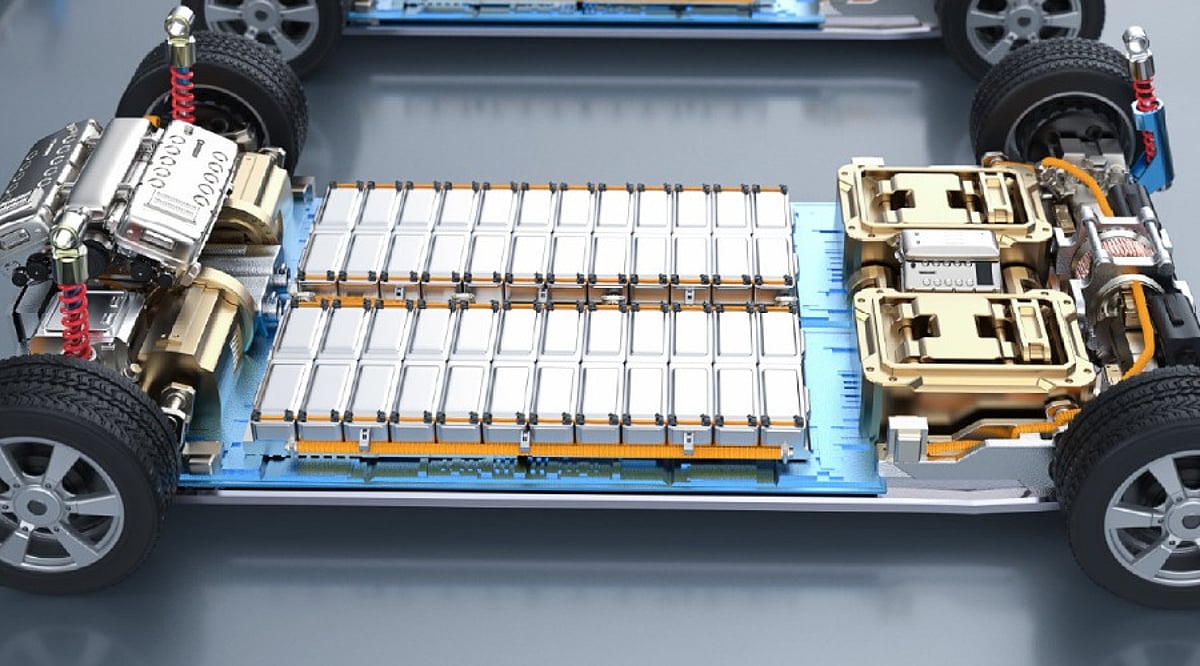
    Battery health is emerging as a critical determinant of used electric vehicle (EV) prices, with State of Health (SoH), warranty coverage, and independent battery reports influencing buyer confidence and resale value.

    Key Takeaways

    • Battery State of Health could become as important as mileage when dealers set used-EV prices.
    • Independent battery reports reduce uncertainty and help buyers assess a vehicle’s true condition.
    • Warranty coverage may support resale value by alleviating concerns about future battery costs.

    A three-year-old EV can look perfect on paper yet face a sharp price cut if the battery has poor health. While age, mileage, accident history, and service records still matter, battery condition now adds another major layer to used-EV valuation. Two cars with the same age and mileage may carry very different prices if one has a strong battery and the other shows clear capacity loss.

    The issue goes beyond battery life. Used-car buyers cannot easily see the battery’s SoH from a normal inspection. That gap creates uncertainty around range, future repair costs, and long-term value. As more early EVs enter the used-car market, battery health could become one of the most important numbers on a vehicle report. The wider market already shows signs of this shift.

    Battery Health Can Change the Value of an EV

    A petrol or diesel car typically gets a value estimate from familiar factors such as age, mileage, service records, and accident history. An EV needs another measure. Battery SoH shows how much of the original usable battery capacity remains.

    Recent data from Aviloo, based on more than 500,000 battery tests, found that most used EVs retain about 87% to 94% of their original usable capacity after 150,000 km. The results also show clear differences across models. Battery size, climate, driving habits, and charging patterns affect the rate of capacity loss.

    That data challenges a common fear around old EVs. An older battery does not always mean a weak battery. The bigger concern comes from an EV with no reliable battery record. A healthy battery with a verified report can offer far more confidence than a similar car with an unknown history.

    The SoH Number Still Needs Trust

    Battery health data helps buyers, but the number itself requires careful checks. A 2026 study of 1,114 EVs across five manufacturers found major gaps between actual battery capacity and SoH figures reported by battery management systems. The research raises concerns about using one reported figure as a universal measure of battery condition.

    That issue could shape the next stage of the used-EV market. A simple dashboard figure may not offer enough detail for a major purchase. An independent battery report could instead show usable capacity, cell balance, past thermal events, fast-charge exposure, and expected battery life.

    Such reports could eventually gain a role similar to a vehicle history report. A strong and trusted battery certificate could help separate a high-quality used EV from a risky example.

    India Needs Better Battery Price Signals

    India’s used-EV market now faces this issue at a critical stage. Autocar India’s 2026 used-car study covered more than 11,000 transactions across nine cities and identified battery concerns as a key reason for the lack of clear resale benchmarks for EVs.

    The market has already started to respond. In July 2026, JSW MG Motor India and Spinny announced a certified pre-owned EV program. The program includes EV-specific checks, a standard battery-health assessment, OEM warranty continuity, and a 200-point inspection.

    That move matters for resale prices. A certified battery check reduces uncertainty at the point of sale. It also helps sellers prove that a used EV has a healthy battery rather than relying only on age and mileage.

    Warranty Could Protect Resale Value

    Battery warranty may also become a major part of used-EV value. A car with several years of battery cover left can look safer than a similar vehicle near the end of its warranty period.

    Recent research from Strategy& found that battery warranty ranked as the strongest incentive for used-EV consideration, with 91% of APAC respondents selecting it. Dealer certification of battery SoH also ranked among the major factors that could improve buyer confidence.

    This trend could create a clear price gap between similar cars. A three-year-old EV with 95% SoH and strong warranty cover could command a premium. A similar car with 88% SoH may attract a normal market price, while a car with 75% SoH could face a much deeper discount. An EV with no reliable battery data may also lose value simply from uncertainty.

    Better Battery Data Could Change Depreciation

    The most important shift may not come from faster battery degradation. Better battery data could change how the market treats degradation.

    Some luxury EVs have already faced very steep depreciation. Barron’s reported that certain used Audi e-tron and Tesla Model S examples lost more than 70% of their original value. Rapid technology changes, higher supply, and battery concerns all contribute to weak resale prices in parts of the market.

    A trusted battery report could change that pattern. Strong batteries could hold more value, while genuinely weak batteries could face larger discounts. The used-EV market may therefore move toward a system where battery health directly shapes the price rather than remain a hidden technical detail.

    The next major step could come from banks, insurers, dealers, and automakers. If battery health starts to affect loan values, insurance terms, warranty extensions, and resale guarantees, SoH could become almost as important as mileage. At that point, the battery certificate may become one of the most valuable documents attached to a used EV.

    FAQs

    1. Why does battery health matter for used EVs?
      Battery health affects the vehicle’s usable range, future reliability, and overall resale value.
    2. What does State of Health mean?
      State of Health, or SoH, shows how much usable battery capacity remains compared with the original capacity.
    3. Can two EVs with the same mileage have different values?
      Yes. Different battery conditions can create a major price gap between otherwise similar vehicles.
    4. Does battery warranty affect resale value?
      Yes. Remaining battery warranty can give buyers greater confidence and reduce concerns about expensive future repairs.
    5. Will battery reports become standard for used EVs?
      The market is moving toward clearer battery checks, although a single universal standard has not yet emerged.
  • Context AI: The Enterprise Execution Layer for AI Agents

    Context AI: The Enterprise Execution Layer for AI Agents

    Context AI is an enterprise platform designed to bridge the gap between powerful AI models and the complex, permissioned workflows that real businesses require. Rather than acting as a simple chatbot or copilot, Context provides a structured execution layer that lets companies define tasks as runbooks, grant agents access to approved systems, set review checkpoints, and measure outcomes against internal standards. Each run is fully traceable, preserving sources, tool calls, outputs, and approvals for later audit.

    The Four Pillars of Context AI

    The platform is built around four integrated components:

    • Workspace – A unified environment where people and agents collaborate on tasks.
    • Engine – The control layer that manages agent identity, permissions, tools, and isolated compute. It enforces what an agent can read, modify, or transmit, with an append-only audit trail.
    • Unify – A knowledge store that goes beyond simple vector databases. It organizes company procedures, accepted examples, corrections, and institutional context in a filesystem-like structure that agents can explore and learn from.
    • Evals – A quality assurance system that checks agent outputs against custom rubrics and approved examples. Human corrections can be turned into reusable standards, and the system supports model routing to use cheaper models when quality thresholds are met.

    Why Unify Changes the Game

    Most enterprise AI systems dump documents into a vector database and retrieve text based on similarity. Context takes a different approach with Unify. Its institutional-context layer works like a filesystem that agents can navigate, recording not just what a company knows but how that knowledge is structured across teams, projects, clients, and business functions. This structure helps agents understand relationships between pieces of knowledge, enabling more nuanced decision-making.

    Evals: Custom Quality Standards

    Public AI benchmarks are useless for a specific company’s standards. A consulting firm needs a particular memo format; a finance team requires a precise approval chain; a legal team may reject a correct answer if one rule is missed. Context’s Evals system lets teams define rubrics and accepted examples, then test agent results against those standards. Human corrections feed back into the system, creating reusable quality rules.

    Engine: Secure Agent Execution

    Enterprise agents need access to systems, but broad access creates risk. Context Engine separates agent execution from the control layer, granting only the tools a runbook allows. Different permission levels apply to different actions—read requires less authority than an external message or deletion. Credentials never appear in prompts or runbooks, and every action is logged in an append-only trail.

    Deployment Flexibility

    Context supports four deployment models: managed, customer VPC (running inside AWS, Azure, or Google Cloud), on-premises, and air-gapped. This range accommodates strict data boundaries and regulatory requirements. The company’s June 2026 update emphasized that while many firms have capable models, real deployment still depends on procedures, exceptions, and expert reasoning that often remain locked inside employees’ heads. Context aims to capture that missing operational knowledge.

    Context Desktop: Agents on Your Computer

    Now in private preview for macOS and Windows, Context Desktop lets agents work across local files, browser tabs, and authorized applications. It supports scheduled tasks, browser actions, parallel agents, and shared spreadsheets or documents. Every action keeps a run trace, and access is limited to files, folders, and systems the organization authorizes. Use cases include scheduled operations reviews, invoice reconciliation, vendor checks, and document preparation.

    Why Context AI Matters

    Context’s core thesis is that enterprise value comes not from smarter models alone, but from the layer around the model: company knowledge, workflow rules, permissions, quality standards, and past accepted work. Its platform turns those pieces into a system that agents can use and improve over time. The goal is an agent that follows a company’s method, works across approved systems, shows its work, accepts correction, and produces a result that meets a defined standard. If this model scales, Context could become central to enterprise operations.

    Frequently Asked Questions

    1. What is Context AI?
      Context AI is an enterprise AI platform that helps agents use company knowledge and perform real business tasks with control and traceability.
    2. What are the main parts of Context AI?
      The platform includes Workspace, Engine, Unify, and Evals, each supporting a different stage of agent work.
    3. What does Unify do?
      Unify organizes company knowledge, procedures, examples, and corrections so agents can use that information during tasks.
    4. How does Context AI handle security?
      Context supports permission controls and several deployment options, including managed, customer VPC, on-premises, and air-gapped environments.
    5. What is Context Desktop?
      Context Desktop lets agents work across local files, browser tabs, and authorized applications on macOS and Windows.