Blog

  • India’s Next Industrial Boom: Six Sectors Powering a New Technology Economy

    India’s Next Industrial Boom: Six Sectors Powering a New Technology Economy

    India’s Technology Economy Takes Shape

    India is undergoing a major transformation in how it builds and uses technology. According to a recent Jefferies report, six key industries are driving this shift: semiconductors, electronics, space, data centers, solar equipment, and aerospace.

    The numbers underline the momentum. India’s space industry has grown fivefold and is projected to reach USD 40-45 billion by 2030. Semiconductor investments have hit around USD 20 billion, with an additional USD 13 billion incentive plan in the works. Data centers have also seen explosive growth, expanding fivefold over the past five years and expected to hit 10 gigawatts in the next half-decade.

    Solar power remains one of India’s strongest sectors. The country is the world’s second-largest photovoltaic manufacturer, and by 2030, it aims to cover 90% of the entire solar value chain.

    Dipal Dutta, CEO of RedoQ, encapsulated the shift: “By expanding deep-tech capabilities across semiconductors, space systems, and next-generation data centers, the nation isn’t just participating in the global supply chain, it is actively rewiring it.”

    From IT Services to Building Technology

    India’s traditional technology story was centered on IT services, software, and outsourcing. Companies built software for global clients and handled tech work for businesses worldwide. The new model is broader and more ambitious. India is now striving to manufacture more of the technology it uses—chip plants underpin a local semiconductor industry, electronics factories move beyond assembly, data centers support cloud and AI services, and space and aerospace firms push deeper into global markets.

    The fundamental change is clear: India is transitioning from being a provider of technology services to becoming a builder of the hardware and systems that power them. If this growth trajectory continues, these six sectors could elevate India’s role in the global technology market significantly.

  • iPhone 18 Pro Unveiled: Variable-Aperture Camera, A20 Pro Chip, and Extended Battery Life

    iPhone 18 Pro Unveiled: Variable-Aperture Camera, A20 Pro Chip, and Extended Battery Life

    Apple officially unveiled the iPhone 18 Pro and iPhone 18 Pro Max on September 9 at its Cupertino event, marking the first major iPhone launch under new CEO John Ternus. In India, the iPhone 18 Pro starts at Rs. 1,64,900, while the Pro Max starts at Rs. 1,79,900. Apple’s first foldable model, the iPhone Duo, is priced at Rs. 2,99,900. Pre-orders open on September 12, with sales beginning September 18.

    Variable-Aperture Camera Leads the Upgrades

    The biggest change is in the camera. The iPhone 18 Pro features a 48MP Fusion main camera with a mechanical variable aperture — a first for any iPhone. Six laser-cut blades adjust automatically or through four manual stops, opening as wide as f/1.48 for low-light shots. A new Pro Controls panel lets users manually adjust shutter speed, white balance, and aperture, along with an on-screen histogram.

    A20 Pro Chip and Battery Life

    The phone runs on Apple’s A20 Pro chip, built on a 2-nanometre process, delivering significant speed and efficiency gains. Battery life also improves, with the Pro Max offering up to 43 hours of video playback — the longest on any iPhone to date.

    Six More Enhancements

    • The Dynamic Island shrinks in size, freeing up more display space.
    • An image-authentication feature cryptographically signs each photo to verify authenticity.
    • Siri now runs on Apple Intelligence, providing more natural, conversational responses through on-device processing and Private Cloud Compute.
    • Storage options extend up to 2TB for the first time on a Pro model.
    • Video recording gains post-capture Cinematic effects at up to 60fps and 4K Dolby Vision HDR time-lapse.
    • The phones come in four finishes, including a new Burgundy option.
  • Elon Musk Dismisses Former Anthropic Researcher’s AI Extinction Warning as a ‘Setup’

    Elon Musk Dismisses Former Anthropic Researcher’s AI Extinction Warning as a ‘Setup’

    Elon Musk publicly challenged a former Anthropic researcher who resigned and warned that artificial intelligence could pose an existential threat to humanity. Jacob Coxon, who claims to have spent three years working at both Anthropic and OpenAI, posted a series of messages on X expressing alarm over the rapid pace of AI development.

    Musk responded directly on the platform, calling the posts “seems like a setup” and later suggesting they appeared to be part of a coordinated “psy op.” The exchange unfolded over several hours through public posts on X, with both men trading remarks.

    In his initial posts, Coxon accused Anthropic and OpenAI of “racing straight to self-improving superintelligence and gambling with our lives.” He stated that people working on AI development believe the technology could kill people by the end of the decade and insisted his warning was not a “marketing stunt.”

    Coxon’s posts reportedly garnered over 120 million views within a day. Musk questioned the sudden reach, noting that he had never seen such attention on a new account with little prior activity. Reports also indicated that Coxon had spent only four months at Anthropic, leaving two months before his stock options would have vested.

    Coxon fired back at Musk on X, writing, “I’m real, and these are my real beliefs. You could ask your xAI researchers about me if you hadn’t fired them.” Billionaire investor Bill Ackman also weighed in, reacting to a post suggesting Coxon’s warning could be the start of a “sophisticated and well-funded PR operation” aimed at pushing AI regulation.

    The exchange comes amid growing scrutiny of safety practices at major AI labs. Anthropic recently stated it is prioritizing safety over speed whenever the two goals conflict, as both it and OpenAI prepare for high-profile public listings while competing to build increasingly powerful AI systems.

  • iPhone 18 Pro Global Pricing: Why Turkey and India Pay a Premium for 2TB Models

    iPhone 18 Pro Global Pricing: Why Turkey and India Pay a Premium for 2TB Models

    Apple’s iPhone 18 Pro carries significantly different price tags depending on the market, with Turkey and India emerging as the most expensive regions for the 2TB flagship models. While US buyers can snag the 256GB version for $1,199, Turkish consumers face a starting price of 149,999 lira, and the 2TB variant soars to 255,999 lira. The iPhone Duo, Apple’s foldable offering, commands even higher premiums—starting at 229,999 lira in Turkey and reaching 335,999 lira for the 2TB configuration.

    India also presents steep costs. The base iPhone 18 Pro starts at ₹1,64,900, but the 2TB version of the iPhone Duo climbs to ₹4,49,900—placing India third globally for Duo pricing. Other markets like the UAE (AED 5,099), Japan (JPY 219,800), and Canada (CAD 1,749) offer more moderate price points.

    The price gaps stem from local taxes, import duties, and currency weakness. Turkey’s minimum wage for 2026 is set at 28,075.50 lira per month, meaning the standard iPhone 18 Pro costs roughly 4.9 months of minimum wage. Deutsche Bank data shows Istanbul’s average monthly net salary at $1,173, equating to about 2.4 months of take-home pay for the phone. The 2TB storage upgrade adds a significant premium, making it a luxury only for deep-pocketed buyers.

    For those seeking the best value, the US remains the cheapest market, while Turkey and India impose the heftiest surcharges—especially for the 2TB variants.

  • Acutaas Chemicals Stock Surges 7% on JM Financial ‘Buy’ Rating and Rs 3,800 Target

    Acutaas Chemicals Stock Surges 7% on JM Financial ‘Buy’ Rating and Rs 3,800 Target

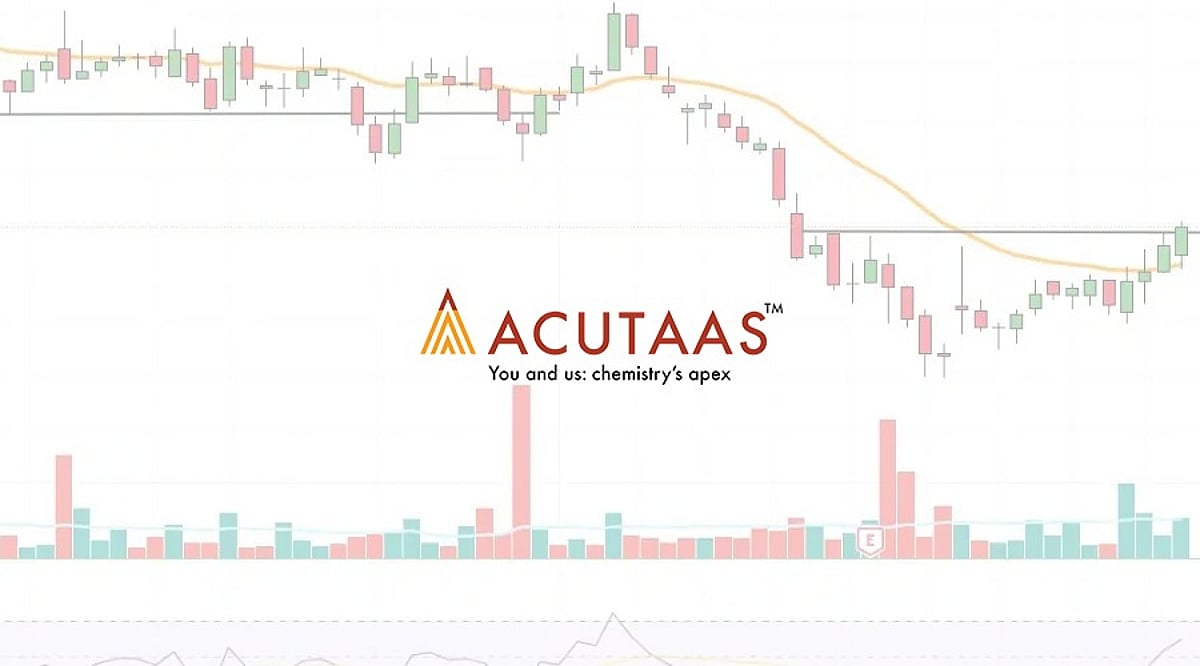
    Acutaas Chemicals Ltd shares surged nearly 7% on Thursday after JM Financial resumed coverage on the specialty chemicals firm with a ‘Buy’ rating. The brokerage upgraded its previous ‘Add’ call and set a target price of Rs 3,800 per share, indicating roughly 17% upside from the level considered in its report.

    The Acutaas Chemicals share price rose as much as 6.73% to Rs 3,451.05 during the session. JM Financial based its rating on expected growth in the company’s contract development and manufacturing organization (CDMO) business and new chemical segments.

    JM Financial Sees Growth in Specialty Chemicals Business

    Acutaas Chemicals has started shifting its specialty chemicals business away from products such as methyl paraben and salicylic acid. Instead, the company is expanding into electrolyte additives, semiconductor chemicals, and electronic chemicals.

    JM Financial said, “Electrolyte additives could address a 150,000 MTPA global market by CY30E.” The brokerage added that Acutaas has already contracted capacity for VC and FEC. Along with two other additives, JM expects these products to generate about Rs 400 crore in revenue by FY30.

    The brokerage also expects semiconductor chemicals to support growth. Acutaas has exposure to photoresist chemicals through BFC and Indichem. However, the revenue forecast depends on the planned ramp-up of the Korean facility, according to JM Financial.

    JM expects specialty chemicals revenue to rise from around Rs 170 crore in FY26 to Rs 730 crore by FY30, representing a compound annual growth rate of about 45%. The brokerage expects electrolyte additives and semiconductor chemicals to account for much of this expansion.

    CDMO Business Expected to Support Acutaas Chemicals Earnings

    JM Financial expects the Acutaas Chemicals CDMO business to grow at a compound annual rate of about 28% between FY26 and FY30. The brokerage linked this forecast to existing operations and new molecules entering the company’s portfolio.

    Acutaas currently has four new CDMO molecules across cardiovascular and oncology applications. According to JM Financial, each molecule could generate annual revenue of Rs 50 crore to Rs 100 crore.

    The brokerage expects combined revenue from these four molecules to reach about Rs 320 crore by FY30. These estimates remain forecasts and depend on commercial scale-up, customer demand, and execution during the period.

    Apixaban Opportunity Could Aid Legacy Pharma Business

    JM Financial also expects the legacy pharmaceutical intermediates business to recover as Pfizer’s Apixaban approaches patent expiry in November 2026. The brokerage estimates a potential opportunity for Acutaas Chemicals if demand for related intermediates increases.

    “Assuming Pfizer retains 20 per cent market share, we estimate an addressable opportunity of Rs 440 crore for Acutaas,” JM Financial said.

    The brokerage expects Apixaban intermediates to help support the legacy pharma segment after the company’s portfolio changes. It forecasts this business could grow at a 12% compound annual rate between FY26 and FY30.

    JM Financial estimates legacy pharma revenue could reach about Rs 880 crore by FY30. Meanwhile, the brokerage expects newer businesses, CDMO products, and specialty chemicals to contribute more to Acutaas Chemicals’ revenue mix over the coming years.

    The Rs 3,800 share price target reflects JM Financial’s forecasts and assumptions. Actual revenue growth, margins, and the Acutaas Chemicals share price may vary based on business performance and market conditions.

  • How AI Agents Are Revolutionizing Banking and Financial Services in 2026

    How AI Agents Are Revolutionizing Banking and Financial Services in 2026

    Artificial intelligence is moving far beyond simple chatbots in the banking sector. As of 2026, AI agents are handling complex tasks across credit assessment, fraud detection, customer service, and capital markets, fundamentally reshaping how financial institutions operate. A global study conducted by Cambridge Judge Business School, the Bank for International Settlements, the International Monetary Fund, and the World Economic Forum reveals that 81% of financial firms now use AI at some level, though only 14% consider it transformational for strategy and competitive advantage. This indicates widespread adoption but limited deep integration.

    AI Agents Go Beyond Chatbots

    The most significant shift is the emergence of AI agents that can perform multi-step tasks. Unlike chatbots that only answer questions, agents can review documents, check policy rules, identify missing data, prepare credit cases, and route them for human approval. Citi has developed Arc, an internal platform for AI agents used in research and task execution. Fiserv launched agentOS, a platform with policy controls, audit trails, and human oversight. This evolution positions AI as a work partner rather than a mere information source.

    Faster and Smarter Credit Decisions

    AI is transforming credit assessment by analyzing cash flow, account activity, income patterns, business data, and repayment history together—far beyond traditional forms and fixed checks. This wider view enables lenders to make faster decisions with less paperwork. BCG highlights agent-led credit journeys, faster credit review, and more personalized collections as key AI opportunities. Better data usage also helps lenders identify risk earlier.

    The AI Fraud Race

    Fraud detection has become an AI-versus-AI battle. Criminal groups use AI for fake identities, deepfakes, and phishing at scale. Banks now combine rules, machine learning models, graph analysis, and generative AI to detect unusual activity. The Federal Reserve has endorsed this multi-layered approach. Systems assess transactions alongside account links, device signals, merchant activity, and past behavior to reveal patterns missed by single-transaction checks.

    Customer Service: From Answers to Action

    AI assistants now go beyond answering balances and fees. They can help set savings targets, review expenses, and suggest plans. With proper permissions, they can even execute tasks like moving money or paying bills. Visa introduced an AI Financial Assistant in July 2026 for banks, noting that over 66% of surveyed Americans who used generative AI had sought financial advice through it. This creates a path from advice to approved action.

    Specialist AI in Capital Markets

    Banks use specialized models for market research, risk checks, liquidity forecasts, portfolio management, and foreign exchange. In August 2026, Citi, HSBC, and Standard Chartered adopted Ant International’s Falcon Time-Series Transformer Model 2.0, which reportedly cuts FX hedge and allocation costs by over 60%. Specialist AI models now play a stronger role across financial markets.

    Trust and Control Matter More Than Ever

    AI brings serious risks: model errors, data access issues, fraud, cyber threats, and poor decisions. The Financial Stability Board issued a June 2026 consultation on responsible AI use in finance, focusing on generative and agentic AI. The UK Financial Conduct Authority also warned about risks to firm operations, customer journeys, competition, fraud, and cybersecurity. Strong controls are as important as model quality.

    The Next Bank Model

    The next major change will come when AI agents gain secure access to core bank systems. A customer could grant an agent a clear task, expense limit, and permission to act, allowing it to compare products, move money, pay bills, or manage cash within set rules. This transforms AI from support to core system component. The strongest banks will combine robust data capabilities, modern infrastructure, useful AI agents, and firm controls. The central race now is about safe AI use at scale.

    Key Takeaways

    • AI agents now handle complex banking tasks across credit, fraud, research, and customer service.
    • Banks use AI to improve speed, accuracy, and personalization across financial services.
    • Strong governance, cybersecurity, privacy, and human oversight remain essential for safe AI adoption.

    Frequently Asked Questions

    How is AI changing banking in 2026?

    AI is transforming credit decisions, fraud detection, customer service, compliance, research, and other core banking processes.

    What are AI agents in banking?

    AI agents can complete multi-step tasks such as checking documents, applying rules, and preparing cases for human approval.

    Can AI improve fraud detection?

    Yes. Banks combine AI models, rules, and graph analysis to identify unusual transaction patterns and potential fraud.

    How does AI affect customers?

    AI provides faster support, personalized financial guidance, and with proper approval, helps customers complete financial tasks.

    What are the main risks of AI in finance?

    Key risks include cyber threats, data privacy issues, model errors, fraud, and poor decisions without suitable human oversight.


  • Large-Cap Stocks: Understanding Their Risk Profile in 2026

    Large-Cap Stocks: Understanding Their Risk Profile in 2026

    What Are Large-Cap Stocks?

    Large-cap stocks represent shares of major companies with substantial market capitalization—calculated by multiplying the current share price by the total number of outstanding shares. These firms are typically industry leaders with established track records, diverse revenue streams, and significant financial resources.

    How Large-Cap Stocks Compare to Smaller Companies

    Investors often view large-cap stocks as a safer bet than small-cap stocks due to their stability and lower volatility. However, the 2026 market performance illustrates that size alone does not guarantee superior returns or immunity from downturns. As of September 8, 2026, the S&P 500—a benchmark for large-cap U.S. stocks—closed at 7,673.52, down 0.58% for the day but still up 12.1% year-to-date. In contrast, the Russell 2000, which tracks small-cap companies, gained a stronger 19.3% over the same period. This divergence highlights that while large-caps may offer more stability, they can lag in growth phases.

    Market Capitalization and Index Composition

    The S&P 500 provides a clear picture of the large-cap landscape. As of August 31, 2026, the index comprised 503 companies, with a median market value of $44.73 billion. The largest company in the index boasted a market cap of approximately $5.35 trillion. Notably, the top 10 companies accounted for 37.8% of the index’s total value, with heavyweights like NVIDIA, Apple, Microsoft, Amazon, Alphabet, Broadcom, Meta, Micron, and Tesla leading the pack.

    Why Size Can Mitigate Certain Risks

    Large-cap companies typically enjoy several advantages that can reduce business-specific risks:

    • Stronger cash reserves and better access to credit markets
    • Diversified product lines and geographic presence
    • Established brand loyalty and customer bases
    • Greater resilience during economic downturns

    These factors can help large firms weather storms that might sink smaller competitors. However, they do not eliminate market risk, valuation concerns, or sector-specific vulnerabilities.

    The Concentration Problem in the S&P 500

    A new risk has emerged in the large-cap space: concentration. According to BlackRock, the top 20 S&P 500 companies now represent 49% of the index’s value and contributed 64% of its five-year return. This means that a broad index fund holding 503 stocks can still see its performance heavily influenced by just a handful of mega-cap firms. The information technology sector, comprising 73 companies in the index, posted a 22.44% year-to-date price return through August 31, 2026, driven largely by AI demand. But this same momentum carries significant valuation risk if earnings fail to meet lofty expectations.

    Real-World Market Shocks Still Hit Large-Caps

    Even the largest companies are not immune to sudden market shocks. On September 8, 2026, the S&P 500 fell 0.58% as oil prices surged and fresh concerns about AI valuations hit software stocks. Salesforce, Intuit, and ServiceNow each dropped between 4% and 5%. Brent crude approached $100 per barrel, reigniting inflation fears. Additionally, the U.S. 10-year Treasury yield hovered near 4.8%, raising borrowing costs for corporations and making bonds more attractive relative to equities—pressures that affect even the biggest firms.

    Analyst Outlook and Risks

    HSBC projects the S&P 500 could reach 8,100 by the end of 2026, citing expectations of more than 25% earnings-per-share growth in the second half of the year, supported by strong corporate results and AI infrastructure spending. However, the bank also flags risks from persistent inflation, interest rate volatility, geopolitical tensions, and stretched stock valuations.

    Conclusion: Large-Cap Means Lower Risk, Not No Risk

    Large-cap stocks can provide a more stable foundation for an equity portfolio compared to small-caps, thanks to their financial strength, market reach, and liquidity. Yet, they are not risk-free. Valuation, debt levels, sector exposure, and broader economic conditions all play critical roles in determining performance. For investors, the key takeaway is to look beyond the “large-cap” label and examine the underlying composition of their holdings. A portfolio that appears diversified may still be heavily concentrated in a few mega-cap tech names, amplifying risk. As always, thorough research and a clear understanding of your risk tolerance are essential before making any investment decisions.

    Frequently Asked Questions

    1. What are large-cap stocks?

    Large-cap stocks are shares of companies with very high market capitalization, calculated by multiplying the share price by the total number of outstanding shares.

    2. Are large-cap stocks less risky?

    Generally, large-cap stocks are less volatile than smaller companies, but they still carry significant market risk and can experience sharp declines.

    3. Why can large-cap stocks still fall sharply?

    High valuations, weak earnings, economic shocks, rising interest rates, sector problems, and geopolitical events can all push large-cap shares lower.

    4. Is the S&P 500 a large-cap index?

    Yes. The S&P 500 provides broad exposure to major U.S. companies and serves as a key benchmark for the large-cap market.

    5. Does large-cap mean safe?

    No. Large-cap status can indicate greater business strength and stability, but it does not guarantee protection from investment losses.

  • Best Buy Labor Day 2026 Deals Still Active: Top Discounts on TVs, Laptops, and Appliances

    Best Buy Labor Day 2026 Deals Still Active: Top Discounts on TVs, Laptops, and Appliances

    Best Buy’s Labor Day sale may have ended on September 7, but several discounted prices remain on TVs, laptops, and appliances. Shoppers can still find major savings on premium models and budget-friendly products across multiple categories. Prices are subject to change, so always verify the listed price before checkout.

    Key Takeaways

    • Several Best Buy Labor Day prices remain available after the September 7 sale deadline.
    • The LG C6 OLED offers the largest TV discount at $1,200 off.
    • The HP OmniBook X Flip at $699.99 stands out among laptop deals.

    TV Deals

    LG 65-Inch C6 OLED evo 4K (2026)

    Price: $1,499.99 (save $1,200). This premium OLED TV delivers a 65-inch screen with evo technology, making it the standout high-end offer.

    Sony 65-Inch BRAVIA 7 II Mini LED

    Price: $1,699.99 (save $900). A top-tier Mini LED option for buyers seeking superior brightness and contrast.

    Samsung 55-Inch U8000H Crystal UHD 4K (2026)

    Price: $299.99 (save $80). A budget-friendly 55-inch 4K TV that keeps the cost under $300.

    Samsung 50-Inch U8000H Crystal UHD 4K (2026)

    Price: $249.99 (save $100). Ideal for smaller spaces, this 50-inch model offers solid 4K performance at a low price.

    Roku 50-Inch Select Series 4K QLED

    Price: $199.99 (save $100). The best budget TV deal — a 4K QLED for under $200.

    LG 75-Inch NU700B Nano AI 4K (2026)

    Price: $549.99 (save $100). A large 75-inch display at a fraction of the cost of OLED models.

    Insignia 32-Inch FE Series 1080p Fire TV

    Price: $79.99 (save $50). Perfect for bedrooms, kitchens, or guest rooms.

    Laptop Deals

    HP OmniBook X Flip 16-Inch 2K OLED (Ryzen AI 5, 16GB, 512GB)

    Price: $699.99 (save $630). Strongest laptop discount with OLED screen and ample memory.

    Lenovo Yoga 7i 16-Inch 2K Touch (Core Ultra 5, 16GB, 512GB)

    Price: $749.99 (save $450). Versatile 2-in-1 with a large touch display.

    Samsung Galaxy Book6 Pro 14-Inch 3K AMOLED (Ultra 7, 16GB, 512GB)

    Price: $1,299.99 (save $500). Premium ultrabook with stunning AMOLED screen.

    HP OmniBook X Flip 16-Inch 2K OLED (Ultra 5, 16GB, 512GB)

    Price: $999.99 (save $350). Same OLED chassis with a mid-range processor.

    ASUS Zenbook A14 14-Inch OLED (Ultra 9, 32GB, 1TB)

    Price: $1,499.99 (save $400). High-end specs for demanding tasks.

    HP OmniBook 3 14-Inch 2K OLED (Snapdragon X, 8GB, 256GB)

    Price: $449.99 (save $150). Entry-level OLED laptop.

    HP OmniBook X Flip 16-Inch 3K OLED (Ultra 9, 32GB, 1TB)

    Price: $1,699.99 (save $550). Top-tier configuration with highest resolution.

    Gaming Laptop Deals

    Lenovo Legion Pro 5i with RTX 5070

    Price: $1,849.99 (save $800). Powerful gaming machine with RTX 5070 graphics.

    Alienware 16X Aurora with RTX 5070

    Price: $1,999.99 (save $900). Largest gaming laptop discount, under $2,000.

    Appliance Deals

    Insignia 6.7-Cubic-Foot Electric Dryer

    Price: $399.99 (save $200). Budget-friendly dryer.

    Insignia 3.7-Cubic-Foot Top-Load Washer

    Price: $399.99 (save $200). Matched pair with the dryer.

    Insignia 4.1-Cubic-Foot Top-Load Washer

    Price: $449.99 (save $250). Larger capacity washer.

    LG 7.3-Cubic-Foot Electric Dryer

    Price: $549.99 (save $350). Premium LG dryer with good capacity.

    Samsung 7.2-Cubic-Foot Electric Dryer

    Price: $549.99 (save $220). Comparable to LG but lower discount.

    Insignia 18.6-Cubic-Foot Bottom-Freezer Refrigerator

    Price: $599.99 (save $350). Large fridge under $600.

    Whirlpool 31-Cubic-Foot French-Door Refrigerator

    Price: $1,799.99 (save $630). Massive capacity with deep discount.

    Extra Savings on Appliance Packages

    Select appliance packages can get up to an extra $1,000 off. LG and LG Studio packages qualify for up to $800 additional savings. These offers are ideal when replacing multiple major appliances at once.

    The Strongest Deals Still Available

    • Best low-cost TV: Roku 50-inch Select Series 4K QLED at $199.99
    • Best premium TV: LG 65-inch C6 OLED evo 4K at $1,499.99
    • Best laptop value: HP OmniBook X Flip 16-inch 2K OLED at $699.99
    • Best appliance value: Insignia washer and dryer pair at $399.99 each

    Frequently Asked Questions

    Are Best Buy Labor Day deals still available?

    Yes, several discounted prices remain after the Labor Day sale ended on September 7.

    What is the biggest TV discount still listed?

    The LG 65-inch C6 OLED evo 4K has a discount of $1,200.

    What is the best low-cost TV deal?

    The Roku 50-inch Select Series 4K QLED costs $199.99 after a $100 discount.

    Which laptop has the strongest discount?

    The HP OmniBook X Flip 16-inch 2K OLED with Ryzen AI 5 has $630 off and costs $699.99.

    Are appliance discounts still available?

    Yes. Select washers, dryers, refrigerators, and appliance packages still have discounts, with some package offers reaching up to $1,000 off.

  • How an ATS Checker Works: A Guide to Resume Optimization for Job Seekers

    How an ATS Checker Works: A Guide to Resume Optimization for Job Seekers

    An ATS checker reviews resume structure, text, keywords, and job relevance to identify possible issues that may affect how hiring software reads and assesses an application. This diagnostic tool simulates parts of the ATS review process, helping candidates improve their resumes before submission.

    Key Takeaways

    • An ATS checker tests whether resume content remains clear and readable for hiring software.
    • Relevant job terms and skills can improve alignment with a specific job description.
    • An ATS score offers guidance, not a guarantee of recruiter review or an interview.

    What an ATS Checker Looks For

    An ATS checker first examines the text and structure of a resume. It attempts to identify key details such as the candidate’s name, contact information, job titles, employers, dates, education, skills, and certifications. Layout is critical: tables, text boxes, graphics, icons, images, headers, footers, and complex columns can hinder text extraction. A simple structure gives the parser a clearer path through the document.

    How Resume Parsing Works

    Resume parsing is the first major stage of an ATS check. The software extracts text from a resume file (often PDF or DOCX) and attempts to categorize each detail—for example, linking a job title with a company name and employment dates. Poor document structure can disrupt this process. Text inside an image may not appear in extracted content, and two-column layouts may cause words to appear in the wrong order, making a strong resume harder for a system to understand.

    How Keyword Matching Works

    After text extraction, an ATS checker compares the resume with a job description, looking for terms related to the role—technical skills, software, certifications, qualifications, job titles, and industry terms. Modern tools may use semantic matching to connect related concepts rather than relying solely on exact word matches. However, exact job terminology still holds value: if a job description asks for SQL, Tableau, data visualization, and A/B testing, a resume should mention those skills when they genuinely match the candidate’s experience.

    Why the ATS Score Can Mislead

    Many online ATS checkers assign a score from 0 to 100 covering formatting, parsing, keywords, skills, experience, and section structure. This number does not represent a universal ATS standard. Employers use different platforms, settings, screening questions, and recruitment processes. A high score does not guarantee an interview, nor does a lower score mean automatic rejection. The score is best used as a guide for finding possible weaknesses.

    AI Is Changing ATS Checks

    Artificial intelligence now plays a larger role in recruitment software. Some modern systems can assess skills, experience, and job relevance with greater detail than older keyword filters. Modern ATS checkers can inspect text structure and show what a parser extracts, and some assess semantic links between resume content and job requirements. The goal should not be to trick an ATS; instead, focus on clear facts, relevant skills, measurable results, and clean document structure.

    The Truth Behind the 75% Claim

    A common online claim states that ATS software rejects 75% of resumes before a recruiter sees them. Current research does not support that figure as a universal fact; some sources describe it as false or based on misunderstanding. A safer statement is that ATS software can filter, rank, and process applications before recruiter review, so resume structure and job relevance can affect how easily a system finds important information.

    What Makes a Resume ATS-Friendly

    A simple resume usually gives an ATS checker fewer problems. Standard sections—Professional Summary, Work Experience, Skills, Education, Certifications—create clear signals for parsing software. Important details should appear as normal text rather than inside graphics or images. Dates, job titles, company names, and responsibilities should follow a consistent format. Most importantly, resume content should honestly match the target role, showing where a skill had real use and what results that work produced.

    The Real Value of an ATS Checker

    An ATS checker cannot promise an interview. Its real value comes from three simple checks: whether a system can read the resume, whether the document contains relevant evidence for the role, and whether the layout hides important details. This makes an ATS checker less of a hiring predictor and more of a resume quality test. A clear document, relevant experience, accurate terminology, and readable structure give both software and recruiters a better view of the candidate’s actual value.

    FAQs

    1. What is an ATS checker? A tool that reviews a resume for machine readability, structure, keywords, and relevance to a target job.
    2. How does an ATS checker read a resume? It extracts resume text and identifies details such as job titles, employers, dates, skills, education, and certifications.
    3. Can an ATS checker guarantee an interview? No. It provides an estimate and cannot predict how a specific employer will assess an application.
    4. Why do resume layouts matter for ATS software? Complex columns, tables, images, text boxes, headers, and graphics can make important details harder for software to extract.
    5. Is a high ATS score enough for a strong resume? No. A useful resume also needs relevant experience, clear evidence of skills, accurate terminology, and a simple structure.
  • Spider-Man: Brand New Day OTT Release Date, Cast, and Plot – Everything We Know

    Spider-Man: Brand New Day OTT Release Date, Cast, and Plot – Everything We Know

    Spider-Man: Brand New Day continues its impressive box-office run, with the Tom Holland-led superhero film crossing $2.4 billion worldwide. The Marvel movie has held the No. 1 spot at the US and Canadian box office for six consecutive weeks, adding $18 million over the most recent weekend.

    Set four years after the events of Spider-Man: No Way Home, the story follows Peter Parker as he deals with the consequences of Doctor Strange’s spell, which erased everyone’s memory of Peter Parker’s identity. The film is currently in theaters, but fans are eager to know when they can watch it from home.

    Spider-Man: Brand New Day OTT Release Date

    There is no confirmed OTT release date for Spider-Man: Brand New Day yet, and the studio has not announced the streaming platform. According to reports, Netflix could stream the movie after its theatrical run, possibly arriving in late September or October 2026. However, this timeline remains unconfirmed.

    What Is Spider-Man: Brand New Day About?

    The story picks up after Spider-Man: No Way Home. Peter Parker now lives in a world where nobody remembers his identity or his connection to Spider-Man — including MJ and Ned. Peter knows they no longer remember their shared history, and instead of revealing the truth, he chooses to stay away from them. This decision comes from his desire to keep them safe, but rebuilding his life without the people closest to him proves difficult. The film explores Peter’s life after the spell and the consequences of starting over, while setting up another chapter in his journey as Spider-Man.

    Spider-Man: Brand New Day Cast

    Tom Holland leads the cast as Peter Parker, with Zendaya returning as MJ. The cast also includes:

    • Mark Ruffalo
    • Jon Bernthal
    • Jacob Batalon
    • Sadie Sink
    • Liza Colon-Zayas
    • Tramell Tillman
    • Marisa Tomei
    • Naomi Watts
    • Michael Mando
    • Keith David
    • Marvin Jones III
    • Olivia Booth-Ford
    • Eman Esfandi
    • Leah Phillips
    • Billy Clements
    • Zabryna Guevara