Blog

  • Google Drive May Delete Inactive WhatsApp Backups After 5 Months — Protect Your Chats Now

    Google Drive May Delete Inactive WhatsApp Backups After 5 Months — Protect Your Chats Now

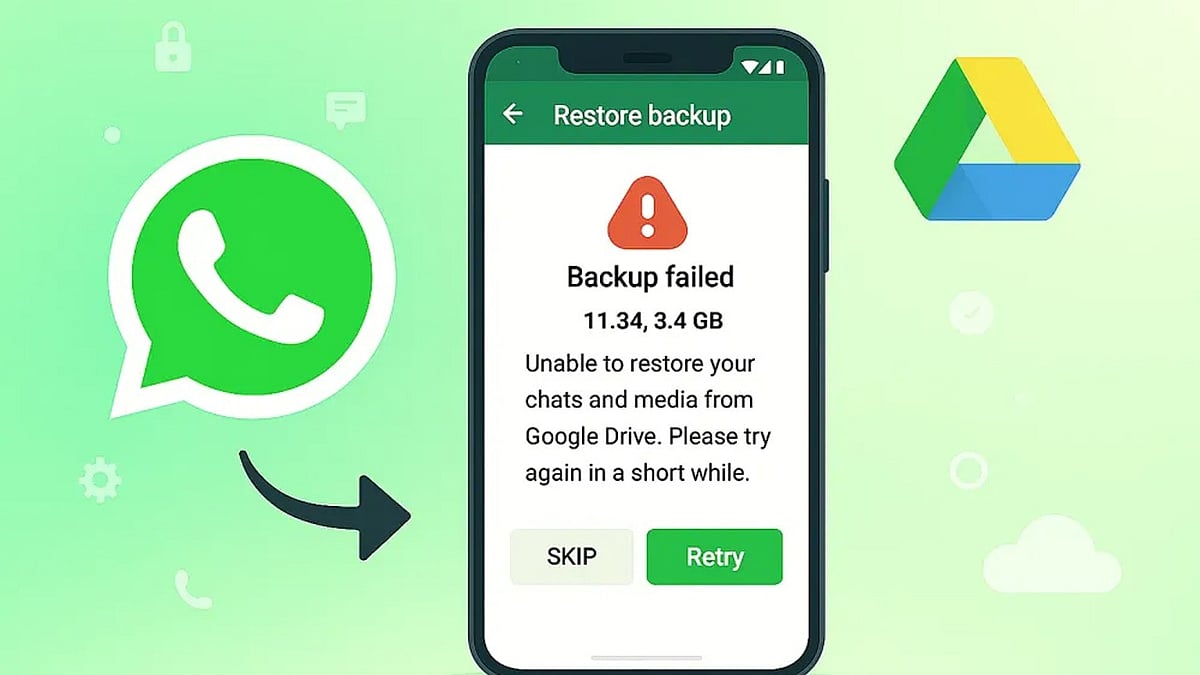
    Android users who rely on Google Drive to back up WhatsApp chats could lose years of conversations if their backup has not been updated in five months. Google may automatically remove inactive WhatsApp backups, and once they are gone, neither Google nor WhatsApp support can restore them.

    What Is Changing?

    According to guidance in the Google Drive Help Community, “WhatsApp backups that haven’t been updated in 5 months may automatically be deleted by Google.” The policy mainly affects Android users who use Google Account backups for WhatsApp and stop refreshing those backups for an extended period.

    The risk becomes more serious during phone upgrades or reinstallations because users often discover the missing backup only after WhatsApp has been installed on a new device. Without a recent backup, restoring old chats can be impossible.

    Why WhatsApp Backups Disappear

    Several factors can trigger the five-month deletion window, including:

    • Google Drive storage filling up and blocking new uploads
    • Changes to backup settings that stop scheduled backups
    • Repeated upload failures that are not checked over time

    Google Drive also keeps only the newest WhatsApp backup. Each successful upload replaces the previous copy, and older versions are not sent to a trash folder. This makes accidental chat loss much harder to reverse later.

    In addition, WhatsApp backups on Google Drive are encrypted. Users cannot browse or restore them through regular Google apps or websites, which means the cloud copy is not a simple backup file you can open independently.

    How to Keep Your WhatsApp Chats Safe

    Taking a few minutes to review your backup setup can prevent an unpleasant surprise. Android users should open WhatsApp Settings > Chats > Chat Backup regularly and follow these steps:

    • Set backup frequency to Daily or Weekly so Google Drive sees recent activity.
    • Confirm you have enough available Google Drive storage for new backups.
    • Make sure the Google Account listed in WhatsApp matches the account you use for regular backups.
    • Check the date of your last backup before switching phones or reinstalling WhatsApp.

    For important conversations, WhatsApp’s Export Chat feature creates a separate copy outside the backup system and can serve as extra protection. Local Android backups may also offer another recovery option if recent chats disappear from Google Drive.

    A Quick Check Can Save Years of Messages

    The risk of losing WhatsApp history is highest when users switch devices, because missing backups are usually discovered after the old phone is no longer available. Checking the last backup date today can reveal potential problems early and prevent a failed restore. With a simple review of your backup schedule and storage, you can protect years of conversations from automatic deletion.


  • Grand Theft Auto VI Extended Preview to Debut on Netflix and YouTube on August 27

    Grand Theft Auto VI Extended Preview to Debut on Netflix and YouTube on August 27

    Rockstar Games has announced that a new extended look at Grand Theft Auto VI will premiere on Netflix and YouTube on August 27. This highly anticipated preview promises to reveal more details about the game’s story, characters, and features.

    The exclusive footage, titled Grand Theft Auto VI: An Extended Look, will debut on Netflix at 3 p.m. ET. Later that same day, it will be available on the official Rockstar Games YouTube channel and the Grand Theft Auto VI website at 9 p.m. ET.

    Netflix Collaboration Marks New Gaming Venture

    According to Netflix, this collaboration showcases its next step into gaming. The game, which has been in development for 13 years, recently opened pre-orders in June. The standard version is priced at $79.99.

    Grand Theft Auto VI will return players to Vice City, a fictional setting inspired by Miami. The story follows two protagonists, Jason and Lucia, as they become entangled in a broader conspiracy across the state of Leonida. Rockstar confirmed that the launch version will focus on single-player gameplay.

    Launch Details and Editions

    Both physical and digital editions of GTA VI will be available. Notably, the physical edition will not include a disc; instead, it will contain a code to download the game. Rockstar is also releasing an Ultimate Edition for $99.99, which includes bonus weapons, cars, and in-game clothing.

    With the extended look arriving later this month, fans can expect more information on the expansive world Rockstar is building before the game’s official release.

  • XRP’s Three-Month Volatility Low Raises Utility Questions as Price Holds Near $1.06

    XRP’s Three-Month Volatility Low Raises Utility Questions as Price Holds Near $1.06

    XRP has entered a notably quieter trading phase, with its 30-day realized volatility dropping to a three-month low of approximately 0.34 on Binance. According to CoinCodex, the token is currently trading near $1.06, a stabilization that follows weeks of sharper price swings.

    What Falling Realized Volatility Means for XRP

    Realized volatility measures an asset’s actual price movement over a specific period, reflecting past fluctuations rather than expected future conditions. CryptoQuant analyst Arab Chain noted that the decline indicates a clear reduction in daily price swings, describing the current action as relatively calm after a period of heightened volatility.

    The lower reading suggests that buyers and sellers have reached a temporary balance. Traders appear hesitant to open large positions until fresh information or stronger market momentum emerges.

    Traders Await the Next Market Catalyst

    Calmer markets often produce tighter ranges, weaker speculative activity, and less trading noise. However, extended volatility compression can precede a sharp move when new momentum arrives. Market participants are watching trading volume and open interest for signs that stronger participation has returned.

    Several catalysts remain in focus, including regulatory clarity in the United States, Ripple ecosystem growth, institutional adoption, derivatives positioning, macroeconomic developments, and broader crypto market sentiment. Recent attention has also been drawn to Google search results identifying XRP as a leading world bridge currency. Some analysts have discussed the possibility of a wider macro breakout and an early Wave 3 advance, though they link further gains to a sustained move above key resistance levels.

    Still, lower realized volatility offers no directional signal, as the eventual breakout could move in either direction.

    Utility Becomes the Core Value Argument

    Evernorth Chief Business Officer Sagar Shah argued that market price should not be the primary measure of XRP’s value. Speaking during a Q&A session on X, Shah said XRP is designed to move value across financial systems. While price attracts constant attention and dominates headlines, he presented utility as a stronger indicator of long-term value.

    Shah cited liquidity provision, cross-border settlement, lending, and tokenized assets as key uses within the XRP ecosystem. He emphasized that the most important signal comes from how XRP operates, rather than how it trades.

    For now, XRP remains near $1.06 while Binance realized volatility sits at a three-month low. Traders continue tracking market participation as the consolidation phase develops.

  • India’s TRAI Opens Public Consultation on 5G Network Slicing Quality Standards to Safeguard User Experience

    India’s TRAI Opens Public Consultation on 5G Network Slicing Quality Standards to Safeguard User Experience

    India’s Telecom Regulatory Authority (TRAI) has invited public comments on a draft document outlining quality-of-service (QoS) benchmarks for 5G network slicing. This emerging technology is considered the backbone of future advanced mobile services in the country. According to TRAI, these new standards will ensure that 5G services do not degrade the quality of experience for ordinary mobile users.

    Network slicing enables telecom carriers to create multiple virtual networks on a single physical network. Each ‘slice’ can be configured for different use cases such as online gaming, cloud computing, factory automation, medical services, or emergency services. These slices have unique speed, latency, and reliability depending on their intended use case.

    TRAI Recommends Setting Up Separate Quality Standards

    In its draft guidelines, TRAI has made provisions to ensure that telecom operators offering network slicing adhere to defined quality standards for each slice. Simultaneously, operators must ensure that resource allocation to premium customers does not adversely impact service quality for other customers. The regulator said operators should continuously monitor network performance and maintain transparency about the quality levels promised under different service categories. The move aims to protect consumers as telecom companies begin introducing differentiated 5G services.

    Debate Over Net Neutrality Continues

    The consultation also revives the debate around net neutrality. Consumer groups argue that prioritized network services could create unequal internet access if premium users consistently receive better performance. Telecom companies, however, maintain that network slicing is a globally accepted 5G capability that enables specialized applications without violating net neutrality principles. They argue the technology is essential for monetizing large investments made in India’s 5G rollout and supporting enterprise use cases.

    Consultation Open Before Final Rules

    TRAI has consulted with telecom companies, industry associations, technology companies, and consumers before formulating the rules. The consultation is part of the regulator’s broader initiative to examine quality-of-service guidelines for mobile networks in India’s growing independent 5G network ecosystem. The regulatory structure is likely to define telecom operators’ approach to offering premium 5G services while ensuring ordinary consumers enjoy reliable mobile connectivity. With telecom companies seeking additional revenue sources, the regulator’s job is to promote innovations while maintaining consumer protection norms and an open internet philosophy.

  • CASHCAT Surges 120% to $86M Market Cap as Robinhood Chain Deposits Rise and Bybit Launches Perpetual Contract

    CASHCAT Surges 120% to $86M Market Cap as Robinhood Chain Deposits Rise and Bybit Launches Perpetual Contract

    CASHCAT, the cat-themed memecoin on Robinhood Chain, has rebounded sharply to an $86 million market cap after a 120% weekly gain. The token’s price reached approximately $0.087 with a daily trading volume of $9 million, though it remains below its July peak of $0.22. Created by outside developers using Robinhood’s former cat-with-cash logo, the project is described by its website as ‘fan fiction with a ticker.’

    CASHCAT became Robinhood Chain’s first breakout memecoin within a week of the mainnet launch on July 1, with early wallets recording seven-figure returns during the initial surge. However, launch activity has since declined. The Noxa launchpad stopped accepting new launches on July 11 and went offline two days later, having earned an estimated $12 million in fees. Daily token deployments across Robinhood Chain launchpads fell from roughly 35,000 in mid-July to nearly 10,000. Noxa still holds about $137,000 in CASHCAT and has not sold.

    According to DEXTools data, there are approximately 41,200 holders, with the entire 989 million supply in circulation. The Uniswap liquidity pool holds 2.47% of the supply, while the next largest wallets each hold between 1.3% and 1.5%. The liquidity pool now contains $5 million, compared with $6.6 million when CASHCAT had a $105 million valuation.

    Robinhood Chain Activity Rises

    Robinhood Chain’s total value locked (TVL) reached $774 million after rising 20% in seven days. Lending protocols accounted for 43% of TVL, while asset management represented 41.5%. Key players include Morpho with $332 million (supporting Robinhood’s on-chain earn product) and Ethena with $236 million. Stablecoin balances grew 14% weekly to $575 million.

    Bybit Adds Leveraged Trading

    Bybit has introduced a CASHCAT perpetual contract with up to 10x leverage, further boosting trading activity. However, questions remain about trading momentum after Robinhood stops covering gas fees around late September. The chain’s stated tokenized-asset total stands at $27.6 million, while another active-market measure reached $100 million, up from about $70 million in late July. During that earlier period, about 12 tokenized stocks each recorded more than $500,000 in daily trading, with GameStop’s tokenized stock generating $26 million alone.

    CASHCAT’s recovery comes amid growing Robinhood Chain deposits and stablecoin balances, yet declining token launches and the impending end of subsidized gas fees represent key tests for the ecosystem’s sustainability.

  • OpenAI Seeks Dismissal of Apple Trade Secrets Lawsuit, Citing Vague Claims

    OpenAI Seeks Dismissal of Apple Trade Secrets Lawsuit, Citing Vague Claims

    OpenAI has filed a motion in a US federal court to dismiss Apple’s trade secrets lawsuit, arguing that the iPhone maker failed to identify any specific confidential information that was allegedly misappropriated. The AI firm contends that it has “no use, need or desire” for Apple’s trade secrets and is developing its consumer hardware independently.

    In its court filing, OpenAI stated that Apple’s complaint lacks a clear description of the stolen trade secrets and does not explain how any such secrets were used. The company emphasized that the information Apple references is either publicly available or does not qualify as trade secrets under the law.

    The legal dispute stems from Apple’s allegations that OpenAI and several former Apple employees took confidential hardware-related information when they joined the AI company. Apple has also requested a preliminary injunction to prevent OpenAI from using any alleged confidential information during the litigation.

    OpenAI dismissed these claims as baseless, asserting that there is no evidence the company obtained, disclosed, or used any trade secrets. The firm further argued that Apple is leveraging the lawsuit to mask its own challenges in attracting engineering talent and keeping pace with AI advancements.

    Despite the legal battle, the two companies continue to collaborate in some areas. Apple integrates ChatGPT into Siri through its Apple Intelligence service, and iPhone users can access ChatGPT via iOS.

    The court will now decide whether to dismiss the case. If the motion is denied, the lawsuit will proceed alongside Apple’s request for a preliminary injunction. This case highlights the intensifying competition between tech giants in artificial intelligence and consumer hardware development.

  • BNY Mellon to Offer In-Custody Crypto Staking for Institutions via Galaxy Partnership

    BNY Mellon to Offer In-Custody Crypto Staking for Institutions via Galaxy Partnership

    BNY Mellon has announced plans to integrate crypto staking into its digital asset custody platform through a collaboration with Galaxy, the bank confirmed on August 4, 2026. The proposed service would allow eligible institutional clients to earn staking rewards while keeping their assets within BNY’s custody system, pending regulatory approval.

    Under the arrangement, Galaxy will provide the staking infrastructure and technical support, enabling clients to participate in proof-of-stake blockchain networks without transferring their tokens to a third party. BNY said the service would maintain the same controls, governance standards, and asset protections expected by institutional investors.

    “As digital assets continue to evolve, clients want more than safekeeping alone — they want a broader set of capabilities delivered through an institutional-grade model,” said Carolyn Weinberg, BNY’s chief product and innovation officer.

    Galaxy will also serve as a design partner for BNY’s broader digital asset platform, contributing to infrastructure development beyond staking. The Nasdaq-listed firm, which already uses BNY’s custody platform as an early client, brings expertise in proof-of-stake networks and digital asset operations.

    Steve Kurz, Galaxy’s global co-head of digital assets, said: “The future of financial markets will be built on open, programmable rails, and the institutions that move first will define the era that follows.”

    BNY launched its digital asset custody service in 2022 and continues to expand blockchain-related services. The bank manages tens of trillions of dollars in assets under custody and administration. It also plans to move core transfer agency record-keeping onto blockchain, enable around-the-clock settlement for U.S. Treasuries by 2027, and test tokenized Treasuries on a private blockchain before the end of 2026.

    Ethereum, the largest proof-of-stake network by market value, remains a key reference point for staking services. At press time, Ethereum traded near $1,868, with a market value of about $225 billion. However, BNY did not specify which networks or tokens the staking service would support, nor did it provide a launch date, fee structure, or client eligibility details.

  • Galaxy Digital Stock Drops 14% on $85M Q2 Loss Despite Helios Data Center Revenue Growth

    Galaxy Digital Stock Drops 14% on $85M Q2 Loss Despite Helios Data Center Revenue Growth

    Galaxy Digital shares fell 14% on Wednesday after the crypto and AI infrastructure company reported an $85 million net loss for the second quarter. The stock closed at $19.07, down from $22.14, as declining digital asset prices overshadowed progress at its Texas data center business.

    Crypto Weakness Pressures Quarterly Results

    Galaxy narrowed its net loss from $216 million in the first quarter, but quarterly revenue declined 15% to $8.7 billion from $10.2 billion. The company reported an adjusted diluted loss of $0.09 per share, with adjusted EBITDA reaching negative $77 million. Total equity stood at $2.7 billion. The Treasury and Corporate segment recorded a $42 million adjusted gross loss during the quarter.

    Digital Assets Unit Shows Higher Gross Profit

    Galaxy’s Digital Assets division generated $66 million in adjusted gross profit, up 34% from the prior quarter, though trading volumes fell 7% due to reduced market activity. The division posted an adjusted EBITDA loss of $11 million despite the stronger gross profit. Combined, Digital Assets and Data Centers produced $86 million in adjusted gross profit and $1 million in combined adjusted EBITDA. However, investors focused on the net loss and continued exposure to crypto price volatility.

    Helios Data Center Begins Revenue Generation

    Galaxy’s Data Centers segment reported revenue for the first time after delivering capacity to CoreWeave. The segment generated $20 million in adjusted gross profit and $11 million in adjusted EBITDA. By quarter-end, Galaxy had delivered all 133 megawatts of critical computing load under the first phase of its 15-year CoreWeave lease. The company expects approximately $80 million in quarterly revenue starting in the third quarter.

    Galaxy targets a project-level adjusted EBITDA margin above 90% at Helios. The recurring AI infrastructure revenue may help reduce exposure to swings in crypto trading. Construction has started on Helios Phase II, which will add 260 megawatts of critical IT capacity, with initial data hall deliveries expected in the second quarter of 2027.

    The company raised $3.5 billion through senior secured notes due in 2031 on July 28, directing proceeds toward Helios I Phase II construction. After the quarter, Galaxy acquired three additional Texas development sites, lifting its potential power pipeline beyond 5.7 gigawatts.

    Key Takeaways

    Galaxy’s second-quarter results showed a narrower net loss, lower revenue, and continued pressure from digital asset prices. Meanwhile, Helios began producing revenue, completed its first 133-megawatt delivery, and moved into a larger expansion funded by $3.5 billion in new debt.

  • Google Maps Brings Hindi Support and Live Transit Updates to Ask Maps in India

    Google Maps Brings Hindi Support and Live Transit Updates to Ask Maps in India

    Google has expanded its Ask Maps feature in India with Hindi language support, live transit updates, and a new Personal Intelligence layer powered by Gemini. The updates, announced on the company’s India blog, aim to transform Google Maps into a smarter daily assistant for commuting, local discovery, and travel planning.

    Hindi Support and Natural Language Queries

    With Hindi support, users can ask travel questions in a more familiar language, search for places, compare routes, and request local recommendations. Ask Maps uses Gemini to handle detailed natural language queries and can even remember earlier conversations when history settings are enabled, allowing travel plans to continue seamlessly.

    Real-Time Transit Information

    The update brings live bus, metro, and train schedules, including delay information, through a new widget. For example, searches around ISBT Kashmere Gate can show departure times, connecting routes, and changing wait times. This real-time data helps commuters make better decisions on the go.

    Personal Intelligence via Gmail Integration

    Personal Intelligence adds another layer of trip planning by optionally connecting to Gmail. With user permission, Ask Maps can access flight, hotel, or restaurant reservations to suggest nearby activities and suitable departure times. Google keeps Gmail access off by default, giving users full control over the connection.

    Beyond Navigation: Traffic, Weather, and Crowd Data

    Ask Maps also provides live traffic, weather, and crowd level information at restaurants or shops. These details help users choose better travel times and avoid crowded locations, making Maps more practical for everyday Indian commutes and short trips.

    Google first launched Ask Maps in India and the United States, positioning it as a conversational layer for Maps. The latest India updates combine language support, live mobility data, and personalized planning in one place, strengthening Maps as an everyday assistant beyond basic navigation.

  • Bitcoin Holds Near $64,600 as S&P 500 Surges $2.1 Trillion on AI Rally

    Bitcoin Holds Near $64,600 as S&P 500 Surges $2.1 Trillion on AI Rally

    The S&P 500 has added $2.1 trillion in market value this month, driven by an AI-led rally, while Bitcoin trades near $64,600 with limited gains. Crypto-specific pressures, rising bond yields, shrinking stablecoin supplies, and uneven ETF demand have restrained Bitcoin’s upside despite stronger sentiment across US equities.

    The S&P 500 has gained 3.12% this month, boosting its market cap by about $2.1 trillion—almost matching the entire global cryptocurrency market. Bitcoin, however, has risen only 2% in the same period, hovering near $64,600. Analysts attribute the divergence to AI-focused stock demand, crypto market headwinds, higher bond yields, and cautious trader positioning.

    AI Stocks Drive Wall Street’s Gains

    The S&P 500 now holds a record market value near $70.5 trillion, with the index around 7,723 points. The Nasdaq and Dow have also advanced as investors pour capital into large technology companies.

    Adam Haeems, head of asset management at Tesseract Group, noted that the equity rally centers on sectors with limited ties to Bitcoin. “Partly because the equity rally is being driven by areas to which bitcoin has little direct exposure, particularly AI and semiconductor stocks,” he said.

    Lower oil prices have provided additional support to listed companies through reduced operating costs. Haeems suggested Bitcoin may benefit later from softer inflation expectations and potential Federal Reserve policy changes, though uncertainty around the September outlook limits that path.

    Paul Howard, senior director at Wincent, linked the gap to concentrated equity demand. “The stock rally is biased towards AI and mega-caps which doesn’t necessarily translate into crypto flows,” he said.

    Crypto Pressures Limit Bitcoin Demand

    Bitcoin faces sector-specific challenges that do not affect equities directly, including the $120 million Coldcard exploit, uncertainty surrounding the CLARITY Act, and Strategy’s recent Bitcoin sales.

    Haeems said these events have weakened sentiment without triggering a wider credit crisis or forced selling cycle. Strategy has sold Bitcoin for three consecutive months, adding concern for traders monitoring corporate demand.

    Rising bond yields also make government debt more attractive than non-yielding crypto assets. Real Treasury returns are at their highest since 2008, encouraging some capital to stay outside digital asset markets.

    Stablecoin supplies reflect the same pressure. Haeems noted that USDT supply dropped from about $190 billion in April to $183 billion, while USDC supply declined from $79.5 billion to $72 billion over the same period.

    Traders Watch October, ETF Flows

    Markus Thielen, founder of 10x Research, said many traders expect Bitcoin’s four-year cycle to produce an October bottom, prompting them to wait rather than build positions during the equity rally.

    However, Thielen said Bitcoin’s ability to hold steady despite the Federal Reserve’s firm stance could support another reading. “Traders are underestimating the upside risk from a less hawkish Fed, and overlooking the possibility that the four-year cycle has already bottomed,” he said.

    ETF activity has been mixed. US spot Bitcoin funds recently recorded $61.53 million in outflows, ending three weeks of modest inflows. They then attracted $626 million this week, their strongest total since early May.

    Giottus CEO Vikram Subburaj said several consecutive inflow days would help confirm stronger institutional demand. He identified Bitcoin support between $63,000 and $63,400, with resistance from $64,500 to $66,000.

    Wintermute noted that some ETF demand may reflect arbitrage rather than direct bullish positioning. Analysts expect possible fourth-quarter catalysts from regulatory progress and renewed stablecoin growth.