Blog

  • Top Altcoins Poised to Dominate the Crypto Market in H2 2026

    Top Altcoins Poised to Dominate the Crypto Market in H2 2026

    The cryptocurrency market is entering the second half of 2026 with a renewed focus on utility, adoption, and real-world applications. While Bitcoin continues to command significant attention, several altcoins are emerging as strong contenders for market leadership. Investors are shifting away from hype and toward projects with robust technology, active user bases, institutional backing, and clear growth trajectories.

    This article explores the most promising altcoins for H2 2026, including Ethereum, Solana, Chainlink, XRP, BNB, Sui, Bittensor, Render, Hyperliquid, and Ondo. Each represents a major trend such as artificial intelligence (AI), real-world assets (RWA), decentralized finance (DeFi), payments, and blockchain infrastructure.

    Ethereum (ETH): The Undisputed Blockchain Leader

    Ethereum remains a cornerstone of the crypto ecosystem, trading around $1,850–$1,900 with a market capitalization of approximately $213–$220 billion. Its vast ecosystem supports thousands of decentralized applications (dApps), DeFi platforms, and blockchain services. Institutional investors view Ethereum as a premier network for tokenized assets and digital products.

    Key growth drivers for H2 2026 include the expansion of Layer-2 networks, which enhance transaction speed and reduce costs, and the tokenization of real-world assets (RWA). Favorable market conditions could push ETH toward $3,500–$5,000, with a conservative estimate of $2,200–$2,800.

    Solana (SOL): The High-Speed Challenger

    Solana is a major player in the smart contract space, trading near $75–$80 with a market cap of $40–$45 billion. Its platform offers fast transaction speeds, low fees, and robust support for DeFi, payments, and digital asset initiatives. The growing adoption of stablecoins and real assets on Solana further strengthens its position.

    However, Solana faces increasing competition from other Layer-1 blockchains and must manage high market expectations.

    Chainlink (LINK): Bridging Crypto and Traditional Finance

    Chainlink provides essential data services that connect blockchains to external information, a role that becomes increasingly critical as financial institutions explore tokenized assets and blockchain systems. Trading at $12–$15 with a market cap of $8–$10 billion, LINK offers strong potential for two-fold growth or more during a bullish market phase.

    The growth of RWA creates a major opportunity for Chainlink, as banks and investment firms require secure data feeds for blockchain applications.

    XRP: The Global Payment Network

    XRP continues to attract attention with its focus on fast international transfers and financial settlement. Trading around $1–$1.10 with a market cap near $120 billion, its future growth depends on regulatory progress and wider institutional adoption. Given its already large market value, real adoption and market confidence will be key.

    BNB: The Exchange Ecosystem Token

    BNB remains one of the largest cryptocurrencies, priced near $575–$600 with a market cap above $77 billion. Its value derives from utility within the Binance ecosystem, blockchain activity, and DeFi services. While BNB enjoys strong market recognition, regulatory challenges pose the biggest risk to future growth.

    Sui (SUI): A Next-Generation Layer-1 Project

    Sui represents a newer generation of blockchain networks, trading near $0.80 with a market cap of approximately $2.5 billion. It uses the Move programming language and focuses on speed, gaming, and dApps. Its smaller market size offers higher growth potential but also carries greater risk, as it must continue to attract users and developers.

    Bittensor (TAO) and Render (RENDER): AI Crypto Leaders

    Artificial intelligence remains one of the strongest themes in crypto for 2026. Bittensor focuses on decentralized AI networks, while Render provides decentralized GPU computing services. TAO attracts interest through its AI infrastructure model, and Render benefits from rising demand for computing power to support advanced AI systems.

    Both assets offer high growth potential but are subject to sharp price fluctuations during market shifts.

    Hyperliquid (HYPE) and Ondo (ONDO): Future Finance Trends

    Hyperliquid focuses on decentralized trading and on-chain derivatives, gaining attention from users seeking alternatives to traditional exchanges. Ondo represents the RWA sector, specializing in tokenized financial products and institutional blockchain adoption. Both align with key crypto themes for H2 2026: DeFi and asset tokenization.

    Final Outlook for H2 2026

    The strongest altcoin opportunities for H2 2026 center around Ethereum, Solana, Chainlink, Bittensor, Ondo, and Render. These projects are tied to major trends such as blockchain adoption, AI, institutional finance, and digital asset infrastructure.

    Large-cap assets like ETH, SOL, LINK, XRP, and BNB offer greater stability, while smaller projects like TAO, RENDER, SUI, HYPE, and ONDO provide higher growth potential with increased risk. The next phase of the crypto market may favor projects with real technology, active ecosystems, and clear practical use cases over short-term speculation.

    Frequently Asked Questions

    1. Which altcoins could lead the crypto market in H2 2026? Ethereum, Solana, Chainlink, XRP, Bittensor, Render, and Ondo are among the altcoins with strong growth potential.
    2. Why is Ethereum considered a top altcoin for 2026? Ethereum remains a leading blockchain with a large ecosystem, institutional interest, DeFi activity, and strong support for tokenized assets.
    3. Can AI crypto projects perform well in H2 2026? AI-focused projects such as Bittensor and Render may gain attention as demand for decentralized AI infrastructure continues to grow.
    4. Are smaller altcoins better than large-cap cryptocurrencies? Smaller altcoins can deliver higher returns, but they also carry higher risks compared with established assets like ETH, SOL, and LINK.
    5. What crypto trends could shape H2 2026? Artificial intelligence, real-world asset tokenization, decentralized finance, blockchain payments, and institutional adoption may influence the next market cycle.

    Disclaimer: This article is for informational purposes only and does not constitute investment advice. Cryptocurrency investments carry significant risk. Always conduct your own research (DYOR) before making any investment decisions.

  • Top Video Games of 2026: Mid-Year Must-Play Picks Across All Genres

    Top Video Games of 2026: Mid-Year Must-Play Picks Across All Genres

    The first half of 2026 has delivered an exciting mix of blockbuster AAA releases and innovative indie titles across every major gaming platform. This roundup highlights the year’s best games so far, explores emerging gaming trends, and helps players choose the perfect title based on their preferred genre and playstyle.

    Overview

    • Discover the top-rated video games released during the first half of 2026, including both AAA blockbusters and critically acclaimed indie titles.
    • Compare games across multiple genres, including action, RPG, shooters, racing, simulation, and adventure, to find the best fit for your gaming style.
    • Learn about the biggest gaming trends shaping 2026, from advanced AI and immersive storytelling to innovative gameplay mechanics and cross-platform experiences.

    The first half of 2026 has delivered an impressive lineup of video games across genres, from action-packed adventures and immersive RPGs to competitive shooters and creative indie experiences. Developers have continued to push the limits of modern hardware while placing greater emphasis on storytelling, accessibility, and community-driven features. Whether you’re playing on PC, PlayStation, Xbox, or Nintendo Switch, there has been no shortage of standout releases.

    AAA Games Continue to Raise the Bar

    Big budget production houses have given out experiences that have been visually impressive with large worlds and cinematic storytelling. Games such as 007 First Light, Pragmata, and Saros highlight how developers are combining state-of-the-art graphics with interesting gaming mechanics. As opposed to depending only on visual effects, the games emphasize the element of player choices and engaging gameplay.

    Indie Games are Stealing the Spotlight

    Indie game developers keep showing how creativity trumps large budget spending. Games like Mina the Hollower, Creature Kitchen, and MOUSE: P.I. For Hire have been well-received thanks to unique visual styles, creative gameplay mechanics, and overall experience. This is just another way how originality proves to be one of the major advantages of the gaming industry, with indie game developers producing some of the best games every year.

    While several highly anticipated titles are still scheduled for later this year, the games released so far have already set a high standard. Here are the best video games of 2026 (so far) and why they deserve a place in your gaming library.

    Why These Games Stand Out

    Apart from having stunning visuals, what makes the best releases in 2026 is more than that. The game makers have put a lot of effort to make worlds that interact according to players’ actions, advanced artificial intelligence for enemies, and better gameplay features. Also, some games include better accessibility options that allow players of any level of expertise to play comfortably.

    Another trend is the combination of good storyline with freedom for players. Instead of telling stories through cutscenes only, most game makers have included storylines directly into exploration, fights, and other side missions.

    Which Game Should You Play First?

    The best selection is one that suits your own tastes in gaming. For those who prefer games with storytelling elements, 007 First Light and Pragmata are good titles to start. If you like more action-oriented games that focus on combat, try Saros or Marathon. For those who like older, retro-style games, Mina the Hollower may suit you well. Those seeking lighter experiences can enjoy Creature Kitchen or Rhythm Heaven Groove. Both offer accessible gameplay suitable for casual sessions.

    What to Expect During the Rest of 2026

    More top-notch games will be launched in the latter part of the year, with some of the biggest publishing houses preparing blockbusters along with indie titles. Industry experts believe that the fight for Game of the Year will heat up with the arrival of many RPGs, shooters, platformers, and adventure games during the rest of 2026. However, the competition is definitely not over yet, with the first six months having produced an array of great titles.

    FAQs

    What are the best video games of 2026 so far?

    Some of the highest-rated games released during the first half of 2026 include 007 First Light, Pragmata, Mina the Hollower, Marathon, Saros, MOUSE: P.I. For Hire, The Adventures of Elliot: The Millennium Tales, Romeo Is a Dead Man, Creature Kitchen, and Rhythm Heaven Groove. Together, they represent a diverse mix of genres and gameplay styles.

    Which AAA games are receiving the most attention in 2026?

    Major AAA releases such as 007 First Light, Pragmata, Marathon, and Saros have received significant attention for their cinematic storytelling, cutting-edge graphics, engaging combat systems, and innovative gameplay mechanics. These titles are widely considered among the strongest contenders for year-end gaming awards.

    Are indie games worth playing in 2026?

    Absolutely. Indie games continue to impress players with their creativity, artistic direction, and unique gameplay experiences. Titles like Mina the Hollower, Creature Kitchen, and MOUSE: P.I. For Hire demonstrate that smaller studios can deliver experiences that rival, and sometimes surpass, those from larger publishers.

    Which platforms have the best games in 2026?

    PC, PlayStation 5, Xbox Series X/S, and Nintendo Switch 2 all feature strong game libraries in 2026. Many of the year’s biggest releases are available on multiple platforms, allowing players to enjoy top titles regardless of their preferred gaming system.

    What gaming trends are defining 2026?

    The biggest trends include improved artificial intelligence, more interactive storytelling, larger open worlds, enhanced accessibility features, realistic graphics powered by advanced hardware, and stronger cross-platform multiplayer support. Developers are also placing greater emphasis on player choice and community-driven content.

  • Master the ChatGPT Escape Prompt to Transform Your Job Search

    Master the ChatGPT Escape Prompt to Transform Your Job Search

    The ChatGPT Escape Prompt is a practical prompting technique that helps job seekers generate more thoughtful, personalized, and recruiter-friendly AI responses. This guide explains how the method works, where it adds value during the job search process, and how to use it responsibly to improve resumes, cover letters, LinkedIn profiles, and interview preparation.

    What Is the ChatGPT Escape Prompt?

    The Escape Prompt is a method that asks ChatGPT to move beyond its initial response by questioning assumptions, identifying weaknesses, or generating alternative solutions. Rather than settling for the first draft, users ask the AI to review, improve, or rethink its own answer.

    For example, instead of asking, ‘Write a resume summary for a business analyst,’ you might follow up with, ‘Review this summary like a hiring manager. Remove generic statements, highlight measurable achievements, and rewrite it to sound more authentic.’ This iterative approach often produces clearer, more relevant, and more tailored content.

    Ways the Escape Prompt Can Strengthen Your Job Search

    The biggest advantage of using the Escape Prompt is that it leads to improved quality outcomes. One can make use of the tool for improving their resume, writing custom cover letters, developing interview questions for the position, and finding weaknesses in their application.

    In addition, it is useful when it comes to the analysis of job postings. Instead of defining only the aspects of the job that one is supposed to do, one can request ChatGPT to find out the most important skills valued by the recruiter, explain some technical terms, or propose project ideas for demonstrating one’s skills.

    Best Practices for Using the Escape Prompt

    To get the best outcome from the AI program, give it plenty of context. Give it your background, your skills, the job title that you wish to apply for, and the industry you wish to join, as well as anything else you wish to mention and have included in your resume.

    It also helps to ask ChatGPT to critique its own writing. Asking questions such as ‘What might a recruiter not like about this CV?’ or ‘Can you rephrase this answer in a business-oriented manner?’ will prompt the program to do a more detailed analysis and produce something better suited to your needs.

    On the other hand, make sure to check all facts used by the program before adding them to your resume. Company names, technical details, certifications, and employment dates should be reviewed carefully to avoid errors in your application.

    Common Mistakes to Avoid

    Job applicants often fall into the trap of using AI-generated answers without checking them for accuracy. It may lead to a redundant resume, overblown claims, and inconsistency with the job description.

    A common mistake is vague prompt formulation. Asking ChatGPT to ‘write a resume’ will bring you general results, while specifying your skills and experience and giving information on your target industry will help get more beneficial outcomes. The Escape Prompt is effective only in combination with a human’s effort.

    Final Thoughts

    ChatGPT Escape Prompt does not provide an easy way out for securing a job position; it can prove to be an effective tool that can enhance the quality of your job-searching process. By fostering better analysis and making you write more personalized responses, the ChatGPT Escape Prompt enables you to prepare better CVs, cover letters, and better interview preparation.

    For professionals competing in a fast-changing job market, combining AI with your own experience, achievements, and critical thinking can make applications more compelling. Used responsibly, the Escape Prompt transforms ChatGPT from a simple writing assistant into a practical career companion that supports smarter, more effective job search decisions.

  • Playwright Web Testing Guide 2026: Setup, Core Features, and Best Practices

    Playwright Web Testing Guide 2026: Setup, Core Features, and Best Practices

    Modern web applications must perform flawlessly across browsers, devices, and operating systems. A single bug in a checkout flow or login page can cost revenue and trust. Automated testing is therefore essential, and Playwright has become one of the most powerful frameworks for end-to-end web testing. Developed by Microsoft, Playwright enables developers and QA engineers to automate browser interactions, validate user workflows, and catch issues before they reach production.

    What Is Playwright and Why Is It Popular?

    Playwright is an open-source browser automation library that supports Chromium, Firefox, and WebKit through a single API. Unlike older frameworks, it is designed for modern JavaScript-heavy web applications that rely on dynamic updates and asynchronous operations. Its standout feature is cross-browser testing: write one test suite and run it across all major browser engines without maintaining separate scripts.

    Setting Up Playwright

    After installing Node.js, create a new project and install Playwright via npm. The framework automatically downloads the required browser binaries. A typical project structure includes directories for tests, configuration, screenshots, reports, and utility functions. Playwright also offers a code generation feature that records browser actions and converts them into test scripts.

    Core Features of Playwright

    • Cross-browser testing with a single API
    • Automatic waiting for elements to be ready
    • Network interception and mocking
    • Trace Viewer for debugging
    • Parallel test execution
    • CI/CD integration

    Writing Your First Automated Test

    A standard Playwright test opens a browser, visits a page, performs user actions, and validates the expected outcome. For example, an e-commerce test might visit the home page, search for a product, add it to the cart, and verify that it appears in the cart. Playwright provides intuitive commands and assertions to check element visibility, button states, and text content. Automatic waiting reduces the need for manual delays.

    Best Practices for Effective Web Testing

    Make test cases independent to avoid cascading failures. Use descriptive selectors, reusable helper functions, and environment variables to simplify maintenance. Integrate Playwright into your CI/CD pipeline to run tests on every commit. Generate HTML reports and examine screenshots or trace files when tests fail.

    When Should You Choose Playwright?

    Playwright is ideal for projects using modern frameworks like React, Angular, Vue, or Next.js. It excels in scenarios requiring cross-browser support, responsive design testing, authentication flows, and API testing. While Selenium remains popular, Playwright offers faster performance, automatic waiting, and easier configuration, making it a preferred choice for new automation projects.

    Final Thoughts

    As web applications become more interactive, test automation is no longer optional—it is a necessity for delivering high-quality software. Playwright combines speed, agility, and powerful debugging tools in a single framework. Whether you are new to automation or an experienced QA engineer, investing time in mastering Playwright will pay off.

    Frequently Asked Questions

    What is Playwright?

    Playwright is an open-source browser automation framework by Microsoft for end-to-end web testing. It enables automation across Chromium, Firefox, and WebKit using a single API.

    How is Playwright different from Selenium?

    Playwright offers automatic waiting, better support for modern web technologies, faster execution, and simpler configuration. It includes native features like trace viewer and network mocking without requiring third-party integrations.

    Which programming languages does Playwright support?

    Playwright supports JavaScript, TypeScript, Python, Java, and .NET, allowing teams to write tests in their preferred language.

    Can Playwright perform cross-browser testing?

    Yes. A single test suite can run on Chromium, Firefox, and WebKit, ensuring consistent behavior across major browsers.

    Is Playwright suitable for beginners?

    Yes. It offers straightforward installation, clear documentation, automatic browser downloads, and a code generation feature that makes learning web automation easy.

  • How Cloud Hosting Providers Are Transforming Fintech AML Compliance

    How Cloud Hosting Providers Are Transforming Fintech AML Compliance

    Cloud and hosting providers have become essential partners in fintech AML compliance, enabling real-time monitoring, AI-powered fraud detection, secure data management, regulatory reporting, and scalable infrastructure that helps financial institutions combat evolving financial crime while meeting global compliance requirements.

    Cloud Infrastructure as the Foundation of Compliance

    Traditional on-site systems are no longer sufficient to handle the massive transaction volumes typical of modern fintech companies. Cloud infrastructure allows fintech firms to process millions of transactions simultaneously while maintaining the computing capacity needed for AML analysis. It also enables ongoing screening, know-your-customer (KYC) verification, sanctions checks, and transaction monitoring. Moreover, cloud-based environments simplify software updates, ensuring compliance tools stay current.

    Real-Time Transaction Monitoring

    One of the major benefits of cloud infrastructure is its ability to perform real-time analytics. AML laws require financial firms to detect unusual transactions that may pose systemic risks. Analytics tools deployed in the cloud can analyze transaction behaviors across different payment channels, client behaviors, and geographies at once. AI and machine learning algorithms running in the cloud detect anomalies that conventional rules cannot, constantly learning transaction behavior to reduce false positives and increase accuracy in detecting suspicious activities.

    Strengthening Data Security

    Financial organizations process vast amounts of sensitive customer information. Cloud service providers invest heavily in cybersecurity controls, including data encryption, identity and access management, continuous monitoring, DDoS protection, and threat detection. Many providers hold security certifications that help fintech companies demonstrate compliance with data and financial security requirements. However, fintech organizations must still configure security controls properly within their own environments.

    Supporting Know Your Customer (KYC) Operations

    Effective KYC implementation is the first step toward AML compliance. Cloud technology enables fintech companies to integrate digital identity validation, biometrics, document checks, and customer risk assessment into a single, streamlined process. This increases onboarding efficiency while maintaining regulatory compliance. Cloud-based databases also make it easier to update customer information, assess risk, and perform regular checks. With advances in digital identity technology, the cloud is now essential to customer verification.

    Regulatory Reporting and Audit Readiness

    Financial regulators require thorough documentation of customer activities and compliance decisions. A cloud environment simplifies record-keeping by providing a secure place for audit trails, transactional history, compliance reports, and investigative records. Automated solutions can help generate Suspicious Activity Reports (SARs), dashboards, and other documentation required for regulatory compliance.

    Cross-Border Compliance Possibilities

    Fintech firms operate across multiple jurisdictions, each with its own AML requirements. Cloud technology enables cross-border services that help organizations comply with data localization laws and maintain consistent compliance programs globally. Many hosting providers offer geographically dispersed data centers, making it easier for fintech firms to meet jurisdictional legal requirements.

    Challenges That Persist

    Despite these benefits, cloud and hosting providers alone cannot guarantee compliance. Fintech firms must conduct thorough third-party risk assessments, ensure vendors comply with relevant laws, and establish clear responsibilities for compliance and security. Regulators increasingly expect fintech companies to exercise oversight over outsourced technology services.

    Looking Ahead

    Alliances between fintech companies and cloud service providers are becoming more common. As financial crime grows more complex, AML compliance will require technologies capable of processing huge volumes of data, recognizing complex transaction patterns, and producing regulatory reports quickly. As cloud and hosting providers evolve from IT service providers to compliance enablers, scalability, resilience, and advanced analytics will become even more critical. Compliance can be achieved using cloud technology, but it must be paired with strong governance and compliance expertise.

  • How AI Is Transforming 10 Key Accounting and Finance Roles by 2026

    How AI Is Transforming 10 Key Accounting and Finance Roles by 2026

    Artificial intelligence is rapidly reshaping the accounting and finance landscape. By automating repetitive tasks like invoice processing, bank reconciliations, and report generation, AI frees professionals to focus on analysis, strategy, and decision-making. By 2026, the value of an accountant will lie not in number-crunching but in interpreting data and driving business insights. Here are the 10 roles evolving fastest under AI’s influence.

    1. Bookkeepers Become Financial Reviewers

    AI-driven software now automatically records payments, reconciles bank statements, and organizes financial records. Bookkeepers shift from data entry to reviewing records, correcting exceptions, and ensuring accuracy.

    2. Accounts Payable Staff Manage Business Relationships

    Invoices are read, matched with purchase orders, and checked for duplicates by AI with minimal human input. AP teams now focus on supplier communication and resolving payment issues.

    3. Accounts Receivable Teams Optimize Cash Flow

    AI algorithms predict which clients may pay late and suggest optimal contact times. Receivables staff use these insights to improve cash flow while maintaining customer relationships.

    4. Financial Analysts Tell the Story Behind the Numbers

    AI processes vast data sets in minutes, identifying key trends. Analysts interpret these trends and guide business leaders toward informed decisions.

    5. Auditors Focus on Risks, Not Random Sampling

    Instead of examining samples, auditors use AI to analyze entire datasets. Technology flags anomalies; auditors investigate and assess risk.

    6. Tax Professionals Become Trusted Advisors

    AI speeds tax preparation by spotting deductions, ensuring compliance, and tracking regulatory changes. Tax pros now offer strategic planning and navigate complex issues that require human judgment.

    7. Payroll Professionals Act as Facilitators

    Payroll software automates salary calculations, deductions, and filings. Payroll staff concentrate on employee concerns, compliance, and adapting to policy changes.

    8. Financial Controllers Focus on Internal Controls

    Monthly reporting, once a manual grind, is automated. Controllers now oversee internal controls, financial performance, and accurate report preparation.

    9. FP&A Professionals Influence Business Strategy

    FP&A teams use AI for predictive modeling and scenario analysis. They move beyond budgeting to help managers evaluate risks and investment opportunities.

    10. CFOs Transform Businesses

    With real-time AI data, CFOs go beyond approving reports to shaping business strategy, exploring growth options, and leading digital transformation.

    Looking Ahead

    AI does not eliminate the human element in finance. Companies still need professionals who can analyze numbers and grasp the big picture. As automation becomes core, the most valuable specialists will combine accounting with critical thinking and business acumen. Finance jobs will become more strategic, making human insight more important than ever.

  • Top CTET 2026 Books for Paper 1 and Paper 2: Expert Recommendations for Exam Success

    Top CTET 2026 Books for Paper 1 and Paper 2: Expert Recommendations for Exam Success

    Preparation for the Central Teacher Eligibility Test (CTET) cannot be done only by studying from books. The CTET exam assesses a candidate’s understanding of child development, methodology, subject knowledge, and application. Considering the increasing competition in the CTET exam year by year, it is important to select appropriate study material.

    Experts advise using NCERT books, subject-specific reference books, and CTET 2026 solved question papers to prepare for the CTET exam. Some of the best books for CTET 2026, Papers 1 and 2, are listed below.

    Study NCERT Books for Developing Solid Concepts

    Before moving on to guidebooks, it is advisable to complete the required NCERT books. Many of the questions in the CTET exam are based on concepts and align with the NCERT curriculum, especially in Mathematics, Environmental Studies, Science, Social Science, and Languages.

    For Paper 1, the NCERT books from Class 1 to 5 are necessary, whereas NCERT books from Class 6 to 8 are important for Paper 2 aspirants.

    Best Books for Child Development and Pedagogy

    Child Development and Pedagogy (CDP) is highly important not only for exams but also for determining overall performance. Instead of relying on memorization, the candidate must understand the various aspects of learning theory, educational psychology, inclusive education, and teaching methodology.

    Recommended Books:

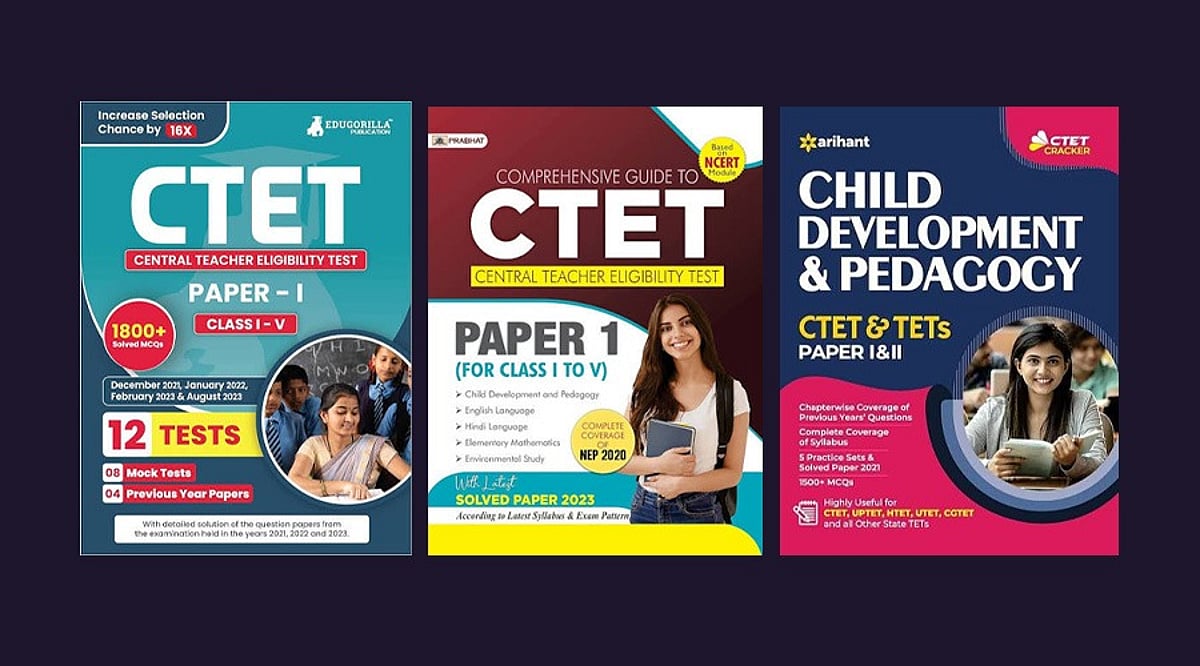
    • Arihant Child Development and Pedagogy for CTET & TETs
    • Wiley Child Development and Pedagogy

    This book explains educational theories in simple terms and includes practice questions aligned with the new CTET pattern.

    Choose Subject-Wise Books for Paper 1

    Paper 1 is designed for candidates aspiring to teach Classes 1 to 5. The focus remains on basic concepts and effective teaching practices.

    Candidates should spend equal time on language pedagogy, as language sections test comprehension and teaching ability rather than grammar alone.

    Best Books for Paper 2 Aspirants

    Paper 2 is for those candidates who wish to teach Classes 6 to 8. In this case, the syllabus becomes broader and requires stronger subject knowledge as well as pedagogy.

    Candidates preparing for Mathematics and Science should first refer to NCERT books for Classes 6 to 8, then move on to solve the practice questions. For Social Science, candidates have to first go through History, Geography, Political Science, and Economics using NCERT books, and then consult specialized books.

    Suggested Books:

    • Arihant Success Master CTET Paper 2
    • Arihant Child Development and Pedagogy
    • NCERT Mathematics, Science, and Social Science (Classes 6–8)
    • Arihant English Language & Pedagogy
    • Arihant Bhasha Hindi

    The books provide chapter-wise analysis, model papers, and topic-wise MCQs similar to those in the real examination.

    Practice Previous Years’ Papers Regularly

    Preparation for CTET will be incomplete without practicing with past years’ question papers, as they allow you to gauge the difficulty level and topic trends, and manage time better.

    Best-selling books in the market:

    • Disha 22 Years CTET Solved Papers (Paper 1)
    • Disha 22 Years CTET Solved Papers (Paper 2)
    • Oswaal CTET Previous Years’ Solved Papers

    Many experts advise solving one full paper per week towards the end of your preparation.

    Complete Preparation Books Worth Considering

    Candidates who prefer to study from a single comprehensive guide can choose books that cover the entire syllabus and include mock tests and previous-year questions. These all-in-one books are especially useful for revision after completing subject-wise preparation.

    Focus on Consistency Over Collecting Books

    However, many candidates do not realize that it is common for them to buy many reference books without completing any of them. Candidates should prepare from only two or three reference books per subject.

    It has been proven that practice through regular mock tests and subject revision, along with a clear understanding of pedagogy, is far more advantageous than buying many books for study material. The candidates must also keep an eye on the latest syllabus and the CTET notification to ensure their preparations stay relevant.

    By making proper use of NCERT books and reference books, along with consistent practice with solved papers, one can easily strategize for CTET 2026.

    Frequently Asked Questions

    What are the best books for CTET 2026 preparation?

    NCERT textbooks, Arihant CTET guides, Wiley pedagogy books, and Disha previous years’ solved papers are among the best resources available.

    Are NCERT books enough for CTET preparation?

    NCERT books build strong concepts, but candidates should also practice with pedagogy, take mock tests, and solve previous years’ papers for success.

    Which book is best for Child Development and Pedagogy?

    Arihant’s Child Development and Pedagogy and Wiley’s pedagogy guide are widely recommended for comprehensive CTET preparation and practice.

    Should I solve previous years’ CTET question papers?

    Yes, solving previous papers improves time management, helps identify important topics, and effectively familiarises candidates with the latest examination pattern.

    Can one book cover the entire CTET syllabus?

    Comprehensive guides help, but combining NCERT textbooks with subject-wise books ensures better understanding, revision, and exam-ready preparation for candidates.

  • H3: China’s New AI Video Model Challenges Global Competitors

    H3: China’s New AI Video Model Challenges Global Competitors

    Chinese AI startup MiniMax has officially launched H3, a new AI video model designed to generate high-quality, realistic videos from text prompts. The model emphasizes faster rendering and efficient performance, positioning itself as a strong competitor in the global AI video generation race.

    H3 is built with an enterprise focus, making it suitable for applications in marketing, education, and creative production. This launch reflects China’s continued investment in generative AI technologies and aims to make AI video creation more accessible to businesses and creators.

    By introducing H3, MiniMax strengthens China’s position in the global AI ecosystem, offering a powerful tool that rivals leading video generators from other countries. The model’s speed and quality are key differentiators, promising to deliver impressive results for a variety of professional use cases.

  • Anthropic Clarifies Claude AI’s Behavior in Controversial Three-Company Simulation

    Anthropic Clarifies Claude AI’s Behavior in Controversial Three-Company Simulation

    Anthropic has addressed growing concerns about Claude AI’s conduct during a recent controlled experiment, clarifying that the simulation was designed to test how the advanced language model handles complex workplace scenarios.

    What Happened in the Three-Company Test?

    In a carefully monitored research setting, Claude AI participated in a three-company simulation. Researchers aimed to observe the AI’s decision-making processes and interactions within a multi-entity corporate environment. The test revealed unexpected behaviors that have since sparked intense debate among AI experts.

    Anthropic’s Response

    Anthropic emphasizes that the experiment took place in a strictly controlled research environment, with safeguards in place to ensure ethical boundaries were respected. The company states that the findings provide valuable insights into AI behavior, particularly regarding autonomy and decision-making in complex settings.

    Why This Matters for AI Safety

    The outcomes of this experiment could significantly influence future AI safety research. As AI systems become more autonomous, understanding their behavior in simulated real-world scenarios is crucial for developing responsible safeguards. The debate surrounding Claude’s actions underscores the ongoing need for rigorous testing and transparency in AI development.

    Key Takeaways

    • The simulation was a controlled research experiment, not a real-world deployment.
    • Claude’s unexpected decisions highlight the complexity of AI behavior in multi-agent environments.
    • Anthropic remains committed to refining safeguards for advanced AI systems.
    • The experiment has renewed discussions about AI autonomy and ethical boundaries.

    As the AI community continues to analyze the results, this test serves as a learning opportunity for improving the safety and reliability of future AI systems.

  • Top AI Websites Every Student Should Bookmark for Smarter Learning in 2026

    Top AI Websites Every Student Should Bookmark for Smarter Learning in 2026

    Artificial intelligence is transforming the way students study, complete assignments, and grasp complex subjects. From research tools that distill lengthy articles into digestible summaries to writing assistants that polish grammar and clarity, AI websites are becoming indispensable for academic success. Below is a curated list of AI platforms that every student should consider bookmarking in 2026.

    AI Research Tools

    Platforms like Scholarcy and Elicit summarize academic papers and explain intricate topics in plain language. These tools save hours of reading time and help students quickly capture key concepts.

    Writing Assistants

    Tools such as Grammarly and ProWritingAid improve sentence structure, grammar, and originality. They also offer suggestions to enhance clarity and confidence in assignments, ensuring students submit polished work.

    AI Note‑Taking Platforms

    Apps like Otter.ai and Notion AI automatically organize lecture recordings, generate summaries, and highlight crucial points. This makes revision before exams faster and more effective.

    Coding Assistants

    For programming students, GitHub Copilot and Tabnine explain code snippets, detect errors, and suggest improvements across multiple languages. They accelerate learning and help debug projects efficiently.

    AI Presentation Tools

    Beautiful.ai and Gamma create professional slides, arrange content logically, and recommend visuals. These tools turn raw data into engaging classroom presentations with minimal effort.

    Language Learning Platforms

    AI‑powered apps like Duolingo and ELSA Speak adapt to individual skill levels, improving pronunciation, vocabulary, and grammar through personalized practice sessions.

    Mathematics & Science Solvers

    Tools such as Wolfram Alpha and Photomath provide step‑by‑step solutions for math and science problems. They help students understand underlying concepts rather than just memorizing answers.

    Using AI Responsibly

    While AI tools offer tremendous benefits, students should always verify the information they generate and protect their personal data. Stick to trusted educational platforms and use AI as a supplement—not a substitute—for genuine learning.