Blog

  • Building Always-On AI Agents: A Practical Guide to Apache Kafka and Apache Flink

    Building Always-On AI Agents: A Practical Guide to Apache Kafka and Apache Flink

    Overview

    Learn how Apache Kafka streams real-time events to power scalable, always-on AI applications across enterprise environments. Understand how Apache Flink processes streaming data with stateful computing for intelligent, low-latency AI decision-making. Compare how Kafka and Flink together build resilient, event-driven AI architectures for continuous business automation.

    Introduction

    AI agents are no longer limited to responding to user prompts. Modern businesses require systems that monitor data continuously, identify patterns, and take action without waiting for human input. These always-on AI agents are now deployed in fraud detection, IT monitoring, predictive maintenance, customer support, and supply chain management.

    To build such systems, organizations need a reliable event streaming platform and a real-time processing engine. Apache Kafka and Apache Flink are the most widely used open-source technologies for this purpose. Kafka captures and distributes data streams, while Flink processes them in real time and powers AI-driven decisions. Here is how each platform fits into the workflow.

    Building Always-On AI Agents with Apache Kafka

    Apache Kafka serves as the communication layer that collects and distributes real-time data across applications. Follow these steps to integrate Kafka:

    • Deploy a Kafka Cluster: Set up a Kafka cluster on-premises or in the cloud. Configure multiple brokers for high availability. Create topics for different event types such as user activity, payment transactions, application logs, or IoT sensor data.
    • Connect Data Producers: Applications generate data through producers that continuously publish events to Kafka topics. These include websites, mobile apps, payment gateways, connected devices, and enterprise software.
    • Set Up Consumers: Develop consumer software that subscribes to Kafka topics. The consumer receives every event in real time and passes data to analytics tools, AI software, or stream processing frameworks like Apache Flink.
    • Ensure High Availability: Configure partitions and replication between brokers to guarantee that Kafka continues delivering events even during server failures.
    • Integrate Your AI Application: Kafka does not perform AI processing itself. It provides a continuous data flow to the AI application, which analyzes the events.

    Building Always-On AI Agents with Apache Flink

    Once data flows through Kafka, Apache Flink processes it in real time and enables intelligent decision-making. Here is how to use Flink:

    • Connect Flink to Kafka: Configure Flink to process events from Kafka topics directly. This creates a continuous stream processing pipeline where incoming data is processed immediately rather than waiting for batch processing.
    • Stream Processing Pipelines: Use Flink to filter unwanted events, enrich data, combine multiple streams, calculate metrics, and detect anomalies. These pipelines prepare data before it reaches the AI models.
    • Integrate AI Models: Embed machine learning models or large language models (LLMs) into Flink flows. The AI agent can classify requests, summarize data, identify fraud, suggest recommendations, or trigger automation workflows in real time.
    • Stateful Processing: One of Flink’s main advantages is its ability to maintain state. Instead of processing events in isolation, Flink retains information from previous events, enabling AI agents to make informed decisions.
    • Set Up Checkpointing: Checkpointing allows Flink to regularly save the application state. If a failure occurs, Flink resumes processing from the latest checkpoint, ensuring reliability.

    Apache Kafka vs. Apache Flink: Quick Comparison

    Feature Apache Kafka Apache Flink
    Primary Role Event streaming and distribution Real-time stream processing
    Data Handling Collects and stores event streams Processes events with low latency
    State Management Limited (via Kafka Streams) Full stateful processing
    AI Integration Delivers data to AI applications Executes AI models within pipelines
    Fault Tolerance Replication across brokers Checkpointing and state snapshots

    Best Practices

    • Create separate Kafka topics for different business events.
    • Design Flink jobs as modular and dedicated to one task only.
    • Use checkpoints and replicas to ensure resilience to failures.
    • Monitor latency and throughput to preserve real-time capabilities.
    • Use authentication and encryption to secure data flows.
    • Scale Kafka brokers and Flink clusters independently when workload increases.

    Which One Should You Choose?

    The answer is not Kafka or Flink; it is Kafka and Flink. Kafka provides reliable, continuous data from various applications. Flink consumes that data, processes it with low latency, and enables AI agents to make decisions as events occur. For building an always-on AI agent, Kafka is the data pipeline, and Flink is the intelligence component. Together they form a scalable architecture for continuous processing.

    Final Takeaway

    Always-on AI agents depend on two things: a constant stream of information and the ability to process it instantly. Apache Kafka provides the first, and Apache Flink provides the second through real-time computations and stateful processing. Combining these two systems allows organizations to create applications that observe events, analyze patterns, and react promptly. As companies increasingly adopt real-time AI applications, the Kafka-Flink combination has become a proven solution.

    Frequently Asked Questions

    What are always-on AI agents?

    Always-on AI agents continuously monitor live data, analyze events, and trigger automated actions without waiting for user prompts. They are used in fraud detection, IT monitoring, customer support, and predictive maintenance.

    How does Apache Kafka help in building AI agents?

    Apache Kafka acts as an event streaming platform that collects, stores, and distributes real-time data from multiple sources, ensuring AI agents receive continuous event streams for analysis and decision-making.

    Why is Apache Flink used alongside Apache Kafka?

    Apache Flink processes streaming data from Kafka in real time, enabling stateful processing, anomaly detection, AI model integration, and automated decision-making with minimal latency across enterprise applications.

    Can Apache Kafka and Apache Flink be used independently?

    Yes, both can operate independently. Kafka is designed for event streaming, while Flink focuses on stream processing. However, combining them creates a robust architecture for real-time AI applications.

    What industries benefit most from always-on AI agents?

    Banking, healthcare, manufacturing, retail, logistics, telecommunications, and cybersecurity benefit significantly by enabling real-time monitoring, intelligent automation, predictive insights, and faster operational decisions.


  • NYT Connections #1147 Hints and Full Answers for August 1, 2026 – Puzzle Solutions

    NYT Connections #1147 Hints and Full Answers for August 1, 2026 – Puzzle Solutions

    Welcome to your Saturday evening puzzle break! For word puzzle lovers, NYT Connections never gets old. Its tricks create the right amount of confusion, keeping solvers on their toes every day. Whether you are a casual puzzle solver or a regular one with more than a 70-game streak on the line, today’s grid is a delightful challenge.

    You will find some commonly used words like Comforter, Jordan, Bore, Drill, Bundle, but apparently, they share no common theme. The twist is that all sixteen words share passive links, allowing them to be grouped into four sets. Once players choose the right words, the game will reveal the theme of that set.

    How NYT Connections Works

    If you’re new to it, Connections is a daily puzzle game from The New York Times where you group 16 words into four sets. The connections can be straightforward or totally hidden, from synonyms and themes to pop culture references. Each group has a difficulty tier: yellow (easy), green and blue (moderate), and purple (hardest). You get four mistakes max, so precision matters. The twist? Some words fit into more than one category, and that’s where the real challenge begins.

    Spoiler-Free Hints for Puzzle #1147

    Here are your hints, color-coded by difficulty (but no answers just yet):

    • Yellow Group (Easiest): These words are generally used for home decorations.
    • Green Group (Medium): In this group, you will find words related to Oscar-winning actors.
    • Blue Group (Moderate): This group of words offers you tasks that generally carpenters will do.
    • Purple Group (Hardest): They are round-shaped things that are related to bread.

    One Word Per Group

    Need a quick push? Here’s one example from each group:

    • COMFORTER
    • JORDAN
    • DRILL
    • ROLLS-ROYCE

    Complete Answers for August 1, 2026

    Still confused about the solutions? Here are the exact categories for today’s puzzle:

    • Yellow (BEDDING): COMFORTER, SHAM, SHEET, THROW
    • Blue (OSCAR-WINNING ACTORS SINCE 2010): BALE, JORDAN, PHOENIX, WALTZ
    • Green (PERFORM SOME HOLE MACHINING OPERATIONS): BORE, COUNTERSINK, DRILL, REAM
    • Purple (STARTING WITH BREAD SHAPES): BOULEVARD, BUNDLE, LOAFER, ROLLS-ROYCE

    Check out the image below to learn how to make the sets of today’s puzzle:

    [Image placeholder: diagram showing the four groups]

    Previous Days’ Answers

    If you have solved today’s puzzle but missed out on a few of the week’s, below are the answers to some of the previous day’s NYT Connections.

    Final Thoughts

    NYT Connections puzzles have never been easy. They challenge gamers’ vocabulary with tough ideas. Today’s purple group may stump some, especially if wordplay isn’t your forte, but the rest of the puzzle plays fair. Whether you solved it in one go or had to peek at a few hints today, the real win is that burst of satisfaction at the end. Come back tomorrow for a new grid, new clues, and more of that Connections magic!

  • 6 Best AI Agents for Data Analytics and Business Intelligence in 2026

    6 Best AI Agents for Data Analytics and Business Intelligence in 2026

    Business intelligence (BI) has evolved far beyond static dashboards and manual reports. In 2026, AI agents are transforming how organizations interact with data—automating reporting, generating insights, and enabling faster, smarter decision-making. These tools can monitor key metrics, write SQL queries, explain trends, detect anomalies, and recommend actions, all through natural language interactions.

    Here are six standout AI agents that leading enterprises and growing startups are adopting this year.

    1. Microsoft Power BI Copilot

    Microsoft Power BI Copilot integrates AI directly into the company’s BI platform. Users can ask questions in plain English, generate reports, create DAX formulas, and summarize dashboards without manual effort. Its tight integration with Microsoft Fabric, Excel, and Teams makes it a practical choice for organizations already using the Microsoft ecosystem.

    2. ThoughtSpot Sage

    ThoughtSpot Sage is built around search-driven analytics. Users simply type business questions and receive charts, explanations, and follow-up insights. The platform identifies unusual trends and suggests additional areas to explore, making it popular with sales, finance, and marketing teams that need quick answers without relying on technical experts.

    3. Databricks AI/BI Genie

    Databricks AI/BI Genie is designed for organizations with large data volumes. The application converts human language into SQL code, enabling users to analyze data without writing any code themselves. Built on the Databricks Lakehouse platform, it provides a seamless experience for data-heavy workflows.

    4. Tableau Agent

    Tableau has extended its visual analytics platform with AI-based assistance. Tableau Agent helps users create dashboards faster, summarize reports, and explain trends using natural language. The visualization process becomes quicker without compromising Tableau’s rich analytical capabilities.

    5. Google Looker AI

    Google Looker AI combines business intelligence with Gemini-powered AI. Users can query enterprise data conversationally while working within a governed semantic model, ensuring consistent metrics across teams. It is especially useful for organizations already relying on Google Cloud for data storage and analytics.

    6. Tellius AI

    Tellius AI focuses on finding answers rather than just displaying data. It investigates changes in business performance, identifies likely causes, and highlights the factors driving results. The platform also delivers predictive insights, helping decision-makers respond to issues before they affect business outcomes.

    Final Thoughts

    The biggest shift in business intelligence in 2026 is the move from AI assistants to AI agents. These platforms do more than generate reports—they analyze data, investigate anomalies, and surface insights with minimal user input. Whether it’s Power BI Copilot for enterprise reporting, ThoughtSpot Sage for self-service analytics, or Tellius AI for automated investigations, businesses now have tools that make data analysis faster, more accessible, and more actionable.

  • Top Grill Microwave Ovens for Fast Reheating and Perfect Grilling in 2026

    Top Grill Microwave Ovens for Fast Reheating and Perfect Grilling in 2026

    A microwave oven with a grill function has become one of the most useful upgrades for an Indian kitchen. It reheats leftovers within seconds and also handles tandoori-style dishes at home, from paneer tikka to seekh kebab. Many buyers assume a basic solo microwave will meet every need, but this model cannot brown, crisp, or grill food. A grill microwave closes this gap. It combines microwave heating with a radiant grill element, giving households the speed of a microwave along with the finishing touch of an oven, all in one compact appliance.

    How to Choose the Right Grill Microwave for Your Kitchen

    Wattage and cavity size matter more than most first-time buyers realize. Ovens rated between 900W and 1200W heat food evenly, while lower wattage models often leave cold spots in the middle of a dish. Cavity size follows a simple rule too. A 20-litre model suits students or couples who mainly reheat small portions, but it struggles to fit a mid-sized biryani handi or a baking tray. Families of three or four generally find 25 to 28 litres to be the most practical size for everyday cooking. Larger households benefit from 30 litres or more, especially if they plan to roast a whole chicken or grill several skewers at once.

    LG 28L Convection MC2886BRUM

    LG remains one of the most consistent names in this category for the price. The 28-litre model pairs 900W microwave power with 2100W convection heat, and it comes at around Rs. 11,000. Its stainless steel cavity handles Indian cooking smells and oil splatter well over the years. A motorized rotisserie sets this model apart, since it grills tandoori chicken and kebabs with even browning on all sides. LG also runs one of the widest service networks in India, making long-term ownership less of a worry for buyers in smaller towns.

    Samsung 28L Convection MC28A5013AK

    Samsung brings a sleeker design to this segment along with genuinely useful cooking modes. This 28-litre oven, priced around Rs. 12,000, includes a dedicated tandoor mode and a curd-making setting that many Indian households will find handy. The touch panel looks premium, though it can feel less responsive with wet or oily hands during a busy cooking session. Samsung’s Slim Fry technology also deserves a mention here, since it crisps up items like pakoras using very little oil.

    IFB 30L Combination BRC2

    IFB does not get talked about as often as LG or Samsung, but this brand deserves more attention from serious home cooks. The 30-litre combination model, priced near Rs. 16,000, runs microwave and grill together instead of one after the other. This cuts down cooking time and improves browning on the outside of the food. It carries over a hundred Indian auto-cook presets, and a steam clean function keeps the cavity easier to maintain between uses. Buyers who cook elaborate meals often find this the most versatile option on the list.

    Panasonic 27L Inverter NN-CT645BP

    Panasonic brings a different strength to the table: precision. Its inverter technology delivers a steady stream of power instead of switching on and off repeatedly, unlike most other microwave ovens. This model, priced around Rs. 14,000, works particularly well for reheating delicate dishes such as fish curry, paneer, or gulab jamun without losing their original texture. The grill function performs reliably too, though the range of Indian-specific presets is narrower than what IFB offers.

    Haier 30L Convection HIL3001ARSB

    Haier has built a reasonable reputation as a budget-friendly choice in the Indian market. This 30-litre model costs around Rs. 12,000, and it includes an air fryer mode along with a rotisserie function built in. The grill performance holds up well for everyday tasks like grilling paneer or toasting sandwiches. Service support outside major cities remains the main drawback here, so buyers in smaller towns should check local availability before choosing this brand.

    Cookware and Safety Checks Before You Buy

    Grill mode comes with its own set of rules for cookware, and getting this wrong can damage either the food or the machine. Metal trays and racks work safely under grill mode, since the microwave function switches off during grilling. These same trays should never go inside during standard microwave reheating, though, since metal causes sparking in that mode. Borosilicate glass remains the safest all-purpose choice, as it withstands microwave, grill, and convection modes without cracking. A simple way to test unfamiliar cookware is to heat it empty for a short burst. If it feels warm afterward, it is absorbing energy, and buyers should avoid using that container going forward.

    Frequently Asked Questions

    What is the difference between a grill microwave and a solo microwave?

    A grill microwave can brown, crisp, and grill food using a heating element, while a solo microwave is mainly designed for reheating, defrosting, and basic cooking.

    Which grill microwave oven is best for Indian cooking?

    Models from LG, Samsung, and IFB are popular choices because they offer features like tandoor mode, rotisserie, Indian auto-cook menus, and convection cooking.

    What capacity grill microwave is suitable for a family of four?

    A 25-litre to 30-litre grill microwave is generally ideal for a family of four, offering enough space for everyday cooking, baking, and grilling.

    Can metal utensils be used in a grill microwave oven?

    Metal racks and trays can be used only in grill mode as recommended by the manufacturer. They should never be used during standard microwave mode, as they can cause sparking.

    What should I consider before buying a grill microwave oven?

    Look at the capacity, power output, cooking modes, auto-cook menus, ease of cleaning, service support, and whether the model includes useful features like convection, rotisserie, or air fryer functions.

  • Danaher Stock vs. XHB ETF: Which Investment Suits Your Portfolio Better?

    Danaher Stock vs. XHB ETF: Which Investment Suits Your Portfolio Better?

    Comparing a single stock to a sector ETF often reveals stark differences in risk, return, and exposure. Danaher (NYSE: DHR) and the SPDR S&P Homebuilders ETF (XHB) are two such instruments that have taken divergent paths recently. Danaher, a diversified life sciences and diagnostics leader, is trading near $196—roughly 19% below its 52-week high of $242.80—after missing some revenue guidance. Meanwhile, XHB, an equal-weighted ETF covering homebuilders, building products, and home improvement retailers, has gained nearly 18% over the trailing twelve months. Understanding these differences helps investors choose the right fit for their portfolio.

    Danaher: Fundamentals and Recent Performance

    Danaher’s market capitalization stands close to $138 billion, with a price-to-earnings ratio above 34. The company exceeded earnings expectations in Q2, reporting $1.94 EPS against a consensus of $1.84. Revenue reached $6.26 billion versus the expected $6.17 billion. However, shares declined after management lowered full-year core revenue growth assumptions. Full-year 2025 revenue was $24.57 billion, up 2.90% year-over-year, but profit fell roughly 7% over the same period. The company maintains a manageable debt-to-equity ratio of 0.48.

    Danaher’s dividend yield is about 0.82%, supported by a payout ratio near 28% of earnings. Analysts hold a Buy consensus, with price targets suggesting upside of over 12%.

    XHB ETF: Diversified Homebuilding Exposure

    XHB tracks the S&P Homebuilders Select Industry Index, using a modified equal-weight methodology. As of mid-July, the fund traded near $109, with net assets of roughly $1.63 billion and an expense ratio of 0.35%. Returns have been strong: nearly 13% year-to-date, over 18% trailing one year, about 14% three-year annualized, and near 10% five-year annualized.

    The ETF carries a beta of 1.42, significantly higher than Danaher’s 0.79, reflecting greater volatility tied to mortgage rates, land costs, and buyer sentiment. This means larger price swings—both up and down—compared to the broader market.

    Performance Comparison: Danaher vs. XHB

    Danaher’s lower beta makes it a more stable holding through market turbulence, while XHB offers higher potential returns during housing upswings but exposes investors to sharper drawdowns during downturns.

    • Concentration vs. Diversification: Danaher provides concentrated exposure to a single, well-run company tied to healthcare and lab spending. XHB spreads risk across dozens of names, reducing the impact of any single homebuilder’s struggles.
    • Valuation: Danaher’s recent pullback has brought shares closer to fair value estimates from several research firms, suggesting potential upside. XHB’s rally reflects a sector story that could reverse quickly if interest rates change direction.

    Final Thoughts

    Choosing between Danaher and XHB depends on an investor’s goals. Danaher offers a high-quality, lower-beta stock with solid dividend coverage and a beaten-down price near fair value. XHB provides diversified housing exposure with strong recent performance but higher volatility tied to the interest rate environment.

    For dividend-focused portfolios, Danaher’s consistency and lower risk profile may be preferable. For cyclical timing strategies, XHB’s housing exposure could deliver faster gains during recoveries. Both require a clear understanding of the risks involved.

  • The Most Iconic Video Game Characters of the 21st Century

    The Most Iconic Video Game Characters of the 21st Century

    Great games are often remembered because of the people in them. A fun combat system or a beautiful world is important, but it is the characters that make players stay until the very end. They make us celebrate victories, feel the sharp pain when we lose, and help scenes linger in our minds long after we finish the game. Over the past twenty-five years, the gaming world has introduced many unforgettable characters. Some became heroes. Some became legends. Others became icons without saying much at all. Picking only ten is never easy, but these characters have earned their place through memorable stories, strong personalities, and moments that players still talk about today.

    Heroes Who Won Players’ Hearts

    When we talk about memorable characters, players generally recall their experiences with the protagonists. Here are some of the most remarkable protagonists that hardly any gamer can forget.

    Arthur Morgan (Red Dead Redemption 2)

    Arthur Morgan is one of those characters who only keeps getting better as the story rolls on. At first, he looks like a faithful outlaw who rides with commands and no real questions. Slowly, players start to notice a gentler, more reflective side in him. His journey is packed with tricky decisions, emotional turmoil, and personal growth. By the time the credits roll, it gets easy to see why so many players call him Rockstar’s greatest character.

    Geralt of Rivia (The Witcher 3: Wild Hunt)

    Geralt is known as a monster hunter, but there is much more to him than that. He is calm, wise, and never rushes into a decision. Through the game, he keeps ending up between two harsh choices, as every road comes with a shadow. In those scenes, his journey feels real. His quiet humor paired with strong values makes him one of gaming’s most respected heroes.

    Leon S. Kennedy (Resident Evil 2)

    Leon walks into his first day as a police officer and ends up fighting for his life. That simple beginning turns into one of the best character journeys in survival horror. He learns quickly, stays brave, and never gives up. Years later, Leon is still one of the first names that comes to mind when people talk about Resident Evil.

    Sam Fisher (Tom Clancy’s Splinter Cell)

    Sam Fisher proves that heroes do not always need loud action scenes. He is patient and sharp, and he calculates everything before making a move. Many of his missions rely on stealth instead of pure chaos, so every real win feels earned, not handed out. Even his calm demeanor helped him stand out in a genre where most characters act like nonstop action is the only language.

    Niko Bellic (Grand Theft Auto IV)

    Niko Bellic brought something fresh to the Grand Theft Auto series. He arrives in Liberty City hoping to leave his painful past behind, but life has other plans. His story feels personal from beginning to end. Themes of family, loyalty, and regret hit harder than you’d expect, making him feel far more layered than the usual open-world protagonist.

    Characters Players Never Forgot

    It is not only the heroes; sometimes antagonists or side characters create an everlasting impression. Here are some of them that gamers will always remember.

    Senua (Hellblade: Senua’s Sacrifice)

    Senua’s story is different from almost anything else in gaming. Her journey deals with grief, fear, and mental illness respectfully. Every step feels charged with emotion because players experience the world through her eyes. It is not just an action game; it is a story that stays with many people long after they finish playing.

    Dorian Pavus (Dragon Age: Inquisition)

    Dorian is one of the brightest personalities in Dragon Age: Inquisition. He’s funny, confident, and never afraid to speak his mind. His personal story remains honest and even emotional. The difficult parts about his family and acceptance helped many players feel deeply connected to him.

    Alduin (The Elder Scrolls V: Skyrim)

    Alduin is one of the most powerful villains in modern RPGs. Known as the World-Eater, he brings danger wherever he appears. His enormous size, booming voice, and critical role in Skyrim‘s storyline made him an enemy you simply do not forget.

    Pyramid Head (Silent Hill 2)

    Pyramid Head hardly says a word, yet almost every horror fan knows who he is. His appearance alone creates fear. He is not simply a monster chasing the player; he represents guilt and punishment, which gives Silent Hill 2 much of its emotional weight. Few horror characters have had such a lasting impact.

    Bella Goth (The Sims 2)

    Bella Goth became famous without fighting monsters or saving the world. Her mysterious disappearance in The Sims 2 sparked years of fan discussions and theories. Players searched for clues and shared ideas about what happened to her. Even now, Bella remains one of the most talked-about characters in simulation gaming.

    Which Character Deserves the Top Spot?

    The answer will always depend on the player. Some will choose Arthur Morgan because of his emotional story. Others will pick Geralt for his wisdom and memorable adventures. Horror fans may never forget Leon or Pyramid Head. At the same time, Sam Fisher, Niko Bellic, Dorian Pavus, Senua, Alduin, and Bella Goth all became popular for different reasons. This variety is what makes gaming so special.

    Final Thoughts

    A great character does more than move the story forward. They make players care about what happens next, make victories feel bigger, and losses feel real. The characters on this list come from different worlds and different genres, but they all have one thing in common: players still remember them years after their games were released. This is the biggest sign of a truly great video game character.

  • Top 10 Free Multiplayer PC Games You Must Play in 2025

    Top 10 Free Multiplayer PC Games You Must Play in 2025

    Top Free Multiplayer PC Games

    Looking for the best free multiplayer games on PC? Here are ten titles that offer endless hours of competitive and cooperative fun without costing a dime.

    Counter-Strike 2

    Counter-Strike 2 delivers intense tactical matches with sharp gunplay, regular updates, and competitive gameplay that keeps millions of PC players engaged daily.

    Valorant

    Valorant combines precise shooting with unique agent abilities, offering strategic team battles, ranked competition, and frequent content updates for everyone.

    Dota 2

    Dota 2 features deep strategy, over one hundred heroes, rewarding teamwork, and endless replay value through competitive multiplayer battles every season.

    Fortnite

    Fortnite offers exciting battle royale action, creative building mechanics, cross-platform multiplayer, and seasonal events packed with fresh content and rewards regularly.

    Apex Legends

    Apex Legends delivers fast-paced squad combat, unique legends, smooth movement, and thrilling firefights across dynamic maps with constant seasonal improvements included.

    Marvel Rivals

    Marvel Rivals lets players control iconic superheroes, enjoy team-based action, combine powerful abilities, and experience exciting objective-focused multiplayer matches together online.

    Warframe

    Warframe offers cooperative missions, fast parkour movement, deep customization, engaging combat, and hundreds of hours of free sci-fi multiplayer adventures available.

    Rocket League

    Rocket League mixes soccer with rocket-powered cars, creating exciting multiplayer matches, skill-based gameplay, and endless fun with friends across different platforms.

    The Finals

    The Finals delivers destructible arenas, objective-based multiplayer battles, creative tactics, and intense team action with constantly evolving gameplay experiences for everyone.

  • NYT Wordle August 1, 2026: Hints, Clues, and Answer for Puzzle #1869

    NYT Wordle August 1, 2026: Hints, Clues, and Answer for Puzzle #1869

    The New York Times Wordle puzzle for August 1, 2026 offers another engaging five-letter challenge that tests vocabulary and deduction skills. Today’s answer is a familiar word linked to partially melted snow, but reaching it may require careful use of the available clues. This guide provides spoiler-free hints, bonus clues, and the final answer for Wordle #1869 to help you solve the puzzle with confidence.

    Wordle Hints for August 1, 2026

    Here are the Wordle hints to solve today’s puzzle:

    • Starting Letter: Today’s word begins with the letter ‘S’.
    • Vowel Count: This word contains one vowel.
    • Part of Speech: It is a noun, but can also be used as a verb.
    • Repeat Letter: There is one set of repeated letters.
    • Associated With: Partly melted snow or ice.

    Bonus Clues

    If the clues above haven’t guided you to the right track, here are some bonus hints:

    • Bonus Hint 1: The word ends with the letter ‘H’.
    • Bonus Hint 2: ‘U’ is the only vowel and it appears in the third position.

    Wordle Answer for August 1, 2026

    These Wordle hints for August 1, 2026 are probably enough to guess the right word, but if you’re still struggling, here is the answer for today’s Wordle #1869: SLUSH.

    Wordle Fun Facts

    Slush is not a common word for most people, but it is generally used to refer to melted snow or ice mixed in water. This word is mostly used as a noun, and sometimes as a verb. According to Wordle testers, the August 1 puzzle is moderately difficult, taking an average of 4.3 out of 6 attempts to solve.

    Final Thoughts

    Wordle’s challenge lies in the guessing process. With limited attempts and no initial clues, solving the puzzle often requires a bit of help. The unpredictability of words makes this NYT puzzle attractive. Suitable for players aged 5 to 50, Wordle enriches vocabulary with high-quality words.

  • Legendary Boss Battles: The Most Difficult Fights in Gaming History

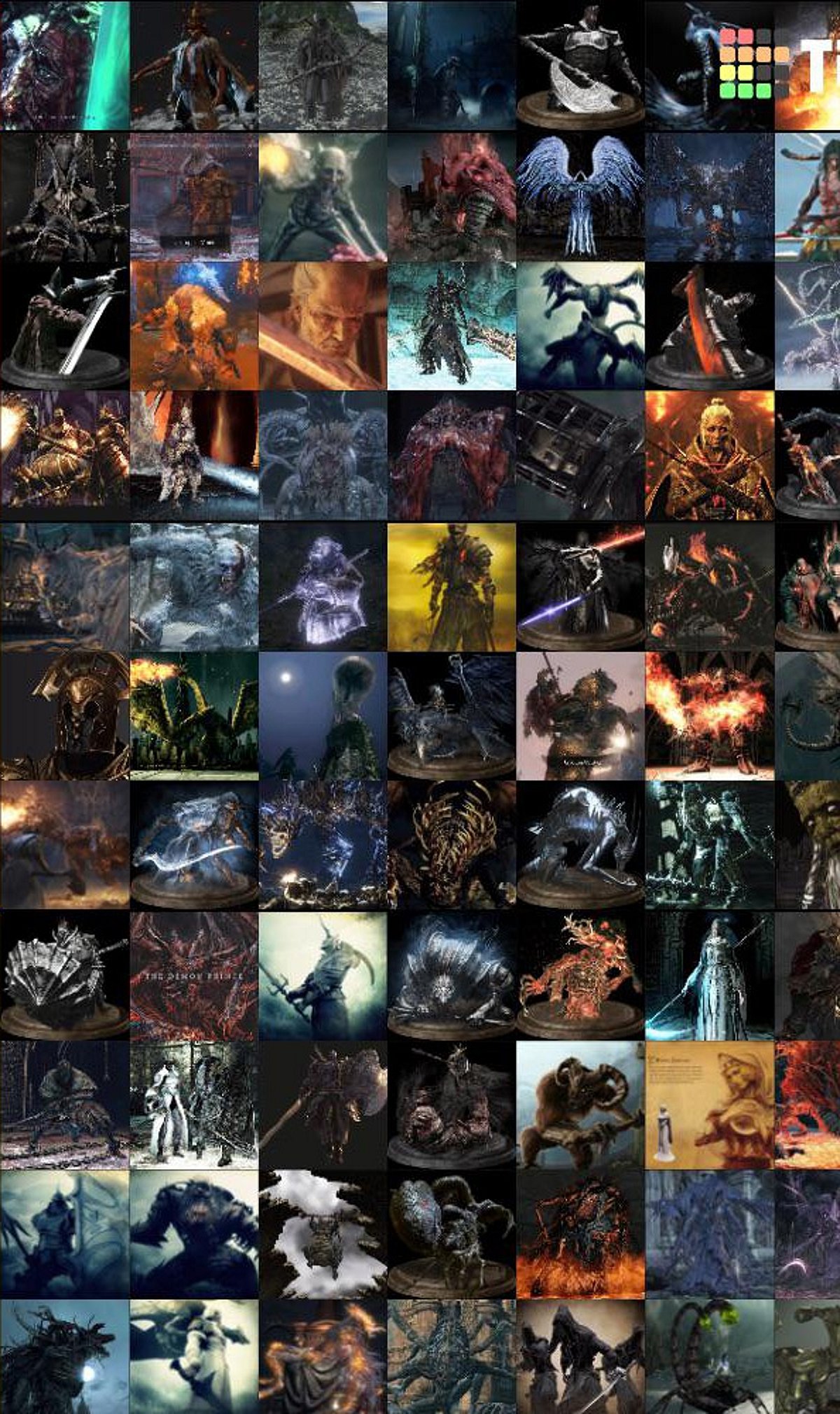
    Legendary Boss Battles: The Most Difficult Fights in Gaming History

    Some video game bosses are more than just obstacles—they are true tests of skill, patience, and determination. Here are nine of the toughest boss fights in gaming history, each demanding near-perfect execution from players.

    Malenia – Elden Ring

    Malenia’s relentless attacks, healing ability, and unpredictable combos demand flawless timing, patience, and near-perfect mastery from every determined player.

    Sword Saint Isshin – Sekiro: Shadows Die Twice

    Sword Saint Isshin tests every combat skill with multiple phases, lightning attacks, brutal speed, and constant pressure until the very end.

    Orphan of Kos – Bloodborne

    Orphan of Kos overwhelms players using wild movements, devastating strikes, and aggressive second-phase attacks that punish every small mistake harshly.

    Absolute Radiance – Hollow Knight

    Absolute Radiance combines platforming precision, endless projectiles, and difficult attack patterns, making victory feel incredibly rewarding after countless determined attempts.

    Sans – Undertale

    Sans surprises players with nonstop bullet patterns, unexpected mechanics, and unforgiving damage, creating one of gaming’s most unforgettable final encounters.

    Fatalis – Monster Hunter: World Iceborne

    Fatalis requires excellent teamwork, careful preparation, perfect positioning, and sustained damage output to survive its devastating fire attacks and powerful blows.

    The Nameless King – Dark Souls III

    The Nameless King features challenging mounted combat, delayed attacks, and punishing second-phase moves that test patience, timing, and complete battlefield awareness.

    Mike Tyson – Punch-Out!!

    Mike Tyson leaves almost no room for mistakes, demanding split-second reactions, pattern recognition, and exceptional consistency throughout the legendary championship battle.

    Emerald Weapon – Final Fantasy VII

    Emerald Weapon challenges players with overwhelming health, powerful attacks, and strict underwater time limits without proper preparation or strategic planning.

  • How to Stop Google’s AI From Learning From Your Search Uploads: A Step-by-Step Guide

    How to Stop Google’s AI From Learning From Your Search Uploads: A Step-by-Step Guide

    Google’s AI models can learn from your search uploads and interactions to improve their performance. While this enables personalized features, it also raises privacy concerns. If you prefer to limit how Google uses your data for AI training, follow these straightforward steps to disable sharing and manage your activity.

    1. Open Search Settings: Sign in to your Google account and navigate to Search settings. Here you can review privacy and AI-related data collection preferences.
    2. Find AI Controls: Locate the AI or Search personalization settings where data-sharing preferences for AI improvement are managed.
    3. Disable Upload Sharing: Turn off the setting that allows Google to use your Search uploads and interactions to improve its AI models.
    4. Review Activity Controls: Visit the Web & App Activity section to understand what Search data Google stores and how it may be used.
    5. Delete Existing Data: Remove previously saved Search uploads and activity if you do not want them retained in your Google account.
    6. Manage Auto-Save: Disable automatic saving of Search activity where available to reduce future data collection for personalization and AI development.
    7. Adjust Product Settings: Check settings for Google Photos, Gemini, Drive, and other services that may have separate AI data-sharing controls.
    8. Use Incognito Mode: Search in Incognito mode when appropriate to minimize the amount of browsing activity linked to your Google account.
    9. Review Settings Regularly: Google periodically updates privacy controls, so revisit your account settings to ensure your AI preferences remain unchanged.

    By taking these steps, you can better control how your search data influences Google’s AI training while still enjoying the core search functionality.