Blog

  • India’s Top 10 Fintech Companies Driving Financial Inclusion in 2026

    India’s Top 10 Fintech Companies Driving Financial Inclusion in 2026

    India’s fintech revolution has transformed digital finance through UPI, AI, and mobile-first innovation. From payments and investing to insurance and lending, the country’s top 10 fintech companies are driving financial inclusion, serving millions of users, and reshaping the future of banking.

    Overview

    India processes over 13 billion UPI transactions monthly, with the fintech market expected to exceed $150 billion by 2025, highlighting its rapid digital finance growth. The top 10 fintech firms lead payments, investing, insurance, and lending, serving millions of users while reshaping India’s financial ecosystem. AI, UPI, Aadhaar, and the Account Aggregator framework power these platforms, enabling faster services, smarter lending, and greater financial inclusion across India.

    The Leaders Redefining India’s Financial Landscape

    PhonePe

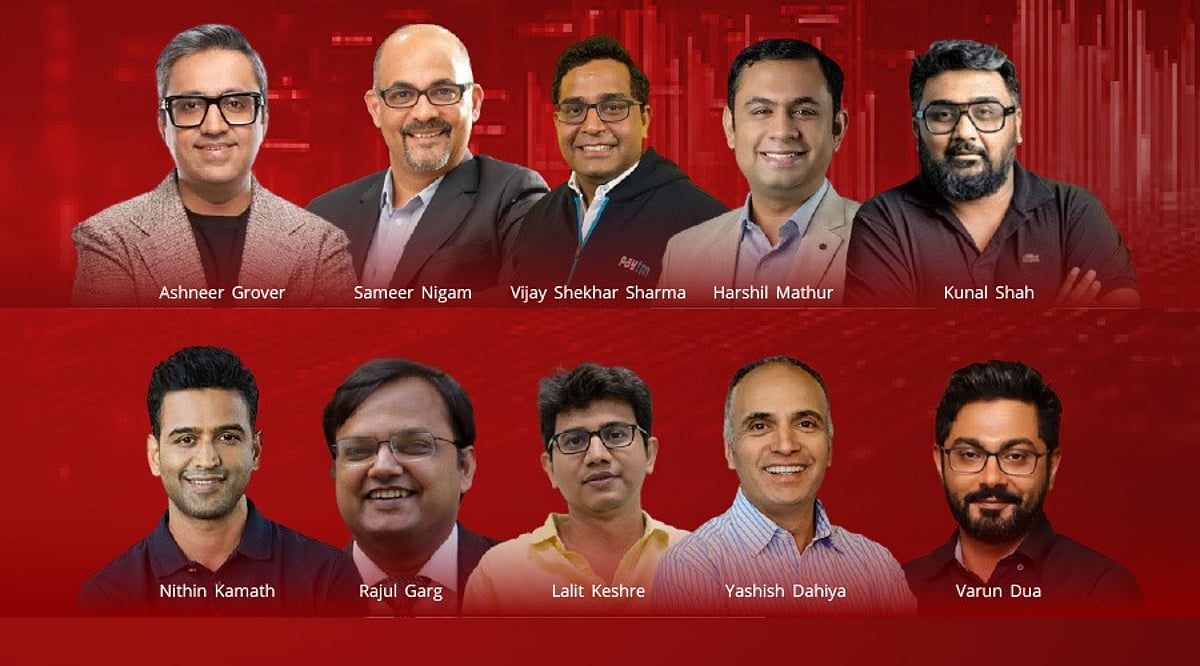
    PhonePe stands as India’s largest digital payments platform. Founded in 2015 by Sameer Nigam, Rahul Chari, and Burzin Engineer, it commands the UPI ecosystem with over 600 million registered users. The company’s revenue crossed ₹5,000 crore in FY24. Its platform spans payments, insurance, digital gold, and mutual funds. An IPO targeting a valuation between $9 billion and $10.5 billion remains on the horizon.

    Paytm

    Vijay Shekhar Sharma founded Paytm in 2000, making it one of India’s oldest fintech institutions. It began as a mobile recharge tool and expanded into wallets, merchant payments, lending, and wealth management. Annual revenues hover above ₹7,000 crore. Despite regulatory headwinds in recent years, Paytm holds a deep merchant network that keeps it embedded in India’s payment infrastructure.

    Razorpay

    Harshil Mathur and Shashank Kumar launched Razorpay in 2014 to solve a clear gap: businesses needed a reliable, developer-friendly payment gateway. The company now processes over $150 billion in annual payment volume and carries a valuation of approximately $7.5 billion. Its product suite covers payment gateways, business banking, payroll automation, and lending products used by thousands of Indian startups and enterprises.

    CRED

    Kunal Shah founded CRED in 2018 around a single insight: financially responsible people deserved better rewards. The platform targets high-credit-score users, offering reward points for credit card bill payments and expanding into personal loans, rent payments, and vehicle services. CRED’s valuation stands at around $6.4 billion, with estimated revenues crossing ₹2,000 crore in FY24.

    Zerodha

    Nithin Kamath and Nikhil Kamath built Zerodha in 2010 to lower the cost of investing. Discount brokerage and a clean trading interface on the Kite platform democratized equity markets for millions of retail investors. Revenue crossed ₹6,000 crore, and the company’s valuation sits between $3 billion and $4 billion. Zerodha remains profitable without external funding, which sets it apart in a sector that often burns capital for growth.

    Groww

    Lalit Keshre, Harsh Jain, Neeraj Singh, and Ishan Bansal founded Groww in 2016 to make investing simple for first-time users. The platform covers mutual funds, stocks, ETFs, IPOs, and fixed deposits under one roof. Its clean design and financial literacy focus helped it attract millions of young investors. Groww became a unicorn and continues expanding its wealth-tech offerings across India.

    Pine Labs

    Pine Labs traces its roots to 1998, making it one of the sector’s most seasoned players. Founded by Rajul Garg, the company built a merchant payment ecosystem spanning over one million touchpoints. Its POS machines and digital finance products serve retail chains and small merchants alike. Valuations range between $5 billion and $6 billion. Pine Labs bridges the offline and online commerce divide at meaningful scale.

    PB Fintech

    Yashish Dahiya founded PB Fintech in 2008, and it operates two major platforms: Policybazaar and Paisabazaar. Policybazaar became India’s largest online insurance marketplace, while Paisabazaar helps consumers compare loans and credit products. The company reported revenue growth of 33% year-on-year in recent results. Its market capitalization ranges between $4 billion and $5 billion.

    BharatPe

    Ashneer Grover and Shashvat Nakrani launched BharatPe in 2018 to serve a neglected segment: small merchants. The company introduced zero-fee UPI QR codes for shopkeepers and followed up with merchant loans and POS solutions. Its revenue surpassed ₹1,000 crore, and its merchant network now covers millions of micro and small retailers. BharatPe remains central to financial access for India’s informal business sector.

    ACKO

    Varun Dua founded ACKO in 2016 to reinvent insurance distribution. Traditional agents and lengthy paperwork gave way to a mobile-first platform where users buy, renew, and claim policies entirely online. ACKO offers motor, health, and travel insurance with faster claim settlements. Its digital-first model has attracted a growing customer base, and the company stands among India’s most prominent insurtech names.

    What These Leaders Share

    Several common threads run through all ten companies on this list: each built its product around mobile-first access, reaching users traditional banks could not. All ten leverage UPI, Aadhaar, or the Account Aggregator framework as foundational infrastructure. AI now powers credit scoring, fraud detection, and customer support across most platforms. Financial inclusion remains a stated goal, whether the customer is a salaried professional or a street-side vendor.

    Final Words

    India’s top fintech leaders did not simply build successful businesses. They rewired how a nation of 1.4 billion people manages money. Each company on this list solved a specific friction point, whether that was payment acceptance for merchants, affordable brokerage for retail investors, or instant insurance for urban professionals. The result is a financial ecosystem that is faster, cheaper, and more accessible than it was even five years ago. The next phase will demand more: regulatory clarity, sustainable unit economics, and deeper penetration into rural markets. The foundations, however, are already strong. India’s fintech sector enters the second half of this decade not as a promising experiment but as a proven engine of economic transformation. The names above have earned their place at the forefront. Now comes the harder task of staying there.


  • Women in Fintech: How Female Leaders Are Driving Innovation and Inclusion in India

    Women in Fintech: How Female Leaders Are Driving Innovation and Inclusion in India

    By Santosh Kadali

    A Sector Built on Access, Now Building for Women

    Fintech in India carries a promise of inclusion at its core. It brings banking and credit to people who never had easy access to either. Women sit at the center of this story directly. President Droupadi Murmu made this point clear at the Black Swan Summit in Bhubaneswar earlier this year. She said India’s fintech journey should be remembered not just for innovation, but for inclusion and gender justice.

    She further shared a striking number too. India has opened over 57 crore Jan Dhan accounts, and more than 56 percent of them belong to women. This detail shows something simple. Financial technology, when built with intent, can close old gaps in access instead of widening them.

    Funding Tells a Mixed Story

    Women-led fintech startups have started to draw serious investor interest. The numbers still show a clear gap, though. In 2024, women-led startups across India raised close to $5 billion. That sum made up 15.2 percent of all funding that went to women-led startups worldwide that year. Fintech stood out as the top sector within that total. It pulled in close to $267 million across 136 deals.

    A report from the Department for Promotion of Industry and Internal Trade found something worth noting. 42 percent of fintech startups in India have at least one woman director or founder. That figure runs well ahead of India’s broader corporate sector, where women hold just 18 percent of board seats. Growth has not stayed limited to big cities either. Women-led fintech ventures outside Tier-1 cities grew by 44 percent over the last decade, says the Ministry of Commerce and Industry.

    The Leadership Gap Still Runs Deep

    Progress at the founder level has not carried over fully into top leadership. Industry research from 2023 to 2025 shows a clear pattern. Women hold fewer than 15 percent of top jobs at Indian fintech firms. The share of women among founders and co-founders sits even lower, close to 10 to 12 percent. Representation drops further still in investment and business-decision roles.

    A KPMG India and AIMA survey from 2026 paints a similar picture across corporate India as a whole. The survey found that 79 percent of women professionals want leadership roles. Only 1 percent of them currently hold a board-level position though. Women now hold 20 percent of leadership roles in mid-market companies, up from 13 percent in 2016.

    This gain matters, though it still falls far short of real parity. The survey’s authors point to a clear reason behind this gap. Structural design, inconsistent execution and uneven accountability across companies keep women from moving past mid-career roles into senior ones. This happens even when ambition and talent are both present.

    Women Leaders Setting the Pace

    Individual leaders across India’s fintech space show what this progress looks like in real terms. Roshni Aslam, co-founder of GoSats, has helped build India’s first rewards app that gives users Bitcoin and gold on their purchases. The platform has grown past 1.1 million users under her work. Stories like hers keep showing up across the sector now, from payments and lending startups to wealth-tech platforms.

    Voices from the wider fintech industry echo the same point about what these leaders bring to the table. Maya Kumar, an executive at fintech firm Banked, has said diversity brings a range of perspectives that form the base of purpose-driven innovation.

    She added that the role women play in driving the sector’s next phase of growth deserves real weight. This kind of leadership shapes more than who runs fintech companies. It shapes how the products themselves get built, tested and delivered to a wide range of users.

    Final Thoughts

    India’s fintech sector stands at a turning point. It has already shown that technology can widen financial access at scale. The next stage of its growth will bring credit expansion, wealth creation and AI-driven finance. This stage will test something important. Can the industry widen access at the leadership level too? Women have already shown their ability to build products, raise funding and lead companies in this space.

    Closing the remaining gaps in senior leadership and investment decisions will decide something bigger. It will decide whether fintech in India truly serves everyone it claims to serve, or keeps its biggest rewards limited to a narrow few. The answer will shape not just the industry’s growth, but its legacy too.

    FAQs

    1. Why are women important to India’s fintech sector?

    Women are driving innovation, building successful startups, improving financial inclusion, and designing products that better serve a diverse customer base across India.

    2. How many fintech startups are there in India?

    India has more than 10,000 fintech startups, making it one of the world’s fastest-growing fintech ecosystems with strong growth in digital payments and financial services.

    3. What challenges do women face in the fintech industry?

    Despite progress, women remain underrepresented in senior leadership, board positions, investment decision-making, and founder roles due to structural and organizational barriers.

    4. How are women-led fintech startups performing in India?

    Women-led fintech startups are attracting increasing investor interest, with fintech emerging as one of the top-funded sectors among women-led ventures in recent years.

    5. What is the future of women in India’s fintech industry?

    As fintech expands into AI-driven finance, digital lending, and wealth management, greater representation of women in leadership and investment roles will be key to building a more inclusive financial ecosystem.

  • Indian Stock Market Opens Higher: Nifty 50 Gains 0.18%, Sensex Rises 70 Points

    Indian Stock Market Opens Higher: Nifty 50 Gains 0.18%, Sensex Rises 70 Points

    Indian equity markets opened on a positive note Wednesday, buoyed by favorable global cues. The Nifty 50 index climbed 44.3 points, or 0.18%, to open at 24,361.45, while the Bank Nifty advanced 78.4 points, or 0.14%, to start at 57,225.90. The Sensex opened at 77,998.66, approximately 70 points higher than its previous close.

    Broader Market Performance

    Midcap and smallcap indices underperformed the benchmarks, with the Midcap index falling 0.4% and the Smallcap index dropping 0.6%. The Indian rupee opened stronger by 29 paise at Rs. 95.39 per dollar on Friday, compared to the previous close of Rs. 95.68.

    Foreign and Domestic Institutional Activity

    Foreign institutional investors (FIIs) were net buyers of shares worth Rs. 3,624 crore on July 30, while domestic institutional investors (DIIs) were net sellers of shares worth Rs. 1,864 crore. FIIs have maintained net buying over the last three sessions.

    Sensex Technical Outlook

    Technically, the Sensex traded comfortably above its 20-day simple moving average (SMA), a largely positive signal. A bullish candle on daily charts and an uptrend continuation pattern on intraday charts suggest further upside potential.

    Shrikant Chouhan, Head of Equity Research at Kotak Securities, noted: “For trend-following traders, now 77,500 would act as a key support zone. Above this, the uptrend wave is likely to continue. On the higher side, the rally could extend till 78,300-78,500. On the flip side, below 77,500, the uptrend would become vulnerable. Below this, traders may prefer to exit their long positions.”

    Nifty 50 Outlook

    The Nifty 50 continues to display a constructive technical setup, having closed above last week’s high and maintaining a pattern of higher highs and higher lows on the daily chart.

    Bajaj Broking commented: “Going ahead, bias remains positive as the index continues to form higher highs and higher lows in daily charts, and we expect the index to maintain positive bias and head towards 24,370 and 24,480 in the coming sessions. Wednesday’s gap area of (24,041-24,136) is likely to act as immediate support.”

    The benchmark index is expected to gradually move toward the crucial resistance zone of 24,500-24,600, which aligns with the current month’s high and the peak recorded in April 2026. On the downside, the brokerage sees immediate support in the 23,800-24,000 zone, where the 20-day and 50-day exponential moving averages (EMAs) converge.

    Bank Nifty Outlook

    Bank Nifty continued to consolidate around the 57,000 mark after forming its second consecutive high-wave candle, indicating stock-specific movement within a broader sideways trend.

    A decisive breakout above Wednesday’s high and the 57,500 mark could trigger fresh buying momentum and pave the way for a rally toward 58,000. However, failure to surpass 57,500 levels is likely to keep the index range-bound between 56,500-57,500. On the downside, the 56,500-56,000 zone remains a crucial support area, reinforced by the lower band of the six-week trading range, an ascending trendline, and the 52-week EMA.

    Bajaj Broking Research added: “As long as the index holds above this support cluster, the broader outlook is expected to remain constructive.”

    Disclaimer: This article is for informational purposes only and does not constitute investment advice. Readers are encouraged to conduct their own research before making any investment decisions. Analytics Insight does not provide financial advice or guidance on stocks or cryptocurrencies.

  • Turning Contracts Into Intelligence: The Growing Role of Agreement Data in Business Strategy

    Turning Contracts Into Intelligence: The Growing Role of Agreement Data in Business Strategy

    Contracts are often treated as legal records filed away after signing. However, they contain valuable details about a company’s financial commitments, business relationships, and future responsibilities. When organized and analyzed, contracts become far more than static documents—they help leaders make stronger decisions about growth, risk, and long-term planning.

    Contract Lifecycle Management Software Makes Agreement Data Usable

    Businesses must organize their agreements before they can effectively use contract information. Contract lifecycle management software provides a centralized platform to create, approve, sign, and store contracts, and monitors agreements after signing. This makes important terms easier to search and analyze.

    A centralized platform reveals patterns that remain hidden when contracts are scattered across email accounts and shared folders. Leaders can compare renewal dates, payment requirements, and service commitments without reading every agreement individually. Reports present the information in a format that different departments can understand, transforming each isolated transaction into a connected source of business data.

    Real-Time Intelligence Helps Leaders Act More Quickly

    The growing interest in contract data is part of a larger shift in business intelligence. CEOs are investing in real-time business intelligence platforms that provide current information rather than delayed reports. Real-time platforms help companies recognize changes as they occur, allowing decision-makers to respond before a small concern becomes a larger problem.

    Contract information strengthens these real-time insights because agreements define many conditions under which a company operates. An executive dashboard might show signed revenue alongside upcoming renewals, highlight contracts with unusual payment terms, or flag approaching deadlines. This gives leaders a clearer view of how current agreements may affect future performance. Modern intelligence platforms can also identify unexpected changes, such as an increase in customers requesting extended payment periods or several major contracts expiring in the same quarter—patterns that aren’t obvious when each agreement is reviewed separately.

    Agreement Data Can Improve Financial Forecasting

    Contracts contain the details needed to understand when money should enter or leave a business. Customer agreements specify pricing, billing dates, and renewal conditions; vendor contracts describe recurring costs and future price changes. When connected with financial systems, companies can create forecasts based on documented commitments. Contract intelligence helps businesses separate potential revenue from revenue supported by signed agreements, giving finance teams reliable details for budgets and cash flow estimates. They can also see whether expected income is tied to specific performance requirements. This data becomes especially valuable for scenario testing: understanding the impact of a major customer not renewing or a vendor price increase. Contract data gives analysts a stronger foundation because they work from actual terms rather than assumptions.

    Customer and Vendor Data Can Guide Relationship Strategy

    Contracts provide a detailed record of how a company works with customers and suppliers. Leaders can identify which relationships offer the greatest long-term value and recognize accounts requiring unusual customization or support. Agreement data reveals which pricing models are linked to stronger renewals, helping sales teams compare contract structures with retention. Customer success teams can then focus outreach on relationships that may need attention before renewal discussions. The same approach improves vendor management: procurement teams examine costs, performance, and renewal timing across suppliers, revealing overlapping services or underperforming agreements. Contract information becomes even more valuable when combined with other business data. A large customer may generate significant revenue but require excessive service; a smaller customer may be easier to support with stronger growth potential. Combining these insights gives executives a complete view of each relationship.

  • HPE Code Wars 2026: Bengaluru Coding Challenge Attracts Over 300 Students

    HPE Code Wars 2026: Bengaluru Coding Challenge Attracts Over 300 Students

    Hewlett Packard Enterprise (HPE) hosted the 2026 edition of HPE Code Wars at its Mahadevapura campus in Bengaluru, bringing together more than 300 students from Classes 9 to 12 for its flagship school-level coding competition.

    The delegates were largely drawn from schools under the government as well as private organizations in Bengaluru, but there were students from other places like Mysore, Mangaluru, Chennai and Kotagiri too.

    The event held at HPE’s largest campus across the globe was based on coding and problem solving. According to the organizers, HPE Code Wars has emerged as one of the biggest coding contests in India.

    This all-day contest, themed ‘Wars’, comprised more than 20 programming tests, which were solved by the students using C, C++, Java, and Python 3+.

    HPE Focuses on Practical Learning

    According to HPE, the contest was formulated as a means of helping students link theoretical knowledge gained in class to practice by providing real-world programming problems for participants to solve.

    “Our goal with HPE Code Wars is to spark curiosity, build confidence, and give young programmers a taste of what it is like to work in a world-class technology environment,” said Manoj Krishna Suseela, Vice President of Engineering, HPE Servers Business & India Site R&D Leader, HPE.

    “As technology continues to reshape every industry, nurturing young talent has never been more important. HPE Code Wars reflects our commitment to empowering students with practical learning experiences that encourage innovation, strengthen problem-solving skills, and prepare them for successful careers in an increasingly digital world,” he added.

    Winners Receive Technology Toolkits

    Winners were given technology kits as well as recognition on the national level for their outstanding performance. All the competitors were given certificates and prizes worth Rs 1.5 lakh in total.

    “It was an incredible experience to compete at HPE Code Wars 2026,” said Ishaan Som Singh from Greenwood High International School, one of the winners.

    “From the exciting atmosphere to the challenging coding problems, every part of the competition motivated me to think critically, improve my programming skills, and fueled my ambition to build a career in technology,” he said.

    According to Rishikesh Muralimohan, who also hails from Greenwood High International School, the competition encouraged participants to think outside the box and remain cool even when under pressure.

    “Participating in HPE Code Wars 2026 was both challenging and rewarding. It challenged me to think differently, stay composed under pressure, and adapt quickly as each problem unfolded. The feedback and guidance throughout the competition were equally valuable and helped me refine my approach. This experience has inspired me to keep learning, take on bigger challenges, and shape my future in technology,” he said.

    Competition Started in 1998

    HPE Code Wars was established in Houston in 1998 and is one of the oldest programming contests for secondary school level. Currently, it is conducted in Roseville, Fort Collins, New Jersey, Taipei, and Barcelona, HPE sites. As per HPE, a number of the participants have been able to get admissions to prestigious institutes like MIT and IITs.

  • Gold Price Today: MCX Gold Falls 0.57% to Rs 1,42,413 as Profit Booking and Stronger Dollar Weigh

    Gold Price Today: MCX Gold Falls 0.57% to Rs 1,42,413 as Profit Booking and Stronger Dollar Weigh

    Gold prices on the Multi Commodity Exchange (MCX) declined on July 31, as profit booking and a stronger US dollar weighed on the precious metal. August gold futures fell 0.57% to Rs 1,42,413 per 10 grams. September silver futures also declined by 0.53% to Rs 2,18,805.

    In the international market, spot gold dropped 0.6% to $4,076.53 per ounce, while US gold futures for August delivery lost 0.4% to $4,074.20. Spot silver fell 0.8% to $58.48 per ounce, platinum slid 1.7% to $1,631.77, and palladium declined 0.8% to $1,294.

    Crude oil prices also edged lower, with Brent crude futures falling 0.98% to $88.16 per barrel and US West Texas Intermediate (WTI) declining 1.47% to $82.36 per barrel.

    According to the CME FedWatch Tool, traders now see a 63% probability of a rate hike by the US Federal Reserve in September. This expectation, combined with a stronger dollar and escalating tensions in the Middle East, has injected volatility into the precious metals market.

    Despite the daily decline, gold has found support around the $4,000 level, attracting buyers on dips. “Gold is showing a mild negative bias today amid profit-taking and a moderate bounce in the US dollar, following the metal’s gains yesterday,” said Tim Waterer, chief market analyst at KCM Trade. He added that gold has had a better run this month, with key support near $4,000.

    Key Levels to Watch

    Internationally, gold has support at $4,064 and $4,020, with resistance at $4,120 and $4,155 per troy ounce. Silver has support at $58.20 and $57.70, with resistance at $59.80 and $60.60 per troy ounce.

    On MCX, gold has support at Rs 1,42,400 and Rs 1,41,750, with resistance at Rs 1,44,000 and Rs 1,45,100. Silver has support at Rs 2,17,700 and Rs 2,16,000, with resistance at Rs 2,22,200 and Rs 2,24,500.

    Domestic and US Gold Prices

    In India, 24K gold rose by Rs 27 to Rs 1,44,600 per 10 grams, while 22K gold advanced by Rs 25 to Rs 1,32,550. Prices in Mumbai and Kolkata were at Rs 1,44,600, Delhi at Rs 1,44,750, and Chennai at Rs 1,44,600.

    US gold prices found support from bargain buying near the $4,000 level, as investors weighed Middle East developments and their impact on the US rate outlook.

  • OpenAI vs ChatGPT: Understanding the Key Differences in 2026

    OpenAI vs ChatGPT: Understanding the Key Differences in 2026

    Many people use the terms OpenAI and ChatGPT interchangeably, but they refer to two different things. OpenAI is the research and deployment company that builds advanced AI models, while ChatGPT is a consumer-facing chatbot product built on top of those models. The distinction matters for pricing, product development, and choosing the right tool for your needs.

    What Is OpenAI?

    OpenAI is an artificial intelligence research organization founded in 2015. Originally a nonprofit, it later shifted to a capped-profit model to fund large-scale model training. The company develops several AI products beyond ChatGPT, including the GPT language model family, DALL-E for image generation, Whisper for speech recognition, and Codex for coding. These models are available to developers through OpenAI’s API, enabling third-party applications.

    What Is ChatGPT?

    ChatGPT is OpenAI’s flagship consumer and business product—a chat interface that sits on top of the underlying AI models. Launched in November 2022, it has evolved far beyond a simple chatbot. As of July 2026, ChatGPT supports multimodal input, deep research tasks, image generation, voice conversations, and custom GPTs. The service runs on the GPT-5.6 model family, which OpenAI has divided into three capability tiers:

    • Sol – flagship tier for hard reasoning and long agentic tasks
    • Terra – everyday workhorse
    • Luna – lighter and faster for quick responses

    Are OpenAI and ChatGPT the Same Thing?

    No. OpenAI is the company; ChatGPT is one product it makes. Think of it like Toyota and the Camry: Toyota builds engines and platforms used across many models, and the Camry is just one specific car. Similarly, OpenAI’s technology powers tools that aren’t ChatGPT—customer service bots, AI writing assistants, coding tools built by other companies through the API.

    Practical Differences You Need to Know

    Pricing

    ChatGPT subscriptions and API usage are billed separately. A ChatGPT Plus subscription does not grant API access. ChatGPT offers a seven-tier pricing structure:

    • Free ($0, ad-supported in the US, uses an older Instant-tier model)
    • Go ($8/month)
    • Plus ($20/month – most popular, unlocks GPT-5.6 flagship, Deep Research, Sora)
    • Pro ($100 or $200/month – 5x or 20x Plus usage)
    • Business (~$20-30 per seat)
    • Enterprise (custom pricing)

    The OpenAI API charges per million tokens processed. For GPT-5.6 Sol, rates are roughly $5 input / $30 output per million tokens; the lighter Luna tier costs about $1 / $6 per million tokens.

    Who Should Use Each

    Use ChatGPT if you need a ready-made assistant for writing, research, brainstorming, or daily tasks—no setup required.

    Use the OpenAI API if you are building a product for others, embedding a chatbot in your app, or creating an automated support tool that requires programmatic control over prompts and responses.

    Pro Tip for Businesses

    Teams that scrape or aggregate public data to feed into an AI pipeline—for research, price monitoring, or training data—often pair API access with proxy infrastructure. A single IP gets rate-limited quickly on high-volume collection, so reliable residential, mobile, or datacenter proxies with rotating IPs and sticky sessions can help maintain consistent data flow. Tools like CyberYozh provide such infrastructure, compatible with Selenium, Playwright, Puppeteer, and Scrapy, along with IP reputation checking and SMS verification.

    Frequently Asked Questions

    Is OpenAI the same as ChatGPT?

    No. OpenAI is the company; ChatGPT is one product. OpenAI also offers a developer API and other tools like DALL-E and Whisper.

    What’s the difference between ChatGPT and the OpenAI API?

    ChatGPT is a ready-to-use chat interface with flat monthly pricing. The OpenAI API is a developer tool billed per token, used to build custom applications.

    Which is cheaper: ChatGPT Plus or the API?

    It depends on usage. Light, occasional use often costs less via the API’s per-token billing. Frequent daily use typically favors ChatGPT Plus’s $20/month flat rate.

    Do I need the OpenAI API if I have ChatGPT Plus?

    Only if you are building something for others to use. A ChatGPT subscription does not include API access; they are billed and used separately.

    What model does ChatGPT run in 2026?

    As of July 2026, ChatGPT runs on the GPT-5.6 family, split into Sol (flagship reasoning), Terra (everyday use), and Luna (lightweight, faster) tiers.

  • Crypto Market Update: Bitcoin Steadies at $64,283 as BNB and Hyperliquid Lead Altcoin Gains

    Crypto Market Update: Bitcoin Steadies at $64,283 as BNB and Hyperliquid Lead Altcoin Gains

    Bitcoin held near $64,283 on Friday, maintaining a narrow range after a choppy week. The leading cryptocurrency edged up 0.66% as spot Bitcoin ETF inflows snapped a four-session outflow streak on July 29, bringing some relief to a market that had been under pressure from Federal Reserve positioning and regulatory uncertainty.

    Among altcoins, BNB and Hyperliquid (HYPE) posted the strongest gains, rising over 3% each and outpacing Bitcoin’s steadier pace. The broader market remains cautious, with the CLARITY Act still stalled in the Senate and traders eyeing Friday’s month-end close for directional cues.

    Bitcoin Price Today

    Bitcoin trades at $64,283.69, up 0.66% over the past 24 hours, according to CoinMarketCap data. Its market cap stands near $1.28 trillion, with 24-hour trading volume reaching $26.82 billion. Price action continues to be driven by ETF flow trends and the Fed’s rate outlook.

    Analyst Insights: Bitcoin Needs $65,000 to Confirm Recovery

    Akshat Siddhant, Lead Quant Analyst at Mudrex, noted that Bitcoin is trading near $64,500 but has failed to sustain a move above the $65,000 resistance level. Softer US PCE inflation data, which eased to 3.7% this week—the first monthly decline since 2020—has not yet triggered strong buying participation. Spot Bitcoin ETFs are on track for their weakest monthly inflows on record, with July inflows near just $205 million. Spot trading volumes on major exchanges have fallen nearly 85% year on year. Seasonality also remains a concern, as Bitcoin has posted negative returns in each of the past four Augusts. A close above $65,000 tonight could strengthen momentum, while the $63,000 zone stays key support.

    Technical Breakout Hinges on the $65,000 Zone

    Piyush Walke, Derivatives Research Analyst at Delta Exchange, observed that Bitcoin briefly climbed above $65,000 but failed to hold the breakout. A four-hour close above $64,700 to $65,000 is needed to confirm bullish momentum. Immediate support sits at $64,170, with the next zone between $62,700 and $63,350. Bollinger Bands on the daily chart continue narrowing, signaling that a volatility spike may be approaching. Ethereum needs to clear $1,935 for a move toward $1,950 to $1,980.

    Macro Correlation Keeps Sentiment Cautious

    Nischal Shetty, founder of WazirX, highlighted that crypto continues to trade under broader macro influence. Bitcoin now moves with a 67% correlation to equities and an even higher 93% correlation to gold, indicating that institutional capital increasingly treats crypto as a macro asset. Nearly $144.63 million in long positions were liquidated during the recent pullback. The Crypto Fear and Greed Index sits at 34, firmly in Fear territory. Franklin Templeton’s public support for the CLARITY Act reflects growing institutional demand. Bitcoin trades near $64,199, up 0.06%, while Ethereum sits at $1,901.73, down 0.50%. Support holds between $63,800 and $64,000, with resistance building near $65,000.

    Selective Altcoin Strength Emerges

    Vikram Subburaj, CEO of Giottus, placed Bitcoin near $64,350, broadly unchanged over 24 hours. Investors are weighing easing inflation against the Fed’s hawkish stance, with markets assigning roughly 65% odds of a September rate hike. Recent ETF outflows suggest institutional demand remains cautious. Bitcoin holds immediate support near $63,800 to $64,000, with resistance around $65,300 to $65,500. Large-cap altcoins mostly gained this week, led by BNB with a 2.3% rise, followed by modest XRP and Solana gains. TRON advanced 0.9%. Subburaj advises investors to avoid chasing short-term moves and to focus on staggered buying and disciplined position sizing.

    Crypto Prices Today: Top 10 Coins at a Glance

    Based on live CoinMarketCap data as of today’s session.

    Biggest Gainers: HYPE, BNB, XRP

    Hyperliquid led the top 10 board with a gain above 3%. BNB followed closely, extending its weekly rally past 4%. XRP also posted a steady gain as institutional demand for altcoins picked up pace.

    Biggest Losers: Mid-Cap DeFi Tokens Lag

    Stablecoins and a few mid-cap DeFi tokens stayed largely flat today. Names like Aave and Ethena continue to face thin liquidity, with cautious risk appetite keeping these tokens under pressure.

    Crypto News Today: Top Headlines Impacting Prices

    Regulatory developments and ETF flow data are steering sentiment across trading desks. Traders are weighing these signals against Strategy’s earnings shock and month-end positioning.

    Fed Holds Rates Steady With Three Dissents

    The Federal Reserve held its benchmark rate at 3.50%-3.75% on Wednesday, voting 9-3 for a fifth straight hold this year. Policymakers Hammack, Kashkari, and Logan dissented in favor of a hike. The split vote kept risk assets cautious ahead of September’s meeting.

    CLARITY Act Remains Stalled in the Senate

    The Digital Asset Market Clarity Act still sits on the Senate calendar with no floor vote scheduled. Trump reportedly approved updated ethics language, though Democratic support stays uncertain. The August 10 recess deadline looms as the last realistic window for 2026 passage.

    Bitcoin ETF Inflows Snap Outflow Streak

    US spot Bitcoin ETFs recorded $32.1 million in net inflows on July 29, ending a four-session outflow run. BlackRock’s IBIT led with $89.8 million in fresh inflows. July’s monthly net inflows now stand near $204.7 million, though 2026 remains in deficit overall.

    Morgan Stanley Expands Into Ethereum and Solana

    Morgan Stanley’s new Ethereum and Solana ETPs drew $33 million in combined inflows on their second trading day. MSOL captured all fresh Solana ETF inflows during the session. Low 0.14% fees give both products an early competitive edge.

    Strategy Reports $8.33 Billion Quarterly Loss

    Strategy posted an $8.33 billion operating loss for the second quarter, driven largely by unrealized losses on its Bitcoin holdings. The company’s Bitcoin treasury strategy remains under scrutiny from investors, and corporate crypto exposure is facing renewed market attention.

    Hungary Grants First MiCA License to Local Exchange

    Hungary repealed its mandatory third-party validation rule for crypto conversions this week. Regulators separately granted CoinCash operator Tiwala Solutions the country’s first MiCA license, covering custody, exchange, and portfolio management services—a fresh regulatory milestone across the European market.

    Investor and Market Outlook

    Bitcoin holds near $64,283 as traders weigh returning ETF inflows against a stalled CLARITY Act. A close above $65,300 could open a path toward stronger $66,700 resistance. A slip below $63,800 risks exposing deeper support closer to $62,700. BNB and Hyperliquid remain the most sensitive names to shifts in institutional risk appetite. Ethereum trades near $1,904, holding steady after a volatile week. The Senate’s August 10 deadline stands as this month’s defining catalyst.

    FAQs

    What is the Bitcoin price today?

    Bitcoin trades near $64,283.69, up 0.66% over the past 24 hours. It holds steady after ETF inflows returned this week. Support sits near $63,800, while resistance builds between $65,300 and $66,700 through coming sessions.

    Why are BNB and Hyperliquid outperforming today?

    BNB and Hyperliquid both posted gains above 3% today, outpacing Bitcoin’s steadier move. Renewed institutional interest and stronger weekly momentum are driving demand toward these two large-cap altcoins.

    What is the biggest crypto news today?

    The CLARITY Act’s stalled Senate progress and Strategy’s $8.33 billion quarterly loss are shaping sentiment. Morgan Stanley’s new Ethereum and Solana ETP launch adds a contrasting institutional growth signal this week.

    Which coins are performing best today?

    Hyperliquid and BNB lead gains with rises above 3%, followed by XRP with a steady climb. Mid-cap DeFi tokens including Aave and Ethena remain under pressure.

    What should investors watch this week?

    Track Friday’s month-end close, the CLARITY Act’s August 10 deadline, and Bitcoin ETF flow trends closely. September Fed rate expectations could also shift near-term positioning meaningfully across the broader crypto market.

  • Morning Tech Digest: IBM’s 0.7nm Chip, Revspot Funding, Graduate Hiring Gap, Coinkite Alert, and OpenAI vs ChatGPT

    Morning Tech Digest: IBM’s 0.7nm Chip, Revspot Funding, Graduate Hiring Gap, Coinkite Alert, and OpenAI vs ChatGPT

    Good morning! Here’s your quick roundup of today’s biggest developments across semiconductors, startup funding, graduate hiring, cryptocurrency security, and artificial intelligence.

    What’s New Today

    IBM has introduced the world’s first 0.7nm chip technology with its new 3D Nanostack architecture, marking a major leap for AI computing and energy-efficient processors. Startup Revspot has secured fresh funding to accelerate growth and expand its technology offerings. A HirePro report shows that only 9% of employers consider fresh graduates job-ready despite 68% of students believing they are. Crypto hardware wallet maker Coinkite has warned Coldcard Mk3 users about a potential security flaw affecting wallet seed generation. Meanwhile, a new explainer outlines the difference between OpenAI, the AI company, and ChatGPT, its popular conversational AI assistant.

    Fast-Track Insights

    • IBM unveils the world’s first 0.7nm chip with 3D Nanostack architecture.
    • Revspot secures fresh funding to support expansion and product development.
    • HirePro report reveals only 9% of graduates are job-ready on day one.
    • Coinkite urges Coldcard Mk3 users to secure funds after wallet warning.
    • OpenAI vs ChatGPT: Understanding the company behind the AI chatbot.

    IBM Debuts World’s First Sub-1nm Chip

    IBM unveiled the world’s first 0.7nm chip technology powered by its new 3D Nanostack architecture. The breakthrough packs nearly 100 billion transistors, promising faster performance, improved energy efficiency, and stronger capabilities for AI, cloud computing, and next-generation data centers.

    Revspot Raises Funding

    Tech startup Revspot has secured fresh funding to accelerate growth and expand its technology offerings. The investment will support hiring, product development, and market expansion.

    Only 9% of Graduates Are Job-Ready: HirePro Report

    A HirePro report reveals that only 9% of employers believe fresh graduates are job-ready on their first day at work, while 68% of students think they are. The findings underline a significant gap between academic education and industry expectations.

    Coinkite Warns Coldcard Mk3 Users

    Coinkite has issued a security advisory for users of its Coldcard Mk3 hardware wallet, warning that a potential flaw may have affected wallet seed generation. The company advises impacted users to move their funds immediately and create a new wallet with a secure seed.

    OpenAI vs ChatGPT Explained

    The article explains the difference between OpenAI and ChatGPT, clarifying that OpenAI is the artificial intelligence company responsible for developing AI models, while ChatGPT is its AI-powered chatbot designed to help users with writing, coding, research, learning, and everyday tasks.

  • Japan’s Semiconductor Powerhouses: 7 Key Innovators Dominating 2026

    Japan’s Semiconductor Powerhouses: 7 Key Innovators Dominating 2026

    Japan remains a powerhouse in the global semiconductor industry, with several companies driving innovation in chip design, manufacturing equipment, and memory technology. Here are the key players shaping the landscape in 2026.

    Tokyo Electron

    Tokyo Electron is among the world’s leading semiconductor equipment manufacturers, supplying advanced wafer fabrication and testing systems. Its technologies support leading chipmakers worldwide, making the company a cornerstone of Japan’s semiconductor ecosystem and a key contributor to AI, automotive, and high-performance computing chip production.

    Renesas Electronics

    Renesas Electronics specializes in microcontrollers, automotive semiconductors, and embedded processors powering modern vehicles and industrial automation. The company continues expanding its global footprint through innovation and strategic acquisitions, strengthening Japan’s position in automotive chips, Internet of Things devices, and intelligent edge computing solutions.

    Kioxia

    Kioxia remains one of the world’s largest NAND flash memory manufacturers, producing storage solutions for smartphones, laptops, data centers, and AI applications. The company’s continuous investment in next-generation flash memory technologies keeps Japan competitive in the rapidly growing global semiconductor memory market during 2026.

    Rohm Semiconductor

    Rohm Semiconductor is recognized for its expertise in power semiconductors, silicon carbide devices, and analog integrated circuits. Its products are widely used in electric vehicles, industrial machinery, renewable energy systems, and consumer electronics, supporting the global transition toward energy-efficient and sustainable semiconductor technologies.

    Socionext

    Socionext focuses on custom system-on-chip development, delivering specialized semiconductor solutions for automotive, networking, data centers, and consumer electronics. By offering tailored chip designs for demanding applications, the company has become an important partner for businesses seeking advanced, high-performance semiconductor technologies in Japan.

    Screen Holdings

    Screen Holdings develops semiconductor manufacturing equipment, particularly wafer cleaning and processing systems used by major chip fabrication plants worldwide. As semiconductor production becomes increasingly complex, the company’s precision engineering and advanced manufacturing solutions continue supporting next-generation chip fabrication across international markets.

    Rapidus

    Rapidus represents Japan’s ambitious effort to re-establish leadership in advanced semiconductor manufacturing. Backed by government support and industry partnerships, the company aims to produce cutting-edge logic chips using leading process technologies, strengthening domestic supply chains while competing with global semiconductor manufacturing giants.