Blog

  • NYT Strands #936 Answers and Hints: Square Numbers Theme for September 25, 2026

    NYT Strands #936 Answers and Hints: Square Numbers Theme for September 25, 2026

    The New York Times Strands puzzle for Friday, September 25, 2026, brings a mathematical challenge with the theme “1×1, etc…”. Players must find five words related to square numbers hidden in a letter grid, plus a special spangram that ties the puzzle together. Below, we break down the theme, offer hints, and reveal the full solution for puzzle #936.

    Understanding Today’s NYT Strands Theme

    The official theme “1×1, etc…” points directly to square numbers—the product of an integer multiplied by itself. The five theme words are names of square numbers: FOUR, NINE, TWENTYFIVE, THIRTYSIX, and EIGHTYONE. These correspond to 2×2, 3×3, 5×5, 6×6, and 9×9 respectively. The spangram, SQUARENUMBER, describes the category connecting all answers.

    How NYT Strands Works

    NYT Strands is a daily word-search puzzle where players drag or tap letters to form words related to a given theme. The spangram is a special word or phrase that touches two opposite sides of the board and appears in yellow when found. Players can also find non-theme words to earn hints—three such words unlock a hint revealing the letters of one theme word.

    Hint for September 25, 2026

    Main theme hint: “1×1, etc…”
    Simpler clue: Think about numbers created when a number is multiplied by itself. The five theme words are square numbers. Reviewing basic multiplication tables can help narrow down the possibilities.

    Spangram Hint

    Still searching for the longest answer? Today’s spangram is mostly horizontal, starts with S, and ends with R. It describes the type of numbers connected to the theme.

    Spangram Answer

    The spangram for September 25, 2026, is SQUARENUMBER. It directly states the mathematical category linking all theme words.

    Full Answers for NYT Strands #936

    • FOUR (2×2)
    • NINE (3×3)
    • TWENTYFIVE (5×5)
    • THIRTYSIX (6×6)
    • EIGHTYONE (9×9)
    • SQUARENUMBER (Spangram)

    Why Today’s Puzzle May Take Some Time

    The mathematical theme is straightforward once the clue is understood, but longer answers like TWENTYFIVE, THIRTYSIX, and EIGHTYONE can be tricky to spot in the grid. Shorter words like FOUR and NINE can help reveal the pattern. Once the spangram SQUARENUMBER is identified, the connection between the remaining words becomes clear.

    Another Daily Word Challenge

    NYT Strands offers a fresh theme and letter grid every day. Puzzle #936 focuses on square numbers with the clue “1×1, etc…”. For players stuck on September 25, the full answer list provides a direct route through the puzzle. The next Strands challenge will bring another theme and new hidden words.

  • Why Global Investors Are Flocking to the UAE: Key Growth Drivers

    Why Global Investors Are Flocking to the UAE: Key Growth Drivers

    The United Arab Emirates has emerged as one of the most attractive destinations for international capital. With a sharp rise in foreign direct investment (FDI) and a clear push toward economic diversification, the country is positioning itself as a hub for long-term opportunity beyond traditional energy markets.

    Foreign Investment Is Surging

    FDI inflows into the UAE jumped 48.7% in 2024, reaching $45.6 billion compared to $30.7 billion the previous year. This surge reflects growing global confidence in the country’s business climate, modern infrastructure, and expanding investment landscape.

    An Economy Moving Beyond Oil

    The UAE is actively building a more diversified economy. Sectors such as tourism, finance, transport, construction, and technology are playing increasingly important roles. The World Bank expects non-oil activity to remain a key growth driver, supported by structural reforms, investment incentives, and infrastructure development.

    AI and Digital Infrastructure Take Center Stage

    Artificial intelligence is becoming a cornerstone of the UAE’s economic strategy. Significant investments in data centers, cloud computing, GPUs, and digital networks are advancing the country’s push toward an AI-driven economy. The World Bank has recognized the UAE as one of the Gulf’s leaders in digital transformation and AI readiness.

    Infrastructure Built for Global Business

    The UAE continues to invest heavily in infrastructure that connects businesses to international markets. Transport networks, logistics hubs, digital services, and financial systems are all being upgraded to support its status as a global business gateway. Abu Dhabi’s long-term economic vision also prioritizes resilient financial markets and world-class infrastructure.

    Fintech and Emerging Sectors Expand Opportunity

    Financial technology is another growing area of interest. The UAE’s official Investor Navigator highlights fintech as a high-potential sector, alongside ICT, logistics, tourism, manufacturing, renewables, gaming, and smart cities. This diverse mix offers investors far more than traditional real estate and energy plays.

    Trade Agreements Open New Markets

    The UAE’s investment story is closely tied to its role as a major trading hub. Economic policies are focused on boosting exports and expanding market access. Comprehensive Economic Partnership Agreements with countries across Asia, Europe, and beyond are strengthening trade connectivity and business activity.

    A Long-Term Bet on Diversification

    Ultimately, the UAE’s appeal lies in its long-term economic transformation. The country’s 2031 vision targets a larger economy, higher non-oil exports, stronger tourism, and expanded foreign trade. For investors, the narrative is clear: this is a story built on diversification, technology, infrastructure, and global connectivity.

  • How Integrated Attendance and Payroll Streamlines Workforce Management as Businesses Scale

    How Integrated Attendance and Payroll Streamlines Workforce Management as Businesses Scale

    Growth brings new opportunities, but it also makes everyday operations more complex. As headcount rises, businesses face a growing volume of attendance records, leave requests, employee information, and payroll tasks. What once worked with spreadsheets or manual processes can quickly become difficult to coordinate across an expanding organization.

    Attendance and payroll are naturally connected. Attendance records feed directly into payroll calculations, so accuracy and coordination between the two are essential. When these functions are handled separately, HR and administrative teams often spend time moving data between systems, verifying records, and completing repetitive checks before payroll can run. An integrated approach brings these processes closer together, helping teams treat attendance and payroll as connected stages in one workforce management workflow rather than as isolated administrative duties.

    Why Integration Matters for Growing Businesses

    The need for integration becomes clearer as businesses scale. A smaller organization may manage workforce administration with relatively simple tools. But when employee numbers increase, the volume of attendance data and payroll information grows too. Managing this information manually or across disconnected processes adds unnecessary strain to HR teams.

    Technology can bring structure to these activities. By connecting attendance and payroll, organizations can reduce repetitive administrative intervention and create a smoother flow of workforce data. The goal is not simply to automate one HR function; it is to make workforce management easier to operate as the business expands. With connected processes in place, HR teams can spend less time coordinating routine information and focus more on strategic workforce needs.

    From Petpooja Payroll to Attendo: A Broader Workforce Platform

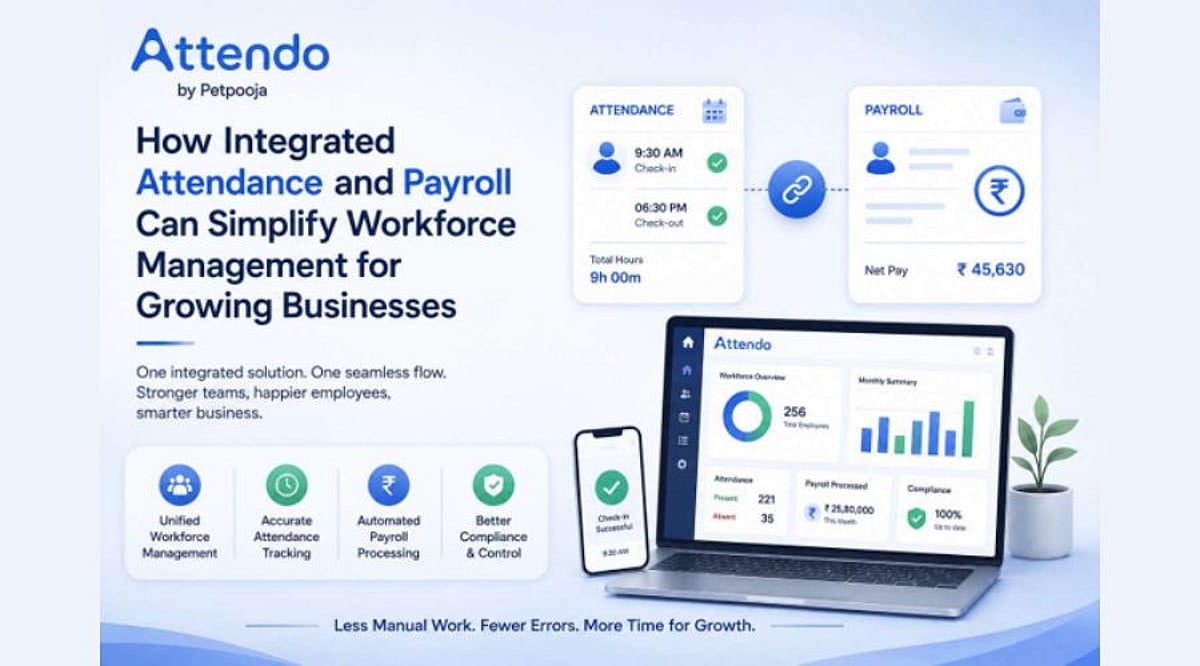
    This evolving approach is reflected in the transition from Petpooja Payroll to Attendo. What began as a solution designed for restaurant workforce needs has grown into a platform that addresses similar operational challenges across industries. The new identity signals a move beyond payroll and positions Attendo as a dedicated workforce management platform with attendance hardware and software capabilities combined.

    The rebrand also reflects a broader shift in how businesses approach HR technology. Instead of adopting tools for individual administrative tasks in isolation, growing organizations are looking for ways to make related functions work together. This matters especially for attendance and payroll, where information from one function directly affects the other.

    Supporting SMBs Without Large HR Teams

    Integrated systems are particularly relevant for small and medium-sized businesses that may not have large HR teams or extensive administrative resources. Managing attendance hardware through one provider, payroll through another platform, and leave or employee records through additional tools can create unnecessary complexity. Bringing these functions into a connected system makes workforce administration simpler to manage as the organization grows.

    For businesses looking to reduce administrative handoffs, platforms such as UKG offer another route. UKG brings HR, payroll, and workforce management together in a single view, with SMB-focused capabilities designed to simplify payroll, scheduling, compliance, and everyday HR tasks. This kind of coordination becomes increasingly valuable when attendance data and payroll processes become harder to manage across separate systems.

    The move toward integrated workforce management is about more than convenience. It is about building processes that are structured enough to support businesses through different stages of growth. When attendance and payroll are connected, employee administration becomes a coordinated workflow rather than a series of disconnected activities.

    With its new identity, Attendo is positioned within this changing landscape. The transition from Petpooja Payroll gives the platform a broader workforce management narrative, presenting attendance and payroll as interconnected elements of a larger HR technology offering. For growing businesses, the underlying requirement remains clear: workforce administration needs to become easier to manage as operations become more complex. Integrated attendance and payroll can help meet that objective by bringing related processes together and creating a more organized approach to workforce information.

    As Indian businesses continue to adopt digital solutions for internal operations, connected workforce management is becoming an increasingly important consideration. Integrating attendance and payroll is a practical step toward building HR processes that are structured, scalable, and aligned with the needs of growing organizations.

  • Ravi Pradhan: Redesigning Work and Skills Beyond AI Adoption

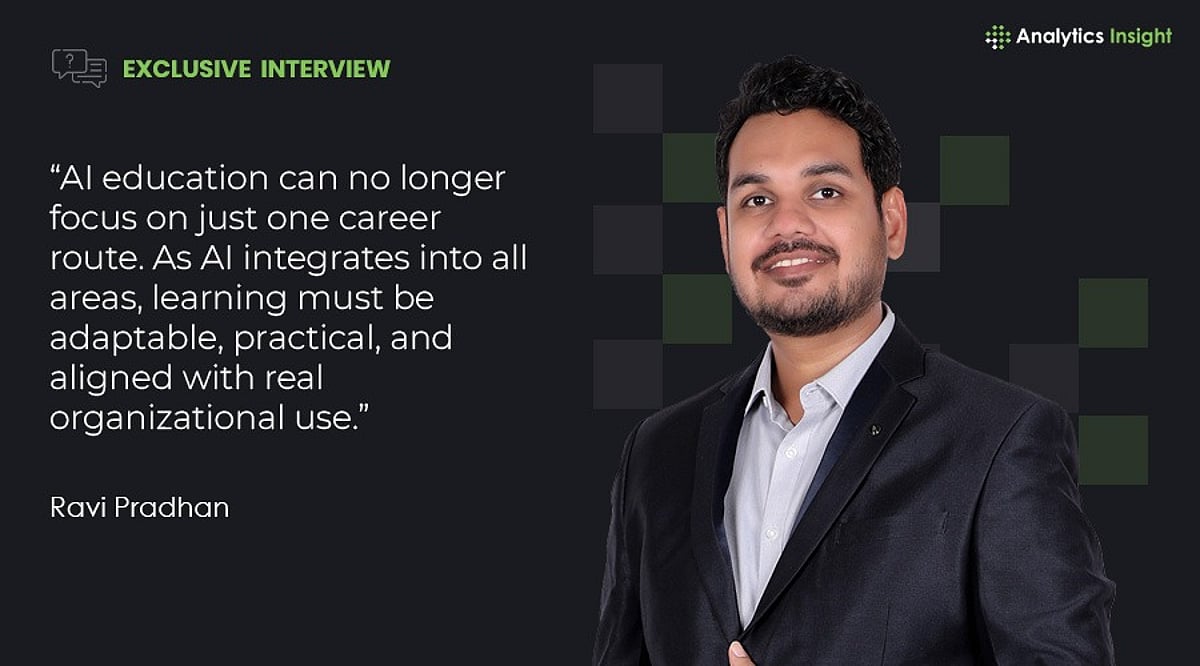
    Ravi Pradhan: Redesigning Work and Skills Beyond AI Adoption

    Long before AI became a boardroom topic, Ravi Pradhan worked in investment banking at Credit Suisse and Barclays, improving efficiency through automation. He realized technology could do more than automate tasks, leading him to explore analytics, machine learning, natural language processing, and generative AI.

    Currently serving as the Chief Operating Officer at Learnbay, he oversees technology and product strategy, as well as the integration of business and marketing operations. Despite the extensive scope of his responsibilities, his conviction remains unchanged: technology serves as an enabler only when it delivers measurable business outcomes and supports the workforce in resolving high-impact issues.

    Throughout his career, Pradhan remained a practitioner. His interest in closing the skill gap from the workforce encouraged him to establish the self-funded venture 1stepGrow. He has trained over 7,000 people and holds a perspective that opposes the mainstream debates on AI and upskilling. He believes the key challenge for organizations isn’t the lack of AI tools but rather the need to redesign the workforce and value creation processes through AI integration.

    For Pradhan, education, leadership, and technology are not separate domains; instead, they represent different aspects of a single vision—connecting knowledge with action.

    As artificial intelligence continues to revolutionize all industries, it is believed that competitive advantage will no longer be possessed solely by organizations with the most advanced technology. Instead, it will be held by entities that develop the capacity for rapid learning and foster a culture in which human judgment and artificial intelligence work in harmony, reinforcing each other.

    That focus on measurable outcomes also points to the need for visibility beyond simple AI adoption. Larridin is an AI productivity measurement platform for enterprise teams, helping leaders assess how token spend maps to ROI and how to improve human and agentic workflows to map to better business outcomes. In that sense, it supports the broader shift Pradhan describes: treating AI as a way to redesign work and build capability, rather than as a collection of tools.

    Q. Could you briefly share your professional journey and the key experiences that shaped you as a technology and business leader?

    None of my career decisions came from a master plan. They came from curiosity. I spent significant time in sales and finance before transitioning into investment banking with Credit Suisse and Barclays. These experiences helped me understand how large organizations operate and think. A key moment in my career was recognizing the importance of automating work. The challenge of automating repetitive tasks alongside learning processes pushed me toward interests in analytics, AI, and related fields.

    Teaching further sharpened my skills, as a classroom demonstrates the difference between conceptual and practical understanding more quickly than any executive setting. Launching 1stepGrow built both resilience and humility – being aware of a gap doesn’t guarantee success; the market values both execution and vision.

    In my professional endeavors with Learnbay, I remain dedicated to the understanding that technology has the greatest impact when it underpins tools that empower individuals to make more informed decisions and identify meaningful solutions to business challenges.

    Q. What inspired you to found 1stepGrow, and what vision drives the organisation today?

    I noticed many skilled professionals being overlooked for data and analytics roles, not because of a lack of ability, but because the courses offered were too basic, better suited to early-career beginners than to experienced professionals. Most training programs are designed this way. The issue isn’t a lack of skill; it’s a lack of relevant context.

    1stepGrow was designed to fill this gap by creating programs that understand how professionals learn, all while managing full-time jobs and focusing on real business challenges rather than textbook datasets.

    Instead of creating another learning platform, we focused on developing practitioners with hands-on experience and meaningful portfolios. Our name reflects this: careers evolve through meaningful steps. Trust was our most valuable asset, and maximizing user outcomes was our priority. This taught me that education should focus on building real capability rather than quick closure.

    Q. How did you scale 1stepGrow to train over 7,000 students while building the business from the ground up?

    We couldn’t outspend competition. We outdelivered competition. Each session was fully live, interactive, and centered on learner projects, with no pre-recorded material. Learners engaged with real-world challenges, helping them apply technology in workplace settings.

    Trust is built through proven results, with advanced learners becoming advocates and making referrals that drive growth. Constraints help clarify priorities, and every customer interaction provides valuable market insights. Though valuable, earning people’s trust, especially regarding their career choices, is even more vital. Sustainable growth hinges on trust—it is a long-term process.

    Q. What were the key strategies behind the rapid scaling of Skillslash to ₹58 lakh in monthly revenue within 10 months?

    There was no single big bang breakthrough. There was a lot of alignment. Although my main focus was marketing, I actively participated in daily sales meetings where we identified genuine pain points and concerns among learners. Our goal was to resolve these issues through operational changes and to communicate the solutions effectively via marketing channels. Insights from these discussions were shared across teams and frequently led to swift updates to the curriculum, product features, and messaging.

    Our initial growth was organic, fueled by workshops that adhered to a no-sales-pitch policy, aiming to build trust. This approach naturally supported monetization efforts. Our success hinged on disciplined execution and agile measurement. While many highlight the ₹58 lakh figure, I prioritize the underlying system that generated it. Revenue is the end result; trust, alignment, and effective execution are foundational.

    Q. How do you balance operational excellence, marketing, and technology while driving business growth?

    Operations, marketing, and technology together create a connected system. Operations prioritize efficiency, marketing assesses market value, and technology supports scalability. Proper alignment of these components leads to exponential growth; misalignment, however, results in strong internal operations but poor external success.

    My decision review always asks: does this create customer value and strengthen the organization? Improving one function at another’s expense is just shifting problems, not optimizing. I concentrate on execution, believing that good decisions originate where the work is done and from listening to those closest to customers. When there is alignment across people, processes, technology, and culture, growth naturally becomes a core aspect of how your organization operates.

    Q. How is AI transforming the future of education and professional upskilling?

    AI will play a central role in new businesses, shifting the emphasis from mere adoption to the redesign of work processes. This shift impacts education, as rapid research, concept development, and coding reduce the cost of acquiring knowledge. The key lies in leveraging technology and knowledge effectively.

    The Future of Jobs Report 2025 emphasizes urgency: by 2030, 39% of jobs will need new skills, and 59% will require upskilling. Merely owning AI isn’t enough; workforce training is vital. Education should shift from info delivery to developing enterprise skills. Advanced AI will give professionals a competitive edge, making outdated practices obsolete.

    Q. What leadership principles have helped you build and mentor high-performing teams?

    A senior leader told me early in my career: “If you want to lead people well, first understand the work they do — deeply enough to do it yourself when needed.” My philosophy is “credibility before authority”. Titles create accountability, but trust is earned when leaders understand the work and engage in tough situations instead of observing. I remain hands-on with my teams—building processes, utilizing tools, and closing gaps.

    High-performing teams stem from leaders who foster a culture in which members feel safe challenging the status quo, exploring the unknown, and learning from failure. Innovation arises from the unknown. Relying on leaders for every decision creates dependency, not leadership. True leadership empowers independence even in their absence.

    Q. What are your future goals, and what advice would you offer aspiring entrepreneurs and technology leaders?

    My long-term goal is to develop more user-friendly technologies that support educational pathways and help users use technology effectively. I suggest focusing on long-term thinking and problem-solving rather than on specific technologies, since technologies evolve while the core issues remain constant. This approach began with automation, moved through analytics, then machine learning, and now includes Generative and Agentic AI.

    There are no shortcuts—only hard work and a willingness to relearn. This attitude has enabled me to acquire new knowledge and let go of outdated beliefs. Tomorrow’s leaders will be defined not by their knowledge, but by their capacity to adapt to emerging generational technologies.

  • 10 Essential AI Tools for Excel Data Analysis in 2025

    10 Essential AI Tools for Excel Data Analysis in 2025

    Introduction

    In 2025, Excel has evolved far beyond rows, columns, and confusing formulas. AI tools now handle the heavy lifting—generating charts, writing formulas, cleaning messy data, and even forecasting future numbers. These tools make Excel feel less like a math chore and more like having a smart assistant built right in. Here are ten AI tools that simplify spreadsheet work for everyone, from students to office professionals.

    Top AI Tools for Excel

    1. Microsoft 365 Copilot

    Built directly into Excel, Copilot handles nearly every data task: creating formulas, cleaning data, generating charts, and explaining what the numbers mean. Just type a request like “show sales from March to June,” and it delivers the answer. Ideal for users who want to finish tasks quickly without searching for formulas online.

    2. ExcelMatic

    This tool works like a chat box inside Excel. Type a sentence such as “sort products by price,” and it executes the command. No need to click through menus or remember button locations—simple and fast when time is short.

    3. Formula Bot

    Struggling with formulas? Describe what you need, and Formula Bot provides the correct Excel formula along with an explanation. It also works with Google Sheets, making it a great learning aid.

    4. DataRobot

    DataRobot finds patterns and makes predictions. For example, it can analyze past sales data to forecast next month’s performance. No coding required, and widely used by companies seeking data-driven insights.

    5. Arcwise AI

    Arcwise brings numbers to life with charts and graphs. Ask questions like “which product returned the most?” and it displays the answer visually. Perfect for school projects or business presentations.

    6. Power Query & Power Pivot

    These built-in Excel tools clean messy data (remove duplicates, split columns) and connect multiple tables. Power Query handles data cleaning; Power Pivot links different sheets—saving time and keeping everything organized.

    7. Datarails

    Primarily used by finance teams, Datarails gathers data from multiple files, consolidates it in one place, and assists with reports and budgets. Designed for professionals who work with numbers daily.

    8. MonkeyLearn

    MonkeyLearn focuses on text analysis. If you have hundreds of reviews or comments, it can classify them as positive, negative, or neutral. Useful for businesses wanting to understand customer sentiment.

    9. Polymer

    Polymer transforms Excel sheets into interactive dashboards. Upload a sheet, and it quickly creates graphs and summaries—no design skills needed. Great for meetings or quick reviews.

    10. KNIME

    KNIME is for advanced users. It integrates with Excel to create step-by-step workflows for cleaning, sorting, and analyzing large datasets—all without coding.

    Bonus: Grok

    Grok helps Excel users reason through data questions, explain findings in plain language, and summarize analysis. Its chat and search capabilities make it useful for research, though it’s not built directly into Excel.

    Who Should Use These Tools

    • Students: Formula Bot and ExcelMatic speed up assignments and make learning Excel easier.
    • Office workers: Microsoft Copilot, Power Query, and Datarails reduce repetitive tasks and accelerate reporting.
    • Small business owners: Polymer, Arcwise, and MonkeyLearn help make smarter decisions using customer and sales data.

    Conclusion

    These AI tools eliminate much of the tedious and confusing aspects of Excel. They save time, reduce errors, and make it simpler to interpret what the numbers are telling you. Whether you’re learning or working, these tools make Excel smarter and more accessible.

  • Huawei Watch D3 vs Samsung Galaxy Watch9: Which Smartwatch Delivers Better Health Tracking in 2026?

    Huawei Watch D3 vs Samsung Galaxy Watch9: Which Smartwatch Delivers Better Health Tracking in 2026?

    Smartwatches have evolved far beyond step counting and notifications. Today, a wearable health tracker is expected to flag irregular heart rhythms, monitor blood pressure, and support long-term wellness goals. Two devices leading this shift in 2026 are the Huawei Watch D3 and the Samsung Galaxy Watch9, each built with a distinct philosophy toward health monitoring.

    The Huawei Watch D3 takes a clinical approach, centered around genuine cuff-based blood pressure readings. The Samsung Galaxy Watch9, meanwhile, blends everyday smartwatch convenience with an expanding suite of optical health metrics. This comparison breaks down their sensors, specifications, and health capabilities to help buyers decide which wearable health tracker suits their needs.

    Design and Display

    The Huawei Watch D3 measures 46.5 x 41 x 11.3mm and weighs only 40 grams — remarkably light for a watch carrying a mechanical airbag inside its strap. Its 1.92-inch LTPO AMOLED display reaches 3,000 nits at peak brightness.

    The Samsung Galaxy Watch9 comes in two sizes, 40mm and 44mm, both using Super AMOLED panels protected by sapphire glass. Brightness also reaches 3,000 nits, giving strong outdoor visibility. Build quality feels premium on both: Huawei uses aluminium alloy, while Samsung uses brushed aluminium. Neither offers a titanium option this generation.

    Health Sensors Compared

    Sensor choices reveal the biggest gap between these two smartwatches. The Huawei Watch D3 combines a nine-axis IMU, ECG sensor, temperature sensor, and barometer. Its most distinctive component is a differential pressure sensor tied to a physical airbag that inflates around the wrist, briefly restricting blood flow — a mechanical method mirroring clinical upper arm monitors.

    The Samsung Galaxy Watch9 instead relies on its upgraded BioActive sensor, merging optical heart rate tracking, electrocardiography, and bioelectrical impedance analysis. A skin temperature sensor and ambient light sensor round out the package. Samsung also introduced an Antioxidant Index, measuring carotenoid levels through the fingertip using multi-wavelength light.

    Blood Pressure Monitoring

    This is where the two watches truly part ways. Huawei’s cuff-based system holds CE MDR certification in Europe and NMPA approval from Chinese regulators — a strong clinical signal. The Watch D3 performs ambulatory blood pressure monitoring across a full day, automatically taking up to 20 daytime readings and seven overnight readings. A dedicated exercise mode checks blood pressure within two minutes post-workout.

    Samsung’s approach is lighter: the Galaxy Watch9 offers a blood pressure trend feature through Samsung Health but still needs periodic calibration against a traditional cuff for meaningful accuracy. In short, Huawei treats blood pressure as its central purpose; Samsung treats it as one wellness metric among many. Buyers managing hypertension will likely notice this difference quickly.

    Heart, Sleep, and Recovery Tracking

    Both smartwatches handle cardiovascular monitoring seriously. Huawei adds atrial fibrillation alerts through its PPG sensor, beat-by-beat ECG readings, and arterial stiffness detection. Its Health Glance feature checks 11 biometric indicators within about a minute — a single-tap convenience for a quick daily snapshot.

    Samsung leans harder into structured fitness coaching. The Galaxy Watch9 includes a Heart Health Score, Daily Cardio Load metric, and FDA-cleared sleep apnea detection that adds real medical weight to its sleep tracking. Advanced sleep coaching and a three- to five-week Running Coach program target active users, making the Galaxy Watch better suited to structured training routines.

    Performance and Battery Life

    The Galaxy Watch9 runs Wear OS 7 with One UI 9 Watch software on a Snapdragon SW6100 Wear Elite chipset (3nm process). Battery capacity sits at 390mAh (40mm) or 445mAh (44mm). Samsung rates both for up to 30 hours with always-on display, meaning daily charging remains part of the routine. Fast wireless charging helps offset this shorter runtime.

    The Huawei Watch D3 runs HarmonyOS instead of Wear OS. Its 540mAh battery delivers up to six days under typical use, with a 75-minute fast charge keeping downtime minimal.

    Price and Value

    The Huawei Watch D3 launched at £399.99 in the UK (approx €449 in Europe), reflecting its medical-grade hardware and certification — positioning it closer to a diagnostic tool than a lifestyle gadget. The Samsung Galaxy Watch9 starts at USD 379.99 (40mm Bluetooth) and rises to USD 459.99 (44mm LTE), placing it firmly within mainstream smartwatch territory.

    Final Words

    Choosing between these two wearables comes down to personal priorities. Anyone managing blood pressure concerns will benefit from Huawei’s clinical accuracy, certification, and ambulatory monitoring. The Samsung Galaxy Watch9 suits those wanting an all-round smartwatch experience with Google integration, plus unique features like the Antioxidant Index and sleep apnea detection. Neither watch is objectively better across every category — both represent thoughtful, well-researched approaches to modern health tracking. The right pick simply depends on what health priority matters most.

  • iPhone Weather App Showdown: Apple Weather vs AccuWeather vs The Weather Channel vs Windy

    iPhone Weather App Showdown: Apple Weather vs AccuWeather vs The Weather Channel vs Windy

    When it comes to checking the weather on an iPhone, users have plenty of options. Apple’s built-in Weather app keeps things simple, but dedicated apps like AccuWeather, The Weather Channel, and Windy offer specialized features. Here’s how they compare.

    Apple Weather: Simplicity and Integration

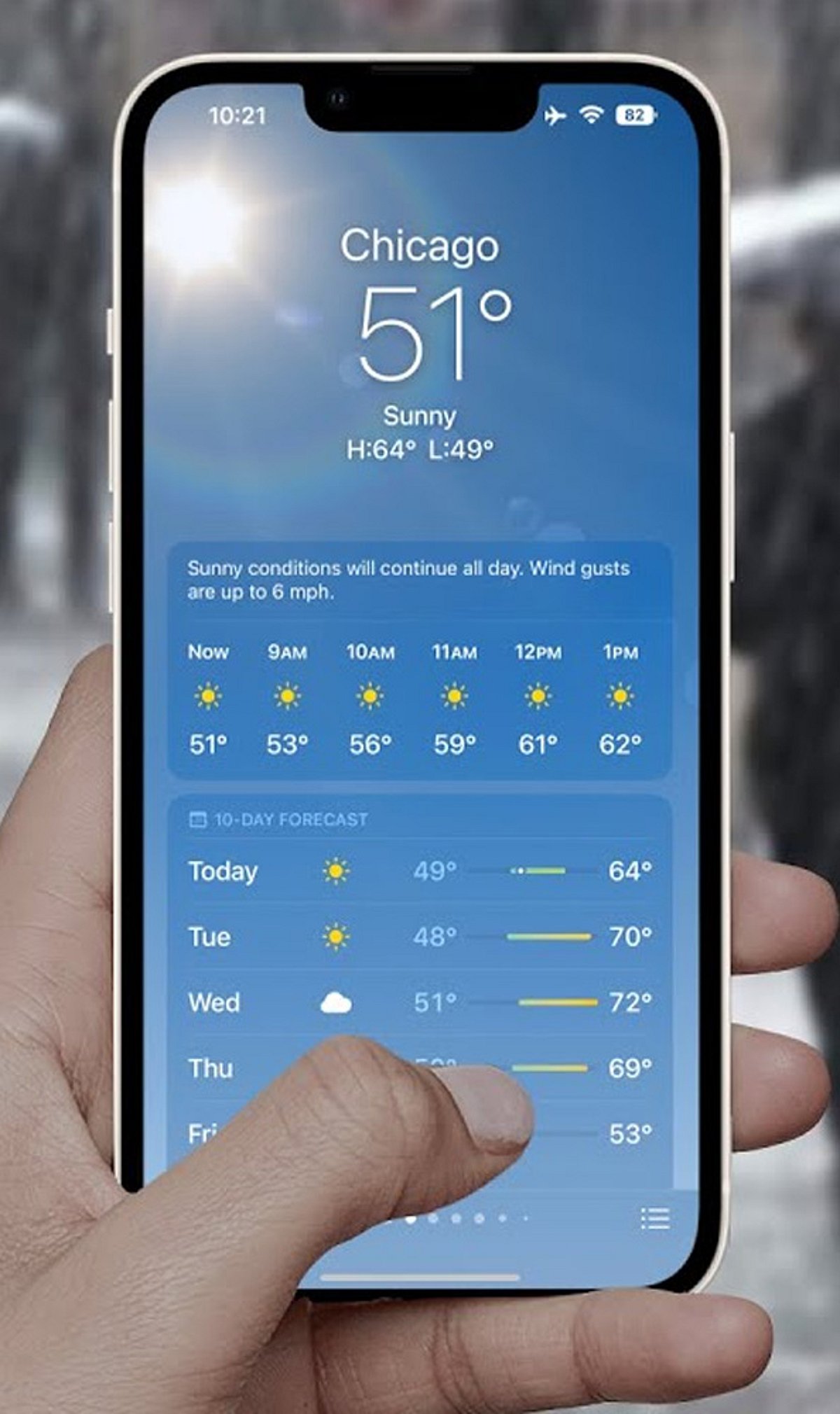
    Apple Weather offers a clean, native experience with hourly forecasts, a ten-day outlook, weather maps, severe alerts, and seamless integration across all Apple devices. It pulls data from multiple weather models and national services, so forecasts are not tied to a single provider.

    AccuWeather: Precision Rain Timing

    AccuWeather excels with detailed hourly forecasts, radar, alerts, and its signature MinuteCast feature—ideal when you need to know exactly when rain will start or stop for daily planning.

    The Weather Channel: Comprehensive Coverage

    The Weather Channel focuses on broad weather information, including forecasts, radar, storm tracking, alerts, air quality, and local pollen data. It’s a solid all-around choice for users who want depth beyond basic forecasts.

    Windy: For Weather Enthusiasts

    Windy stands out with animated maps, wind layers, satellite views, and multiple forecast models. It’s designed for users who want to dive deep into weather analysis and visualize conditions dynamically.

    Accuracy and Regional Considerations

    No single app is universally the most accurate—accuracy varies by location and forecast period. For iPhone users in India, Apple Weather includes severe-weather information, while air-quality data is powered by BreezoMeter in many supported regions.

    Which Weather App Should You Use?

    The right choice depends on what you value most: quick forecasts, precise rain timing, storm tracking, detailed maps, or simple iPhone integration. Apple Weather is best for simplicity and ecosystem integration; AccuWeather for rain timing; The Weather Channel for comprehensive data; and Windy for in-depth weather analysis.

  • Crypto Market Update: Bitcoin ETF Inflows Hit $191M, KelpDAO Sues LayerZero, Bitget Faces $350M Exploit

    Crypto Market Update: Bitcoin ETF Inflows Hit $191M, KelpDAO Sues LayerZero, Bitget Faces $350M Exploit

    The crypto market delivered several headline-making moves on September 25, from strong institutional demand for Bitcoin ETFs to legal action against LayerZero and a major exchange exploit. Here is a closer look at the day’s most important stories.

    Bitcoin ETF Inflows Reach $191 Million

    Spot Bitcoin ETFs posted $191 million in cumulative daily net inflows, according to SoSoValue. BlackRock’s IBIT led the pack with $163 million in single-day net inflows, lifting its all-time net inflow total to $65.18 billion. Fidelity’s FBTC added $12.86 million, bringing its historical total to $11.01 billion. On the other end, WisdomTree’s BTCW saw the largest daily net outflow at $4.016 million.

    Combined, spot Bitcoin ETFs now hold about $108.91 billion in total net assets, representing a 6.43% ETF net asset ratio. Cumulative historical net inflows for the category stand at $57.41 billion.

    KelpDAO Takes LayerZero to Court

    KelpDAO has filed a lawsuit against LayerZero and co-founder Bryan Pellegrino following the April attack that drained 116,500 rsETH worth approximately $292 million from the liquid staking protocol. The incident, which occurred on April 22, has been tied by researchers to a North Korean hacking group. In its complaint, KelpDAO alleges that LayerZero failed to disclose security weaknesses and risks in its technology, and that it did not prevent attackers from compromising its security infrastructure. The lawsuit also claims that LayerZero and Pellegrino shifted blame to KelpDAO rather than accepting responsibility. These allegations remain subject to litigation.

    Bitget Loses $350 Million in Hot Wallet Exploit

    Crypto exchange Bitget has confirmed an exploit that drained at least $350 million from its hot wallets. CEO Gracy Chen said unauthorized transfers were detected across multiple blockchain networks after assets including ETH, USDT, USDC, AVAX and BNB were moved to an unidentified address. On-chain analysts saw rapid swaps on decentralized exchanges such as UniswapX and 1inch Fusion, with some trades executed at premiums of up to 5% above market prices. Chen said cold wallets are completely intact and that user losses are covered by the Bitget Protection Fund, which has a balance of more than $464 million.

    Hyperliquid Strategies Adds $45.8M in HYPE

    Hyperliquid Strategies has purchased another 494,200 HYPE worth roughly $45.8 million, according to Lookonchain. The buying activity, linked to wallet 0x6436, took place over a 16-hour period on September 25. With the latest purchase, the address has accumulated 5.51 million HYPE worth approximately $476 million over the past month, averaging 183,574 HYPE or $15.86 million per day. Hyperliquid Strategies now holds about 35.1 million HYPE, valued at roughly $3.2 billion.

    Shielded Bitcoin: A New Privacy Proposal

    Researchers from Alloc Init have published a September 24 paper proposing private Bitcoin transfers using zero-knowledge proofs without requiring a soft fork. The metaprotocol, called Shielded Bitcoin, would use Bitcoin to publish and order encrypted transaction data while Bitcoin nodes would not need to enforce the privacy rules. The design draws on concepts from Zcash, including encrypted notes, nullifiers and zero-knowledge proofs. It would conceal shielded senders, receivers, amounts and transaction links while leaving Bitcoin’s existing consensus rules unchanged.

    These developments highlight how quickly institutional flows, security incidents, legal disputes, and protocol research can shift the crypto landscape in a single day.

  • Gremlins 3 Sets October 2028 Release Date: Gizmo Returns in Long-Awaited Sequel

    Gremlins 3 Sets October 2028 Release Date: Gizmo Returns in Long-Awaited Sequel

    Fans of the beloved Mogwai will need to hold on a little longer: Warner Bros. has officially pushed the release of Gremlins 3 to October 6, 2028. The news came with a brief teaser showing Gizmo peeking out from a backpack, confirming the creature’s return to the big screen after more than three decades.

    The film was originally slated for November 19, 2027. The studio did not provide a reason for the delay but used the opportunity to generate excitement by offering the first glimpse of the furry star.

    What We Know So Far

    Chris Columbus, who wrote the original 1984 film, is directing and producing Gremlins 3. Hannah Marks is writing the screenplay based on an earlier draft by Columbus, Zach Lipovsky, and Adam Stein. Steven Spielberg returns as executive producer through Amblin Entertainment and 26th Street Pictures.

    Warner Bros. has not yet revealed the full cast or plot details. It remains unconfirmed whether Zach Galligan will reprise his role as Billy Peltzer, the character he played in the first two films.

    The Legacy of the Franchise

    The original Gremlins (1984), directed by Joe Dante, followed Billy Peltzer as he received Gizmo as a Christmas gift—along with three crucial rules: avoid bright light, never get him wet, and don’t feed him after midnight. When the rules were broken, the town of Kingston Falls was overrun by mischievous and dangerous Gremlins. The film earned an 86% critic score on Rotten Tomatoes and became a cult classic for its blend of horror, comedy, and holiday charm.

    Gremlins 2: The New Batch (1990) took a more satirical turn, moving the action to a corporate skyscraper and introducing bizarre new Gremlin variants. While it earned a 71% critic score, it developed a strong cult following.

    What the New Film Could Bring

    The October 2028 release date places Gremlins 3 close to Halloween, suggesting the film might lean into the horror elements of the franchise while maintaining the comedic tone that made it distinctive. With Columbus and Spielberg involved, the sequel has a direct link to the original creative team.

    For now, Gizmo is back—but almost everything else remains a mystery. Fans will have to wait until 2028 to discover what new trouble awaits the Mogwai.

    Frequently Asked Questions

    When will Gremlins 3 be released?
    The film is scheduled for October 6, 2028, after being moved from its original November 19, 2027 date.

    Who is directing Gremlins 3?
    Chris Columbus, who wrote the original film, is directing and producing. Hannah Marks wrote the screenplay based on earlier drafts.

    Will Gizmo return?
    Yes. The teaser confirms Gizmo’s return, though Warner Bros. has not yet detailed his role.

    Will Zach Galligan return as Billy Peltzer?
    This has not been confirmed. Warner Bros. has not announced the full cast.

  • September 25, 2026 Quordle Hints and Answers: Solve Puzzle #1705

    September 25, 2026 Quordle Hints and Answers: Solve Puzzle #1705

    If you’re playing Quordle today, puzzle #1705 is ready to test your vocabulary. The goal is simple: find four five-letter words in nine guesses. Need a nudge in the right direction? Below are helpful hints and the full answers for September 25, 2026.

    Quordle Strategy for September 25, 2026

    Before jumping to the answers, try a few opening guesses. Use words with distinct letters to cover as many common letters as possible. Then adjust based on the color-coded feedback. With nine attempts, you have room for careful elimination.

    Quordle Hints for Puzzle #1705

    Here are today’s Quordle hints if you want to solve it on your own:

    • Vowel count: The four answers contain the vowels A, E, O, and U.
    • Repeated letters: Two answers include double letters. One has OO, and the other has PP.
    • Rare letter: One answer contains the letter Y.
    • Starting letters: Two words begin with the same letter. The top-left answer starts with S, the top-right with F, and the bottom two both begin with G.

    Quick Clues for Each Word

    If you still want a little more help, use these one-line clues:

    • Word 1: To make a sincere promise.
    • Word 2: What heavy rain can cause.
    • Word 3: A small freshwater fish.
    • Word 4: A sound people make when reacting to a bad joke.

    Quordle Answers for September 25, 2026

    Spoilers below! The four answers are:

    • Top left: SWEAR
    • Top right: FLOOD
    • Bottom left: GUPPY
    • Bottom right: GROAN

    Final Thoughts

    Quordle gives you a fresh set of words every day, but the limited attempts and lack of starting clues can make it tricky. If puzzle #1705 stumped you, you’re not alone. Keep practicing, check back tomorrow, and enjoy the next word challenge.