Blog

  • Apple Hits $5 Trillion Market Cap, Becoming Second Company to Reach the Milestone

    Apple Hits $5 Trillion Market Cap, Becoming Second Company to Reach the Milestone

    Apple has crossed the $5 trillion market value mark after a steady rise in its share price, becoming only the second company to reach the historic milestone. The iPhone maker’s market capitalization surged past the $5 trillion threshold, making it the world’s most valuable company, surpassing NVIDIA.

    The jump came after Apple’s shares rose 0.2 percent to $337.7, bringing its market capitalization to $4.96 trillion. With a session high of $342.89, Apple’s market value stood at $5.036 trillion. Including session gains, Apple stock has jumped 24% so far this year, outperforming the other six of the ‘Magnificent 7,’ which include Microsoft, Amazon, Alphabet, Meta Platforms, Tesla, and Nvidia.

    Apple is ready to report its third-quarter earnings after the market close on Thursday. Analysts expect the company will jump more than 15% from the previous year.

    Staying on top will be the real test. The Cupertino-based tech giant has struggled for years to build its own AI models. More recently, Google has used its technology to roll out new services, such as a revamped Siri, that have saved it from the massive infrastructure spending that tech investors so often fear. Dipanjan Chatterjee, vice president and principal analyst at Forrester, said, “Apple has resisted the AI spending race, betting that customer experience – not infrastructure investment – will ultimately determine the winners.”

  • Morgan Stanley Lists MSSE ETF as Ethereum Funds Attract $14.53M in Daily Inflows

    Morgan Stanley Lists MSSE ETF as Ethereum Funds Attract $14.53M in Daily Inflows

    Morgan Stanley has listed its MSSE exchange-traded fund, a spot Ethereum ETF, which coincided with $14.53 million in daily net inflows across existing spot Ethereum funds. The development marks a significant step in the firm’s expansion into regulated crypto investment products, offering investors a new institutional access point without the need to directly hold the underlying asset.

    MSSE Expands Morgan Stanley’s Crypto Offerings

    The MSSE ETF listing represents another milestone in Morgan Stanley Investment Management’s push into exchange-traded crypto products. The firm has also announced Ethereum and Solana products, diversifying beyond its earlier Bitcoin-focused offerings. MSSE provides investors with regulated, exchange-traded exposure to Ethereum, separating it from the broader spot Ethereum ETF basket. This distinction is crucial because the $14.53 million inflow figure reflects combined activity across existing spot Ethereum funds, not the newly listed MSSE product alone.

    Morgan Stanley has further widened crypto access through its brokerage operations. Its E*TRADE unit has launched spot cryptocurrency trading, and updated Ethereum and Solana documents name Coinbase for custody and staking services. The firm’s Ether and Solana product debut follows the performance of its Bitcoin fund, which has shown active management through withdrawals from Coinbase Prime.

    Ethereum ETF Inflows Signal Growing Demand

    Spot Ethereum ETFs posted $14.53 million in net inflows during the trading session, indicating that these funds attracted more capital than they lost. While a single day’s data only captures a brief shift in market demand, continued inflows in subsequent reports would strengthen the demand signal. Conversely, renewed outflows would weaken it. Trading activity in MSSE will provide another reference point, and Ethereum’s price response will show whether fund demand aligns with stronger market performance.

    The key question remains: Can sustained ETF demand offset the caution created by large whale transfers near a repeatedly tested price area?

    Whale Transfers Test ETH Support Levels

    Ali Charts reported that 226,435 ETH, worth approximately $430 million, moved during the previous 24 hours, ranking among the largest daily whale activity spikes in recent months. These movements may include sales, internal transfers, or broader wallet redistribution. Their scale adds attention because Ethereum has faced several rejection attempts around the current price region. Ali Charts identified $1,733 as the key level to monitor, with a loss of that level pausing the current bullish outlook. The $1,711-to-$1,773 area forms the immediate support zone, between the 0.236 Fibonacci mark and the lower Bollinger Band.

    Merlijn The Trader described Ethereum’s June fall to $1,520 as a shakeout that cleared buyers from the $1,745-to-$2,500 range. ETH later recovered above $1,860, with expectations of another dip toward the range low before a larger move develops. This outlook becomes invalid if Ethereum records a weekly close below $1,550.

    Summary

    Morgan Stanley’s MSSE listing expands regulated crypto access as spot Ethereum ETFs attract $14.53 million in daily net inflows. However, large whale transfers and Ethereum’s support zone create a near-term test. Market participants now await sustained fund inflows, MSSE trading activity, and ETH’s response around $1,733.

  • Trump Administration Bans New Chinese Robots to Safeguard US AI Infrastructure

    Trump Administration Bans New Chinese Robots to Safeguard US AI Infrastructure

    The Trump administration has implemented new technology restrictions aimed at Chinese-made humanoid robots, quadruped robots, and connected power inverters, citing national security concerns and the need to protect America’s rapidly expanding artificial intelligence infrastructure. The measures, announced by the US Federal Communications Commission (FCC), took effect immediately upon publication.

    The restrictions apply exclusively to new product models not yet released in the United States. However, the FCC retains the authority to revoke approvals for products already authorized for sale if deemed necessary.

    Focus on AI, Cybersecurity, and Critical Infrastructure

    According to US officials, the measure is designed to reduce the risk of cyberattacks, surveillance, and supply chain vulnerabilities as the country invests heavily in building AI data centers and computing infrastructure. Inverters used to connect renewable energy devices and batteries to the electric grid have become increasingly important for AI data centers.

    The administration has also raised concerns about the potential use of networked robots for espionage and remote interference by foreign entities. Officials stated the measure is intended to secure key technologies vital to the nation’s security and economy.

    Chinese Firms Likely to Be Hit Hardest

    While the order does not explicitly name individual companies, it is expected to have the greatest impact on Chinese manufacturers, including Unitree Robotics, one of the world’s leading producers of humanoid and quadruped robots. China currently dominates the global humanoid robotics market, making the restrictions a significant setback for its expansion into the US market.

    The FCC indicated that manufacturers outside China may still qualify for exemptions, provided they satisfy security requirements.

    Beijing Condemns Move

    China condemned the move, claiming that the US unfairly singled out Chinese companies for punitive action and vowing to do whatever is necessary to defend its business interests. These restrictions, among others implemented by the US government in recent times, reflect the increased competition between the two countries as they vie for supremacy in AI and semiconductor production and supply chains.

    This development underscores a convergence of technology policies and national security issues, with AI infrastructure emerging as a key area of competition.

  • Bitcoin ETF Outflows, Luno Layoffs, Morgan Stanley Crypto Trusts, and Myanmar Anti-Scam Law: Top Crypto News

    Bitcoin ETF Outflows, Luno Layoffs, Morgan Stanley Crypto Trusts, and Myanmar Anti-Scam Law: Top Crypto News

    Bitcoin Spot ETFs See $49.75M in Net Outflows

    According to SoSoValue, Bitcoin spot ETFs recorded a total net outflow of $49.75 million yesterday. The Grayscale Bitcoin Mini Trust ETF ($BTC) saw the highest net inflow of $5.08 million, bringing its historical net inflow to $2.65 billion. Conversely, BlackRock’s IBIT led outflows with $54.83 million, though its cumulative net inflow remains at $60.33 billion. Overall, Bitcoin spot ETFs hold a net asset value of $77.23 billion, with a net asset ratio of 6.02% and a cumulative net inflow of $51.32 billion.

    Luno Cuts 20% of Global Workforce

    Crypto exchange Luno announced a 20% reduction in its global workforce as part of a corporate restructuring plan revealed in July 2026. CEO James Lanigan cited the need to adjust the operating structure in response to recent crypto market volatility, including prolonged price declines in Bitcoin, Ethereum, and Solana. The company has invested heavily in automation and process improvements over the past year. Luno currently serves 16 million users across Africa and Asia-Pacific markets.

    Robinhood Chain TVL Reaches $332 Million

    Total value locked (TVL) on Robinhood Chain has climbed to approximately $325 million, with no daily declines since launch. However, daily DEX volume averaged $553 million last week, a 27% drop from the previous week. Active accounts fell to around 275,000 per day, a 7% weekly decline. The DEX volume-to-TVL ratio dropped from 9.25x in mid-July to 1.68x by last Friday. Robinhood Earn’s estimated 7% APY on USDG appears to be a major driver, though trading volume per active account slid to $2,000 from a peak of $2,800.

    Morgan Stanley Launches Ethereum and Solana Trusts

    Morgan Stanley Investment Management launched the Morgan Stanley Ethereum Trust (MSSE) and Morgan Stanley Solana Trust (MSOL) on Tuesday, trading on NYSE Arca. Both products charge an annual management fee of 0.14%, among the lowest for U.S. crypto exchange-traded products. They hold digital assets directly, allowing investors to gain price exposure through traditional brokerage accounts without managing wallets or private keys.

    Myanmar Passes Anti-Crypto Scam Bill

    Myanmar’s Parliament approved the Anti-Online Scam Bill on July 28, targeting digital-currency fraud, online scam centers, forced scam labor, and financial networks supporting scams. The state-run Global New Light of Myanmar reported the bill’s full approval. However, the final text, presidential assent, and commencement date are not yet publicly available. Penalties remain based on the May draft and lawmakers’ comments.

  • Young Indian Innovator Develops $9 Offline AI Storytelling Device Using ESP32 Chip

    Young Indian Innovator Develops $9 Offline AI Storytelling Device Using ESP32 Chip

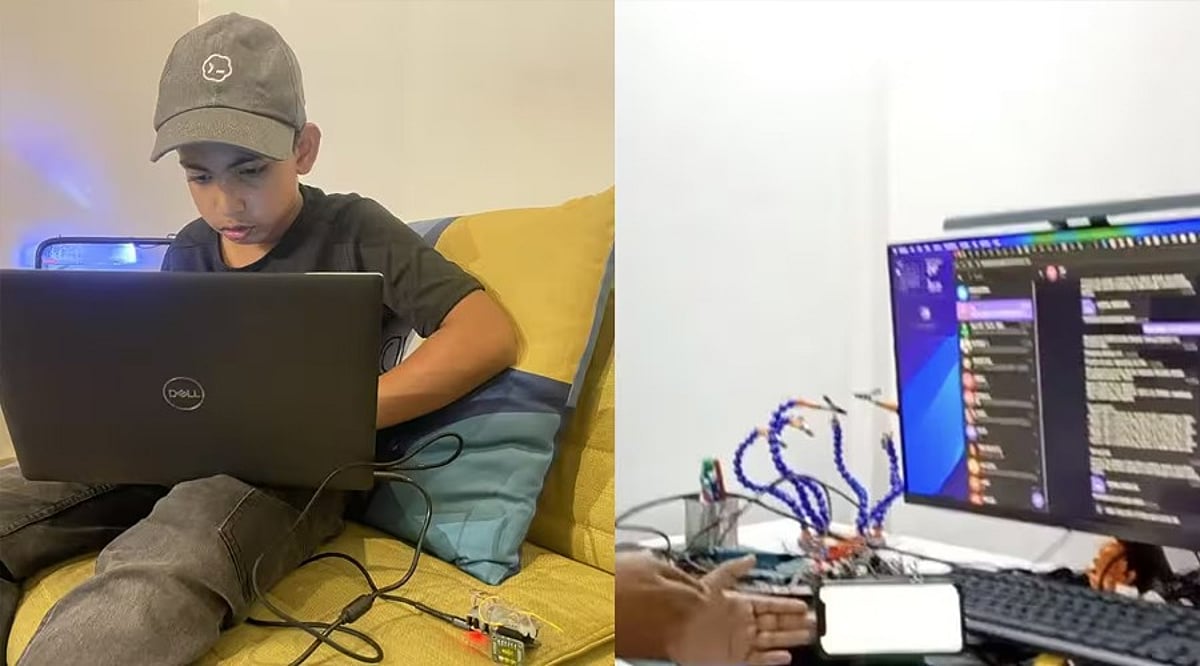
    An eight-year-old boy from India named Laksh has built an offline AI storytelling device that costs just Rs. 760 (approximately $9). The device uses an ESP32 microcontroller to generate, narrate, and animate stories without requiring any internet connection or cloud services.

    Laksh customized the open-source TinyStories LLM for the ESP32 platform. The original model already supported offline story generation, but the young developer added voice interaction, playback controls, and on-screen animations to enhance the user experience. The source code is available on GitHub, allowing other developers to replicate or improve the project.

    During a live demonstration, Laksh spoke the command “Make a funny story,” and the device quickly generated a new story, read it aloud, and displayed simple animations on its screen. It also responded to commands such as “play,” “pause,” “resume,” and “next story.”

    Laksh noted that the next step is to improve the text-to-speech engine, as the English voice currently sounds basic. Despite this limitation, the project demonstrates how low-cost hardware can run AI locally without relying on online services.

    This achievement highlights the potential of open-source AI and affordable hardware to empower students and young creators. Offline AI devices like this one could be especially valuable in schools and regions with limited or unreliable internet access.

    Laksh’s project proves that big ideas and simple tools can lead to impressive results without significant financial investment.

  • Fable to Showcase New Gameplay at Gamescom 2026 Ahead of February 2027 Release

    Fable to Showcase New Gameplay at Gamescom 2026 Ahead of February 2027 Release

    Microsoft has confirmed that Fable will take center stage at Gamescom 2026, offering fans an extensive look at the upcoming Xbox RPG before its launch on February 23, 2027. The event will feature a dedicated booth where attendees can watch live gameplay and explore the fantasy world of Albion.

    Originally released in 2004, the beloved franchise is being revived by Playground Games. The new version promises action, humor, and meaningful player choices, staying true to the spirit of the original while introducing modern gameplay mechanics.

    In a recent post on X (formerly Twitter), the developer teased: “We’re heading to @Gamescom to share much more of Fable! That means more Fable gameplay, including a deeper look at combat and the many ways Heroes can tackle a fight.”

    While it remains unclear if Gamescom’s Opening Night Live will feature a dedicated trailer, attendees can expect new details on how melee, ranged, and magical abilities combine to create a unique combat experience. Showing the game months before release gives Microsoft a chance to rebuild excitement, answer questions, and demonstrate progress.

    Fable is also a key part of Microsoft’s strategy to keep attention on Xbox’s upcoming lineup. If the new gameplay delivers, it could become one of the biggest highlights of Gamescom 2026 and a major title for the Xbox ecosystem.

  • SEC Chairman Backs CLARITY Act as Fed Decision Caps Crypto Recovery

    SEC Chairman Backs CLARITY Act as Fed Decision Caps Crypto Recovery

    The cryptocurrency market edged higher on July 29 after SEC Chairman Paul Atkins voiced support for the CLARITY Act, but the rebound remained limited as traders awaited the Federal Reserve’s interest rate decision. Bitcoin rose 0.62% to $63,895.34, while Ethereum added 1.12% and traded at $1,906.56. The overall market gained 0.57% over 24 hours.

    SEC Support Halts the Immediate Crypto Sell-Off

    Atkins stated on X that he remains committed to helping Congress advance the CLARITY Act and offered technical assistance during the legislative process. He emphasized that U.S. leadership in digital finance requires a regulatory framework that supports domestic innovators. His comments helped Bitcoin recover the $63,000 level after a broad market decline on July 28, when reports that the Senate had suspended its review pushed Bitcoin down about $3,000. Ethereum also lost about $100 and fell below $1,900 before Atkins’ statement halted the immediate sell-off.

    Senate Delay and FOMC Decision Restrict Demand

    The Senate Majority Leader placed a Russia sanctions bill ahead of the CLARITY Act, leaving little time for a vote before Congress began its August recess. Attention also shifted to the Federal Reserve’s rate decision at 2 p.m. Eastern Time on July 29. High borrowing costs can support demand for Treasuries and dollar assets. CME data showed a 70.6% probability that the Fed would keep interest rates unchanged and a 29.4% probability of a 25-basis-point increase. The modest rebound demonstrated that the market still faced competing policy signals.

    Bitcoin ETF Outflows Meet New ETH and SOL Funds

    Spot Bitcoin ETFs recorded a fourth consecutive day of net outflows, with the latest session producing $49.75 million in withdrawals. Institutional observers viewed the four-day pattern as a possible sign of portfolio repositioning rather than simple profit-taking. Meanwhile, Morgan Stanley launched the Morgan Stanley Ethereum Trust and Morgan Stanley Solana Trust on NYSE Arca, using the tickers MSSE and MSOL. Both funds charge a 0.14% expense ratio, described as the market’s lowest. Morgan Stanley also plans to stake part of each trust’s ETH and SOL holdings, passing staking rewards directly to investors. Amy Oldenburg, head of digital asset strategy at Morgan Stanley, said digital assets were becoming more important within diversified portfolios.

    Conclusion

    Atkins’ support helped Bitcoin and Ethereum recover, but Senate delays, the FOMC decision, and four straight Bitcoin ETF outflow days limited momentum. Morgan Stanley’s low-cost Ethereum and Solana trusts added another institutional route into digital assets. Attention now turns to the Fed announcement and Congress’s next steps.

  • Veo Debuts Three-Wheeled Electric Trike in Denver, Aiming to Broaden Micromobility Reach

    Veo Debuts Three-Wheeled Electric Trike in Denver, Aiming to Broaden Micromobility Reach

    Shared micromobility company Veo has launched its new electric tricycle, the Rover, in Denver, marking a significant step toward making shared transportation more stable and accessible. The three-wheeled vehicle is designed to appeal to seniors, beginners, commuters, and individuals with physical challenges, offering a safer alternative to traditional e-bikes and e-scooters.

    Riders can unlock the Rover through the Veo app, pay per trip, and return it after use. The trike fits within standard bike lanes and has a top speed of 10 mph, lower than typical shared micromobility limits, which Veo says enhances rider safety. It also boasts an estimated range of 45 miles per charge and includes a rear cargo basket suitable for groceries or luggage.

    Unlike two-wheeled vehicles, the Rover’s three-wheel design eliminates the need for balancing, keeping it upright automatically. Veo developed the design in consultation with disability rights groups, organizations for the elderly, and mobility experts.

    Denver signed an exclusive contract with Veo to operate the city’s bike-sharing system, replacing Lime and Bird. The city will serve as a testbed for the Rover, allowing Veo to study rider behavior before expanding to other US cities. The vehicle is equipped with an AI voice assistant for navigation and riding updates, as well as lidar technology that detects sidewalk riding. Trip data is anonymous.

    While electric tricycles have been available in the consumer market for years, Veo’s initiative represents one of the first large-scale efforts to introduce them into shared micromobility services. The company believes the format could appeal to a broad audience, including commuters seeking a more stable ride.

  • SK Hynix Stock Drops 9% as Record Earnings Fall Short of AI Chip Market Expectations

    SK Hynix Stock Drops 9% as Record Earnings Fall Short of AI Chip Market Expectations

    SK Hynix stock faced renewed selling pressure after the memory-chip maker reported second-quarter figures that came in below market forecasts. While revenue and operating profit reached quarterly records, both measures missed analyst estimates, triggering a sharp decline in share prices.

    The company’s US-listed ADRs closed Tuesday at $130.17, down 8.99% during regular trading, before recovering about 1.9% in after-hours trading. In Seoul, SK Hynix shares fell approximately 9.4% on Wednesday as investors digested the earnings release.

    SK Hynix Earnings Miss Market Forecasts

    SK Hynix reported second-quarter revenue of 79.3 trillion won, up 257% from the same period last year. Analysts had expected approximately 84 trillion won. Operating profit reached 60.5 trillion won, marking a 557% annual increase, but still fell short of the 64 trillion won market forecast.

    Both revenue and operating profit set company records during the June quarter, yet the gap against forecasts shaped the market reaction. Investors had raised expectations after strong demand lifted memory prices and pushed SK Hynix stock to record levels earlier in 2026.

    Net profit surged more than 13 times to 93.9 trillion won, with investment gains playing a major role in that increase. Analysts linked much of the gain to the completed sale of SK Hynix’s indirect stake in Japanese flash-memory maker Kioxia.

    AI Memory Demand Supports Record Results

    Demand for high-bandwidth memory continued to support SK Hynix earnings. HBM chips serve data centers that train and operate artificial intelligence models. The company has secured long-term supply agreements with approximately 10 customers and continues negotiations with other buyers.

    SK Hynix said customers are seeking longer contracts as memory supply remains tight. These agreements include financial protections intended to reduce risks from changes in customer demand. The company also plans 2026 capital spending of about 47 trillion to 48 trillion won.

    However, delays in some HBM4 shipments reduced revenue recognition during the quarter. Price gains for standard DRAM products also came in below earlier expectations, contributing to the operating profit and revenue misses.

    Management maintained its positive demand outlook for the second half of 2026, expecting AI server investment and limited memory supply to support sales. Still, the latest figures show that record growth must also clear high market forecasts.

    SK Hynix Stock Tracks Wider Chip Selloff

    SK Hynix stock moved lower during a broader retreat from AI-linked semiconductor shares. Investors have questioned the funding and returns of large data-center projects. Competition from Chinese memory-chip companies has also added pressure across Asian markets.

    South Korea’s Kospi fell approximately 6% on Wednesday, while Samsung Electronics lost about 4.8%. The moves followed broad selling across chip stocks. SK Hynix ADRs also closed below their $149 US listing price after Tuesday’s decline.

    Investors are also watching the company’s shareholder return plan. SK Hynix has not yet provided details on its timing, size, or structure. Hyundai Motor Securities research head Greg Roh said, “SK needs to come up with a concrete shareholder return policy to turn around investor sentiment.”

    The company reported a net cash position of about 88 trillion won at the end of June and aims to build that figure toward 100 trillion won. Investors will track future spending, customer contracts, HBM4 deliveries, and the planned shareholder return policy.

  • Zcash Drops Below $470 as Ironwood Upgrade Fails to Spur Demand

    Zcash Drops Below $470 as Ironwood Upgrade Fails to Spur Demand

    Zcash fell below the $470-$472 support cluster shortly after the Ironwood upgrade activated on July 28. ZEC traded near $461 as negative spot and futures flows continued to pressure the market.

    Ironwood Closes Orchard Supply Gap

    Developers discovered a soundness flaw in the zero-knowledge circuit behind Orchard, Zcash’s shielded pool. In theory, the flaw could have allowed counterfeit ZEC to be created undetected. A patch was delivered in June, and no evidence of exploitation was found. However, Orchard’s privacy design prevented users from independently verifying the pool’s recorded supply.

    Ironwood introduces a new shielded pool and version 6 transactions. It also closes Orchard to new deposits and routes withdrawals through a capped turnstile, limiting outflows to the total amount previously deposited. As balances enter the new pool, users can verify that migration creates no additional ZEC.

    Negative Flows Follow Earlier Price Weakness

    ZEC approached $560 earlier in July before forming lower highs and lower lows. By activation day, the price remained inside a falling channel near the $470 cluster. Ironwood had been widely discussed for weeks, but its activation did not attract enough demand to reverse the decline already visible on the chart.

    Coinglass data showed negative spot flows across every displayed period. The 12-hour balance recorded $10.2 million in inflows and $12.81 million in outflows, leaving a $2.6 million deficit. The eight-hour balance stood at negative $1.65 million, while four-hour flows reached negative $935,000. Futures also remained negative over longer periods, with the 12-hour balance at negative $7.1 million and the eight-hour reading at negative $2.98 million. Shorter futures windows turned positive, adding $418,000 over four hours and $213,000 over one hour.

    ZEC Faces Resistance Before $484

    The 0.382 Fibonacci level near $470 and the 50-day moving average at $472 formed a support zone that ZEC now trades below, turning them into resistance. The day’s high reached $470 near the Fibonacci level. A daily close above $472 would reclaim both barriers, while the 100-day moving average at $484 presents another hurdle.

    Below the market, $450 marks the nearest support and sits near the falling channel’s lower boundary. A close below that level could expose the 0.236 retracement near $420. More than 80% of all ZEC has entered circulation, reducing future dilution as Ironwood makes Orchard migration verifiable.

    Conclusion

    Ironwood closed a major supply-verification gap, yet ZEC fell below $470 as spot and longer-term futures flows remained negative. The market now watches $450 as the first support. A recovery above $472 would improve the technical picture, while losing $450 could expose $419-$420.