Blog

  • How Experience-Driven Retail Is Redefining Shopping in 2026

    How Experience-Driven Retail Is Redefining Shopping in 2026

    The retail landscape is undergoing a profound transformation. By 2026, the focus will no longer be on transactions alone but on creating immersive, memorable experiences that keep customers coming back. From artificial intelligence to augmented reality, retailers are leveraging cutting-edge technology to build deeper connections with shoppers. Here’s a look at the key trends shaping the future of experience-driven retail.

    Immersive Shopping Experiences

    Interactive stores using AR, VR, and digital displays make shopping engaging and memorable. These technologies encourage customers to spend more time exploring products, leading to higher satisfaction and increased sales.

    Personalized Recommendations

    AI-driven insights help retailers deliver customized offers, product suggestions, and promotions. This level of personalization significantly improves customer satisfaction and purchasing decisions.

    Omnichannel Integration

    Seamless connections between online platforms and physical stores provide customers with convenient, flexible, and consistent shopping experiences everywhere they engage with a brand.

    Smart Store Technology

    Automated checkouts, smart shelves, and connected devices simplify shopping while improving operational efficiency and customer convenience across retail environments.

    Community Engagement

    Retailers increasingly host workshops, events, and exclusive experiences that strengthen customer relationships and encourage repeat visits beyond traditional shopping.

    AI-Powered Customer Service

    Intelligent chatbots and virtual assistants provide instant support, personalized assistance, and faster issue resolution throughout the shopping journey.

    Sustainability Initiatives

    Eco-friendly packaging, ethical sourcing, and transparent supply chains attract environmentally conscious consumers while building long-term brand loyalty and trust.

    Data-Driven Insights

    Retailers analyze customer behavior to optimize store layouts, inventory planning, and personalized marketing strategies for improved shopping experiences.

    Emotional Brand Connections

    Memorable retail experiences create stronger emotional relationships with customers, increasing loyalty, advocacy, and long-term business growth in competitive markets.

    As 2026 approaches, retailers that prioritize experience over mere transactions will lead the industry. By embracing AI, AR, omnichannel strategies, and sustainability, they can create a shopping future that is not only efficient but also deeply engaging.

  • Master Perplexity AI for Research: Expert Tips and Techniques for 2026

    Master Perplexity AI for Research: Expert Tips and Techniques for 2026

    Perplexity AI is rapidly becoming a go-to research assistant for professionals, students, and writers. To get the most out of it in 2026, you need to move beyond basic queries. This guide breaks down the essential strategies for using Perplexity AI like a seasoned researcher.

    Ask Better Questions

    Forget keyword stuffing. Write clear, detailed prompts. Include your topic, time frame, location, and desired output format. This precision yields far more accurate and relevant results.

    Choose the Right Search Mode

    • Web Mode – Best for real-time information and current events.
    • Academic Focus – Ideal for peer-reviewed studies and scholarly articles.
    • Deep Research – Produces comprehensive reports by pulling from hundreds of verified sources.

    Let Deep Research Save Hours

    Instead of opening dozens of browser tabs, use Deep Research to scan hundreds of trusted sources in minutes. It compiles everything into a structured report, freeing you to focus on analysis.

    Always Verify Every Citation

    Never trust AI blindly. Open the linked sources, check the original context, and verify facts before using them in reports, articles, or academic work. AI can still hallucinate citations.

    Keep Refining Your Research

    Ask follow-up questions in the same conversation. Request comparisons, opposing viewpoints, summaries, or deeper explanations. The conversational thread helps you drill down into nuance.

    Organize Projects with Spaces

    Create dedicated Spaces to store prompts, uploaded PDFs, notes, and research instructions. This makes long-term projects easy to manage and revisit without losing context.

    Upload PDFs for Faster Analysis

    Upload research papers, reports, or documents. Perplexity AI quickly summarizes key findings, extracts methodologies, and highlights important conclusions, saving you manual reading time.

    Combine Perplexity with Reference Tools

    Export verified citations to Zotero, Mendeley, or EndNote. This keeps your references organized and ensures a reliable bibliography for any research project.

    Know the Limits of AI

    Perplexity AI speeds up research but can still produce incorrect or fabricated citations. Always cross-check important information with trusted databases before publishing.

  • Kindle vs Kobo in 2026: Which eReader Should You Buy?

    Kindle vs Kobo in 2026: Which eReader Should You Buy?

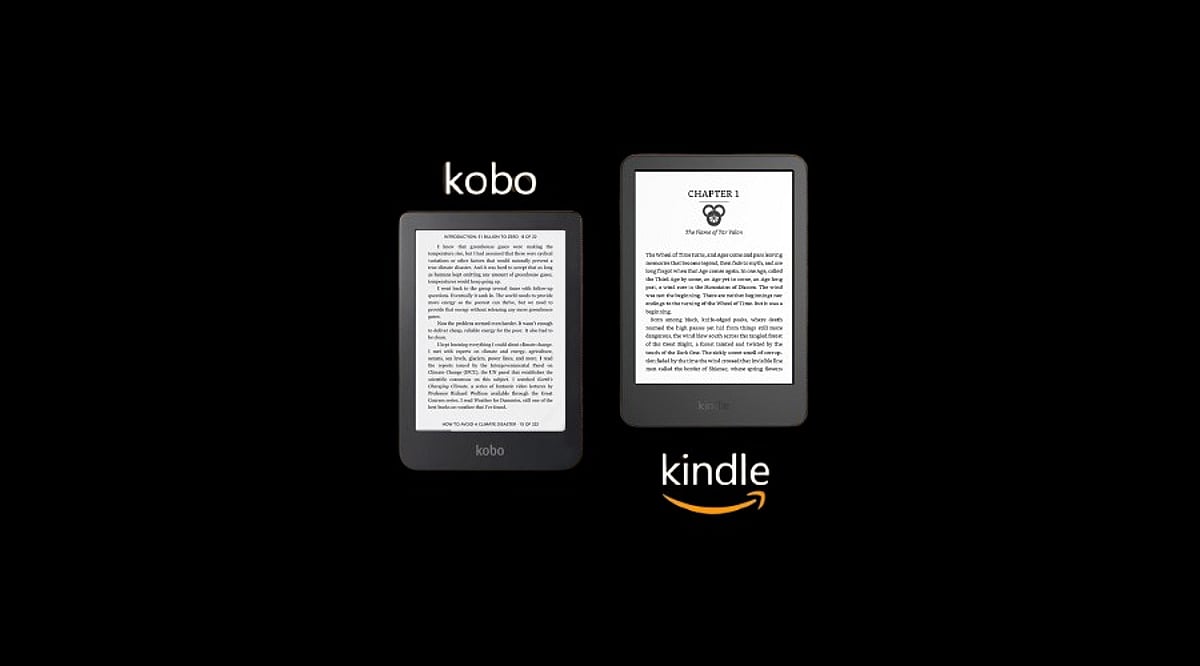
    Choosing between Kindle and Kobo is no longer mainly about display quality or battery life. Both brands now offer capable e-readers across budget, color, and note-taking categories. The bigger difference lies in the ecosystem: Kindle prioritizes Amazon integration, while Kobo offers broader format support and easier library borrowing.

    Kindle: Best for Amazon Users

    Kindle remains the strongest option for readers who buy most of their books from Amazon. Purchased titles appear instantly on the device, the Kindle app works across multiple platforms, and Amazon Household allows eligible books to be shared between two adult accounts. Kindle Unlimited provides access to more than 4 million titles, making it useful for frequent readers of genre fiction and self-published books.

    The Kindle Paperwhite 12th Generation, released in 2024, features a 7-inch, 300ppi display, a higher contrast ratio, and page turns that are 25% faster than the previous generation. Its battery can last up to 12 weeks under suitable usage conditions.

    However, Kindle’s ecosystem is relatively closed. It uses Amazon formats such as KFX and MOBI. EPUB files can be transferred through Send to Kindle, but they must first be converted, which may affect complex formatting. Library borrowing can also require additional steps, particularly outside the US.

    Kobo: Better for EPUBs and Library Books

    Kobo’s biggest advantage is format flexibility. Its devices natively support EPUB, the standard used by many independent bookstores and digital libraries. Users can buy books from different sources, sideload files, or borrow compatible library titles without converting them.

    The Kobo Clara BW is positioned as a lightweight budget model for readers focused mainly on novels. At the mid-range level, the Kobo Libra Colour offers a 7-inch color e-ink display and physical page-turn buttons. Color e-ink is most useful for comics, manga, book covers, and illustrated non-fiction. For regular novels, the difference compared with a black-and-white screen is limited.

    Kobo also supports OverDrive-based borrowing directly on compatible devices. This makes it easier for users who regularly access library services such as Libby or similar platforms.

    Which Device Offers Better Value?

    Below £120 or $130, the Kobo Clara BW offers native EPUB support and warm lighting, while the basic Kindle has a smaller 6-inch screen and no warm light. In the £130–£170 or $140–$180 segment, the Kindle Paperwhite is a strong choice for Amazon users. For color devices, the Kobo Libra Colour costs around £209.99, while the Kindle Colorsoft is priced near £239.

    At the premium end, the 10.2-inch Kindle Scribe is better suited to PDF work and document annotation. The 10.3-inch Kobo Elipsa 2E may appeal more to readers seeking a large-screen book experience with stylus support.

    Conclusion

    You can buy a Kindle when convenience, Amazon purchases, and cross-device syncing matter most. Kobo is a great option when EPUB support, library borrowing, physical page buttons, and long-term control over book files are higher priorities. The right choice depends less on hardware and more on how and where you obtain your books.

    FAQs

    1. Is Kindle or Kobo better in 2026?
    Kindle is generally better for readers who purchase most books from Amazon and value seamless syncing. Kobo is more suitable for users who prefer EPUB files, independent bookstores, and easier library borrowing.

    2. Which eReader is better for borrowing library books?
    Kobo usually provides the more convenient library experience because compatible devices support OverDrive integration and native EPUB files. Kindle library borrowing may involve additional redirects, account logins, or file transfers.

    3. Does Kindle support EPUB files?
    Kindle does not read EPUB files directly in the same way as Kobo. Users can transfer EPUBs through Amazon’s Send to Kindle service, which converts them into a Kindle-compatible format.

    4. Is the Kobo Libra Colour better than the Kindle Colorsoft?
    The Kobo Libra Colour may appeal to readers who want physical page-turn buttons, native EPUB support, and easier library access. Kindle Colorsoft is better suited to users already invested in Amazon’s ecosystem.

    5. Which eReader is best for PDFs and note-taking?
    The Kindle Scribe is a strong option for PDF reading, document workflows, and handwritten annotations. The Kobo Elipsa 2E is better suited to readers wanting a large display with stylus support and broader file compatibility.

  • Top Affordable Laptops for Work, Study, and Streaming in 2026

    Top Affordable Laptops for Work, Study, and Streaming in 2026

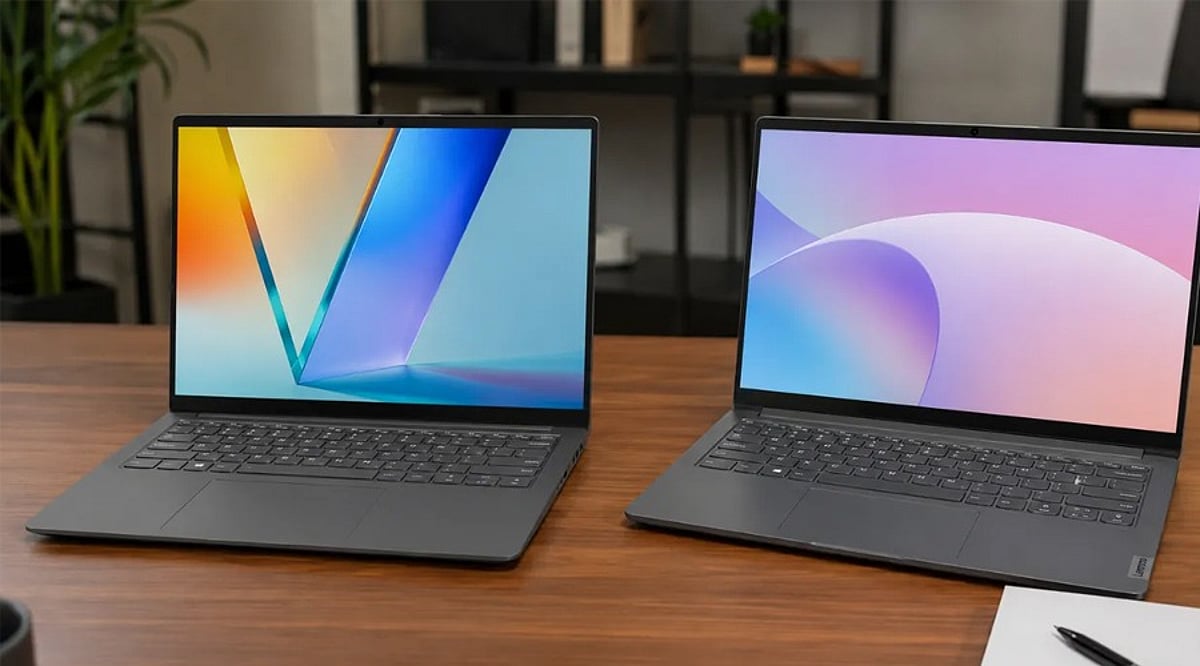
    The days of sacrificing performance for price are over. Today’s budget laptops deliver impressive speed, crisp Full HD displays, and all-day battery life, making them ideal for work, online classes, and entertainment without breaking the bank.

    Performance That Matters

    Modern affordable laptops are powered by Intel Core i3 or AMD Ryzen 5 processors, paired with at least 8GB or 16GB of RAM and speedy SSD storage. This combination ensures smooth multitasking across browser tabs, Microsoft Office, video calls, and streaming. Unlike older hard drives, SSDs boot up in seconds and launch apps instantly.

    Premium Features at a Lower Price

    Budget laptops now include features once reserved for high-end models: Full HD anti-glare displays, backlit keyboards, camera shutters for privacy, and Wi-Fi 6 connectivity. Slim and lightweight designs make them perfect for students and professionals on the go.

    More Choices Than Ever

    Top brands like ASUS, HP, Dell, Lenovo, and Acer offer a wide range of models. Whether you prefer a compact 14-inch screen or a larger 15.6-inch display, there’s an option for every need. AMD Ryzen laptops excel at multitasking, while Intel models are favored for workplace software compatibility. Increased competition keeps prices low while raising the bar on specs.

    What to Look For

    Experts recommend prioritizing RAM, SSD storage, and processing power over flashy extras that don’t improve daily use. A well-configured budget laptop handles work, education, communication, and leisure with ease.

  • SpaceX Stock Drops to New Low Despite Starship Flight Success

    SpaceX Stock Drops to New Low Despite Starship Flight Success

    SpaceX shares fell to a record low on Monday, even after the company’s Starship completed its most successful test flight yet. The stock dipped below $109 before closing 1.4% lower at $113.50, extending a decline that began after its IPO in June.

    Investors are now looking beyond launch milestones. They are focused on whether Starship can achieve high flight rates, safe returns, and cost-effective operations to support SpaceX’s long-term ambitions.

    Starship Achieves Key Flight Milestones

    Starship lifted off from Starbase, Texas, on Friday during its 13th test flight. The mission deployed 20 next-generation Starlink V3 satellites, completed an engine relight in space, and ended with the upper stage making a controlled splashdown in the Indian Ocean.

    SpaceX spokesperson Dan Huot expressed excitement during the livestream, calling the mission ‘lucky number 13.’ The spacecraft remained intact after landing, providing engineers with valuable heat shield data from reentry.

    However, the Super Heavy booster did not complete its planned landing sequence. Five engines failed to restart during the landing burn, causing the booster to hit the Gulf of Mexico harder than intended. SpaceX did not plan to recover either vehicle.

    The mission followed an engine-ignition abort on July 16 and a weather delay on July 23. Elon Musk said SpaceX may attempt to catch the Starship upper stage with its launch tower during Flight 14, pending a thorough data review.

    SpaceX Stock Continues Post-IPO Decline

    SpaceX stock closed at $115.07 on Friday before the launch, after falling 2.7% during the session and 7.2% over the week. Monday’s decline pushed shares further below the company’s $135 initial public offering price.

    The stock has lost nearly half its value since reaching a post-IPO high above $225 in June. Short sellers have built positions during the decline, while investors question the company’s valuation and spending plans.

    Alex Morris, CEO of F/m Investments, said the shares could move into ‘double digits.’ He acknowledged SpaceX’s strong product and limited direct competition but attributed some volatility to the company’s growing focus on artificial intelligence.

    SpaceX plans to report second-quarter results on August 4. The release will give investors their first detailed look at quarterly revenue, costs, cash usage, Starlink growth, and spending across space and AI operations.

    Starship Becomes Central to Future Plans

    SpaceX is shifting its launch strategy toward Starship and away from Falcon 9. Reports indicate the company has turned away some satellite operators seeking dedicated Falcon 9 launches after 2028 and stopped accepting new rideshare reservations for later missions.

    The company has also reduced production of some non-reusable Falcon components. This shift makes Starship’s reliability, reuse, and launch rate critical to operations, as Falcon 9 supports commercial launches and much of the Starlink deployment schedule.

    Investors are monitoring the cost of repairing Starship after reentry and the turnaround time between flights. SpaceX aims to increase launch frequency sharply, but each test carries technical risk and can face hardware or weather delays.

    SpaceX has not confirmed a date for Flight 14. Any tower-catch attempt depends on the company’s review of Flight 13 data, including engine performance, reentry conditions, heat shield results, and splashdown control before approving the next flight.

  • Microsoft Unveils MAI-Cyber-1-Flash AI Model for Cybersecurity, Claims Superiority Over Gemini and ChatGPT

    Microsoft Unveils MAI-Cyber-1-Flash AI Model for Cybersecurity, Claims Superiority Over Gemini and ChatGPT

    Microsoft has announced two new AI-powered cybersecurity offerings: Project Perception, an agent-based security platform, and MAI-Cyber-1-Flash, its first dedicated AI model for security. The company claims that the new system outperforms competing models from Google and OpenAI on vulnerability detection benchmarks while cutting operating costs by nearly 50%.

    Project Perception: A Multi-Agent Security Framework

    At the core of the announcement is Project Perception, an agent-based platform that orchestrates multiple specialized AI agents to identify risks, prioritize threats, and automate remediation. Rather than relying on a single large model, the platform uses three categories of agents:

    • Red Team agents proactively search for vulnerabilities before attackers can exploit them.
    • Blue Team agents analyze alerts and determine which risks require immediate attention.
    • Green Team agents recommend or implement fixes after customer approval.

    This collaborative approach is designed to provide continuous protection across applications, cloud services, endpoints, and AI systems.

    MAI-Cyber-1-Flash: Specialized for Software Vulnerabilities

    Alongside the platform, Microsoft introduced MAI-Cyber-1-Flash, its first in-house AI model built specifically for cybersecurity. Unlike general-purpose language models, this system has been trained to identify software vulnerabilities, analyze complex codebases, and assist with remediation. Microsoft stated that the combined system outperformed Gemini and GPT-based cybersecurity solutions on industry benchmarks while reducing infrastructure costs by nearly half through its specialized, multi-model design.

    Availability and Future Plans

    Project Perception is scheduled to enter public preview on August 3, while MAI-Cyber-1-Flash will be available through Azure AI Foundry. Initially, the platform will focus on software vulnerability management before expanding to additional cybersecurity workflows. According to Microsoft, “As part of this multi-model strategy, we are committed to bringing customers the best models for each security task, including innovating with our own specialized models. The first scenario is software vulnerability management, bringing MAI-Cyber-1-Flash inside MDASH, our software vulnerability multi-model team of agents. MDASH with MAI-Cyber-1-Flash delivers 96% on CyberGym, an industry leading benchmark, +12 points above Mythos. And this same configuration delivers almost 50% of cost savings vs. the current MDASH configuration in market today.”

    With these launches, Microsoft is positioning itself to compete more aggressively in the growing AI cybersecurity market, where efficiency, automation, and lower operating costs are becoming as important as raw model capability.

  • Meta Apologizes After Facebook Glitch Briefly Blocks PM Modi Video in India, Restoration Follows

    Meta Apologizes After Facebook Glitch Briefly Blocks PM Modi Video in India, Restoration Follows

    Meta issued an apology on July 28 after Facebook temporarily blocked a video of Indian Prime Minister Narendra Modi in the country, attributing the removal to a technical glitch. The video, originally posted on July 23, became inaccessible to some Indian users before the company identified the error and restored it.

    Users attempting to view the video encountered a notice stating that Facebook had restricted the content following a legal request, which sparked questions about the unexpected removal. A Meta spokesperson explained, “The content was removed in error and has since been restored.”

    The glitch drew significant attention in India, especially because the video featured the Prime Minister addressing young audiences. In the video, PM Modi discussed plans to introduce tougher laws, fast-track courts, and stricter penalties for those involved in examination paper leaks. He also mentioned that a draft law with stronger measures would be presented to the Union Cabinet.

    Indian government officials have taken the incident seriously and are examining how the video became unavailable. Sources indicate that representatives from Meta may be asked to explain the circumstances behind the removal. According to IANS, the Ministry of Electronics and Information Technology has summoned Meta and Instagram’s global heads over the temporary restriction.

    The video had garnered millions of views before being briefly restricted. Meta has since restored the content and maintains that the removal was a mistake. The incident has raised broader questions about content moderation and how social media platforms handle communications from key government figures.

  • WPP Media Partners with Indian AI Startup Kily to Enhance Commerce Planning with AI

    WPP Media Partners with Indian AI Startup Kily to Enhance Commerce Planning with AI

    WPP Media has signed a new partnership with Indian AI startup Kily to strengthen its commerce planning operations in India. Under the deal, WPP Media will integrate Kily’s AI platform to help brands analyze shopping behavior, process customer data, and design more effective marketing campaigns. Kily specializes in AI agents that manage commerce tasks such as product listings, pricing, and advertising across marketplaces and quick-commerce platforms.

    The collaboration introduces an Integrated Commerce Planner, a tool that combines data from multiple commerce platforms to help brands plan, activate, and measure their investments seamlessly. Sankalp Malhotra, Co-founder and CEO of Kily, commented: "Kily is deeply focused on bringing autonomy to commerce management. India’s fragmented multi-marketplace landscape makes a solution like ours critical for judgment, decision-making and outcomes at scale. Working with WPP Media, we are enabling brands to respond faster, operate more efficiently and unlock stronger performance across quick commerce and marketplaces."

    Ashwin Padmanabhan, COO of WPP Media, South Asia, added: "Our Integrated Commerce Planner developed in partnership with Kily brings these moving parts into a more connected system where planning, activation, and measurement are continuously aligned."

    This deal underscores the growing recognition of Indian AI startups by global corporations. Rather than building new AI tools from scratch, many agencies are now opting to collaborate with startups that offer proven products and deep local market understanding. India’s AI startup ecosystem has expanded rapidly in recent years, with many young companies delivering practical AI solutions for marketing, finance, healthcare, and retail. As demand for AI-driven efficiencies continues to rise, more global firms are expected to follow WPP Media’s lead and partner with local AI innovators.

  • Amazon Aims to Launch Satellite-to-Smartphone Service by 2028

    Amazon Aims to Launch Satellite-to-Smartphone Service by 2028

    Amazon is preparing to take smartphone connectivity beyond traditional mobile networks. The tech giant has proposed a satellite-based direct-to-device (D2D) service that could allow compatible smartphones to make calls, send messages, and access mobile data even in areas without cellular coverage.

    According to filings submitted to the US Federal Communications Commission (FCC), Amazon plans to deploy a constellation of up to 5,105 low Earth orbit (LEO) satellites under its Amazon Leo initiative. If approved, the rollout is expected to begin in 2028.

    Unlike Amazon’s existing satellite broadband service, which requires dedicated ground equipment, the new system is designed to connect directly with compatible smartphones. The company says the network will complement, rather than replace, existing mobile infrastructure.

    Voice Calls, Messaging and Emergency Services

    The following services would include calling, messaging, mobile internet, and emergency services. Amazon plans to partner with telecom providers globally to enable connectivity in areas where it is not easy to build mobile network infrastructure. According to the company, this technology may prove useful for industries like logistics and IoT applications.

    How the Satellite Network Will Work

    Amazon’s system of satellites will be operating in five different orbital planes to offer coverage not only to inhabited zones but also to high and near-polar latitudes. L-band and S-band frequencies will enable communication between the smartphones and the satellites. Ka-band and V-band frequencies will connect the satellites to the internet via ground infrastructure. Additionally, Amazon intends to process the network traffic in space, thus decreasing potential signal interference.

    India Among Key Focus Markets

    Amazon has identified India as one of its priority markets as it expands its satellite ambitions. The company has cited India’s rapidly growing digital economy and the need to improve connectivity in underserved regions as key reasons for its interest. The proposal also intensifies competition in the fast-growing satellite connectivity market, where companies including SpaceX, AST SpaceMobile and Lynk Global are developing direct-to-smartphone services. If approved, Amazon’s network would mark another step towards making satellite communication a mainstream feature for future smartphones.

  • Shiba Inu Price Recovery Stalls as Volume Declines and Sellers Take Control

    Shiba Inu Price Recovery Stalls as Volume Declines and Sellers Take Control

    Shiba Inu’s (SHIB) recent price recovery has lost momentum after a 40% surge failed near the 100-day exponential moving average (EMA) at $0.00000503. Trading volume temporarily spiked twelvefold, but sellers quickly erased much of the advance. The pullback has also delayed a potential mini-golden cross between the 20-day and 50-day EMAs, weakening the short-term bullish outlook.

    Rally Meets Strong Resistance

    SHIB initially climbed through its short-term moving averages as daily volume reached one of its strongest levels this year. The rise briefly revived attention on the token, which had remained under sustained pressure. The volume expansion suggested that fresh market activity, not just short-covering, supported the move. However, buyers could not maintain control once SHIB approached the 100-day EMA. Sellers stepped in near $0.00000503 and pushed the token back below that barrier. The rejection stopped what could have become SHIB’s third-largest recovery rally of 2026.

    Mini-Golden Cross Loses Momentum

    The 20-day and 50-day EMAs had moved close to a bullish crossover before the reversal. Market participants often track that pattern as an early sign of stronger short-term momentum. Instead, the price decline widened the gap between both averages. That shift postponed technical confirmation of a lasting trend reversal and weakened the recent breakout structure.

    Can SHIB preserve its recovery structure while demand continues to fade? Immediate support sits near $0.00000448, where the shorter moving averages remain close together. Holding that area would preserve part of the breakout. A clear loss could return SHIB to the consolidation range that controlled most of July.

    Volume Falls as Exchange Outflows Rise

    Trading activity declined sharply after the initial twelvefold expansion. At the same time, SHIB surrendered a large share of its gains as buyers lost momentum. The relative strength index (RSI) also retreated from overbought territory toward neutral levels, matching the rapid decline in buying pressure after the brief surge.

    Bulls still need to reclaim $0.00000503 before challenging the 200-day EMA near $0.00000602. That longer moving average continues to define the broader bearish structure. Meanwhile, blockchain trackers reported large transfers from Coinbase-related addresses. The transfers did not appear on open order books, so observers linked them to wallet rebalancing or cold-storage management.

    Blockchain venues also recorded net withdrawals of 74 billion SHIB from centralized exchanges. Such movements can reduce near-term exchange supply when holders move tokens into self-custody. However, the available data cannot determine whether the withdrawals reflected accumulation or routine wallet reshuffling. The transfer activity has nonetheless returned SHIB to traders’ watchlists, who now watch whether exchange withdrawals translate into lasting demand.