Blog

  • How Intelligent Systems Are Redefining Data-Driven Decision-Making

    How Intelligent Systems Are Redefining Data-Driven Decision-Making

    As enterprises race to harness data at scale, the shift from manual analysis to intelligent, automated systems is redefining how decisions are made, unlocking speed, precision, and competitive advantage in a digital-first economy.

    Organizations across various sectors are experiencing a complete transformation in their approach to data leadership. The old reliance on static reports and delayed insights has evolved into systems that deliver real-time intelligence through active data processing. Advanced data engineering, distributed computing, and artificial intelligence now enable companies to move beyond mere data collection toward operationalizing their data. This transition establishes data as a primary strategic resource, powering predictive insights, automated decision-making, and continuous system improvement.

    Bharath Kandati, a software engineer and engineering manager, leads this evolution by developing large-scale data platforms and intelligent systems for modern digital enterprises. His professional life has been dedicated to designing and implementing powerful data processing systems that convert raw data into business-critical insights.

    “Organizations today are no longer limited by the availability of data,” Kandati explains. “The real challenge, and opportunity, lies in how effectively that data can be processed, interpreted, and translated into meaningful action in real time.”

    Kandati’s journey reflects a steady progression from hands-on engineering to strategic leadership, guiding teams to build distributed systems capable of handling millions of data events daily. His work has been instrumental in helping organizations transition from manual data analysis to intelligent, automated pipelines that significantly reduce operational overhead while enhancing accuracy and speed.

    One of his key contributions is designing scalable data architectures that seamlessly integrate analytics and machine learning into core product workflows. These systems empower organizations to detect patterns, identify anomalies, and optimize performance without the delays of traditional analysis. By automating complex data processes, Kandati has enabled faster decision cycles and improved operational efficiency—critical factors in today’s fast-paced digital landscape.

    “In many environments, manual analysis creates bottlenecks that limit both speed and scalability,” he notes. “By building intelligent systems, we’re not just improving efficiency; we’re fundamentally changing how organizations think about decision-making.”

    His work extends to developing internal data tools and platforms that democratize access to insights across engineering, product, and business teams. By reducing reliance on manual workflows, these tools allow organizations to focus on higher-value strategic initiatives, fostering a culture of data-driven innovation.

    Scaling such systems presents challenges. According to Kandati, designing an architecture that balances performance, reliability, and data integrity is difficult, especially with multiple data sources and real-time processing requirements.

    “Scalability is not just about handling more data; it’s about maintaining trust in the system as it grows,” he says. “That means ensuring accuracy, resilience, and transparency at every stage of the data lifecycle.”

    Beyond technical achievements, Kandati is a thought leader, contributing to debates on the evolving role of artificial intelligence in software engineering and big data infrastructures. He emphasizes the necessity of combining engineering approaches with AI technologies to build sustainable systems.

    Looking ahead, Kandati predicts that data-driven companies must seamlessly integrate intelligent automation with scalable infrastructure. As data volumes grow, the ability to turn data into intelligence will be a key competitive differentiator.

    “We are moving toward a world where systems don’t just inform decisions, they actively participate in them,” he observes. “The organizations that succeed will be those that can harness this capability responsibly and effectively.”

    In an age where data is abundant and vital, figures like Bharath Kandati are guiding the future of smart systems, setting the stage for organizations to not only analyze but also operate autonomously.

  • From Software Developer to Upskilling Pioneer: How Krishna Kumar Built Learnbay to Tackle Career Anxiety

    From Software Developer to Upskilling Pioneer: How Krishna Kumar Built Learnbay to Tackle Career Anxiety

    Krishna Kumar, a veteran software engineer with stints at Wipro, Cisco, and Samsung, turned his own observations of career stagnation into Learnbay — an upskilling platform that helps working professionals transition into AI, data science, and cloud roles. Launched in 2015, Learnbay has grown from a single Bangalore classroom to a multi-city hub with a presence in seven Indian cities and several international locations.

    Krishna’s journey began when he noticed that many talented professionals, despite working tirelessly, lacked future-proof career paths. He believed that a technical background or coding skills were not prerequisites for a successful career in the AI era. This conviction drove him to create Learnbay as an open-learning platform that prioritizes real-time exposure over pre-recorded sessions.

    Learnbay’s curriculum evolves continuously to keep pace with industry trends, covering everything from basic data science and cloud & DevOps to advanced GenAI and Agentic AI. Strategic partnerships with IBM, Microsoft, NASSCOM, IIT Patna, and Woolf University ensure industry relevance. In 2023, the platform achieved 300% growth, reflecting its impact.

    Krishna emphasizes outcomes over vanity metrics. Learnbay’s hybrid training model — combining live online sessions with face-to-face capstone projects — is designed for busy professionals. Placement assistance, customized mentorship, and interview preparation are core services, not add-ons. The platform’s success is measured by learners’ career transitions and placements at over 350 MNCs.

    Looking ahead to 2026 and beyond, Krishna remains focused on disciplined upskilling strategies, expanding GenAI and Agentic AI offerings, and deepening partnerships. His philosophy is simple: a course succeeds only when the learner’s career goals are met. Learnbay aims to make reskilling tangible, measurable, and accessible for professionals from any domain.

  • How Intent-Based Architecture Is Replacing Bridges for Safer Cross-Chain Infrastructure

    How Intent-Based Architecture Is Replacing Bridges for Safer Cross-Chain Infrastructure

    From Bridges to Intent: A Quiet Infrastructure Shift

    For most of the last decade, moving value between blockchains has relied on a mechanism that engineers quietly disliked and users learned to fear: the bridge. It worked well enough to become the default, but it also became the single most exploited surface in the entire ecosystem. As blockchain matures from a speculative curiosity into infrastructure that enterprises actually build on, the industry is replacing that mechanism — and the shift says a lot about where decentralized systems are heading.

    The replacement is called intent-based architecture, and while the name is dry, the change it represents is significant. It’s one of those quiet infrastructure shifts that doesn’t make headlines but reshapes what’s possible on top of it.

    The Bridge Was a Design Compromise, Not a Solution

    To understand why the change matters, it helps to see what bridges actually were: a workaround for a problem blockchains were never designed to solve. Each chain is its own isolated system with its own state. Getting an asset from one to another meant locking it in a smart contract on the source chain and minting a synthetic representation on the destination — an IOU backed by that locked collateral.

    That design created two structural weaknesses. The first was security. Those pools of locked collateral became enormous honeypots, and attackers drained them repeatedly, with individual exploits running into the hundreds of millions. The second was fragmentation: users ended up holding wrapped tokens that weren’t quite the real asset, liquidity splintered across dozens of bridge variants, and the experience required technical fluency most people don’t have. For a technology aspiring to be financial infrastructure, “elegant in theory, exploited in practice” is not a sustainable position.

    What Intent-Based Systems Do Differently

    Intent-based architecture inverts the model. Instead of the user specifying how a cross-chain transfer should execute — which bridge, which route, which wrapped token — they specify only the outcome they want: this asset, on that chain. A network of solvers then competes to fulfill that intent using liquidity that already exists on the destination chain, and a settlement layer guarantees the result.

    The distinction is more than semantic. Because the outcome is fulfilled from existing destination-chain liquidity rather than by locking collateral and minting synthetics, there’s no honeypot to drain and no wrapped IOU to strand. The complexity of routing across a fragmented multi-chain landscape moves off the user and into the protocol. What used to be a multi-step, error-prone process — bridge, wait, swap, hope — collapses into a single declared intention.

    This is the same architectural pattern now appearing across serious infrastructure projects, from NEAR’s intents framework to a wave of solver-based settlement networks. It reflects a broader maturation in how decentralized systems are designed: abstracting complexity away from the end user, the way every successful infrastructure layer eventually does.

    From Protocol Pattern to Real Products

    Infrastructure shifts become real when applications are built on them. CryptoRoute is one example — a non-custodial aggregator built on NEAR Intents that applies this model to cross-chain swaps and payments. A user expresses what they want; the system sources liquidity across chains and settles it, without the user ever surrendering custody or touching a bridge contract. It’s a useful illustration of how an abstract protocol pattern turns into something a non-technical person can actually use, which is ultimately the test any infrastructure has to pass.

    The same underlying capability extends naturally to payments: a merchant can accept any asset a customer holds and receive a single settled token, because the intent-based engine handles the conversion invisibly. Once the routing complexity lives in the protocol, the surface applications built on top of it get dramatically simpler — which is exactly the pattern enterprise adopters look for before they commit.

    Why This Matters Beyond Crypto-Native Users

    The significance here isn’t limited to traders moving tokens. As blockchain gets deployed as infrastructure for payments, settlement, and cross-organizational data integrity, the question of how value and state move between systems becomes central. Bridges made that movement risky and clunky. Intent-based settlement makes it safer and near-invisible — and “safer and invisible” is the precondition for any technology crossing from early adopters to mainstream infrastructure.

    None of this happens overnight. Bridges still carry significant volume, and the transition will take years. But the direction is clear: when the biggest security liability and the biggest usability barrier in a technology both get engineered out by the same architectural shift, that shift tends to define the next phase. For anyone tracking where decentralized infrastructure is genuinely heading — rather than where the hype cycle points — intent-based architecture is one of the more consequential developments to watch.

    Disclaimer: This article is for informational purposes only and does not constitute financial or investment advice. Cryptocurrency and blockchain products are volatile and carry risk; conduct your own research before making decisions.

  • Europe’s Strategic Imperative: A Decentralized Euro Stablecoin for Digital Autonomy

    Europe’s Strategic Imperative: A Decentralized Euro Stablecoin for Digital Autonomy

    Europe’s stablecoin debate has shifted from policy papers to real-world launches. European Central Bank President Christine Lagarde recently noted that stablecoins have surged from under $10 billion six years ago to over $300 billion today, with nearly 98% of the market dollar-denominated. In July, Crédit Agricole’s asset-servicing arm CACEIS launched EURXT, a euro-backed token on Ethereum, used for a tokenized Amundi money market fund. Europe is no longer observing from the sidelines—it is witnessing the next layer of payments and settlement take shape.

    This rapid development underscores the urgency of strategic autonomy. Most stablecoin activity relies on dollar-pegged tokens issued outside the EU, while the U.S. GENIUS law has turned stablecoins into an explicit instrument of dollar power and Treasury demand. European banks are moving from internal debate to product execution, building MiCA-compliant tokens and responding to corporate demand for faster, cheaper settlement outside traditional banking hours.

    Brussels must focus on this combination. MiCA gave Europe an early regulatory framework, and the ECB rightly worries about liquidity stress, fragmented issuance, and digital dollarization. But rules alone will not determine who shapes this market. Stablecoins promise near-instant settlement, lower fees, and programmable payments, but their public value depends on the architecture behind them. If Europe leaves the most scalable rails to dollar-based instruments, its regulators will supervise a system whose incentives are set elsewhere.

    The United States has understood this faster. By setting clearer rules for reserves, issuance, and compliance, Washington is giving stablecoins the legal scaffolding to move from crypto markets into mainstream finance. Europe has safeguards but still lacks a convincing euro-denominated alternative that is open enough to scale, trusted enough for institutions, and decentralized enough to avoid becoming another centrally controlled payment instrument.

    Alexandre Azoulay, managing partner of SGH Capital, argues that the current approach is too cautious. “Europe has tried to supervise a market it does not yet shape,” he says. “We need a digital asset that carries European values, not one borrowed from someone else’s system.” A decentralized euro-based stablecoin could achieve this without placing additional control in any single public authority. It could operate under transparent rules, with open protocols, broad participation, and oversight that protects users without stifling development.

    Lagarde’s warnings highlight a real problem: a rush by non-EU holders to redeem EU-issued tokens could strain liquidity and disrupt markets. However, these concerns speak to the design of specific models, not stablecoins themselves. A European decentralized stablecoin with reserves held domestically and governed by clear rules would address most issues. The problem is not the concept—it is the absence of a European version built for scale.

    The European Banking Authority notes that MiCA already contains safeguards for robust liquidity, sound governance, and transparency. National regulators can enforce compliance. But these tools do not replace the need for leadership. Europe has a long tradition of turning regulation into a competitive advantage—for data protection, consumer rights, and payments. Stablecoins should be no different.

    Azoulay frames the opportunity simply: “If Europe wants to remain influential in the next generation of commerce, it needs its own digital settlement layer. Not a copy of the dollar system, not a centralized instrument controlled from Frankfurt, but a decentralized asset that strengthens the euro.” A decentralized stablecoin would support cross-border businesses, improve transparency, and reduce reliance on private intermediaries. It would also reduce Europe’s exposure to regulatory shifts in Washington or geopolitical tensions affecting the dollar-based financial system.

    A centralized European stablecoin may appear safer, but centralization carries vulnerabilities—a single point of control influenced by political cycles, administrative delays, or shifting mandates. A decentralized structure distributes risk and reinforces trust by limiting unilateral intervention. Users would know the asset is governed by predictable mechanisms.

    Europe stands at a crossroads. It can continue managing the rise of foreign stablecoins through rules that address symptoms, or it can take the initiative and design a decentralized, euro-denominated stablecoin that reflects its economic weight and technological ambition. Lagarde’s intervention should encourage action rather than hesitation. Stablecoins are already reshaping global financial infrastructure. The question is whether Europe will shape their future or watch others do so.

  • Dogecoin Price Prediction: $14M Whale Buy Sparks Renewed Interest in DOGE

    Dogecoin Price Prediction: $14M Whale Buy Sparks Renewed Interest in DOGE

    Dogecoin has once again captured the attention of the cryptocurrency market after a whale purchased nearly 200 million DOGE, worth approximately $14 million. This significant accumulation has sparked fresh interest among traders, as large investors often make such moves before major price shifts. While whale activity does not guarantee a rally, it typically brings renewed focus to the asset.

    At the time of writing, Dogecoin is trading around $0.072–$0.073. The price has dipped in the latest session, but many traders are now watching closely to see if this whale purchase signals the start of a recovery.

    Whale Purchase Boosts Market Confidence

    Blockchain data reveals that whales added around 200 million DOGE through Robinhood-linked wallets. This purchase occurred as market activity picked up across major exchanges. Large investors generally have access to more data and capital than retail traders, so many market participants follow whale transactions to gauge potential trends. Although a whale buy does not guarantee higher prices, it often increases overall market confidence.

    Futures Market Shows Strong Activity

    Dogecoin’s futures market has also become more active. Open interest has climbed to about $1.08 billion, while derivatives trading volume has more than doubled in recent sessions. Higher open interest indicates more futures contracts remain open, signaling increased market participation. This often suggests that traders expect larger price moves ahead. The surge in volume also points to heightened volatility, meaning prices could swing quickly in either direction.

    Technical Indicators Paint a Mixed Picture

    According to the latest 15-minute TradingView chart, Dogecoin is currently valued at approximately $0.0723 after a significant decline from a recent high of $0.0739. The price sits below the midpoint of the Bollinger Bands, indicating sellers remain in short-term control. However, other technical indicators offer a different perspective.

    The Relative Strength Index (RSI) has dropped to around 28, placing Dogecoin in oversold territory. An RSI below 30 suggests that strong selling pressure has pushed the asset into oversold conditions in the short term. This often leaves room for a recovery if buying resumes.

    Key Support and Resistance Levels

    The immediate support level is around $0.0720. If this level holds, buyers may attempt to push the price higher. A stronger support level lies near $0.0715, where buyers could step in if selling continues. On the upside, the first resistance is near $0.0730. Above that, $0.0754 remains the critical level that traders are watching. A successful move above this area could improve market sentiment and attract more buyers.

    Short-Term Price Prediction

    If buyers defend $0.0720 and push the price above $0.0754, Dogecoin could move toward $0.0795 and potentially test $0.0800. Continued whale accumulation and strong futures activity would provide additional support for this bullish scenario. However, if sellers break the $0.0720 support level, Dogecoin could fall toward $0.0710 or even $0.0700. Weak sentiment across the broader cryptocurrency market could add further pressure.

    Long-Term Outlook

    Dogecoin remains one of the most well-known cryptocurrencies, thanks to its dedicated community and strong branding. Its periodic acceptance by merchants and ongoing developer support are additional advantages. However, Dogecoin is still a highly speculative asset. Market sentiment, Bitcoin price movements, and social media discussions continue to play a significant role in determining its price.

    If the broader crypto market recovers in the second half of the year, Dogecoin prices may rise again. If the market remains sluggish, prices are likely to stay within the same range despite recent whale activity.

    Why This Matters

    A $14 million whale purchase signals that institutional holders are capitalizing on oversold technical conditions. The surge in futures open interest to $1.08 billion points toward imminent price volatility, making $0.0720 a critical line in the sand for traders.

    Final Thoughts

    The $14 million whale purchase has brought renewed focus on Dogecoin, especially with technical indicators producing mixed signals. The rise in futures open interest to $1.08 billion, high trading volume, and an RSI near 28 indicate increased market activity. However, the price remains below a crucial resistance level, highlighting the need for buyers to demonstrate renewed momentum. The $0.0720 support and $0.0754 resistance are the key levels to watch. The next move above or below these levels is likely to determine Dogecoin’s price direction in the near term.

    Frequently Asked Questions

    1. Why is Dogecoin in the news?
    A major whale accumulated nearly 200 million DOGE worth $14 million via Robinhood, renewing investor focus on potential upside moves.

    2. What is Dogecoin’s current price range?
    Dogecoin is consolidating in a tight trading range, holding near the critical $0.072 to $0.073 support region.

    3. Why is the RSI important now?
    An RSI near 28 indicates deeply oversold short-term conditions, which often precedes a relief bounce if buyers step in to absorb selling.

    4. What are the key price levels for DOGE?
    Immediate key support sits at $0.0720, while breaking above overhead resistance at $0.0754 is required to confirm a bullish reversal.

    5. Can the whale purchase push DOGE higher?
    While whale buys boost market confidence, a sustained price recovery requires continuous spot buying volume and a breakout above $0.0754 resistance.

    Disclaimer: This article is for informational purposes only and does not constitute investment advice. Cryptocurrency investments are highly risky and may result in total loss. Always do your own research before investing.

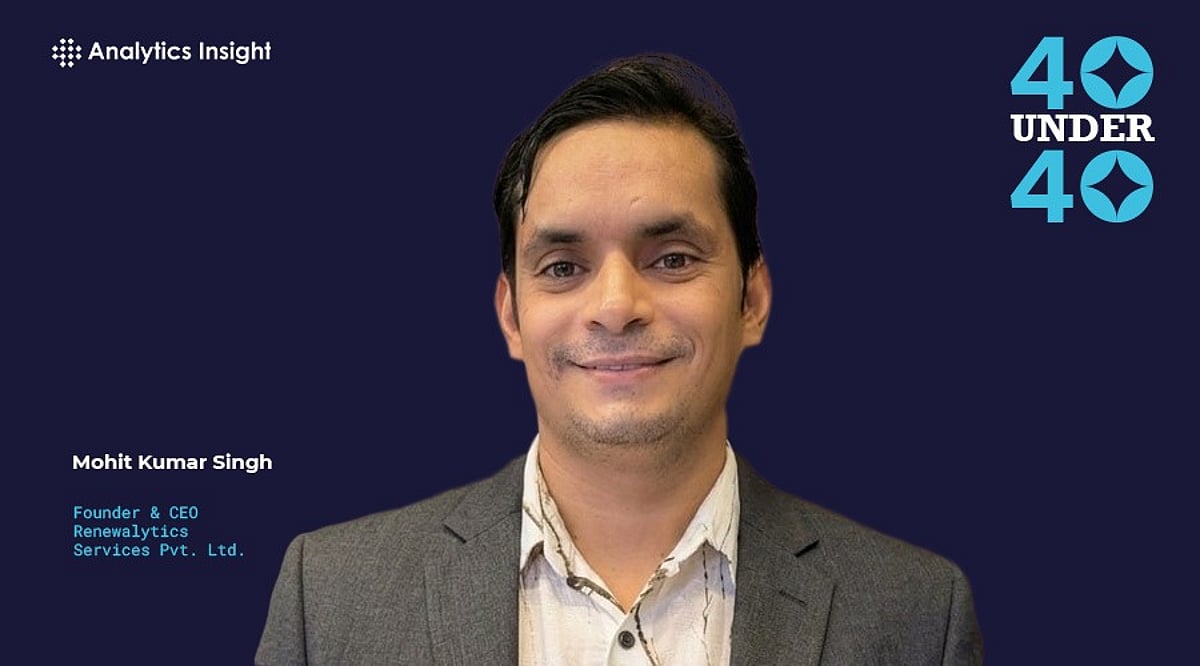
  • AI-Driven Operational Intelligence for Renewable Energy: An Interview with Mohit Kumar Singh

    AI-Driven Operational Intelligence for Renewable Energy: An Interview with Mohit Kumar Singh

    Mohit Kumar Singh, Founder & CEO of Renewalytics Services Pvt. Ltd., is leveraging artificial intelligence to solve critical operational challenges in the renewable energy sector. His company builds AI-powered operational intelligence platforms that help solar and wind operators improve efficiency, grid reliability, and intelligent energy management while supporting India’s clean energy transition.

    Singh’s journey in renewable energy began in December 2016 at Climate Connect, where he worked extensively on forecasting, scheduling, and grid compliance for renewable energy generators. Over the years, he collaborated with independent power producers, operations teams, regulators, and grid stakeholders, gaining first-hand exposure to the operational complexities of integrating renewable energy into the power system.

    After Climate Connect was acquired by ReNew Power and later divested, Singh founded Renewalytics in 2023 with the belief that the industry needed an independent company focused entirely on intelligent software for renewable energy operations. Today, Renewalytics supports more than 3 GW of solar and wind assets across commercial and pilot engagements, offering AI-driven forecasting, scheduling, weather intelligence, DSM analytics, enterprise software, operational automation, and intelligent decision-support systems.

    Solving Real-World Challenges

    India’s renewable energy targets are ambitious, but operational complexity is growing rapidly. Renewable energy companies must manage weather uncertainty, grid regulations, scheduling obligations, battery integration, diverse data sources, operational risks, and increasingly complex market dynamics.

    Renewalytics addresses these challenges by transforming fragmented operational data into actionable intelligence. As Singh explains, “Our objective is to help renewable energy companies improve operational visibility, automate routine workflows, strengthen decision-making, and optimize plant performance.”

    How AI is Transforming Forecasting and Operations

    Artificial Intelligence is fundamentally changing how renewable energy assets are managed. Machine learning enables continuous learning from historical generation patterns, weather behavior, plant performance, and operational outcomes to improve prediction accuracy and support better planning.

    Beyond forecasting, AI is assisting operations teams through intelligent co-pilots that validate data, detect anomalies, recommend corrective actions, and automate repetitive tasks. At Renewalytics, the team is building agentic AI capabilities where specialized AI agents collaborate to support weather intelligence, operational analytics, forecast validation, data quality monitoring, and performance optimization.

    “Our philosophy is that AI should augment human expertise rather than replace it,” Singh says. “We aim to enable engineers and operations teams to make faster and better-informed decisions.”

    Differentiation from Traditional Solutions

    Traditional energy management platforms primarily focus on monitoring assets and reporting operational data. Renewalytics goes beyond monitoring by combining AI, machine learning, operational intelligence, automation, weather analytics, scheduling, DSM analytics, and enterprise workflow management into a unified platform.

    Singh notes that his team’s practical experience within the renewable energy ecosystem allows them to build solutions that address real operational challenges instead of simply presenting data on dashboards. “We believe the future lies in intelligent platforms that actively assist decision-making rather than simply displaying information,” he adds.

    The Role of Data in Renewable Energy Performance

    Data is the foundation of every intelligent renewable energy system, but the true value lies in its quality, reliability, and contextual understanding. Renewable energy operations depend on information from SCADA systems, weather services, meters, grid operators, market platforms, scheduling systems, and operational logs.

    “At Renewalytics, significant emphasis is placed on data engineering, validation, automation, and integration because reliable AI models can only be built upon reliable data,” Singh explains. High-quality data ultimately leads to better operational decisions, improved efficiency, and stronger grid reliability.

    Future Trends and Vision

    Singh believes the next decade of renewable energy will extend far beyond capacity addition. The sector will increasingly be shaped by battery energy storage systems, hybrid renewable projects, AI-powered operational co-pilots, autonomous software agents, intelligent forecasting, grid optimization, and advanced machine learning.

    “As renewable penetration continues to increase, maintaining grid stability will become just as important as adding new generation capacity,” he says. “Utilities, grid operators, and renewable energy companies will rely far more heavily on predictive analytics, flexible energy resources, and intelligent software platforms to maintain system reliability.”

    Looking ahead, Singh envisions Renewalytics evolving into a digital operating layer that helps organizations improve efficiency, strengthen grid reliability, and accelerate the global clean energy transition. “Our long-term ambition is to build technology from India that serves renewable energy companies across international markets,” he concludes.

  • Solana (SOL) Long-Term Price Forecast: Scenarios for 2030 and Beyond

    Solana (SOL) Long-Term Price Forecast: Scenarios for 2030 and Beyond

    Solana remains one of the fastest-growing Layer-1 blockchains, but its long-term price outlook is far from certain. Forecasts for SOL by 2030 range from around $90–$300 in cautious scenarios to over $2,000 in highly bullish cases. The outcome will depend on adoption, regulation, and overall crypto market growth.

    Institutional interest continues to strengthen Solana’s investment case. Spot Solana ETF inflows have crossed $1.1 billion, while major financial firms are exploring Solana-based products. Growing adoption by traditional institutions could significantly increase long-term demand for the SOL token.

    Technology remains one of Solana’s biggest advantages. Upgrades like Alpenglow, Firedancer, and future scaling improvements aim to boost speed, reduce latency, and improve network reliability. These innovations could make Solana an attractive platform for payments, DeFi, tokenized assets, and high-frequency trading.

    Real-world asset tokenization is becoming another major growth driver. Tokenized assets on Solana have reached record highs, while companies including Visa, Franklin Templeton, and Société Générale have explored the network for payments and digital asset settlement. Wider enterprise adoption could support higher SOL valuations over time.

    Despite its strengths, Solana faces serious challenges. Ethereum still leads decentralized finance with a much larger ecosystem and total value locked. Solana must also overcome concerns about past network outages, execution risks, and regulatory uncertainty to maintain long-term investor confidence.

    Analysts suggest thinking about Solana in scenarios rather than one fixed price target. A cautious outlook places SOL between $90 and $300 by 2030, while a moderate case sees several hundred dollars through steady ecosystem growth. A bullish scenario above $1,000 would likely require mass stablecoin adoption, expanding institutional investment, and a strong crypto bull market.

    Looking beyond 2030, forecasts become even wider. Some experts see SOL reaching $2,000–$4,000 by 2036 if Solana becomes a key layer for global tokenized finance, while bearish projections remain below $500 if competition, regulation, or adoption disappoints. As with all cryptocurrencies, long-term returns remain highly uncertain and volatile.

  • Complete Guide to Microsoft AI Certifications for Professionals in 2026

    Complete Guide to Microsoft AI Certifications for Professionals in 2026

    Artificial intelligence is reshaping the workplace, and companies across industries are actively seeking professionals who understand AI tools. Microsoft has developed a comprehensive certification program to help professionals acquire these in-demand skills. These certifications go beyond simple tests—they provide practical, job-ready knowledge that can be applied immediately.

    Different roles require different learning approaches. Managers, developers, data scientists, and IT specialists each have unique goals and challenges. Microsoft recognizes this and has designed separate learning paths tailored to each career type.

    What Microsoft’s AI Program Offers

    Microsoft provides a centralized learning hub for AI training, bringing together a wide range of courses in one accessible platform. Professionals can progress through the material at their own pace, whether they are complete beginners or have some foundational knowledge. The hub offers resources for both groups.

    Learners start with basic concepts about what AI is and gradually advance to more complex topics. The system flows naturally from one idea to the next, with each lesson building on the previous one.

    Different Paths for Different Jobs

    Each job role has distinct needs. A business leader wants to understand how AI can drive company growth. A developer focuses on writing code that leverages AI services. A data scientist works on improving prediction accuracy. IT professionals manage the infrastructure that runs AI applications. Microsoft has created separate learning paths for each role.

    • Business leaders take courses on applying AI to business strategy.
    • Developers learn to build applications using Azure AI tools.
    • Data scientists study machine learning and analytical methods.
    • IT professionals learn to maintain and optimize AI systems.

    This role-based approach ensures professionals learn only what is relevant to their work, saving time and keeping training focused on real-world goals.

    Learning the Basics First

    Microsoft emphasizes starting with fundamentals. Early courses explain what AI is and how AI systems operate. Key introductory courses include Introduction to AI in Azure and Introduction to Generative AI. These help professionals grasp core concepts.

    Training also covers responsible AI practices, teaching how to build fair and safe AI systems. This ethical component is a critical part of the curriculum, addressing concerns beyond just technology.

    Why Companies Value These Certifications

    The job market is evolving rapidly, and employers prioritize candidates with verified AI skills. A Microsoft AI certification demonstrates that a professional has invested time in learning and has passed a rigorous assessment. The certification process includes courses, hands-on practice labs, and a final exam.

    The exam tests practical ability, ensuring certified professionals are ready to contribute from day one. Employers trust this validation, and certified workers stand out to hiring managers.

    How to Get Started

    Professionals should begin with the fundamentals using Microsoft Learn, a free platform that requires only a Microsoft account. Learners choose a path aligned with their role and progress through courses at their own pace. Many courses include practice labs where users work with real tools in a safe environment, reinforcing skills through hands-on experience.

    Starting this journey is easier than many professionals think. The structured approach removes guesswork and provides a clear roadmap to certification.

    Final Thoughts

    Microsoft’s AI certification program prepares professionals for various job roles by teaching both technical skills and responsible AI practices. With self-paced learning and practical training, professionals gain skills that help them thrive in an AI-driven workplace.

    Frequently Asked Questions

    1. What are Microsoft AI Certifications? They are role-based learning programs that help professionals build practical AI, Azure, and machine learning skills through structured courses and certification exams.
    2. Who should take them? Developers, data scientists, IT professionals, business leaders, and anyone looking to build AI skills for career growth.
    3. Are Microsoft AI courses free? Many learning modules are free on Microsoft Learn, though certification exams typically require a separate fee.
    4. Do they help with career opportunities? Yes. They validate AI and cloud computing skills, making professionals more competitive for roles in AI, data science, software development, and IT.
    5. Where can I start? Begin with Microsoft Learn, choose a role-based AI learning path, complete the training modules, practice in hands-on labs, and prepare for the certification exam.
  • How Disconnected Payment Data Undermines Business Performance and What to Do About It

    How Disconnected Payment Data Undermines Business Performance and What to Do About It

    Ask most finance or operations teams how their payment data is structured, and you’ll get a version of the same answer: it depends which provider you mean. Authorization rates live in one dashboard. Settlement reports come from another system, on a different schedule, with different field names. Chargeback data sits somewhere else entirely. None of it is wrong, exactly — it’s just disconnected. And that disconnection has a cost that rarely gets attributed to its actual source.

    Payment data fragmentation is one of those problems that doesn’t announce itself. It shows up as slow month-end closes, as decisions that take longer than they should, as performance issues that go unnoticed until they’ve already cost real money. This is what fragmentation actually does to a business, and what reduces it.

    What Payment Data Fragmentation Actually Looks Like

    Fragmentation isn’t a single event. It’s the cumulative effect of payment data living in multiple places, in multiple formats, updated on multiple schedules — with no layer that brings it together. It happens for understandable reasons. A business adds a second payment provider for a new market. Each provider has its own dashboard, its own API, its own reporting structure. Transaction data, settlement data, dispute data, and fee data all come from each provider independently. Multiply that by three or four providers, and you have a payment data environment where no single system holds the full picture.

    The fragmentation isn’t limited to provider-to-provider differences, either. Within a single provider, transaction-level data, settlement-level data, and reporting-level data sometimes use different identifiers and update on different timelines — which means even “one provider” can produce data that doesn’t cleanly line up with itself.

    Inconsistent Reporting Across Providers

    The most immediate symptom of fragmentation is that reports from different providers don’t mean the same thing. One provider might report a “decline” using a generic code. Another might break declines into a dozen specific reason codes. One settles in the transaction currency; another settles after currency conversion, with the conversion rate applied at a different point in time. Field names differ — what one provider calls a “transaction ID” might be called a “reference number” by another, with no shared identifier connecting the two.

    None of these differences are arbitrary. They reflect how each provider built their own systems. But the effect is that a report pulled from Provider A and a report pulled from Provider B can’t be combined without manual translation — and that translation work has to happen every time someone wants a combined view.

    Poor Visibility Into Payment Performance

    When transaction data is spread across multiple systems, getting a complete view of payment performance requires pulling from all of them — and that’s rarely done routinely, because it’s expensive in time. The result is that most businesses operate with partial visibility most of the time. They can see overall revenue and volume easily enough — those numbers tend to be tracked centrally regardless. What’s harder to see is the detail underneath: authorization rates broken down by provider, by card type, by geography. Decline patterns that might indicate a routing problem. Processing costs that vary by transaction type and route.

    This detail is exactly the kind of payment analytics that drives optimization — and it’s exactly the kind of data that fragmentation makes expensive to produce. So it often just isn’t produced, except as an occasional special project.

    Decisions That Take Longer Than They Should

    Fragmented data doesn’t just make analysis harder — it makes decisions slower, because someone has to do the analysis before the decision can be made. Consider a simple question: should we route more transactions to Provider B for a specific card type, because Provider A’s authorization rates have been declining? Answering that requires comparing authorization rates across providers, for a specific segment, over a specific time period. If that comparison requires manually pulling and reconciling data from two separate dashboards, the question doesn’t get answered quickly — it gets answered when someone has time to do the legwork.

    In practice, this means payment performance issues often persist for weeks longer than they need to. Not because nobody noticed something seemed off, but because confirming it and acting on it required more effort than the day-to-day workload allowed for.

    Reconciliation Becomes a Recurring Drain

    Reconciliation — matching transactions to settlements, settlements to bank deposits, and fees to invoices — is where fragmentation costs show up most concretely for finance teams. Without a unified transaction data layer, reconciliation means: exporting reports from each provider separately, often in different file formats; manually mapping transaction references across systems that use different identifiers; adjusting for currency conversion differences between what was authorized and what settled; and investigating discrepancies one by one, often without a clear record of why a given transaction doesn’t match.

    This work tends to repeat every reporting period, with the same manual steps each time. It’s the kind of recurring cost that’s easy to normalize — “that’s just what month-end looks like” — but that normalization is itself a sign of how deeply fragmentation has been absorbed into how the business operates.

    Optimization Becomes Guesswork

    Payment optimization — improving routing, adjusting fraud rules, renegotiating provider terms — depends on being able to measure the effect of changes. Fragmented data makes that measurement difficult in both directions: before a change, to identify where the opportunity is, and after a change, to confirm it worked. A business considering a new routing rule needs to know, with reasonable confidence, what its current authorization rates look like by provider and segment. Without that baseline, the new rule is implemented on intuition rather than data — and its impact is hard to verify afterward, because the same fragmented reporting that made the baseline unclear also makes the result unclear.

    Over time, this means optimization work in fragmented environments tends to be sporadic and reactive — triggered by an obvious problem rather than ongoing refinement based on data that’s readily available.

    Why Centralized Payment Visibility Changes the Picture

    The common thread across all of these issues is that fragmentation turns routine questions into projects. Centralized payment visibility — a single, normalized view of transaction data across all providers — turns those projects back into routine questions. When transaction data, settlement data, and fee data from every provider flow into a single normalized structure, comparisons that used to require manual work become straightforward. Authorization rates by provider and segment are visible without exporting anything. Reconciliation becomes a matching exercise against a single source of truth rather than a cross-provider translation task. Decline patterns that might indicate a routing issue are visible as they emerge, not discovered weeks later during a performance review.

    This isn’t just about convenience. It changes the cadence of payment operations from reactive to ongoing — from “we’ll look into this when something seems wrong” to “we can see this continuously and adjust as needed.”

    Practical Ways to Reduce Payment Data Fragmentation

    Normalize data at the point of collection. The most effective fix happens upstream of reporting. Rather than collecting each provider’s data in its native format and reconciling differences later, a normalization layer translates each provider’s output into a consistent schema as transactions happen. Reports built on top of normalized data don’t require translation — the translation already happened.

    Use a single interface for provider-facing operations. For businesses managing payments on behalf of sub-merchants or operating branded payment products, fragmentation often extends to the provider-facing side as well — different merchant onboarding flows, different reporting interfaces for different acquirers. A white label payment gateway that presents a single interface regardless of which providers operate underneath it removes this layer of fragmentation for merchants and partners, not just for internal teams.

    Build reconciliation around a unified transaction record. Reconciliation tooling that operates against a single, normalized transaction record — rather than against each provider’s native export — turns a recurring manual process into an automated matching exercise. Discrepancies get flagged against a consistent baseline, which makes investigation faster and more reliable.

    Make payment analytics a standing capability, not a project. When the data layer is unified, payment analytics stops being something that requires a special data pull. Authorization rates, decline patterns, and processing costs by route become things that can be checked routinely — which is what makes ongoing optimization realistic rather than aspirational.

    Centralize provider management at the infrastructure level. The most durable fix addresses fragmentation at its source: provider connections themselves. Corefy centralizes data across connected providers into a single normalized layer, so payment operations, finance, and analytics teams work from one consistent dataset regardless of how many providers are active underneath it.

    Fragmentation Is a Solvable Problem, Not a Permanent State

    Payment data fragmentation tends to be treated as an inevitable consequence of using multiple providers — something to work around rather than something to fix. That framing undersells how much it costs. The slower decisions, the recurring reconciliation work, the optimization opportunities that go unaddressed because confirming them takes too much effort — these aren’t fixed costs of doing business with multiple providers. They’re costs of not having a unified data layer underneath those providers.

    Businesses that address fragmentation directly — through normalization, centralized reporting, and unified provider management — don’t just save time on reconciliation. They gain the ability to see their payment performance clearly enough to actually improve it, on an ongoing basis, rather than only when something has already gone wrong.