Blog

  • Bitcoin Slips Beneath $63,000: Can BTC Recover from $62,700 Support?

    Bitcoin Slips Beneath $63,000: Can BTC Recover from $62,700 Support?

    Bitcoin continues to face selling pressure, trading near $62,700 after losing key support levels. Technical indicators remain bearish, but the Relative Strength Index (RSI) has entered oversold territory, suggesting selling momentum may be exhausting. Investors are now watching crucial support levels, ETF flows, and macroeconomic events for direction.

    Current Market Overview

    As of July 17, 2026, Bitcoin is trading around $62,724, struggling to reclaim the $64,500–$65,000 resistance zone. The cryptocurrency has been confined to a narrow range of $62,500–$64,700, reflecting cautious market sentiment. Traders are weighing recent US inflation data, interest rate expectations, and global political uncertainties, which have kept buying activity limited.

    Bitcoin Chart Analysis

    The 15-minute BTC/USD chart reveals a bearish pattern with lower highs and lower lows, indicating persistent selling pressure. A brief push toward $64,800 earlier in the session was quickly reversed, and Bitcoin fell below the critical $63,000 level. Bollinger Bands continue to slope downward, with the price hugging the lower band—a sign that sellers remain in control. Any recovery would require a clear breakout above the bands’ midline.

    RSI Signals Oversold Conditions

    The RSI currently stands at 29.7, placing Bitcoin in the oversold zone (below 30). While this does not guarantee an immediate reversal, it often indicates that selling pressure is overextended. Traders typically look for the RSI to climb back above 40 or 50 alongside bullish price action before confirming a trend change. For now, a short-term bounce is possible if buyers step in.

    Key Price Levels to Watch

    • Support: $62,500 (critical), $62,200, $61,800. A break below these could open the door to $61,500–$61,000.
    • Resistance: $63,000 (immediate), $63,500, $64,000. A sustained move above $64,000 would signal renewed bullish momentum.

    Market Sentiment and External Factors

    Overall sentiment remains mixed. Recent US inflation data has eased fears of aggressive rate hikes, providing some support for risk assets like Bitcoin. However, global political tensions and lingering financial market uncertainty continue to cap gains. Institutional investors are closely monitoring Bitcoin ETF flows, central bank decisions, and upcoming economic reports. The $62,500–$63,000 zone is viewed as a key support range, while resistance lies between $65,300 and $65,750.

    Latest Bitcoin News

    Bitcoin has traded in a tight range over the past few sessions as investors balance positive inflation data with geopolitical concerns. Market experts remain divided—some see the current consolidation as a foundation for a recovery, while others anticipate another leg down before a stronger rally. ETF activity, US economic data, and Federal Reserve policy updates are expected to generate fresh volatility.

    Future Outlook

    Bitcoin remains under bearish pressure below key resistance. The oversold RSI suggests that buyers may attempt a comeback, but a decisive move above $62,500 is critical for a bullish reversal. If Bitcoin can hold this support and push above $64,000, it could trigger more aggressive buying. Conversely, a drop below $62,200 could lead to a decline toward the $61,500–$61,000 zone. The next few sessions will be pivotal.

    Frequently Asked Questions

    1. What is Bitcoin’s current price? Bitcoin trades near $62,724 at the time of this analysis.
    2. Why is Bitcoin falling? Weak market sentiment, profit-taking, and global economic uncertainty have kept sellers in control.
    3. Is Bitcoin oversold now? Yes, the RSI near 29.7 places Bitcoin in oversold territory.
    4. What are the important support and resistance levels? Support at $62,500, $62,200, $61,800; resistance at $63,000, $63,500, $64,000.
    5. What should traders watch next? Whether Bitcoin holds above $62,500, along with ETF flows, US economic data, and Federal Reserve policy updates.

    Disclaimer: This article is for informational purposes only and does not constitute financial advice. Cryptocurrency investments are risky. Always conduct your own research (DYOR) before making investment decisions.

  • Quordle Hints and Answers for July 17: Cumin, Paler, Grass, Inbox Revealed

    Quordle Hints and Answers for July 17: Cumin, Paler, Grass, Inbox Revealed

    Today’s Quordle puzzle (July 17) features a mix of everyday words related to a kitchen spice, a color shade, nature, and email. One of the four answers contains repeated letters, making letter placement and deduction key to solving all four grids.

    Hints for Today’s Quordle Puzzle

    If you need a nudge without giving away the answers, here are the hints:

    • Word 1 (Top Left): A seed of the parsley plant commonly used to make curry.
    • Word 2 (Top Right): Lighter in color than another thing.
    • Word 3 (Bottom Left): A green ground cover that people jokingly say one needs to “touch” when they spend too much time on computers.
    • Word 4 (Bottom Right): The folder where incoming emails are delivered for you to read.

    Additional Clues

    • One of today’s answers contains a pair of repeated letters.
    • The four words begin with the letters C, P, G, and I.

    If you’re still solving, this is your final spoiler warning. Stop scrolling now if you’d rather discover the answers on your own.

    Quordle Answers Today (July 17)

    The answers for today’s Quordle are:

    • CUMIN
    • PALER
    • GRASS
    • INBOX

    Puzzle Analysis

    The difficulty level of today’s Quordle is fairly low, as all the words are part of everyday vocabulary. The word INBOX will likely be one of the first solved after identifying some initial letters. GRASS may be confusing due to the double S.

    PALER is a comparative form of the adjective that players can easily miss while thinking of color names. However, CUMIN could be one of the trickiest for those unfamiliar with various cooking spices, though the clue clearly points to it. Overall, today’s Quordle with the repeated letter is not very challenging.

    Conclusion

    Today’s Quordle features an interesting mix of words from everyday life, food, technology, and nature. Even though the clues are simple, GRASS (with the repeated letter) and CUMIN (uncommon guess) require extra attention.

  • Indian Stock Market Surges: Sensex Gains Over 900 Points, Nifty Crosses 24,300

    Indian Stock Market Surges: Sensex Gains Over 900 Points, Nifty Crosses 24,300

    Indian benchmark indices surged in Friday’s afternoon session, with the Sensex jumping over 900 points and the Nifty crossing the 24,300 mark. Broad-based buying across banking, IT, and heavyweight stocks lifted investor sentiment and pushed markets sharply higher.

    Indian equity benchmarks ended Friday’s session on a strong note, outperforming most Asian markets as robust buying in information technology and financial stocks offset concerns over rising crude oil prices and geopolitical tensions in the Middle East. Investors largely focused on the ongoing June-quarter earnings season, with encouraging corporate results boosting market sentiment.

    The Sensex rose 912.74 points, or 1.18%, to 78,099.61, while the Nifty climbed 248.10 points, or 1.03%, to 24,320.85. The gains pushed the Nifty above the 24,300 mark, reflecting broad-based buying across sectors.

    IT and Financial Stocks Drive the Rally

    The IT sector took center stage in Friday’s rally as Tech Mahindra delivered better-than-expected quarterly results, sparking buying sentiment in technology-related stocks. Shares of Infosys, HCL Technologies, and Tata Consultancy Services rose, with analysts believing the quarter could mark a turning point for the underperforming sector. Banks were also strong, with Jio Financial Services jumping on better-than-expected quarterly results and loan growth estimates for Reliance Industries ahead of its Q1 results.

    Wipro, CEAT Among Major Laggards

    Wipro got off to a poor start as its quarterly earnings fell short of expectations, and management hinted at a delayed-than-anticipated demand recovery. Tire maker CEAT also took a severe beating due to weak earnings performance. Some pharma and metals sector companies were under selling pressure, with Cipla, Dr. Reddy’s Lab, and Hindalco ending on a negative note.

    Earnings Season Takes Center Stage

    According to market analysts, corporate profits and management outlooks should continue driving stock market movements in the coming weeks. Despite high oil prices and geopolitical instability being important factors, market participants will be closely watching how companies perform during the quarterly earnings season.

    Weekly Market Performance (July 13–17)

    The Indian equity market closed on a bullish note despite staying confined to a range during the July 13–17 week due to uncertainties in the global economic environment and expectations of earnings from Indian companies. The Sensex and Nifty stayed in a tight range as traders weighed strong corporate performance in Q4 June against rising crude oil prices and tensions in the Middle East.

    The week started with a volatile session on Monday as major indices managed to recover from early losses due to strong performance in IT sector stocks driven by earnings results and significant deals. The rally on Friday, led by stocks such as Reliance Industries, Jio Financial Services, Tech Mahindra, and private banking stocks, boosted the major benchmarks.

    Disclaimer: This article is for informational purposes only and does not constitute investment advice. Always conduct your own research before making investment decisions.

  • How Artificial Intelligence Is Transforming Product Development and Global Sourcing for Brands

    How Artificial Intelligence Is Transforming Product Development and Global Sourcing for Brands

    Building a product requires creativity, planning, strong supplier relationships, smart pricing, and meticulous quality control. For growing brands, this process can be both exciting and overwhelming. Finding the right manufacturer, comparing quotes, managing samples, and keeping production on track are time-consuming tasks. Artificial intelligence is now streamlining these workflows, making them more efficient and data-driven.

    Global Product Sourcing Becomes Data-Driven

    Global product sourcing is a critical component of a successful product line. The right supplier can enhance quality, reduce costs, and ensure timely production. Conversely, a poor supplier can cause delays, inconsistent products, and financial losses. AI tools enable brands to compare suppliers faster and identify better matches based on specific needs. While AI does not replace human judgment—brands must still assess quality, ethics, and shipping regulations—it reduces guesswork and accelerates decision-making with data-backed insights.

    Better Communication Reduces Production Problems

    Most sourcing errors stem from miscommunication. A supplier may misinterpret specifications, overlook material choices, or misunderstand quality standards. These small mistakes can lead to delays, rejected samples, or subpar final products. Clear communication from the outset prevents many of these issues. AI tools help structure specifications, organize supplier responses, and track production details, ensuring both parties work from consistent notes. This is especially valuable when brands operate across different countries and time zones. While not a cure-all, clearer communication significantly increases the likelihood of smooth production runs.

    AI Accelerates the Journey from Idea to Sample

    The early stages of product development are often uncertain. Brands may have a great concept but struggle to translate it into detailed specifications and samples. AI tools assist by clarifying requirements and enabling brands to communicate ideas to suppliers in straightforward terms. This reduces confusion and speeds up the transition from concept to sample. Fast sampling is crucial for brands chasing trends or seasonal opportunities. AI helps teams compare supplier capabilities, estimate costs earlier, and refine product details, giving brands a better chance of launching at the optimal time.

    Supplier Discovery Becomes More Efficient

    Traditionally, finding suppliers involved networking, attending trade shows, or browsing directories—slow processes that often miss viable options. AI sourcing tools scan broader networks, matching suppliers to a brand’s specific needs. This benefits both new brands and established companies expanding into new product categories. Speed matters because finding a supplier is about more than just production capability; it involves meeting quality standards, price targets, order volumes, and delivery schedules. A larger pool of suppliers provides more choice and reduces dependence on a single factory or region.

    Cost Control Begins Before Production

    Most product costs are determined long before manufacturing begins. Material choices, design, packaging, order size, shipping, and supplier location all influence the final cost. AI tools help brands evaluate these factors early, allowing adjustments before costs become fixed. Even small decisions in design or sourcing can significantly impact profit margins. Cost control does not mean always choosing the cheapest supplier—a low-cost supplier with poor quality or missed deadlines can be more expensive in the long run. Smart sourcing balances price against reliability and quality. AI can analyze the numbers, but the final decision rests with the brand and its strategic goals.

  • XRP Price Analysis: Can Ripple Recover Amid Slowing Whale Activity and ETF Demand?

    XRP Price Analysis: Can Ripple Recover Amid Slowing Whale Activity and ETF Demand?

    XRP is trading near $1.09 as whale activity and ETF demand weaken, leaving investors questioning its next move. The cryptocurrency has dropped about 2% in the last 24 hours, with daily trading volume above $1.1 billion and a total market value close to $68 billion. Despite the decline, XRP remains the sixth-largest cryptocurrency by market capitalization.

    Large investors, known as whales, have historically played a major role in XRP price movements. However, recent blockchain data shows Binance whale withdrawals have dropped to around 885 million XRP, the lowest level in over two months. This suggests major holders are becoming more cautious. Additionally, large XRP transactions have become less common, coinciding with weaker institutional interest. While this does not guarantee a sharp decline, it removes a key source of buying support.

    Exchange-traded funds (ETFs) have been a major topic in the crypto market, but recent figures show XRP investment products recorded about $7.18 million in net outflows. This marks a shift from stronger inflows earlier in the year, reflecting a cautious mood across the wider market. Many investors are waiting for better conditions before committing new capital.

    Technically, XRP is near a crucial support zone between $1.08 and $1.10. Buyers have defended this range multiple times in recent months. If XRP stays above this level, a recovery could target $1.20, then $1.35, and potentially $1.50. On the downside, $1.00 remains the key support; a break below could increase selling pressure.

    Despite market weakness, Ripple continues to expand its global payment network and develop the XRP Ledger. Recent projects focus on tokenized assets, decentralized finance, stablecoins, and business solutions. Regulatory approvals in Europe could accelerate adoption among banks and financial institutions.

    Market sentiment around XRP is mixed. Some investors are optimistic about Ripple’s business growth, while others remain cautious due to slowing whale activity and ETF demand. The broader crypto market also influences XRP, with Bitcoin and other major assets often setting the direction.

    For XRP to recover, several conditions need to improve: a return of strong whale buying, better ETF inflows, and clearer regulatory frameworks. The next few weeks will be critical. If the $1.08–$1.10 support holds, a move toward $1.20 is possible. If it breaks, sellers may gain control.

    Key Takeaways:

    • XRP holds a crucial support zone between $1.08 and $1.10 despite recent selling pressure.
    • Whale activity and ETF inflows have slowed, reducing short-term bullish momentum.
    • Ripple continues to expand its payment network and XRP Ledger, supporting long-term growth.

    FAQs

    1. What is XRP’s current price?
    The token trades near $1.09. It remains the sixth largest cryptocurrency by market capitalization despite a 2% decline over the last 24 hours.

    2. Why has XRP come under pressure?
    Reduced whale activity and a drop in large transactions have weakened buyer support. Additionally, institutional investors have pulled money out, leading to $7.18 million in net ETF outflows.

    3. What is the key support level for XRP?
    The immediate support zone lies between $1.08 and $1.10. If sellers break this range, the next vital psychological and technical floor to watch rests at $1.00.

    4. Can XRP recover in the coming weeks?
    A recovery remains entirely possible. However, the market first needs to see a return of aggressive whale buying, positive institutional ETF inflows, and improved momentum across the broader cryptocurrency landscape.

    5. What could drive XRP higher?
    Future gains depend on renewed whale accumulation and stronger institutional investment. Long-term growth could also be triggered by clearer global regulations and the ongoing expansion of Ripple’s cross-border network.

  • Bitmine’s Ethereum Staking Generates $45.7M, Accounting for 98% of Quarterly Revenue

    Bitmine’s Ethereum Staking Generates $45.7M, Accounting for 98% of Quarterly Revenue

    Bitmine Immersion Technologies has reached a major milestone as Ethereum staking became the company’s largest source of income. According to its latest quarterly report, Ethereum staking and validator services generated $45.7 million in revenue, making up 98% of the total quarterly revenue of $46.5 million.

    Shift from Bitcoin Mining to Staking

    The latest figures show how quickly Bitmine has transformed its business model. Instead of relying mainly on Bitcoin mining, the company now earns almost all of its revenue through Ethereum staking. This change reflects a broader trend across the crypto industry, where more companies view Ethereum staking as a reliable way to earn regular income without depending solely on crypto price swings.

    Legacy Businesses Now Play a Very Small Role

    Bitcoin self-mining brought in only $624,000 during the quarter, while consulting services added another $168,000. Compared to the $45.7 million from Ethereum staking, these businesses now contribute very little. Revenue grew more than 22 times year-over-year, from $2.05 million in the same quarter last year.

    MAVAN Platform Drives Revenue Growth

    The launch of the MAVAN (Made in America Validator Network) platform in March 2026, along with the acquisition of Australian staking infrastructure company Pier Two Holdings, fueled the rapid growth. Pier Two contributed about $3.53 million in staking revenue. MAVAN supports both Bitmine’s own Ethereum holdings and institutional clients’ digital assets.

    Millions of ETH Now Generate Rewards

    As of July 12, 2026, Bitmine held 5.77 million ETH, with 4,917,189 ETH (about 85%) actively staked. These holdings represent about 4.8% of Ethereum’s total circulating supply. Company Chairman Tom Lee said that once the entire Ethereum treasury enters the MAVAN platform, projected annual staking rewards could reach approximately $284 million, based on a recent annual staking yield of roughly 2.70%.

    Ethereum Attracts More Institutional Investors

    Bitmine’s success highlights a broader institutional shift. Ethereum staking provides a steady income while allowing investors to retain ownership of their ETH. Unlike Bitcoin mining, staking does not require large amounts of electricity or expensive hardware. Ethereum’s transition to Proof-of-Stake in 2022 reduced energy consumption by about 99.98%, making it more attractive to environmentally conscious investors.

    Profit Challenges Persist

    Despite record revenue, Bitmine reported a net loss of $83.6 million, largely due to derivative-related expenses, operating costs, and accounting adjustments tied to its expanding crypto treasury. The company also cited risks such as changes in staking rewards, validator performance, network upgrades, regulations, and market volatility.

    Ethereum Staking Continues to Expand

    The Ethereum network now has more than 920,000 active validators. The recent Pectra update allows validators to reinvest staking rewards directly into their validator accounts, improving operational efficiency. As tokenization, decentralized finance, and blockchain infrastructure evolve, Ethereum staking services are likely to grow further.

    Why This Matters

    Bitmine’s transformation shows how Ethereum staking is becoming a major revenue source for crypto companies. The shift underscores growing institutional adoption, more predictable blockchain income, and the industry’s move away from traditional cryptocurrency mining.

    Outlook

    With 98% of total quarterly revenue from staking, 5.77 million ETH under management, and nearly 4.92 million ETH staked, Bitmine is now one of the largest institutional participants in Ethereum’s Proof-of-Stake ecosystem. If current yields hold, annual staking rewards could reach $284 million. Although market risks remain, Bitmine’s pivot illustrates how blockchain companies are increasingly turning to staking as a long-term source of recurring revenue.

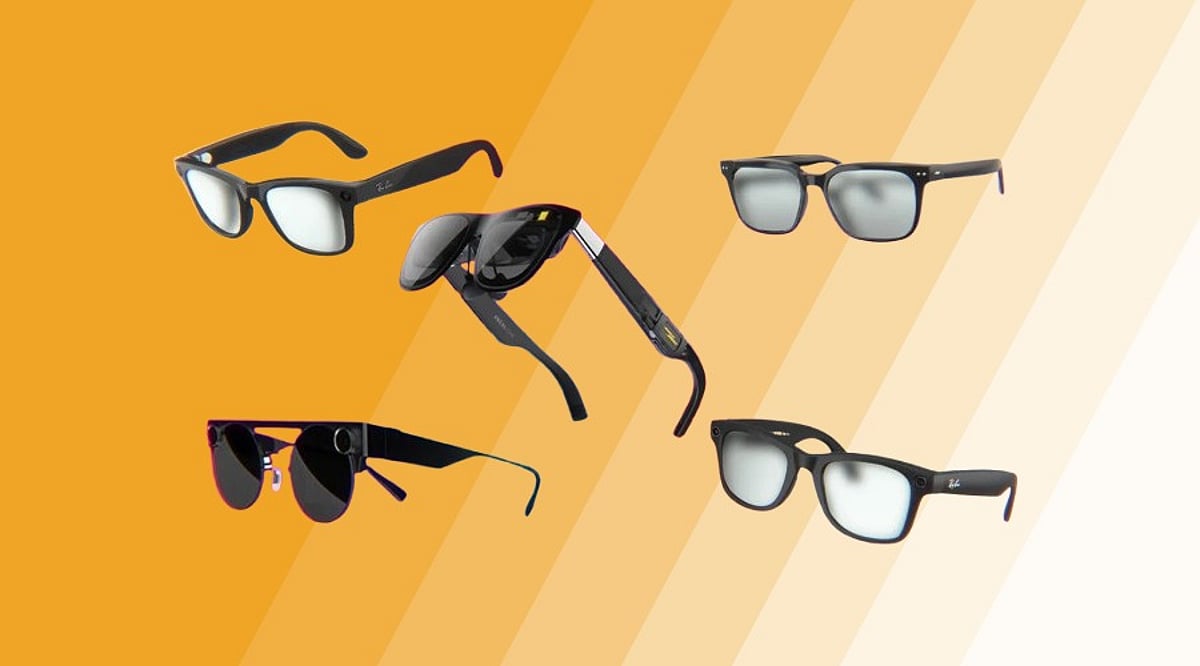
  • Best Smart Glasses 2026: AI, AR Display, and Standalone Models Compared

    Best Smart Glasses 2026: AI, AR Display, and Standalone Models Compared

    Smart glasses now split into three distinct categories: AI camera and audio glasses, tethered AR display glasses, and standalone AR glasses with a built-in HUD. The category matters more than the model. Once the use case is clear, the shortlist narrows fast.

    Every spec here comes from manufacturers or retailers, including weight, battery, and connection type, not just headline features.

    A pair of smart glasses is sold every ninety seconds somewhere in the world, and the surprising part is not the sales figure. It is that three completely different products now share the same shelf. One pair replaces a phone call. Another replaces a monitor. A third tries to replace both at once and pays for it in battery life.

    That split is the real story behind the buying decision. Meta’s Ray-Ban line proved AI glasses could sell at scale, pulling Google, Samsung, and Warby Parker into a competing Android XR platform launching later this year. Meanwhile, the AR display category, led by Xreal, Viture, and RayNeo, moved past prototype status into something people actually use for a workday or a long flight. Anyone shopping this category for the first time needs to understand the split before comparing a single spec.

    Types of Smart Glasses in 2026: AI, AR Display, and Standalone AR Explained

    AI camera and audio glasses (led by Ray-Ban Meta Gen 2) skip the display entirely. They record video, take calls, and run an AI assistant through bone-conduction audio, pairing over Bluetooth rather than a cable. They look like ordinary glasses, which is the point.

    AR display glasses (including the Xreal, Viture, and RayNeo Air series) tether to a phone, laptop, or console over USB-C and project a large virtual screen through micro-OLED panels. Most carry no camera and no battery of their own; power and video come from the connected device.

    Standalone AR glasses (represented here by RayNeo’s X3 Pro) combine a lightweight HUD, a camera, and onboard AI in one frame with their own battery. That independence is the trade for shorter runtime, and the comparison table below shows exactly how much shorter.

    Best Smart Glasses for Work, Travel, Gaming, and Everyday Use

    Compatibility, comfort, and what to check before buying smart glasses:

    Tethered AR glasses need a source device with USB-C video output, often called DisplayPort Alt Mode. Xreal, Viture, RayNeo’s Air line, and Rokid Max 2 work with recent iPhones, most Android phones, Macs, Windows laptops, the Steam Deck, the ROG Ally, and the Nintendo Switch 2. Older phones without Alt Mode need an HDMI-to-USB-C adapter. Ray-Ban Meta Gen 2 pairs over Bluetooth instead, with no cable or Alt Mode requirement. RayNeo X3 Pro connects over Wi-Fi and Bluetooth as a standalone device rather than a tethered display.

    Weight alone does not decide comfort. RayNeo distributes the Air 4 Pro’s 76g at roughly 47 percent in the front and 53 percent in the rear to ease nose pressure, a design choice that matters more over a long session than the raw number on a spec sheet. The VITURE Luma Pro, the heaviest tethered pair here at close to 90g, offsets that with two frame sizes for different IPD ranges. Anyone who wears prescription lenses should confirm exact diopter support directly with the brand before buying, since ranges shift between hardware revisions.

    Best Smart Glasses to Buy in 2026

    Ray-Ban Meta Gen 2

    Ray-Ban Meta Gen 2 carries no screen and no cable, unlike every AR display pair on this list. Battery life roughly doubled over the first generation, and the camera now shoots 3K video. Giving up a private screen is the exchange for a frame that wears like ordinary sunglasses.

    Xreal One

    Xreal One suits a routine built around a laptop and a train seat. Its 50° field of view and 147-inch perceived screen sit below the Pro model’s numbers, though the gap rarely shows up during document work.

    Xreal One Pro

    Xreal One Pro pairs a 57° field of view with a 171-inch perceived screen through Sony’s 0.55-inch micro-OLED panel and X-Prism optics that hold sharpness at the edges. At 87g and a $150 premium over the standard One, it targets people who sit in front of the screen for hours, not casual users.

    VITURE Luma Pro

    VITURE Luma Pro stays visible in bright rooms where most AR glasses wash out, thanks to a 1,000-nit panel. Built-in myopia adjustment removes the need for a lens insert for milder prescriptions. Fixed tint, rather than electrochromic dimming, is the compromise.

    RayNeo Air 4 Pro

    RayNeo Air 4 Pro balances 76g of weight toward the rear of the frame, making it the most wearable tethered pair here over long flights. HDR10 support, rare in this category, is clearly visible during movie playback. It functions as a personal cinema rather than a work display.

    RayNeo X3 Pro

    RayNeo X3 Pro is the only pair here with a true waveguide HUD, a 12MP camera, and onboard AI in one 76g titanium frame. The 245 mAh battery caps active use at roughly three hours, a real limit for anyone expecting a full workday from it. Short navigation stretches or quick capture suits it better than sustained wear.

    Rokid Max 2

    Rokid Max 2 delivers a 215-inch perceived screen and 600-nit brightness in a 75g package, a strong match for Steam Deck and ROG handheld gaming. Without a camera or onboard AI, it stays focused on watching and playing rather than capturing.

    Final Thoughts

    AI glasses have reached a point where they can replace real phone interactions, not just supplement them, while AR display glasses now offer a workable substitute for carrying a second monitor. The category a buyer picks will shape daily use far more than any single spec inside it. Checking a workplace’s camera policy before wearing anything with a lens built in is worth doing before the purchase, not after.

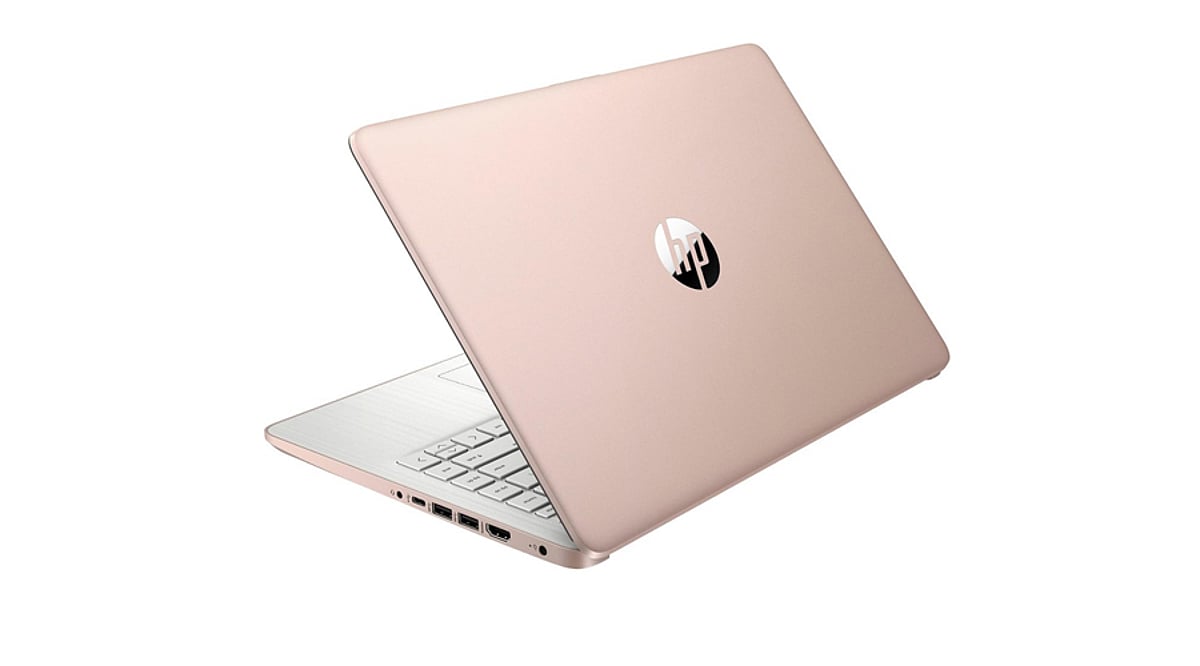
  • Top HP Laptops for Students on Amazon: Budget-Friendly Picks for 2026

    Top HP Laptops for Students on Amazon: Budget-Friendly Picks for 2026

    Choosing the right HP laptop starts with understanding your needs and budget. For most students, an Intel Core i3/i5 or AMD Ryzen 3/5 processor, at least 16GB RAM, and a 512GB SSD deliver smooth performance for assignments, browsing, online classes, and everyday multitasking.

    HP 15s-fq5330TU is one of the best value picks for students. Powered by an Intel Core i5 processor with 16GB RAM and a 512GB SSD, it handles coding, research, multiple browser tabs, and video meetings with ease while offering a spacious 15.6-inch Full HD display.

    HP 14s-DY5005TU is ideal for students who want a lightweight laptop for daily college use. Its Intel Core i5 processor, 16GB RAM, and 512GB SSD provide reliable speed for note-taking, presentations, Office apps, and online learning, all in a portable 1.46kg design.

    Students looking for a premium display should consider the HP Pavilion Plus 14. It features a sharp 2K display, Intel Core i5 processor, fast LPDDR5 memory, and a lightweight design, making it perfect for creative work, media consumption, and productivity on the go.

    The new HP OmniBook 3 offers excellent value with AI-powered Ryzen or Snapdragon processors, generous RAM, and up to 1TB SSD storage. Its anti-glare display, long battery life, and fast performance make it a great option for classes, homework, and daily multitasking.

    For demanding workloads like programming, video editing, or heavy multitasking, the HP OmniBook 7 OLED stands out. It combines an Intel Core Ultra processor, up to 32GB RAM, a 1TB SSD, and a stunning high-resolution OLED display for professional-level performance.

    Before buying, check four essentials: a modern Intel Core or Ryzen processor, at least 16GB RAM, a 512GB SSD, and a laptop weighing under 1.5kg if portability matters. Many HP student laptops on Amazon also include Windows 11 and Microsoft Office, offering extra value for college users.

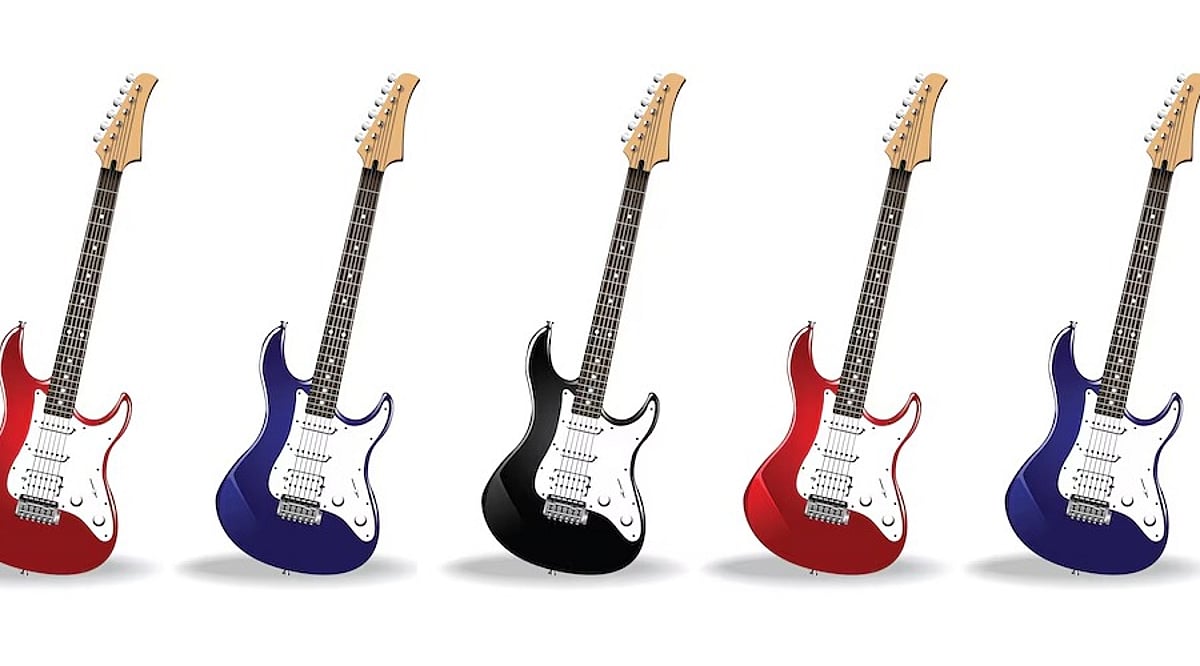
  • Top Electric Guitars in 2026: Expert Picks for Beginners, Intermediate, and Pro Players

    Top Electric Guitars in 2026: Expert Picks for Beginners, Intermediate, and Pro Players

    Choosing the right electric guitar depends on skill level, comfort, and sound preferences. This guide highlights the best beginner, intermediate, and professional guitars while explaining key features that help players make a confident buying decision.

    What Makes a Good Electric Guitar?

    A good electric guitar has five core qualities: a comfortable neck, stable tuning, high-quality pickups, solid sustain, and a smooth fretboard. Pickups are especially important—single-coils deliver bright, clear tones ideal for blues, pop, and country, while humbuckers produce a thicker, warmer sound suited for rock and metal. Understanding your preferred tone helps narrow down choices quickly.

    Best Electric Guitars for Beginners

    Beginners need an instrument that is easy to play, stays in tune, and is affordable. Experts recommend spending between $150 and $500 on a first electric guitar.

    • Yamaha Pacifica 112V – A top choice since 1993, featuring an Alnico V humbucker at the bridge and two single-coil pickups. Its rosewood fingerboard feels smooth, and it covers rock, blues, and pop. Priced around $309.
    • Ibanez miKro GRGM21M-BLT – Designed for children ages 5–9, with a 22.2-inch scale length for smaller hands. Low string tension reduces finger pressure during practice.

    Best Electric Guitars for Intermediate Players

    Intermediate players know chords and simple solos and need a guitar that rewards progress with better tone and feel.

    • Squier Classic Vibe ’50s Stratocaster – Fender-designed Alnico single-coil pickups deliver a bright, lively tone. The ‘C’ profile neck feels natural for players with a year or more of experience. Retails around $429.
    • PRS SE CE 24 Standard – Features two 85/15 ‘S’ humbuckers with a coil-split tone control for expanded sound options. Ideal for players covering many styles. Priced at about $499.

    Best Electric Guitars for Professional Players

    Professionals need reliability and top-tier tone for live performances and studio sessions.

    • Fender Player II Telecaster – Under $1,000, with rolled fretboard edges, ClassicGear tuners, and a rosewood fingerboard. Delivers classic Telecaster sounds for country, rock, blues, and alternative. Price: $799.
    • Epiphone Inspired by Gibson ES-335 – Dual Alnico Classic humbuckers and a semi-hollow body add warmth and resonance. Praised for versatility in blues and jazz.

    Key Factors Every Buyer Should Consider

    Price and brand are not enough. Consider scale length (shorter is easier for small hands), body shape (comfort while sitting or standing), and hardware quality (tuners and bridges affect tuning stability). Guitar World’s review process evaluates build quality, playability, tone, and value. Don’t overthink—choose the guitar that feels right and inspires daily practice.

    Final Thoughts

    The best electric guitar is not necessarily the most expensive. Beginners will thrive with the Yamaha Pacifica 112V. Intermediate players can grow with the Squier Classic Vibe Stratocaster or PRS SE CE 24 Standard. Professionals can rely on the Fender Player II Telecaster and Epiphone ES-335. The right guitar is the one you pick up every day.

    Frequently Asked Questions

    1. Which electric guitar is best for beginners? The Yamaha Pacifica 112V offers comfort, versatile pickups, and reliability at an affordable price.
    2. Should beginners choose single-coil or humbucker pickups? Single-coils suit blues, pop, and country; humbuckers suit rock and metal. A guitar with both offers versatility.
    3. How much should a beginner spend? Between $150 and $500 for good quality without overspending.
    4. Which guitar is best for intermediate players? The Squier Classic Vibe ’50s Stratocaster and PRS SE CE 24 Standard are excellent choices.
    5. What should buyers consider? Comfortable neck, quality pickups, tuning stability, smooth fretboard, suitable scale length, and durable hardware.
  • Top Free AI Video Editing Apps Ranked for 2026

    Top Free AI Video Editing Apps Ranked for 2026

    AI-powered video editing tools have made it easier than ever for creators to produce professional-looking content without expensive software or advanced skills. Here are the best free AI video editing apps ranked for 2026, each offering unique features to streamline your workflow.

    CapCut

    CapCut is one of the most popular free AI video editing apps for beginners and creators. It offers automatic captions, background removal, AI effects, text-to-speech, and smart templates. Its easy interface helps users create professional-looking videos for TikTok, YouTube Shorts, Instagram Reels, and other social platforms within minutes.

    Canva

    Canva combines graphic design and AI-powered video editing in one platform. Users can create videos using Magic Design, AI-generated visuals, animations, subtitles, and drag-and-drop templates. Its cloud-based workflow makes collaboration simple, while the free version includes enough features for students, marketers, and content creators to produce engaging videos.

    Adobe Express

    Adobe Express offers an easy way to edit videos using AI without requiring advanced editing skills. The free version includes automatic resizing, background removal, quick templates, AI image generation, and text effects. It is ideal for creating social media content, promotional videos, and presentations with minimal effort and time.

    Clipchamp

    Microsoft-owned Clipchamp provides a user-friendly editing experience with AI voiceovers, automatic captions, text-to-speech, and stock media. The free version supports full HD exports and basic editing tools for everyday projects. It works directly in the browser, making it convenient for Windows users and beginners looking for quick results.

    InVideo AI

    InVideo AI turns simple text prompts into complete videos using artificial intelligence. Users can generate scripts, voiceovers, visuals, and transitions automatically. The free plan allows creators to test AI-powered video production without spending money. It is especially useful for YouTube creators, marketers, educators, and small business owners.

    VEED.IO

    VEED.IO offers browser-based AI video editing with features like automatic subtitles, background noise removal, eye contact correction, and text-to-video generation. The free version is suitable for podcasts, online tutorials, interviews, and social media content. Its simple interface helps creators edit and publish videos much faster than traditional software.

    Descript

    Descript takes a unique approach by allowing users to edit videos through text. Its AI features include automatic transcription, filler word removal, voice cloning, and screen recording. The free plan is ideal for podcasters, educators, and YouTubers who want to create polished videos without using complicated editing timelines.

    Each of these apps offers powerful AI capabilities at no cost, making professional video editing accessible to everyone. Try them out to find the one that best fits your creative workflow.