Blog

  • Zepto’s Best-Selling Products in 2026: Key Categories and Opportunities for Quick-Commerce Sellers

    Zepto’s Best-Selling Products in 2026: Key Categories and Opportunities for Quick-Commerce Sellers

    In today’s fast-paced world, quick commerce has become a key part of everyday life. From Instamart to Zepto, several instant service providers are reshaping how consumers shop. India’s quick-commerce market continues to expand, and Zepto remains a leading platform driving this shift. Consumers now rely on instant delivery for everything from groceries to personal care essentials, creating new opportunities for sellers.

    Top Products on Zepto in 2026: Popular Categories

    Understanding consumer trends on Zepto can help D2C brands, grocers, retail stores, and entrepreneurs identify hot-selling product categories, plan inventories, and offer products that attract repeat purchases. Below are the best-selling product categories on Zepto in 2026.

    Fresh Fruits & Vegetables

    Fresh fruits and vegetables continue to be among the most popular products as consumers prefer having fresh produce delivered daily. Professionals, families, and seniors choose Zepto for the convenience of deliveries rather than going to the market themselves. Seasonal fruits, greens, and cooked vegetables show constant popularity, offering high inventory turnover.

    Dairy Products

    Milk, curd, butter, paneer, cheese, and yogurt are daily essentials purchased frequently. Since they require regular replenishment, dairy items generate many orders weekly. Students, working people, and families value fast deliveries, making dairy products among the most reliable and profitable quick-commerce items.

    Snacks & Namkeen

    Products such as chips, biscuits, namkeen, chocolates, cookies, and healthy snack packages continue to appeal to buyers. Evening snacking, work breaks, and weekend parties drive constant sales. Companies selling regional snacks and premium packaged food benefit from rising consumer interest, making snacks one of the most trending categories on Zepto.

    Instant Noodles & Ready-to-Eat Meals

    Busier lifestyles have increased consumption of instant noodles, pasta, frozen parathas, soup packets, and pre-cooked meals. Students, young adults, and singles often buy these items for easy cooking. With long shelf life and consistent demand, these products are top sellers on Zepto.

    Soft Drinks & Energy Drinks

    Carbonated beverages, fruit juices, packaged water, sports drinks, and energy drinks see consistent sales year-round, with seasonal spikes during summer, tournaments, and festivals. Buyers often include drinks with food orders, increasing basket value and helping sellers achieve healthy sales across many brands.

    Ice Cream & Frozen Food

    The popularity of ice creams, frozen treats, fries, nuggets, and frozen desserts has risen significantly. Instant delivery ensures products arrive in perfect condition. Working households prefer frozen foods for quick and convenient meal options.

    Personal Care & Hygiene Products

    Toothpaste, soaps, shampoos, deodorants, skincare products, sanitary pads, and grooming items enjoy high demand. Buyers often use Zepto to replenish stocks instead of visiting supermarkets, making this category among the most dependable best-sellers.

    Baby Care Essentials

    Parents frequently order diapers, wipes, baby food, lotions, and other infant care products, often urgently. Quick delivery is a major advantage in emergencies. With increasing reliance on quick commerce among young families, baby care generates steady sales and loyal customers.

    Cleaning & Household Supplies

    Household cleaning agents, detergents, dishwashing liquid, floor cleaners, garbage bags, tissues, and disinfectants always see demand. These items generate sales year-round. Bulk buying and reordering make this category lucrative for quick-commerce sellers.

    Pet Food & Pet Care Products

    The growing popularity of pets in India has boosted demand for pet food, treats, litter, grooming products, and other pet care items. Pet owners value the convenience of quick delivery when they unexpectedly run out of supplies.

    Best-Selling Products in Zepto: An Overview

    Quick commerce platforms have grown significantly. Consumer trends on Zepto are influenced by data, efficiency, and speed. From a retail analytics perspective, sellers need to use tools such as demand forecasting, real-time inventory management, SKU-level analytics, and consumer purchase history to identify the best products.

    Understanding buying patterns, repeat purchase cycles, and location-specific demand can improve assortment planning and pricing decisions. As quick commerce becomes increasingly data-driven, businesses that combine fast-moving products with analytics-led inventory management and personalized merchandising will be better positioned to improve conversions, retain customers, and scale profitably.

    FAQs

    1. What are the best-selling products on Zepto in 2026?

    Fresh fruits, vegetables, dairy products, snacks, ready-to-eat meals, beverages, frozen foods, personal care items, baby products, cleaning supplies, and pet care products consistently rank among Zepto’s best sellers.

    2. Why do grocery products perform well on Zepto?

    Grocery products are daily essentials with high purchase frequency. Customers value instant delivery for urgent needs, resulting in repeat orders, predictable demand, and strong inventory turnover throughout the year.

    3. Which product category offers the highest repeat purchases?

    Dairy products, fresh produce, personal care essentials, and household cleaning supplies generate the highest repeat purchases because consumers regularly replenish these items as part of everyday household shopping.

    4. How can sellers improve sales on Zepto?

    Sellers should maintain product availability, monitor demand trends, optimize inventory, use competitive pricing, and analyze customer purchasing patterns to improve visibility, conversions, and long-term sales performance on Zepto.

    5. Is Zepto suitable for D2C brands entering quick commerce?

    Yes. Zepto offers D2C brands access to urban consumers seeking instant delivery. Success depends on stocking fast-moving products, maintaining reliable supply, and leveraging data-driven demand forecasting and merchandising.

  • How AI Upscaling Boosts Performance in Modern PC Games

    How AI Upscaling Boosts Performance in Modern PC Games

    AI upscaling has revolutionized PC gaming, enabling players to enjoy high-resolution visuals and smooth frame rates without requiring the most expensive hardware. Instead of forcing the graphics card to render every pixel at full resolution, AI generates a sharp, detailed image from a lower-resolution source. This approach reduces the GPU’s workload while preserving visual fidelity.

    How AI Upscaling Works

    Traditionally, a graphics card renders each frame at the target resolution—4K demands significantly more power than 1080p. AI upscaling flips this process: the game renders at a lower resolution, then an AI model analyzes the image and fills in missing details before output. The result is a clear, high-resolution picture with much less computational strain.

    Key Technologies: DLSS, FSR, and XeSS

    Three major technologies dominate the market: NVIDIA’s DLSS (Deep Learning Super Sampling), AMD’s FSR (FidelityFX Super Resolution), and Intel’s XeSS (Xe Super Sampling). Each works differently but shares the same goal—boosting performance without sacrificing image quality. Games like Cyberpunk 2077, Alan Wake 2, and Black Myth: Wukong rely on these tools to maintain high frame rates with ray tracing enabled. Tests show frame rate gains of 30–100% or more, depending on the title and hardware.

    Benefits Beyond Speed

    AI upscaling also extends the life of existing GPUs, allowing mid-range PCs to run demanding titles smoothly. This democratizes access to modern games, letting more players experience rich, detailed worlds without frequent hardware upgrades.

    Current Limitations

    Despite its advances, AI upscaling isn’t perfect. Fast motion can introduce blurry edges, and fine details like text or thin objects may appear slightly off. DLSS requires NVIDIA RTX cards, while FSR and XeSS are more cross-compatible but perform best on their respective hardware. There’s also a concern that studios might lean too heavily on AI rather than optimizing games natively.

    AI Enhances, Not Replaces, Human Creativity

    AI upscaling does not generate stories, characters, or game worlds—it simply improves how those elements look on screen. Artists, writers, and programmers remain the heart of game development. AI is a powerful helper, not a substitute for human imagination.

    The Future of AI in Gaming

    As the technology matures, image quality will improve and artifacts will diminish. AI upscaling will likely become a standard feature, making future games more accessible while empowering developers to create even more ambitious worlds. For now, it’s one of the best ways to get more performance from your existing PC.

  • 2026 Global Advertising Giants: Omnicom Leads After IPG Merger, Reshaping the Big Five

    2026 Global Advertising Giants: Omnicom Leads After IPG Merger, Reshaping the Big Five

    The advertising industry has undergone a seismic shift in 2026, with major mergers and evolving client demands redefining the competitive landscape. Omnicom Group now stands as the world’s largest advertising agency after completing its acquisition of Interpublic Group (IPG) in November 2025, pushing combined pro forma revenue above $25 billion. This consolidation reduces the former Big Six to the Big Five, comprising Omnicom, Publicis Groupe, WPP, Dentsu, and Havas.

    Industry Overview

    The global marketing agencies market is valued at approximately $473 billion and is projected to reach $592 billion within five years, driven by demand for integrated AI, data, media, and creative services. Brands increasingly seek partners that can deliver creative work, data science, media buying, and emerging technology under one roof. Agencies lacking these capabilities have either acquired them or fallen behind.

    Top 10 Largest Advertising Agencies in 2026

    1. Omnicom Group

    Omnicom closed its acquisition of Interpublic Group on November 26, 2025, becoming the industry’s largest player overnight. BBDO, DDB, TBWA, and McCann now operate under one corporate umbrella. Full-year revenue reached $17.3 billion, a jump of more than 10% from the prior period. Key clients include Apple, McDonald’s, PepsiCo, and Mastercard. The merger targets $1.5 billion in cost synergies over thirty months of integration, with each agency brand maintaining creative independence.

    2. Publicis Groupe

    Publicis reported €14,547 million in net revenue, supported by a workforce of over 103,000 people. New business wins reached $10.1 billion, the highest among all holding companies this cycle. Mars and Paramount switched to Publicis from WPP. The Marcel AI platform and Epsilon’s data capabilities drive its competitive advantage, emphasizing AI-powered targeting and integrated marketing.

    3. WPP plc

    WPP reported £13,550 million in revenue, retaining its place among the largest advertising companies. Ogilvy, VML, Grey, and several media specialists operate under its umbrella. Recent revenue pressure has led to restructuring, trimming overlapping units to simplify client-facing operations. Ogilvy remains WPP’s strongest creative asset, topping global award rankings for six consecutive years.

    4. Accenture Song

    Accenture Song operates as a consultancy-agency hybrid, with revenue estimated near $20 billion. It blends business transformation consulting with creative and marketing services, appealing to enterprises facing systemic challenges. Droga5 operates within this structure, and the unit excels when marketing problems overlap with technology and operational rebuilds.

    5. Dentsu Inc.

    Dentsu dominates Japan and the broader Asia-Pacific region. The company is restructuring for better profitability, with Dentsu Creative acting as its main global creative arm. Regional depth gives Dentsu an edge for brands expanding into Asian markets, leveraging local media relationships and cultural fluency.

    6. Havas

    Havas operates as an independent member of the Big Five, based in Paris. The network has felt some revenue softness amid industry consolidation but has largely avoided major mergers. Havas Creative handles integrated brand communications globally, and the company continues investing in data tools to stay competitive.

    7. Stagwell

    Stagwell has built its identity as a digital-first challenger to legacy holding company models. Growth has come through acquiring performance marketing and digital-focused agencies. The network prioritizes measurable results over creative prestige, appealing to brands focused on data-driven marketing.

    8. BBDO Worldwide

    BBDO, under Omnicom, is one of the most-awarded creative networks globally, with 289 offices across 81 countries. Its ‘Never Finished’ philosophy keeps campaigns evolving. Major clients include PepsiCo, Visa, Mars, Bayer, and FedEx.

    9. McCann Worldgroup

    McCann now sits inside Omnicom following the IPG acquisition. Built on the ‘Truth Well Told’ strategic approach, McCann handles large, multi-market accounts requiring consistency and operational throughput. Clients include American Express, Johnson & Johnson, Netflix, and Accenture.

    10. Ogilvy

    Ogilvy has topped the WARC Creative 100 rankings for six consecutive years, with 15 campaigns among the top 100 globally. Founded by David Ogilvy, the agency now spans 450 offices as part of WPP. It covers advertising, public relations, branding, and digital marketing, serving clients like Dove, IBM, Coca-Cola, and Pfizer.

    Revenue Rankings and Market Outlook

    Revenue tells the clearest story of scale. Omnicom leads by a wide margin after the IPG deal, with Publicis and WPP close behind. Accenture Song, structured as a consultancy division, also lands firmly in the top tier. The broader marketing agency market is estimated at $473 billion, with growth projections toward $592 billion within five years. North America holds the largest regional share, while Asia-Pacific grows at a faster pace.

    Final Thoughts

    The biggest company isn’t always the market leader. Revenue, innovation, and creative quality all matter. Omnicom’s rise signals that smaller networks will need to adapt. Brands should look beyond headline size when choosing a partner—networks combining true scale with measurable creative and technological impact will shape the next chapter of global advertising leadership.

  • 10 Powerful Marketing Automation Platforms to Boost Your Business in 2026

    10 Powerful Marketing Automation Platforms to Boost Your Business in 2026

    Introduction

    Modern marketing demands more than just email blasts and social media scheduling. Businesses need intelligent tools that automate repetitive tasks, track customer interactions, and deliver personalized experiences—all without overloading marketing teams. The latest marketing automation platforms leverage artificial intelligence, customer data, and smart workflows to help attract leads, nurture prospects, and drive conversions. Here are ten must-have platforms for businesses of all sizes in 2026.

    Top Marketing Automation Platforms

    1. HubSpot Marketing Hub

    HubSpot offers an all-in-one solution that combines CRM, email marketing, lead management, landing pages, analytics, and automation. Its intuitive interface makes it a strong choice for businesses of any size that want a single platform to handle all their marketing tasks.

    2. Adobe Marketo Engage

    Designed for enterprise B2B marketing, Marketo Engage excels at lead nurturing, account-based marketing, and advanced analytics. Companies with long sales cycles appreciate its robust automation capabilities.

    3. ActiveCampaign

    ActiveCampaign is ideal for small to medium businesses. Its visual automation builder lets you design personalized customer journeys, while built-in CRM keeps marketing and sales aligned throughout the buying process.

    4. Salesforce Marketing Cloud Account Engagement

    Salesforce’s tool integrates seamlessly with its CRM, enabling automated lead generation, nurturing, follow-ups, and detailed campaign performance reports.

    5. Klaviyo

    Klaviyo is a favorite among e-commerce brands. It sends personalized email and SMS campaigns based on customer behavior, helping recover abandoned carts and drive repeat sales.

    6. Brevo

    Brevo (formerly Sendinblue) provides an affordable, unified dashboard for email, SMS, WhatsApp, and other marketing communications—perfect for budget-conscious teams.

    7. Mailchimp

    Mailchimp remains one of the simplest tools to use, with pre-designed templates, easy automation, and customer segmentation. It’s great for startups and small businesses launching their first automation efforts.

    8. Customer.io

    Customer.io focuses on behavior-driven marketing, automatically sending emails, SMS, and push notifications based on how users interact with your website or app.

    9. Omnisend

    Built for e-commerce, Omnisend combines email, SMS, and web push notifications to automate messages at every stage of the customer journey, boosting retention.

    10. Braze

    Braze targets large enterprises with cross-channel communication across email, mobile apps, SMS, and push notifications, enabling sophisticated customer engagement at scale.

    Final Verdict

    Choosing the right platform depends on your business goals, budget, and customer base. Small businesses often prefer Mailchimp, Brevo, or ActiveCampaign for their ease of use, while larger organizations may opt for HubSpot, Marketo, Salesforce, or Braze for advanced features. E-commerce companies should look at Klaviyo and Omnisend. As automation becomes essential to digital marketing, picking the right tool is critical for success.

    Frequently Asked Questions

    What is marketing automation software and why is it important?

    Marketing automation software handles repetitive tasks like email campaigns, lead nurturing, and analytics, saving time and improving engagement, conversions, and efficiency.

    Which platform is best for small businesses?

    Mailchimp, Brevo, and ActiveCampaign are popular choices due to affordable pricing, user-friendly interfaces, and scalable features.

    Can marketing automation improve customer engagement?

    Yes, by personalizing messages based on behavior, these platforms help deliver relevant content and strengthen relationships across multiple channels.

    What features should I consider before choosing a platform?

    Evaluate automation workflows, CRM integration, email marketing, analytics, AI personalization, multichannel support, ease of use, scalability, pricing, and customer support.

    Are marketing automation platforms suitable for e-commerce?

    Absolutely. Platforms like Klaviyo and Omnisend are designed for e-commerce, offering abandoned cart recovery, product recommendations, and retention campaigns.

  • Top CEO Productivity Habits: Routines That Drive Peak Performance

    Top CEO Productivity Habits: Routines That Drive Peak Performance

    Highly successful CEOs don’t rely on longer work hours—they rely on smarter habits. Discover the productivity routines of leaders like Tim Cook, Jeff Bezos, Bill Gates, Satya Nadella, and Elon Musk, and learn practical strategies to improve focus, decision-making, energy, and long-term leadership performance.

    Start Before the Day Starts

    The most consistent trait across productive CEOs is protecting their mornings from emails and other people’s agendas. Apple’s Tim Cook is famously up at 3:45 AM, reading customer feedback before the workday begins. Jeff Bezos takes the opposite approach but achieves the same effect: he allows himself unstructured morning time for family, reading, and thinking before any scheduled demands, deliberately avoiding early meetings to preserve peak cognitive energy for high-stakes decisions later. Harvard Business Review research found that 72% of top executives structure their mornings around rituals matching their personal strengths. This distinction matters enormously at scale, where a CEO’s first two hours of clarity can be worth more than the rest of the day combined.

    Guard Time Like Capital

    Successful CEOs guard their time fiercely in a world of endless emails, Slack messages, and meetings. Bill Gates famously carves out “Think Weeks” twice a year—isolating himself completely to read, reflect, and think strategically without interruption. Mark Zuckerberg and Jack Dorsey both schedule no-meeting days specifically to protect deep work time. Elon Musk divides his day into five-minute time blocks rather than hour-based calendar slots, a scheduling approach that eliminates dead time between tasks. The underlying principle is consistent across all of them: time is non-renewable, meetings are expensive, and the ability to think deeply without interruption is increasingly rare and increasingly valuable.

    Make Smarter Decisions, Not More of Them

    Jeff Bezos follows a “two types of decisions” rule: irreversible, high-impact decisions deserve time and deliberation; reversible, low-risk ones should be made fast and moved past. Elon Musk applies first-principles thinking to strip decisions down to fundamental truths rather than convention. Steve Jobs famously reduced his wardrobe to a uniform to eliminate minor decision fatigue, preserving cognitive bandwidth for what mattered. The shared insight is that leaders who try to give every decision equal mental energy exhaust themselves on the small ones before reaching the important ones.

    Treat Physical Health as a Leadership Input

    Richard Branson once said exercise is the secret to doubling his productivity. Jeff Bezos has said improving his fitness directly supports complex decision-making and sustained focus. Satya Nadella commits to cardio four to five times a week as explicit preparation for the mental demands of leadership. The common thread isn’t athleticism; it’s the recognition that cognitive performance, decision stamina, and emotional regulation are all downstream of physical health. Leaders who treat the body as separate from professional performance tend to miss this compounding effect entirely.

    Never Stop Learning

    Warren Buffett spends 80% of his working day reading. Bill Gates reads roughly 50 books a year. Satya Nadella reads across technology, philosophy, and poetry, viewing cross-disciplinary thinking as a core input to Microsoft’s culture. The most productive CEOs treat learning not as something that happens in formal settings but as a daily habit, a consistent investment in the quality of their own thinking rather than a signal of idle time. Knowledge, like compound interest, builds most reliably when the deposits are small and consistent rather than large and occasional.

    Why This Matters

    Today’s business leaders face constant information overload, rapid technological change, and high-stakes decision-making. Strong productivity habits help executives protect their time, improve judgment, reduce burnout, and maintain consistent performance. Whether leading a global enterprise or a growing startup, adopting proven CEO routines can significantly enhance leadership effectiveness and long-term career success.

    Frequently Asked Questions

    What productivity habits do the world’s most successful CEOs have in common?

    Successful CEOs typically follow structured routines that prioritize deep work, strategic thinking, physical health, continuous learning, and disciplined time management. Rather than trying to maximize every minute, they focus on protecting their highest-energy hours, minimizing distractions, and making intentional decisions. These habits help improve productivity while reducing stress and decision fatigue over the long term.

    Why do many CEOs wake up early?

    Early mornings often provide uninterrupted time before meetings, emails, and daily responsibilities begin. CEOs like Tim Cook use this period for planning, reading, or reviewing priorities, while others prefer exercising or spending time with family. The real benefit isn’t simply waking up early but creating a consistent routine that supports focus and better decision-making throughout the day.

    How does time blocking improve executive productivity?

    Time blocking involves dividing the day into dedicated periods for specific activities instead of reacting to constant interruptions. Leaders like Elon Musk use structured schedules to minimize context switching and improve concentration. This method helps executives protect time for strategic work, reduce unnecessary meetings, and accomplish more without extending their working hours.

    How much do successful CEOs read every day?

    Many top executives dedicate significant time to reading books, reports, industry research, and business publications. Warren Buffett famously spends much of his day reading, while Bill Gates and Satya Nadella consistently invest time in learning across multiple disciplines. Regular reading expands knowledge, improves strategic thinking, and helps leaders stay informed about emerging technologies and market trends.

    What is decision fatigue, and how do CEOs reduce it?

    Decision fatigue occurs when the quality of decisions declines after making too many choices throughout the day. CEOs reduce it by automating routine decisions, simplifying daily habits, delegating lower-priority tasks, and reserving their mental energy for strategic business issues. This approach improves judgment while preventing unnecessary cognitive overload during busy workdays.

  • ASML Stock Climbs After Second 2026 Revenue Forecast Hike Fueled by AI Chip Demand

    ASML Stock Climbs After Second 2026 Revenue Forecast Hike Fueled by AI Chip Demand

    ASML shares rose more than 3% on Wednesday after the Dutch chip equipment maker raised its 2026 sales forecast for the second time this year. The company also reported quarterly revenue and profit above market estimates as chipmakers increased spending on advanced production tools.

    The update points to demand for equipment used in AI processors, data centers, and high-bandwidth memory. ASML said customer orders stayed strong during the first half of 2026 as foundries and memory producers moved faster on capacity plans.

    ASML Lifts Sales and Margin Outlook

    ASML now expects 2026 net sales between €43 billion and €45 billion. Its earlier forecast called for sales between €36 billion and €40 billion. The company also raised its gross margin range to 54% to 56%, from 51% to 53%.

    Second-quarter net sales reached €9.3 billion, above the €8.8 billion expected by analysts surveyed by LSEG. Net profit came in at €2.9 billion, compared with the €2.6 billion market forecast. Shares opened more than 7% higher before trimming gains to about 3.4%.

    Chief Executive Christophe Fouquet said order intake was ‘extremely strong’ during the first half. He added that customers were accelerating expansion plans across logic and memory production. Those commitments gave ASML better visibility into demand through 2028.

    ASML plans to increase its 2026 low-NA EUV capacity by 30%. It will also add 30% to its deep ultraviolet immersion capacity. The company produces both systems at its site in Veldhoven, Netherlands.

    AI Spending Drives Equipment Orders

    ASML holds a central position in advanced chip production. It is the only supplier of extreme ultraviolet lithography machines used to make the most advanced semiconductors. Its customers include TSMC, Intel, SK Hynix, and Micron Technology.

    Fouquet said stronger end-market demand had encouraged customers to lift capital spending and bring forward expansion plans. ‘This has also translated practically into very strong order booking through the first half of 2026,’ he said.

    Orders for EUV systems now extend into 2028. That longer order window reflects continued investment in AI servers, advanced processors, and memory chips. Chipmakers also seek faster productivity gains from upgrades to installed equipment.

    TSMC, one of ASML’s largest customers, reported a 68% rise in June sales. The Taiwanese company is also preparing new advanced packaging plants as demand grows for AI chips and related services.

    TSMC Earnings Draw Closer Scrutiny

    ASML’s report arrives one day before TSMC is due to release second-quarter results on July 16. Analysts expect TSMC to report earnings of $3.89 per share and revenue of $39.31 billion, based on consensus estimates.

    Investors will watch TSMC’s capital spending plans, its 2-nanometre production ramp, and demand for advanced packaging. ASML’s order strength suggests major customers are still committing funds to new capacity, though TSMC’s guidance will provide the next update.

    China is an important market for ASML despite tighter export controls. The company still expects China to account for about 20% of annual sales. China’s share fell to 14% in the second quarter from 19% in the first quarter.

    South Korea became ASML’s largest market during the quarter, contributing 43% of sales. The company plans to provide a broader update on long-term targets at its Capital Markets Day on June 10, 2027.

  • Step-by-Step Guide: Update Your Aadhaar Email ID Online Without Visiting a Centre

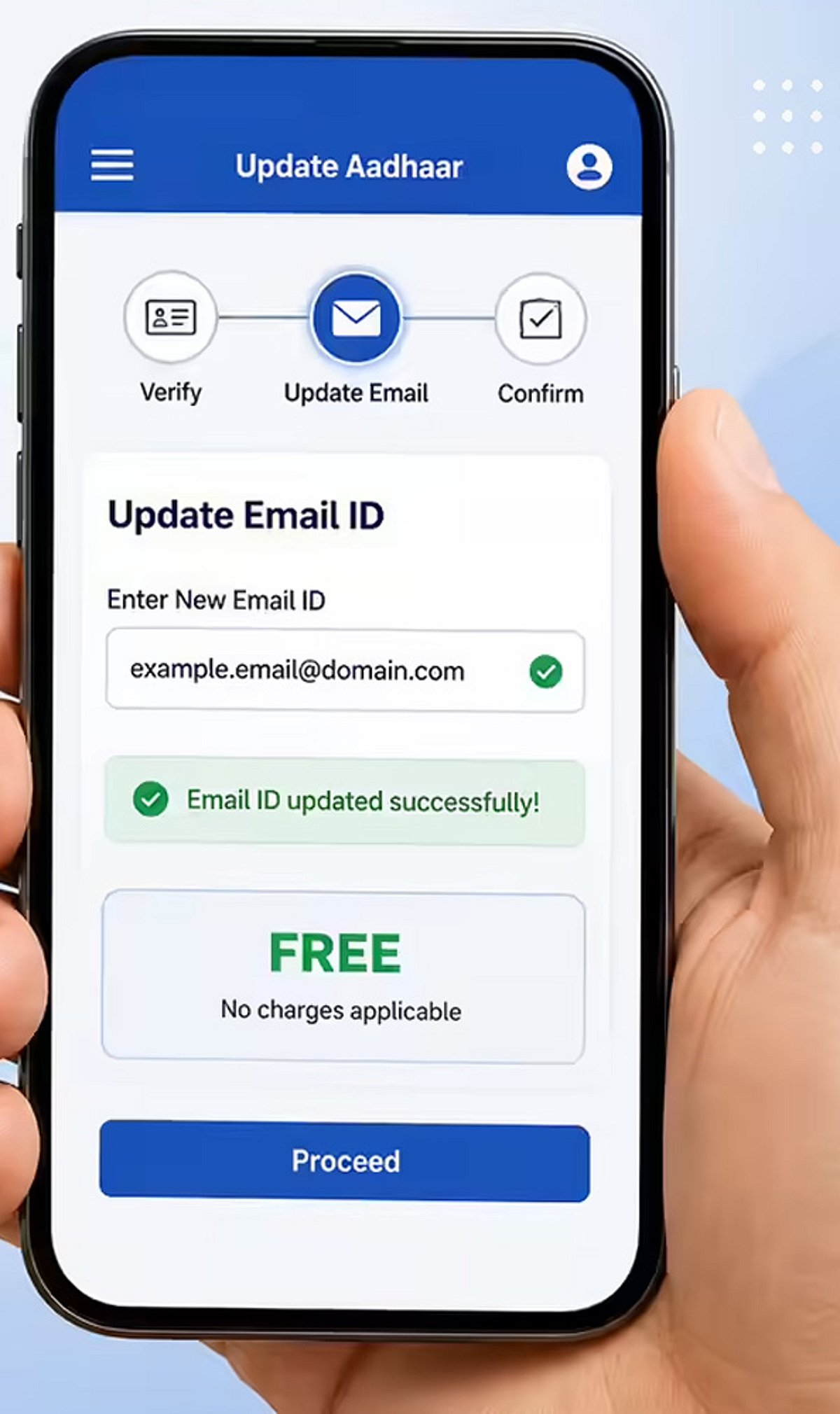
    Step-by-Step Guide: Update Your Aadhaar Email ID Online Without Visiting a Centre

    Updating your Aadhaar email ID has become significantly easier thanks to online services available through the myAadhaar portal. An email ID linked with your Aadhaar helps you receive important updates and access digital services more conveniently.

    1. Visit the myAadhaar portal and log in using your Aadhaar number and the OTP sent to your registered mobile number.
    2. Select the profile or update section to check whether an email ID is already linked with your Aadhaar.
    3. Enter the new email ID carefully and complete the verification process, if prompted.
    4. Review all details before submitting the request to avoid delays or incorrect updates.
    5. Keep your registered mobile number active since OTP authentication is required for online Aadhaar services.

    Important note: If your mobile number is not linked with Aadhaar, online email update services may not be available. A linked email ID makes it easier to receive Aadhaar-related alerts and access several digital government services.

    For the latest news, exclusives, and videos, join our WhatsApp Channel.

  • Top Smart Hotels You Can Book Today: From Robot Staff to Voice-Controlled Rooms

    Top Smart Hotels You Can Book Today: From Robot Staff to Voice-Controlled Rooms

    The hospitality industry is rapidly embracing technology, and a growing number of hotels now offer guests a truly connected, automated experience. From mobile check-ins and robotic luggage storage to voice-controlled lighting and blockchain-powered rooms, these smart hotels are redefining what it means to stay away from home. Here are some of the most innovative smart hotels you can actually book today.

    CitizenM

    CitizenM hotels offer app-based check-in, smart room controls, and modern automation, delivering seamless stays with stylish spaces and efficient digital convenience. Guests can adjust the room’s mood lighting, temperature, and entertainment from their smartphone or an in-room tablet.

    YOTEL

    YOTEL is known for its technology-driven hospitality, featuring robotic luggage storage, self-service kiosks, and adjustable smart beds. The hotel is designed for modern business and leisure travelers who value efficiency and comfort.

    Henn na Hotel (Japan)

    Henn na Hotel, located in Japan, is famous for its robot staff, facial recognition check-in, and automated services. This futuristic property redefines traditional hotel hospitality with a completely automated experience.

    Hilton Connected Room

    Hilton’s Connected Room allows guests to control lighting, temperature, the television, and curtains through a smartphone. This personalized comfort system ensures every stay is tailored to individual preferences.

    Marriott Smart Rooms

    Marriott’s smart rooms integrate voice assistants, mobile room access, and customized preferences, ensuring convenience and enhancing the overall guest accommodation experience.

    Wynn Las Vegas

    Wynn Las Vegas is equipped with smart voice controls that operate lighting, entertainment, and room settings, delivering premium comfort with advanced automation technology.

    Eccleston Square Hotel (London)

    Eccleston Square Hotel features tablet-controlled lighting, curtains, and entertainment systems, combining luxury accommodation with cutting-edge in-room technology for travelers.

    The Sinclair Hotel (Fort Worth, Texas)

    The Sinclair Hotel uses blockchain technology and IoT-enabled smart rooms to deliver energy-efficient operations alongside enhanced guest convenience and security features.

    Hotel EMC2 (Chicago)

    Hotel EMC2 combines artistic design with smart room technologies, interactive digital experiences, and personalized guest services for a memorable modern hospitality experience.

  • Top Identity Management Solutions for Enterprise Security and Access Control

    Top Identity Management Solutions for Enterprise Security and Access Control

    Identity management solutions are becoming essential as enterprises strengthen cybersecurity and manage digital access. Modern IAM platforms help organizations control user access while improving security and compliance.

    Single Sign-On (SSO) allows employees to access multiple applications with one secure login. Multi-Factor Authentication (MFA) adds another layer of protection beyond passwords. Role-based access control helps organizations assign permissions according to employee responsibilities.

    Cloud-based identity management platforms offer flexibility for hybrid and remote work environments. AI-powered identity security tools can detect unusual login activity and reduce cyber risks.

    Enterprises should evaluate scalability, integration options, compliance support, and pricing before choosing an IAM solution. The growing adoption of Zero Trust security is making identity management a key part of enterprise cybersecurity strategies.

  • Tesla Optimus Robot: 10 Impressive Capabilities Already Demonstrated

    Tesla Optimus Robot: 10 Impressive Capabilities Already Demonstrated

    Tesla’s humanoid robot, Optimus, has already demonstrated a wide range of practical skills, from walking independently to assisting with household chores. Here are 10 things Tesla Optimus can already do, showcasing its rapid progress in robotics and artificial intelligence.

    • Walk Independently: Optimus can walk steadily across different surfaces using advanced balance systems and AI-powered movement coordination for stable navigation.
    • Carry Objects: The robot lifts, carries, and transports everyday items carefully, demonstrating practical usefulness in warehouses, factories, and future household environments.
    • Sort Items: Optimus identifies, categorizes, and organizes objects using computer vision, making repetitive industrial and logistics tasks more efficient and accurate.
    • Perform Factory Tasks: Tesla designed Optimus to handle repetitive manufacturing jobs, reducing human workload while increasing productivity across production facilities and assembly lines.
    • Climb Small Steps: The robot navigates slight elevation changes and steps with improved stability, expanding mobility across real-world indoor environments effectively.
    • Use Human-Like Hands: Advanced robotic hands grip delicate and heavy objects precisely, enabling versatile performance in numerous practical everyday applications.
    • Respond to Voice Commands: AI-powered speech recognition allows Optimus to understand instructions and complete assigned tasks through natural voice interactions efficiently.
    • Learn Through AI Training: Optimus continuously improves movement and task performance using artificial intelligence models trained on real-world human demonstrations and experiences.
    • Assist with Household Chores: Tesla envisions Optimus helping with cleaning, organizing, carrying groceries, and other repetitive household responsibilities in the near future.

    These capabilities mark significant strides toward a versatile, general-purpose robot that could transform industries and daily life. Stay tuned for more updates on Tesla Optimus.