Blog

  • MCX Gold Dips 0.46% as Brent Crude Surges Past $85, Inflation Worries Persist

    MCX Gold Dips 0.46% as Brent Crude Surges Past $85, Inflation Worries Persist

    Gold prices on the Multi Commodity Exchange (MCX) traded lower on July 15, despite a slowdown in U.S. inflation that reduced expectations for aggressive Federal Reserve rate hikes and weakened the U.S. dollar. August gold futures declined 0.46%, settling at Rs. 1,41,600 per 10 grams. Meanwhile, September silver futures slipped 0.31% to Rs. 2,22,499 per kilogram.

    In the energy markets, Brent crude futures jumped 1.20% to $85.75 per barrel, while U.S. West Texas Intermediate (WTI) advanced 0.92% to $80.07 per barrel. The rise in crude oil prices reignited inflation concerns, putting pressure on precious metals.

    According to the CME FedWatch Tool, traders now see a 58% chance of a September rate hike by the Fed, down from 78% earlier, reflecting the market’s shifting outlook on monetary policy.

    Domestic Gold Prices

    In the Indian domestic market, 24K gold rose by Rs. 77 to Rs. 1,43,570 per 10 grams, while 22K gold advanced by Rs. 70 to Rs. 1,31,600. By city, Mumbai and Kolkata quoted gold at Rs. 1,43,570, Delhi at Rs. 1,43,720, and Chennai at Rs. 1,43,780.

    U.S. Gold Prices

    U.S. gold prices fell on Wednesday after climbing more than 2% in the previous session, as rising oil prices fueled inflation concerns and uncertainty. Spot gold was down 0.5% at $4,035.67 per ounce, while U.S. gold futures for August delivery eased 0.7% to $4,042.20.

    Spot silver lost 0.3% to $58.48 per ounce. Among other precious metals, platinum gained 0.2% to $1,635.56, and palladium edged 0.2% higher to $1,307.11.

    Key Levels to Watch

    Kelvin Wong, senior market analyst at OANDA, commented: “I reckon that the market is now looking past the CPI data, which is kind of a lagging indication… Trump continues to maintain the blockade of ships that is flowing out of the Strait of Hormuz, causing oil prices to rise and gold to come under pressure.”

    Internationally, gold has support at $4,022 and $3,989, while resistance is at $4,110 and $4,140 per troy ounce. Silver has support at $57.40 and $56, with resistance at $60.60 and $62.00 per troy ounce.

    On MCX, gold has support at Rs. 1,41,400 and Rs. 1,40,650, and resistance at Rs. 1,43,350 and Rs. 1,44,500. Silver has support at Rs. 2,20,000 and Rs. 2,17,700, and resistance at Rs. 2,26,000 and Rs. 2,28,800.

  • Free Fire MAX Redeem Codes for July 15: Unlock Exclusive Bundles, Skins, and Diamonds

    Free Fire MAX Redeem Codes for July 15: Unlock Exclusive Bundles, Skins, and Diamonds

    Daily redeem codes in Garena Free Fire MAX for July 15, 2026, are now available. Unlock diamonds, weapon skins, and characters. The codes will be available only to players who act quickly to claim these limited-time in-game freebies!

    Active Free Fire MAX codes are valid for 24 hours, so redeem them as soon as possible to get rewards. Each code can be redeemed only once per account; players cannot get rewards by redeeming the same code twice.

    Dive into the game today and redeem codes like FFCBRAXQTS9S, FM6N1B8V3C4X, and others for exciting rewards.

    Garena Free Fire MAX July 15 codes are active with a range of in-game currencies and cosmetic items. Whether you are looking to give your character a standout look or acquire some Diamonds for free, these codes are here to fulfill all your desires. Most of these rewards are expensive in-game items, and codes let you get them for free. The rewards are available to everyone, but only those who act quickly will receive them. So, your speed is the deciding factor here.

    Garena Free Fire MAX Redeem Codes for July 15, 2026

    Here are the Free Fire redeem codes for July 15:

    • 4N8M2XL9R1G3
    • H8YC4TN6VKQ9
    • FF6YH3BFD7VT
    • FFR4G3HM5YJN
    • 6KWMFJVMQQY
    • GFQ9W2E1R7T5
    • YFFCBRAXQTS9S
    • FM6N1B8V3C4X
    • FA3S7D5F1G9H
    • FK3J9H5G1F7D
    • FU1I5O3P7A9S
    • F7F9A3B2K6G8
    • FE2R8T6Y4U1I
    • 4ST1ZTBZBRP9
    • BR43FMAPYEZZ
    • UPQ7X5NMJ64V
    • S9QK2L6VP3MR
    • FPSTQ7MXNPY5
    • P3LX6V9TM2QH
    • RD3TZK7WME65
    • ZRW3J4N8VX56
    • WD2ATK3ZEA55
    • FFPLUFBVSLOT
    • J3ZKQ57Z2P2P
    • FFSGT7KNFQ2X
    • B1RK7C5ZL8YT
    • FZ5X1C7V9B2N
    • FFDMNSW9KG2T
    • FX9J3Z2RP64M
    • CPW3D28VZD6F
    • F8HG3JK5L0PF
    • F7TRD2SQA9FF
    • F2VC3DENRF5F
    • FP8K5LMR2VNF
    • FV3K9PLM2RNFT
    • 4E9Y5U1I3OFP
    • 9O1I5U3Y2TFF
    • WCTKX2P5NQFF
    • RSX4CYHLLQFF
    • SKTXVQF2NR

    The rewards these codes will bring generally include the following:

    • Gold
    • Diamond Vouchers
    • Weapons Skins
    • Character Skins
    • Playable Characters

    How to Redeem the Codes in Garena Free Fire Max

    Free Fire MAX codes expire after a specific period. Follow the steps below to redeem codes quickly:

    1. Visit the official Rewards Redemption website of the game.
    2. Log in using your Gmail, Facebook, Twitter (presently X), or VK ID.
    3. Follow the instructions and copy-paste the code in the designated box.
    4. Click the Confirm button, then press ‘OK’.
    5. Once redeemed, wait for the next 24 hours for the reward to reflect in your in-game mailbox. Only the currencies are credited instantly to players’ accounts.

    How to Get a Decent Amount of Diamonds in Free Fire MAX

    Diamonds are one of the most expensive in-game items. Here’s how you can get them easily:

    • These premium currencies are awarded for completing missions. Select the missions that exclusively offer diamonds as rewards.
    • Redeeming codes also gives gamers Diamonds. However, the amount is not satisfactory.
    • Participate in in-game events and tournaments. The performance and rank of players decide whether they will get Diamonds or not.
    • Finally, the most expensive yet easiest way is to purchase these in-game currencies from the in-game store with real money.

    Start logging in regularly. In this FPS game, completing missions typically rewards players with a substantial amount of Diamonds. So, players should focus on participating in daily challenges and completing them to claim their rewards.

    Final Thoughts

    Redeem codes are more than a simple reward system. These are calculated retention strategies designed to keep players returning daily. The developer studio combines scarcity, time limits, and desirable cosmetic items to create a loop of anticipation and engagement that strengthens user loyalty. From a player’s perspective, these codes reduce the grind required to access premium content.

  • How to Identify Fraudulent Investment Apps Before Losing Your Money

    How to Identify Fraudulent Investment Apps Before Losing Your Money

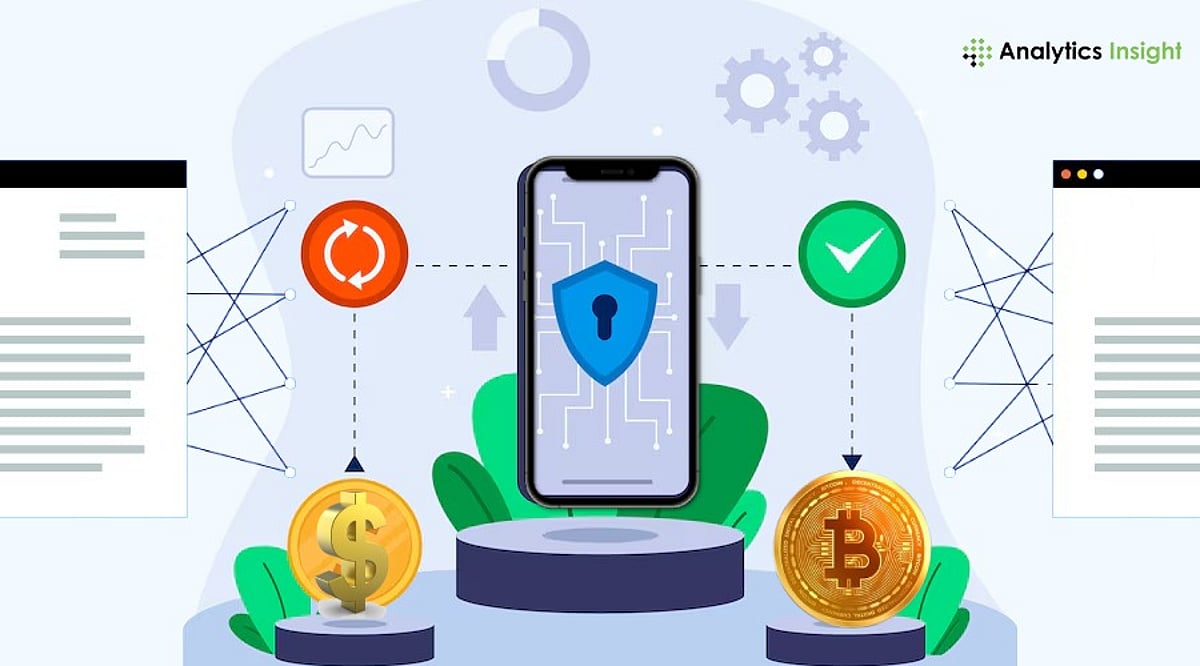
    Fake investment apps are becoming increasingly sophisticated, luring users with promises of guaranteed returns, instant profits, and exclusive opportunities. Many closely mimic legitimate financial platforms, making them hard to spot at first glance. By taking a few simple precautions before investing, you can protect your finances and personal data.

    Verify the Company Before Downloading Any App

    Always confirm that the company behind the app is legitimate and registered with the relevant financial regulator. Visit the official website, review contact details, and download apps only from trusted sources—avoid clicking ads or unsolicited links shared via social media or messaging platforms.

    Watch for Unrealistic Returns and Urgent Offers

    Promises of fixed high returns with little or no risk are major red flags. Fraudulent apps often create urgency through limited-time offers, bonus rewards, or referral incentives to pressure you into quick decisions without verifying credibility.

    Read Reviews Beyond App Store Ratings

    High ratings alone don’t guarantee trustworthiness. Read detailed user reviews, search for independent reports, and look for complaints about withdrawal issues, blocked accounts, or poor customer support. Consistent negative feedback from multiple sources is a strong warning signal.

    Never Share Sensitive Banking or OTP Details

    Legitimate investment platforms never ask for OTPs, banking PINs, passwords, or full card details via calls, emails, or messages. Sharing such information gives fraudsters direct access to your bank accounts and assets.

    Keep Devices Updated and Use Official App Stores

    Only download investment apps from official app stores, and keep your smartphone updated with the latest security patches. Install trusted security software and enable two-factor authentication for an extra layer of protection.

    Report Suspicious Apps Immediately

    If an investment app seems suspicious or asks for unusual payments, stop using it right away and report it through the appropriate cybercrime reporting channels. Quick action can limit financial damage and help protect others from falling victim to the same scam.

  • Why Small Businesses Are Poised to Win Big with AI

    Why Small Businesses Are Poised to Win Big with AI

    For the better part of two years, the national conversation about artificial intelligence has been dominated by the largest technology companies, the researchers building the underlying models, and the policymakers trying to write the rules for them. But what is largely missing from the discussion is the segment of the American economy where the day-to-day impact of these tools will be felt first and most directly: small businesses.

    Small businesses, the roughly 33 million firms that account for nearly half of private sector employment, are the place where AI will either become a unifying force for economic prosperity or create a widening gap in equality. This outcome will be shaped by the choices made over the next several years about access, training, and support.

    Rhett Buttle, founder and CEO of Public Private Strategies and president of the Public Private Strategies Institute, has spent his career at the intersection of policy and the private sector. He argues that small businesses are not bystanders in the AI story, but some of its most promising potential beneficiaries.

    The Numbers Behind the Argument

    The early data is encouraging. Roughly a third of American small businesses report that they are already experimenting with AI in some form, whether through customer service tools, marketing automation, bookkeeping software, or content generation. Their experience also seems to be largely positive. Owners describe saved time, faster customer responses, marketing that is easier to sustain, and the ability to take on work that previously required hiring help they could not afford.

    However, two-thirds of small businesses have not yet engaged with these tools in a meaningful way. Some owners lack the time, others lack the technical confidence, and many have not yet found a tool that fits well with their business. Yet a common theme in all of these reasons is the need for a trusted source to point them toward the tools that would actually be useful for what they do.

    This is the part of the story Buttle keeps coming back to. The risk is not that small businesses will be displaced by AI, but that the businesses already using AI will pull further ahead of the businesses that have not yet started.

    Why Small Businesses Are Well-Positioned

    In some ways, small businesses are better positioned to benefit from AI than larger firms because it is easier for them to implement the technology. Large companies have to integrate AI through a complex process that involves many systems, teams, and compliance considerations. In many cases, the time from deciding to adopt new AI software to deploying it can be measured in quarters or years. Small businesses, by contrast, can adopt a new tool in an afternoon. An owner who decides on Monday that an AI-powered scheduling tool would help her bakery can be using it by Tuesday. The barrier is simply awareness and confidence.

    That structural advantage means small businesses can adapt faster, abandon what does not work, and double down on what does. The firms that figure this out early tend to do so by trial rather than by strategic plan, which is how small businesses have always adopted new tools.

    We saw this play out with e-commerce. When small businesses began adopting websites in the late 1990s and early 2000s, the firms that engaged early found themselves with a meaningful advantage over the firms that waited. The same pattern played out with social media in the 2010s, with mobile payments shortly after. Each wave produced a gap between adopters and non-adopters, and each wave eventually closed as the technology became standard. AI is on a similar trajectory, with one important difference: the productivity gains compound faster.

    The Coordination Problem

    From Buttle’s perspective, the challenge is not the technology itself. It is the coordination required to make sure the tools actually reach the businesses that would benefit from them. This is where the public and private sectors have a meaningful role to play.

    There are already federal and state small business support programs that are well positioned to help on the awareness side. The Small Business Administration’s network of resource partners, including Small Business Development Centers and SCORE chapters, reaches millions of business owners every year. Adding clear, vendor-neutral AI guidance to that work is feasible and will benefit countless small businesses.

    In the private sector, technology companies that build for small businesses have an interest in making their tools genuinely accessible, not just available. That means pricing that works for a five-person firm, onboarding that does not assume a technical background, and support that respects the time constraints of an owner who is also the person opening the store in the morning. The companies that get this right will likely have long-term customers in a part of the economy that, as a whole, is larger than most enterprise markets.

    Philanthropy and civil society have a third role. Industry associations, chambers of commerce, and community-based organizations are often the most trusted source of practical guidance for small business owners. There is an opportunity to equip those organizations with the resources to offer real AI literacy programs to their members.

    Public Private Strategies has been organized, in part, around exactly this kind of coordinated work. The Small Business Roundtable, which Buttle helped build, brings together organizations representing small business owners across industries, regions, and backgrounds. In addition, the Next Gen Chamber of Commerce, which he founded, is built around the priorities of a new generation of business leaders who are often the first in their networks to experiment with new tools. The bottom line is that the infrastructure to move quickly on AI literacy exists. The question is whether it gets used.

    A Realistic Read on the Risks

    AI adoption at the small business level also brings real questions about data privacy, about reliability, and about the quality of the outputs these tools produce. Owners who deploy AI in customer-facing contexts need to understand what the technology can and cannot do, along with clear guidance on how to use it responsibly.

    Buttle’s argument is that these challenges are manageable when they are addressed deliberately. The country has navigated technology transitions in the small business segment before. The pattern that tends to work is a combination of clear policy frameworks, accessible private sector products, and trusted community-level guidance. These pieces are available. They just need to be put together.

    An Opportunity Worth Building Toward

    If the country gets this right, the next several years could produce one of the most significant productivity gains the small business community has seen in a generation. Owners who once spent their evenings on bookkeeping will get those hours back. Firms that could not previously afford marketing will have access to it. Customer service that used to drop off at 5 p.m. will be available around the clock. None of this is hypothetical. It is already happening at the firms that have started using AI.

    The question is how widely the benefit gets distributed. Rhett Buttle’s argument, consistent across his work, is that broad-based participation in this kind of transition does not happen by default. It happens when the public and private sectors are willing to design for it together.

    "Entrepreneurship is the basis for everything we do," Buttle has said of his own organization. Applied to the AI moment, the line points toward a specific responsibility: making sure the tools of the next economy reach the entrepreneurs who will use them best. That is the goal, and it is one of the more promising opportunities of the decade.

  • Safe Storage Strategies for Large Cryptocurrency Holdings: Cold Wallets, Multisig & More

    Safe Storage Strategies for Large Cryptocurrency Holdings: Cold Wallets, Multisig & More

    A large cryptocurrency portfolio demands stronger security measures than a modest one. While a few tokens can be stored in a mobile wallet, long-term investments in Bitcoin, Ethereum, stablecoins, and blue-chip altcoins require a layered security approach.

    In 2025, over $3 billion in cryptocurrency was stolen as attackers exploited predictable weak points: account takeovers, compromised credentials, and platform security gaps. The FBI’s 2025 Internet Crime Report documented over 181,000 crypto-related complaints with losses exceeding $11 billion, up 22% from 2024.

    Use Cold Storage for Long-Term Holdings

    For large balances, cold storage is the safest starting point. A cold wallet keeps private keys offline, minimizing risks from malware, phishing, fake browser extensions, and wallet-draining sites. Hardware wallets like Ledger and Trezor require physical confirmation for transactions, adding an extra layer of security.

    However, a hardware wallet is only as safe as its recovery phrase. Never photograph your seed phrase, store it in cloud storage, or type it into any app.

    Split Funds Across Multiple Wallets

    Avoid storing all holdings in a single wallet. Split your portfolio according to use: long-term investments in cold storage, medium-term on an exchange, and DeFi investments in a separate hot wallet. This eliminates single-point failures; if one wallet is compromised, the rest of your portfolio remains unaffected.

    Use Multi-Signature Protection

    Multi-signature (multisig) wallets require more than one approval to move funds. A 2-of-3 arrangement, for example, needs two separate keys for any transaction. This protects against seed phrase loss, device theft, and insider misuse, making it ideal for family offices, businesses, and large investors.

    Protect Against Human Error

    Human error remains a top risk. Address poisoning—where attackers send small transactions from fake addresses to trick victims into copying the wrong address—is increasingly common. In 2025, a study found 270 million address poisoning attempts targeting 17 million on-chain addresses, resulting in at least $83.8 million in losses.

    Always verify the full address when sending or receiving transactions. Send a small test transaction first, and avoid copying addresses from your transaction history.

    Plan for Recovery and Inheritance

    Long-term investors need a recovery plan. Store seed phrases offline in a bank locker or safe, and consider metal backups for fire and water protection. Trusted heirs should know where recovery instructions are stored, without having direct access to funds.

    Why This Matters

    With crypto theft exceeding $11 billion in 2025, standard wallets are insufficient for large portfolios. Implementing layered security—cold storage, multisig, wallet separation, offline backups, and transaction verification—is critical to making theft difficult, recovery possible, and mistakes less costly.

    FAQs

    1. What is the safest way to store large crypto holdings?

    Cold storage is generally the safest option for long-term holdings, as private keys stay offline. Hardware wallets reduce exposure to phishing, malware, and wallet-draining sites.

    2. Should I keep all my crypto in one wallet?

    No. Storing all crypto in one wallet creates a single point of failure. Splitting funds across cold storage, exchange wallets, and DeFi wallets reduces portfolio-wide risk.

    3. What is a multi-signature wallet?

    A multi-signature wallet requires more than one approval before funds can be moved. This shields large holdings from device theft, seed phrase loss, insider misuse, and unauthorized transactions.

    4. How can investors avoid address poisoning scams?

    Always verify the full wallet address before sending funds, avoid copying addresses from transaction history, and send a small test transaction first to catch errors.

    5. Why is recovery planning important for crypto investors?

    Recovery planning ensures funds aren’t permanently lost if a device is damaged, stolen, or inaccessible. Store seed phrases offline, and let trusted heirs know where recovery instructions are kept.

    Disclaimer: This article is for informational purposes only and does not constitute financial or investment advice. Always conduct your own research before making any investment decisions.

  • Morning Briefing: ASML’s AI Boom, OpenAI’s First Hardware, and High-Paying Degrees

    Morning Briefing: ASML’s AI Boom, OpenAI’s First Hardware, and High-Paying Degrees

    ASML Lifts Guidance Again on Surging AI Chip Demand

    Dutch semiconductor equipment leader ASML has raised its financial outlook for the second time this year, citing robust demand for its advanced lithography systems used in AI chip production. The company’s order backlog remains strong as major chipmakers continue expanding AI compute capacity. ASML expects AI infrastructure spending to remain a key growth driver despite broader economic uncertainties.

    Top Bachelor’s Degrees for Highest Salaries in 2026

    A new analysis reveals that bachelor’s degrees in engineering, computer science, and healthcare offer the best earning potential and job stability. Employers are prioritizing specialized technical skills, steering students toward fields that align with tech-driven industry shifts.

    Europe’s Founder Factories Accelerate Startup Growth

    Europe’s startup ecosystem is being transformed by “founder factories” like Antler, which combine funding, mentorship, and operational support to launch multiple high-growth companies. This model is cultivating serial entrepreneurs and strengthening the region’s position on the global innovation map.

    Best Crypto Exchanges for Beginners in 2026

    Cryptocurrency exchanges are increasingly focusing on user-friendly interfaces, educational resources, and robust security to attract newcomers. This guide ranks platforms by ease of use, fees, and available cryptocurrencies, helping beginners choose reliable entry points into the volatile market.

    OpenAI’s First Consumer Device Rumored to Be a Screenless Smart Speaker

    OpenAI is reportedly developing its debut hardware product—a voice-first smart speaker without a screen. If launched, it would mark the company’s entry into the consumer electronics space, extending its AI capabilities beyond software.

  • Infosys Stock Plunges 36% from Peak Amid IBM Crash and Global IT Spending Concerns

    Infosys Stock Plunges 36% from Peak Amid IBM Crash and Global IT Spending Concerns

    Infosys shares were trading at Rs. 1,081.10, extending a prolonged decline from their January 2026 peak of nearly Rs. 1,700. The weakness comes amid growing concerns over slowing global technology spending, cautious enterprise budgets, and the ripple effect of IBM’s historic 25% single-day stock plunge. Although the sharp correction has weighed on investor sentiment, analysts believe client spending trends will shape the long-term outlook for Infosys, large deal wins, and the company’s ability to capitalize on the artificial intelligence (AI) boom.

    Why Infosys Is Feeling the Heat

    IBM’s sharp sell-off has become the latest trigger for weakness across technology stocks globally. The US technology giant reported weaker-than-expected preliminary quarterly results. Enterprise spending is softening, raising concerns about delayed discretionary business technology spending and a shift toward AI investments.

    The news is relevant to Infosys in many ways. Most of its revenue comes from enterprises globally that rely on digital transformation, cloud migrations, and consulting services. Any cut in tech spending, especially in North America, affects investor sentiment towards Indian IT companies. Yet the news will not affect all of its business areas equally, as it serves clients across various industry verticals with different economic cycles.

    IBM’s Decline Weighs on the Broader IT Sector

    The market response did not end at Infosys. The stocks of Tata Consultancy Services, Wipro, HCL Technologies, Tech Mahindra, Coforge, and Persistent Systems were also under selling pressure as the growth prospects of India’s IT industry were being reassessed. This is because companies are shifting their spending priorities. Even as companies keep pouring money into areas like artificial intelligence, cybersecurity, and cloud computing, projects like digital transformations and consulting projects are taking longer to get approval. These changes can affect the growth of outsourcing companies that rely heavily on long-term technology contracts.

    Nonetheless, experts have advised against comparing IBM’s performance with that of India’s IT sector companies. The business models of these companies differ significantly, and IBM’s earnings might not reflect the demand picture for offshore technology services.

    Can Infosys Recover?

    Though the recent rally has seen some retracement, Infosys continues to have solid fundamentals. This includes having a diversified clientele across the globe, maintaining sufficient cash on its balance sheet, and staying focused on growth sectors such as AI, cloud computing, automation, and digital engineering. Such sectors are set to drive enterprise IT spending in the coming years.

    Technically, Infosys is trying to consolidate around Rs. 1,050 – 1,100 levels. Holding above these levels can help it consolidate its gains, and a decisive move above Rs. 1,150 can restore investors’ confidence. On the downside, Rs. 1,000 remains a crucial support level for traders.

    Besides, investors would be keeping an eye on the next quarterly results, management commentary, the deal pipeline, and potential revenue from the AI sector.

    Market Outlook

    There is no doubt that IBM’s steep decline would have affected the share prices of technology companies worldwide. Still, in the case of Infosys, the long-term investment story is independent of any particular company’s fortunes. Infosys is well-placed to capitalize on emerging structural themes such as AI adoption, cloud migration, and digital transformation.

    Although near-term stock volatility may persist amid uncertainty about global tech spending, Infosys’s success in closing larger transformation deals and in AI-enabled services would ultimately determine whether the recent fall was merely a correction or an indication of lower growth ahead. For investors, the upcoming earnings season may provide important insights into this stock’s future.

    FAQs

    What caused Infosys shares to decline recently?

    Infosys shares fell after IBM’s historic stock plunge raised concerns about slowing global technology spending and weaker enterprise IT budgets.

    How does IBM’s decline affect Infosys?

    IBM’s weak outlook fuels fears of reduced enterprise technology spending, which could delay client projects and impact Infosys’ revenue growth.

    Is Infosys fundamentally weak despite the stock correction?

    No. Infosys continues to have strong fundamentals, healthy cash reserves, diversified clients and growing investments in AI and cloud services.

    Which sectors contribute the most to Infosys’ revenue?

    Financial Services is the largest contributor, followed by Retail, Manufacturing, Communication, Energy, Hi-Tech, and Life Sciences businesses.

    What should investors watch before buying Infosys shares?

    Investors should monitor quarterly earnings, deal wins, management guidance, AI-driven growth opportunities and global enterprise technology spending trends.

  • FTSE 100 Drops 65 Points as Middle East Tensions and Weak China GDP Sour Investor Mood

    FTSE 100 Drops 65 Points as Middle East Tensions and Weak China GDP Sour Investor Mood

    The FTSE 100 opened 65 points lower at 10,464 on Wednesday, driven by escalating tensions between the United States and Iran that pushed oil prices higher, while disappointing Chinese economic growth data added to investor caution.

    Brent crude futures rose 1.64% to $86.12 a barrel, and US West Texas Intermediate (WTI) advanced 1.66% to $80.66 a barrel. Sterling strengthened slightly, quoted at $1.3405 early Wednesday, up from $1.3396 at the previous London close.

    Gainers & Losers

    Top Gainers

    • Barratt Redrow +3.06% to £286.70
    • ICG +2.24% to £1,830
    • Burberry Group +1.64% to £1,086.50
    • Smith & Nephew +1.21% to £1,127.50
    • Persimmon +1.14% to £1,064.50
    • Polar Capital Technology Trust +0.82% to £675

    Top Losers

    • Fresnillo -3.39% to £2,507
    • Antofagasta -2.91% to £3,731
    • Endeavour Mining -2.58% to £3,510
    • Lion Finance Group -1.40% to £11,290
    • Coca-Cola Europacific Partners -1.20% to £7,820
    • Games Workshop Group -0.59% to £20,220

    China’s Economic Slowdown

    China’s economy grew 4.3% year-on-year in the second quarter, its weakest pace since the fourth quarter of 2022, according to the National Bureau of Statistics. The reading missed the Reuters poll forecast of 4.5% and slowed from 5% growth in the first quarter, falling below Beijing’s full-year target range of 4.5% to 5%.

    B&M First Quarter Sales Rise

    B&M European Value Retail reported first-quarter sales growth of 2%, with revenue climbing to £1.43 billion in the 13 weeks to 27 June. Revenue at B&M UK increased 0.3% to £1.14 billion, though like-for-like sales fell 2.3%.

    Antofagasta Under Pressure from Rising Costs

    Antofagasta faced headwinds from falling production and rising operational costs. Year-to-date copper production declined 9.5% to 285,000 tonnes, while maintenance at Los Pelambres cut molybdenum output by 18% to 6,100 tonnes. Gold production increased 1.8% to 92,800 ounces, but raw production costs surged 22.8% to $2.8 per pound.

    Barratt Redrow Bets on Buybacks

    Barratt Redrow committed to returning £400 million to shareholders, citing that buybacks offer better value than larger cash dividends. The group completed 17,667 home sales in the year to 28 June, at the top end of its guidance and up from 16,826 a year earlier. Net cash stood at £772 million, well above the guided range of £550-£650 million.

    Global Market Overview

    In the US, the Nasdaq climbed 0.9% on semiconductor strength, while the S&P 500 added 0.4% and the Dow Jones edged up just 10 points. In Asia, Tokyo’s Nikkei 225 rose 1.49% to 68,751.51, China’s Shanghai Composite fell 0.29%, Hong Kong’s Hang Seng climbed 1.24%, and South Korea’s Kospi advanced 6.24%. In India, the Nifty 50 dipped 0.02% and the Sensex rose 0.04%.

    Disclaimer: This article is for informational purposes only and does not constitute investment advice. Always conduct your own research before making any financial decisions.

  • Quordle July 15 Hints, Answers & Strategy Guide

    Quordle July 15 Hints, Answers & Strategy Guide

    Today’s Quordle puzzle challenges players with words related to representation, construction, cooking, and sudden energy surges. None of the four solutions contain repeated letters, making letter elimination and starting clues especially useful.

    Hints for Today’s Quordle Puzzle

    Need some clues without full spoilers? Here are the hints for each word:

    • Word 1 (Top Left): A person who acts on behalf of another, particularly someone who votes on their behalf.
    • Word 2 (Top Right): A simple structure commonly used in construction work.
    • Word 3 (Bottom Left): A rich stew made by cooking meat and/or vegetables in stock.
    • Word 4 (Bottom Right): A rapid and dramatic rise, especially related to electricity.

    Additional Clues

    • None of today’s answers contain repeated letters.
    • The four words begin with the letters P, B, B, and S.

    This is your final spoiler warning. Stop scrolling if you want to solve the puzzle yourself.

    Quordle Answers for July 15

    Today’s Quordle answers are:

    • PROXY
    • BRICK
    • BROTH
    • SURGE

    Puzzle Analysis

    Today’s Quordle leans heavily on familiar vocabulary, though a couple of answers can be deceptive. BRICK is likely one of the easiest words thanks to its everyday use and straightforward spelling. SURGE is another common word that frequently appears in discussions about electricity, prices, demand, and even medicines, making it easier to guess from certain clues.

    BROTH may be more challenging because the first association that comes to mind is soup, but the word itself is straightforward. PROXY is considered the most difficult word today; although it’s used in technology, business, and law, its unusual letter combination makes it hard to guess without hints.

    The absence of duplicate letters helps exclude many variants, allowing solvers to discover the unique letter combinations more easily.

    Conclusion

    Today’s Quordle is all about deductive reasoning rather than obscure vocabulary. The starting letter hints and the fact that none of the solutions contain repeated letters make it easier to find the answers. While PROXY might prove tricky, the rest of the solutions are familiar enough for most players to solve.

  • Smart Contract and DeFi Security Risks: Essential Knowledge for Crypto Investors in 2026

    Smart Contract and DeFi Security Risks: Essential Knowledge for Crypto Investors in 2026

    Decentralized Finance, or DeFi, has transformed how people interact with cryptocurrency. By enabling lending, borrowing, trading, staking, and earning rewards without intermediaries, DeFi platforms rely on smart contracts—self-executing programs that run on blockchains. However, as the DeFi market has ballooned to lock over $120 billion in crypto assets by mid-2026, security vulnerabilities have become a critical concern for every investor.

    Smart Contracts: Powerful Yet Vulnerable

    Smart contracts execute automatically based on coded instructions. Even minor coding errors—such as weak access control, poor data validation, or flawed business logic—can be exploited by malicious actors. Unlike traditional software, smart contracts are immutable once deployed; a single bug can lead to massive financial losses. Security experts continuously find vulnerabilities, and even experienced teams have suffered major hacks.

    Smart Contract Exploits Lead the Threat Landscape

    Data from early 2026 reveals that smart contract weaknesses remain the primary vector for attacks on DeFi protocols. In the first half of 2026, there were 207 successful cyberattacks on cryptocurrency systems—the highest ever recorded in a six-month period. Of these, 125 attacks (60%) were attributed to smart contract vulnerabilities. Despite advancements in security tools, hackers constantly search for unpatched bugs, making the competition between defenders and attackers more intense than ever.

    Price Manipulation via Oracles

    Many DeFi platforms depend on oracles—external services that supply real-time asset prices. If attackers can temporarily manipulate price feeds, smart contracts may accept false data, enabling unauthorized loans, unjust liquidations, or other fraudulent activities. Several high-profile DeFi breaches have resulted from manipulated price data rather than direct code failures.

    Flash Loan Attacks

    Flash loans allow users to borrow large sums without collateral, provided the loan is repaid within the same blockchain transaction. This feature has legitimate uses, but criminals have exploited it to amplify attacks. By combining flash loans with coding flaws, hackers have stolen hundreds of millions of dollars, manipulating token prices, governance votes, or exploiting protocol weaknesses.

    Cross-Chain Bridges: Complex and Risky

    Cross-chain bridges enable transfers of digital assets between different blockchains, increasing DeFi’s flexibility. However, their complexity—involving multiple contracts, validators, and security checks—creates more attack surfaces. Because bridges often hold enormous pools of locked assets, they remain prime targets for cybercriminals.

    Private Key Theft: A Growing Threat

    Smart contract bugs are no longer the only danger. Private key theft now accounts for a significant share of losses. Attackers use phishing, malware, fake websites, and social engineering to steal wallet credentials. Industry estimates suggest that about 40% of all historical crypto hack losses stemmed from stolen private keys. In the first half of 2026, 76% of stolen funds came from compromised keys, wallet systems, bridge infrastructure, or other operational weaknesses—not solely coding errors. Wallet security is as critical as secure smart contracts.

    The Latest Numbers: A Mixed Picture in 2026

    While total crypto losses fell by approximately 58% compared to the same period in 2025—dropping from $2.3 billion to $972 million—the number of attacks hit a record high. This suggests that improved security audits, bug bounty programs, and monitoring tools have reduced average loss per incident, but hackers are persistent. CertiK reported 344 Web3 security incidents in early 2026: 204 from code vulnerabilities, $444 million lost to wallet compromises, and $366 million from phishing. Ethereum was the most targeted chain with 153 incidents and losses exceeding $522 million.

    Why This Matters for Investors

    With over $120 billion locked in DeFi and cyberattacks escalating, understanding these risks is essential. Smart contract flaws, oracle manipulation, flash loan exploits, bridge vulnerabilities, and private key theft pose serious threats. Thorough research, use of hardware wallets, verification of security audits, and caution with unknown contracts are vital steps to safeguard digital assets.

    FAQs

    1. What is a smart contract?
    A smart contract is a blockchain-based program that automatically executes transactions when predefined conditions are met.

    2. Why are smart contracts risky?
    Coding mistakes or logic flaws can allow hackers to exploit the contract and steal funds.

    3. What is a flash loan attack?
    It is an attack where borrowed funds manipulate prices or exploit weaknesses in a DeFi protocol within a single transaction.

    4. Why are private keys important?
    Anyone with access to a private key can control the associated crypto wallet and transfer its assets.

    5. How can crypto investors reduce DeFi risks?
    Research projects carefully, use hardware wallets, verify security audits, and avoid interacting with unknown or suspicious smart contracts.

    Disclaimer: This article is for informational purposes only and does not constitute investment advice. Always conduct your own research before making any investment.