Blog

  • Top Dehumidifiers for Monsoon: Beat Humidity at Home with These Amazon Picks

    Top Dehumidifiers for Monsoon: Beat Humidity at Home with These Amazon Picks

    The monsoon season can make your home feel damp and uncomfortable. High humidity often leads to musty smells, mold, and moisture on walls and furniture. A good dehumidifier helps keep indoor air dry and fresh. Here are some of the best dehumidifiers you can buy on Amazon this monsoon.

    SIMSEN 95oz Dehumidifier

    The SIMSEN 95oz Dehumidifier is a great choice for bedrooms, study rooms, and small living areas. It removes excess moisture while running quietly, making it suitable for day and night use. Its large water tank, auto shut-off feature, and soft LED light add to its convenience.

    TABYIK Small Dehumidifier

    If you need a compact solution for bathrooms, wardrobes, or small bedrooms, the TABYIK Small Dehumidifier is worth considering. It consumes less electricity, operates with very little noise, and automatically turns off when the water tank is full, making maintenance simple.

    ToLife Dehumidifier

    The ToLife Dehumidifier is designed to control indoor humidity without creating much noise. It offers different operating modes, a timer function, and an easy-to-use control panel. Its sleek design also blends well with modern home interiors while keeping rooms dry and comfortable.

    NineSky Dehumidifier

    The NineSky Dehumidifier is suitable for people looking for longer operation between water tank emptying. It features a larger tank, quiet performance, and an auto shut-off function. It also helps reduce dampness, mold growth, and unpleasant odors caused by excess humidity.

    Midea Cube Smart Dehumidifier

    For larger rooms or basements, the Midea Cube Smart Dehumidifier offers powerful moisture removal. It supports Wi-Fi connectivity and app control, allowing users to monitor and adjust settings remotely. Its expandable water tank also reduces the need for frequent emptying.

    Frigidaire 35-Pint Dehumidifier

    The Frigidaire 35-Pint Dehumidifier is designed for medium-sized spaces that experience high humidity. It offers adjustable humidity settings, continuous drain support, and easy-roll wheels for convenient movement. The simple controls make it easy for anyone to use every day.

    hOmeLabs Energy Star Dehumidifier

    The hOmeLabs Energy Star Dehumidifier is a reliable option for larger homes and living spaces. It removes moisture efficiently while keeping energy use low. With a user-friendly control panel, washable filter, and continuous drain option, it is well suited for long monsoon months.

  • Smart Ways to Lower Your Electricity Bill with an Older Refrigerator

    Smart Ways to Lower Your Electricity Bill with an Older Refrigerator

    Many households still use refrigerators that are over 10 years old. While they can continue working reliably, older models generally consume more electricity than modern energy-efficient appliances. Adopting a few smart habits can significantly reduce energy usage without immediately replacing the refrigerator.

    Set the Right Temperature

    Keeping the refrigerator colder than necessary wastes electricity. Experts recommend setting the refrigerator compartment between 3°C and 5°C and the freezer around -18°C. These settings keep food safe while helping the appliance operate more efficiently.

    Clean the Condenser Coils Regularly

    Dust and dirt on the condenser coils force the refrigerator to work harder, increasing power consumption. Cleaning the coils every few months improves cooling efficiency and can help reduce electricity usage, especially in older refrigerators.

    Check the Door Gasket

    A worn or loose rubber door seal allows cold air to escape, making the compressor run more frequently. Inspect the gasket for cracks or gaps and replace it if needed to improve energy efficiency and maintain consistent cooling.

    Avoid Overloading or Leaving It Nearly Empty

    An overcrowded refrigerator blocks proper airflow, while an almost empty one loses cold air more quickly whenever the door is opened. Keeping the refrigerator reasonably filled helps maintain a stable temperature and reduces unnecessary compressor operation.

    Keep the Refrigerator Away from Heat Sources

    Placing the refrigerator next to ovens, gas stoves, or direct sunlight increases the workload on the compressor. Positioning it in a cool, well-ventilated area with sufficient space around the back improves efficiency and lowers electricity consumption.

    Replace It When Repairs Become Too Frequent

    If an old refrigerator requires repeated repairs or consumes unusually high electricity despite proper maintenance, upgrading to a modern energy-efficient model may reduce long-term operating costs. Although the initial investment is higher, lower electricity bills can offset the expense over time.

  • How to Safely Verify Official Productivity Software Websites Before Installing Office Tools

    How to Safely Verify Official Productivity Software Websites Before Installing Office Tools

    Productivity software has become part of everyday digital work. Students use document tools to prepare assignments, professionals manage reports and spreadsheets, and remote teams depend on office applications to collaborate across devices. Because these tools often handle important files, personal documents, and business information, users should be careful about where they download them.

    Many people still search for office software quickly and click the first download button they find. This habit may seem convenient, but it can expose users to unsafe installers, misleading pages, outdated software versions, or unnecessary bundled programs. Before installing any productivity tool on Windows, Android, or other desktop environments, users should understand how to identify official software websites and verify download sources.

    Why Official Software Sources Matter

    Office and productivity apps are more than just simple utilities. They can access local files, cloud storage, account information, printing systems, templates, fonts, and shared documents. Installing a modified or unreliable version by a user poses a risk not only for one app. It may impact document privacy, system performance, browser settings or future software updates.

    Official software websites typically contain more detailed product information, version details, installation instructions, update channels, and support resources. Also, the risk of downloading repackaged installers with third party software is reduced. If you work or study using productivity tools, downloading from a safer place helps keep your devices and documents safe.

    Common Problems With Unsafe Download Pages

    Unsafe download pages often employ confusing design patterns. A page can have many big buttons, but only one of them actually downloads the intended application. Some of the buttons could be ads, or the links could be to unrelated tools. Users in a hurry can easily click on the wrong option.

    Bundled installers are another common problem. These packages might include browser extensions, search toolbars, system cleaners, or trial software unrelated to the office tool the user intended to download. Even if these additions are optional, they may be selected by default during installation.

    Outdated versions are also a concern. A third-party page may keep old software files available long after the official version has been updated. Older software may lack important security fixes or compatibility improvements. For productivity tools used across Windows, mobile, and cloud environments, version reliability is especially important.

    How to Verify Whether a Website Looks Official

    The first step is to examine the domain name carefully. A trusted source should have a clear and consistent domain that matches the software brand or service. Users should be cautious with websites that imitate official names, add unnecessary words, use unusual spellings, or rely on excessive pop-ups.

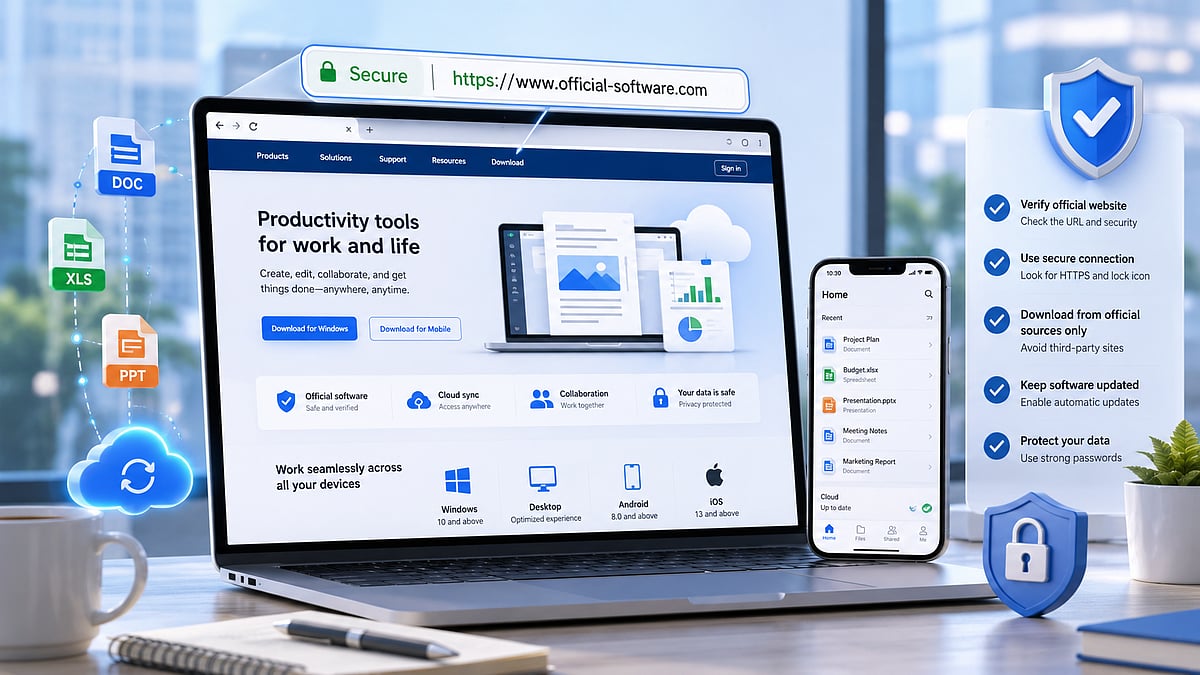
    For office software users, verifying the source is especially important before downloading installation files. When checking an official-looking office software page such as wps官网, users should review the page structure, download instructions, HTTPS status, file information, and whether the website provides a clear path for updates or support.

    Users should also look at how the page explains the software. A reliable website usually describes product features, supported platforms, system requirements, and installation steps consistently. A page that only pushes users toward a download button without explaining the software may deserve closer inspection.

    Check HTTPS and Basic Page Signals

    HTTPS is no guarantee of safety, but it is still a basic requirement for modern software websites. Users should not input account information or download important applications from non-secure connection pages. The address bar of your browser can help you confirm that the page uses HTTPS.

    Users should look at basic page signals other than HTTPS. Is the website easy to navigate? Does it offer contact or support information? Are there any obvious spelling errors or suspicious redirects? Does the download page still remain on the same domain or does it take users through a number of unknown websites?

    Multiple redirects are a warning sign. A user should know where a file is coming from before downloading it. If the download path moves through several unrelated domains, it becomes harder to trust the file source.

    Review the Download File Before Installing

    After downloading a file, users should pause before running it. On Windows, the file name should match the application and should not look like a generic installer from an unknown source. Users should also check whether the file extension makes sense. Executable files should be handled carefully, especially when they come from unfamiliar pages.

    For mobile users, APK files require even more attention. Installing an APK outside verified app stores may be necessary in some situations, but it also places more responsibility on the user. The file source, app version, permissions, and update method should all be reviewed before installation.

    If security software warns about a file, users should not ignore the warning. They should verify the source again, scan the file if needed, and consider downloading from a more reliable location.

    Avoid Bundled Installers and Unrelated Add-ons

    During installation, users should read each step instead of clicking through quickly. A safe productivity software installer should not require unrelated browser extensions, search tools, advertising components, or unknown system utilities. If an installer includes extra offers, users should be careful to decline them.

    Bundled software can create long-term inconvenience. It may change browser settings, add startup programs, display unwanted notifications, or slow down the system. For people who use productivity tools daily, these changes can reduce work efficiency and create unnecessary troubleshooting.

    Understand Update Channels

    Safe software installation does not end after the first download. Users should also understand how updates will be delivered. Official websites and verified app stores usually provide more predictable update paths. This helps users receive security patches and compatibility improvements without searching for a new installer every time.

    If an app asks users to download updates from random pop-up messages or unknown pages, they should be cautious. Reliable productivity tools usually provide updates through the application itself, the official website, or a recognized software distribution platform.

    Why Teams Should Standardize Software Sources

    For teams, safe download habits should be part of a broader workflow policy. The more team members download office tools from different sources, the more likely you are to run into compatibility and security issues. One person might be on an old version, another might be on a modified build, and another might be getting updates from a different channel.

    Teams can mitigate these risks by defining approved software sources. They can also record installation steps, rules for account set-up, and update expectations. This is especially beneficial for remote teams that work on a variety of devices and share documents on the cloud.

    Final Checklist Before Installing Productivity Software

    Before installing office or productivity tools, users should confirm several points. The website should have a clear domain, HTTPS protection, useful product information, and a direct download path. The file name should look relevant, the installer should avoid unrelated bundles, and the update channel should be easy to understand.

    Users should also review permissions after installation, especially on mobile devices. If a productivity app requests access that does not match its function, the user should review the settings carefully. Good software habits include downloading from trusted sources, keeping apps updated, and avoiding unnecessary add-ons.

    Productivity software supports everyday work, education, communication, and document management. Because these tools often handle important files, users should not treat installation as a routine click-through. Checking the official software websites helps reduce the risk of downloading unsafe software, outdated versions, installers that bundle other programs, and confusing update processes.

    The safest approach for users installing office software on a personal laptop, work desktop, or mobile device is to slow down and check the source first. A few minutes of checking can help you protect documents, improve device reliability, and make long-term software use safer.


  • Wordle July 9, 2026: Hints and Answer for Puzzle #1846

    Wordle July 9, 2026: Hints and Answer for Puzzle #1846

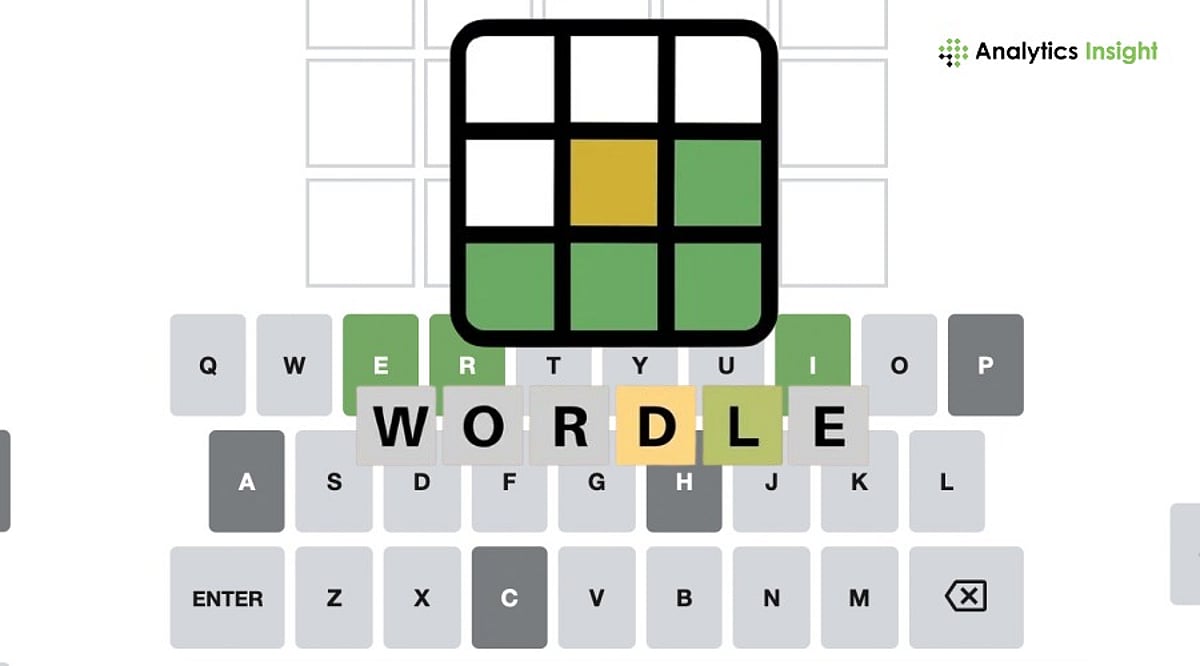
    Stuck on today’s Wordle? Puzzle #1846 for July 9, 2026, might have you scratching your head, but with the right clues, you’ll crack the five-letter word before your sixth guess. Whether you’re protecting a long winning streak or just looking for a gentle nudge, we’ve got the hints and the final answer.

    Today’s Wordle Hints (July 9, 2026)

    Use these clues to narrow down the possibilities:

    • Vowel Count: 2 vowels
    • Consonant Count: 3 consonants
    • Repeated Letters: None
    • Letter Rarity: All letters are common
    • First Letter: A
    • Bonus Hint: The word ends with the letter ‘D’

    Wordle Answer for July 9, 2026

    The answer to Wordle #1846 is AMEND. This verb means to make changes or improvements, fitting the theme of transformation hinted at in the puzzle.

    Expert Tips for Wordle Mastery

    If you’re new to Wordle or struggling to improve your game, follow these strategies:

    • Start with a word that includes common vowels and consonants to gather maximum information early.
    • Avoid repeating letters in your first few guesses unless you are confident about placement.
    • Pay close attention to color feedback: green for correct and well-placed, yellow for correct but misplaced.
    • Use each guess to eliminate possibilities rather than rushing toward the answer.
    • Expand your vocabulary with less common five-letter words to solve puzzles faster.

    Why Wordle Remains So Addictive

    Part of Wordle’s charm is its daily uncertainty. Every puzzle offers a new grid and a new challenge, forcing players to think critically. Even after four years, the game sharpens vocabulary and pattern-recognition skills. Whether you solve it over morning coffee or during a work break, Wordle provides a satisfying mental workout that reminds us simple games can offer the biggest rewards.

  • How Predictive Analytics Is Reshaping Automotive Logistics

    How Predictive Analytics Is Reshaping Automotive Logistics

    Cross-country car shipping has long relied on instinct. Brokers called carriers, negotiated rates over the phone, and hoped the trailer showed up on schedule. For decades, whether it was a local move or a 2,000+ mile haul, the process looked the same: a dispatcher with a phone, a spreadsheet, and a best guess. That model held when the industry was smaller and less competitive. But it falls apart at scale.

    The shift toward predictive analytics began quietly. A handful of large carriers started feeding historical shipment records into machine learning models, looking for patterns in pricing, route efficiency, and seasonal demand. What they found wasn’t surprising—it was the precision that changed things. Instead of knowing that Northeast-to-Florida hauls get expensive each winter, models could pinpoint exactly when rates climb, by how much, and which lanes are hit hardest. That granularity turns reactive dispatching into strategic planning. The gap between carriers using data and those still working off spreadsheets is widening fast, and the predictive advantage compounds over time: every completed shipment adds to the training data, making the next forecast slightly sharper.

    How Predictive Models Work in Vehicle Logistics

    Pattern Recognition Across Shipping Lanes

    At its core, predictive analytics in car shipping is pattern recognition applied to logistics data. A platform ingests years of booking records from a carrier network and identifies recurring behavior—for example, open car transport demand along the I-10 corridor jumping 20% each spring as families relocate, or enclosed vehicle transport for luxury sedans spiking before major auto shows. The models also track carrier-level preferences: some owner-operators avoid northern routes in winter; others prefer long-haul loads over 1,500 miles for better per-mile rates. When dispatch software understands these tendencies algorithmically, matching between available trucks and pending shipments improves across the board. Trucks run fuller, drivers earn more per trip, and customers get tighter delivery windows.

    Demand Forecasting and Seasonal Pricing

    Anyone who has shipped a vehicle during snowbird season knows the price goes up. Predictive analytics quantifies that with uncomfortable accuracy. Models don’t just flag “winter is expensive”—they identify that auto transport pricing on the Chicago to Scottsdale lane rises around 18% starting the second week of November, peaks in mid-December, and normalizes by late January. That level of detail changes how people buy. A dealership group moving auction inventory from Pennsylvania to California can time purchases around predicted carrier availability dips. A military family using PCS relocation benefits can book door-to-door transport during a window when rates soften. The data turns a guessing game into something resembling airline revenue management, applied to flatbed trailers instead of seat classes.

    Dynamic Quoting and Real-Time Rate Adjustments

    Static pricing is fading from car shipping. The old model of flat-rate tables based on distance brackets can’t keep up with volatility. A 1,200-mile shipment might cost $850 one week and $1,100 the next because diesel prices shifted, a major carrier pulled trucks off a lane, or a regional auction flooded the market. Dynamic quoting engines process these variables continuously—pulling diesel price feeds, carrier capacity data, seasonal demand models, and macroeconomic signals like new vehicle sales volume. The output is a quote that reflects what the shipment will actually cost to execute, not what a similar shipment cost six months ago. For customers, this creates a tradeoff: transparency improves, but the “best price” becomes a moving target. Savvy shippers, dealers, and fleet managers learn to treat quotes like airline fare classes: book early when demand is soft, pay a premium for guaranteed pickup dates, and accept flexibility for savings.

    Fleet Optimization and Multi-Stop Routing

    A standard car hauler trailer holds seven to ten vehicles depending on configuration. Maximizing capacity on every trip is the biggest profitability lever in auto transport. Predictive analytics tackles this as a combinatorial optimization problem: given a set of vehicles at scattered pickup locations needing different destinations, what loading sequence and route produces the fewest empty miles? Large finished-vehicle logistics providers use proprietary routing software that continuously recalculates as new orders enter the system. If a dealer cancels a shipment, the algorithm evaluates whether rerouting through another location keeps the trailer at full capacity. These adjustments happen dozens of times daily across fleets of hundreds of trucks. The environmental impact is real: every eliminated deadhead mile means less diesel burned. When a carrier reduces empty mileage from 22% to 15% through better dispatch, fuel savings are substantial—and so is the reduction in carbon emissions per vehicle shipped. Several major OEMs now include carbon-per-unit metrics in their logistics vendor scorecards, pushing carriers toward smarter routing regardless of sustainability priorities.

    Handling Disruptions Before They Cascade

    Weather events don’t just threaten physical damage—they reshape carrier routing for weeks. Hurricane season along the Gulf Coast forces rerouting through Alabama and Mississippi, sometimes adding 200+ miles to Florida-bound shipments. Predictive platforms that integrate National Hurricane Center tracking data can adjust ETAs and reroute proactively while competitors are still fielding customer calls. The same logic applies to less dramatic disruptions: a bridge closure on I-40 near Amarillo doesn’t make national news, but it bottlenecks westbound transport for days. Models that monitor DOT road closure feeds and historical traffic patterns flag these before a driver hits the backup. Even labor shortages play into forecasting—when driver availability drops in a specific region, predictive models adjust rate estimates and lead times before the shortage hits. Brokers who wait until trucks stop answering are already behind.

    Where Automotive Logistics Goes From Here

    The next stage combines predictive analytics with IoT telematics and condition monitoring sensors. Picture a car shipping transaction where onboard diagnostics report a vehicle’s condition at pickup, GPS-tracked sensors monitor vibration and tilt during transit, and a digital verification system confirms delivery condition automatically. Every data point feeds back into the predictive model, making the next shipment more accurate and more accountable. Most mid-size auto transport brokers are still transitioning from phone-based dispatch to digital platforms. The gap between technology leaders and the rest is growing. Companies that invested in data infrastructure early—capturing shipment outcomes, carrier performance scores, and route efficiency metrics—now hold a compounding advantage. Their forecasts improve with every completed load. For anyone involved in vehicle logistics, whether shipping a single sedan or managing a dealer network moving thousands of units monthly, predictive analytics isn’t a nice-to-have anymore. It’s the infrastructure that determines who delivers on time, quotes accurately, and operates with the fewest surprises. The companies that figured this out early are already pulling ahead. The rest are still shipping blind.

  • Top Affordable WiFi Printers for Home and Office Use in 2026

    Top Affordable WiFi Printers for Home and Office Use in 2026

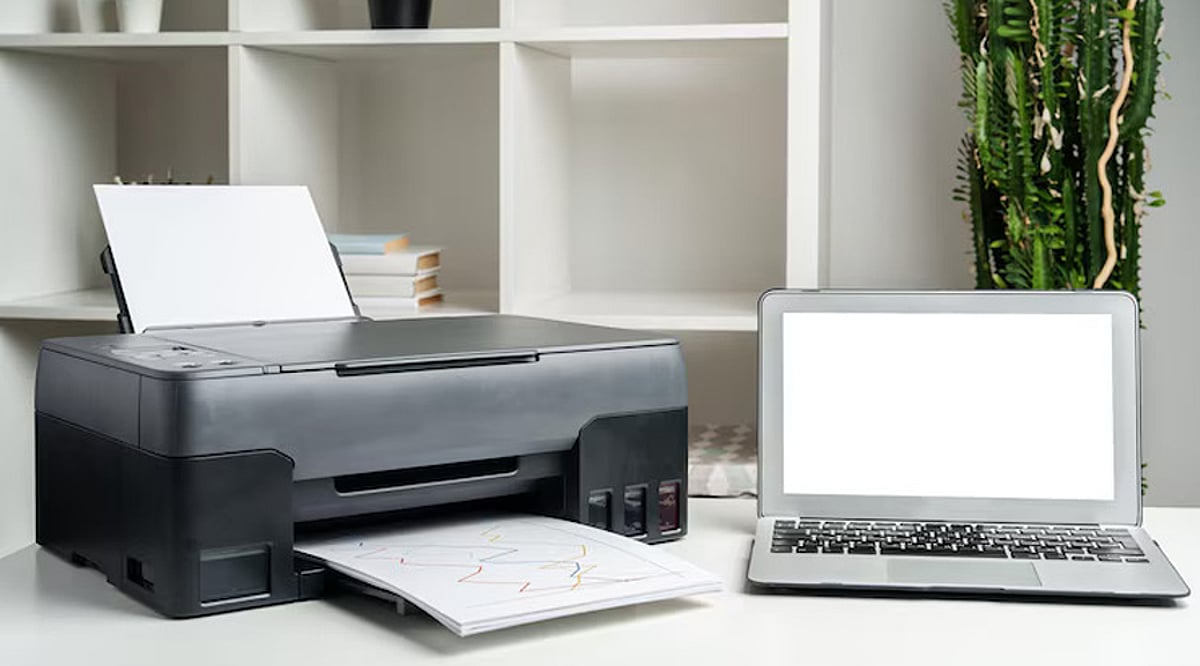
    Finding a reliable, budget-friendly WiFi printer that handles both home and office tasks can be challenging. We’ve reviewed the best options on the market, focusing on low running costs, wireless convenience, and solid print quality. Here are our top picks.

    HP Smart Tank 580

    The HP Smart Tank 580 is an excellent choice for home and office environments. It supports wireless printing, scanning, and copying. Its refillable ink tank system keeps printing costs low, while the HP Smart app simplifies setup. This model delivers consistent print quality for documents, homework, reports, and occasional photos.

    Canon PIXMA G3770

    The Canon PIXMA G3770 offers WiFi connectivity and a high-yield ink tank system. It produces sharp text and vibrant colors, making it ideal for school projects, presentations, and photos. Its compact design fits easily on smaller desks, and running costs remain affordable for regular use.

    Epson EcoTank L3252

    The Epson EcoTank L3252 is popular for its low printing costs and dependable performance. It supports WiFi and mobile printing from phones, tablets, and laptops. The ink bottles last a long time, and the printer handles everyday documents, assignments, bills, and office work smoothly.

    Brother DCP-T426W

    The Brother DCP-T426W includes print, scan, and copy features with built-in WiFi support. It offers impressive page yields through its refillable ink tank system. This printer is suitable for home businesses, students, and professionals who need quick, efficient, and consistent printing throughout the week.

    Canon PIXMA E4570

    The Canon PIXMA E4570 is an affordable wireless printer with an automatic document feeder. It can print, scan, copy, and fax, making it useful for office paperwork. Text output is clear, and color prints are good enough for everyday personal and professional tasks.

    HP DeskJet 2820e

    The HP DeskJet 2820e is designed for users with lighter printing needs. It supports wireless printing, scanning, and copying through an easy setup process. Its compact body saves space, and the HP Smart app allows convenient printing directly from smartphones, tablets, and computers.

    Epson EcoTank L3260

    The Epson EcoTank L3260 combines wireless printing, scanning, and copying with extremely low operating costs. It supports mobile printing and produces consistent results for documents and photos. The refillable ink tank lasts for a long time, making it a smart long-term choice.

  • NYT Strands Hints, Spangram, and Answers for July 9, 2026: Beauty-Themed Puzzle Guide

    NYT Strands Hints, Spangram, and Answers for July 9, 2026: Beauty-Themed Puzzle Guide

    Welcome to our daily guide for the New York Times Strands puzzle. Today’s challenge revolves around a beauty and cosmetics theme—specifically, items you might apply to your lips. If you’re stuck, think of products like lip balm, gloss, stain, and similar cosmetics. Below, we provide hints, reveal the Spangram, and list all the answers for July 9, 2026.

    What Is NYT Strands and How to Play It

    NYT Strands is a captivating daily word puzzle that blends elements of the NYT Crossword, Connections, and Spelling Bee. Players are presented with a 6×8 grid of letters and a daily theme as a hint. The goal is to find theme words and one special word—the Spangram—that stretches across the grid, connecting two opposite sides. The Spangram can change direction as it winds through adjacent letters, making it a defining feature of the puzzle.

    Hints for Today’s Puzzle

    Here are some words that can serve as hints to help you find the answers: Kiss, Tick, Slat, Slog, Slogs, Dogs, Mads, Sand, Sands. Focus on items that go on the lips, such as balm, gloss, liner, stain, tint, and plumper.

    Spangram Reveal and Explanation

    Today’s Spangram is KISSANDMAKEUP. To find it, start with the letter K that is five cells down on the far-left column, and then weave across the grid. The shape may resemble a pair of lips—or that’s just our imagination after staring at the puzzle for too long. The phrase “kiss and make up” is a popular idiom meaning to reconcile after a disagreement, which ties perfectly with the cosmetic theme.

    NYT Strands Answers for July 9, 2026

    Below are all the non-Spangram answers for today’s puzzle:

    • Stick
    • Stain
    • Balm
    • Tint
    • Gloss
    • Liner
    • Plumper

    Understanding the Theme: “On the Lips”

    Today’s theme, “On the Lips,” refers directly to lip cosmetics such as balm, gloss, liner, stain, tint, and plumper. The phrase also hints at something that is the topic of eager conversation or a pressing question everyone wants answered.

    Tips for Solving NYT Strands

    To solve puzzles more quickly, start by identifying the theme and brainstorming related words. For today, think about cosmetics for the lips. Another useful tip is to look for long words that stretch across the edges of the grid, as they often form the Spangram. Practice and pattern recognition will make you faster over time.

  • NYT Mini Crossword Solutions: July 9, 2026 Puzzle Answers and Explanations

    NYT Mini Crossword Solutions: July 9, 2026 Puzzle Answers and Explanations

    The NYT Mini Crossword for Thursday, July 9, 2026, offers a brisk mix of everyday words and clever number clues. This guide provides all five Across and five Down answers, plus simple explanations to help you finish the puzzle quickly.

    Overview

    Today’s puzzle includes familiar terms like Spot, Orzo, Pizza, and Storm, alongside fun math-based clues that add variety. The Mini remains a popular quick brain game, complementing the broader NYT Games lineup of Wordle, Connections, Strands, Spelling Bee, and the full Crossword.

    Today’s Mini Crossword for July 9

    Mini Across Clues and Answers

    • Something to look for while circling the block – Spot (Drivers often circle a street looking for an empty parking spot.)
    • Grow weary – Tire (Tire means to become tired after work or activity.)
    • This clue number × 2 – Dozen (Doubling the clue number gives 12, which is called a dozen.)
    • Rice-shaped pasta – Orzo
    • December 25th, for short – Xmas

    Mini Down Clues and Answers

    • Calm before the ___ – Storm
    • Favorite food of the Teenage Mutant Ninja Turtles – Pizza
    • Black-and-white cookies – Oreos
    • (This clue number × 2) + 2 – Ten
    • Release personal information about, informally – Dox

    Why Players Love the NYT Mini

    The NYT Mini has become a daily habit for many puzzle fans. It takes only a few minutes to finish, but every puzzle offers something new. Some clues test general knowledge, while others use simple wordplay or basic math. That mix makes the game fun for both new and experienced players. Each day’s puzzle feels different, so every morning starts with a fresh challenge.

    Final Words

    The NYT Mini Crossword for July 9, 2026 delivers another enjoyable mix of simple clues, clever wordplay, and fun challenges. Whether the puzzle took only a minute or required a little extra thinking, every answer added to the fun of the daily game. Tomorrow brings a brand-new NYT Mini with a fresh set of clues waiting to be solved. Along with the Mini, NYT Games will also feature other popular daily puzzles like Wordle, Connections, Strands, Spelling Bee, and the full New York Times Crossword.

  • NYT Connections Puzzle #1124: Hints and Full Answers for July 9, 2026

    NYT Connections Puzzle #1124: Hints and Full Answers for July 9, 2026

    The New York Times Connections puzzle for July 9, 2026 (Puzzle #1124) brings together four cleverly disguised categories: non-alcoholic drink labels, music publications, rug types, and classic Pontiac car models. The grid starts off accessible but builds to a challenging purple category that rewards careful thinking.

    How NYT Connections Works

    In Connections, players sort 16 words into four hidden groups of four. Each group shares a common theme or meaning. Colors indicate difficulty: yellow (easiest), green (moderate), blue (challenging), and purple (trickiest). You have limited mistakes, so strategy matters.

    Today’s Words List

    Here are the 16 words in the July 9 grid:

    • ZERO-PROOF
    • BILLBOARD
    • VIRGIN
    • G6
    • GRAND PRIX
    • SPIN
    • PERSIAN
    • PRAYER
    • SHAG
    • THROW
    • FIREBIRD
    • NA
    • SPIRIT-FREE
    • TRANS AM
    • PITCHFORK
    • ROLLING STONE

    Hints for Each Category

    Yellow Group: Think of common terms for non-alcoholic drinks.

    Green Group: These words are associated with media companies.

    Blue Group: These are types of floor coverings.

    Purple Group: These are actually car models.

    One-Word Hints

    If you need a little more help, here’s one word from each category:

    • Yellow: NA
    • Green: PITCHFORK
    • Blue: SHAG
    • Purple: TRANS AM

    Full Answers for July 9, 2026

    Yellow Group (NON-ALCOHOLIC DESIGNATORS): NA, SPIRIT-FREE, VIRGIN, ZERO-PROOF

    Green Group (MUSIC PUBLICATIONS): BILLBOARD, PITCHFORK, ROLLING STONE, SPIN

    Blue Group (KINDS OF RUGS): PERSIAN, PRAYER, SHAG, THROW

    Purple Group (PONTIAC MODELS): FIREBIRD, G6, GRAND PRIX, TRANS AM

    Why This Puzzle Stands Out

    The July 9 edition offers a balanced mix of everyday vocabulary and niche knowledge. The yellow and green categories are approachable, while the blue and purple groups demand a broader cultural awareness. The overlapping themes make it a satisfying challenge for both newcomers and seasoned solvers.

  • Essential Prompt Engineering Techniques for Reliable AI Agents

    Essential Prompt Engineering Techniques for Reliable AI Agents

    Prompt engineering for AI agents is a distinct discipline that goes beyond writing simple instructions. It involves defining how an agent should think, act, and respond when conditions become unpredictable. A well-designed prompt reduces ambiguity, improves task accuracy, and ensures consistent performance across complex, multi-step workflows.

    Define a Clear Agent Identity

    Instead of a generic “You are a helpful assistant,” assign a concrete job with defined scope. For example, a support triage agent that sorts tickets into three categories and never resolves billing disputes on its own. Identity defines operational ownership, not just tone. Place this instruction in the system prompt to maintain consistency across interactions.

    Set Decision Boundaries

    Agents must decide when to act, wait, or ask a clarifying question. A well-built prompt states what the agent may do, what it must never do, when to call a tool, and when to hand off to a human. Strong boundaries also resolve conflicts, like when retrieved information contradicts earlier conversation history. Clear constraints prevent compounded errors in multi-step loops.

    Use Few-Shot Prompting

    Few-shot examples help models infer behavior faster than explanations alone. Choose examples that cover a normal case, an ambiguous case, and a failure case. This shows the agent how decisions are made under different conditions. Structured prompts separate identity, objectives, constraints, and output requirements, and examples connect those sections to real behavior.

    Specify Output Schemas and Handle Uncertainty

    When an agent’s output feeds a workflow or database, format is critical. Define a schema (JSON, ordered steps, labeled fields) so downstream systems can parse results reliably. Also address uncertainty: what happens when input is incomplete, contradictory, or outside scope? A clarifying question, safe default, or escalation path works better than a confident guess.

    Test and Evaluate

    Version prompts like code, splitting role, boundaries, formatting, and safety into separate modules. Test against a fixed set of inputs with repeatable runs, checking accuracy, tool selection, and format compliance before shipping. Reliability comes from combining all techniques, not any single line of instruction.

    Common Mistakes to Avoid

    • Vague Instructions: “Be helpful” leaves too much open to interpretation.
    • Missing Guardrails: Without limits, agents act when they shouldn’t.
    • No Examples: Long explanations don’t teach decision patterns as well as examples.
    • No Defined Output Structure: Unstructured responses are hard for APIs and workflows to handle.
    • Skipping Real Evaluation: Testing against one or two scenarios is insufficient.

    Final Thoughts

    The best AI agent prompts are built with clear responsibilities, explicit boundaries, structured outputs, and ongoing evaluation. When prompt engineering is treated as an engineering discipline rather than a writing exercise, agents become reliable systems ready for real deployment.

    Frequently Asked Questions

    What is prompt engineering for AI agents?

    It is the process of designing clear instructions that define an agent’s role, constraints, decision-making, tool usage, and output format to improve reliability across multi-step tasks.

    What are the best techniques?

    Techniques include defining a precise role, adding guardrails, using few-shot examples, specifying structured outputs, planning for uncertainty, and continuously evaluating performance.

    Why are structured prompts important?

    Structured prompts organize instructions into clear sections, helping agents produce more consistent, predictable, and machine-readable responses.

    How do few-shot examples help?

    They show agents how to handle typical, ambiguous, and edge-case scenarios, teaching reasoning patterns and decision boundaries more effectively than instructions alone.

    How to evaluate prompt effectiveness?

    Test against a benchmark set of tasks to measure accuracy, output consistency, format compliance, tool selection, and exception handling.