Blog

  • Nintendo Switch 2 Gets User-Replaceable Battery Ahead of EU Right-to-Repair Rules

    Nintendo Switch 2 Gets User-Replaceable Battery Ahead of EU Right-to-Repair Rules

    Nintendo is making a small but important change to the Switch 2. The company is working on an upgraded version with a replaceable battery before new repair rules come into effect in the European Union. The update is expected to make the console easier to repair and help players use it for longer.

    Many gamers wonder how to extend the lifespan of their consoles. As batteries get older, they hold less charge. Until now, replacing them has often meant paying for repairs or opening the device with special tools. Nintendo’s new design could make that process much simpler.

    Switch 2 Gets a Repair-Friendly Battery

    Nintendo is expected to roll out the updated design before the Switch 2 reaches more markets, including the UAE and 27 European Union member states. Ahead of the launch, in a post on its website, the console maker has said that Switch 2 will have a 5,172mAh battery, which is 1% smaller than the current version’s 5,220mAh cell. Furthermore, the console will weigh 10 grams more with user-replaceable batteries.

    The primary reason for this change is EU-specific regulations that require consumer electronics to have removable, replaceable batteries. Instead of waiting for the rules to take effect, Nintendo appears to be preparing early. This also means the company may not need different versions of the console for different regions.

    The updated design is expected to make it easier for users to replace the battery when it wears out. Nintendo has not shared full details yet, but the goal is clear. Players should be able to keep using the same console instead of replacing it because of a weak battery. The change also shows that game companies are paying more attention to repair-friendly designs.

    A New Battery Can Add Years to the Console

    A replaceable battery is useful for more than repairs. It can help the console last much longer. Players can easily replace the battery after years of use instead of purchasing a new system.

    It can also help save money, as battery replacement typically costs much less than replacing the entire console. A healthy battery can also help the Switch 2 keep a better resale value if owners decide to sell it later.

    Another benefit is less waiting. If batteries become easier to replace, players may not have to leave their console at a service center for days.

    Could This Make the Switch 2 More Expensive?

    Repair-friendly parts can increase production costs. A replaceable battery generally means a different internal design and more parts. That could have a minor impact on the end price. Many players might find the extra cost worth it. Consoles that last longer save you money in the long run and reduce electronic waste.

    The move from Nintendo demonstrates how repairability is becoming a bigger deal in gaming hardware. If other companies follow suit, it could be much easier to own, fix, and use a console for many years to come.
  • SPCX Stock Falls After NASDAQ-100 Debut as Analysts Deliver Mixed Forecasts

    SPCX Stock Falls After NASDAQ-100 Debut as Analysts Deliver Mixed Forecasts

    SpaceX stock (ticker: SPCX) experienced a decline following its first day of trading on the NASDAQ-100 index, closing at $149.47 on Tuesday. The 7% drop came despite expectations that index inclusion would trigger buying from funds tracking the benchmark. The stock remains above its $135 IPO price but is more than 25% below its June 16 closing high of $201.80.

    The NASDAQ-100 entry had been anticipated to bring demand from index-tracking funds, which collectively manage approximately $800 billion in assets. However, this anticipated buying did not materialize into a rally, suggesting that some of the index demand may have been priced into the stock earlier. SPCX had gained nearly 6% in the week leading up to the index addition, and investors sold off shares as the first NASDAQ-100 session failed to extend that upward move.

    Meanwhile, ARK Invest increased its position in SpaceX by purchasing 44,196 SPCX shares on Tuesday, valued at around $6.6 million based on the closing price. ARK funds already held approximately 3.29 million shares by the end of SpaceX’s first public trading day.

    Wall Street analysts have begun issuing coverage following the end of the post-IPO quiet period, with a wide range of price targets reflecting significant uncertainty about the company’s valuation. The average analyst target stands near $236, implying roughly 58% upside from Tuesday’s close. Nineteen analysts have issued ratings so far.

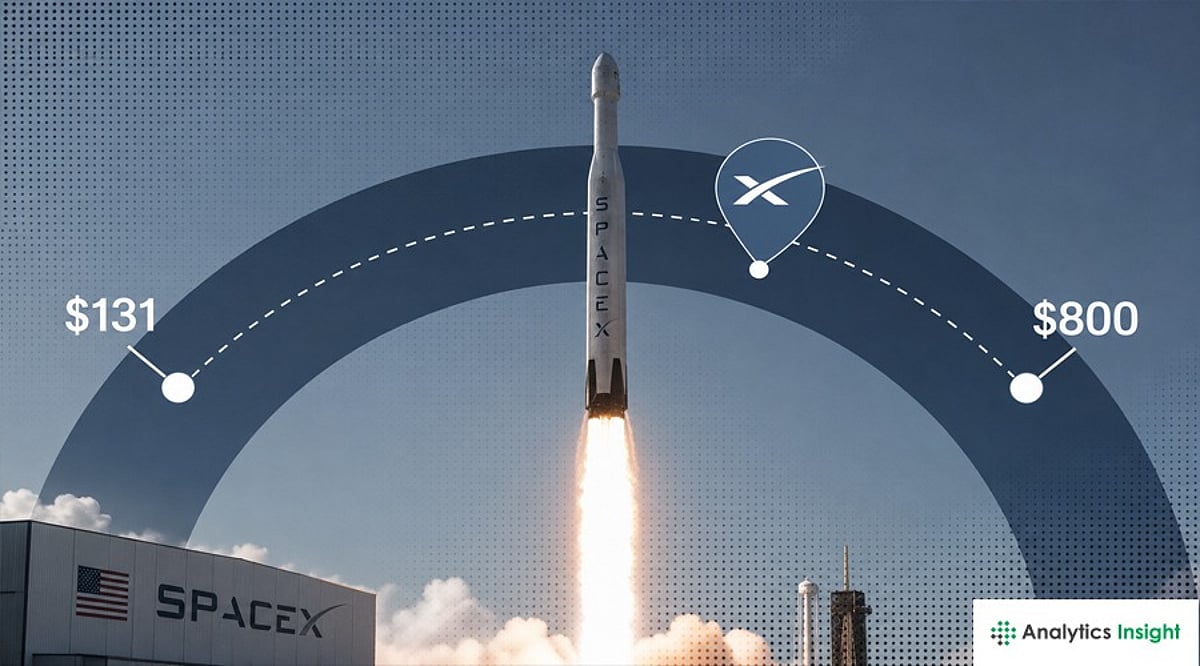
    Deutsche Bank initiated coverage with a Buy rating and a $255 target, citing SpaceX’s reusable rockets, Starlink satellite internet business, and potential use in AI infrastructure. Cantor Fitzgerald started with an Overweight rating and a $246 target, describing SpaceX as a “planetary infrastructure company.” Raymond James set the highest target on the Street at $800. Citi rated the stock a Buy at $200, linking a longer-term $900 case to the Starship program. Morgan Stanley set a $300 base case, with a $600 bull case and a $75 bear case.

    However, not all analysts share this optimism. MoffettNathanson set a $131 target with a neutral rating, questioning SpaceX’s valuation and long-term business forecasts. The firm called the company’s $30 trillion addressable market estimate “absurd” and expressed doubts about plans tied to orbital compute, stating, “There is simply no credible financial model that can support what is at the time of this writing a roughly $2 trillion valuation.”

    In other news, SpaceX has raised prices for Starlink Business Aviation customers. The Aviation Regional 25GB plan increased to $4,000 per month from $2,000, with additional data priced at $250 per GB. The company also introduced Aviation Regional Unlimited at $12,500 per month and raised Aviation Global Unlimited to $20,000 per month from $10,000, offering worldwide coverage and speeds up to 1 Gbps with the Aviation Performance Antenna. Starlink aviation equipment costs also rose to $200,000 per business jet, up from $145,000 last year.

  • Shiba Inu Burns 117 Million SHIB But Price Stays Flat Amid Weak Meme Coin Sentiment

    Shiba Inu Burns 117 Million SHIB But Price Stays Flat Amid Weak Meme Coin Sentiment

    Shiba Inu’s community permanently removed more than 117 million SHIB tokens from circulation on July 8, recording the network’s largest single-day burn in six months. Data from Shibburn showed that a Robinhood-linked wallet completed the biggest transaction by sending more than 109 million SHIB to a dead wallet, while several smaller wallets added to the daily total.

    Even so, the token continued trading within a tight range after losing nearly 9% over the past month, despite posting a modest weekly gain. The muted market response reflected continued weakness across the meme coin sector as traders focused on broader demand instead of supply reductions.

    Robinhood-Linked Wallet Drives Largest Burn

    Shibburn data identified a wallet linked to Robinhood as the largest contributor to the July 8 burn. The address destroyed more than 109 million SHIB in a single transfer. Meanwhile, several other wallets completed smaller burns during the day. Together, those transactions pushed the daily total above 117 million SHIB.

    Even after the latest activity, Shiba Inu has destroyed about 410.84 trillion tokens since 2021. That figure remains dominated by one historic burn rather than ongoing community efforts. Ethereum co-founder Vitalik Buterin removed 410.24 trillion SHIB tokens in May 2021 after receiving half of the token’s supply as an unsolicited gift. At the time, those tokens carried an estimated value of $6.7 billion.

    Large Supply Continues to Limit Burn Impact

    Shiba Inu currently holds a market capitalization of about $2.52 billion and ranks 36th among cryptocurrencies, according to BeInCrypto data. Its circulating supply still exceeds 585 trillion tokens. Even if the July 8 burn rate continued for an entire year, it would remove only a small portion of the available supply. As a result, traders showed little reaction to the latest burn announcement.

    Why has the market remained largely unmoved despite the biggest SHIB burn in six months? Historically, meme coin rallies have followed stronger retail participation instead of supply reductions alone. Consequently, burn activity has continued without producing a matching increase in demand.

    Weak Meme Coin Sentiment Keeps SHIB Under Pressure

    SHIB has traded within a narrow price range in recent sessions. Furthermore, the token has struggled to build momentum despite widespread discussion of the latest burn across social media. The broader cryptocurrency market recovered during the weekend after a difficult second quarter. Bitcoin, Ethereum, Cardano, and Solana posted double-digit gains, yet meme coins failed to match that performance.

    Shiba Inu gained less than 5% during the rebound and remained near $0.0000054. Likewise, several major meme coins recorded similar modest advances, suggesting weaker investor confidence across the sector.

    Trader James Wynn recently described SHIB as dead, while whales transferred more than one trillion SHIB tokens to exchanges in a single day. At the same time, a SpaceX-themed parody token featuring a Shiba Inu mascot rallied sharply, unlike SHIB.

    Recent market coverage also pointed to Shibarium adoption as a more important factor than burn activity. Accordingly, analysts have continued to identify network utility, rather than deflation alone, as the project’s primary challenge.

    What’s Next?

    Shiba Inu recorded its largest daily token burn in six months after the community destroyed more than 117 million SHIB. Despite the milestone, SHIB remained range-bound as traders focused on demand, circulating supply, and Shibarium adoption instead of burn activity. Investors will likely continue monitoring these factors closely.

    Disclaimer: This article is provided for informational purposes only and does not constitute investment advice. Cryptocurrencies are highly volatile and carry financial risk. Always conduct your own research before making any investment decisions.

  • China Considers New Restrictions on Overseas Access to Advanced AI Models

    China Considers New Restrictions on Overseas Access to Advanced AI Models

    Beijing Reviews Frontier AI as Strategic Technology

    China is evaluating potential new controls that would restrict overseas access to its most advanced artificial intelligence models, according to sources familiar with recent government-led discussions. The talks signal that Beijing now views frontier AI systems as strategic assets rather than mere commercial software, raising the stakes for global developers and businesses that rely on Chinese AI technology.

    Over the past month, officials from China’s Ministry of Commerce and the state planning agency met with major technology firms including Alibaba, ByteDance, and Z.ai to discuss possible limits on the use of top AI models outside the country. The proposals cover both closed-source systems and open-weight models, which allow users to download and modify parts of the technology. Sources told Reuters that the plans remain under review and that no final decision has been made.

    National Security Concerns Drive the Initiative

    The Ministry of Commerce led the meetings, with one proposal suggesting that leaks or theft of proprietary AI technology could be treated as an offense under China’s national security law. Officials also discussed tightening controls on who can fund domestic AI startups, adding another layer of oversight around sensitive technology and data.

    Chinese authorities are reportedly worried about advanced US AI systems, such as Anthropic’s Mythos model, and their potential use in finding software vulnerabilities. This mirrors US concerns that foreign actors could misuse frontier AI tools for military or intelligence purposes. The talks reflect a growing mutual anxiety between the two countries over AI security.

    Scope of Restrictions Remains Unclear

    Alibaba’s Qwen, ByteDance’s Doubao, and Z.ai’s GLM-5.2 are among the Chinese models that have gained global attention for their lower costs and strong performance. However, officials indicated that any new rules may apply only to future models, leaving existing systems unaffected. The scope and timeline remain uncertain, creating ambiguity for companies that integrate Chinese AI tools into software, research, automation, and customer service.

    Legal experts in China have already discussed a tiered approach for open-source AI. Under one proposal, basic tools would require simple filing, more powerful systems would face security reviews, and the most sensitive frontier models could be limited to domestic use only.

    Global Developers Face Potential Disruption

    Chinese AI models, particularly DeepSeek’s R1, have become a low-cost alternative for developers worldwide. If Beijing proceeds with restrictions, foreign companies may lose access to affordable AI options, potentially shifting to US or European alternatives or seeking domestic solutions. Costs could rise for businesses that have come to rely on Chinese AI systems.

    For now, formal rules have not been announced. Sources said it is not clear when, or even whether, the curbs will take effect. The global AI community continues to watch closely as China’s advanced models become central to national technology policy.

  • Bentley Confirms Torcal Electric SUV for September 2026 Global Debut

    Bentley Confirms Torcal Electric SUV for September 2026 Global Debut

    Bentley has officially announced that its first fully electric production model will be called the Torcal, an electric SUV set to debut globally in London on September 23, 2026. The new model expands Bentley’s lineup with a dedicated EV line while maintaining the brand’s signature luxury and craftsmanship.

    Name and Inspiration

    The Torcal name draws from El Torcal de Antequera in Andalusia, Spain, a natural landmark known for dramatic limestone rock formations, cliffs, and caves. This continues Bentley’s tradition of naming models after iconic natural sites—following the Bentayga, Bacalar, and Batur. The name also echoes the Latin word ‘torquere’ (to twist), hinting at the torque performance inherent to electric drivetrains.

    Positioning and Platform

    Bentley describes the Torcal as a ‘Luxury Urban SUV,’ smaller than the current Bentayga, and aimed at city-oriented luxury buyers. It will become the brand’s fourth main model line, joining the Continental GT, Flying Spur, and Bentayga families. Underpinning the Torcal is an advanced electric platform linked to Volkswagen Group’s Premium Platform Electric (PPE), which is also expected to underpin the upcoming Porsche Cayenne Electric. An 800-volt electrical architecture supports fast charging, with Bentley claiming the ability to add approximately 160 kilometers of range in just seven minutes under optimal conditions.

    Design and Technology

    Initial teaser images reveal a sleek SUV profile with a long roofline, slim rear lighting, and a black Bentley badge. The front end is expected to feature a closed grille design typical of EVs, along with illuminated detailing and a large curved central screen inside. While Bentley has not shared full specifications, industry reports indicate a dual-motor all-wheel-drive setup with a battery pack around 113 kWh, targeting more than 300 miles of range. Official figures will be confirmed at the September unveiling.

    Timeline and Future Plans

    The Torcal is a cornerstone of Bentley’s Beyond100+ strategy, which aims for a fully electric lineup by 2035. Market launch dates, final pricing, and detailed performance data remain under wraps until the global debut.

  • Perplexity Enters AI Coding Assistant Arena to Challenge Claude Code

    Perplexity Enters AI Coding Assistant Arena to Challenge Claude Code

    Perplexity, the AI-powered search company, is reportedly developing a coding assistant designed to compete head-to-head with Anthropic’s Claude Code and other popular developer tools. According to recent reports, the tool, internally named Teammate, has been tested by Perplexity’s own engineers for several months and is expected to be model-agnostic, giving developers the flexibility to choose the underlying AI model that best fits their workflow.

    Unlike some rivals that lock users into a single AI system, Perplexity’s approach emphasizes choice. Developers may be able to switch between models—such as Anthropic’s Claude, OpenAI’s GPT, or others—depending on the task. This flexibility could be a key differentiator in the increasingly crowded AI coding assistant market.

    Teammate Already in Internal Use

    Sources indicate that Teammate has been assisting Perplexity’s in-house engineers with code writing, bug detection, and other aspects of software development for the past few months. The company has not officially announced a public release date, but the internal testing suggests a launch could be forthcoming as Perplexity seeks to expand beyond search into everyday productivity tools.

    Competing with Claude Code and Others

    Claude Code, built by Anthropic, has gained popularity for its deep reasoning capabilities and ability to handle large code datasets. Perplexity, meanwhile, is best known for its search engine that provides quick, source-backed answers. With Teammate, Perplexity aims to target the same professional developer audience but with a multi-model twist that could give it a competitive edge.

    If Perplexity succeeds in launching a broad, model-agnostic coding assistant, it could shake up the AI coding landscape and force established players to consider offering more flexible integrations. The race for AI-powered developer tools is heating up, and Perplexity’s entry signals that the battle is far from over.

    For now, developers and industry watchers await an official announcement from Perplexity regarding Teammate’s availability and pricing.

  • Meta’s Super-Sensing AI Glasses Spark Fresh Privacy Debates

    Meta’s Super-Sensing AI Glasses Spark Fresh Privacy Debates

    Meta Platforms is testing a new prototype of AI-powered smart glasses that can continuously capture what users see and hear through built-in cameras and microphones. Dubbed “super sensing” glasses, the device could allow wearers to ask Meta AI about their day, surroundings, or past activities. However, the project has reignited concerns about privacy, consent, and legal compliance as wearable AI becomes more pervasive.

    How the Prototype Works

    According to reports, the glasses can take photos every few seconds and record audio, collecting data from the wearer’s daily life. Users could later query the AI to recall specific moments. The system reportedly does not store raw video or audio; instead, it extracts relevant data from images and sound and uploads it to Meta’s servers for AI search. Supporters argue this approach reduces privacy risks, but internal debate at Meta suggests many employees view the technology as intrusive, especially when it captures information from people who have not opted in.

    Privacy Light Concerns

    Meta’s current Ray-Ban Meta smart glasses include an LED light that activates when the wearer takes photos or records video, serving as a notification to bystanders. The new super-sensing feature may not trigger the LED in the same way, raising questions about whether people nearby will know when data collection is occurring. Meta has previously faced issues with users trying to disable or obscure the privacy light, prompting the company to roll out an update that disables the camera if tampering is detected. Still, the reported design choice has drawn criticism from privacy advocates.

    Legal and Regulatory Implications

    Always-aware devices could face scrutiny under privacy, biometric data, and audio recording laws. In some US states, recording private conversations without all-party consent is illegal. Boston University law professor Woodrow Hartzog noted, “No existing law comprehensively addresses the myriad ways these tools can pose risks during their design and manufacturing.” He urged lawmakers to update legal frameworks for devices that are “always on and constantly observing.” Public venues are already reacting: New York State courts plan to ban camera glasses from courtrooms, and Philadelphia courts and some cruise lines have restricted smart glasses in certain areas.

    Meta’s Vision and Next Steps

    Meta CEO Mark Zuckerberg has positioned AI glasses as a key part of the company’s future, calling them a “personal assistant that stays with you all day, helping you remember things and achieve your goals.” While the prototype is still under testing and could change, the debate highlights how smart glasses are evolving from simple recording tools into devices that monitor, process, and recall daily life. The outcome of this testing phase will likely shape both Meta’s product roadmap and the broader conversation around privacy in wearable AI.

  • SpaceXAI Unveils Grok 4.5 to Challenge Rivals in the AI Race

    SpaceXAI Unveils Grok 4.5 to Challenge Rivals in the AI Race

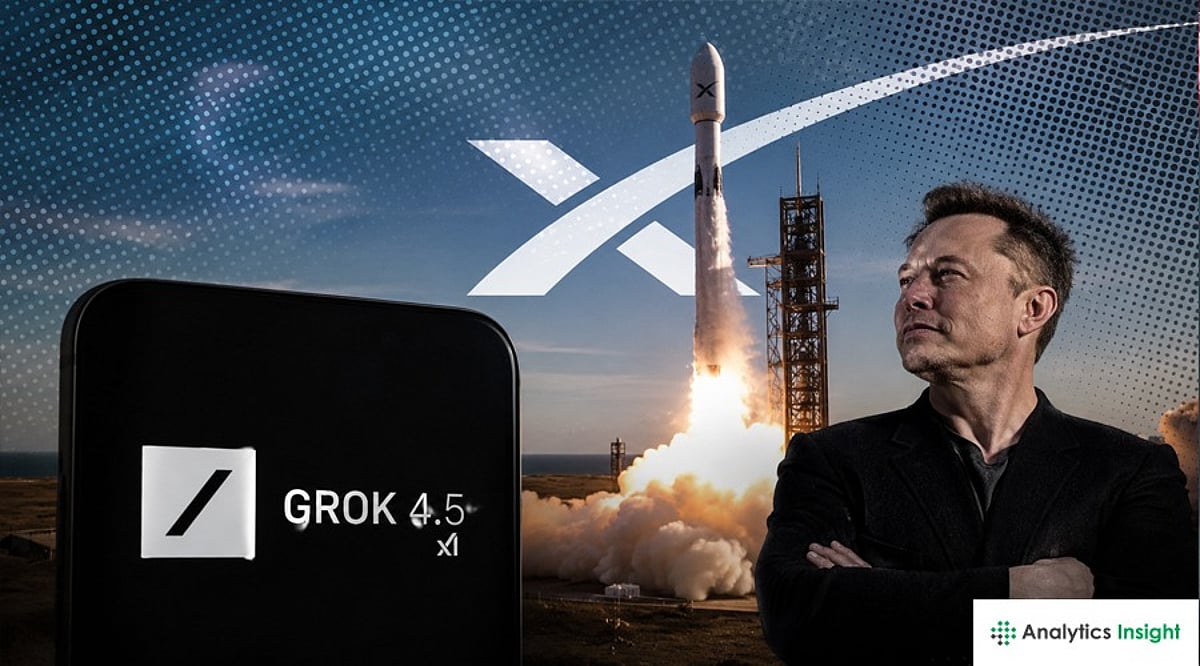
    The AI race has become even more intense. SpaceXAI will launch Grok 4.5, its latest language model, on July 9, 2026. The new model arrives before the expected release of next-generation AI systems from several rivals, making the timing hard to ignore.

    Elon Musk has been clear about his goal. He wants Grok to stand alongside the best AI models available today. With every new release, the company is trying to improve reasoning, speed, and the overall user experience. Grok 4.5 is another step in that plan.

    Grok 4.5 Brings New Upgrades to the AI Race

    Earlier this year, Elon Musk launched Grok 4.3 and stated that the company is preparing a more advanced model that will build on improved reasoning, stronger coding support, and better responses across tasks. In an official post, Musk has announced that the upcoming LLM is built on XAI’s new V9 foundation model, which features 1.5 trillion parameters. The model is also expected to handle longer conversations more naturally and provide more accurate answers.

    SpaceXAI says Grok is designed to be useful to both everyday users and developers. The company continues to expand its AI tools while keeping Grok closely connected to X. This gives users quick access to AI without leaving the platform.

    The launch also shows that Musk wants to compete directly with the biggest names in AI. OpenAI, Google, and Anthropic have all released stronger models over the past year. Grok 4.5 is SpaceXAI’s answer to that growing competition.

    Why Launch Grok 4.5 Now?

    The timing may be just as important as the technology. Several AI companies are expected to introduce major updates in the coming months. By releasing Grok 4.5 now, SpaceXAI keeps itself in the spotlight before its rivals make their next moves. Even Musk has mentioned that Grok 4.5 is ‘Opus-Class,’ which is a direct reference to its rival Claude’s general language model, Claude Opus.

    The company also wants developers and businesses to use Grok before newer models from competitors arrive. Companies often go for early releases to get feedback and improve performance. This helps them strengthen their user base before the next stage of the AI race begins.

    Competition in AI is moving faster than ever. Every launch now becomes part of a larger battle to attract users, developers, and businesses.

    What Grok 4.5 Could Mean for X Users?

    The most significant transformation isn’t the launch of the model; instead, it’s the implementation. If it works properly, tasks like searching, content discovery, and writing will be much more convenient on X.

    With the arrival of an advanced tool like Grok, the platform may grow larger than a mere social network. It can be a powerful solution to many tasks such as information discovery, post creation, and communication with users.

  • Your Complete Data Analytics Cheat Sheet: Excel, SQL, Python, and Power BI

    Your Complete Data Analytics Cheat Sheet: Excel, SQL, Python, and Power BI

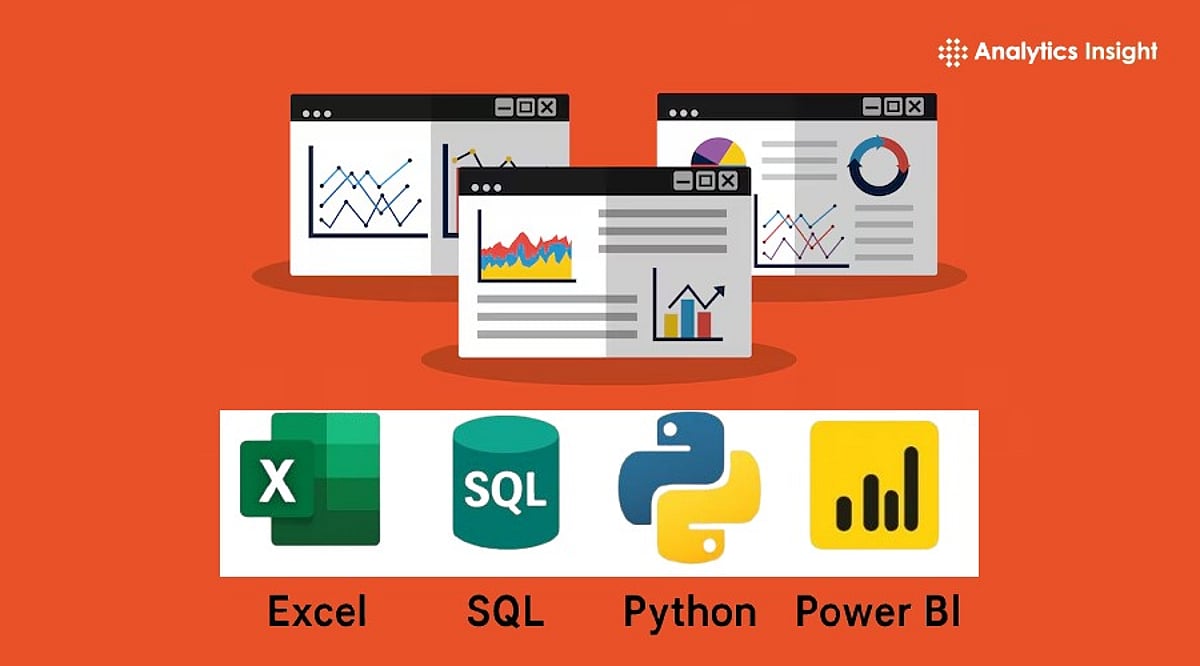
    Data analytics is the process of examining data to uncover useful insights. Every organization collects vast amounts of information daily—sales figures, customer feedback, website traffic, and growth metrics. Companies leverage this data to make smarter decisions and plan ahead. Mastering data analytics is a highly sought-after skill, and employers increasingly value professionals who can work across multiple tools. The four most popular tools in this domain are Excel, SQL, Python, and Power BI. Each serves a distinct purpose: Excel handles calculations and reporting; SQL retrieves data from databases; Power BI transforms data into visual dashboards; and Python manages large datasets and complex analyses. This guide provides a concise cheat sheet covering essential formulas, commands, and functions for these tools.

    Excel Cheat Sheet

    Excel remains a staple for everyday data analysis due to its simplicity and versatility. It is widely used for creating reports, analyzing numbers, and organizing information. Key formulas include SUM, AVERAGE, COUNT, MIN, and MAX for basic calculations; IF for conditional logic; XLOOKUP and VLOOKUP for searching large tables; and INDEX and MATCH for advanced lookups. Essential features include Pivot Tables to summarize data, Conditional Formatting to highlight key values, Power Query for data cleaning, and Data Validation to prevent input errors. Industry surveys indicate that over 75% of data professionals still use Excel daily.

    SQL Cheat Sheet

    SQL (Structured Query Language) is the standard for working with relational databases. Most businesses store critical data in databases, and SQL enables quick and efficient retrieval. Core commands include SELECT, FROM, WHERE, ORDER BY, GROUP BY, HAVING, DISTINCT, and LIMIT. Joins are crucial: INNER JOIN returns matching records; LEFT JOIN returns all records from the left table; RIGHT JOIN returns all from the right; and FULL OUTER JOIN returns all from both. Advanced features include Common Table Expressions (CTEs), CASE statements, subqueries, window functions (ROW_NUMBER, RANK, DENSE_RANK, LEAD, LAG). SQL remains indispensable because most business data resides in databases.

    Python Cheat Sheet

    Python is a powerful programming language for data analysis, valued for its readability and extensive library ecosystem. The top five libraries are Pandas (data manipulation), NumPy (numerical operations), Matplotlib and Plotly (visualization), and Scikit-learn (machine learning). Key Pandas commands include read_csv(), head(), info(), describe(), shape, columns, groupby(), merge(), sort_values(), drop_duplicates(), and fillna(). Python excels at data cleansing, automation, statistical analysis, and building AI models.

    Power BI Cheat Sheet

    Power BI, a Microsoft business intelligence tool, converts raw data into interactive charts, reports, and dashboards. Core components include Power Query (data preparation), Data Model (table relationships), DAX (formulas), Visualizations (charts), Dashboards, and Power BI Service (cloud sharing). Common chart types are bar, line, column, pie, maps, KPI cards, matrix tables, and slicers. According to Microsoft, Power BI is used by over 375,000 organizations and has more than 30 million monthly active users, reflecting its widespread adoption.

    Latest Trends in Data Analytics

    Data analytics continues to evolve with emerging technologies. Artificial intelligence accelerates analysis, enabling tools to answer business questions via natural language instead of code. Cloud technology facilitates storage and processing of massive datasets. Real-time reporting is increasingly common as organizations demand up-to-the-minute insights. Enhanced data security and self-service analytics are also top priorities. Industry experts highlight AI-powered analytics, robust data governance, and accessible business intelligence as the biggest current trends.

    Final Thoughts

    A comprehensive data analytics cheat sheet saves time and streamlines workflows. Excel handles numerical tasks and reporting; SQL retrieves database information; Python manages large-scale and advanced analysis; Power BI creates clear visual dashboards. Together, these four tools cover every essential aspect of data analytics. Mastering them builds a solid foundation for a successful career in today’s data-driven world.

    Frequently Asked Questions

    1. What is a data analytics cheat sheet? A quick reference guide summarizing important formulas, commands, and functions for popular analytics tools.
    2. Why is Excel important for data analytics? It helps organize data, perform calculations, create reports, and identify trends using simple formulas and built-in features.
    3. Why should SQL be part of data analytics skills? SQL enables access, filtering, and analysis of data stored in databases, which most businesses rely on daily.
    4. What is Python used for in data analytics? Python is used for data cleaning, task automation, visualization, statistical analysis, and building machine learning models.
    5. Why do companies use Power BI? Power BI transforms raw data into clear dashboards and reports, helping businesses understand information and make better decisions.
  • Multi-Agent Systems: Enhancing AI Speed, Accuracy, and Scalability

    Multi-Agent Systems: Enhancing AI Speed, Accuracy, and Scalability

    Artificial intelligence has transformed how we solve problems, create content, analyze data, and automate workflows. As AI evolves, tasks grow increasingly complex. A single AI agent can handle many duties, but it often struggles when a job demands diverse skills, careful planning, or simultaneous steps. This challenge has given rise to multi-agent systems—a setup where multiple AI agents collaborate, each with a specific role, to achieve superior performance.

    How Multi-Agent Systems Work

    A multi-agent system breaks a large task into smaller, manageable pieces. An orchestrator agent receives the initial request and decides the workflow. Then, specialized agents take over based on their strengths: a planner outlines the strategy, a researcher gathers data, a tool agent interacts with software or databases, a reviewer checks for errors, and a final agent compiles the response. This division of labor makes the entire process more organized and reliable.

    Better Results Through Specialization

    Specialization is a key advantage. Instead of burdening one agent with everything, each agent focuses on a single objective. For example, a coding agent writes code while another inspects it for bugs. A research agent finds facts while a verifier confirms their accuracy. This clear separation improves quality because every agent performs tasks aligned with its design.

    Faster Performance with Parallel Execution

    Multi-agent systems excel at speed by running tasks in parallel. While a single agent processes sequentially, multiple agents can simultaneously gather data, analyze it, and produce reports. This concurrency dramatically reduces completion times, especially for large-scale operations in software development, research, and enterprise projects.

    Higher Accuracy Through Verification

    Accuracy is a top priority. Multi-agent systems add a verification layer: one agent reviews another’s work. For instance, an agent drafts a report, then a reviewer checks facts, calculations, and references. Errors are flagged before finalization, cutting down on misinformation and boosting trust in the output.

    Research Backing Multi-Agent Systems

    Recent Google research examined 180 different multi-agent designs. The study found these systems perform best when tasks split into independent parts. Researchers also developed prediction models to identify the optimal agent structure for various jobs. Fields like software development, customer support, enterprise automation, and data analysis benefit greatly from this approach.

    More Agents ≠ Better Performance

    Adding more agents doesn’t automatically improve results. Some complex multi-agent systems can be ten times more expensive than a strong single-agent solution while yielding weaker outcomes. Poor coordination leads to delays, redundant work, and excessive communication. Experts emphasize careful design over sheer quantity—a small, well-organized team of specialized agents often outperforms a large, uncoordinated group.

    Why Real-Time Information Matters

    Modern businesses operate in fast-changing environments. Multi-agent systems perform better when all agents access the latest data. Event-driven architectures allow agents to share current information, reducing conflicting decisions and enabling quicker responses to changes while maintaining consistency.

    Enterprise Improvements

    Companies now build multi-agent systems for business operations. Recent enterprise frameworks achieve up to 4.5 times higher throughput without major resource increases, using smaller models for specific tasks. This efficiency lets organizations process larger workloads cost-effectively.

    Common Business Applications

    • Software Development: Agents handle planning, coding, testing, debugging, and documentation, improving quality and speed.
    • Research: One agent searches, another summarizes, a third verifies references, and a fourth prepares the final report, reducing errors.
    • Customer Support: Specialized agents classify requests, search knowledge bases, verify policies, draft responses, and review replies, boosting consistency and satisfaction.
    • Business Automation: Multi-agent systems manage financial analysis, supply chain operations, compliance checks, and scheduling.

    Current Challenges

    Despite benefits, multi-agent systems introduce infrastructure costs and complexity. Communication between agents requires careful management to avoid duplication or conflicting decisions. Debugging becomes harder due to multiple interactions. Companies need robust monitoring, clear governance, and reliable coordination to maintain high performance.

    Final Thoughts

    Multi-agent systems represent a significant advancement in AI. Instead of relying on a single agent, they leverage the strengths of many to handle complex tasks more efficiently. They improve speed, accuracy, scalability, and reliability across diverse fields. However, success depends on thoughtful design—not just the number of agents. A well-structured team of specialized agents consistently outperforms general-purpose or poorly designed systems.

    Frequently Asked Questions

    1. What is a multi-agent system? A group of AI agents collaborating, each handling a specific task toward a common goal.
    2. Why are they better than a single AI agent? They boost speed, accuracy, and efficiency by dividing complex work among specialized agents.
    3. Where are they commonly used? In software development, research, customer service, business automation, financial analysis, and supply chain management.
    4. Do more agents always improve performance? No. Well-designed systems outperform large, poorly coordinated groups.
    5. What is the biggest advantage? The ability to solve complex problems faster and more accurately through collaboration between specialized agents.