Blog

  • X Money Rolls Out Fiat Payments for Premium+ Users Through Cross River Bank

    X Money Rolls Out Fiat Payments for Premium+ Users Through Cross River Bank

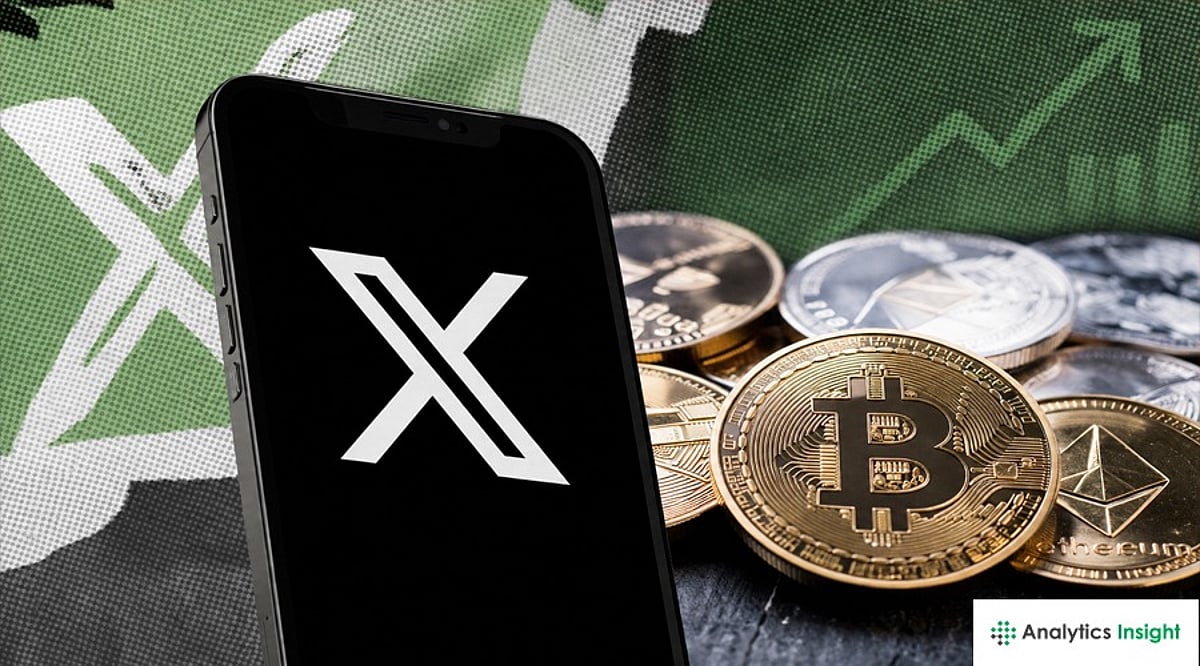
    X has begun rolling out X Money to Premium+ subscribers, opening access to fiat payments through Cross River Bank’s banking infrastructure. The launch advances Elon Musk’s plan to build an all-in-one platform for communication, commerce, and financial services. For now, the service supports traditional currency and has no confirmed cryptocurrency integration.

    X Money Starts With Regulated Banking Rails

    Eligible Premium+ users can send and receive fiat payments within X. Cross River Bank manages transaction processing and customer accounts, providing the regulated foundation for the new service. The initial setup uses conventional banking channels rather than blockchain networks. It also keeps the first phase focused on familiar payment methods.

    X has not announced support for cryptocurrency transfers, stablecoin payments, tokenized assets, or blockchain settlement. Instead, X Money allows the platform to add financial functions through an established banking partner. The first rollout therefore centers on traditional payments while leaving future digital asset features unconfirmed. The service initially remains available only to eligible Premium+ subscribers.

    The launch represents one of X’s largest product expansions since Musk acquired the platform. He has repeatedly outlined plans for an ‘everything app’ combining social networking, messaging, payments, banking, and commerce. X Money now brings part of that strategy into operation. The service adds financial activity to the platform’s existing communication and commercial ambitions.

    Cross River Link Fuels Cryptocurrency Speculation

    Cross River Bank is a United States financial institution with experience supporting fintech and blockchain companies. Its role in X Money has therefore renewed speculation about possible cryptocurrency features. Much of that discussion has focused on Ripple and XRP. The bank’s digital asset connections have drawn greater market attention to the rollout.

    Still, the bank’s industry relationships do not prove that Ripple technology powers the service. X, Cross River Bank, and Ripple have made no announcement linking X Money with XRP. They have also provided no evidence of blockchain-based payment processing within the platform. The available information supports only a fiat-based service.

    The current design depends on regulated banking infrastructure. Customers use traditional currency through Cross River Bank’s systems, not a confirmed digital asset network. Claims about active XRP integration therefore remain unsupported by the information released about the rollout. The service can expand its financial functions without introducing cryptocurrency settlement.

    Future Digital Asset Features Remain Unconfirmed

    X has left open the possibility of adding more financial services as Musk develops a broader financial ecosystem. Yet the platform has announced no plan, timetable, or technical framework for cryptocurrency support. Its present structure shows how regulated banking partners can help technology companies enter payments first. That model connects consumer platforms with established financial channels.

    Could X Money eventually bring digital assets to a major consumer platform? Future additions could include stablecoins, tokenized assets, or cryptocurrency transfers, but X has confirmed none of those functions. Any such expansion would require a separate announcement and clear operating details. Until then, speculation cannot replace official confirmation.

    Should X later add cryptocurrency payments, the platform could bring digital assets directly to a large mainstream audience. For now, X Money remains a fiat payment service for eligible Premium+ users. Investors and users will watch X, Cross River Bank, and Ripple for verified updates. Future announcements will determine whether the service moves beyond conventional payments.

    What’s Next?

    X Money marks a major step in X’s expansion into financial services by enabling fiat payments for Premium+ users through Cross River Bank. While cryptocurrency and XRP integration remain unconfirmed, future announcements could reveal whether the platform plans to introduce digital asset support.

  • Indian Government Summons Meta Over Instagram Ads Allegedly Tied to Child Sexual Abuse Material

    Indian Government Summons Meta Over Instagram Ads Allegedly Tied to Child Sexual Abuse Material

    The Indian government has issued a summons to Meta after reports surfaced alleging that Instagram displayed advertisements linked to Child Sexual Abuse Material (CSAM). The move underscores growing nationwide concern over platform safety and content moderation practices.

    Union IT Minister Ashwini Vaishnaw has directed the Ministry of Electronics and Information Technology (MeitY) to demand an explanation from the social media giant regarding the alleged promotion of illegal material on its platform. According to government officials, Meta’s content moderation policies, ad review systems, and mechanisms to prevent the dissemination of such content will be scrutinized closely.

    The government intends to investigate the approval process for these advertisements and the detection methods in place. This development follows repeated calls from authorities for digital platforms operating in India to comply with national laws and ensure they do not host harmful or illegal content.

    Meta has not yet issued a public statement in response to the summons. The outcome of this inquiry will determine whether further legal action is taken against the company. The case highlights the ongoing debate about the responsibility of social media platforms to protect users, especially children, from exploitation and abuse.

  • MCX Gold Climbs 1.47% to Rs 1,47,900 as US Jobs Data Eases Rate Hike Fears; Silver and Brent Also Gain

    MCX Gold Climbs 1.47% to Rs 1,47,900 as US Jobs Data Eases Rate Hike Fears; Silver and Brent Also Gain

    Gold prices rallied on the Multi Commodity Exchange (MCX) on July 3, buoyed by softer-than-expected US jobs data that lowered expectations for further Federal Reserve interest rate hikes. August gold futures surged 1.47% to Rs 1,47,900 per 10 grams, while September silver futures advanced 1.85% to Rs 2,37,630. In the energy market, Brent crude futures rose 0.61% to $72.34 a barrel, and US West Texas Intermediate (WTI) gained 0.47% to $69.01.

    According to the CME FedWatch Tool, traders now see a 54% probability of a rate hike in September, down from 66% previously. The shift in sentiment followed a lackluster US labor market report, which dampened hawkish Fed expectations and boosted demand for safe-haven assets like gold.

    Domestic Gold Prices

    In the Indian market, 24K gold increased by Rs 322 to Rs 1,47,000 per 10 grams, while 22K gold rose by Rs 295 to Rs 1,34,750. Regional variations were minimal: Mumbai and Kolkata quoted Rs 1,47,000, Delhi Rs 1,47,150, and Chennai Rs 1,49,500.

    US Gold Prices

    Internationally, spot gold climbed 1.4% to $4,179.94 per ounce, and US gold futures for August delivery gained 1.6% to $4,193.20. Spot silver rose 2.3% to $62.43 per ounce, platinum added 2.7% to $1,660.05, and palladium increased 1.3% to $1,284.40.

    Key Levels to Watch

    Kelvin Wong, senior market analyst at OANDA, noted that the market is pricing in fewer Fed rate hikes for the remainder of this year and early next year, driven by the weak US jobs data. However, he cautioned that rate hike expectations have not been completely erased, and gold could still face downside pressure, potentially testing the $3,500/oz level.

    On the international front, gold has support at $4,084 and $4,040 per troy ounce, with resistance at $4,180 and $4,240. Silver support stands at $59.40 and $58, while resistance is at $63 and $64.40. On MCX, gold support is at Rs 1,44,400 and Rs 1,43,350, with resistance at Rs 1,47,100 and Rs 1,48,800. Silver support on MCX is at Rs 2,33,000 and Rs 2,26,600, with resistance at Rs 2,37,700 and Rs 2,41,000.

  • 7 Nano Banana Prompts to Transform Your Photos Into Video Game Avatars

    7 Nano Banana Prompts to Transform Your Photos Into Video Game Avatars

    AI-generated gaming avatars are taking over social feeds, and Google’s Nano Banana model is the engine behind many of these viral creations. With a simple prompt formula, anyone can turn a regular selfie into a GTA protagonist, a cyberpunk mercenary, or an anime RPG hero in seconds.

    This guide breaks down the exact prompt structure you need and highlights seven of the most popular gaming styles to try right now using Google Gemini.

    The Nano Banana Prompt Formula

    The key to great results is a structured prompt that includes: a base photo description, the desired game genre or art style, and any specific character traits. Nano Banana interprets these instructions to generate a stylized avatar that keeps your facial features while adopting the look and feel of your chosen game world.

    7 Viral Styles to Try

    • GTA Protagonist – Edgy, urban look with a gritty cinematic filter.
    • Cyberpunk Mercenary – Neon lights, augmented gear, and a futuristic city backdrop.
    • Anime RPG Hero – Bright colors, oversized weapons, and manga-inspired expressions.
    • Fantasy Warrior – Medieval armor, magical auras, and epic landscapes.
    • Retro Arcade Character – Pixelated aesthetics with 8-bit color palettes.
    • Sci-Fi Explorer – Space suits, alien planets, and advanced tech gadgets.
    • Horror Survivor – Dark, atmospheric scenes with distressed clothing and eerie lighting.

    To get started, upload a clear front-facing photo and use a prompt like: “Turn this person into a [style] character, Nano Banana style, keeping facial features intact.” Experiment with adjectives like “detailed, cinematic, high-resolution” for better results.

    These Nano Banana prompts make it incredibly easy to create stunning AI-powered gaming avatars. Whether you want to be the hero of your favorite game or just have fun with friends, these seven styles are the best options to explore right now.

  • 5 Common Google Chrome Habits That Are Slowing Down Your Computer

    5 Common Google Chrome Habits That Are Slowing Down Your Computer

    Google Chrome is a fast and feature-rich browser, but certain browsing habits can turn it into a resource-heavy application. Excessive tabs, unnecessary extensions, outdated software, and neglected maintenance all increase memory and CPU usage. Identifying and fixing these common mistakes can restore browser responsiveness, speed up your PC, and deliver a smoother browsing experience.

    Keeping Too Many Tabs Open

    Each Chrome tab runs as a separate process and consumes RAM, even when inactive. Dozens of open tabs can slow multitasking, increase memory usage, and reduce overall PC performance. Close unused tabs regularly or use Chrome’s Memory Saver feature to automatically free resources from inactive tabs without losing them.

    Installing Too Many Extensions

    Extensions enhance Chrome’s functionality, but every installed add-on uses system resources. Too many extensions running in the background can slow startup, browsing, and page loading. Review your extensions frequently and remove those you rarely use. Keeping only essential extensions helps Chrome run faster and more efficiently.

    Ignoring Chrome Updates

    Running an outdated version of Chrome means missing performance improvements, bug fixes, and security patches. Google regularly releases updates that optimize browser speed and resource management. Enable automatic updates or check manually to ensure you’re using the latest version for better stability, security, and browsing performance.

    Letting Cache and Cookies Build Up

    Chrome stores cached files and cookies to speed up website loading. However, excessive browsing data can eventually affect browser performance. Clearing cache and cookies periodically removes unnecessary files, resolves loading issues, and helps Chrome run more smoothly without affecting saved passwords if selected carefully during cleanup.

    Misusing Hardware Acceleration

    Hardware acceleration lets Chrome use your computer’s graphics processor to improve performance. However, on older or incompatible systems, it may cause lag, high resource usage, or display glitches. If Chrome becomes unstable, disable hardware acceleration in Settings and restart the browser to check for performance improvements.

    Simple Fixes for a Faster Browser

    Improving Chrome’s performance doesn’t require a new computer. Close unnecessary tabs, remove unused extensions, install updates, clear browsing data, and adjust hardware acceleration when needed. These simple maintenance habits reduce resource consumption, improve browsing speed, and help your PC deliver a faster, smoother, and more reliable experience.

  • AI Chips, Battery Recycling, and Hiring Trends: Tech News Roundup for July 3, 2026

    AI Chips, Battery Recycling, and Hiring Trends: Tech News Roundup for July 3, 2026

    Good morning, tech enthusiasts! Here’s a quick roundup of today’s top headlines, from Amazon’s custom AI chips for Alexa to startup funding, AI hiring shifts, codeless automation platforms, and cryptocurrency sentiment indicators.

    Amazon Plans Custom AI Chips for Future Alexa Devices

    Amazon is designing its own AI chips to power upcoming Alexa devices, promising faster, safer, and more connected AI features. Devices chief Panos Panay confirmed the company is also working on new portable products beyond smart speakers and TVs, with a focus on natural conversation interfaces rather than screens. No official launch dates or product details have been revealed yet.

    BatX Raises Rs. 105 Crore to Expand Battery Recycling Operations

    Battery recycling startup BatX has secured Rs. 105 crore (about $12.6 million) in Series A funding led by IvyCap Ventures. The company plans to use the capital to increase its recycling and refining capacity, strengthen research, and build a more robust local supply chain for critical battery materials. BatX recovers valuable materials from used batteries and manufacturing waste and aims to expand its technology footprint in India and other markets.

    WEF Report: AI Reshaping Graduate Hiring

    A new report from the World Economic Forum and PwC highlights how AI is changing entry-level hiring. Jobs most affected by AI have seen minimal growth in graduate openings since 2012. While weak business conditions and cost-cutting also play a role, the report urges companies to maintain graduate hiring and redesign entry-level roles rather than eliminate them.

    Top Codeless AI Platforms Transforming Business Automation in 2026

    Businesses are increasingly using codeless AI platforms like Zapier, n8n, Make, Workato, Bubble, and Microsoft Power Automate to build chatbots, AI agents, and automated workflows without programming skills. AI agents that complete tasks with minimal human intervention are a major trend in 2026, democratizing AI for both small businesses and large enterprises.

    Crypto Fear and Greed Index: A Quick Sentiment Check

    The Crypto Fear and Greed Index measures market sentiment by analyzing price volatility, trading volume, social media buzz, Bitcoin dominance, and Google search trends. Scores range from 0 (extreme fear) to 100 (extreme greed). While useful for gauging market mood, the index should not be the sole basis for trading decisions.

    Stay tuned for more tech updates throughout the day.

  • Bitcoin Holds Above $61K as Ether and Solana Lead Market Recovery: June Jobs Data Eases Fed Rate Hike Fears

    Bitcoin Holds Above $61K as Ether and Solana Lead Market Recovery: June Jobs Data Eases Fed Rate Hike Fears

    Market Overview: Bitcoin Rebounds Above $61,000

    Bitcoin is trading near $61,390, up 1.28% over the past 24 hours, as a weaker-than-expected June jobs report cools expectations of a near-term Federal Reserve rate hike. The recovery has lifted the broader crypto market, with Ethereum and Solana posting stronger gains. However, analysts warn that the rally may be a relief bounce rather than a confirmed reversal, citing persistent ETF outflows, thin liquidity, and regulatory uncertainty.

    Bitcoin Price Today: Key Levels and Analyst Insights

    Bitcoin stands at $61,547.78 (CoinMarketCap), having recovered roughly $3,400 from last week’s 21-month low near $58,115. It remains well below its 52-week high above $126,000.

    Akshat Siddhant, Lead Quant Analyst at Mudrex, notes: “Bitcoin is holding strong above $61,500 after weaker US jobs data reduced rate hike expectations. However, on-chain data shows exchange inflows have climbed above 50,000 BTC per day, historically followed by increased volatility. If Bitcoin loses $60,000 support, it could retest the realized price near $53,000. On the upside, a break above $62,600 could pave the way toward $65,000.”

    The CoinSwitch Markets Desk adds: “BTC’s rebound toward $62K was driven primarily by a short squeeze. Institutional demand remains weak due to persistent ETF outflows, while higher bond yields compete with risk assets. Entering Q3, the market is healthier from a leverage perspective but more susceptible to sharp price swings.”

    Top Crypto Prices Today: Biggest Gainers

    Ethereum leads the top ten with a 4.51% gain, supported by fresh ETF inflows. Hyperliquid follows at 4.29%, extending strong momentum in derivatives trading. Solana adds 2.85%, holding gains from its recent rally toward $80. No asset in the top ten posted losses today.

    News Driving Market Sentiment

    Weak June Jobs Report Cools Rate Hike Fears

    US payrolls grew by only 57,000 in June, missing expectations by a wide margin. The soft print reduced bets on further Fed tightening, lifting risk assets including Bitcoin and Ether. Traders now see a more accommodative Fed stance, with the next policy signal expected at the July 29 FOMC meeting.

    CLARITY Act Delayed

    The White House targeted a July 4 signing, but a Senate recess pushed the vote further out. Prediction markets trimmed 2026 passage odds. XRP traders watch closely, as the bill would set clearer digital asset rules.

    Citi Cuts Bitcoin and Ether Price Targets

    Citi lowered its 12-month Bitcoin forecast from $112,000 to $82,000 and Ether from $3,175 to $2,240, citing weak ETF flows and softer investor appetite. The bear case places Bitcoin near $53,000 if outflows persist.

    JPMorgan Flags Risk in Strategy’s Bitcoin Sales Policy

    JPMorgan said Strategy’s approach to selling Bitcoin adds unnecessary market uncertainty. The bank recommended equity issuance instead, adding scrutiny to corporate treasury strategies tied to Bitcoin.

    Investor and Market Outlook

    Bitcoin’s hold above $61,000 marks a steadier session, but most desks call it a relief bounce. The $60,000–$61,000 zone is key support. A break below could reopen the path toward $58,000, then realized price near $53,000. On the upside, $62,600 and $65,000 are targets for bulls. Ether’s strength above $1,650 and Hyperliquid’s climb suggest capital rotation into higher-beta names. Investors should track daily ETF flows, the CLARITY Act’s delayed Senate vote, and Fed commentary ahead of the July 29 FOMC meeting.

    Frequently Asked Questions

    What is the Bitcoin price today?

    Bitcoin is trading near $61,390.46, up 1.28% over 24 hours. Support near $60,000, resistance at $62,600 and $65,000.

    Why did Bitcoin recover this week?

    A weaker-than-expected June jobs report cooled Fed rate hike expectations, lifting Bitcoin and broader risk assets.

    What is the biggest crypto news today?

    The CLARITY Act’s delayed July 4 deadline, Citi’s price target cuts, and JPMorgan’s note on Strategy’s Bitcoin sales policy.

    Which coins are gaining the most today?

    Ethereum (+4.51%), Hyperliquid (+4.29%), and Solana (+2.85%) lead gains. No top-ten coin posted losses.

    What should crypto investors watch this week?

    Daily ETF flow data, CLARITY Act Senate vote, Fed commentary, and the $60,000 Bitcoin support level.

    Disclaimer: This article is for informational purposes only and does not constitute investment advice. Cryptocurrencies are risky assets; always conduct your own research before investing.

  • Indian Stock Market Opens Higher: Sensex Gains 492 Points, Nifty50 Crosses 24,337 on IT and Metal Rally

    Indian Stock Market Opens Higher: Sensex Gains 492 Points, Nifty50 Crosses 24,337 on IT and Metal Rally

    The Indian stock market started Friday, July 3, 2026, on a strong note, with both benchmark indices posting solid gains in early trade. Positive global cues, robust buying in technology and metal shares, and healthy Asian market performance boosted investor sentiment.

    Key Takeaways

    • Nifty50 rose 162 points (0.67%) to trade at 24,337.70.
    • Sensex gained 492 points (0.64%) to reach 77,994.27.
    • IT and metal stocks led the rally, while banking shares remained weak.
    • IC Electricals launched its IPO today; Knack Packaging entered its final subscription day.

    Market Performance

    At the time of reporting, the Nifty50 stood at 24,337.70, up 162 points or 0.67%. The BSE Sensex climbed 492 points to 77,994.27, recording a gain of 0.64%. The strong opening reflected confidence among investors, with buying interest visible across major sectors.

    IT Stocks Lead the Rally

    Technology stocks provided major support to the market. The Nifty IT index emerged as one of the top performers among sectoral indices, driven by strong buying interest. Positive signals from global technology markets also supported the sector, given Indian IT companies’ strong international presence.

    Asian Markets Boost Sentiment

    Major Asian indices traded with gains, improving risk appetite among investors. The positive movement across Asian exchanges created a favorable environment and added strength to domestic equities, helping Indian benchmarks maintain their early gains.

    Broader Markets Also Positive

    The broader market opened in green, though gains were smaller than benchmark indices. The Nifty MidCap index rose 0.21%, while the Nifty SmallCap index gained 0.47%, reflecting healthy retail participation and positive sentiment beyond large-cap stocks.

    Metal Sector Shines, Banking Lags

    Metal stocks recorded strong movement, with the Nifty Metal index among the best-performing sectoral indices. In contrast, banking stocks underperformed: the Nifty Bank index remained weak, and the Nifty PSU Bank index also lagged other sectors.

    IPO Activity

    IC Electricals launched its initial public offering today, a book-built issue worth ₹47.91 crore. Meanwhile, Knack Packaging entered the final day of its IPO subscription, aiming to raise ₹439.5 crore from the primary market.

    Market Outlook

    Overall sentiment remained positive despite weakness in banking shares. Investors continued to focus on strong sectors and fresh IPO activity, supported by favorable global cues and domestic buying interest.

    FAQs

    1. Why did the Indian stock market open higher today?

    The market opened stronger due to aggressive buying in IT and metal shares, combined with positive global sentiment and solid gains across major Asian trading exchanges.

    2. What level did the Nifty50 reach in early trade?

    The Nifty50 climbed past 24,337.70, gaining 162 points or 0.67% in early session.

    3. How did the BSE Sensex perform?

    The BSE Sensex rallied by 492 points to trade at 77,994.27, a gain of 0.64%.

    4. Which sectors are leading the market rally today?

    The IT and metal sectors dominated the morning rally, offsetting weakness in the banking sector.

    5. Which IPOs are active in the market today?

    IC Electricals opened its IPO subscription today, while Knack Packaging entered the final day for bidding on its public issue.

  • How Data-Driven Gifting is Reshaping Corporate Culture and Employee Engagement

    How Data-Driven Gifting is Reshaping Corporate Culture and Employee Engagement

    Giving company gifts used to be just another chore to cross off the to-do list—a branded mug, a basket of snacks, a seasonal parcel that reached the desk, then faded into the background. That old model is giving way to something sharper and far more human. Data-driven gifting uses employee preferences, customer behavior, timing cues, and AI-assisted recommendations to make each gesture feel considered instead of random, and that shift is changing how people experience work itself. Forbes Business Council framed this as a move toward smarter, scalable gifting with stronger ROI, while the same evolution is also described as a response to the long-standing problem of personalization at scale.

    The cultural effect is bigger than the gift table. Once a company starts using data to decide who gets recognized, when that recognition lands, and what feels relevant, gifting stops being decorative. It becomes part of the employee experience, customer relationship, and the tone a company sets for itself. Deloitte’s 2025 Human Capital Trends research found that 67% of leaders say customizing work and workforce experiences around people’s skills, motivations, and styles matters, which tells you the corporate world is already moving toward more personal treatment in general. Gifting is simply one of the most visible places where that shift shows up.

    Why Personalization is Essential in Corporate Gifting

    Generic gifts are easy to send, but they rarely feel earned. Traditional programs often run into three problems at once: they stay generic, fail to scale cleanly, and miss recipient preferences because companies are guessing instead of using signals. Personalized gifts can deepen client relationships, lift employee engagement, and improve brand loyalty. That logic is hard to ignore, especially now that companies have more data than ever from HR systems, CRM platforms, survey tools, and purchase histories.

    How AI is Changing the Gifting Workflow

    The most useful thing AI does here is not novelty—it reduces the guesswork. According to McKinsey, generative AI can create and scale highly relevant messages with bespoke tone, imagery, copy, and experiences at high volume and speed. In gifting, that means companies can match the message, the packaging, and the product more closely to the person receiving it, instead of relying on a standard template with a logo stamped on top. Modern gifting platforms like Gifteo are now following data and automation to create more relevant recipient experiences. Smart systems pull together details on who the recipient is, what they’ve bought before, and current market shifts. They use all that to shape solid gift ideas and move customization along faster than any manual process could.

    What Data Can Tell a Gifting Team

    In practice, data-driven gifting usually draws from a few places. HR systems can capture tenure and milestone dates. Surveys can surface dietary needs, hobbies, or preferred categories. Purchase and engagement data can reveal what people respond to over time. Those signals help a company decide whether a person would value a desk item, a wellness kit, a premium experience, or a more practical work upgrade.

    This is also where the culture piece becomes visible. A company that uses data well sends a message that people are seen as individuals. That message can be stronger than the value of the item itself. Gallup’s workplace research says employees who receive high-quality recognition are 45% less likely to have turned over after two years, and employees who strongly agree their organization encourages recognition are five times as likely to be connected to company culture and four times as likely to be engaged.

    Why Corporate Culture is Changing Around Recognition

    The modern office, whether it is hybrid, remote, or split across time zones, runs on fewer shared rituals than it used to. That means recognition has to do more work. Gallup reported in 2025 that U.S. engagement had edged up only one point in the second quarter, while the cost of disengagement was estimated at about $2 trillion in lost productivity. That backdrop makes any credible recognition strategy more valuable, especially one that feels specific and timely rather than generic and routine.

    Data-driven gifting fits this moment because it helps companies rebuild connection without pretending the workplace still looks like it did ten years ago. Deloitte’s 2025 research on employee personalization notes leaders recognize the need for more customized experiences, yet many struggle to make it real. Gifting gives organizations a visible place to practice that idea. It is easier to see a package, a note, an experience, or a tailored reward than it is to see a strategy deck.

    The Trust Problem Companies Cannot Skip

    There is a catch, and it is a serious one. The more data a company uses, the more careful it must be. Adobe’s 2025 digital report states 88% of consumers expect responsible handling of personal information, yet only 49% of organizations meet that expectation, and just 14% deliver experiences that truly delight. In other words, personalization can easily cross the line into awkwardness if privacy, consent, and relevance are handled carelessly.

    From Objects to Experiences

    The trend is moving beyond physical objects as well. Experiential gifting is becoming more durable because hybrid work, digital fatigue, and sustainability pressure have changed what people value. The same budget can create very different outcomes depending on whether it buys a forgettable object or a memory people keep talking about. That idea fits the broader corporate culture story. The smartest gifting is no longer about filling a shelf—rather, it is about creating a moment that sticks.

    That is also why the market feels different now. Gifting is increasingly tied to onboarding, recognition, client retention, and team rituals instead of sitting off to the side as a seasonal expense. A modern gifting platform has to think more like an experience designer than a merch seller.