Blog

  • S&P Global Ratings Upgrades India’s FY27 GDP Forecast to 7%; RBI Rate Hike Expected

    S&P Global Ratings Upgrades India’s FY27 GDP Forecast to 7%; RBI Rate Hike Expected

    S&P Global Ratings raised India’s GDP growth forecast for fiscal year 2027 (FY27) to 7% on September 23, 2026, up from the previous estimate of 6.6%. The upgrade reflects stronger-than-expected economic activity, driven by robust consumption, industrial output, goods exports, and government investment.

    The ratings agency also expects the Reserve Bank of India (RBI) to implement a 25-basis-point rate hike during FY27, citing persistent inflation pressures and strong growth momentum. India recorded 7.8% growth in the June quarter, supporting the upward revision.

    S&P forecasts consumer inflation to average 5.1% in FY27, which could influence the RBI’s monetary policy. The agency noted that the balance of considerations is shifting toward higher interest rates, with risks from West Asia tensions and weather conditions adding to the outlook.

    Weather remains a concern, as cumulative rainfall stood 15% below normal through early September, potentially pressuring agricultural output and food inflation. Higher energy prices could further strain the rupee and inflation.

    The latest S&P forecast is above the RBI’s own projection of 6.7% and Fitch Ratings’ estimate of 6.4%, but aligns with Moody’s expectation of 7% growth for India in FY27. Looking ahead, S&P expects India’s growth to reach 7.2% in FY28 before easing to 7% in FY29, with domestic consumption and investment remaining central to the trajectory.

  • Brahma AI Secures $150M to Scale Enterprise AI Across Media, Sports, and Healthcare

    Brahma AI Secures $150M to Scale Enterprise AI Across Media, Sports, and Healthcare

    Brahma AI, the artificial intelligence company backed by Prime Focus, has raised USD 150 million in new funding to accelerate the expansion of its enterprise AI platform into media, sports, healthcare, and advertising. The round was led by Multiples Alternate Asset Management, which contributed USD 100 million, and values Brahma AI at approximately USD 2 billion.

    Prime Focus announced the funding on September 23, reinforcing its strategy of building Brahma AI as a standalone business while retaining a significant economic stake in the company.

    Expanding beyond entertainment

    Brahma AI’s platform helps large organizations manage content, produce visual assets, and deploy AI-powered tools for digital humans, voice, and multilingual workflows. The company already serves clients including Warner Bros., the NBA, and Mayo Clinic, and works with partners such as Google, Hakuhodo, and DNEG.

    According to Brahma AI’s founder and CEO, the new capital will support aggressive product development and global growth: “We are shortly launching interactive digital humans, we are building Brahma to be model agnostic, and we are taking our technology into entirely new use cases across sports, healthcare and advertising. We now have the firepower to invest aggressively in all of this, build out our presence in the Bay Area and significantly expand our global go-to-market organization.”

    Built on Prime Focus and DNEG technology

    Brahma AI’s technology was not built from scratch. It draws on years of work from the Prime Focus and DNEG ecosystem, including visual effects, content tools, and AI capabilities. The company also gained technology through its 2025 merger with Metaphysic, a deal that valued Brahma at USD 1.43 billion at the time.

    With the new funding, Brahma AI is positioning itself as a major AI platform player, moving beyond film and visual effects into industries where visual and digital content creation is rapidly growing. Prime Focus gains a new avenue to monetize its technology assets while maintaining exposure to the AI market’s upside.

  • Beats 360 Over-Ear Headphones Launch with Interchangeable Cushions and Advanced Active Noise Cancellation

    Beats 360 Over-Ear Headphones Launch with Interchangeable Cushions and Advanced Active Noise Cancellation

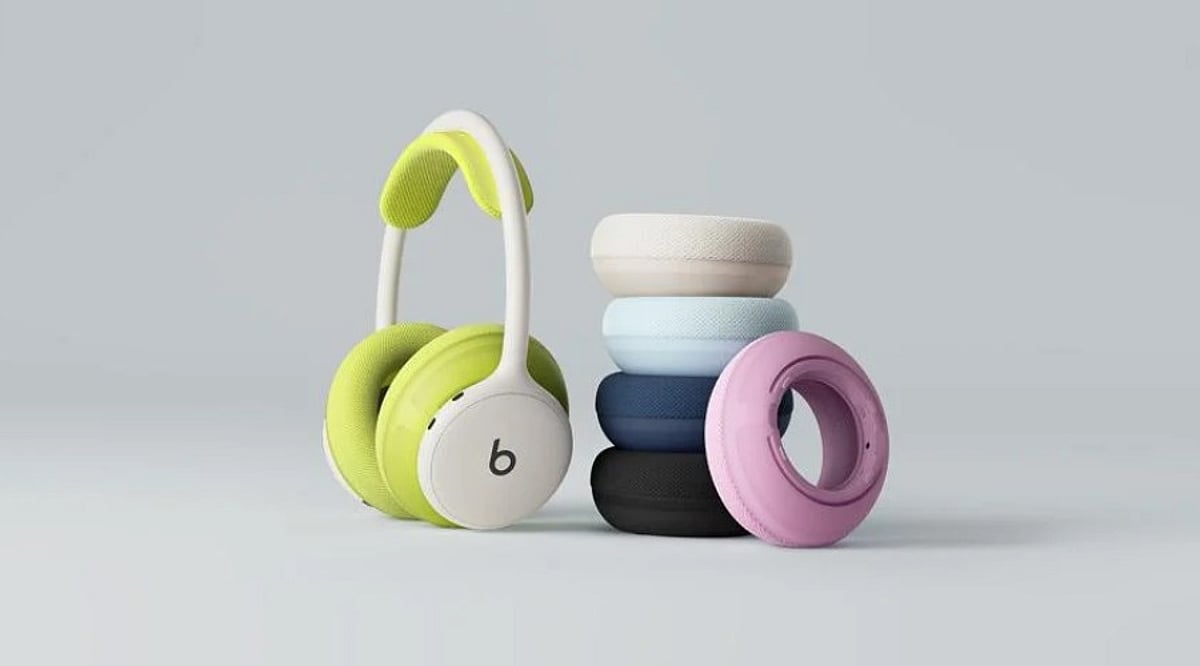
    Beats has officially launched its latest over-ear flagship headphones, the Beats 360, in India and global markets. Priced at Rs. 42,900 in India and $349.99 in the US, the new headphones offer interchangeable ear and headband cushions, active noise cancellation (ANC), personalized Spatial Audio, and up to 32 hours of battery life.

    The Beats 360 are available in Black, Cloud, Pink, and Sky color options. Customers can purchase additional cushion kits separately, allowing them to change the headphones’ color and material. The detachable cushions use memory foam for comfort, and the headphones automatically adjust acoustic tuning based on the installed cushion configuration. The design folds flat and comes with a woven ripstop carrying case.

    These are Beats’ first over-ear headphones with an IPX4 rating, providing resistance against sweat and water splashes. The ANC system delivers up to 1.75 times more combined active and passive noise cancellation than the Beats Studio Pro. The headphones also support Transparency mode, Adaptive EQ, and personalized Spatial Audio with dynamic head tracking.

    Internally, Beats uses custom-designed drivers with dual neodymium magnets and a three-layer diaphragm. Nine microphones handle noise cancellation and voice pickup, with beam-forming technology to improve call clarity.

    Battery life is rated at up to 32 hours with ANC and Spatial Audio enabled. A five-minute Fast Fuel charge provides up to one hour of playback. Charging is via USB Type-C. Connectivity includes Bluetooth 5.3, with support for both Apple and Android devices. Apple users get one-touch pairing, Automatic Switching, Audio Sharing, and Find My, while Android users get Fast Pair, Audio Switch, and Find Hub support.

    Orders opened through Apple’s website on September 22, with retail and in-store availability beginning September 24.

  • OpenAI and Anthropic Launch Affordable AI Models for Enterprise Customers

    OpenAI and Anthropic Launch Affordable AI Models for Enterprise Customers

    OpenAI and Anthropic Introduce Budget-Friendly AI Models

    Anthropic and OpenAI have launched new, more affordable artificial intelligence models within hours of each other, intensifying competition for enterprise customers. As businesses increasingly demand cost-effective AI solutions, both companies are focusing on reducing the price of deployment while maintaining high performance.

    Anthropic’s Claude Opus 5.5

    Anthropic introduced Claude Opus 5.5, which delivers performance comparable to its high-end Fable 5.1 model but costs about 40% less to operate than its predecessor, Opus 5. The model underwent external safety testing before its release. Opus 5.5 is priced at $4 per million input tokens and $20 per million output tokens, a 20% reduction from Opus 5. It is available through major cloud platforms including Amazon Web Services, Google Cloud, and Microsoft Azure. Anthropic also plans to release Sonnet 5.5 and Haiku 5.5 in the coming weeks.

    OpenAI’s GPT-6 Sol and GPT-6 Luna

    OpenAI unveiled GPT-6 Sol and GPT-6 Luna as more affordable alternatives to its flagship GPT-6 Astra. The new models offer some of Astra’s capabilities while targeting everyday professional workloads and higher-volume usage. GPT-6 Sol costs $2 per million input tokens and $10 per million output tokens. GPT-6 Luna is even cheaper at $0.10 per million input tokens and $0.50 per million output tokens. OpenAI attributes the lower costs to improvements in inference and caching, with cached input-token reads eligible for discounts of up to 90%.

    The launches come as US AI companies face increasing pressure from lower-cost open-weight models, particularly those developed in China. The industry is shifting toward efficiency and pricing as key competitive factors alongside model performance.

  • Xbox Restructuring: 268 Jobs Cut as Halo Development Shifts to Activision

    Xbox Restructuring: 268 Jobs Cut as Halo Development Shifts to Activision

    Microsoft is eliminating 268 roles across its Xbox division as part of a broader restructuring, with Halo development moving to Activision and several studios being reorganized or divested.

    Halo Development Shifts to Activision

    Activision will take on the next mainline Halo title through a newly formed team that will stay separate from its Call of Duty development groups. Halo Studios will continue in a smaller capacity, supporting the Halo community and existing games on the market. Activision is also expanding its responsibilities to include Rare, the studio behind Sea of Thieves, and World’s Edge, the team overseeing the Age of Empires franchise.

    Studio Reorganization and Divestitures

    Bethesda will take responsibility for Obsidian Entertainment, while King will add Microsoft Casual Games to its operations. Playground Games and Turn 10 Studios are being combined into a single studio focused on the Forza and Fable franchises.

    Xbox has also provided updates on previously announced studio exits. Compulsion Games and Double Fine have returned to independent ownership, and Undead Labs has transitioned out of Xbox. Its upcoming game, State of Decay 3, is expected to launch day one on Game Pass under its new publisher.

    Ninja Theory and Arkane Face Uncertainty

    Ninja Theory is facing a proposed closure after two separate agreements to sell the studio fell through. Xbox said it will begin consultation with employees regarding the proposed closure while continuing to explore other options. Consultations over the future of Arkane are also ongoing and expected to run through the end of the year.

    Broader Restructuring Context

    Xbox chief content officer Matt Booty said the changes completed since July, including studio divestitures, have taken the company roughly three-quarters of the way through the previously announced restructuring. The latest 268 cuts follow 1,600 Xbox layoffs announced in July. Microsoft has said its restructuring will affect 3,200 roles during its 2027 financial year. Xbox is expected to provide further updates during an October 6 company-wide town hall.

  • Apple Explores Screenless Fitness Band as Potential Whoop Rival

    Apple Explores Screenless Fitness Band as Potential Whoop Rival

    Apple is reportedly working on a screenless fitness band that could directly compete with Whoop in the health wearable market. According to Bloomberg, the company has tested prototypes in California after exploring the category for several months.

    Early-Stage Development

    The device is described as a thin fabric strap with a compact computing module that contains multiple health sensors. Apple has not yet decided whether the product will reach consumers. The project is still in an internal phase referred to as a “technology investigation,” and even if approved, a commercial launch could be delayed until 2028 or later.

    Health-First Design Without a Display

    Unlike the Apple Watch, the reported band would omit a screen entirely. Instead, its design would prioritize health tracking over apps, alerts, and music controls. Sensors would continuously collect biometric data, while connected devices would handle most user interactions.

    Apple executive chairman Tim Cook and services chief Eddy Cue are said to support the initiative. Engineers from Apple’s Vision hardware group have also contributed to prototype development. Apple declined to comment on the project or its launch plans.

    Expanding Apple’s Wearable Health Strategy

    A screenless tracker would put Apple in closer competition with Whoop, Oura, Garmin, and Google’s Fitbit Air. These products appeal to consumers who want continuous health monitoring without another bright display on their wrist.

    Apple has already added health-focused features to its latest Apple Watch lineup, including readiness information, advanced heart tracking, and biological age estimates. A screenless band could extend these capabilities to people who avoid traditional smartwatches.

    The device could also complement the Apple Watch rather than replace it. A display-free tracker may attract athletes, wellness-focused users, and those who prefer mechanical watches.

    Market Reaction and Outlook

    Apple’s reported interest had an immediate market impact. Garmin shares reportedly fell as much as 2.5% after the news surfaced, while Apple shares gained roughly 1% during the same period.

    Apple has not confirmed the product, so final features and release timing remain uncertain. Still, the reported prototype signals a possible expansion of Apple’s wearable ecosystem and a more direct challenge to dedicated fitness-tracker brands.

  • Rockstar Drops Nearly $1 Million on Real-Life Vice City Sign in Miami to Fuel GTA 6 Hype

    Rockstar Drops Nearly $1 Million on Real-Life Vice City Sign in Miami to Fuel GTA 6 Hype

    Rockstar Games has kicked off real-world marketing for GTA 6 in spectacular fashion. A massive “Welcome to Vice City” sign now sits atop the Kaseya Center in Miami, reportedly installed with the help of a helicopter and a budget of nearly $1 million.

    According to a journalist on X, the studio paid $975,000 to Miami-Dade County for the sign on the roof of the Kaseya Center, home of the Miami Heat. The highly anticipated Rockstar title is scheduled to launch on November 19 for PS5 and Xbox Series X|S.

    A Long-Term Landmark for GTA 6

    This isn’t a short-lived billboard. Documents reviewed by sources indicate the sign will remain in place for a year, through the final Miami Heat home game of the 2026-27 season on April 11, 2027. That means fans and locals will see Vice City looming over the Miami skyline for months.

    Marketing Beyond the Screen

    Rockstar is not relying only on trailers, social media, and online ads. By placing Vice City in the real Miami skyline, the company turns the city itself into a persistent advertisement for GTA 6. The sign connects the real-world location with the fictional world the game is built around.

    The nearly seven-figure spend on a single sign shows how far publishers will go to keep a major title in front of audiences. A large physical ad stays in one place and keeps being seen, something online ads often cannot do.

    The Miami installation is just one part of a much larger campaign, but it highlights how AAA gaming now competes for attention beyond gaming platforms.

  • Apple Reveals iPhone 18 Pro Exclusive Camera Controls for iOS 27

    Apple Reveals iPhone 18 Pro Exclusive Camera Controls for iOS 27

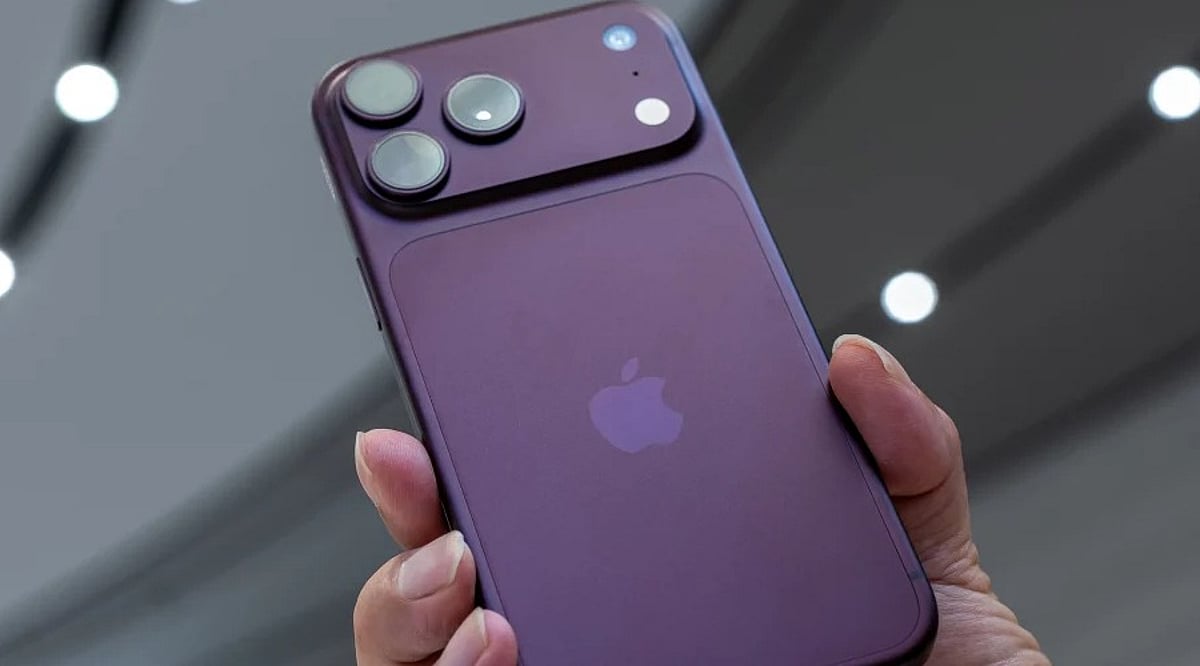
    Apple has quietly updated its official support documentation to clarify which devices will support the new Texture and Grain controls introduced with iOS 27. According to the latest information, these exclusive camera features are available only on the iPhone 18 Pro models and the iPhone Duo.

    When the iPhone 18 Pro was first announced, Apple’s Newsroom documentation suggested that the updated Photographic Styles and the accompanying Texture and Grain controls might be available on a broader set of iPhone models. However, the company has since refined that wording, and the current iPhone support page explicitly states that texture adjustments are limited to the iPhone 18 Pro lineup.

    The new controls are part of Apple’s upgraded Photographic Styles system, offering users more creative flexibility. The Texture setting lets photographers alter the visual treatment of an image, while the Grain control adds a film-like effect. Users can choose from presets such as Soft Skin, Glow, and Film, and then adjust the intensity to their preference.

    This update also affects older models like the iPhone 16 and iPhone 17 series, which were previously understood to support the feature based on Apple’s initial wording. Reports this week confirmed that those devices will not receive the new controls.

    In addition to the software enhancements, the iPhone 18 Pro features a 48MP Fusion Main camera with a variable aperture. This allows the camera to automatically adjust for lighting and depth of field, while manual aperture control is available through the Camera app for users who want a more hands-on approach.

  • Banks Warn AI Shopping Bots Risk Wrong Purchases and Payment Data Exposure

    Banks Warn AI Shopping Bots Risk Wrong Purchases and Payment Data Exposure

    Major banks are sounding the alarm over the rise of AI shopping assistants that can search for products and even complete purchases on behalf of consumers. The concerns range from incorrect purchases and scams to exposure of payment data and weaker consumer protections, prompting calls for clearer standards around AI-driven commerce.

    AI Agents Could Make Purchases on Your Behalf

    The technology, often described as “agentic commerce,” allows an AI system to act on a shopper’s instructions rather than simply providing recommendations. Depending on the design, an agent could search for a product, select an option, and potentially complete the transaction. A group including NatWest, Bank of America, ING, Capital One, ASB Bank, and Commonwealth Bank of Australia has raised concerns about scams, fraud, and misuse of financial data.

    The warning comes as technology companies including OpenAI, Google, Anthropic, and Meta develop AI agents capable of assisting with or carrying out shopping tasks. The banks said adoption is outpacing existing industry standards and consumer protections.

    UK retailer John Lewis reported that searches originating from AI agents rose to 2.5% this year, up from 0.3% a year earlier, signaling rapid growth in AI-driven shopping.

    Card Details and Payment Risks

    Financial information is another major concern. The banking group highlighted situations in which AI agents could request customers’ card details and enter them directly into websites. There are also concerns that an AI agent could steer a shopper toward payment methods that provide weaker fraud or purchase protections. If a transaction goes wrong, consumers may not know whether the retailer, payment provider, or AI service is responsible.

    Banks Seek Clearer AI Commerce Rules

    The participating banks plan to discuss a set of proposals with policymakers. These include requiring businesses to disclose when an AI agent is involved in a transaction and providing greater transparency about how the technology makes purchasing decisions. The group also called for stronger safeguards around customer data, along with freedom for consumers and merchants to choose which AI-powered commerce services they use. Interoperability between different AI shopping systems was another principle included in the framework.

    As AI moves from recommending products to acting on shoppers’ behalf, the debate increasingly shifts toward who controls these transactions and who takes responsibility when something goes wrong.

  • Anthropic’s Claude Opus 5.5 Takes on GPT-6 Astra with Lower Costs and Superior Benchmark Performance

    Anthropic’s Claude Opus 5.5 Takes on GPT-6 Astra with Lower Costs and Superior Benchmark Performance

    Anthropic launched Claude Opus 5.5 on September 22 as its first Claude 5.5 family model. The company targets developers and enterprises with stronger coding, reasoning, and computer-use capabilities.

    The model reaches Claude Fable 5.1-level performance across most workflows while costing 40% less overall. Anthropic achieved this through lower token usage, faster output generation, and improved computational efficiency.

    Introducing Claude Opus 5.5, the first model in our new Claude 5.5 family. It performs at the level of Claude Fable 5.1 for most tasks, and costs 40% less to run than Opus 5.

    Anthropic also positioned Claude Opus 5.5 against OpenAI’s GPT-6 Astra through several published benchmark comparisons. The company reported higher scores across coding, knowledge work, and multidisciplinary reasoning tests.

    Terminal-Bench 4.0 gave Claude Opus 5.5 a 66.4% score, ahead of GPT-6 Astra’s 57.9%. FrontierCode also showed Opus 5.5 slightly ahead with a 54.4% score. GDPval-AA measured knowledge work performance, where Opus 5.5 reached 1,846 Elo against Astra’s 1,542. Humanity’s Last Exam also favored Opus 5.5 with tools enabled.

    GPT-6 Astra still scored higher on specialized tests covering scientific research and business workflow automation. Astra reached 64.6% on Terminal-Bench Science against Opus 5.5’s 58.7%.

    Cost efficiency forms another major part of Anthropic’s Claude Opus 5.5 pitch for large-scale AI coding. The model costs USD 4 per million input tokens and USD 20 per million output tokens. Anthropic says Opus 5.5 costs nearly 20% of Astra’s task cost on FrontierCode at default settings. Terminal-Bench performance can also match Astra while using around 40% of its task cost.

    The coding improvements extend beyond benchmark scores to long, complex software engineering workflows. An early tester completed a 680,000-line migration in less than a day. Another test showed Opus 5.5 improving page load times across a web application during 39 of 40 attempts. Anthropic also reported output generation more than 30% faster than Opus 5.

    Safety remains another focus, with Anthropic reporting its strongest automated behavioral audit performance so far. The company said Opus 5.5 showed fewer attempts to cross containment boundaries during testing.

    Anthropic also highlighted communication improvements, saying the model places important information first and follows writing instructions more closely. An early tester described the AI model as one that ‘writes the way I do.’

    Claude Opus 5.5 now reaches developers through Anthropic’s Claude Platform under the model name claude-opus-5-5. Amazon Web Services, Google Cloud, and Microsoft Azure also provide access.

    Anthropic plans to expand the Claude 5.5 lineup with Sonnet 5.5 and Haiku 5.5 in coming weeks. The company said both models will bring similar improvements across performance, efficiency, and safety.

    Also Read: AI Consciousness Debate: Why Microsoft is Challenging Anthropic’s Approach