Blog

  • CERT-In Flags Critical Security Flaws in Apple Devices: Update Your iPhone, iPad, and Mac Now

    CERT-In Flags Critical Security Flaws in Apple Devices: Update Your iPhone, iPad, and Mac Now

    Apple users in India are being urged to update their devices immediately after the Indian Computer Emergency Response Team (CERT-In) issued a warning about multiple serious security vulnerabilities. The flaws affect iPhones, iPads, Macs, Apple Watches, Apple TVs, and the Safari browser, potentially allowing hackers to access devices, execute malicious code, or cause apps to crash.

    According to CERT-In, the risk is highest for devices running older software versions. The warning covers iOS versions before 26.5.2, iPadOS versions prior to 26.5.2, macOS Tahoe versions before 26.5.2, and Safari versions prior to 26.5.2. If left unpatched, these vulnerabilities could lead to sensitive information disclosure, privilege escalation, security restriction bypass, arbitrary code execution, cross-origin data exfiltration, and denial-of-service attacks.

    Apple has already released security updates. Users should check for updates in the Settings menu on iPhones and iPads or in System Settings on Macs. Owners of older Apple devices should verify whether their model still receives official software support and install updates as soon as they are available.

    Apple typically releases fixes simultaneously across supported devices, allowing most users to update the same day a patch is issued. In contrast, Android devices often receive security updates later due to carrier and manufacturer testing. While no platform is immune to threats, prompt updates remain the simplest way to stay protected.

    Security experts also warn buyers of refurbished iPhones to confirm that the model still receives Apple’s latest security updates. Although refurbished devices are more affordable, continued security support is critical for daily use.

  • Apple MacBook and iPad Price Hikes Stir Supplier Tensions; Micron Points to 2023 Pricing Pressure

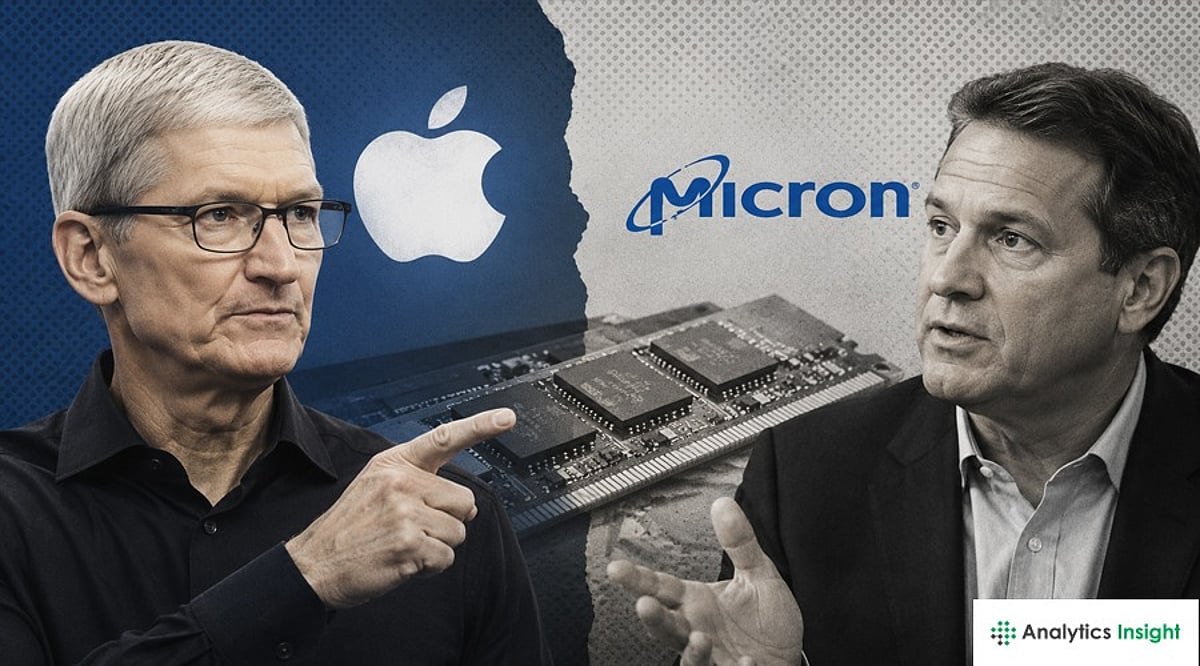
    Apple MacBook and iPad Price Hikes Stir Supplier Tensions; Micron Points to 2023 Pricing Pressure

    Apple has raised prices across several MacBook, iPad, Apple TV, HomePod, and Vision Pro models, attributing the increases to soaring memory and storage costs driven by AI data center demand. The company announced the broad price hikes on June 25, affecting multiple hardware products while leaving iPhone prices unchanged. According to Apple, the rapid expansion of AI infrastructure has created exceptional demand for memory and storage chips, reducing available supply for consumer electronics.

    CEO Tim Cook described the current market conditions as unlike anything Apple has experienced before. He stated, “There’s less supply at a time when consumers want devices and the memory guys are passing along huge price increases.” Cook also called the situation “unavoidable” and “unsustainable.”

    Market data supports the broader supply trend. Research firms report that memory and storage prices are now roughly four times higher than they were several quarters ago. TrendForce estimates memory chip prices rose by as much as 98% during the first quarter of 2026 and could increase by another 58% to 63% in the following quarter. Those higher component costs have reached consumers: the MacBook Neo increased from $599 to $699, while several MacBook and iPad models received price increases ranging from $100 to $300. Apple also confirmed that the affected devices did not receive additional memory or storage upgrades despite the higher prices.

    Micron Points to Pricing Pressure During the 2023 Downturn

    Shortly after Apple’s announcement, Micron Chief Business Officer Sumit Sadana offered a different explanation for today’s supply constraints in an interview with The Wall Street Journal. He said some major customers pushed suppliers to accept extremely low prices during the memory market collapse in 2023. Sadana stated, “We told a couple of the customers who were being very aggressive with pricing at that time that this is not constructive.” He added that poor pricing and weak margins forced many companies across the industry to reduce investment in new production capacity.

    Although Sadana never identified Apple by name, Apple is widely known for negotiating long-term supply agreements and purchasing large volumes of memory components. During 2023, Micron reported deeply negative margins as the memory market experienced one of its weakest periods in recent years. The company has since recovered, reporting strong quarterly financial results with revenue rising sharply alongside improved profitability. Its shares climbed after the earnings report, while Apple’s stock declined following the announcement of higher product prices.

    Supply Constraints May Continue Beyond 2027

    Industry analysts say both explanations reflect different parts of the same market cycle. AI servers require high-bandwidth memory, which uses far more manufacturing capacity than standard memory found in smartphones and laptops. As more production shifts toward AI hardware, fewer chips remain available for consumer devices. Meanwhile, reduced investment during the 2023 downturn limited the industry’s ability to expand manufacturing before AI demand accelerated. New semiconductor facilities require several years to build and reach full production, meaning additional capacity cannot arrive quickly.

    Apple has reportedly begun seeking additional memory suppliers, including Chinese manufacturer CXMT, to improve future supply. However, Tim Cook said Apple has no plans to enter the memory business itself. Several analysts expect memory costs to remain elevated through at least 2027. Research firms also estimate memory could account for a much larger share of smartphone production costs over the next two years, leading some industry observers to expect future iPhone price increases if current market conditions continue.

    Related Articles

    • Apple Stock Slides 6% After MacBook and iPad Price Hikes Worldwide
    • US Stock Market Today: NASDAQ Falls as Apple Slides Nearly 5% While Dow Surges 598 Points to Record High
    • Micron Stock Surges 16% After $9.8B Revenue Beat and $22B AI Supply Deals
    • US Stock Market Today: S&P 500 Rises as Oil Prices Slide and Investors Await Micron’s Earnings Report
    • US Stock Market Today: S&P 500 and NASDAQ Slide as Micron Leads Global Chip Stock Sell-Off
  • SharpLink Resumes Ethereum Accumulation, Boosts Treasury to 886,725 ETH

    SharpLink Resumes Ethereum Accumulation, Boosts Treasury to 886,725 ETH

    SharpLink (SBET) has resumed its Ethereum accumulation strategy after a months-long pause, purchasing 10,000 ETH last week at an average price of $1,611 per token. The acquisition brings the company’s total holdings to 886,725 ETH, valued at approximately $1.4 billion based on current market prices. The move follows a $75 million registered direct offering that strengthened SharpLink’s balance sheet and signaled renewed confidence in digital asset treasury management.

    SharpLink Restarts Ethereum Buying

    The Florida-based company made its first Ethereum purchase since October, adding 10,000 ETH at an average of $1,611 each. SharpLink now holds 886,725 ETH, with its treasury valued at roughly $1.4 billion. The purchase was funded by a $75 million direct offering, which CEO Joseph Chalom said was designed to support the company’s active Ethereum treasury strategy and increase Ethereum per share over the long term.

    SharpLink also repurchased more than 2.13 million common shares last week at an average price of $4.69 per share, reflecting its belief that the stock is significantly undervalued. Since launching its buyback program in August, the company has repurchased over four million shares. Despite these moves, SharpLink shares closed Tuesday at $4.80, down 2.44% for the session and still 88% below its 52-week high of $40.46, a decline tied to Ethereum’s broader market weakness.

    Ethereum Faces Market Pressure

    Ethereum has posted three consecutive quarterly losses, declining 25.4% in Q2 2026 after drops of 29.2% in Q1 2026 and 28.2% in Q4 2025, according to Coinglass. Over the past 24 hours, $58.5 million in Ethereum liquidations occurred, with long positions accounting for $41.3 million. Technical indicators show Ethereum trading below its 20-day, 50-day, and 100-day exponential moving averages at $1,669, $1,824, and $2,002, respectively. The asset remains below a descending trendline near $1,617, with the Relative Strength Index at 34 (just above oversold territory) and the Stochastic Oscillator near 21.

    Analysts identify immediate resistance at $1,611 and $1,617, with higher levels at $1,669, $1,741, $1,806, $1,824, $1,909, and $2,002. Support stands at $1,524 and $1,404, with a deeper decline potentially exposing the key support near $1,155.

    Treasury Strategy Extends Beyond Holdings

    SharpLink recently joined Chairman Joe Lubin and BitMine to fund the launch of Ethlabs, a nonprofit focused on Ethereum research and development. The company initiated its Ethereum treasury strategy in May 2025, shifting toward ETH accumulation when prices were slightly below current levels. While SharpLink has not disclosed any staking activity, institutional staking demand is growing across proof-of-stake networks, and the company could eventually expand beyond passive holdings.

    Regulatory uncertainty remains a factor for public companies with crypto treasuries. U.S. securities laws require careful classification of digital assets, and future SEC guidance could impact how firms account for holdings and manage treasury positions.

    What’s Next?

    SharpLink’s renewed Ethereum buying, combined with its share buyback program and participation in Ethlabs, highlights its commitment to a crypto-focused treasury strategy. As Ethereum navigates a prolonged downturn, the company’s moves may influence how other public corporations approach digital asset accumulation.

  • Elizabeth Warren Pushes for Stricter Crypto Rules Following Trump’s $1.4 Billion Digital Asset Income

    Elizabeth Warren Pushes for Stricter Crypto Rules Following Trump’s $1.4 Billion Digital Asset Income

    Senator Elizabeth Warren has renewed her call for stronger cryptocurrency regulations after President Donald Trump’s 2025 financial disclosure revealed over $1.4 billion in income from digital asset ventures. The disclosure has intensified debates over potential conflicts of interest and the need for oversight of crypto-related earnings by public officials.

    Warren Targets Crypto Legislation

    Warren urged Congress to tighten the CLARITY Act, arguing that the legislation should prevent sitting presidents and their families from profiting from cryptocurrency businesses while in office. She stated that the bill must stop Trump and his family from benefiting from crypto ventures, highlighting concerns about self-dealing and ethical breaches.

    Several public figures have also weighed in. Wall Street financier Steve Rattner criticized the Trump family’s involvement, while investment manager Lawrence Lepard warned that the disclosure could trigger political backlash against the crypto industry. Former White House lawyer Ty Cobb described the situation as ‘the greatest onslaught of corruption in the history of mankind,’ according to media reports.

    Details of the Financial Disclosure

    The annual filing with the U.S. Office of Government Ethics listed cryptocurrency as a major income source for Trump in 2025. The report showed that his crypto ventures generated between $1.2 billion and $1.4 billion. Key components included:

    • Over $520 million from token sales linked to World Liberty Financial, a venture co-founded by Trump and his sons.
    • Approximately $635 million in royalties from the Official Trump memecoin.
    • About $1.8 million in Ethereum validator rewards from staking.
    • Bitcoin holdings worth over $50 million stored in a cold wallet.

    The White House did not immediately respond to requests for comment.

    Crypto Policy Under Scrutiny

    Since returning to office in January 2025, Trump has implemented crypto-friendly policies, including plans for a national strategic cryptocurrency reserve and the first White House crypto summit. The SEC dropped its enforcement case against Coinbase, and Congress approved the GENIUS Act, which mandates stablecoins to maintain one-to-one backing with U.S. dollars.

    Warren and four other Democratic senators have requested hearings on the administration’s crypto activities, citing investments from the United Arab Emirates into World Liberty Financial and potential national security risks. They have called for administration officials to testify under oath as Congress continues reviewing digital asset legislation.

  • Crypto Hack Losses Drop 7% in June, Humanity Protocol Hit by $36M Exploit

    Crypto Hack Losses Drop 7% in June, Humanity Protocol Hit by $36M Exploit

    Crypto-related thefts declined in June after several months of heavy losses, although attackers continued targeting blockchain projects through private key compromises and bridge vulnerabilities. Blockchain security firm PeckShield reported about $75.9 million stolen across 40 major incidents, marking a 7.1% decrease from May’s $81.7 million.

    Even so, the monthly decline did little to slow the year’s overall losses. Data from blockchain intelligence firm TRM Labs showed crypto hacks and exploits have already cost the industry more than $750 million in 2026, with two large attacks recorded earlier this year accounting for a major share of that total.

    Humanity Protocol Records June’s Largest Exploit

    Humanity Protocol recorded the biggest security breach during June. PeckShield estimated the exploit at about $31 million, while the project’s internal investigation later placed losses closer to $36 million. According to the project, attackers gained access after compromising a private key linked to the protocol’s bridge administration.

    Founder Terence Kwok said the breach resulted from a compromised private key. Humanity Protocol also stated that attackers accessed bridge administration on Ethereum and BNB Chain after compromising a developer’s laptop. The project said the incident allowed hackers to drain wallets and mint about 447 million H tokens. Reports also stated that the exploit triggered an 80% to 90% decline in the token’s market price. Humanity Protocol added that it is preparing a recovery plan, including a possible 1:1 token airdrop for affected users. Meanwhile, reports linked the attack to North Korea’s Lazarus Group, although investigations remain ongoing.

    Bridge Exploits and Protocol Attacks Continue

    Beyond Humanity Protocol, several blockchain projects also suffered large losses during June. PeckShield reported that Syscoin Bridge lost about $10 million after attackers exploited a validation flaw that allowed billions of unsupported SYS tokens to be minted without the required token burn.

    A bot associated with the address JaredFromSubway.eth also lost about $7.5 million after being targeted by another exploit. Other affected platforms included Secret Network, Polymarket users, SecondFi and TESSERA, with reported losses ranging between $2.4 million and $4.67 million.

    Meanwhile, Aztec’s deprecated infrastructure was exploited twice during the month. PeckShield tracked approximately $2.16 million stolen from Aztec Bridge and another $2.1 million from Aztec Connect. According to the Aztec Foundation, both immutable contracts are no longer under its control and cannot be paused. Combined losses reached about $4 million.

    The remaining projects in PeckShield’s top ten included Taiko Bridge, Token of Power, Raydium and LABUBU/OLPC, with each incident resulting in losses exceeding $1 million.

    Crypto Losses Remain High in 2026

    Although June recorded a lower monthly total, overall crypto losses during 2026 remain elevated. TRM Labs estimated that hackers have already stolen more than $750 million this year. According to the firm, two attacks linked to North Korea accounted for much of those losses.

    On April 1, Drift Protocol lost about $285 million after attackers reportedly spent months using social engineering tactics against governance signers. Later, on April 18, Kelp DAO’s LayerZero bridge lost approximately $292 million after attackers compromised its verifier network.

    Meanwhile, PeckShield reported that the Humanity Protocol exploiter has moved stolen assets across Bitcoin, Solana, Hyperliquid, and BNB Chain. The firm also found that some funds were mixed with assets connected to the separate Kelp DAO exploit. PeckShield said this pattern ‘raises the possibility the same threat actor is behind both attacks,’ though no final attribution has been confirmed.

  • How Fintech Is Powering India’s Startup Boom in 2026: UPI, Embedded Finance, and Merchant Lending Lead the Charge

    How Fintech Is Powering India’s Startup Boom in 2026: UPI, Embedded Finance, and Merchant Lending Lead the Charge

    India’s fintech story in 2026 is one of divergence: venture funding has normalized, but the real-economy footprint of fintech continues to expand. Despite a slowdown in capital inflows, usage metrics show no signs of easing. UPI processed 23.2 billion transactions worth ₹29.90 lakh crore in May 2026 alone, while the RBI’s Digital Payments Index rose to 493.22 in March 2025 from 445.50 a year earlier. This is why fintech remains a critical engine for startup growth—it has evolved from a venture category into essential infrastructure.

    Payments, merchant acceptance, embedded finance, account aggregation, and digital lending rails are reducing friction for e-commerce, SaaS, consumer internet, logistics, and MSME startups. The regulatory architecture has also matured: UPI continues to expand globally, the Account Aggregator framework is entering a more formal phase, RBI’s interoperable sandbox lowers experimentation costs, and the DPDP Rules raise the baseline for trust and data governance.

    Funding Reset, Operating Boom

    India remains the world’s third-largest fintech ecosystem. IBEF pegs the domestic fintech market at $111 billion today, with potential to reach $421 billion by 2029. Tracxn counted 16,461 fintech companies in India, including 2,890 funded firms and 30 unicorns as of late May 2026. The macro context remains supportive: the World Bank reports India grew 6.5% in FY24-25, and the IMF projects 6.5% real GDP growth in 2026. With 886 million active internet users in 2024 and a mobile broadband base of 944.12 million, the digital user base is vast and growing.

    Financial inclusion is also deepening. PMJDY had 57.78 crore accounts as of February 2026, 55.8% held by women and 78.2% in rural/semi-urban areas. RBI’s Financial Inclusion Index improved to 67.0 in March 2025 from 64.2 a year earlier. UPI now accounts for 84% of retail payment volumes, with 185.9 billion transactions totaling ₹260.6 lakh crore in FY25. By FY26, UPI’s annual value exceeded ₹314 lakh crore with 700+ banks live, and India accounts for nearly 49% of global real-time payments.

    How Fintech Powers Startup Formation and Scaling

    Fintech behaves as a productivity layer for the startup economy. API-led rails for checkout, collections, payouts, KYC, merchant onboarding, and small-ticket credit lower the cost of starting and scaling a business. Credit deepening is the second leg: NITI Aayog’s 2026 credit report expects women’s credit penetration to reach 36%, with total credit outstanding to women rising to ₹76 lakh crore. Fintech NBFCs sanctioned 10.9 crore personal loans worth ₹1,06,548 crore in FY25.

    Adoption at the household and MSME level is another driver. 85.5% of Indian households have at least one smartphone, and 97.1% of people aged 15-29 used a mobile phone in the prior three months. Startup distribution increasingly begins with a payment-enabled, identity-linked handset.

    Case Studies: Where Value Is Accruing

    Indian fintech leaders are moving beyond pure transaction acquisition into multi-product monetization. Razorpay’s FY25 consolidated revenue rose 65% year over year to ₹3,783 crore, processing roughly $180 billion in annual payment value. PhonePe has 650+ million users and processed nearly 10 billion UPI transactions in January 2026, targeting an IPO valuation of $9–10.5 billion. BharatPe reported ₹1,734 crore in FY25 revenue with its first adjusted profit before tax, driven by merchant lending rather than just QR acceptance.

    Risks and Recommendations

    Risks include credit quality deterioration if underwriting lags growth, intense competition in payments (PhonePe and Google Pay held 79% of UPI market share in May 2026), and rising data governance and cyber costs. Private-market money is more selective, with global fintech deal count at a multi-year low in Q1 2026. For policymakers and investors, deepening AA and ULI coverage, preserving trust while lowering compliance duplication, revisiting payments economics, and prioritizing cybersecurity are key next steps.

    The bottom line: fintech is fueling India’s startup growth in 2026 less by attracting peak venture dollars and more by rewiring how startups collect money, lend, onboard, underwrite, and retain customers. Funding has become harder, but infrastructure has become stronger—a more important signal in a maturing startup market.

  • India’s 10 Most Promising Tech Startups Shaping 2026

    India’s 10 Most Promising Tech Startups Shaping 2026

    India’s startup ecosystem is undergoing a significant transformation. While previous years were dominated by conversations about massive funding rounds and valuations, the focus in 2026 has shifted toward sustainable growth, real-world problem-solving, and long-term profitability. Investors are now asking more critical questions: Is the business growing steadily? Does it solve a genuine problem? Can it generate sustainable revenue?

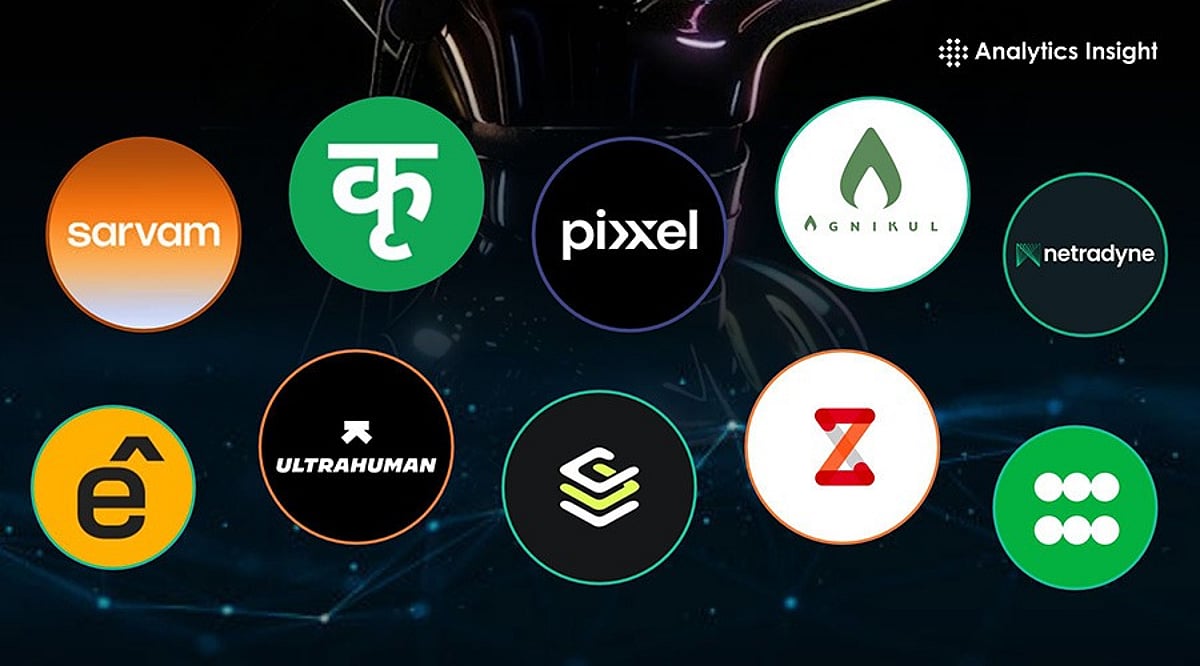
    This shift has created fertile ground for a new generation of startups across artificial intelligence, healthcare, financial services, electric vehicles, cloud computing, and space technology. These companies are building products that businesses and consumers actually need—from efficiency tools to accessible financial services. Below are ten Indian tech startups that are set to make an impact in 2026.

    Why Investors Are Paying Attention

    The startup landscape has become more pragmatic. While innovation remains paramount, investors are backing ventures with clear purpose and viable business models. Most startups now focus on solving everyday challenges rather than chasing trends. Government support for technology development and innovation is also fueling this growth.

    What Makes These Startups Different?

    Many startups launch every year, but only a few stand out. The companies on this list prioritize solving real problems. Some help businesses manage data more efficiently, others simplify financial services, and several are advancing health tracking or building space technology. Additionally, many of these startups are designed for global markets, giving them access to a larger customer base and more expansion opportunities. Most importantly, these companies are building products people actually use—substance over hype.

    Big Trends Shaping Indian Startups in 2026

    Businesses need tools that enable employees to work faster and smarter. Startups are delivering practical, less complex AI solutions. The healthcare sector is expanding rapidly due to rising consumer interest in health and fitness, opening doors for wellness-focused tech companies. Fintech continues to thrive as demand for faster, more convenient financial services grows. Electric mobility is also gaining traction, creating a pressing need for robust charging infrastructure. Meanwhile, space technology—once the domain of government agencies—is now attracting private players, with several Indian companies already achieving notable results.

    Why These Companies Matter

    The most successful startups are often not the loudest. They quietly solve problems every day—helping businesses save costs, making healthcare more accessible, improving financial services, and supporting emerging industries. These companies are building products with real impact, which is why investors, customers, and industry experts are closely watching them.

    Looking Ahead

    India’s startup environment is maturing. The “growth at any cost” mindset is giving way to value creation, problem-solving, and sustainability. The success stories of 2026 won’t come from companies that make the most noise; they will come from those that create something useful and earn customer trust. The ten firms highlighted here are among those to watch as India’s technology industry enters its next phase of growth.

    Why It Matters

    India’s next generation of technology startups is shaping the future of innovation across multiple industries. By developing practical solutions, creating employment opportunities, attracting investment, and expanding globally, these companies are strengthening India’s digital economy and driving long-term technological growth.

    FAQs

    Which are the top Indian tech startups to watch in 2026?

    Some of the most promising include Sarvam AI, Krutrim, Pixxel, Agnikul Cosmos, Netradyne, Exponent Energy, Ultrahuman, Lucidity, Zolve, and Equal. These companies are driving innovation across AI, space tech, fintech, healthtech, and cloud computing.

    Why are investors focusing on Indian tech startups in 2026?

    Investors are backing startups with sustainable business models, strong revenue potential, and products solving real-world problems. They prioritize long-term profitability, customer adoption, operational efficiency, and scalability across domestic and international markets.

    Which sectors are driving India’s startup ecosystem in 2026?

    AI, fintech, healthtech, electric mobility, cloud computing, identity technology, and commercial space technology are among the fastest-growing sectors. These industries benefit from digital adoption, supportive policies, private investment, and rising technology-driven demand.

    Why is AI becoming a major focus for Indian startups?

    AI startups are developing language models, enterprise automation tools, customer service platforms, and productivity solutions tailored to India’s diverse market. Businesses across industries adopt AI to improve efficiency, reduce costs, automate tasks, and enhance customer experiences.

    What makes Indian space startups attractive to investors?

    Private companies like Pixxel and Agnikul Cosmos are building satellite technologies, launch vehicles, and Earth observation solutions with global commercial potential. Government reforms and increased private participation have created new opportunities for innovation and international partnerships.


  • India’s Startup Ecosystem Enters a New Era: Prioritizing Profitability, Public Markets, and Deep-Tech Innovation

    India’s Startup Ecosystem Enters a New Era: Prioritizing Profitability, Public Markets, and Deep-Tech Innovation

    India’s startup ecosystem is entering a defining phase. The years of easy capital, rapid expansion, and soaring valuations have given way to a more measured approach. Investors are asking tougher questions, founders are focusing on sustainable growth, and public markets are emerging as a key source of capital.

    The shift marks a turning point for a sector that transformed India’s business landscape over the past decade. With more than 1.59 lakh DPIIT-recognized startups and over 1.66 million jobs created, the ecosystem remains one of the country’s strongest engines of innovation. The challenge now is not whether startups can grow, but whether they can build durable businesses while maintaining momentum.

    Why Profitability Has Become a New Benchmark

    Previously, success for startups was mostly measured by how many rounds of funding they managed to raise, and at what valuations. The whole idea was to push hard on customer acquisition and growth while ignoring profitability, or assuming it could come later. But now, the dynamics of success have shifted. Higher interest rates, greater investor caution, and a generally hard-edged funding environment have pushed startups to rethink what matters most. Just growing revenue isn’t enough anymore. Investors want clearer signals, such as solid unit economics, operational efficiency, and a path toward profitability.

    This shift is already visible in the Indian tech space. Many startups are either turning profitable or at least trimming losses, suggesting a more careful, disciplined approach to management.

    Public Markets Are Reshaping Startup Ambitions

    Another major change is the growing role of public markets. The IPO is now an option available to mature startups. Companies that relied heavily on venture capital funding in their early days are now raising capital through stock offerings on public exchanges. This brings a new level of accountability. The importance of sound governance, financial transparency, efficient cash flow management, and business sustainability outweighs the hype about growth in the public markets environment. Startup founders now focus on such matters much earlier than ever before.

    Beyond Bengaluru and Mumbai

    India’s entrepreneurial journey is no longer confined to a few metro cities. Young entrepreneurs from tier-II and tier-III cities are setting up companies across sectors such as fintech, logistics, healthcare, education, and more. Internet connectivity, digital payment systems, and access to an online workforce have significantly lowered barriers, even for those working outside traditional startup hubs. Smaller cities themselves have become emerging markets, as technology adoption rises and consumer spending power increases steadily. This geographic expansion has diversified the startup landscape in the country.

    Deep-Tech Emerges as the Next Frontier

    Consumer internet businesses dominated India’s startup ecosystem for much of the past decade. The next wave may come from deep-tech sectors. Firms engaged in artificial intelligence, semiconductor design, robotics, climate technology, space technology, and sophisticated software have become a major area of interest for investors. However, deep-tech firms face specific challenges: large sums of capital, long gestation periods, and specific talent requirements. Nevertheless, investors and policymakers recognize that India’s future economic success will depend on its capacity to develop innovative deep technologies.

    Challenges That Refuse to Disappear

    The ecosystem must not ignore its problems. Investments remain selective, especially for early-stage startups. Investors prefer startups with proven business models and revenue streams. Startups face a talent shortage, particularly in areas such as artificial intelligence, chip design, and advanced engineering. Some regulations could pose challenges, especially for startups without sufficient funds to comply. Uncertainty about the global economy adds yet another problem: slow growth in key markets could negatively impact investments and expansion.

    What Comes Next for Indian Startups

    The startup ecosystem in India is transitioning from its teenage phase to adulthood. The focus will shift from chasing valuations to building robust companies. Profitability will serve as a competitive advantage. Corporate governance systems are improving. Capital markets have opened new ways to raise money. Deep technology innovation leads to opportunities beyond consumer-facing offerings. The coming decade could witness more stable businesses rather than eye-catching funding rounds. It will be imperative for entrepreneurs to strike the right balance between innovation, financial prudence, scalability, and performance.

    This is a pivotal time for the Indian startup ecosystem. The decisions made by entrepreneurs and investors will determine whether India succeeds in nurturing future global leaders or falls short.

  • Wordle #1838 Hints and Answer for July 1, 2026 – Expert Walkthrough and Strategy Tips

    Wordle #1838 Hints and Answer for July 1, 2026 – Expert Walkthrough and Strategy Tips

    Stuck on Wordle #1838? Today’s puzzle points to a monastery-related noun. Check the hints, decode the clues, and uncover the answer to keep your streak alive.

    Wordle for July 1 features a noun related to change. Use the hints wisely and see the final answer before your six chances run out.

    Josh Wardle’s Wordle continues to engage millions with a new five-letter word daily. Today’s puzzle features a noun associated with a short story.

    Is Wordle giving you a hard time today? Even four years after its release, this NYT puzzle remains one of the most popular word games in the world, especially among word-game enthusiasts. The game’s structure is simple, but the challenge lies in guessing the word within six attempts. Today’s word is somewhat related to a character from a short story that kids love.

    Like every other day, today’s Wordle gives players just six attempts to crack the mystery word, without any hints at the start. If you’re aiming to protect your winning streak or simply need a gentle nudge in the right direction, here are today’s Wordle hints and the final answer.

    Wordle Hints for July 1, 2026 (Puzzle #1838)

    • Vowel Count: 2 vowels
    • Consonant Count: 3 consonants
    • Repeated Letters: No
    • Letter Rarity: All common letters
    • First Letter: D
    • Bonus Hint: The word ends with the letter ‘R’.

    Wordle Answer for July 1, 2026

    The clues mentioned above must have guided players onto the right track. If not, then it is time for the grand reveal. So, here’s the answer for today’s Wordle #1838: DEMUR

    Also Read: NYT Wordle Hints and Answer for June 28, 2026

    Best Tips to Play Wordle

    Players who recently started playing this NYT word puzzle and are struggling to master the guessing technique can follow these tips:

    • Start with words that include common vowels and consonants to gather as much information as possible early.
    • Avoid repeating letters in your first few guesses unless you’re confident about their placement.
    • Pay close attention to the color feedback. Green letters are correct and well-placed, while yellow letters belong in the word but need to be repositioned.
    • Use each guess to eliminate possibilities rather than rushing toward the final answer.
    • Expanding your vocabulary is key. Familiarity with less common words can make solving the puzzle much quicker.

    Final Thoughts

    The allure of Wordle comes from its uncertainty. Every day, the puzzle presents a new grid with a new word to guess. Despite Wordle experts often ranking the solutions as average or simple, most players find every puzzle equally challenging.

    Another appealing part of Wordle is that you can solve it anytime; you might be solving it with a cup of coffee in the morning or during a short break at work.

    Wordle quietly and efficiently sharpens players’ vocabulary and pattern-recognition skills. Every puzzle offers a little but rewarding mental exercise, often reminding players that even the simplest games can offer the biggest rewards. A different word, an empty grid, and six opportunities – that’s the excitement that Wordle has every single day. May your 2026 streaks stay unbroken.

  • Why Data-Driven Enterprises Must Refine AI-Generated Language for Human Impact

    Why Data-Driven Enterprises Must Refine AI-Generated Language for Human Impact

    The integration of Large Language Models into enterprise infrastructure has fundamentally transformed data processing, automated reporting, and corporate communications. In today’s data-driven ecosystem, organizations are leveraging these sophisticated models to make sense of massive amounts of unstructured data and translate it into actionable insights at unprecedented speeds. From real-time financial analytics dashboards to comprehensive predictive market reports, artificial intelligence is changing the speed of information distribution at its core.

    As the initial novelty of rapid text generation wears off, data scientists and Chief Data Officers (CDOs) are facing a major qualitative hurdle. The output of language models is mathematically efficient, unfiltered, and unedited, but it often lacks the contextual nuance, empathetic tone, and rhythmic variance of natural human thought. To ensure that automated reports and executive briefings actually resonate with their intended human audiences, technology leaders are realizing that it is no longer sufficient to simply generate text at scale. Instead, they must actively deploy secondary Natural Language Processing (NLP) frameworks to humanize AI outputs, effectively bridging the critical gap between statistical probability and genuine human cognition.

    At its core, this qualitative issue stems from the fundamental architecture of generative models. LLMs operate on a predictive, probabilistic basis, calculating and selecting the next most likely token based on massive training datasets. From a data science perspective, this results in highly uniform, low-entropy output. In enterprise applications like automated data storytelling, business intelligence reporting, and client-facing analytics, this rigid syntactical structure becomes highly problematic.

    When text lacks the “burstiness”—the natural variation in sentence length, structural pauses, and conversational cadence—that characterizes authentic human writing, it inevitably triggers cognitive fatigue in the reader. The underlying data and analytical insights might be perfectly accurate, but the delivery mechanism is fundamentally flawed. This algorithmic predictability not only diminishes reader engagement but also raises valid concerns about the homogenization of corporate intelligence. When every enterprise utilizes similar foundational models, the unique brand voice and authoritative edge of the company are quickly lost in a sea of synthetic uniformity.

    In response to this influx of synthetic text, the broader technology industry has witnessed a rapid proliferation of digital auditing and verification tools. Today, it has become standard compliance protocol for enterprise governance teams, academic research institutions, and digital publishers to process incoming documents through a specialized AI checker to evaluate the origin of the content. These diagnostic algorithms are engineered to analyze the perplexity and structural predictability of a given text, searching for the unmistakable mathematical watermark of a machine.

    While these auditing tools are essential for maintaining data integrity, mitigating algorithmic bias, and ensuring transparency, they ultimately represent an incomplete solution. They serve merely as a diagnostic boundary rather than a developmental bridge. Knowing that an automated earnings report or a market analysis draft sounds robotic does not solve the underlying communication deficit. Furthermore, highly technical writing, such as data science whitepapers, often triggers false positives in these systems due to their naturally rigid structures. The enterprise challenge, therefore, is not merely to detect machine-generated text, but to actively refine it into a format that is virtually indistinguishable from expert human analysis.

    To address this critical limitation, the focus within the enterprise AI sector has shifted toward sophisticated structural refinement. The goal is to move far beyond the superficial replacement of vocabulary—a hallmark of early-generation text spinners that often destroyed contextual accuracy—and focus instead on the deep semantic restructuring of the text. By algorithmically introducing the natural cognitive friction, pacing variations, and empathetic tone found in genuine human communication, these advanced systems can effectively recalibrate synthetic drafts. This critical transformation ensures that the final narrative accurately conveys the underlying data without alienating the human reader on the receiving end.

    This necessary paradigm shift is giving birth to an entirely new layer of mission-critical enterprise software. Platforms designed for advanced linguistic recalibration are quickly becoming integral parts of the modern data pipeline. These tools serve as an invisible editorial and polish layer that lets organizations harness the immense computational scale and speed of generative AI while fiercely protecting the authentic, authoritative voice of their brand.

    With artificial intelligence becoming increasingly involved in every aspect of business intelligence, data analytics, and corporate activity, the biggest competitive advantage will not be solely in speed of generation. It will be the exclusive property of enterprises that master the integration of advanced refinement technologies, keeping their automated insights deeply, engagingly, and persuasively human.